
Randall Carlson looks at the Earth as if it is trying to remember something.
Not through myth alone.
Not through geology alone.
But through the strange overlap between scarred landscapes, ancient traditions, cosmic cycles, sacred architecture, and the possibility that human civilization has forgotten the scale of what this planet can do.
That is why Carlson has become such a compelling figure inside the alternative history and catastrophe theory world.
He does not simply ask whether an ancient civilization existed before known history.
He asks whether catastrophe itself may have erased the evidence, scattered the memory, and left only fragments behind: flood myths, sacred numbers, astronomical alignments, megalithic geometry, and landscapes carved by forces modern humans struggle to imagine.
His work sits in a powerful middle zone.
Some of the geological events he discusses, like Ice Age megafloods, are real and well documented.
Some of the broader conclusions he draws, especially around the Younger Dryas Impact Hypothesis, global catastrophe memory, and lost advanced knowledge, remain debated or speculative.
That tension is exactly why Carlson belongs in The Galactic Mind.
He is not only a researcher of ancient catastrophes.
He is a guide to the possibility that Earth’s past may be more violent, more cyclical, and more culturally encoded than the modern world is comfortable admitting.

Overview
Randall Carlson is an independent researcher, lecturer, master builder, architectural designer, geometrician, and host of Kosmographia, a podcast and research platform focused on catastrophic Earth history, ancient knowledge systems, sacred geometry, and the relationship between cosmic events and human civilization.
His public identity sits outside conventional academic categories. He is not mainly known as a university geologist, archaeologist, or historian. He is known as a long-form public educator who brings together geology, astronomy, architecture, mythology, symbolism, and catastrophe theory into one sweeping narrative.
That makes him influential and controversial.
To supporters, Carlson is one of the most gifted interpreters of Earth’s catastrophic past. His lectures on the Channeled Scablands, Ice Age megafloods, glaciation, impact events, and ancient measures have helped many people take geology seriously for the first time.
To critics, his work can move too freely from real geological evidence into larger claims about lost civilization, ancient advanced knowledge, and cosmic cycles without the kind of evidence mainstream scholarship would require.
But even critics would be wrong to dismiss the core appeal.
Carlson’s work speaks to a deep intuition: the Earth is not static. Civilization is not guaranteed. Human memory may be shorter than the forces that shape it.
And the past may contain warnings that are still relevant.
Origins and Background
Randall Carlson’s public work developed from several overlapping interests: building, geometry, landscape, architecture, ancient symbolism, catastrophe theory, and field study of geological formations.
Unlike many public figures in ancient mystery culture, Carlson’s central entry point is not aliens, secret priesthoods, or supernatural intervention.
It is the land.
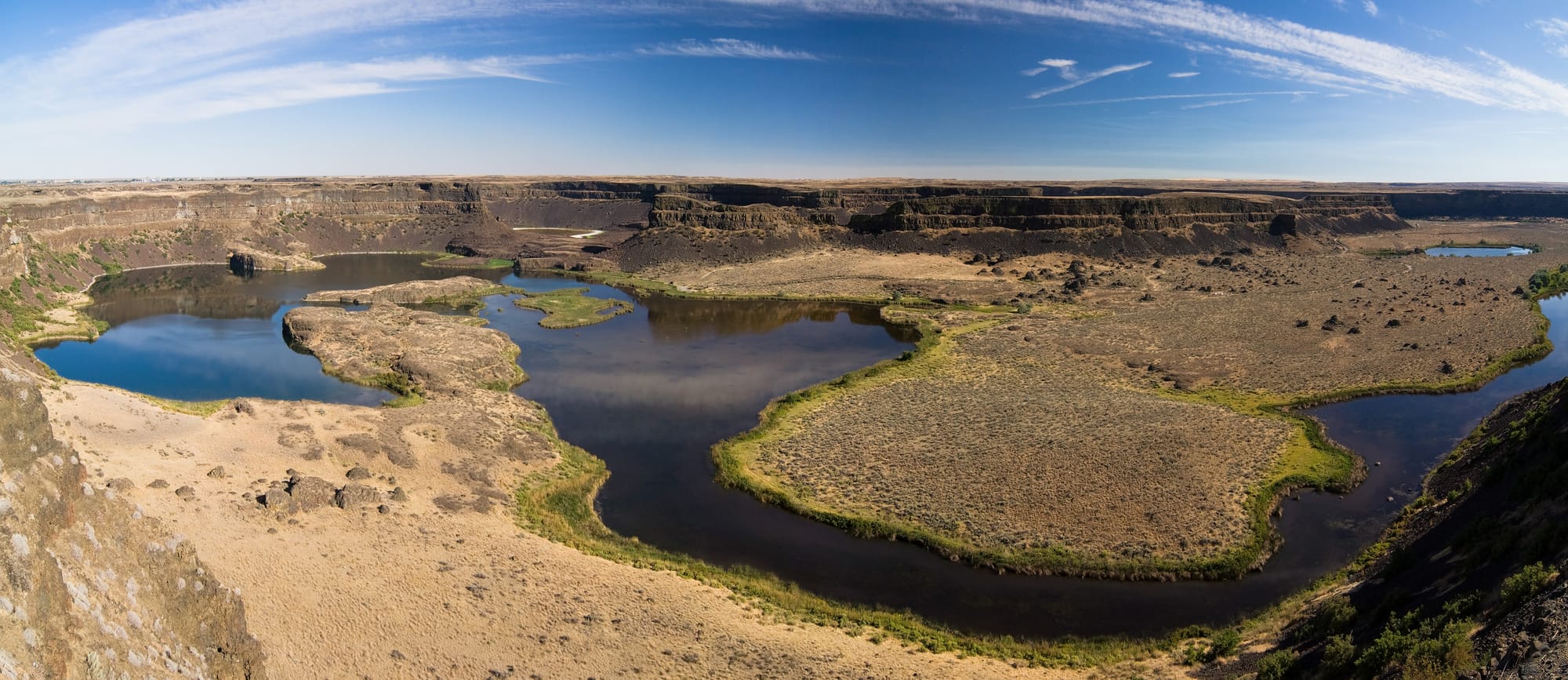
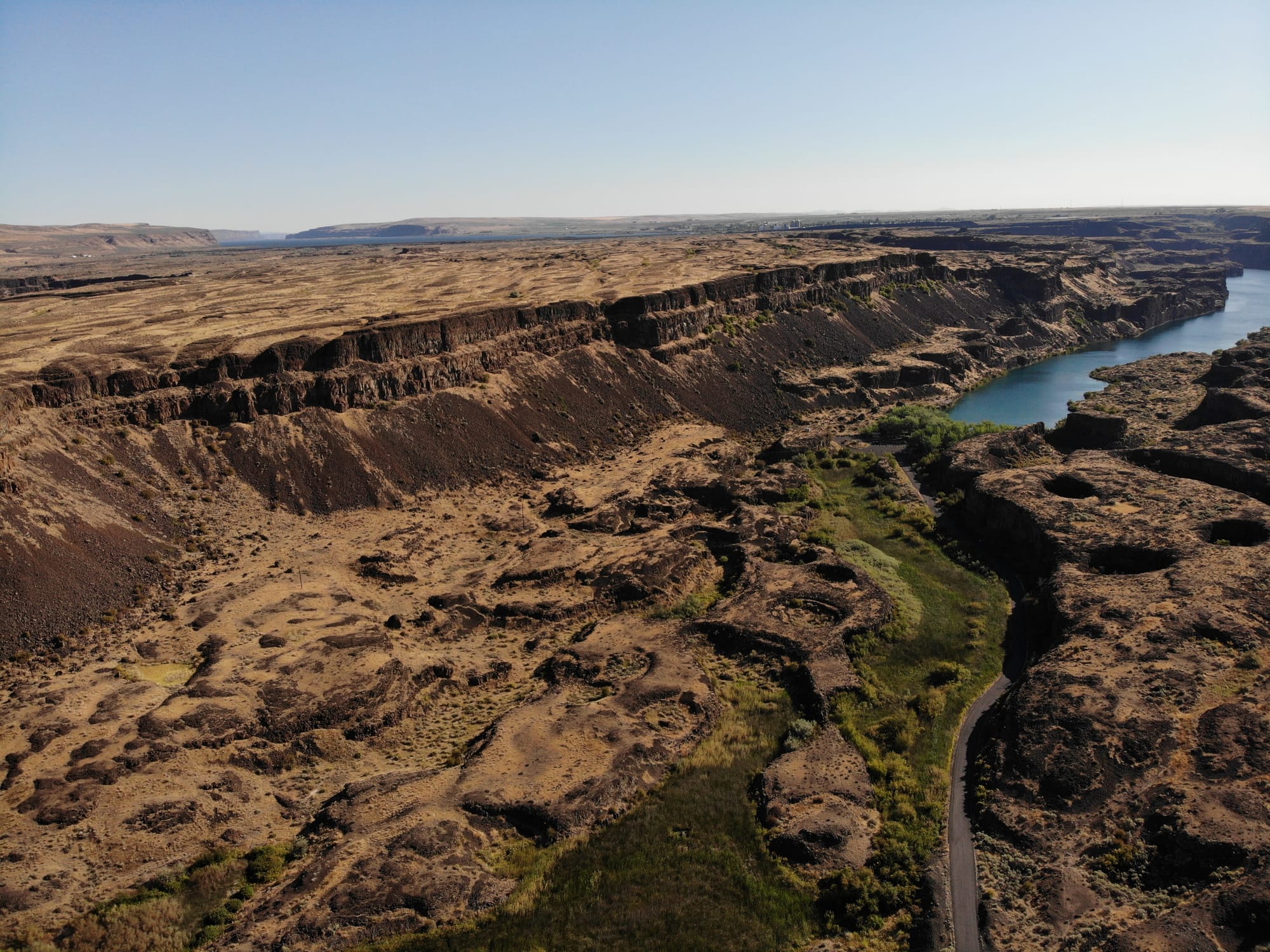
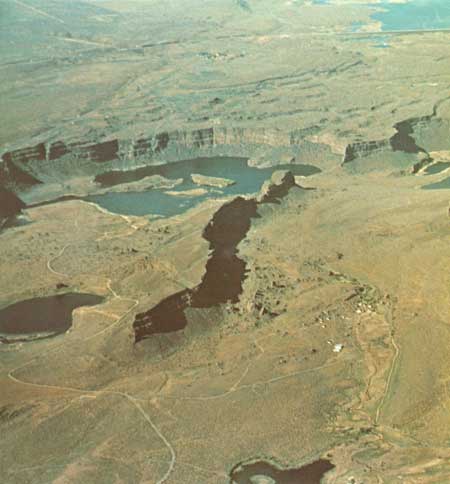
He spends much of his work asking people to look closely at physical evidence: giant ripple marks, coulees, dry falls, glacial erratics, flood-carved channels, scablands, impact markers, and landscapes that appear to preserve the aftermath of immense forces.
This is one of the reasons his work gained a wide audience. He gives viewers something concrete to look at.
A canyon.
A boulder field.
A flood channel.
A dry waterfall larger than anything a normal river could have carved.
The landscape becomes the document.
Carlson’s fascination with sacred geometry and ancient measurement adds another layer. He does not see ancient architecture only as symbolic or religious. He often treats it as a possible carrier of scientific, astronomical, and mathematical knowledge.
That combination became the foundation of his public persona: part geological explorer, part geometrician, part catastrophist, part keeper of ancient pattern memory.

What He Is Known For
Randall Carlson is best known for several major themes.
He is known for popularizing catastrophic geology, especially the Ice Age Floods and the Channeled Scablands of eastern Washington.
He is known for discussing the Younger Dryas Impact Hypothesis, which proposes that a comet or fragmented cosmic impact event around 12,800 to 12,900 years ago may have contributed to abrupt climate change, megafaunal extinctions, and disruption to human cultures.
He is known for connecting flood myths and ancient catastrophe traditions to real geological events.
He is known for sacred geometry, ancient metrology, architecture, and the possibility that earlier cultures encoded advanced knowledge in buildings, symbols, and measures.
He is known for long appearances with Graham Hancock, especially on The Joe Rogan Experience, where he helped bring catastrophe theory and alternative ancient history into one of the largest public conversation spaces in the world.
He is also known for Kosmographia, his podcast and research platform, which describes its mission as investigating and documenting catastrophic Earth history and evidence for advanced knowledge in earlier cultures.
What makes Carlson distinct is not any single claim.
It is the scale of the map he is trying to draw.
He wants to connect landscape, myth, architecture, astronomy, and deep time into one larger pattern.
The Core Idea
The core idea behind Randall Carlson is that catastrophe is not an exception to Earth history.
It is part of the operating system.
Modern civilization often imagines the planet as slow, stable, and mostly predictable. Mountains rise over millions of years. Rivers carve valleys gradually. Climate shifts slowly. Civilizations rise through steady development.
Carlson pushes against that comfort.
He argues that Earth history includes episodes of sudden, overwhelming transformation: floods, impacts, fires, rapid climate shifts, collapsing ice sheets, and cosmic encounters capable of reshaping landscapes and human memory.
This is where Carlson’s work becomes powerful.
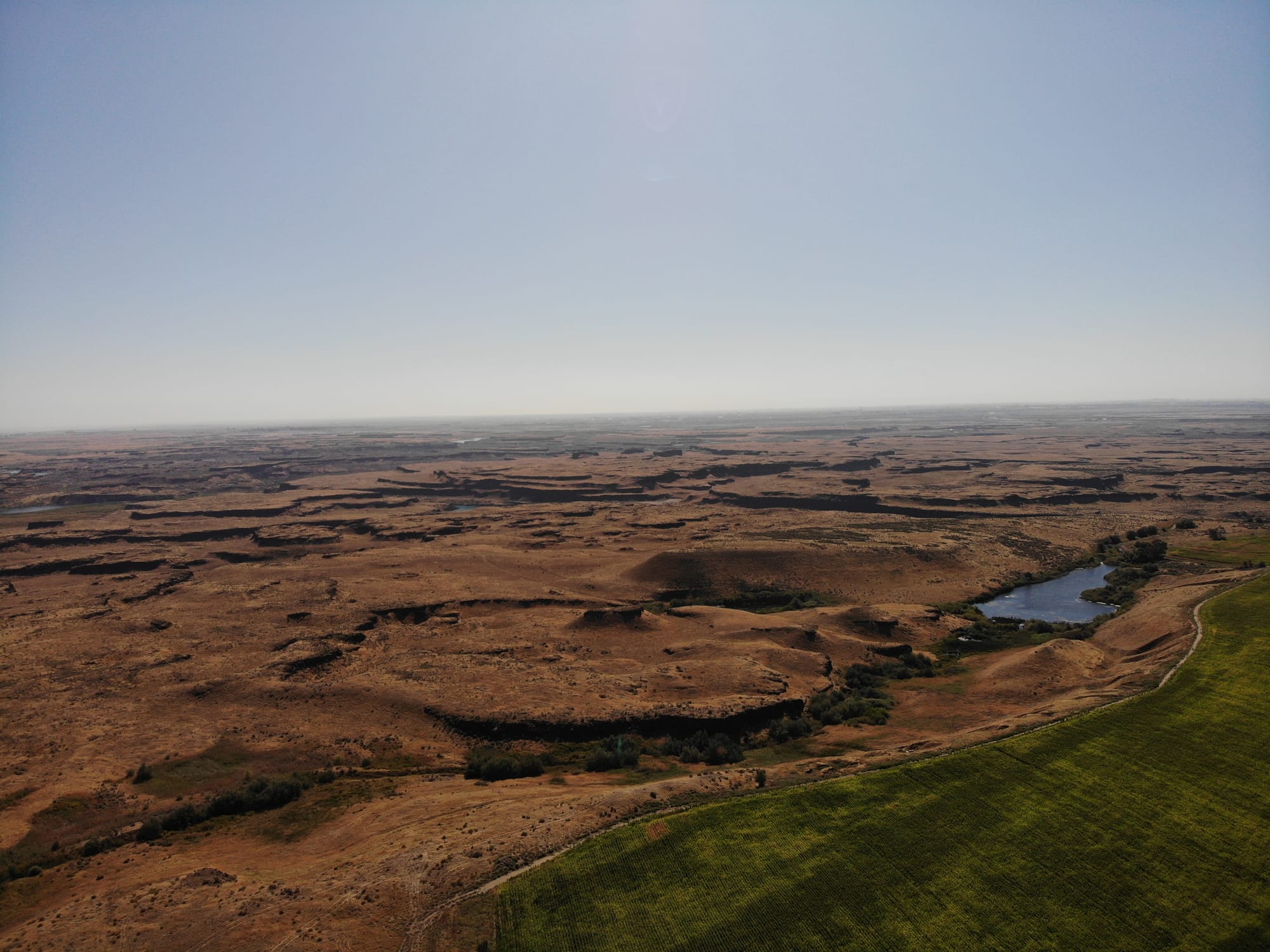
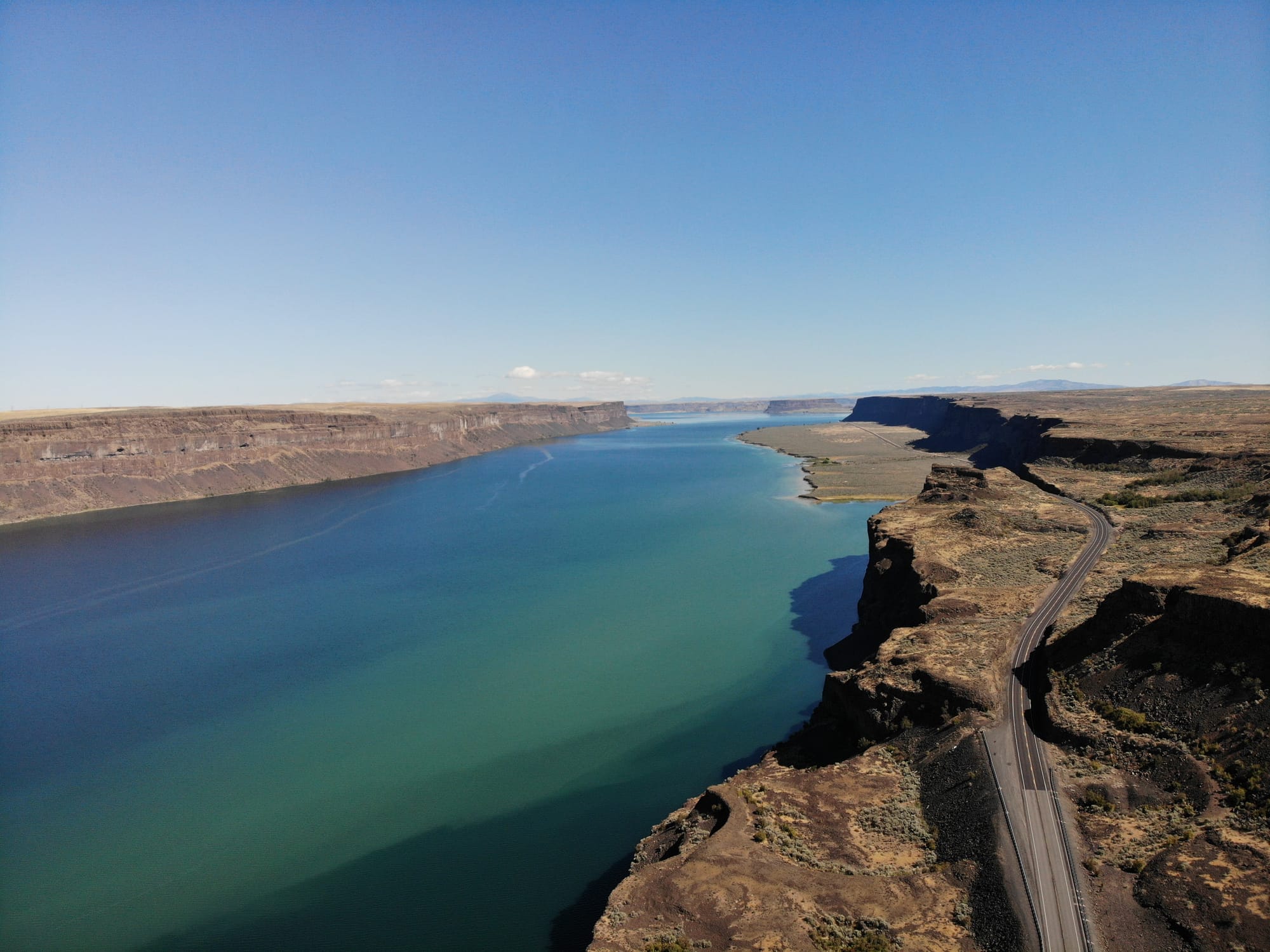
The Channeled Scablands were once controversial because the idea of massive catastrophic flooding challenged older assumptions about gradual geological change. Today, Ice Age megafloods are well accepted. The landscape really was carved by enormous flood events connected to glacial Lake Missoula and related Ice Age processes.
That history gives Carlson’s larger argument emotional force.
Sometimes, the Earth has changed very quickly.
Sometimes, catastrophist ideas were dismissed before later being accepted.
Sometimes, the landscape really does preserve events that sound impossible until the evidence is understood.
But Carlson’s Dossier lives in the next question:
How far can that lesson be extended?
Does the reality of megaflood geology support the idea of a global catastrophe memory?
Does the Younger Dryas event preserve evidence of cosmic impact?
Did ancient cultures inherit knowledge from survivors of a lost world?
Or are these separate threads being woven into a pattern larger than the evidence can hold?
That is the tension.
And it is the reason Carlson remains so fascinating.
The Megaflood Foundation
The strongest part of Carlson’s public work is his emphasis on catastrophic flooding.
The Channeled Scablands of eastern Washington are one of the clearest examples of accepted catastrophic geology. These landscapes were shaped by enormous Ice Age floods, especially those associated with glacial Lake Missoula. The floodwaters carved channels, moved massive boulders, created giant ripple marks, and left behind landforms that did not fit ordinary river erosion.
This history matters because it gives Carlson a real foundation.
He is not wrong that modern geology had to make room for catastrophic events.
He is not wrong that certain landscapes preserve evidence of forces far beyond normal human experience.
He is not wrong that earlier scientific cultures sometimes resisted catastrophic explanations before the evidence became too strong to ignore.
The story of J Harlen Bretz and the Scablands is central here. Bretz argued in the 1920s that the region had been shaped by massive floods. His ideas faced resistance, but later research supported the megaflood interpretation.
Carlson often uses this as a model for how scientific paradigms can change.
The Earth can do things that sound mythic.
The mistake is assuming that because something sounds too large, it did not happen.
The Younger Dryas Question
The Younger Dryas is one of the most important climate events in Carlson’s worldview.
Around 12,900 years ago, Earth experienced an abrupt return to colder conditions after a period of warming near the end of the last Ice Age. This cold interval lasted roughly 1,200 years before warming resumed.
The mainstream scientific question is what caused it.
One major explanation involves changes in ocean circulation triggered by meltwater from retreating ice sheets. Another, more controversial explanation is the Younger Dryas Impact Hypothesis, which proposes that Earth encountered cometary debris or impact-related events that contributed to sudden cooling, widespread burning, ecological disruption, and cultural consequences.
Carlson is one of the best-known public advocates for taking the impact possibility seriously.
This is where his work becomes both compelling and contested.
Supporters of the Younger Dryas Impact Hypothesis point to proposed impact markers, microspherules, nanodiamonds, platinum anomalies, black mats, and possible signs of widespread burning or abrupt environmental stress.
Critics argue that many of these markers are not consistently reproducible, may have terrestrial explanations, or do not line up with a coherent impact scenario. Major critical reviews have argued that the hypothesis has not demonstrated a self-consistent explanation across geology, chemistry, climate, archaeology, and extinction patterns.
The debate is active.
That matters for the way this Dossier should be read.
The Younger Dryas Impact Hypothesis is not the same as the accepted Ice Age megaflood story.
Megafloods are solidly grounded.
The cosmic impact explanation for the Younger Dryas remains controversial.
Carlson’s influence comes from placing them inside one larger narrative of planetary catastrophe. His risk comes from making that larger narrative feel more settled than the evidence currently allows.
Sacred Geometry and Ancient Knowledge
Carlson’s second major domain is sacred geometry.
This is the part of his work that shifts from geology into architecture, mathematics, symbolism, and ancient knowledge systems.
For Carlson, geometry is not merely decorative. It is a language of proportion, order, and cosmic relationship. He often treats ancient buildings, measurements, and symbolic systems as possible remnants of a deeper understanding of nature.
This is one reason he attracts an audience that extends far beyond geology.
Carlson makes the ancient world feel intelligent.
Not primitive.
Not confused.
Not merely mythic.
Intelligent in ways modernity may not fully recognize.
That approach fits The Galactic Mind because it opens a serious question: how much knowledge can a culture encode without writing it in the way we expect?
Could geometry preserve memory?
Could architecture encode astronomy?
Could myth preserve catastrophe?
Could ancient systems of proportion reflect observations of cycles, time, and cosmic order?
These are powerful questions.
But they require caution.
The fact that ancient cultures were mathematically and astronomically sophisticated does not automatically prove the existence of a lost advanced civilization. The fact that flood myths exist in many cultures does not automatically prove a single global cataclysm. The fact that ancient structures contain geometry does not mean they encode one universal forgotten science.
The best version of Carlson’s work invites respect for ancient intelligence.
The weaker version risks turning pattern recognition into certainty.
The Hancock Connection
Randall Carlson’s public visibility increased significantly through his appearances with Graham Hancock, especially on The Joe Rogan Experience.
Hancock’s work argues that a lost civilization may have existed before known history and that its memory survived through myths, monuments, and traditions. Carlson’s catastrophe framework provides a geological engine for that possibility: if major disasters struck near the end of the Ice Age, they could have erased coastal settlements, disrupted cultures, and transformed the landscape of human development.
Together, Hancock and Carlson offer audiences a powerful story:
What if civilization is older than we think?
What if catastrophe reset the human timeline?
What if ancient myths are not fantasies, but damaged memories of real events?
What if the ruins we study are not the beginning of civilization, but the recovery phase after something was lost?
This story is compelling because it feels emotionally and mythically complete.
It gives humanity a lost origin, a planetary disaster, survivors, memory fragments, and a modern rediscovery.
But it also creates a major evidence challenge.
Archaeology requires material culture, stratigraphy, dating, settlement patterns, tools, human remains, and context. A lost civilization cannot be established through mythic resonance alone. It needs evidence strong enough to survive the ordinary demands of historical reconstruction.
Carlson’s geology may widen the imagination.
It does not, by itself, prove Hancock’s civilization model.
That distinction keeps the Dossier honest.
Perspectives and Interpretations
One interpretation of Randall Carlson is that he is a powerful public educator whose greatest gift is teaching people to see landscapes differently.
In this reading, he has done something valuable. He has helped general audiences understand that Earth history includes catastrophic episodes, that flood geology is real, and that modern civilization should not assume planetary stability.
A second interpretation sees Carlson as an important bridge between science and myth.
He does not treat ancient traditions as childish stories. He asks whether they may preserve encoded observations of real events. This is not an unreasonable question. Human cultures often preserve memory through story, ritual, symbolism, and sacred geography.
A third interpretation is more skeptical.
Carlson’s work can blur the boundary between accepted geology, debated impact theory, and speculative ancient knowledge claims. The danger is not that he asks big questions. The danger is that audiences may leave with the impression that the entire system is equally established.
The Ice Age Floods are well supported.
The Younger Dryas Impact Hypothesis remains contested.
The lost advanced civilization idea remains speculative.
The value of Carlson’s work depends on keeping those layers separate.
Strengths and Limitations
Carlson’s greatest strength is scale.
He restores awe to geology. He reminds audiences that the Earth has been shaped by forces so large they feel almost mythological: collapsing ice dams, continental floods, impact events, climate swings, fires, and sudden environmental transitions.
His second strength is synthesis.
Carlson is willing to connect fields that usually remain separated: geology, myth, geometry, ancient architecture, astronomy, and cultural memory. Even when his conclusions are debated, the act of connecting these domains can generate useful questions.
His third strength is narrative.
He makes deep time feel urgent. The past becomes something alive, not a dead academic category.
His limitation is evidentiary blending.
Carlson’s map is so large that it can sometimes make uneven evidence feel unified. A well-established megaflood, a debated impact marker, a symbolic pattern in ancient architecture, and a flood myth may all appear inside the same argument. But each belongs to a different evidentiary category.
For The Galactic Mind, that is the key.
The strongest way to read Carlson is not as someone who has solved ancient history.
It is as someone who forces us to ask whether our model of the past is too smooth, too gradual, and too forgetful of catastrophe.
Broader Implications
Randall Carlson’s work matters because catastrophe is no longer only ancient history.
Modern civilization depends on fragile systems: electrical grids, satellites, supply chains, agriculture, climate stability, oceans, and predictable seasons.
The deeper lesson of Carlson’s work is not simply that something terrible happened long ago.
It is that civilization exists inside a planetary and cosmic system it does not control.
A solar storm could damage global infrastructure.
An impact event, even a regional one, could have massive consequences.
Abrupt climate shifts can reorganize ecosystems.
Floods, fires, earthquakes, and volcanic events can erase settlements and rewrite human plans in hours.
In that sense, Carlson’s work is not only about the past.
It is about humility.
Modern people often assume ancient people were naive because they feared the sky, honored cycles, built monuments, and preserved catastrophe myths.
Carlson suggests the opposite possibility.
Maybe they remembered something.
Maybe they knew civilization is not separate from the cosmos.
Maybe myth was not an escape from reality, but an early warning system.
That does not make every myth literal.
But it does make the question worth asking.

The Galactic Mind Perspective
Randall Carlson is compelling because he treats the Earth like an archive.
Not a passive rock.
An archive.
Its canyons are pages. Its flood channels are scars. Its boulders are displaced evidence. Its ancient structures are arguments in stone. Its myths are memory fragments passed down through frightened generations trying to explain what happened when the world changed.
The danger is obvious.
When the pattern becomes too beautiful, it can become too easy to believe.
A flood myth becomes a global flood.
A geometric ratio becomes proof of lost science.
A climate disruption becomes a comet strike.
A vanished coastline becomes a lost civilization.
The mind wants the pieces to connect.
But the value of Carlson’s work is not that every connection is proven.
The value is that he reminds us the past may be less stable than our textbooks made it feel.
Human civilization is young.
Written history is short.
Sea levels have risen.
Ice sheets have collapsed.
Floods have carved impossible landscapes.
The sky has struck Earth before.
The question is not whether catastrophe belongs in the human story.
It does.
The question is how much of that story we have forgotten.
And whether the oldest myths were trying to warn us that civilization is never as permanent as it feels from inside the present moment.
Open Question
If Earth has already erased landscapes, coastlines, ecosystems, and entire ways of life, how confident should we be that human history begins where our evidence happens to survive?
And if ancient people encoded catastrophe in myth, geometry, and sacred architecture, are we looking at superstition?
Or are we looking at memory after the evidence was washed away?
What do you think? Drop your thoughts in the comments ...
Sources / Receipts
-Randall Carlson Official Website
Useful for his official framing, Kosmographia, sacred geometry work, events, and stated mission around catastrophic Earth history and advanced knowledge in earlier cultures.
-Kosmographia Podcast
Useful for Carlson’s long-form work on Ice Age floods, Younger Dryas, catastrophism, ancient knowledge, and geocosmic cycles.
-Joe Rogan Experience Episodes with Randall Carlson and Graham Hancock Useful for documenting Carlson’s role in bringing catastrophe theory and alternative ancient history into mass public conversation.
-National Park Service: Ice Age Floods National Geologic Trail
Useful for grounding the reality of the Ice Age Floods and the landscapes shaped by glacial Lake Missoula flood events.
-USGS: The Missoula and Bonneville Floods
Useful for the scientific foundation of megaflood geology, the Channeled Scablands, J Harlen Bretz, and the overwhelming flood evidence preserved in the Columbia River Basin.
-National Park Service: J Harlen Bretz and Ice Age Floods People Page
Useful for the history of Bretz, the initial resistance to catastrophic flood theory, and the eventual scientific acceptance of megaflood geology.
-Firestone et al., 2007, PNAS
The original major paper proposing evidence for an extraterrestrial impact around 12,900 years ago contributing to Younger Dryas cooling and megafaunal extinctions.
-Powell, 2022, The Case of the Younger Dryas Impact Hypothesis
Useful supportive review summarizing the hypothesis and arguing that impact evidence remains significant.
-Holliday et al., 2023, Comprehensive Refutation of the Younger Dryas Impact Hypothesis
Useful critical review arguing that the hypothesis lacks a self-consistent scenario and that no confirmed impact crater dates to the onset of the Younger Dryas.
-Sweatman, Powell, and West, 2024, Rejection of Holliday et al.’s Alleged Refutation
Useful supporter response arguing that the Younger Dryas Impact Hypothesis has not been comprehensively refuted and remains active.
-Comet Research Group Publications Page
Useful for tracking papers, claims, and ongoing support for the Younger Dryas Impact Hypothesis, while keeping in mind that this is an advocacy-aligned source.
-Mainstream climate and archaeology sources on the Younger Dryas
Useful for balancing the impact hypothesis against other explanations involving deglacial meltwater, ocean circulation, and regional climate dynamics.


Discussion