
Central Question
What if DMT does not simply distort reality, but reveals how unstable our access to reality actually is?
Most of us move through the world assuming consciousness is fixed.
We wake up inside a familiar environment.
We recognize the room.
We remember our name.
We trust the body.
We trust the senses.
We trust that reality is sitting outside us, waiting to be perceived.
Then a molecule enters the bloodstream, and within moments, some people report that the familiar world is gone.
Not altered.
Replaced.
They describe impossible geometry. Vast interior spaces. Intelligent presences. Communication without language. A sense of entering somewhere rather than imagining something.
That does not prove another realm exists.
But it does raise a question that is harder to dismiss:
If consciousness can experience another world with such force, structure, and meaning, what exactly is ordinary reality made of?
The Familiar World
We usually think of hallucination as error.
A false image.
A misfiring pattern.
A private distortion.
A thing the brain invents when perception breaks down.
That is the safe category.
It keeps the normal world intact.
But DMT complicates that category because many reports do not sound like simple sensory distortion. They sound like entry.
People often describe DMT as less like watching a strange movie and more like being transported into a complete environment. A place with structure. A place with presence. A place that feels responsive.
This is why DMT sits so strangely in the modern imagination.
It belongs to chemistry.
It belongs to neuroscience.
It belongs to indigenous and ceremonial contexts through ayahuasca.
It belongs to internet folklore and modern psychedelic culture.
And increasingly, it belongs to consciousness research.
For The Galactic Mind, the interesting question is not whether every DMT story should be believed literally.
The interesting question is why the human mind can generate, receive, or enter an experience that feels so radically other.
The Chase Hughes Dossier explored the outer surface of influence: how perception, behavior, and belief can be shaped through signals, authority, and psychological pressure.
DMT turns that question inward.
If reality can be shaped from the outside, what happens when the entire inner frame of reality is altered from within?
Nature of the Inquiry
This is not only a drug question.
It is a consciousness question.
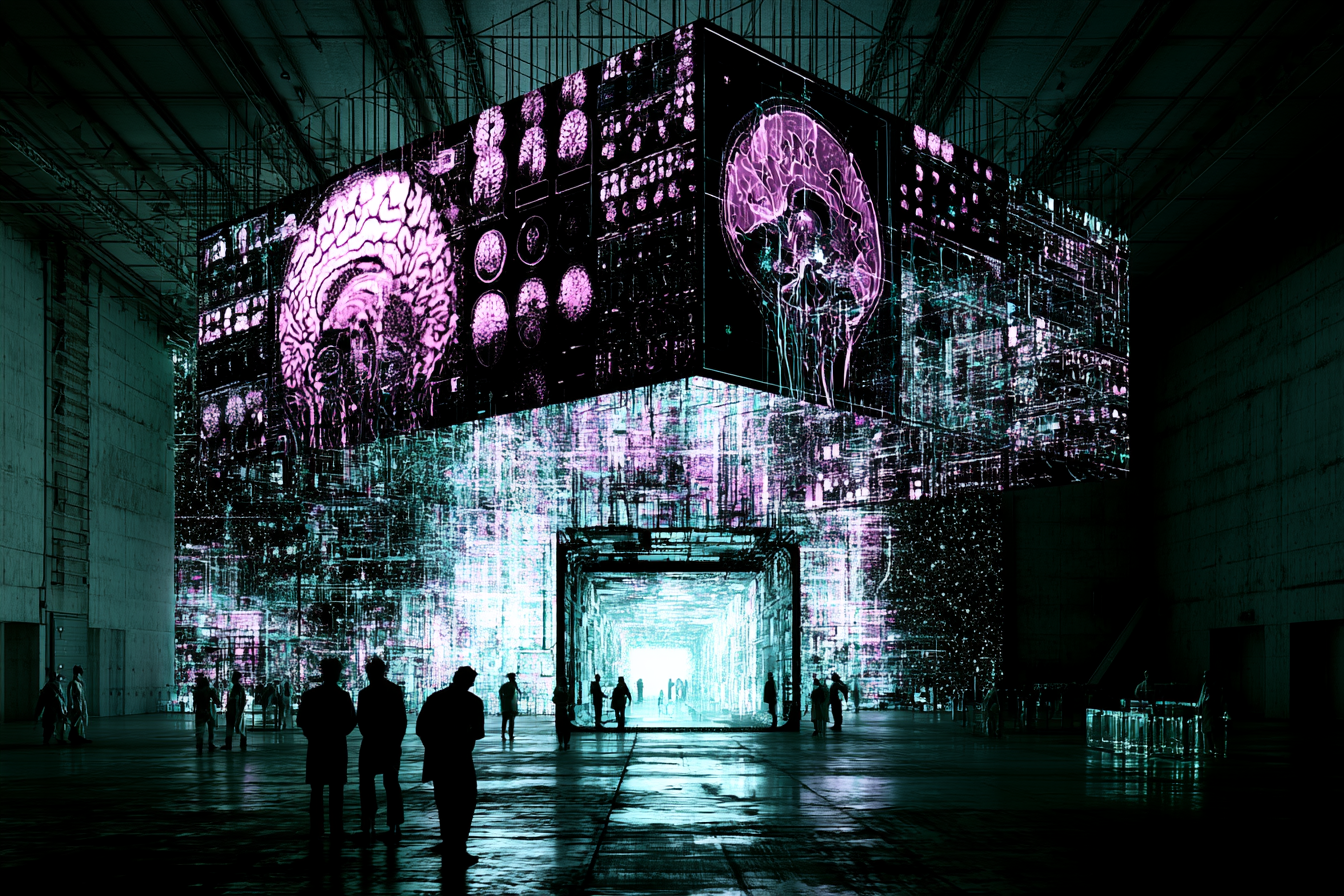
It touches neuroscience because DMT visibly changes brain activity. A 2023 Imperial College London study using advanced brain imaging found that DMT increased communication across brain systems, with especially strong changes in regions linked to higher-level functions such as imagination and world-modeling.
It touches philosophy because the experience forces us to ask whether reality is directly perceived or internally rendered.
It touches culture because DMT entity encounters have become one of the modern world’s strangest recurring reports: beings, guides, architects, tricksters, observers, intelligences.
And it touches the future because extended DMT research is beginning to ask whether this brief state can be stabilized long enough to study more carefully. In a small placebo-controlled study, researchers tested a bolus injection followed by continuous infusion to extend the DMT experience for around 30 minutes in healthy volunteers.
That matters.
A state that once lasted only minutes may become more observable. More navigable. More scientifically legible.
Not proven as another realm.
But no longer easy to dismiss as a fleeting chemical storm.
The Crack in the Frame
The familiar explanation is simple:
DMT acts on the brain.
The brain produces visions.
The visions feel real because the brain is powerful.
Mystery solved.
And maybe that is exactly right.
But there is a crack in the frame.
Ordinary reality also depends on the brain.
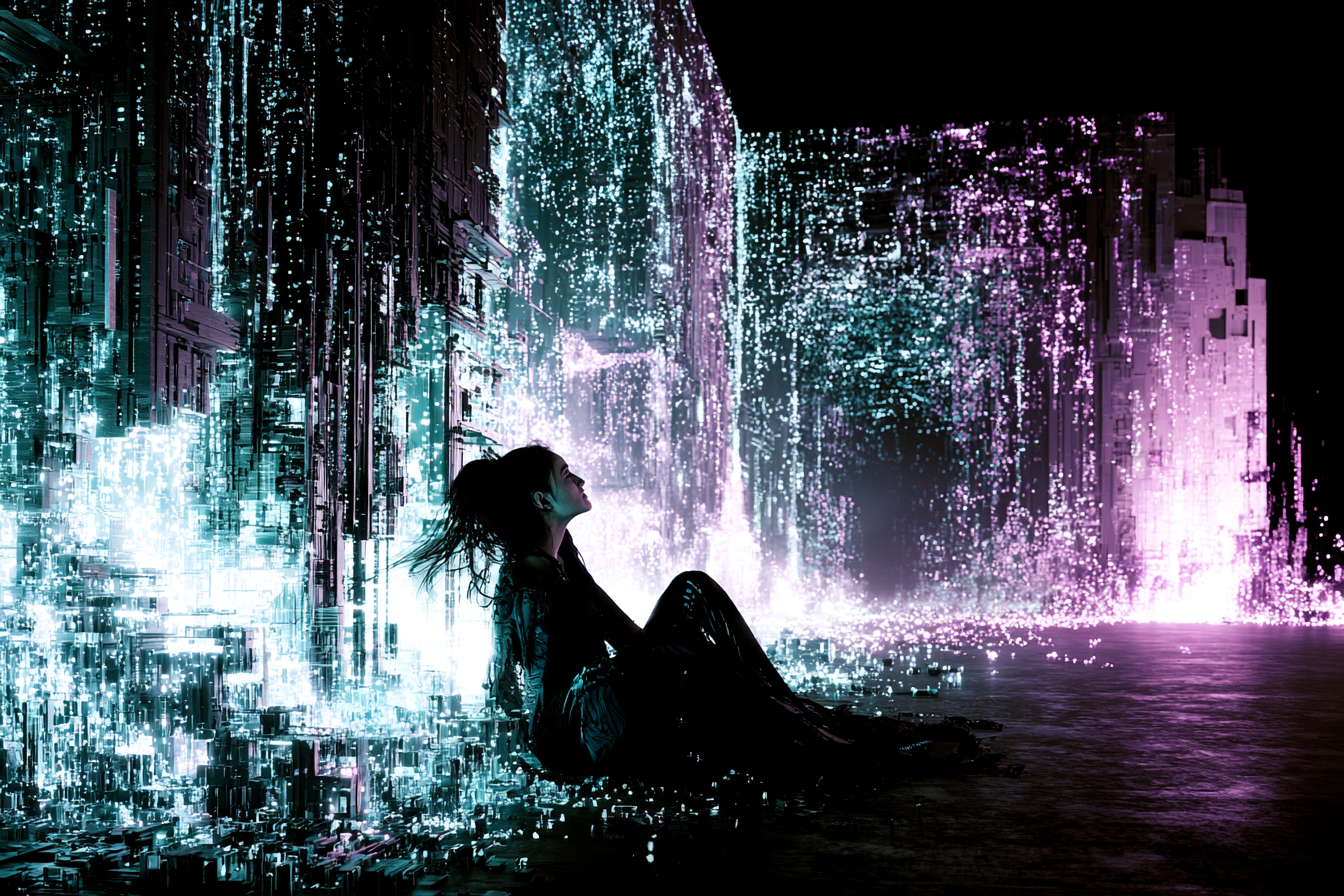
The world we experience every day is not raw reality entering the mind untouched. It is a model. A controlled construction. A living interface assembled from sense data, memory, attention, prediction, emotion, and body state.
You do not experience the world as it is.
You experience the world as your nervous system makes it usable.
That does not mean the world is fake. It means perception is mediated.
So when DMT changes the model, the question becomes more subtle.
Is DMT producing an illusion?
Or is it exposing the fact that ordinary waking life is also a kind of controlled hallucination, one stabilized by biology, survival, and consensus?
This is where the mystery sharpens.
Maybe DMT does not take consciousness somewhere else.
Maybe it reveals that “somewhere” was always more fragile than we thought.
Compatible Perspectives
Several frameworks can look at DMT without needing to collapse the mystery too quickly.
Neuroscience may say the experience comes from altered brain dynamics. Under DMT, the brain’s normal boundaries between systems appear to loosen. Increased global connectivity may allow perception, memory, imagination, emotion, and selfhood to recombine in unusual ways.
Philosophy may say DMT reveals the interface nature of experience. The brain does not passively receive reality. It helps format reality into something consciousness can inhabit.
Mythology may see the “other world” pattern as ancient. Human beings have always reported journeys into hidden realms, meetings with non-human intelligences, underworld descents, celestial ascents, spirit teachers, and threshold beings.
Consciousness research may treat DMT as a tool. Not because it proves the soul leaves the body, but because it produces one of the most intense known disruptions of ordinary conscious experience while the subject remains awake.
The overlap is where things become interesting.
Science does not need to confirm ancient myth for the comparison to matter.
Myth does not need to override neuroscience for the pattern to remain meaningful.
Both may be circling the same strange fact:
Human consciousness is capable of experiencing reality as layered.
Not metaphorically layered.
Experientially layered.
A world beneath the world.
A presence behind the image.
A dimension of mind that feels less invented than encountered.
Contrasting Views
There are strong reasons to stay careful.
The weakest version of the DMT conversation jumps too quickly from experience to certainty.
Someone sees entities, therefore the entities are real.
Someone enters another realm, therefore another dimension has been proven.
Someone has a mystical experience, therefore the brain is only a receiver.
That leap is tempting.
But it is not enough.
A powerful experience can feel true without being externally real. Dreams can contain characters who surprise us. Psychosis can generate fully convincing worlds. The brain can simulate agency, environment, and meaning with terrifying intensity.
There is also the popular claim that the pineal gland releases large amounts of DMT during birth, dreaming, or death. That idea has become almost mythic online, but a 2018 review by David Nichols argued that scientific evidence is not consistent with those claims, and that detected levels of DMT in the brain are too low to explain full psychedelic effects.
So the grounded position matters:
DMT does not prove a portal.
DMT does not prove entities.
DMT does not prove the afterlife.
DMT does not prove that consciousness leaves the body.
But it does prove something else.
It proves that human reality is more transformable than everyday life allows us to feel.
And that may be strange enough.
Because if a change in chemistry can replace the world, then our ordinary world is not simply “given.”
It is maintained.
Broader Context
This is where DMT becomes larger than DMT.
Human civilization is built on shared reality.
Law depends on it.
Science depends on it.
Language depends on it.
Money depends on it.
Identity depends on it.
Culture depends on it.
We wake into a common world and agree, more or less, that we are seeing the same thing.
But altered states reveal that consciousness has other modes.
Dreams show us private worlds.
Meditation can dissolve the self.
Near-death experiences can transform people’s relationship with mortality.
Psychedelics can produce encounters that feel more real than ordinary life.
In one study, researchers compared DMT experiences with near-death experiences and found significant overlap in reported features, including themes such as leaving the body, entering another realm, and encountering presences.
Again, this does not prove that death and DMT lead to the same place.
But it suggests that the human mind may have recurring thresholds.
Doors it can approach under extreme conditions.
Chemical.
Biological.
Spiritual.
Traumatic.
Ceremonial.
Technological.
And that raises a future-facing question.
If consciousness can be shifted this dramatically by molecules, what happens when advanced neuroscience, AI, brain-computer interfaces, immersive simulation, and psychedelic research begin to converge?
Will future humans map these states like explorers once mapped oceans?
Will “inner worlds” become research environments?
Will entity encounters be studied as projections, intelligences, archetypes, or something we do not yet have language for?
And if the DMT state can be extended, stabilized, and studied, will we discover that it is only a hallucination?
Or will we discover that hallucination was too small a word?
Perspective Shift
The most interesting possibility is not that DMT proves another reality exists.
The most interesting possibility is that it forces us to rethink what we mean by reality in the first place.
We often imagine reality as a single, solid stage.
Matter is there.
The body is here.
The mind looks outward.
The world appears.
But consciousness may not be a spectator sitting in front of reality.
It may be part of the rendering process.
A translator.
A filter.
An interface.
A participant.
If that is true, then DMT is not important because it gives us answers.
It is important because it reveals the hidden machinery of the question.
Maybe the DMT realm is generated entirely inside the brain.
Maybe it is a symbolic theater where the unconscious becomes visible.
Maybe it is an encounter with archetypal intelligence.
Maybe it is an access point to something real but normally filtered out.
Maybe it is none of these cleanly.
The deeper shift is this:
The boundary between “real” and “imagined” may not be as simple as we think.
Ordinary life feels real because it is stable, shared, and survivable.
DMT feels real because it is immersive, intelligent, and overwhelming.
Dreams feel real until we wake up.
Memory feels real until it changes.
The self feels real until it dissolves.
So perhaps the question is not, “Is the DMT world real?”
Perhaps the better question is:
What kind of reality is consciousness capable of entering?
Open Reflection
DMT sits at the edge of several maps.
The chemical map says it is a molecule.
The neurological map says it alters brain activity.
The psychological map says it reveals hidden structures of mind.
The mythic map says it opens a threshold.
The philosophical map asks whether perception was ever as solid as we believed.
The honest answer may be that we do not know what kind of experience this is yet.
And maybe that is the point.
DMT may not be a doorway into another dimension.
It may not be a message from beyond.
It may not be proof of anything supernatural.
But it is a reminder that consciousness is not locked into one version of the world.
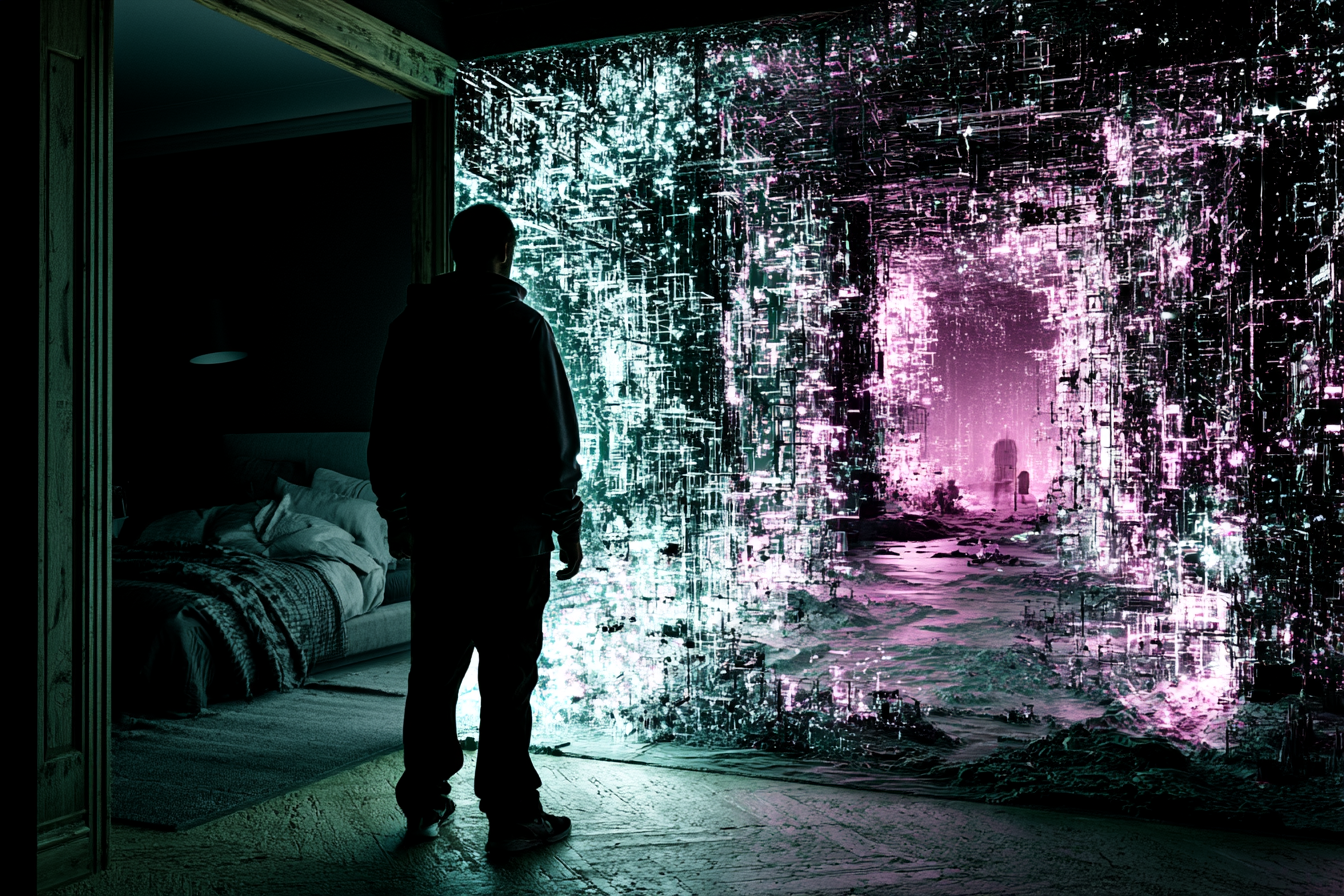
A slight change in chemistry, and the ordinary frame can vanish.
The room disappears.
The self loosens.
The impossible becomes immediate.
The mind finds itself somewhere it was never taught to expect.
Maybe that place is inside us.
Maybe it is beyond us.
Maybe the distinction is part of the illusion.
What do you think? Drop your thoughts in the comments ...
Sources / Receipts
-Imperial College London reported on a 2023 DMT brain imaging study involving 20 healthy volunteers, noting increased connectivity across brain systems and changes in higher-level brain regions associated with imagination and world-modeling.
-The 2024 extended DMT study in Journal of Psychopharmacology tested bolus injection plus continuous infusion in 11 healthy volunteers, with the goal of extending the DMT experience in a stable and tolerable way for research.
-David Nichols’ 2018 review, “N,N-dimethyltryptamine and the pineal gland: Separating fact from myth,” argues that the evidence does not support popular claims that the pineal gland produces enough DMT during birth, dreaming, or death to cause full psychedelic experiences.
-A 2020 Johns Hopkins survey study examined 2,561 reports of DMT entity encounters and focused on the phenomenology, interpretation, and enduring effects of these experiences.
-A 2018 Frontiers in Psychology study compared DMT experiences with near-death experience features in 13 healthy participants and found significant overlap in reported phenomenology.


Discussion