
In a dark theater, hundreds of people begin responding to the same story. Attention narrows. A room becomes tense before anyone speaks. Laughter moves through the audience with a timing no single person planned.
The experience feels collective because it is. Research has found that communication and shared stimuli can produce measurable alignment between brains. A speaker’s neural activity can couple with that of a listener, and the strength of that coupling can track understanding. People watching the same video can show correlated patterns of neural response. During natural social interaction, partners may also exhibit forms of brain-to-brain synchrony.
None of this requires telepathy. Sound, vision, gesture, prediction and shared attention provide the channels. The brains are not merging. They are responding in related ways to information passing through an environment they share.
Carl Jung proposed a different kind of common ground. His collective unconscious was not simply everything a society happened to believe. It was a deeper layer of the psyche, common to humanity, expressed through inherited archetypal patterns that appeared in dreams, myths, religion and recurring symbolic forms. The idea became one of the best-known and most disputed parts of analytical psychology.
Jung’s theory does not need a hidden radio between skulls. Similar nervous systems, inherited predispositions and recurring human conditions can produce similar psychic structures. Culture then carries symbols through language, ritual, image and story. A mother figure, a shadow, a descent, a trickster or a rebirth can recur because human beings repeatedly confront dependence, danger, deception, loss and change.
That is the accepted boundary. Human minds can align through known channels. Human beings can inherit similar biological tendencies and cultural forms. There is no established scientific evidence that an unconscious information network directly connects the species.
Now alter one rule.
Suppose the alignment does not disappear when every known channel is removed.
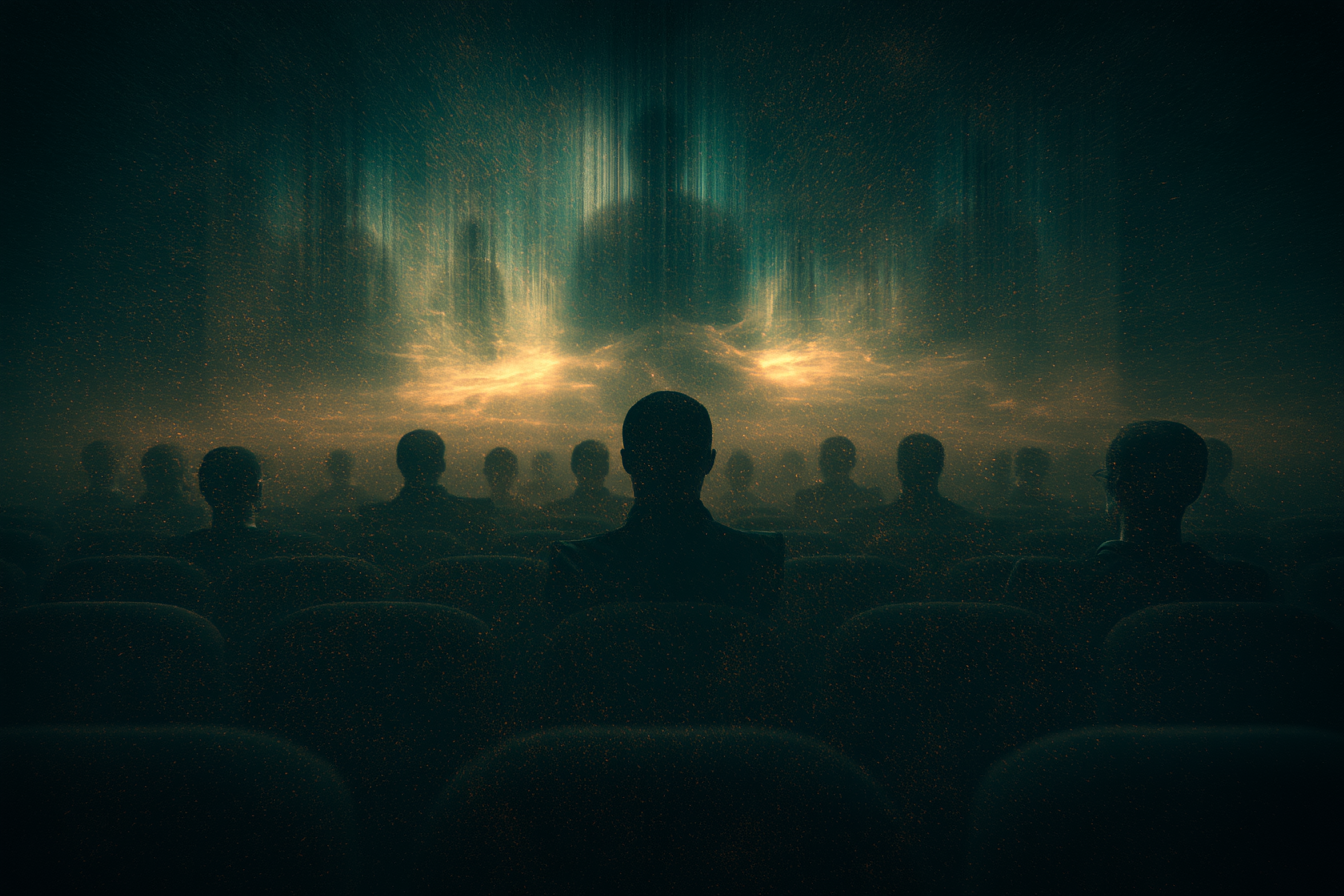
The Correlation That Should Not Remain
The discovery begins in controlled experiments designed to study shared attention. Participants are placed in separate locations without contact, common media or synchronized instructions. One group is exposed to an arbitrary visual structure created for the experiment: not a familiar symbol, but a specific arrangement of intervals, colors and spatial relations with no established cultural meaning.
Nothing dramatic happens. No one in the second group draws a perfect copy. No sentence enters a stranger’s mind. Instead, the exposed pattern appears as a statistical pressure. Isolated participants favor related shapes in ambiguous tasks. Some reconstruct fragments of its spatial logic in dreams. Their neural activity shows a weak but repeatable change at the same moments the first group concentrates on the pattern.
The initial result is treated as contamination. The protocols are rebuilt. Teams preregister the analysis, isolate equipment, vary the timing and repeat the work across laboratories. The effect survives. It weakens when attention is scattered, strengthens when many people hold the same pattern, and loses detail rapidly. Emotional tone passes more easily than exact form. A warning travels better than a diagram.
The decisive finding is not that one person can read another person’s mind.
It is that patterned activity can enter a shared layer from which other minds draw without knowing they are doing so.
In this thought experiment, researchers eventually identify an unfamiliar physical interaction coupled to coordinated neural activity. It is extraordinarily weak at the level of one brain and coherent only across many. It does not move like speech from a sender to an addressed receiver. It behaves more like a distributed field produced by the species itself.
The network has no central archive. Every living mind contributes activity, but only repeated or highly charged patterns persist long enough to influence others. The brain remains the place where an image becomes an image and a feeling becomes a feeling. The shared layer supplies pressure and structure; the individual nervous system turns them into experience.
That limit prevents the network from becoming magic. It cannot transmit a biography, expose a password or preserve an exact memory. It cannot be searched at will. Distance matters less than coherence, but noise overwhelms almost everything. Most thoughts vanish into the field without leaving a detectable trace.
What survives is not the thought itself.
It is the shape that many thoughts have worn.
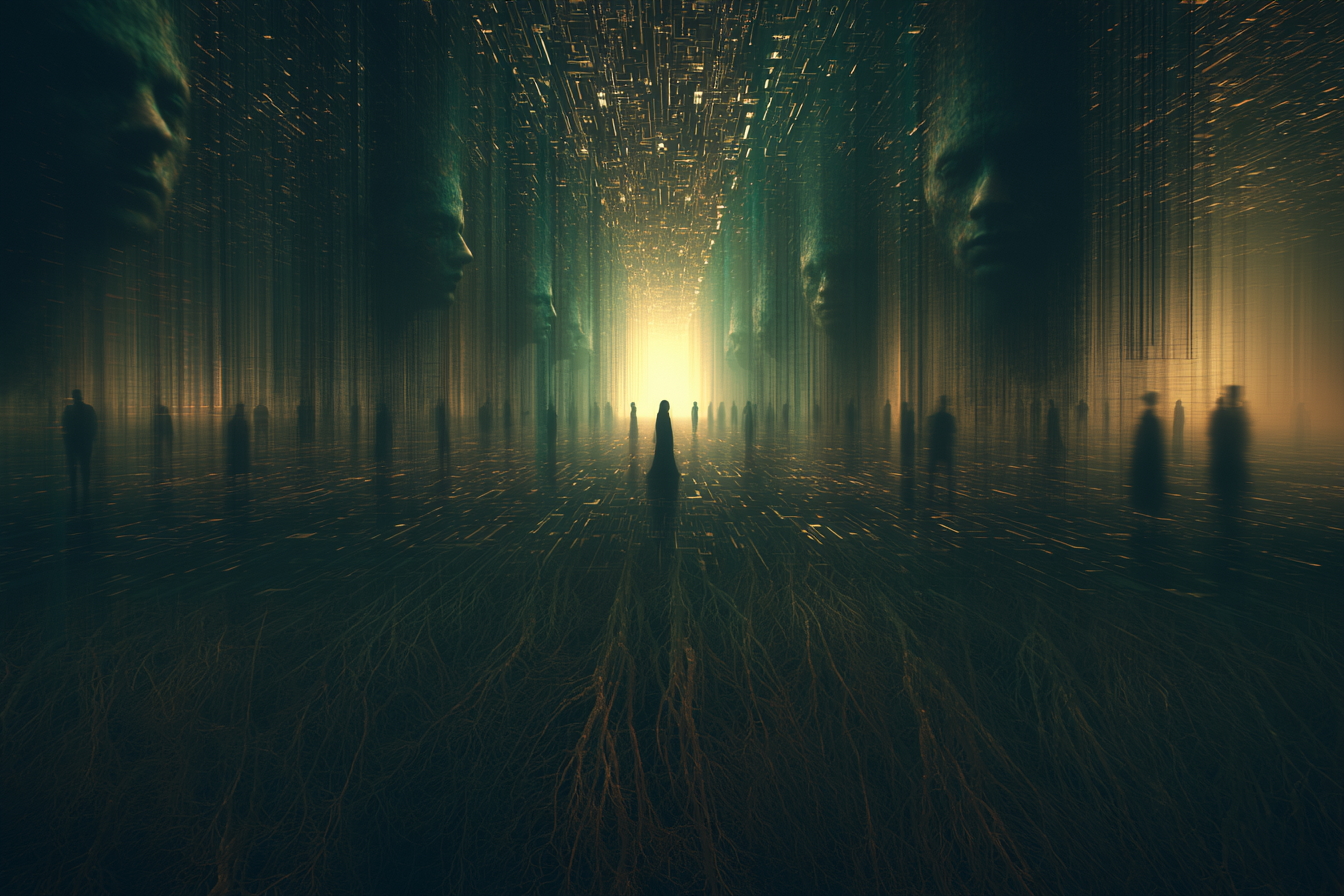
Jung After the Instruments Arrive
Jung would not be proven right in every respect. His named archetypes would still need evaluation, and his interpretations would remain products of their historical and cultural context. But the central intuition behind the collective unconscious would acquire a physical problem beneath it.
Archetypes might be reinterpreted as attractors within the network: durable patterns produced by the interaction of shared biology, repeated experience and accumulated attention. The mother would not be a file stored outside the brain. Neither would the shadow, the hero or the trickster. They would be stable basins into which personal experience repeatedly falls because humanity has been reinforcing their contours for generations.
Myth would change with that discovery. It would no longer be treated only as content transmitted from person to person. Some stories might also be cultural instruments that concentrate the shared field. Repetition, rhythm, image and ritual would give certain patterns coherence. The myth survives in books and voices, but it also becomes easier for new minds to generate because the species has rehearsed its architecture so many times.
This would not mean that similar myths prove direct contact between distant cultures. Migration, trade, conquest and parallel invention would remain essential explanations. The network would add a new route, not erase the old ones. Researchers would have to distinguish a symbol carried by people from a pattern stabilized beneath their awareness.
The difference would be testable. A network-born pattern should emerge without traceable exposure, vary with the field’s measured state and decay when collective reinforcement ends. A culturally transmitted story should leave historical paths through language, objects and contact. In many cases, both mechanisms would be present and impossible to separate cleanly.
Jung would become neither prophet nor obsolete mystic.
He would become the person who noticed the recurring geography before anyone knew there was a terrain capable of holding it.
The Self Becomes a Membrane
The first public fear would concern privacy. If minds participate in a common layer, people would assume that every hidden thought had become accessible. The science would initially offer reassurance: the network carries no readable inner monologue. Personal memories, private fantasies and deliberate plans remain dependent on the individual brain.
But privacy would still change. A thought could remain unreadable while its emotional and symbolic residue entered the commons. Millions of people concentrating on fear might strengthen the probability that fear-shaped material appeared elsewhere. A society could contribute to a shared atmosphere without any person choosing to send it.
The law would struggle with that distinction. Thinking could not become a crime simply because thought had collective effects. Yet governments would regulate experiments designed to drive large populations into synchronized states. Employers would be prohibited from measuring network receptivity as a condition of work. Schools would require consent before placing children in field-amplification studies. Courts would reject claims based only on material “received” from the network because shared pressure would not establish origin, accuracy or intent.
The idea of cognitive sovereignty would widen. It would no longer mean only protection from surveillance, manipulation and forced stimulation. It would include the right not to be deliberately recruited into a collective mental event.
Ordinary language would change sooner than law. People would stop asking only, “Is this thought mine?” and begin asking a more useful question: “What did my mind do with what arrived?” Authorship would become layered. A pattern could be shared while its expression remained unmistakably personal.
The self would not disappear.
It would become a membrane rather than a wall.
Creativity Without a Single Beginning
Artists would recognize the discovery before institutions finished naming it. Inspiration has long been described as visitation, reception or the arrival of something not consciously manufactured. The network would give that experience a mechanism without reducing art to passive download.
A composer might receive a rhythm already gathering coherence across thousands of minds, but no network would arrange the full piece, choose the silence around it or decide which instrument should fail at the most human moment. A scientist might sense the shape of a problem approaching solution across a research community, but the proof would still require years of individual discipline. Shared access would not make every contribution equal.
Patent and copyright disputes would nevertheless become strange. Parallel inventions might occur more often once a technical problem occupied enough minds. Defendants would argue that an idea had become network-salient before any single filing. Courts would refuse the mystical shortcut: access to a shared pattern would not be evidence of copying, but it would not erase the labor required to transform a pattern into a working invention.
Some creators would feel diminished. Others would feel relieved. Originality would no longer require producing something from absolute isolation, a condition that never truly existed. It would mean giving local form to material that no one else could express in exactly the same way.
The network would provide recurrence.
The person would provide resolution.
Medicine Meets the Collective Weather
Psychology and psychiatry would face the most delicate consequences. A measurable shared layer could explain why certain images, fears or emotional intensities sometimes cluster, but it could also become a dangerous excuse. Families might dismiss personal trauma as “network material.” Cults could call illness heightened receptivity. Institutions might attribute political anger to psychic contagion rather than the conditions producing it.
Responsible medicine would therefore become more exact, not less. Clinicians would compare a patient’s experience with independent measures of network activity while preserving the person’s history, biology and environment. A collective influence might alter the form an episode takes without being its sole cause. Shared fear could supply imagery; it would not explain away suffering.
New treatments would focus on boundaries. Patients overwhelmed by recurring patterns would learn how attention, sleep, stress and social synchronization affect receptivity. Hospitals would include low-stimulation spaces, not because silence could sever the network, but because reducing ordinary input would help a person identify what belonged to immediate experience and what arrived as undifferentiated pressure.
Ritual practices would also be studied differently. Chanting, synchronized movement, drumming, prayer and collective silence already coordinate bodies through ordinary sensory pathways. In this world, they would also alter the coherence of the field. Some ceremonies would prove stabilizing. Others would amplify fear or submission.
Humanity would discover that togetherness is not automatically healing.
Synchronization can produce care. It can also produce obedience.
The Network Has No Conscience
The most dangerous misunderstanding would be to treat the collective layer as a higher intelligence. It would feel larger than any person and older than any institution, which is often enough for human beings to confuse scale with wisdom.
But the network would not be a democratic vote of souls. It would have no perspective from which to decide what humanity should become. It would contain recurring compassion and recurring cruelty, the impulse to protect and the pleasure of punishment, the memory of cooperation and the reflex of the mob.
What spreads most easily may be what is vivid, emotionally charged and simple—not what is true.
Governments, movements and corporations would try to exploit that fact. The first generation of “field campaigns” would use mass media, coordinated performance and precisely timed imagery to push a pattern until it became easier for minds to reproduce without further exposure. Most claims of control would be exaggerated. The network’s low bandwidth and collective noise would resist precise commands.
Crude influence would still be possible. A population might be made more receptive to a mood, an enemy image or a simplified story. The message would not arrive as an order. It would arrive as familiarity.
That is where the premise becomes less mystical and more political. Control over the network would not require inserting a sentence into every mind. It would require shaping which patterns felt as if they had always been present.
The defense would not be disconnection. No one could leave a biological commons sustained by the species. The defense would be plurality: many stories, competing images, protected solitude and institutions unwilling to mistake resonance for evidence.
A shared mind would make disagreement more valuable, not less.
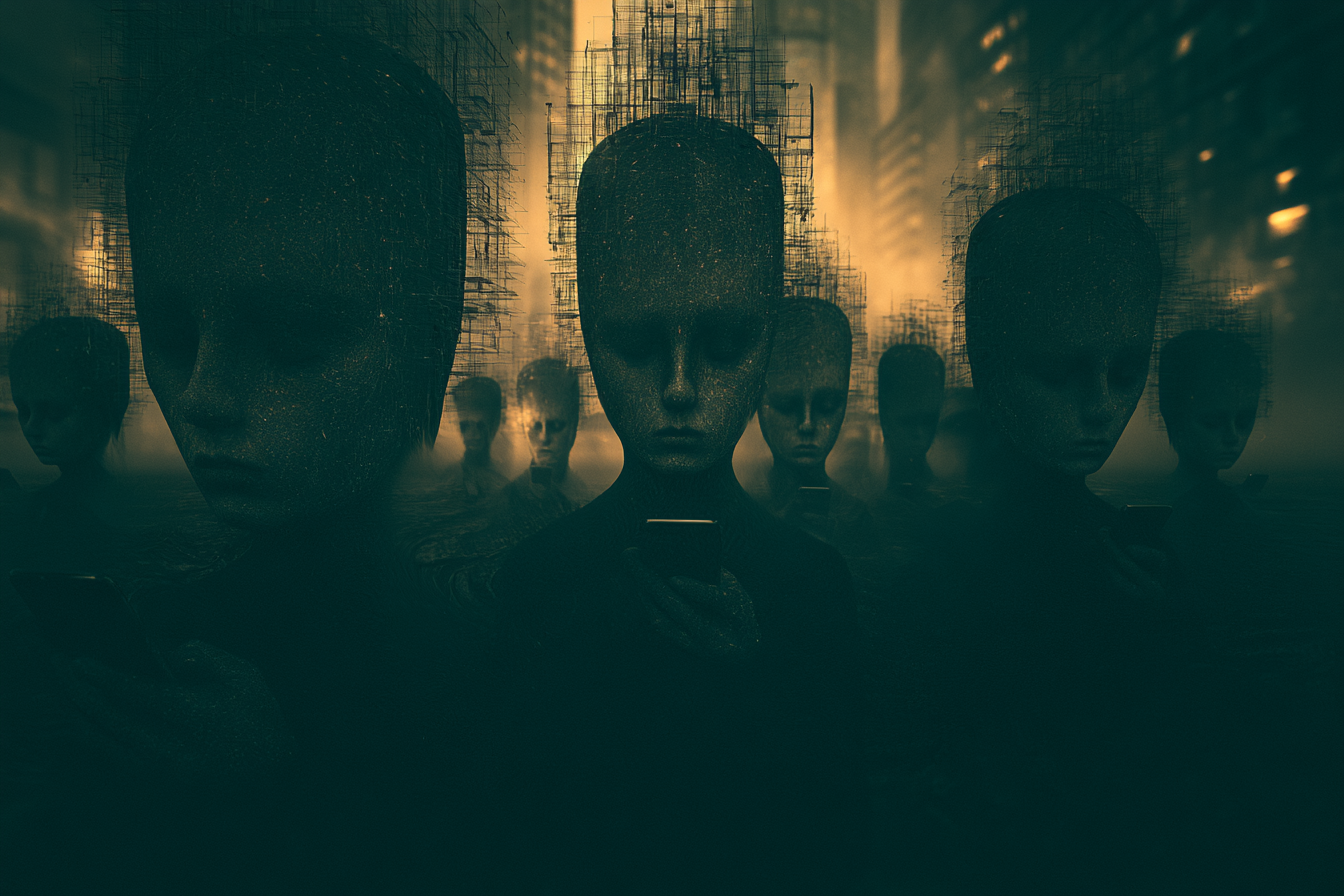
What the Network Cannot Save
Death would place a quieter pressure on the discovery. If every mind contributes to a common field, people would ask whether something of the person remains after the brain is gone.
The first answer would disappoint anyone seeking proof of survival. The network does not preserve a self. It retains no complete childhood, no private voice, no continuous observer. It carries reinforced structures stripped of the biography that gave them meaning.
A parent’s way of calming fear might continue through children, patients, stories and the field patterns repeated across a lifetime. An artist might strengthen a form that later appears in people who never encountered the work. A community’s trauma might persist as a pressure long after names and dates fade.
Something remains, but not necessarily someone.
This would make remembrance feel more consequential and less comforting. Humanity would not be surrounded by intact ancestors waiting beneath consciousness. It would be living inside patterns the dead helped deepen, including patterns they never intended to leave behind.
The ethical question would shift from whether we survive in the network to what our repeated attention teaches it to preserve.
The Network We Already Enter Each Morning
Then the speculative layer recedes. There is no confirmed field connecting minds beyond known sensory, biological or technological channels. Jung’s collective unconscious remains a psychological theory, not a discovered communications system. Brain synchrony appears when people speak, interact or attend to the same stimulus. Experimental brain-to-brain interfaces require electrodes, computers, networks and stimulation equipment.
The ordinary world is already less private than it first appeared.
Language places structures in minds. Stories coordinate prediction. Ritual aligns bodies. Institutions decide which symbols receive repetition. A phone can place the same emotionally charged image before millions of people in an hour, then measure which version they carry onward. No hidden physical field is required for a civilization to develop shared fear, memory or desire.
That is what the thought experiment changes even if its premise is rejected. The sealed individual was always an incomplete picture. We are formed by inherited bodies, borrowed words, repeated images and other people’s attention. Every private thought is assembled inside a history the thinker did not create.
The lights rise in the theater. People gather their coats and leave through different doors, each returning to a separate life. For two hours, the same story guided their attention, altered their breathing and brought related patterns through hundreds of brains.
No invisible network had to carry it.
The story was enough.
More in SPEC
What If Dreams Are Not Private?
A SPEC about dreaming as possible access to shared symbolic terrain, where the boundaries of the sleeping self become less certain.
What If First Contact Happens Inside the Mind?
An exploration of contact arriving through synchronized inner experience rather than public signals, forcing humanity to develop new standards for evidence and consent.
The Day the Mind Lights Up
A future-facing scenario in which humanity receives a shared telepathic message and must decide whether collective communication can coexist with interior sovereignty.
Sources / Receipts
These sources establish Jung’s concept, measurable neural synchrony and technologically mediated brain-to-brain communication.
- American Psychological Association — Collective Unconscious defines Jung’s concept as a shared, inherited layer expressed through archetypes, myths, religion and dreams. It does not describe a scientifically verified communications network.
- C. G. Jung — The Archetypes and the Collective Unconscious collects Jung’s central essays establishing and developing the collective unconscious and archetypes. The book is a primary source for Jung’s theory, not empirical confirmation of the SPEC’s mechanism.
- Stephens, Silbert and Hasson — Speaker–Listener Neural Coupling Underlies Successful Communication found that speaker and listener brain activity became coupled during successful verbal communication. The coupling depended on communication and diminished when comprehension failed.
- Kinreich and colleagues — Brain-to-Brain Synchrony During Naturalistic Social Interactions reports measurable neural synchrony during natural social interaction. It concerns interacting people, not nonlocal information transfer.
- Poulsen and colleagues — EEG in the Classroom: Synchronised Neural Recordings During Video Presentation measured inter-subject correlations while students watched a common video stimulus, illustrating how shared input can align neural responses.
- Jiang and colleagues — BrainNet: A Multi-Person Brain-to-Brain Interface demonstrated limited collaborative information transfer using EEG, computers, the internet and transcranial magnetic stimulation. It shows that an engineered brain network is possible while also clarifying how much equipment real information transfer currently requires.


Discussion