
Overview
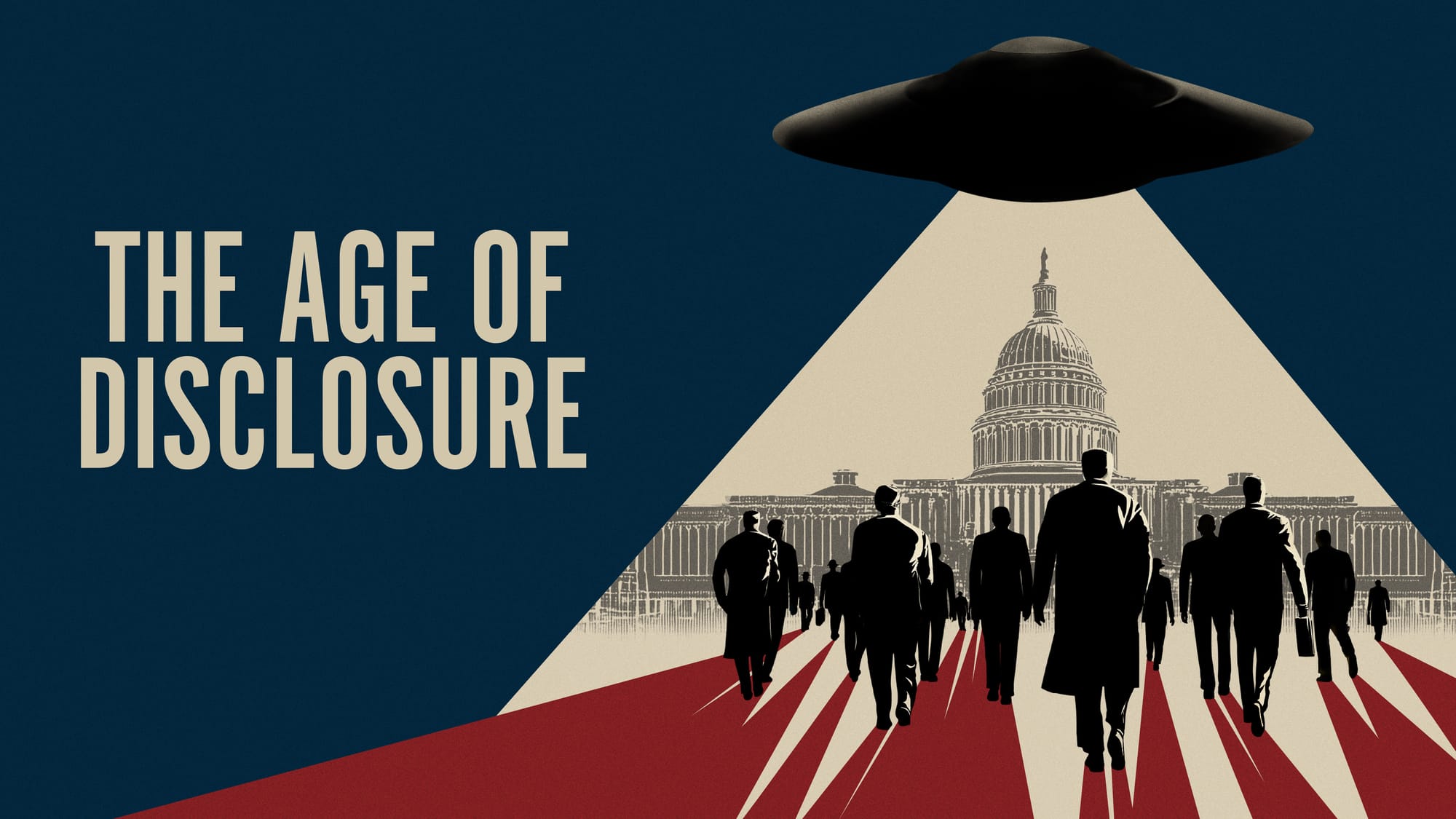
Dan Farah is a producer and manager whose significance in this space comes from one specific move: he took UAP disclosure claims and packaged them as a mainstream documentary event. SXSW described The Age of Disclosure as an unprecedented film featuring 34 senior members of the U.S. Senate, House, military, and intelligence community, while the film’s official site says it reveals an 80-year cover-up of non-human intelligent life and is now available globally on Prime Video.
What makes Farah matter is that he is not primarily a whistleblower, scientist, or former official. He is a media builder. That changes the nature of his influence. His role is not to originate the claims, but to decide how they are framed, who presents them, and how they are introduced to a wider public that might never read hearings, white papers, or niche UAP reporting on its own. This is an inference from his producer role and the structure of the film he made.
Origins and Background
Farah came into the disclosure conversation from mainstream entertainment, not from ufology. SXSW’s 2018 announcement for Ready Player One lists him as one of the film’s producers alongside Steven Spielberg, Donald De Line, and Kristie Macosko Krieger, showing that his professional footing was already established inside major studio filmmaking before his UAP work became public.
That matters because The Age of Disclosure was not the work of someone trying to enter Hollywood through UFO culture. It was the work of someone already fluent in Hollywood packaging, rollout, and scale. SXSW’s contributor page described The Age of Disclosure as Farah’s debut film as a director, following a prolific producing career that included Warner Bros. projects, while later press and industry coverage consistently referenced him as the Ready Player One producer.
Farah’s broader career also shows a pattern of trying to convert speculative or future-facing concepts into commercial platforms. In 2024, SXSW and PR Newswire reported that he co-founded Readyverse Studios with Ernest Cline and Futureverse executives to build metaverse experiences around major IP, which suggests a producer interested not just in films, but in large interpretive ecosystems.
What It’s Known For
Farah is known, first, for producing large-scale entertainment like Ready Player One, which placed him inside prestige studio filmmaking before his disclosure work became prominent.
He is known, second, for directing and producing The Age of Disclosure, which SXSW and the film’s official site describe as built around testimony from 34 U.S. government, military, and intelligence insiders and around claims of a long-running cover-up involving non-human intelligence.
He is known, third, for treating disclosure as an ongoing media lane rather than a one-off documentary. In 2024, Deadline reported that Farah Films acquired rights to Jay Stratton’s UAP memoir, which suggests Farah’s interest in building a larger body of disclosure-related storytelling beyond a single film.
What makes him distinct is that he operates as a legitimacy broker. He does not stand at the center of the mystery as a firsthand witness. He stands at the center of the presentation, gathering officials, shaping tone, and giving extraordinary claims a format that feels high-status and institution-adjacent. That is a very specific kind of influence.
The Core Idea
The deeper signal behind Dan Farah is that he represents the moment when disclosure stopped being only a subculture and became a prestige-media product.
That is the real shift. A subject once pushed largely by witnesses, retired officials, independent researchers, and niche documentaries is now being handled through festival premieres, polished trailers, mainstream distribution, and a consciously serious cinematic frame. SXSW gave The Age of Disclosure a high-visibility world premiere slot, and the film’s own site presents it not as fringe entertainment but as a major revelation arriving in sync with bipartisan hearings and the proposed UAP Disclosure Act.
Farah therefore represents something larger than one movie. He represents a new stage in reality-perception politics, where the battle is not only over what is true, but over which package of truth feels respectable enough for mass audiences to engage. This is an inference from the way his film is positioned and received.

Perspectives and Interpretations
Supporters are likely to see Farah as one of the most important bridge figures in the modern disclosure era because he gathered a large number of credentialed insiders into one polished film and gave the subject a level of seriousness that many earlier UFO documentaries lacked. Indiewire’s SXSW coverage described first-time documentarian Farah as determined to convince audiences that Pentagon UFO sightings are a bipartisan issue, and the official film site frames the project as an unprecedented insider-driven account.
A second supportive reading is that Farah’s mainstream entertainment background is exactly what makes him useful here. Because he comes from outside traditional UFO media, supporters can argue that he brings stronger production standards, better access, and a clearer understanding of how to move a difficult subject into the public mainstream. That is an inference from his producing career and the way The Age of Disclosure has been positioned.
Critics see a different pattern. The Hollywood Reporter’s review called The Age of Disclosure a polished documentary that legitimizes unverifiable theories about UFOs, while Variety’s review framed it as a film full of U.S. officials alleging a deep-state conspiracy. Those critiques do not deny that the film is professionally made. They question whether professional packaging is being used to confer authority on claims that remain unproven in the public evidentiary record.
A more neutral reading lands somewhere in the middle. Farah may not prove the disclosure thesis, but he undeniably changes the cultural status of the conversation. He makes it harder to dismiss the subject as purely fringe, even if he does not settle the truth claims at its center. That may be his most durable influence. This is an inference from the film’s reception and rollout.
Strengths and Limitations
Farah’s biggest strength is strategic framing. He understands how to build an event, how to attach a subject to credible faces, and how to make a difficult theme feel urgent without looking chaotic. The official film materials and SXSW positioning both show this clearly.
A second strength is access. The Age of Disclosure did not rely on one or two marginal personalities. It assembled a large cast of current and former figures from government, military, and intelligence contexts, which gave the project an immediate aura of seriousness and institutional nearness.
The limitation is just as clear. Farah’s authority is mostly presentational, not evidentiary. A polished film with many insiders can raise the stakes of a conversation, but it does not automatically convert testimony into independently verified proof. That is exactly why the strongest criticism of the film has focused on its ability to make unverifiable claims feel newly credible.
There is also a structural limitation in the medium itself. Documentary can feel like adjudication even when it is mainly arrangement. Editing, score, sequencing, and witness selection all shape what feels true before the audience has a chance to test anything. That is not unique to Farah, but in a dossier about him it is central, because his influence lives in this layer of mediated seriousness. This is an inference from the nature of his role as producer-director.
Broader Implications
Dan Farah matters because he shows how disclosure is evolving from a claims ecosystem into a content ecosystem.
That shift matters. Once a subject enters festival circuits, streaming platforms, rights acquisitions, and sequel-adjacent media pipelines, it stops being only a debate over facts. It becomes an industry of framing. Farah’s work on The Age of Disclosure and the later acquisition of Jay Stratton’s memoir rights both point in that direction.
He also matters because he embodies a new type of gatekeeper. In older media systems, the main gatekeepers were studios, networks, publishers, and government spokespeople. In this newer system, a producer with mainstream credibility can gather elite voices, build a prestige package, and effectively create a new reality lane for public attention. That does not settle the claims, but it changes who is listening and how they listen. This is an inference from his role and track record.
For The Galactic Mind, the bigger significance is clear: Farah is not important because he discovered the phenomenon. He is important because he helps decide what disclosure looks like when it tries to become culturally respectable. In that sense, he is not just a producer of a film. He is a producer of tone.
The Galactic Mind Perspective
Dan Farah is worth studying as a media architect, not as a final authority on the phenomenon itself.
That is the cleanest read. His value lies in showing how extraordinary claims migrate from hearings, rumors, and insider conversations into a polished public object designed to change the center of gravity of the debate. He is part of the machinery that makes some questions feel newly serious.
The disciplined caution is that prestige can be mistaken for proof. Farah’s significance is real, but it is the significance of framing, access, and packaging. He has helped build one of the most visible disclosure artifacts of the current era. That is not the same as having resolved what the artifact argues.
Open Thread
If Dan Farah’s real power is not that he knows the final truth, but that he knows how to make a version of the truth feel institutionally serious, then what matters more in modern disclosure: the evidence itself, or the package that teaches the public how to receive it?
Sources / Receipts
- Official The Age of Disclosure film page.
- SXSW 2025 film lineup and project descriptions.
- SXSW contributor listing for Dan Farah.
- SXSW 2018 Ready Player One announcement.
- SXSW 2024 Readyverse session announcement.
- PR Newswire announcement for Readyverse Studios.
- Deadline report on Jay Stratton memoir rights acquisition.
- The Hollywood Reporter and Variety review coverage of The Age of Disclosure.
- Indiewire SXSW coverage.
What do you think? Drop your thoughts in the comments


Discussion