
You wake to a message that does not fit inside a phone. It is a coordinated disclosure, measured, simple, and impossible to ignore. Not fireworks, not panic, just a clear statement from beyond the familiar: We are here.
For a moment the air feels lighter, like the world has been holding its breath for a very long time. Then a second feeling arrives, quieter and heavier. If this is true, what else changes with it.
By noon, pulpits, podcasts, and kitchen tables hum with the same conversation. What happens to sacred stories when the cosmos introduces new characters, and what happens to our ethics when the circle of neighbors expands beyond our species.
The day ends, and it is not the end of anything. It feels like the first page of a chapter we sensed but could not name.
The premise
What if acknowledged NHI does not erase religion, it reframes it. Traditions would not vanish, they would shift their center of gravity from exclusivity toward scale, from single stage histories to layered ones. The question becomes less about whether God exists, and more about how revelation travels in a vast, inhabited universe, how many ways a moral law can be learned, and whether love has already been practiced somewhere else.
There are real world hooks that make this less abstract. Theologians and philosophers have long debated life beyond Earth. Faith leaders have said that other intelligences would not cancel a Creator, they might widen creation. Psych studies suggest that contact beliefs correlate with awe and with prosocial behavior when fear is low. None of this decides the outcome, it does hint that our deepest frameworks are elastic.
How this could unfold
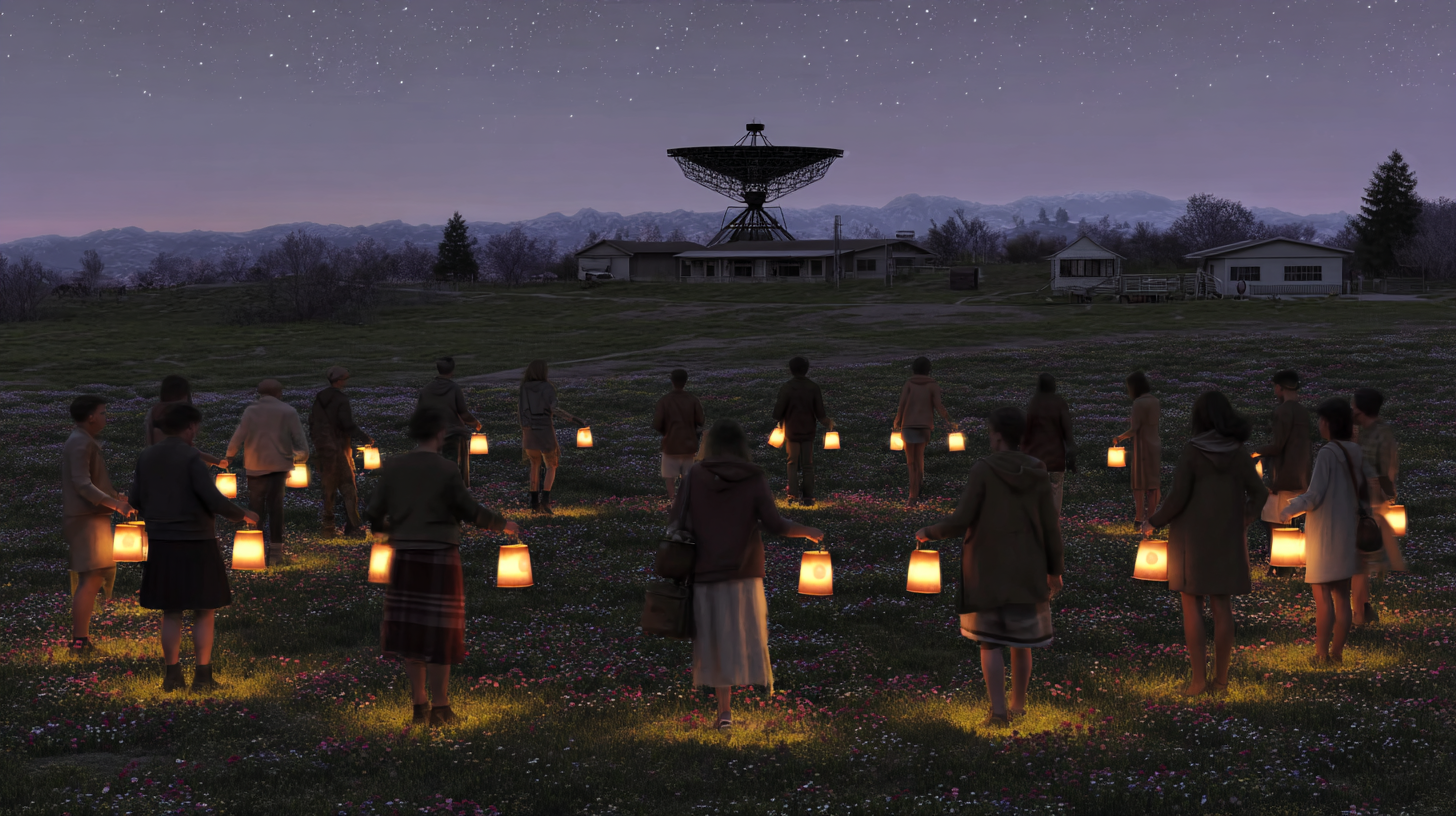
Week one is language. Faith communities rush to translate the announcement into their terms without losing what makes it new. Sermons compare angels and messengers to neighbors from far away. Skeptics in the same pew approve of the metaphors, even if they still prefer radio to revelation. The first Sunday after contact feels like a town hall where no one is ready to vote.
Month one is practice. Congregations begin small experiments that feel oddly practical. Prayer lists add unknown beings, not as idols, as subjects of care. Fasting and charity drives shift toward Earth stewardship, framed as table manners in a galactic house. Youth groups hold joint nights with science clubs. The mood is awkward, hopeful, and very human.
Year one is ethics. Lawmakers and elders draft a simple covenant that treats biospheres as sacred commons. Killing becomes more expensive, not because aliens said so, because values finally meet scale. The idea of stewardship leaves the margins and sits at the main table. Repentance becomes a civic habit, built into how we govern forests, rivers, and code.
A branch worth noting: if NHI offer verifiable history, even a few episodes, some literal readings will soften. Many believers will relocate certainty from timelines to principles, from how to when and who to how to be.
Signals in the real world
You can already see rehearsal lines for this shift. Faith institutions fund dialogue with scientists. Seminaries teach astrobiology modules and interfaith ethics for an inhabited cosmos. Environmental movements borrow language from stewardship and Sabbath rest. Popular culture keeps blending cosmic scale with moral questions, which is a kind of warm up.
Signals to watch:
- Clergy and community leaders building practical guidance around humility, consent, and nonviolence that does not depend on a single origin story
- Grassroots coalitions that pair spiritual practice with measurable ecological repair
- Philosophers and jurists drafting personhood frameworks for nonhuman minds, including animals and synthetic agents
- Education pilots that teach awe literacy and moral reasoning alongside basic astronomy
If love is real, it should scale. If truth is real, it should survive the sky opening.
If this is even half true
Values would shift from possession to relationship. The meaningful question would not be which creed won, it would be how well we listen and how gently we act while we learn. The idea of chosen people might evolve into chosen responsibilities, chosen repair.
Religions with strong ethical cores would find new reach. Justice, hospitality, mercy, care for the stranger, these become interspecies tools. Ritual would not disappear, it would deepen by adding witnesses. A harvest blessing spoken to the field might also be spoken to the wider community of minds who depend on our restraint.
Science would not replace devotion, it would measure it. We would have numbers for the health of watersheds and cities and minds, then ask whether our practices, sacred and secular, actually help life to thrive. If they do, we keep them. If they do not, we change. Faith becomes less about defending a wall, more about tending a garden that faces the stars.
There will be loss. Some certainties will fade, some identities will feel unmoored. Yet a gift sits inside the ache. We are not the first to wrestle with meaning. Somewhere, someone already learned how to tell the truth without domination, how to wield power without harm. If contact shows even a fragment of that, our stories do not shrink, they inherit.
Closing
Maybe NHI arrive like neighbors, maybe they remain silhouettes at the edge of our understanding. Either way the mirror is up. What do we believe about dignity when no one is watching, and what will we believe when everyone is.
Tonight, if the sky is clear, step outside and ask the older question behind every new one. Who are we, and what kind of people do we want to be when someone else finally hears our answer.


