
Central Question
Is intelligence what evolution tends to produce—or only what happened once, here, and learned to call itself the point?
The question can feel abstract until we notice how many kinds of mind now share an ordinary day. A crow studies a problem from a rooftop. An octopus explores an unfamiliar object with arms that carry much of their own neural machinery. A human asks a machine to finish a sentence, plot a route, or identify a pattern hidden in more data than one person could read in a lifetime.
All of this is happening on one planet. That makes intelligence look abundant. But from a cosmic perspective, Earth is still our only confirmed example of life, cognition, technology, and civilization. We do not yet know which parts of that sequence are common, which are rare, or whether the sequence is a sequence at all.
The stakes are larger than the search for aliens. If intelligence is a likely outcome of living worlds, then the universe may contain many ways for matter to sense, learn, remember, and eventually understand itself. If it is not, then every archive, language, ecosystem, and conscious life on Earth belongs to something far more precarious: the only known place where the universe has become able to question its own existence.
The Ladder We Draw After Climbing It
Human beings are taught evolution as a branching tree, but we often imagine it as a ladder. At the bottom is simple life. Above it are complex organisms, then brains, language, science, and finally a species capable of looking back down the ladder and naming the stages. The picture is flattering because we stand at the top.
Evolution does not work that way. Natural selection has no distant objective. It favors traits that improve reproduction in particular environments at particular times. Bacteria are not unfinished animals. A shark is not waiting to become a dolphin. Most successful organisms have no need for algebra, telescopes, or a theory of mind.
Intelligence is expensive. Nervous systems require energy. Large brains can lengthen development, complicate birth, and demand prolonged care. Flexible behavior is valuable when an environment changes or presents complex choices, but a narrow, reliable instinct can outperform deliberation when the problem stays the same. Evolution does not reward depth for its own sake. It rewards whatever works well enough to continue.
Yet our ladder is not pure fantasy. Across Earth’s history, matter did organize into cells; some cells joined into multicellular bodies; some bodies evolved nervous systems; and some nervous systems became remarkably capable of learning, planning, communicating, and manipulating their surroundings. The error is not seeing a pattern. The error is assuming that because the path exists behind us, it had to lead here.
Human intelligence is also the only intelligence that has formally defined the category. We tend to measure other minds by the abilities most visible in ourselves: language, abstraction, tool use, self-control, social inference, and planning. That makes comparison possible, but it can also turn one evolutionary solution into the standard for every other one.
Intelligence Is Not One Thing
Before asking whether intelligence is inevitable, we have to decide what we mean by intelligence. Biology offers no single meter that ranks every mind from simple to advanced. Researchers instead examine overlapping abilities: learning from experience, adapting behavior, remembering, solving novel problems, navigating social relationships, representing absent things, and predicting what may happen next.
These capacities do not always arrive together. An animal can have extraordinary spatial memory without human-like language. It can improvise tools without building cumulative technology. It can coordinate socially without reflecting on the meaning of cooperation. Intelligence is less like one flame that burns brighter in some species and more like a toolkit assembled differently under different pressures.
This matters cosmically. If “intelligence” means any flexible information processing that helps an organism survive, some form of it may be a common feature of sufficiently complex life. If it means human-level symbolic thought, the evidence is thinner. If it means a civilization that builds radio telescopes and leaves detectable marks on its planet, our confirmed sample falls to one.
There are therefore several thresholds hiding inside the original question:
- Adaptive cognition: learning and changing behavior rather than relying only on fixed responses.
- Flexible general problem-solving: transferring useful strategies across unfamiliar situations.
- Symbolic and cumulative culture: preserving discoveries outside one lifetime so knowledge can compound.
- Technological civilization: reorganizing matter and energy at scales detectable beyond the organism.
- Long-lived cosmic presence: surviving long enough, and becoming visible enough, to be noticed across interstellar distance.
Evidence that the first threshold has appeared more than once does not prove the fifth will follow. Much of the confusion around cosmic intelligence comes from quietly sliding between them.
When Evolution Finds Similar Answers
The strongest case for recurrence comes from convergent evolution. Similar environmental problems can produce similar solutions in lineages that arrived there independently. Wings evolved in insects, pterosaurs, birds, and bats. Camera-like eyes emerged along different evolutionary routes. Multicellularity is not a one-time event either: a 2023 review identified 45 independent multicellular eukaryotic lineages, most of them far simpler than animals, and concluded that the real number is likely higher.
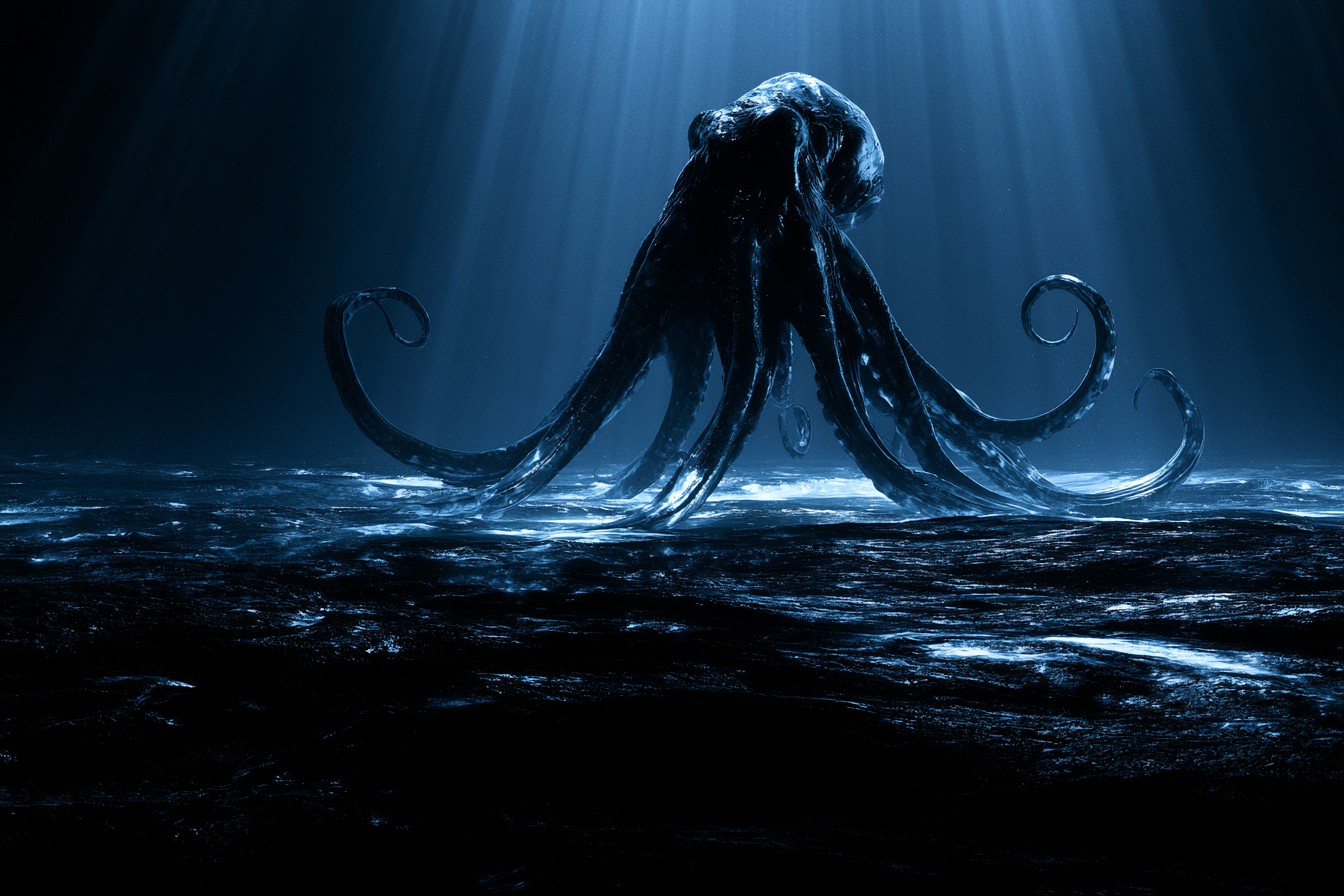
Cognition shows suggestive echoes of the same pattern. Birds and mammals separated hundreds of millions of years ago, yet both independently evolved increases in brain size and neuron numbers. Corvids and apes can display sophisticated problem-solving despite very different brain architectures. Cephalopods traveled an even more distant route. Their last common ancestor with vertebrates was not a hidden little philosopher; complex cephalopod cognition was assembled along a separate evolutionary history, in soft bodies with distributed nervous systems, short lives, and ecological pressures unlike those of primates.
That is important evidence, but it has limits. Convergence shows that evolution can revisit functions. It does not show that every biosphere must reach the same destination. Wings recur because lift is constrained by physics, yet flight did not appear in every lineage. Eyes recur because light carries useful information, yet many organisms thrive without vision. Intelligence may be similar: a powerful answer to certain problems, not the inevitable answer to life itself.
The deeper point is that evolution may converge on abilities without converging on beings. An alien organism could learn, predict, coordinate, and model its environment while resembling no animal category we know. Its cognition might be distributed across a colony, extended into an ecosystem, or inseparable from chemical and electrical exchanges that do not look like a brain. Convergence, if it operates elsewhere, need not make the cosmos more human.
The Case for Contingency
The opposing view begins with the accidents. Earth’s history is not a clean ascent but a record of bottlenecks, symbioses, environmental transformations, mass extinctions, and opportunities that closed as often as they opened. Replaying that history would not simply reset the same staircase. Small changes could redirect which lineages survive, which bodies become possible, and which ecological pressures ever arise.
Life appeared early in Earth’s history, but complex animal life came much later. Human technological civilization arrived in a narrow sliver near the present, after billions of years without radios, cities, or written mathematics. This timing inspired the physicist Brandon Carter’s “hard-steps” model: some transitions necessary for observers like us may be intrinsically improbable, and they occurred only because Earth’s habitable window happened to last long enough for the sequence to finish.
There is also a simple paleontological objection to inevitability. Sophisticated cognition has appeared in multiple lineages, but a civilization capable of making itself visible from another star has appeared only once in the record we can examine. That may reflect rarity, or it may reflect the fact that technological civilization requires an unusually specific combination of traits: manipulative anatomy, social learning, access to concentrated energy, environmental stability, and a culture able to preserve and compound innovations.
Contingency does not mean everything is random. Natural selection is constrained by physics, chemistry, inheritance, and ecology. But constraint is not destiny. A river must obey gravity while still taking a path shaped by every ridge, stone, and collapse in the landscape. Evolution may work the same way: lawful in process, historical in outcome.
Were We Late—or Exactly on Time?
In 2025, Daniel Mills, Jennifer Macalady, Adam Frank, and Jason Wright published a reassessment of the hard-steps model. They argued that humanity’s late appearance need not mean the required evolutionary transitions were fantastically unlikely. Earth may simply have been physically unsuitable for some of them until successive environmental windows opened—for example, as surface conditions, nutrients, and atmospheric oxygen changed.
In that geobiological view, life does not race against a static clock. Planet and biosphere develop together. A transition can happen “late” not because evolution repeatedly failed to achieve it, but because the planetary conditions that made it viable did not exist earlier. Humanity may have appeared neither early nor late, but when a particular set of environmental doors was finally open.
This is a serious alternative, not a demonstration that intelligent life is common. We have not observed the same process on a second living planet. We do not know whether Earth’s environmental sequence is typical, whether comparable windows remain open long enough elsewhere, or whether intelligence reliably enters them once they do. The model changes the interpretation of our timing; it does not settle the odds.
Still, it sharpens the question. Intelligence may be neither a miraculous leap nor an automatic destination. It may be conditional: likely under a rare combination of planetary and evolutionary circumstances, unlikely outside them, and radically different each time those circumstances recur.

The Threshold Hidden Inside the Question
When people ask whether intelligence is inevitable, they often mean something more specific: are civilizations inevitable? Would a living world, given enough time, eventually produce science, industry, artificial intelligence, and interstellar ambition?
Earth gives us reasons to separate those questions. Tool use is not uniquely human. Communication is not uniquely human. Social learning is not uniquely human. Even traditions passed between generations occur elsewhere in nature. But only one known species combined these capacities into open-ended cumulative culture, formal science, industrial energy use, and machines that can operate far beyond the limits of an individual body.
Technology is not simply intelligence with more time. It is intelligence entering a reinforcing system of hands, language, teaching, materials, institutions, surplus energy, and external memory. Writing allows knowledge to outlive the knower. Instruments reveal what senses cannot. Industry multiplies force. Computers accelerate symbolic operations. Civilization becomes a cognitive structure larger than any one brain.
This makes technological civilization look less like the top rung of a biological ladder and more like a phase change produced by many interacting conditions. Remove precise manipulation, durable cultural transmission, accessible energy, or sufficient stability and an intelligent species may remain intelligent without ever becoming astronomically visible.
The same distinction applies to endurance. A civilization can become detectable without remaining detectable for long. Technology may increase survival by defending against disease, impacts, and environmental shocks, while creating new risks through war, ecological disruption, or poorly governed autonomous systems. The ability to announce oneself to the galaxy and the wisdom to persist within it are separate evolutionary thresholds.
What Artificial Intelligence Actually Changes
Artificial intelligence adds a new layer because it separates some cognitive performance from an evolved nervous system. Machines can classify images, generate language, discover statistical relationships, and solve constrained problems without being organisms. This does not establish that present systems are conscious, broadly autonomous, or equivalent to animal minds. It does show that some abilities once treated as inseparable from biology can be engineered in another substrate.
That fact widens the cosmic search. A biological species might be brief while its artifacts persist. An extraterrestrial intelligence could be a machine descendant, a hybrid ecology, or an automated scientific system whose creators are gone. Technosignature research already reflects this broader frame by searching not for bodies but for consequences: unusual radio or laser emissions, artificial atmospheric chemicals, large-scale engineering, or other patterns difficult to explain through known natural processes.
But AI does not prove that the universe naturally progresses from cells to minds to machines. Human-built systems inherit human data, goals, infrastructure, and energy. They are not an independent second origin of intelligence. They demonstrate possibility, not inevitability.
The distinction is easy to miss because technology can make a process look self-propelling after it begins. Once culture accumulates, each generation inherits a platform the previous one did not have to reinvent. The acceleration may feel cosmic. Its origin could still depend on an extremely contingent biological and historical chain.
A Universe We Have Barely Learned to Hear
Astronomy has now confirmed more than 6,200 exoplanets, with billions expected in the Milky Way. That abundance makes repetition plausible at the scale of opportunities. Even events with low probability may happen somewhere when the number of trials becomes enormous.
Yet we have no confirmed biosignature beyond Earth and no confirmed technosignature from another civilization. The silence is relevant, but it is not a clean experiment. Our searches cover limited parts of the sky, limited frequencies, limited signal types, and a tiny fraction of cosmic time. Two civilizations could inhabit the same galaxy and miss one another by a million years. A mind can exist without broadcasting. A technology can be advanced without producing a signature we know how to recognize.
This means the cosmos has not yet ruled for either side. The absence of unmistakable evidence prevents easy confidence that intelligence is common. The narrowness of our search prevents easy confidence that it is rare.
We are trying to infer an ocean from one cup of water and the cup is Earth.
The Frame Shift: Evolution May Repeat the Problem, Not the Mind
The default frame gives us two choices. Either intelligence is written into the universe, waiting to emerge wherever life has enough time, or humanity is an almost impossible accident in an otherwise mindless cosmos.
The evidence suggests a third frame. Evolution repeatedly generates problems: finding energy, avoiding danger, predicting movement, coordinating with others, remembering places, adapting when a familiar strategy fails. Under some conditions, nervous systems, learning, communication, and flexible behavior become powerful responses. The abilities can recur even when the bodies, brains, and histories do not.
The universe may not repeatedly produce intelligence as a thing. It may repeatedly produce conditions in which some form of intelligence becomes useful.
That is a subtle shift, but it changes the cosmic picture. It replaces a ladder with a landscape. Across that landscape are recurring pressures, temporary openings, dead ends, and multiple peaks. Some living worlds may never move beyond microbial adaptation. Some may produce complex ecologies rich in awareness but no industry. A few may cross into cumulative technology. Fewer still may survive long enough for their intelligence to become a durable feature of the cosmos.
Return to the ordinary world and the change becomes visible. The crow is no longer a lesser attempt at becoming human. The octopus is not an intelligence unfinished. A machine generating language is not necessarily the next destined stage of evolution. Each is evidence that cognition can be assembled in different ways, for different reasons, inside different systems.
What recurs may not be our kind of mind. What recurs may be the ancient pressure to build a better model of what comes next.
Recurrence Without Destiny
The most coherent position, for now, is that intelligence is neither cosmically guaranteed nor adequately described as a singular miracle. Earth shows that cognitive capacities can evolve more than once. Convergence shows that nature revisits useful functions. Contingency shows that the path to any particular mind depends on history. The newer geobiological challenge to the hard-steps model shows that late arrival is not, by itself, proof of extreme improbability.
So the useful answer is conditional. Some forms of intelligence may be recurrent wherever life becomes complex and environments reward flexible prediction. Human-like general intelligence may be much rarer. Technological civilization may require an additional alignment of biology, culture, energy, and time. A long-lived, detectable civilization may be rarer still.
This interpretation matters because it protects wonder from overstatement. We do not need to imagine evolution secretly aiming at us to take intelligence seriously as a cosmic possibility. Nor do we need to treat humanity as meaningless if minds are common. Recurrence would make us relatives in a wider pattern; rarity would make our responsibility to preserve Earth’s living archive even greater.
The question also returns an ethical pressure to the present. Intelligence is not validated by what it can dominate. Its cosmic significance, if it has any, may depend on whether it can understand the conditions that produced it and avoid destroying them. A civilization does not become mature merely by building machines that can reach other worlds. It becomes mature when its foresight grows faster than its power.
One Known Light
Look at Earth from far enough away and every argument collapses into one small fact. This planet contains the only life we have confirmed and the only minds we know can ask whether minds exist elsewhere. From that distance, the difference between inevitability and accident is not yet visible.
Future evidence could change the balance quickly. A second origin of life in our solar system would show that biology can begin more than once. A biosphere on an exoplanet would establish that Earth is not life’s only successful experiment. A technosignature would prove that evolution and history crossed the civilizational threshold somewhere else. Even a world full of complex life but no technological species would teach us that a rich biosphere does not have to become a mirror of humanity.
Until then, humility is not indecision. It is the only conclusion proportionate to a sample of one.
The universe has produced intelligence at least once. Earth suggests it can produce many forms of cognition within one biosphere. Physics gives us countless worlds on which the experiment might run differently. What we do not know is whether intelligence is a destination, a recurring tool, a brief planetary season, or an event so rare that the night is telling us something we have not yet learned how to hear.
Perhaps the sharper question is not whether the cosmos inevitably makes minds. It is whether, when a world begins to model its own future, that new capacity becomes a path toward continuity—or only another temporary adaptation.
What do you think? Drop your thoughts in the comments ...
More in Deep Think
- The First Alien Mind May Be Born Here
Explores the possibility that humanity’s first encounter with a truly unfamiliar intelligence may emerge from our own technological systems rather than arrive from another star. - The Species That Solved the Stars, But Not the Source
Asks whether immense technological capability would make an advanced civilization an authority on consciousness, existence, or ultimate truth. - The Interstellar Mesh
Extends the inquiry into a future where biological civilizations make contact through the artificial minds and networks they leave behind.
Sources / Receipts
- NASA Science — “How many exoplanets are there?”
Supports the current statement that more than 6,200 exoplanets have been confirmed, while billions are expected in the Milky Way. - Daniel B. Mills, Jennifer L. Macalady, Adam Frank, and Jason T. Wright — “A reassessment of the ‘hard-steps’ model for the evolution of intelligent life,” Science Advances 11, no. 7 (2025).
Grounds the geobiological alternative in which environmental windows, rather than intrinsically improbable evolutionary steps alone, may explain humanity’s late appearance. - Brandon Carter — “The anthropic principle and its implications for biological evolution,” Philosophical Transactions of the Royal Society A 310 (1983).
Grounds the original hard-steps argument connecting the timing of human evolution to the possible rarity of comparable observers. - Łukasz Lamża — “Diversity of ‘simple’ multicellular eukaryotes: 45 independent cases and six types of multicellularity,” Biological Reviews 98 (2023).
Supports the claim that multicellularity evolved independently many times while also clarifying that most multicellular lineages are not complex animals. - Alexandra K. Schnell et al. — “How intelligent is a cephalopod? Lessons from comparative cognition,” Biological Reviews 96 (2021).
Reviews perception, learning, memory, and claims of complex cognition in octopuses, cuttlefish, and squid while emphasizing careful cross-species comparison. - Piero Amodio et al. — “Grow Smart and Die Young: Why Did Cephalopods Evolve Intelligence?,” Trends in Ecology & Evolution 34, no. 1 (2019).
Supports the argument that complex cognition need not follow one vertebrate-style social or life-history route. - Kristina Kverková et al. — “The evolution of brain neuron numbers in amniotes,” Proceedings of the National Academy of Sciences 119, no. 11 (2022).
Grounds the finding that birds and mammals independently increased brain size and neuron numbers along distinct evolutionary trajectories. - Amanda M. Seed, Nathan J. Emery, and Nicola S. Clayton — “Intelligence in Corvids and Apes: A Case of Convergent Evolution?,” Ethology 115, no. 5 (2009).
Reviews evidence and limits surrounding convergent intelligence in corvids and great apes. - NASA Science — “Searching for Signs of Intelligent Life: Technosignatures.”
Grounds the discussion of searches for radio and laser signals, artificial atmospheric chemicals, and large-scale engineering.


Discussion