
Some thinkers stand at the edge of the unknown.
Others drag the unknown into politics.
Jason Reza Jorjani sits in that more volatile territory.
He is a philosopher, author, and former university lecturer whose work moves through continental philosophy, technology, parapsychology, Iranian history, myth, UFOs, transhumanism, and the possibility that reality contains forces modern materialism has learned to dismiss.
That alone would place him near The Galactic Mind archive.
But Jorjani is not only a thinker of anomalies.
He is also a public controversy.
His name is tied to Arktos Media, AltRight.com, Richard Spencer, New Jersey Institute of Technology, a high-profile undercover recording, legal battles over free speech, and writings that critics identify as racially charged, extremist, or eugenic in implication. His own account frames his political activity differently: as an attempt to redirect right-wing movements away from white nationalism and toward a broader Indo-European / Iranian civilizational vision.
That is the tension.
Jorjani cannot be handled as a simple frontier philosopher.
He also cannot be reduced to a headline.
The signal is stranger than that.
His work asks whether modernity suppressed the spectral, whether technology is animated by mythic forces, whether anomalous phenomena should be taken as clues to a deeper structure of reality, and whether civilization is now entering a Promethean confrontation with the limits of the human.
But his career also shows what happens when myth, metaphysics, identity, power, and politics fuse too tightly.
A Dossier is not a monument.
It is a map of influence.
And in Jorjani’s case, the map has warning signs.

Overview
Jason Reza Jorjani is an American philosopher and author born in 1981 and raised in New York City. His official biography states that he studied at New York University, where he received a BA and MA, and completed a PhD in philosophy at Stony Brook University in 2013.
He has taught courses in philosophy, technology, comparative religion, ethics, the history of Iran, and related subjects. Arktos’ author page states that he taught Science, Technology, and Society, Heidegger, and the history of Iran as a full-time faculty member at the New Jersey Institute of Technology.
He is known for books including Prometheus and Atlas, World State of Emergency, Lovers of Sophia, Iranian Leviathan, Prometheism, Closer Encounters, Artemis Unveiled, Erosophia, and Metapolemos. His official site lists a much larger body of work and says Prometheus and Atlas won the 2016 Book Award of the Parapsychological Association.
The central theme running through much of his work is what he calls the spectral.
For Jorjani, the spectral is not merely “the paranormal” as entertainment.
It is a challenge to the modern picture of reality.
He argues that phenomena associated with ESP, psychokinesis, UFOs, mythic archetypes, technological destiny, and non-human or superhuman agency may point toward hidden dimensions of the real. His publisher describes Prometheus and Atlas as an attempt to challenge modern materialism by re-centering the “spectral” and arguing that psi is only treated as “paranormal” because modern scientific models have obscured what he calls “Supernature.”
That is why Jorjani belongs in this archive.
Not because his claims should be accepted.
Not because his politics should be laundered through mystery.
But because his work reveals a dangerous and important pattern:
When reality becomes unstable, myth returns.
And when myth returns without discipline, it can become philosophy, prophecy, conspiracy, or politics.
Sometimes all at once.

Origins and Background
Jorjani’s intellectual roots sit in philosophy, religion, technology, and the study of anomalous experience.
His official biography emphasizes New York, Persian heritage, formal philosophy training, and teaching in the greater New York and New Jersey academic world. It also foregrounds his descent from the Qajar dynasty of Iran through his father’s side, a detail that becomes important because Persian and Iranian civilizational identity later becomes a recurring theme in his work.
His first major book, Prometheus and Atlas, grew from academic work and became the foundation of his public intellectual identity. It attempts to merge continental philosophy, parapsychology, mythology, technology, and civilizational critique into a single framework. Arktos describes the book as a challenge to modern materialism and as a call to break down barriers between science, religion, politics, and art.
That synthesis is the key.
Jorjani does not write like a narrow academic philosopher.
He writes like a system-builder.
Prometheus.
Atlas.
Mithra.
Heidegger.
Nietzsche.
Parapsychology.
UFOs.
Transhumanism.
Iran.
Technology.
The Singularity.
The result is a body of work that often feels less like one argument and more like a mythic operating system.
This is part of the appeal.
It is also part of the danger.
In 2016 and 2017, Jorjani became associated with Arktos Media and AltRight.com. The Atlantic reported in January 2017 that Richard Spencer and Jorjani had bought the AltRight.com domain and were working to position themselves as intellectual leaders of the alt-right.
Jorjani’s own official biography describes his entry into that political space as an attempt to redirect rising right-wing movements away from white nationalism and European xenophobia. He says he became editor-in-chief of Arktos Media, founded the Alt-Right Corporation, and worked with Iranian Renaissance circles during that period.
The public record is not as clean as that self-description.
The Third Circuit’s 2025 opinion in Jorjani v. New Jersey Institute of Technology states that, while employed at NJIT, Jorjani formed the Alt Right Corporation and published an essay on AltRight.com containing racial and eugenic claims. The court also noted that he did not disclose those outside associations as required by NJIT policy.
That is where the story becomes not only philosophical, but institutional.
In 2017, an undercover recording of Jorjani became public through a New York Times opinion video. NJIT placed him on paid administrative leave, investigated, and later did not renew his contract. Jorjani sued, alleging retaliation for protected speech.
The legal story continued for years.
In September 2025, the Third Circuit reversed a district court judgment against him, holding that NJIT had not shown sufficient disruption to outweigh his First Amendment interest in off-campus speech.
Then, on remand, a federal judge dismissed the lawsuit with prejudice in April 2026, with legal reporting describing the ruling as based on qualified immunity for university officials.
That means Jorjani’s public story has several layers at once:
A philosopher of the spectral.
A writer of mythic-technological systems.
A controversial figure associated with alt-right infrastructure.
A former lecturer whose case became part of a broader academic freedom and public-employee speech debate.
A thinker whose work sits at the unstable boundary between reality inquiry and ideological danger.
What He’s Known For
Jorjani is known for a set of overlapping signals.
The Spectral
His central philosophical signature is the spectral: the idea that anomalous phenomena, mythic presences, psi effects, UFOs, and strange encounters may reveal something about the structure of reality that modern rationalism has prematurely dismissed.
In Prometheus and Atlas, this becomes a critique of reductive materialism. The publisher’s description says the book rejects the marginalization of ESP and psychokinesis as merely “paranormal” and frames these phenomena as part of a larger suppressed “Supernature.”
This is the part of Jorjani most relevant to The Galactic Mind.
He is trying to turn high strangeness into philosophy.
Not just reports.
Not just belief.
A worldview.
Prometheism
Jorjani’s later work develops what he calls Prometheism.
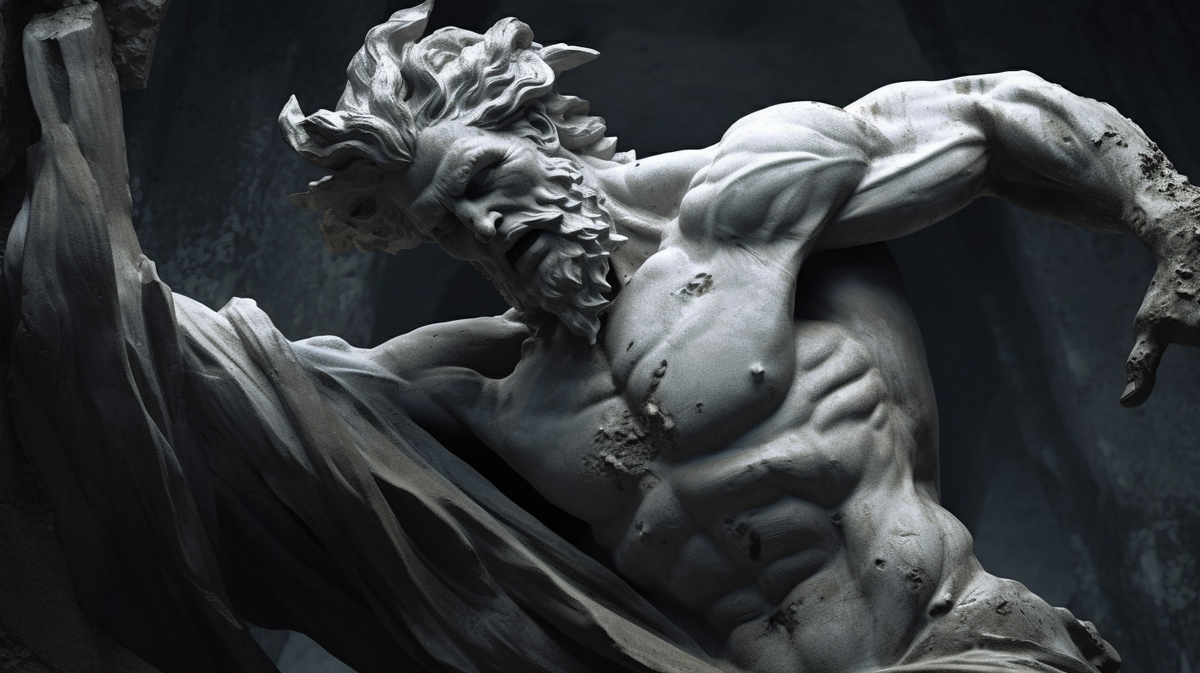
At its core, Prometheism is built around the mythic figure of Prometheus: the rebel, fire-bringer, technologist, liberator, trickster, and challenger of divine authority.
A New Thinking Allowed page summarizing a Jorjani interview describes his account of Prometheus as creator, rebel, trickster, martyr, wise titan, visionary, and daemonic force behind science and technology.
This matters because Prometheus is not just a myth in Jorjani’s system.
Prometheus becomes a civilizational archetype.
The figure of forbidden knowledge.
The force behind technological daring.
The symbol of rebellion against cosmic or religious authority.
The risk is clear.
Prometheus can represent liberation.
He can also represent overreach.
Technology and the Singularity
Jorjani’s work often treats technology not as neutral machinery, but as a metaphysical event.
In this frame, technology is not merely a tool humans use.
It becomes a force that reshapes what humans are.
This brings him into the same broad territory as Heidegger’s philosophy of technology, transhumanism, singularity discourse, and debates over whether technological acceleration changes reality itself.
In Prometheism, catalog descriptions frame the book around the end of humanity, history, and reality beyond the event horizon of technological Singularity.
The question beneath this is serious:
Does technology reveal human freedom?
Or does it possess us before we understand what we are becoming?
Iranian Civilizational Myth
Jorjani also writes extensively about Iran, Persia, Mithra, Zoroastrian heritage, and Iranian civilization.
His book Iranian Leviathan is described by its publisher as a philosophical history concerned with metaphysics, epistemology, ethics, political philosophy, and the ideological program of an Iranian Renaissance.
This is another major part of his signal.
Jorjani is not only interested in the paranormal.
He is interested in civilizational mythology.
He tries to read history as an encoded struggle of archetypes, empires, religions, technologies, and hidden forces.
Again, this can be intellectually rich.
It can also become dangerous when mythic history turns into political destiny.

The Alt-Right Controversy
Jorjani is also known for his public association with the alt-right during 2016–2017.
The Atlantic reported that he and Richard Spencer were building AltRight.com as a hub for the movement.
His own account says he was attempting to redirect the movement away from white nationalism and European xenophobia.
The court record, however, documents writings and statements that generated serious concern, including racial and eugenic claims and comments about race, politics, and immigration that later became central to the NJIT dispute.
A careful Dossier cannot erase that.
It also should not collapse every part of his work into that controversy.
The task is to map the signal honestly.
Academic Freedom and Free Speech Litigation
Jorjani’s lawsuit against NJIT became part of a broader debate over extramural speech, public university employment, offensive political expression, and institutional disruption.
The Third Circuit ruled in 2025 that his off-campus speech was protected under the First Amendment on the record before it, finding NJIT had not shown enough actual disruption.
The case did not end there.
In April 2026, after remand, the district court dismissed the case with prejudice, according to legal reporting, because the university officials were shielded by qualified immunity.
That legal arc is important.
It means the courts separated two questions:
Was the speech protected?
Could the officials still be shielded from liability?
Those are not the same question.
The distinction matters because Jorjani’s public case became less about whether his ideas were admirable and more about how institutions should handle controversial speech outside the classroom.
The Core Idea or Signal
The core signal of Jason Jorjani is this:
The suppressed unknown can become a philosophy. But philosophy can become dangerous when it fuses myth with power.
That is the fault line.
Jorjani’s work begins from a question The Galactic Mind takes seriously:
What if reality is larger than materialism allows?
What if anomalous experience is not just error, fraud, or superstition?
What if myths preserve symbolic knowledge about forces that modern categories cannot easily explain?
What if technology is not merely mechanical, but archetypal?
Those questions are worth exploring.
They belong at the edge of serious conversation.
But Jorjani’s work shows the risk of crossing another boundary.
The unknown can humble the mind.
Or it can inflate it.
Myth can illuminate reality.
Or it can harden into ideology.
Civilizational memory can deepen historical imagination.
Or it can become a weapon of identity.
Speculation can open doors.
Or it can start treating itself as destiny.
That is why this Dossier has to be careful.
Jorjani’s signal is not just “the paranormal is real” or “modernity suppressed the spectral.”
The deeper signal is about what happens when high strangeness enters the political imagination.
That is a powerful doorway.
It is also a dangerous one.

Perspectives and Interpretations
Jorjani can be interpreted through several lenses.
The Frontier Philosophy View
From the frontier philosophy view, Jorjani is interesting because he tries to do something rare.
He attempts to build a philosophical system around anomalous phenomena.
Most discussions of ESP, psychokinesis, UFOs, or high strangeness remain either anecdotal, debunking-oriented, mystical, or investigative.
Jorjani tries to move one level deeper.
He asks what kind of reality would make these phenomena possible.
That is a legitimate philosophical move.
Even if the evidence is incomplete.
Even if the conclusions are wrong.
Even if the framework becomes unstable.
A thinker can matter by forcing a question into a more serious form.
The Esoteric and Mythic View
From the esoteric view, Jorjani is a myth-maker.
He does not treat Prometheus, Atlas, Mithra, or other figures as dead symbols.
He treats them as active patterns.
For some readers, this makes his work powerful.
It offers a re-enchanted account of technology, history, and human destiny.
It suggests that modernity has not escaped myth. It has only forgotten the myths that move it.
That is a useful insight.
The modern world often pretends to be post-mythic while behaving mythically everywhere:
progress narratives
chosen nations
apocalyptic politics
technological salvation
hidden masters
decline and rebirth
the coming transformation
Jorjani’s work exposes that mythic layer.
But exposure is not the same as wisdom.

The Critical View
From the critical view, Jorjani’s work is not simply speculative.
It could be considered politically and ethically troubling.
His documented associations with AltRight.com and Arktos Media, his work with Richard Spencer, and court-documented writings involving racial hierarchy and eugenic claims place him in a highly charged intellectual environment.
EuropeNow’s analysis of Arktos describes a broader shift from occult and traditionalist publishing toward more explicitly white nationalist or far-right ideological materials, while the SPLC described Arktos’ relationship to Identity Evropa as part of a white-supremacist campus recruitment ecosystem.
This does not mean every idea Jorjani has written is reducible to those associations.
But it does mean the associations are not incidental.
They shape how his work is read.
A Dossier has to name that.
The Academic Freedom View
From the academic freedom view, Jorjani’s case raises a separate question:
How should a public university respond when an instructor’s off-campus speech is offensive, controversial, or reputationally damaging?
The Third Circuit’s 2025 opinion held that NJIT had not shown sufficient operational disruption to justify adverse action against him on the record before it. The court emphasized that his speech occurred outside NJIT’s academic environment and that the evidence of disruption was minimal.
But the later 2026 dismissal shows the legal story did not become a straightforward personal vindication. The district court dismissed the case with prejudice on qualified-immunity grounds, according to legal reporting.
This creates a complicated ledger.
His speech could be constitutionally protected.
The institution could still be shielded from damages.
And the ethical evaluation of the speech remains separate from the legal question.
The Reality Studies View
For The Galactic Mind, the most important view is the reality studies view.
Jorjani represents a collision between:
the paranormal and the political
myth and modernity
technology and archetype
identity and metaphysics
speculation and ideology
freedom of inquiry and responsibility of interpretation
He is not simply a fringe thinker.
He is a case study in how fringe realities become worldviews.
And how worldviews can become programs.
That is where the signal becomes serious.
Strengths and Limitations
Jorjani’s greatest strength is scope.
He is willing to connect fields that most writers keep apart.
Parapsychology.
Heidegger.
Iranian history.
UFOs.
Technology.
Myth.
Transhumanism.
Politics.
Philosophy of science.
Most intellectual work is narrow by design.
Jorjani is not narrow.
That makes his work unusually alive.
It also makes it unstable.
His second strength is that he recognizes something important about modernity:
The modern world did not eliminate the irrational, the mythic, or the sacred.
It displaced them.
They return through technology, politics, entertainment, conspiracy, nationalism, apocalypse, and dreams of transformation.
That insight matters now.
AI is already becoming mythic.
UFO disclosure is already becoming mythic.
Transhumanism is mythic.
Political identity is mythic.
Even scientific materialism has mythic shadows when it becomes a total worldview.
Jorjani sees this.
But the limitations are substantial.
First, his speculative claims often outrun the available evidence.
High strangeness may deserve investigation.
That does not make every mythic synthesis reliable.
Second, the move from anomaly to ontology is risky.
A strange report does not automatically reveal the structure of reality.
A recurring myth does not automatically disclose hidden history.
A symbolic pattern does not automatically prove metaphysical agency.
Third, his political associations and racial / eugenic claims cannot be treated as side noise.
They are part of the public record and part of why his work is controversial.
Fourth, mythic language can create intoxication.
Words like Prometheus, destiny, superhuman, empire, spectral, and apocalypse carry psychic force.
They can open imagination.
They can also bypass judgment.
A grounded ledger helps.
What is documented:
Jorjani is a philosopher and author with formal academic training, a PhD from Stony Brook, and a record of teaching philosophy, technology, religion, ethics, and Iranian history.
What is claimed by Jorjani and his publishers:
His work challenges reductive materialism, re-centers anomalous phenomena, and develops a Promethean philosophy of technology, myth, and reality.
What is documented as controversy:
He was associated with Arktos Media and AltRight.com, worked with Richard Spencer during the formation of AltRight.com, and became the subject of an NJIT employment dispute after controversial off-campus remarks and writings became public.
What is legally complex:
The Third Circuit ruled in 2025 that his off-campus speech was protected on the record before it, but the district court later dismissed the case with prejudice in 2026 on qualified-immunity grounds, according to legal reporting.
What remains unresolved:
Whether Jorjani’s philosophy can be separated from his political entanglements.
Whether his “spectral” framework offers a serious path forward for anomalous studies.
Whether his mythic reading of technology clarifies modernity or intensifies its dangers.
Whether the unknown can be brought into public thought without becoming ideology.

Broader Implications
Jorjani matters because he reveals a pattern that is becoming more visible everywhere:
Reality is being re-mythologized.
The modern world spent centuries telling itself it had outgrown myth.
But the mythic did not disappear.
It entered new containers.
The UFO became a technological angel.
The AI became an oracle.
The Singularity became apocalypse.
The state became Leviathan.
The algorithm became fate.
The conspiracy became scripture.
The influencer became prophet.
The civilization became a chosen organism.
The future became a battlefield of gods.
Jorjani’s work belongs to this moment because it does not treat myth as decoration.
It treats myth as infrastructure.
That is why his writing can feel electric.
It is also why it can feel dangerous.
When myth is treated as metaphor, it can help us think.
When myth is treated as destiny, it can begin to command.
This is the deeper lesson.
The problem is not that Jorjani takes myth seriously.
The problem is that taking myth seriously requires discipline.
A culture that cannot tell the difference between symbol and evidence becomes easy to manipulate.
A culture that cannot tell the difference between archetype and political program becomes vulnerable to extremism.
A culture that cannot tell the difference between anomaly and proof becomes vulnerable to fantasy.
But the opposite error is also real.
A culture that dismisses every anomaly, every myth, every strange experience, and every spiritual hunger as irrational noise creates the conditions for the return of the repressed.
People will not stop seeking meaning because institutions disapprove.
They will seek it elsewhere.
In that sense, Jorjani is not only an individual subject.
He is a symptom.
He shows what happens when philosophy, high strangeness, civilizational anxiety, and political radicalization converge in a period where old frameworks no longer feel sufficient.
For The Galactic Mind, this is the key:
The unknown must be studied.
But the unknown must not be weaponized.

The Reality Signal
What this subject represents
Jason Jorjani represents the dangerous return of myth into reality theory.
He represents a mind trying to build a philosophical bridge between anomalous phenomena, technology, ancient symbols, and future civilization.
He also represents the risk of that bridge leading into ideology.
His work carries a real question:
What if modern reality is not disenchanted, but misread?
But his public career carries a second question:
What happens when re-enchantment enters politics before it has learned restraint?
That is the signal.
What reality frame it challenges
Jorjani challenges reductive materialism.
He challenges the assumption that anomalous phenomena can be dismissed without philosophical cost.
He challenges the idea that technology is merely instrumental.
He challenges the belief that myth is only fiction.
He challenges the modern frame that separates science, religion, politics, and art into sealed categories.
But he also challenges The Galactic Mind’s own discipline.
Because curiosity can become careless.
Open-mindedness can become intoxication.
Reality inquiry can become ideology if it abandons evidence, ethics, and proportion.

Why it matters now
Jorjani matters now because the public imagination is already moving into his territory.
AI is making people ask whether intelligence is technological, spiritual, alien, or emergent.
UFO disclosure debates are forcing mainstream institutions to speak about things once locked in fringe spaces.
Post-materialist ideas are returning through consciousness studies, psychedelics, simulation theory, and anomalous research.
At the same time, political life is becoming increasingly mythic, apocalyptic, tribal, and conspiratorial.
This is the exact environment where a figure like Jorjani becomes relevant.
Not necessarily as a guide.
As a warning and a case study.
He shows how quickly the question “Is reality stranger than we think?” can become entangled with the question “Who should rule the future?”
Those questions must not be confused.
What remains unresolved
What is established:
Jorjani is a formally trained philosopher and prolific author whose work engages technology, parapsychology, myth, Iranian history, and political philosophy.
What is documented:
He was publicly associated with Arktos Media, AltRight.com, and Richard Spencer during the 2016–2017 alt-right period, and his NJIT employment dispute became a major free-speech case.
What is claimed:
He argues for a spectral, Promethean, post-materialist understanding of reality in which anomalous phenomena and mythic structures are not marginal, but central.
What is debated:
Whether his framework is visionary philosophy, dangerous myth-politics, speculative overreach, or some combination of all three.
What remains open:
Whether reality inquiry can reclaim myth, anomaly, and the spectral without repeating the oldest mistake of power:
turning mystery into a mandate.
The Galactic Mind Perspective
Jason Jorjani belongs in The Galactic Mind archive because he stands at one of the most unstable edges of the reality conversation.
He is not a clean figure.
That is precisely why the Dossier matters.
Some subjects test what open-mindedness really means.
It does not mean approval.
It does not mean rehabilitation.
It does not mean pretending controversy is just misunderstanding.
It means looking clearly at the signal without surrendering judgment.
Jorjani’s work touches real questions.
The limits of materialism.
The meaning of anomalous phenomena.
The mythic nature of technology.
The spiritual hunger beneath transhumanism.
The return of ancient symbols inside modern politics.
The possibility that reality is stranger than our institutions allow.
But the dangers are just as real.
Myth can seduce the mind.
Civilizational language can intensify identity.
Speculation can harden into certainty.
The unknown can become a stage for power.
That is why Jorjani is not just a philosopher of the spectral.
He is a test case for how The Galactic Mind handles the edge.
The deeper question is not whether every claim attached to Jorjani is correct.
The deeper question is how to study the unknown without becoming possessed by it.
That may be the real Promethean problem.
Not whether humanity can steal fire.
But whether it can carry fire without burning the world around it.
Open Thread
Jason Jorjani leaves us with a question that is larger than his work.
Can modern civilization recover myth, mystery, and anomalous experience without turning them into ideology?
Can the spectral be studied without becoming a weapon?
Can philosophy move beyond materialism without falling into fantasy?
Can technology be understood mythically without becoming apocalyptic?
And can a culture hungry for hidden meaning learn to distinguish revelation from projection?
Maybe the unknown does not only ask whether reality is stranger than we think.
Maybe it asks whether we are disciplined enough to meet that strangeness honestly.
What do you think? Drop your thoughts in the comments ...
Sources / Receipts
- Jason Reza Jorjani official biography and books list: education, background, self-description, Arktos / Alt-Right Corporation account, Iranian Renaissance involvement, and book list.
- Arktos author page: education, teaching background, book list, and publisher biography.
- Arktos page for Prometheus and Atlas: publisher description of Jorjani’s “spectral” project and challenge to modern materialism.
- New Thinking Allowed page on “Prometheus as a Specter”: summary of Jorjani’s Prometheus framework and mythic-technology themes.
- The Atlantic, “A ‘One-Stop Shop’ for the Alt-Right”: reporting on Jorjani, Richard Spencer, AltRight.com, and the 2017 alt-right organizing context.
- Third Circuit opinion in Jorjani v. New Jersey Institute of Technology: NJIT employment dispute, speech analysis, and 2025 reversal.
- Justia summary of the 2025 Third Circuit case: legal timeline and appellate holding.
- Justia docket entry and legal reporting on the April 2026 district-court dismissal after remand.
- EuropeNow analysis of Arktos: background on Arktos, Integral Tradition Publishing, and far-right / New Right publishing context.
- Southern Poverty Law Center Hatewatch article: Arktos and Identity Evropa context within white-supremacist campus recruitment concerns.


Discussion