
Overview
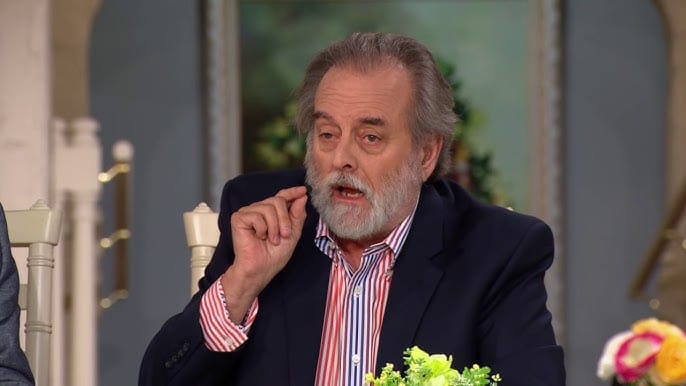
Steve Quayle is a longtime radio host, author, and alternative-media figure whose public identity blends biblical prophecy, civil-defense preparedness, ancient-giants research, bioterror anxiety, precious-metals advocacy, and high-strangeness conspiracism into one worldview. On his own site, he is described as a nationally known radio host, photographer, and author of books including Breathe No Evil, LongWalkers, Aliens and Fallen Angels, and Genesis 6 Giants. His homepage currently foregrounds recurring topics like giants, dead scientists, earthquakes, gold, and “real alien disclosure.”
What makes Quayle matter is not simply that he covers fringe subjects. It is that he turns them into one continuous interpretive system. In Quayle’s media world, geological instability, genetic corruption, biblical giants, elite concealment, bioterror, and end-times prophecy are not separate lanes. They are presented as connected signs of a civilization entering crisis. That is what gives him staying power with a certain audience.
He remains relevant because he is still an active node in prophecy-oriented and alternative media. His site is current, Prophecy Watchers still promotes him as a major voice on biblical giants, and he continues to circulate through networks like Jim Bakker’s show and Coast to Coast AM-affiliated spaces. This is not a legacy figure preserved only by archive culture. He is still publishing, appearing, and framing current events for an audience that sees world instability through a prophetic lens.
Origins and Background
Quayle’s own biography frames him as a preparedness-oriented broadcaster and writer long before his giant-and-prophecy material became central. His site says he was the former editor and publisher of Survival Quest and Security and Survival Chronicles, newsletters focused on dangerous world events and how to prepare for them. It also presents Breathe No Evil, first published in 1996, as an early warning book about bioterrorism and chemical threats.
That early positioning matters because it helps explain the structure of his later work. Quayle did not begin as only an ancient-mysteries personality. He emerged from a survivalist and civil-defense frame, then widened it into a more theological and conspiratorial system. Preparedness, biological threat, social collapse, and hidden danger were already there. The giants, Nephilim, and fallen-angel material expanded the frame rather than replacing it.
His public persona also became tied to established late-night paranormal and prophecy media. Coast to Coast AM describes him as a researcher and author of more than a dozen books dealing with advanced ancient technology and civilizations, while Jim Bakker’s platform presents him as a nationally known radio host for Survive2thrive and Coast to Coast. Those descriptions are promotional, but they still show the media ecosystem he inhabits: not mainstream scholarship, but a durable alternative network where apocalypse, mystery, and hidden-history content reinforce one another.
What He Is Known For
Quayle is known for several overlapping lanes:
- Promoting preparedness and survival framing around bioterrorism, civil instability, and infrastructure breakdown.
- Building a large body of work around biblical giants, Nephilim, and the “days of Noah.”
- Maintaining long-running “dead scientists” archives that collect suspicious or unusual deaths and imply hidden patterns behind them.
- Publishing books and documentaries that connect ancient civilizations, fallen angels, hidden elites, and civilizational collapse.
- Positioning current events through prophecy-oriented media such as Prophecy Watchers and Jim Bakker’s show.
What makes him distinct is not just the presence of fringe claims, but the way they are assembled. Quayle does not present giants as a side curiosity and preparedness as a separate practical concern. He presents both as parts of one worldview in which ancient corruption, elite concealment, and end-times escalation are all converging in the present.
The Core Idea
The deeper signal behind Steve Quayle is that he functions as a collapse interpreter.
That is the real center of his influence. Quayle takes events, headlines, legends, and anomalies that might otherwise feel disconnected and folds them into a unified warning system. In his framework, disaster is rarely just disaster. It is usually revelation. It proves that hidden powers, ancient corruption, or prophetic timelines are moving into plain view. His site structure itself reflects that worldview, pairing real-time quake maps, “dead scientists,” giants, prophecy language, and alien-fallen-angel themes under one roof.
That makes him important as a media figure even if one rejects his claims. He represents a style of thinking in which preparedness is not only practical. It is theological and epistemic. To prepare physically is also to prepare interpretively, to learn how to read reality as a layered warning field rather than as a neutral sequence of events. That is an inference from the structure and content of his platform, but it is the clearest way to understand why his audience stays engaged.
Perspectives and Interpretations
Supporters tend to see Quayle as a watchman figure. From that perspective, he has spent decades warning about biological threats, social fragility, and spiritual deception before broader culture was willing to talk about them. His own biography emphasizes that Breathe No Evil anticipated concerns about bioterrorism years before such topics became mainstream, and prophecy-oriented outlets present his giants work as evidence that modern institutions hide truths that affirm the Bible rather than contradict it.
Another supportive reading is that Quayle gives people an integrated framework when official narratives feel fragmented or unconvincing. For listeners who distrust elite institutions, mainstream history, and secular materialism all at once, his work can feel unusually coherent. He offers not just warnings, but a total explanation for why the world feels unstable and why hidden forces seem to be everywhere. This is an inference from the themes and self-presentation of his platform rather than a direct quote, but it tracks the structure of his media output.
Critics would see the same pattern very differently. They would argue that Quayle’s platform collapses too many categories into one self-reinforcing worldview, where ambiguous deaths, ancient legends, prophecy, and current events are all interpreted in the most alarming possible way. The “dead scientists” archive is a clear example of this style: it aggregates real deaths and suspicious-sounding incidents into an atmosphere of hidden pattern, whether or not a stronger evidentiary chain exists.
Neutral observers are more likely to treat Quayle as a revealing media node rather than as a decisive authority. They may not accept his claims about giants, fallen angels, or orchestrated catastrophe, but they can still see his importance as a builder of a certain kind of counter-reality. He helps show how prophecy media, survivalism, and conspiracy research fuse into a stable audience ecosystem.
Strengths and Limitations
Quayle’s biggest strength is synthesis. He is good at turning scattered anxieties into a larger frame that feels morally and spiritually legible. That is one reason he persists. Many fringe figures specialize in one obsession. Quayle links bioterror, ancient history, geology, prophecy, and elite distrust into a single narrative structure.
A second strength is audience continuity. He has stayed active across newsletters, radio, books, websites, documentaries, and guest appearances, which suggests more than momentary virality. He is part of a durable infrastructure of alternative Christian and paranormal media, not just a one-cycle internet personality.
The limitations are serious. Much of Quayle’s influence depends on associative reasoning rather than publicly verifiable demonstration. Claims about living giants, fallen-angel agendas, or hidden coordinated patterns behind scientist deaths carry a strong narrative charge, but his public-facing materials do not establish them at the level that mainstream historical, archaeological, or scientific standards would require.
There is also a self-sealing quality to this kind of framework. When every anomaly points in the same direction, disconfirmation becomes hard to recognize. A strange death becomes evidence of suppression. Ancient legend becomes evidence of buried truth. Disaster becomes prophecy confirmation. That gives the system emotional power, but it also makes it harder to test. This is an inference from the recurring structure of his content rather than a claim he explicitly states.
Broader Implications
Steve Quayle matters because he shows how alternative reality systems are built from more than one ingredient at once. They are not just conspiracies. They are also survival strategies, theological maps, identity structures, and emotional frameworks for living inside perceived decline. In Quayle’s case, prophecy and preparedness are inseparable. The result is not just a media brand, but a way of inhabiting history.
He also matters because he sits at an intersection that has become increasingly important in American fringe culture: biblical literalism, alternative archaeology, civil-defense anxiety, and distrust of institutions. That blend helps explain why his material can resonate across audiences who might not otherwise gather in one place. A person can come for earthquakes, giants, bioterror, precious metals, or prophecy, and still be folded into the same interpretive world.
For The Galactic Mind, the bigger significance is that Quayle represents a form of media that does not merely question official reality. It replaces it with an alternative architecture built from warning, hidden history, and sacred conflict. Whether one sees that as revelation or overreach, it is a powerful example of how modern counter-realities are assembled and sustained.

The Galactic Mind Perspective
Steve Quayle is worth studying less as a source of settled answers and more as a builder of a specific worldview architecture.
He is one of those figures who reveals how easily hidden history, end-times theology, and civilizational anxiety can be woven into a total interpretive system. That system has clear emotional and narrative power. It also has clear evidentiary weaknesses. The right read is not to dismiss him as irrelevant, but to recognize that his influence comes from giving people a structure for fear, meaning, and preparedness all at once.
Open Thread
If Steve Quayle’s audience is drawn not only to his claims but to the coherence of the world he builds around them, then what is really doing the work: hidden truth, prophetic certainty, survival psychology, or the human need for a pattern strong enough to hold chaos together?
Sources / Receipts
- Steve Quayle official biography page.
- Steve Quayle official homepage.
- Steve Quayle “Genesis 6 Giants” page.
- Steve Quayle “Dead Scientists” archive index.
- Prophecy Watchers feature on Steve Quayle and giants.
- Jim Bakker Show guest bio for Steve Quayle.
- Coast to Coast AM guest profile/search listing for Steve Quayle.
What do you think? Drop your thoughts in the comments


Discussion