
The first release was never going to be simple.
For decades, the public has imagined UFO disclosure as a single moment: a press conference, a smoking gun photograph, a recovered craft rolled into the light. But the first PURSUE release points toward something less cinematic and more difficult to interpret.
An official government portal.
A rolling archive.
A mix of images, videos, transcripts, reports, witness claims, redactions, and unresolved cases.
And somewhere inside the noise, a familiar question returns:
What happens when the government releases records that preserve extraordinary claims, but does not fully resolve them?
Case Overview
On May 8, 2026, the Department of War announced the initial release of files on Unidentified Anomalous Phenomena, or UAP, through a system called PURSUE, the Presidential Unsealing and Reporting System for UAP Encounters. The official release described the effort as an interagency project involving the White House, ODNI, Department of Energy, AARO, NASA, the FBI, and additional intelligence components. The Department said the files would be housed at WAR.GOV/UFO, with more releases coming on a rolling basis.
The public-facing PURSUE page frames the release as a response to a directive attributed to President Donald J. Trump, calling for the identification and release of government files related to “alien and extraterrestrial life,” UAP, UFOs, and related information. The same page says the effort involves the review of tens of millions of records across dozens of agencies, many of them existing only on paper and spanning decades.
But the actual material is not presented as confirmed alien evidence. The page states that the archived materials are unresolved cases, meaning the government cannot make a definitive determination about the observed phenomena, sometimes because the data is insufficient. It also says new tranches are expected every few weeks and invites private-sector analysis and expertise.
That is the core tension of Release 01.
The language is enormous.
The evidence is fragmented.
The conclusion is still unresolved.
What Actually Happened
According to the Department of War announcement, the first PURSUE release includes videos, photos, and original source documents from across the U.S. government, but the Department also noted that while the files had been reviewed for security purposes, many had not yet been analyzed for resolution of the anomalies.
Major outlets reported that the release includes old State Department cables, FBI documents, NASA transcripts, military videos, and written reports tied to UAP sightings. The Associated Press described examples ranging from Apollo-era astronaut observations to military reports of erratic objects and FBI interviews with witnesses.
Reuters reported that the batch contained around 160 files and included Apollo mission materials, historical reports, images, and transcripts. It also quoted experts cautioning that the release did not provide conclusive evidence of extraterrestrial life.
This matters because the first PURSUE release is not one thing.
It is not just a photo dump.
It is not just a document release.
It is not a confirmation event.
It is a public archive beginning to form around unresolved claims.
Key Claims and Evidence
The Apollo Materials
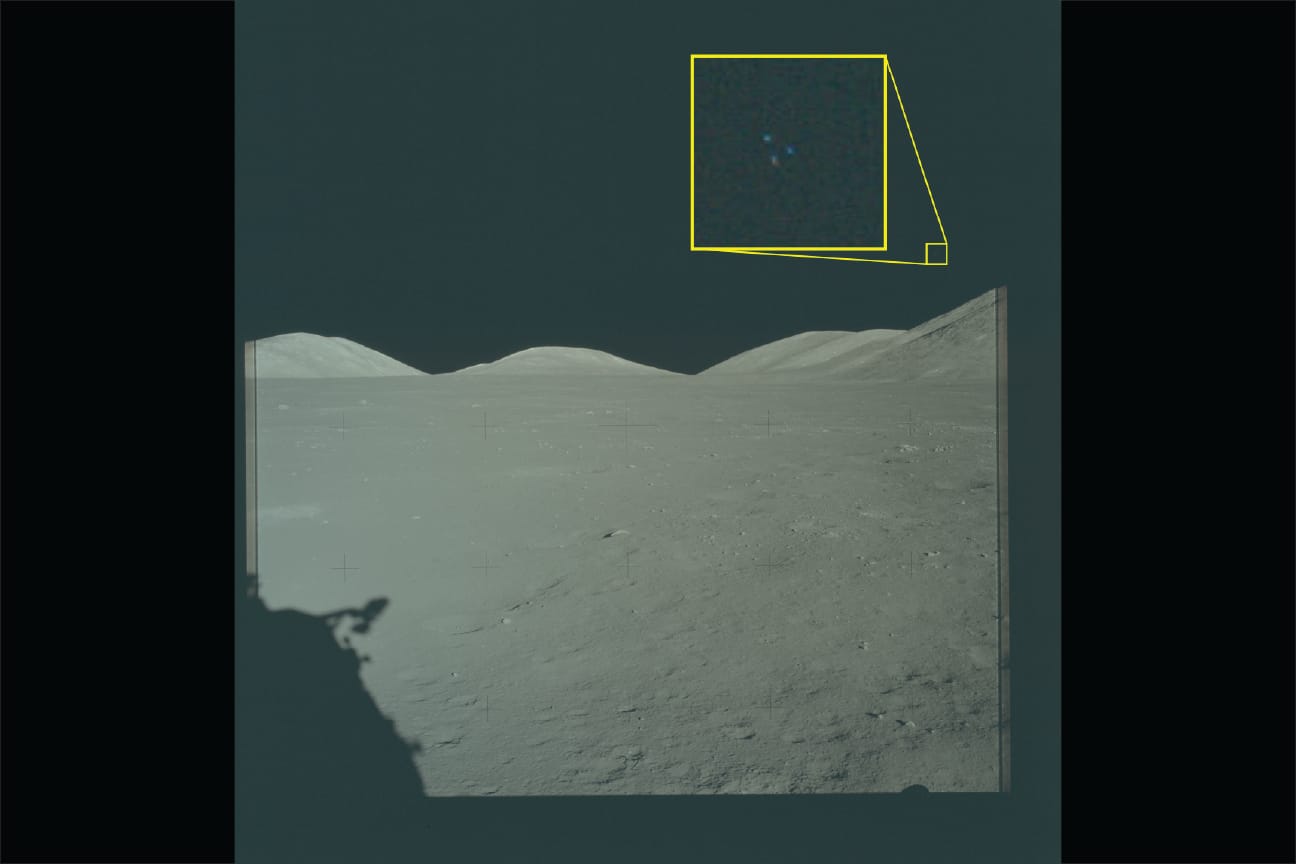
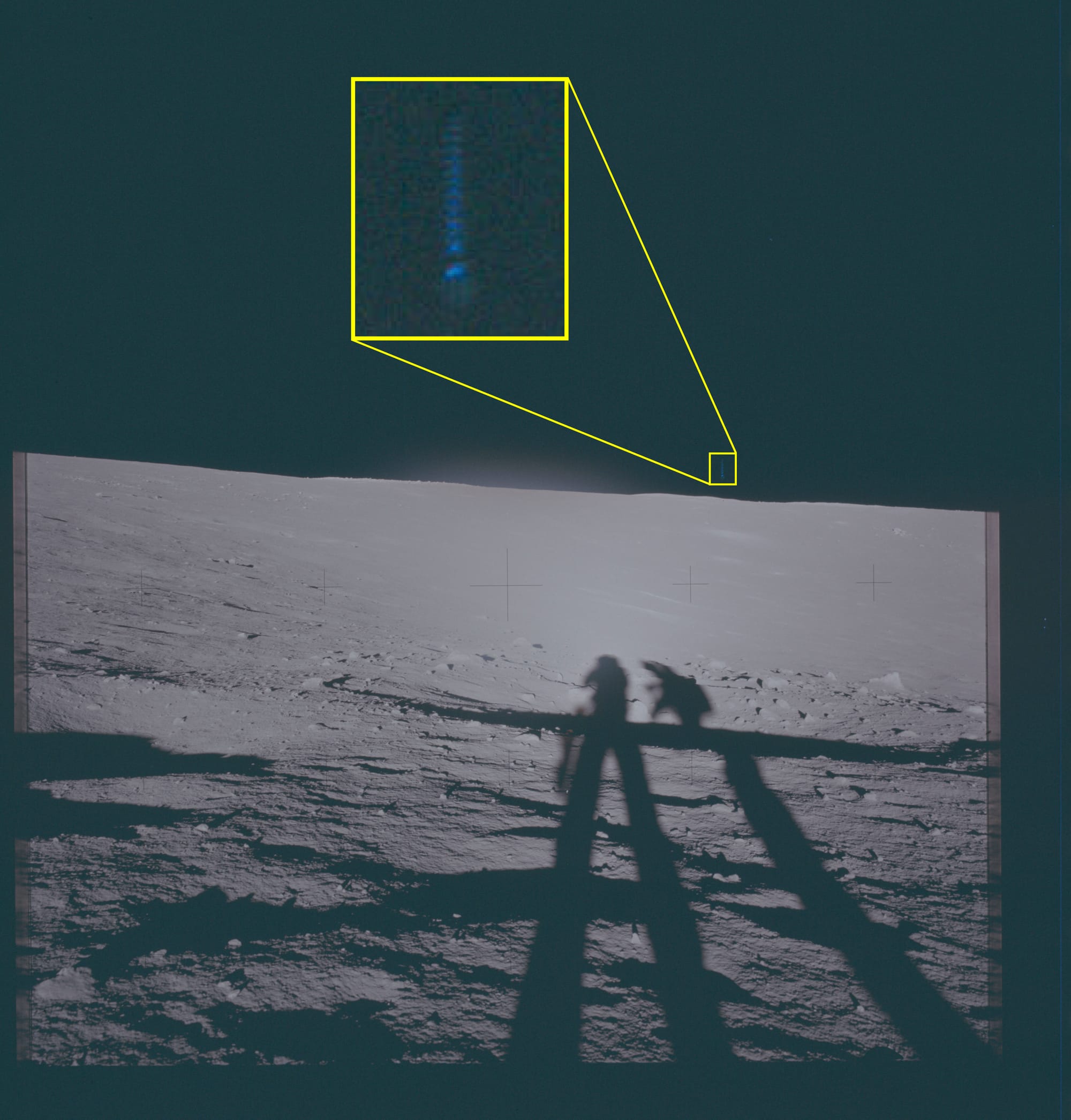
One of the most visually striking items is an Apollo 17 image showing three dots in a triangular formation above the lunar terrain. AP reported that the Pentagon’s accompanying caption says there is no consensus about the anomaly, while a preliminary analysis suggested it could be a physical object.
Reuters also noted Apollo-related material in the release, including Apollo mission photos and transcripts involving unidentified phenomena. One cited Apollo 17 transcript line describes bright particles or fragments drifting by during maneuvering.
This does not prove the objects were craft.
But it does place anomalous visual material from the Apollo record inside a modern UAP disclosure framework. That alone gives the image cultural weight.
The “Crewmen” Memo Claim
The viral claim that caught public attention was not a photo. It was a line from a reported FBI UFO file describing witnesses who allegedly saw small “crewmen” associated with landed objects.
Los Angeles Magazine reproduced the circulated line, saying witnesses reportedly described figures roughly three and a half to four feet tall wearing what appeared to be space suits and helmets. The same article says many portions of the newly released documents reviewed by Los Angeles were heavily redacted, including names and photographs, and that many videos carried little explanatory context.
This is the most alien-coded element of the release.
But it must be handled carefully.
A file preserving a claim is not the same thing as a government validating the claim. The memo’s significance is not that it proves contact. Its significance is that extraordinary witness accounts were preserved, circulated, and now appear within the larger disclosure conversation.
That distinction matters.
The FBI has already dealt with this pattern before. In the case of the famous Guy Hottel memo, the Bureau later emphasized that the memo did not prove a UFO crash or recovered alien bodies. The FBI described it as a second- or third-hand claim that was never investigated.
The lesson is simple: old government files can contain extraordinary claims without confirming them.
The Military and Witness Reports
The release also includes more conventional UAP material: objects reported by military personnel, pilots, sensors, and other witnesses.
AP described a 1994 State Department cable from the U.S. Embassy in Tajikistan involving a brightly lit object over Kazakhstan that reportedly made 90-degree turns and corkscrew maneuvers. AP also noted a 2023 Aegean Sea military report describing a UAP above the ocean making multiple 90-degree turns at an estimated 80 mph.
Another AP-cited case involved a U.S. intelligence official in a helicopter who encountered a “super-hot” orb near the ground, followed by additional orbs that appeared and faded. AP also described an FBI interview with a drone pilot who reported a brief sighting of a linear object with a bright light.
These reports are more important as a pattern than as isolated proof.
They show the range of material now being gathered into public view: NASA transcripts, FBI interviews, State Department cables, military reports, and sensor footage.
The archive is not clean.
It is uneven.
It is full of fragments.
But that may be exactly what makes it historically interesting.
Points of Tension
Unresolved Does Not Mean Extraterrestrial
The official PURSUE page says the cases are unresolved because the government cannot make a definitive determination. It specifically notes that this can happen because of insufficient data.
That is the credibility anchor.
Unresolved does not mean alien.
Unidentified does not mean impossible.
A witness claim does not become confirmed reality simply because it appears in a government file.
This is where The Galactic Mind has to stay grounded.
The better question is not, “Did they just prove aliens?”
The better question is, “Why are these unresolved records now being released together, and what does that reveal about the government’s long relationship with anomalous reports?”
Photos Without Full Context
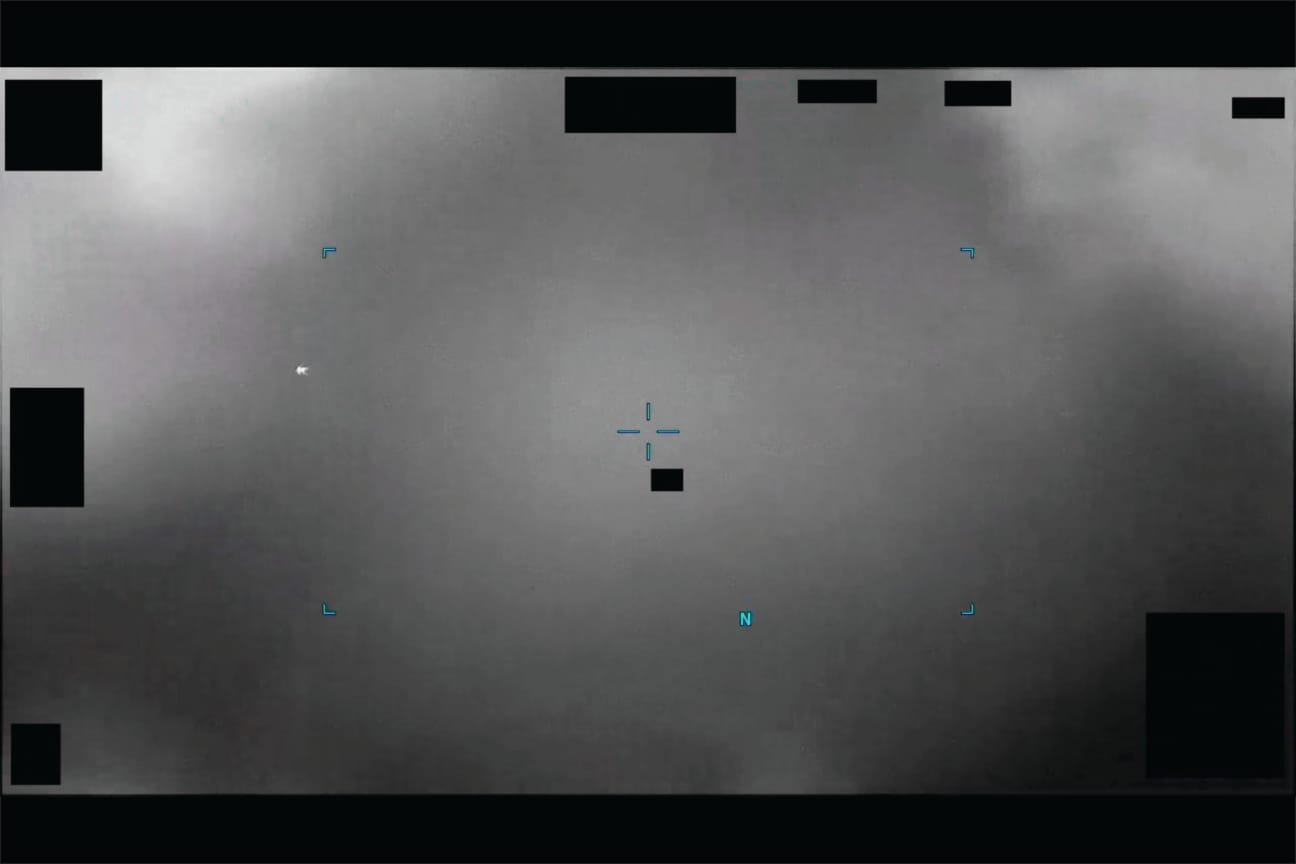
Many of the visible images are underwhelming as standalone evidence: sensor dots, infrared stills, distant shapes, dark objects against sky or water, and a composite sketch. The strongest visuals are the Apollo image and the triangular/wedge-like composite sketch, but even those require context.
A photograph without metadata is not enough.
A video without range, altitude, sensor type, tracking data, or chain of custody remains difficult to evaluate.
A witness report without investigation records is only part of the story.
That is not a dismissal. It is the problem at the center of UAP evidence.
Disclosure as Bureaucracy
The public wants the vault.
The government gives them a portal.
That may sound disappointing, but it may be the more realistic version of disclosure. The PURSUE page describes a process involving dozens of agencies, tens of millions of records, paper archives, declassification review, rolling tranches, unresolved cases, and private-sector analysis.
This is not the mythology of disclosure.
It is the machinery of disclosure.
And machinery moves slowly.

Perspectives and Explanations
There are several ways to read Release 01.
One interpretation is that this is a genuine transparency effort: a formal public archive that begins placing decades of scattered UAP-related records into one location. The Department’s announcement explicitly frames the project as a joint declassification and release effort, with additional files to come.
Another interpretation is that the release is politically useful but evidentially thin. Reuters reported criticism that the release could be seen as a distraction, while also noting that analysts found no conclusive evidence of alien life in the first batch.
A third interpretation is more structural: the release is less important for what it proves and more important for what it creates. A government portal dedicated to unresolved UAP records changes the public architecture around the subject.
The unknown is no longer only in rumors, leaks, testimony, podcasts, and forums.
It is being indexed.
Context and Pattern Recognition
AARO’s existing public posture remains cautious and analytical. Its website says the office addresses UAP using a rigorous scientific framework and data-driven approach. Its official imagery page includes both unresolved cases and resolved cases, including cases assessed as balloons, birds, aircraft, or not anomalous.
AARO’s 2024 Historical Record Report also found no empirical evidence that the U.S. government or private companies had been reverse-engineering extraterrestrial technology. The report states that many claims involving specific people, programs, locations, and documents were inaccurate or involved misidentified classified programs.
That creates the larger tension.
On one side, the government is opening a portal for unresolved UAP material, including reports that revive old alien-contact themes.
On the other side, the government’s own anomaly office has repeatedly stated that it has not found empirical evidence for recovered extraterrestrial technology or hidden reverse-engineering programs.
Both realities can exist at once.
The archive can contain strange claims.
And the claims can remain unproven.
Implications
The first PURSUE release may not answer the UFO question.
But it changes the conditions around the question.
For years, the public debate has split into two camps: believers demanding disclosure and skeptics demanding evidence. Release 01 does not satisfy either side completely. It gives believers an official archive. It gives skeptics unresolved material with missing context. It gives researchers a map of where to look next.
That may be the real story.
Disclosure may not arrive as certainty.
It may arrive as a growing archive of unresolved fragments, each one demanding interpretation.
A lunar image.
A pilot report.
A military video.
An FBI memo.
A redacted name.
A witness account of small figures in helmets.
A government note that says, in effect: we cannot yet determine what this was.
The public wanted proof.
What it received was a process.
The Galactic Mind Perspective
The first PURSUE release does not prove extraterrestrial contact.
But it does something culturally important.
It moves the unknown into public infrastructure.
That is the shift. Not the image. Not the viral quote. Not the triangle sketch or the Apollo dots. The shift is that the government is building a public-facing system around material it still classifies as unresolved.
In one sense, that is frustrating. The release gives us fragments where people wanted answers.
In another sense, it may be exactly what real disclosure looks like.
Not a single revelation.
A slow archive.
A bureaucratic thaw.
A series of documents that do not resolve the mystery, but make it harder to pretend the mystery was never there.
The first PURSUE release asks us to hold two ideas at once:
Some of these reports may have ordinary explanations.
And yet the archive itself is now telling us something extraordinary about the persistence of the phenomenon in government memory.
Open Question
If disclosure begins with redactions, unresolved records, and claims that still refuse to settle into certainty, is that a failure of transparency?
Or is that what contact with the unknown always looks like at first?
What do you think? Drop your thoughts in the comments ...
Sources / Receipts
Primary sources include the official Department of War PURSUE page, the Department’s release announcement, AARO’s official public resources, AARO’s 2024 Historical Record Report, AP reporting, Reuters reporting, Guardian reporting, Los Angeles Magazine’s coverage of the release, and the FBI’s own cautionary explanation of the Guy Hottel memo.


Discussion