
Dropping a wild thought experiment that's equal parts mind-bending sci-fi and "wait, is this actually possible?" Grab your telescopes, tin-foil hats (optional), and a sense of wonder ... we're diving into the idea that our Moon might be more than a dusty rock. What if it's a cosmic eavesdropper, hiding ancient tech in its craters? Buckle up; this one's gonna make your next full moon feel personal.
That First Telescope Peek: Magic or Machine?
Picture this: You snag a cheap telescope on a whim, point it skyward, and bam the Moon stares back. But it's not just a pockmarked ball; those ridges look like welded seams, shadows scream "ventilation system," and craters? They're too perfect, like someone punched them into cosmic powdered sugar with a giant cookie cutter.
You stand there, jaw dropped, as a weird vibe creeps in. The wind dies, and suddenly it hits: Is something up there watching? Not in a creepy way (okay, maybe a little), but like it's syncing with Earth's oceans, breathing in rhythm with the tides. Spooky? Hell yeah. Fun? Absolutely ... it's like the universe's best hide and seek game.
The Big Reveal: Lava Tubes and Lunar Hums
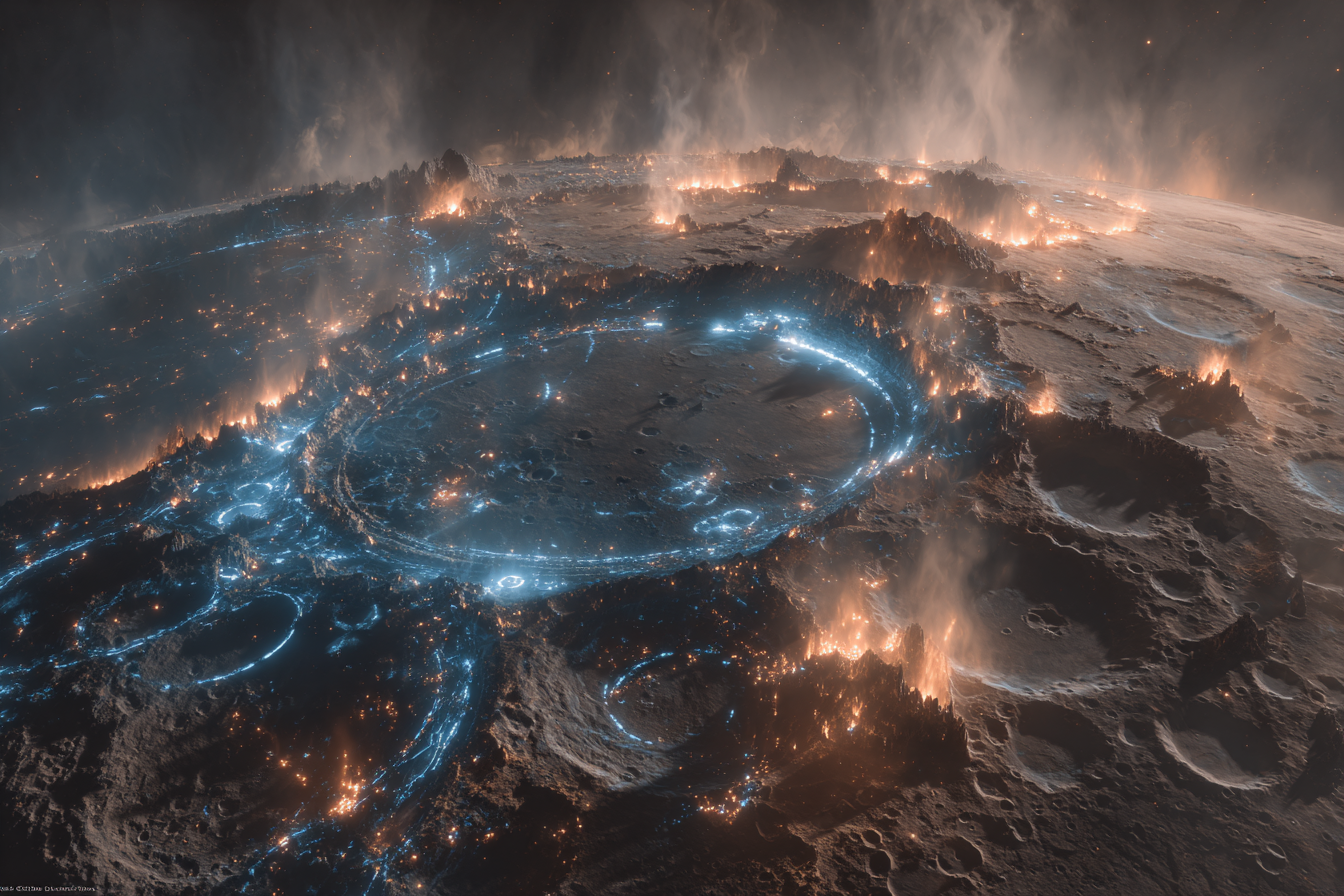
Fast-forward to a hush-hush briefing in a dimly lit observatory. A researcher hits play on grainy footage from a lunar lava tube (those massive underground tunnels on the Moon ... real things, folks!). The camera pans over hexagonal patterns under the rock... not random geology, but structured, like alien honeycomb. No air, yet the dust dances to an invisible beat. The tunnel's humming, low and steady, like it's got its own playlist.
What if that hum's a timer? A ancient device, ticking since Earth's first sloshy tides, blending natural rock with hidden tech. It doesn't shout; it whispers. Listens to our world, tweaks the tides, and only pipes up when we're mature enough to spot patterns without turning them into gods. (No more moon-worshipping cults we're past that, right?)
This isn't pure fantasy. Hook into real science: Apollo missions caught the Moon "ringing" like a bell after quakes, way longer than expected. NASA's Lunar Reconnaissance Orbiter mapped lava tubes big enough for cities. And those mass concentrations (mascons) mess with orbits in quirky ways. If ET wanted to stash a beacon, the Moon's the ultimate incognito spot.
How It Might Go Down: Rovers, Resonators, and Global Freak-Outs
Imagine a scrappy private space crew launches micro-rovers into a skylight in Mare Tranquillitatis (that's the Sea of Tranquility, where Apollo 11 landed poetic, huh?). They're hunting basalt and shiny beads, but one team's romantic packs mics and sensors. Deep in the tube, they catch a faint tone, just below what we can hear, pulsing with Earth's tides. Boom ...not wind noise; it's synced.
Back on Earth, a drill sample reveals an embedded lattice ...no natural mineral, but a resonator. Zap it with radio waves and magnets in the lab? It sings back primes, like a cosmic metronome older than language. Governments scramble committees (because bureaucracy), but leaks happen. Ham radio nerds worldwide sync up and snag echoes from the Moon's far side, timed to solar wind hisses. Subtract the noise, and you've got a signal engineered to last forever without batteries.
Of course, a botched retrieval mission silences it temporarily. But the tone lingers, patient AF. Lesson? We gotta learn to listen together before it spills the beans.

Wild Twists: Ice Vibes or Ancient Human Shenanigans?
Branch out for fun:
- Polar Ice Party: Deep frozen deposits at the Moon's poles act like a mixer, blending the beacon's signal with Earth's Schumann resonances (those natural electromagnetic vibes). It's like the Moon's remixing our planet's heartbeat.
- It's Us All Along: Plot twist ... not aliens! It's a relic from a lost human civilization, a "note to self" from our forgotten ancestors. Talk about existential mic drop.
Real-World Clues: Signals We're Ignoring?
This thought experiment vibes with actual Moon mysteries. Lava tubes vast as stadiums? Check. Hours-long seismic rings on a vacuum world? Yup. Eternal cold traps preserving secrets? Absolutely. And with missions like Artemis gearing up to probe these spots, who knows what we'll find?
Keep an ear out for:
- Narrow radio blips syncing with tides.
- Weirdly symmetric tube insides across different regions.
- Quakes with funky, repeating vibes.
- Core samples showing perfect lattices, not chaotic crystals.
If the Moon's a mirror, it's reflecting our blind spots ... like how ready we are to handle big truths.
The Ripple Effect: Tides, Tunes, and a Touch of Awe
If this pans out (even halfway), humanity levels up. Tides aren't just physics; they're part of a grand instrument. The Moon graduates from "dead rock" to "eternal DJ," teaching patience.
Culture flips: Poets craft tidal haikus. Kids learn subsonic notes like ABCs. Music drops a new bassline from the cosmos. Laws? Moon mining gets ethics audits... listen first, dig second. It's stewardship as a vibe, not a chore.
Downside? Feeling watched across eons is intimate... and weird. Upside? Someone (or something) bet on us being worthwhile. That's kinda flattering.
Wrapping It Up: Your Moonlit Challenge
Is the beacon legit, or just a fun lens to appreciate our overlooked neighbor? Either way, the real test is us: Can we care without needing answers?
Next full moon, try this: Step outside, go still, and imagine that ancient hum threading through waves and your bones. Ask a question worth living by ... even if the reply takes a millennium. Who's in?
Drop your thoughts below ... wild theories, debunk attempts, or your own Moon stares🚀🌌


