
Case Overview
High above Antarctica, a NASA-supported balloon experiment called ANITA was built to listen for radio signals produced when ultra-high-energy particles strike ice or atmosphere. Instead, across earlier ANITA flights, researchers reported a small set of radio pulses that appeared to come from below the horizon in a way that did not cleanly match standard expectations for known particles or ordinary reflected cosmic-ray signals. The case is notable because it sits at the intersection of hard instrumentation, peer-reviewed analysis, and a still-unresolved physical interpretation.
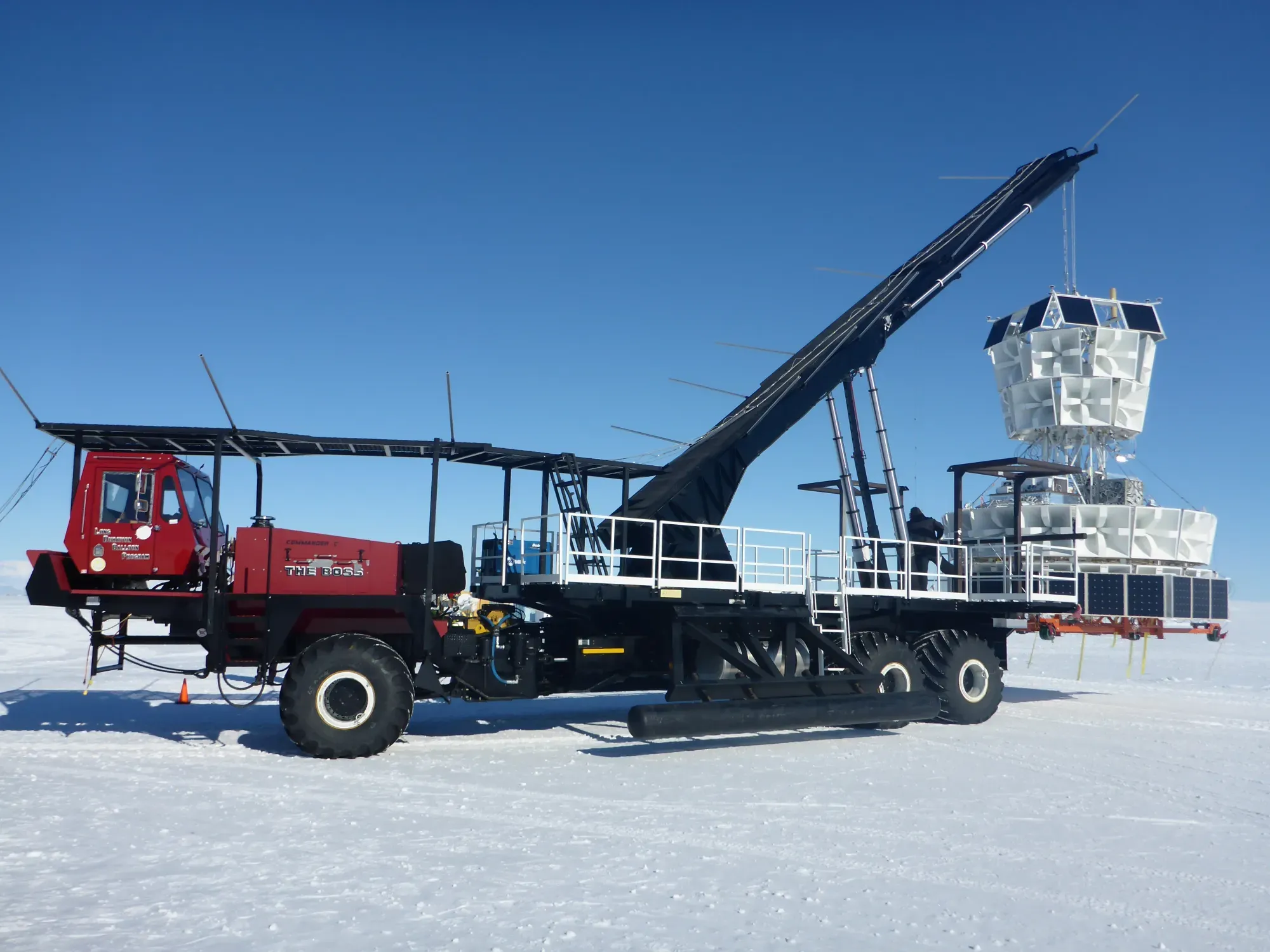
ANITA is not fringe equipment and this is not folklore. It is a balloon-borne radio detector flown over Antarctica precisely because the ice sheet offers an enormous quiet target for particle detection, with little radio interference and a useful vantage point from near-space altitudes. That is part of what makes the anomaly compelling: the event class emerged inside a serious scientific program designed for something else entirely.
What Actually Happened
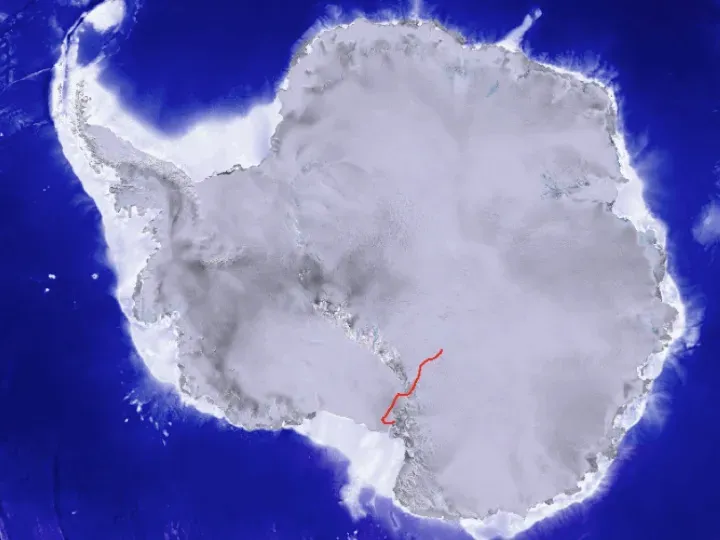
ANITA, the Antarctic Impulsive Transient Antenna, flies on high-altitude balloons over Antarctica to detect radio emissions associated with ultra-high-energy neutrinos and cosmic-ray air showers. NASA’s 2014 Antarctic campaign launched ANITA-III from near McMurdo Station, and NASA’s 2016 campaign included ANITA again as one of its major balloon payloads.
In later analyses, researchers focused on a pair of unusual signals associated with ANITA flights I and III. A 2018 interpretation paper summarizing the case described them as two anomalous events that appeared to be roughly 0.6 EeV cosmic-ray showers emerging from the Earth at exit angles of 27° and 35°, much steeper than standard scenarios would comfortably allow.
The basic issue is waveform polarity and geometry. Ordinary downward cosmic rays that reflect off the Antarctic ice are expected to show a phase inversion. These anomalous events did not present the expected inversion, which made them resemble direct upward-going events instead of ordinary reflected ones. A later ANITA-IV analysis also reported four below-horizon cosmic-ray-like events with anomalous non-inverted polarity near the horizon, though it did not find steeply upward-coming events like the earlier pair.
In 2025, the Pierre Auger Observatory performed a dedicated search for analogous upward-going air showers motivated by the ANITA events. It found one event across the search period from January 1, 2004 to December 31, 2018, but judged that result consistent with expected background from misreconstructed cosmic-ray showers.
Also in 2025, Penn State researchers involved in the work said that after comparing ANITA data with models and cross-checking against other detectors such as IceCube and Pierre Auger, they still did not have a known-particle explanation that fit cleanly. Stephanie Wissel said her best guess was some still-unmodeled radio propagation effect near the ice and near the horizon, but also said the teams had already explored several such possibilities without finding a satisfying answer.
Key Claims and Evidence
- Documented detector program: ANITA is a real NASA-supported Antarctic balloon experiment built to detect radio signals from high-energy particle interactions in the ice and atmosphere.
- Core anomalous claim: Two earlier ANITA events appeared inconsistent with standard-model expectations if interpreted as upward-going air showers emerging through the Earth.
- Signal-form evidence: The polarity pattern did not match the usual reflected cosmic-ray signature, which is why these events were flagged as anomalous in the first place.
- Broader pattern evidence: ANITA-IV later saw additional anomalous below-horizon non-inverted events, though not the same steep class as the earlier pair.
- Cross-check evidence: The 2025 Pierre Auger search did not find a confirming population of analogous upward-going showers, and Penn State researchers said other detectors did not register anything that cleanly explained the ANITA signals.
Points of Tension
The first tension is geometry. If these were truly upward-going air showers produced by known particles, the reported exit angles are steeper than conventional particle-physics expectations comfortably allow. That is why some researchers explicitly argued that no standard-model particle should be able to traverse the Earth with meaningful probability at those energies and angles.
The second tension is replication. A strong interpretation of the ANITA events as a real upward-going shower population runs into trouble because Pierre Auger did not see the rate of analogous events that such an interpretation would predict. In its 2025 analysis, Auger said an ANITA-normalized upward-going flux would imply many more events than were observed, in strong disagreement with that interpretation.
The third tension is environmental ambiguity. A 2019 glaciology-oriented explanation argued that subsurface reflection, firn density inversions, or other ice-layer effects could plausibly mimic the non-inverted signal pattern, but that hypothesis itself requires more detailed radar characterization of the relevant Antarctic regions. In other words, the cleanest non-exotic explanation is still not a settled one.
The fourth tension is pattern without closure. ANITA-IV produced more anomalous below-horizon, non-inverted events, which suggests the oddity may not be a simple one-off artifact. At the same time, those later events were near the horizon and not steeply upward like the earlier pair, so they do not neatly confirm the strongest version of the original anomaly either.
Perspectives and Explanations
One conservative explanation is that the anomaly comes from radio propagation or reflection effects in Antarctic ice, not new particles. That line of thought has real support in the literature: subsurface layers, density inversions, and other ice-structure effects could alter how signals present at the detector. Wissel’s 2025 comments also lean in this direction, suggesting some not-yet-fully-modeled propagation effect near the horizon.
A stricter skeptical view is that the anomaly is best treated as a rare analysis or reconstruction problem unless independently reproduced. The 2025 Pierre Auger search strengthens that position by showing that a simple upward-going-shower interpretation does not scale well across detectors.
A more speculative physics view is that, if the ANITA events were correctly interpreted as Earth-emergent showers, they may point beyond the standard model. A 2018 paper argued exactly that, concluding that beyond-standard-model particles would be required if the events are taken at face value. That is a serious interpretation from physicists, but it remains an interpretation, not a confirmed discovery.
Context and Pattern Recognition
This case fits a recurring pattern in frontier science: instruments built to measure something very specific sometimes detect a real signal before the community understands whether it represents new physics, rare environmental effects, or a subtle failure mode in the detector pipeline. The ANITA case sits precisely in that zone. That framing is an inference, but it is grounded in the fact that multiple teams have treated the events seriously enough to publish, challenge, reinterpret, and search for analogs across independent observatories.
The follow-on instrument, PUEO, shows that this scientific lane is still active. NASA’s HEASARC describes PUEO as a more powerful successor based on ANITA, and the University of Chicago reported that PUEO launched on December 20, 2025, flew for 23 days at about 120,000 feet, and returned on January 12, 2026 with data that scientists are now analyzing. The anomaly did not end the program. It helped define the next phase of it.
Implications
If even part of this is true in the strongest sense, then one of two things follows. Either nature is producing particle behavior that our standard framework does not yet model well at these energies and trajectories, or Antarctic ice and near-horizon radio propagation are more complex than the field had assumed when interpreting these signals. Both possibilities matter far beyond one odd event because they affect how confidently we read the edge cases of the universe.
This is what makes the case feel larger than a niche physics dispute. It is a reminder that reality often breaks first at the boundary between signal and interpretation. The raw event can be real, the instrumentation can be legitimate, and the explanation can still remain unsettled.

The Galactic Mind Perspective
This case does not need aliens, mythology, or overstatement to be interesting. Its power comes from something quieter. A real scientific instrument recorded something that remains difficult to place cleanly inside the current map of explanation. That does not prove new physics. It does show that our explanatory systems are sometimes least stable exactly where our tools become most sensitive.
In that sense, the ANITA anomaly is a useful kind of pressure point. It reveals how reality can stay factual and unresolved at the same time.
Open Question
Is the signal beneath the ice pointing to a new category of particle behavior, or is it exposing a blind spot in how we read one of the quietest environments on Earth?
Credibility Meter
Witness Reliability: 5/5
This is instrument-based evidence from major research collaborations, not anecdotal testimony.
Physical Evidence: 3/5
The signals are real, but the cause behind them is still ambiguous.
Documentation: 5/5
The case is unusually well documented through NASA materials, university releases, and peer-reviewed or accepted scientific papers.
Expert Analysis: 4/5
Multiple serious teams have analyzed the anomaly, but no consensus explanation has closed the case.
Interpretation
This is a high-credibility anomaly, not because the explanation is strong, but because the documentation is. The uncertainty is real, and that is exactly why the case remains worth watching.
Sources / Receipts
- NASA, Balloons on Ice: NASA Launches Antarctica Scientific Balloon Campaign.
- NASA, NASA Balloons Begin Flying in Antarctica for 2014 Campaign.
- ANITA Collaboration, Unusual Near-horizon Cosmic-ray-like Events Observed by ANITA-IV.
- Pierre Auger Collaboration, A search for the anomalous events detected by ANITA using the Pierre Auger Observatory.
- Shoemaker et al., Reflections On the Anomalous ANITA Events: The Antarctic Subsurface as a Possible Explanation.
- Fox et al., The ANITA Anomalous Events as Signatures of a Beyond Standard Model Particle.
- Penn State, Strange radio pulses detected coming from ice in Antarctica.
- University of Chicago, In Antarctica, balloon lands after 23-day search for particles from outer space.
What do you think? Drop your thoughts in the comments


Discussion