
Every worldview wants a place to stand.
A point beyond distortion. A perspective untouched by fear, ideology, memory, culture, biology, or history. From there, reality would appear clean. Measurable. Whole.
This is the dream behind the Archimedean point.
A statement traditionally attributed to Archimedes imagines moving the Earth if only he were given a place outside it from which to apply leverage. Philosophy inherited the image as a metaphor: perhaps thought, too, could find a position far enough outside the system to see the system clearly.
In 1986, philosopher Thomas Nagel gave the problem one of its most memorable names: the view from nowhere.
Nagel was not simply arguing that objectivity is impossible. He was examining a tension built into human consciousness. We experience reality from a particular body, history, and point of view, yet we can also step back from ourselves and construct increasingly detached descriptions of the world.
Both capacities appear real.
Neither appears complete.
The question, then, is not whether perspective exists. It is whether any mind can remove perspective entirely or whether the closest we can come to objectivity is learning how to correct a viewpoint from within it.
The Central Question
Can reality ever be known independently of the conditions through which it is known?
The question reaches beyond philosophy. It appears whenever a scientist designs a method to limit bias, a journalist invokes neutrality, a contemplative tradition teaches people to observe their thoughts, or an artificial intelligence system is trusted to distinguish signal from noise.
In each case, the hope is similar: that the observer can become less entangled with what is being observed.
But there is an important difference between becoming less dependent on one perspective and escaping perspective altogether.
Scientific instruments can extend the senses. Statistical methods can reveal patterns intuition misses. Dialogue can expose assumptions that remain invisible from inside a single culture. None of these requires access to an absolute viewpoint. They require methods through which viewpoints can be tested, compared, and corrected.
That distinction protects this inquiry from collapsing into relativism.
If all knowledge is situated, it does not follow that every claim is equally reliable. Evidence still matters. Predictive success matters. Logical consistency matters. Replication, transparency, and correction matter.
The deeper question is whether objectivity should be understood as a place outside perspective or as a disciplined relationship among perspectives, evidence, and reality.
Why This Question Matters
Some questions stay in books.
This one does not.
The search for an Archimedean point shapes how civilizations decide what counts as true. It shapes who gets trusted, which institutions claim authority, and how people distinguish insight from illusion.
In one age, the trusted vantage point may be religion.
In another, science. In another, data. In another, machine intelligence.
But beneath these shifting authorities is the same recurring hope: that somewhere, somehow, a perspective exists that is less entangled than our own.
A view from nowhere. A clear window. A final frame.
The trouble is that every frame has edges.
Human beings do not arrive in reality as detached observers. We arrive embodied. Cultural. Linguistic. Emotional. Historical. We inherit metaphors before we make arguments. We inherit categories before we examine them. Even our tools for correction emerge from within the very world they are trying to assess.
That does not mean truth is impossible.
It means truth may not look like escape.
The Seduction of Standing Outside
There is a reason the Archimedean dream keeps returning.
Distance can create clarity.
From above, a city becomes a pattern. From orbit, political borders disappear. From historical distance, empires that once seemed permanent look temporary. A wider scale can reveal relationships that proximity conceals.
This is part of what makes science so powerful. Science does not depend upon the private perception of a single observer. It develops shared definitions, instruments, controlled comparisons, repeatable measurements, statistical tests, public criticism, and procedures for revision.
These practices do not remove perspective from knowledge.
They reduce how heavily a conclusion depends upon one person’s perspective.
Scientific objectivity can therefore be understood as an achievement of method rather than possession of a godlike viewpoint. A finding becomes more trustworthy when it survives different observers, instruments, tests, and attempts to disprove it.
Rejecting a perfect view from nowhere does not mean abandoning objectivity. It means recognizing that objectivity comes in degrees and must be built.
The danger begins when a successful method is mistaken for a position beyond all assumptions. That is where earned confidence can harden into unexamined certainty and where a limited framework can begin presenting itself as reality in full.
Compatible Perspectives
Different traditions, strangely enough, orbit this same problem.
Not because they agree, but because each in its own way confronts the difficulty of perception.
Science
Science assumes that individual perception is unreliable enough to require method. Instruments extend the senses. Statistics reveal hidden structure. Replication pushes against personal bias. Models can be tested against the world rather than merely asserted.
Science does not eliminate perspective.
It operationalizes humility.
Philosophy
Philosophy keeps returning to the tension between appearance and reality, subject and object, observer and world. Can reason discover universal truths? Or is all thought shaped by language, embodiment, and historical location? The Archimedean point becomes a stand-in for the dream of pure objectivity.
Philosophy rarely leaves that dream untouched.
It tends to expose the cost of claiming too much distance.
Contemplative Traditions
Many contemplative paths do not seek objectivity in the scientific sense. They seek a subtler shift: the ability to witness thoughts without being fully consumed by them. This can feel like stepping outside the self, but it may be better understood as changing one’s relationship to inner experience.
Not escape from consciousness.
A different mode within it.
Systems Thinking
Systems thinking complicates the fantasy of a clean outside position.
It does not establish that every act of observation physically changes whatever is observed. Its contribution is more practical: the boundaries of a system must be selected, relationships must be modeled, and interventions can alter the conditions being studied.
This becomes especially important in social, ecological, and economic systems. A prediction can change behavior. A measurement can become a target. A policy intended to correct one part of a system can produce consequences elsewhere.
The observer may not create the system, but the observer chooses what enters the model and what remains outside it.
There may be no perfectly neutral boundary.
Only boundaries that are more or less useful, transparent, and open to correction.
AI and Computation
Artificial intelligence introduces a new kind of perspective, but not a perspective from nowhere.
Machine-learning systems can identify statistical relationships across volumes of information no individual human could examine. They can compare patterns without fatigue and sometimes avoid particular forms of human inconsistency.
Yet their outputs remain shaped by training data, system architecture, selected objectives, human labels, evaluation standards, deployment conditions, and decisions about what counts as success.
A machine may perceive differently from a human without perceiving neutrally.
AI could still widen the range of what humanity can see. But a wider lens is not the same as a lens without structure.
An artificial mirror is not an Archimedean point.
Nagel, Situated Knowledge, and the Limits of Neutrality
Thomas Nagel’s argument is more subtle than a rejection of objectivity.
He describes the human capacity to move beyond an immediate personal viewpoint and form a more detached conception of the world. This movement toward objectivity is valuable. It allows us to recognize that our own experience is only one part of a reality larger than ourselves.
But detachment can also leave something behind.
A complete third-person description of a conscious organism may still fail to capture what existence feels like from within that organism. The objective and subjective standpoints disclose different aspects of reality, and neither can always be reduced to the other.
Other thinkers have pressed the criticism further.
Donna Haraway’s idea of situated knowledge challenges claims that appear to speak from no social, historical, or embodied location. The concern is not that truth disappears into personal opinion. It is that a viewpoint can become most powerful when it stops acknowledging that it is a viewpoint.
What presents itself as neutral may quietly preserve assumptions about culture, authority, class, gender, institutions, or which questions deserve to be asked.
This does not make objectivity fraudulent.
It makes reflexivity part of objectivity.
A trustworthy perspective should be able to disclose its methods, identify its limitations, encounter criticism, and explain what evidence could force it to change. Sometimes knowledge becomes stronger not by eliminating the observer, but by making the observer’s position visible enough to be tested.
Three Ways to Understand Objectivity
The tension can be organized into three broad positions.
Objectivity as an Ideal
This view holds that truth becomes clearer as we reduce the influence of personal preference, emotion, culture, and individual limitation. A perfectly impersonal standpoint may remain unreachable, but the attempt to move toward one produces better methods and more reliable knowledge.
The view from nowhere functions as a direction of travel rather than a destination.
Knowledge as Situated
This view argues that knowing always occurs from somewhere. Bodies, languages, histories, technologies, and institutions shape which questions can be asked and which patterns become visible.
That does not mean all perspectives are equally accurate. It means claims should be judged with attention to both their evidence and the conditions under which they were produced.
Here, intellectual honesty begins with locating the observer.
Reality as Participatory
The strongest position proposes something more speculative: perhaps consciousness does not merely observe a finished world from outside. Perhaps observer and environment participate in relationships through which parts of reality become accessible.
This possibility appears in philosophy, contemplative thought, and some interpretations of systems theory, but it should not be presented as an established scientific conclusion.
Its value is as a question.
What if the deepest error is not that we have failed to escape participation, but that we assumed truth could only exist outside it?
What If Clarity Is Not Escape?
What if the problem is not that humans have failed to find the right outside vantage point?
What if the deeper mistake is assuming that wisdom requires one?
This is where the question turns.
Perhaps clarity does not come from leaving the system, but from learning how to move within it more consciously.
Perhaps truth is not a place above the world.
Perhaps it is a discipline of orientation inside the world.
That would change everything.
It would mean that better seeing comes not from pretending to have no lens, but from examining the lens. Comparing it with others. Testing it against consequence. Refining it through dialogue, evidence, and humility.
The goal would no longer be purity of perspective.
It would be integrity of perception.
That is a very different civilizational project.
Broader Context
The question of the Archimedean point becomes more urgent the more complex the world becomes.
We now live inside overlapping systems so vast that no single person can fully apprehend them. Information networks. Financial systems. algorithmic feeds. geopolitical narratives. climate models. machine-generated realities. Synthetic media. Competing truth regimes.
The fantasy of stepping outside all this becomes more seductive as life becomes more entangled.
And yet the opposite may be happening.
The more interconnected the world becomes, the more obvious it is that no one stands fully outside it.
Not the journalist. Not the scientist. Not the philosopher. Not the state.
Not the machine. Not even the critic of all of them.
Everyone is inside something.
The real challenge, then, is not finding an impossible purity. It is building cultures that can navigate impurity without collapsing into nihilism.
That may be one of the central problems of this century.
How do we remain truth-seeking without pretending we are godlike?
How do we resist distortion without worshipping our own frame?
How do we create institutions of correction without turning them into institutions of certainty?
This is where the Archimedean point stops being a metaphor from philosophy and starts feeling like a question about civilization.
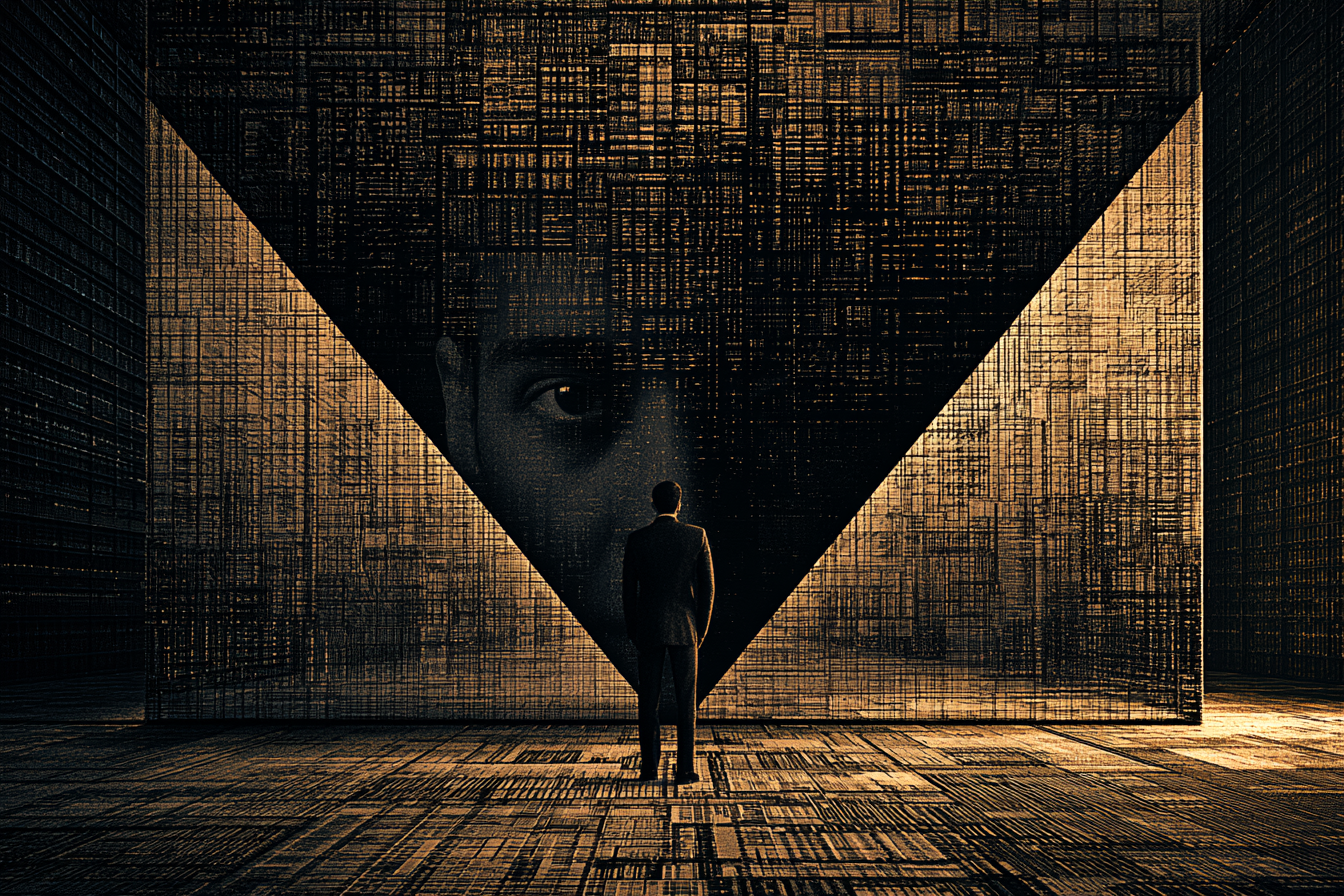
AI and the New Dream of Neutrality
Artificial intelligence may be the latest expression of the Archimedean dream.
A machine does not experience fatigue, loyalty, embarrassment, tribal identity, or emotion in the way a human does. It can process more information than any individual mind and apply the same computational procedure across thousands of cases.
That can look like neutrality.
But consistency and neutrality are not the same thing.
AI systems are sociotechnical systems. Their behavior emerges not only from algorithms, but from data selection, human objectives, institutional priorities, labeling practices, evaluation criteria, and the situations in which their outputs are used. Bias can enter through computation, human judgment, or the wider social structures represented in the data.
This does not make AI incapable of improving human judgment. A model may expose patterns people overlook, test competing interpretations, reveal inconsistencies, and provide perspectives no unaided observer could produce.
Its greatest value may not be that it stands outside human thought.
It may be that it allows human thought to encounter a transformed version of itself.
AI could become an instrument for comparing perspectives at unprecedented scale. Used carefully, it might help us detect where our assumptions are local, where our categories fail, and which patterns remain stable across multiple ways of seeing.
That would not give humanity a view from nowhere.
It would give us another place from which to look.
A Cosmic Version of the Same Question
The question widens again when imagined beyond Earth.
If humanity were encountered by another intelligence, would they see us more clearly than we see ourselves?
It is easy to assume they might. An outside civilization could notice patterns invisible to insiders. Our tribalism. Our symbolic systems. Our contradictions. Our unresolved adolescence. Our inability to separate technological power from moral maturity.
But even an alien intelligence would not arrive from nowhere. It would arrive from its own history, forms, perception, constraints, values, and metaphysics. It would interpret us through itself.
The dream of an external observer would return.
And so would the same limitation.
There may be no intelligence in the cosmos that sees from nowhere.
Only minds seeing from somewhere.
If so, then perhaps the universe is not composed of detached observers gradually approaching total objectivity. Perhaps it is composed of situated centers of experience, each reaching outward, translating, approximating, misunderstanding, correcting, and reaching again.
Not perfect knowledge.
But an evolving web of perspective.
That image feels less absolute.
And more alive.
What If…?
What if the closest thing to an Archimedean point is not detachment, but scale?
Not a place outside reality, but moments when a being becomes capable of holding multiple levels of reality at once.
The personal and civilizational.
The emotional and structural.
The local and cosmic.
The immediate and historical.
The human and the more-than-human.
Maybe wisdom is not the disappearance of perspective.
Maybe it is the expansion of perspective until it becomes more honest about its limits.
That would mean the highest form of seeing is not sterile neutrality.
It is disciplined humility with range.
And that possibility carries its own kind of wonder.
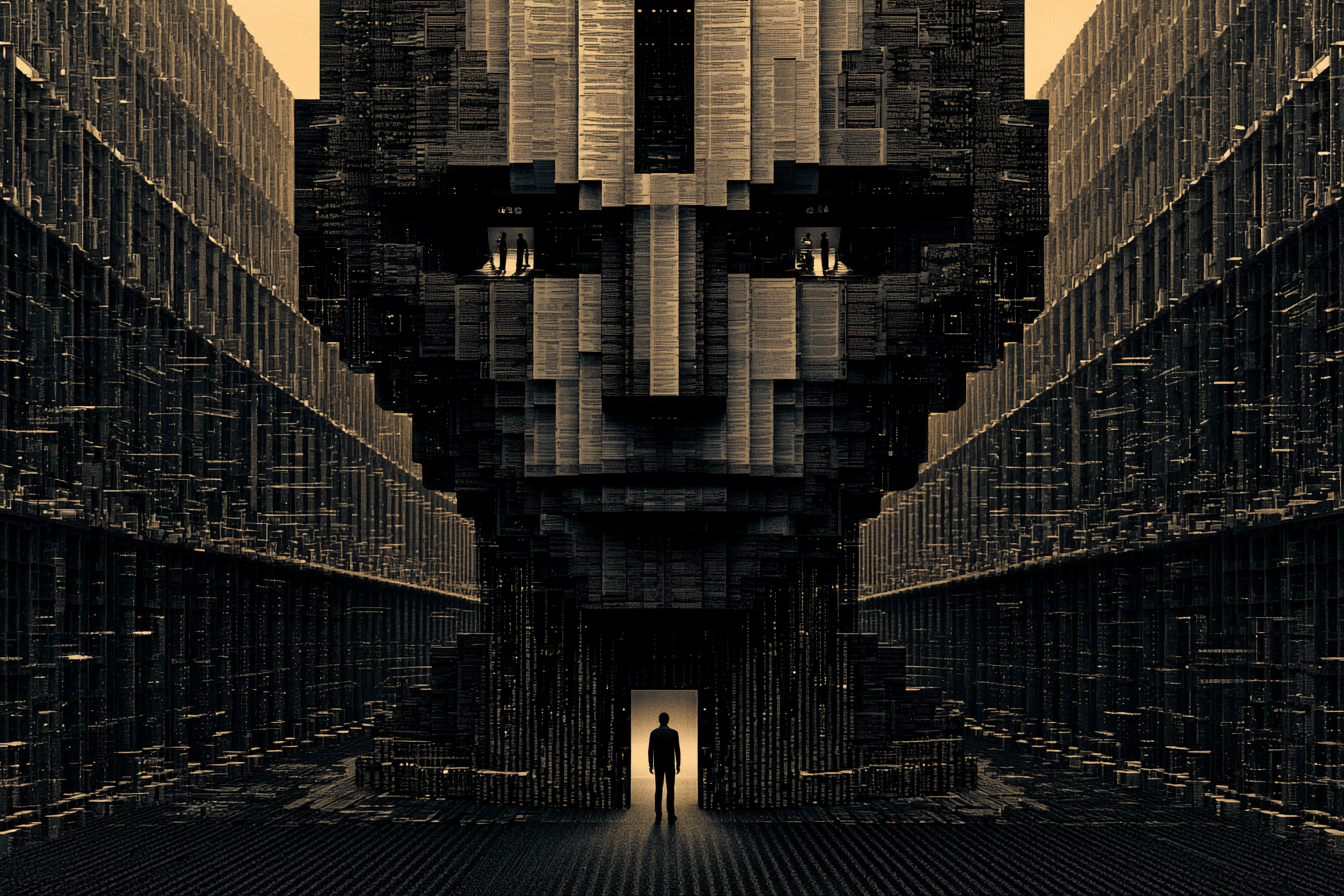
The Galactic Mind Perspective
The closest thing to a view from nowhere may be a disciplined network of views from somewhere.
One observer offers an angle. Another exposes its blind spot. An instrument reveals what neither can sense. A different culture notices a category the first never thought to question. An artificial system detects a pattern too large for an individual mind to hold.
When these perspectives are compared under shared standards of evidence and correction, something new can emerge.
Not perfect neutrality.
Perspectival triangulation.
The goal is not to accept every viewpoint or confuse consensus with truth. Perspectives can be mistaken, manipulated, incomplete, or poorly calibrated. The value of multiple perspectives appears when they are allowed to challenge one another and when their claims remain answerable to evidence.
From this angle, objectivity may not be something an individual observer possesses. It may be an emergent property of a truth-seeking system—one capable of preserving disagreement, exposing error, and correcting itself.
The same principle could apply beyond humanity.
Every biological mind may encounter reality through the structure of its senses. Every artificial mind may encounter it through the structure of its architecture. Every hypothetical non-human intelligence may interpret the cosmos through an evolutionary and cultural history of its own.
No intelligence would see from nowhere.
But intelligences capable of exchanging perspectives might discover features of reality that none could reach alone.
Perhaps advanced intelligence is not defined by perfect vision.
Perhaps it is defined by the ability to recognize its own blind spots and build relationships that can see beyond them.
The Open Door
If there is no view from nowhere, truth does not disappear.
The responsibility placed upon the observer becomes greater.
We must know where we are standing. We must understand what our tools can and cannot reveal. We must compare our maps without assuming that any one map contains the entire terrain.
Perhaps clarity was never going to come from escaping the world.
Perhaps it comes from participating in reality with enough humility to be corrected by it.
If no observer can see from nowhere, which perspectives are still missing from your map and what might become visible if you allowed them to test it?
What do you think? Drop your thoughts in the comments ...
More in Deep Think
Is the Self an Illusion or a Portal?
Is the self merely a model constructed by the mind—or could subjective experience reveal something deeper about consciousness and reality?
What If Reality Doesn’t Translate Cleanly?
What happens when two minds encounter the same reality through senses, concepts, and forms of experience that cannot be perfectly translated?
Did Humans Invent Morality, or Discover It?
Explores whether moral truth is constructed by human minds, produced through evolution, or imperfectly perceived through them.
Sources / Receipts
- Thomas Nagel — The View From Nowhere (Oxford University Press, 1986) — Nagel’s examination of the tension between subjective experience and increasingly objective descriptions of reality.
- Stanford Encyclopedia of Philosophy — Scientific Objectivity — An overview of competing definitions of scientific objectivity, including the view from nowhere, value neutrality, personal bias, and community practices.
- Donna Haraway — “Situated Knowledges: The Science Question in Feminism and the Privilege of Partial Perspective” (Feminist Studies, 1988) — A foundational argument for embodied, situated knowledge and against claims of unlocated vision.
- Stanford Encyclopedia of Philosophy — Feminist Epistemology and Philosophy of Science — Explores situated knowledge, standpoint theory, and why perspectival knowledge does not automatically imply relativism.
- NIST — Artificial Intelligence Risk Management Framework 1.0 — A framework for evaluating trustworthy AI as a sociotechnical challenge involving technical, human, and institutional factors.
- NIST — Towards a Standard for Identifying and Managing Bias in Artificial Intelligence — Examines systemic, computational, and human sources of bias across the AI lifecycle.


Discussion