
Central Question
Imagine filling out an ordinary form.
Name.
Date of birth.
Nationality.
Country.
You hardly think about the answers. They are part of how you navigate the modern world.
Now imagine one final line appears.
Representative of Earth: __________
Most of us would stop writing.
Not because there are no important people.
But because something about the question feels impossible.
Who could honestly claim to speak for eight billion people?
Who could represent thousands of cultures, hundreds of nations, countless belief systems, and every version of what it means to be human?
It sounds like the beginning of a science fiction story. Yet beneath it lies a much deeper question.
Perhaps the issue isn't who should speak for Earth.
Perhaps it's whether humanity has become the kind of civilization that can have a single voice at all.
The World We Already Live In
Every day, people represent something larger than themselves.
Parents speak for their children.
Managers speak for companies.
Lawyers speak for clients.
Diplomats speak for nations.
Representation is woven into civilization because no society can function if everyone speaks at once.
We accept this without much thought.
Yet every level of representation has limits.
A mayor cannot speak for an entire country.
A president cannot perfectly represent every citizen.
Even within families, no single person captures everyone's experiences.
The larger the group becomes, the more difficult true representation becomes.
Now expand that idea beyond nations.
Beyond continents.
Beyond politics itself.
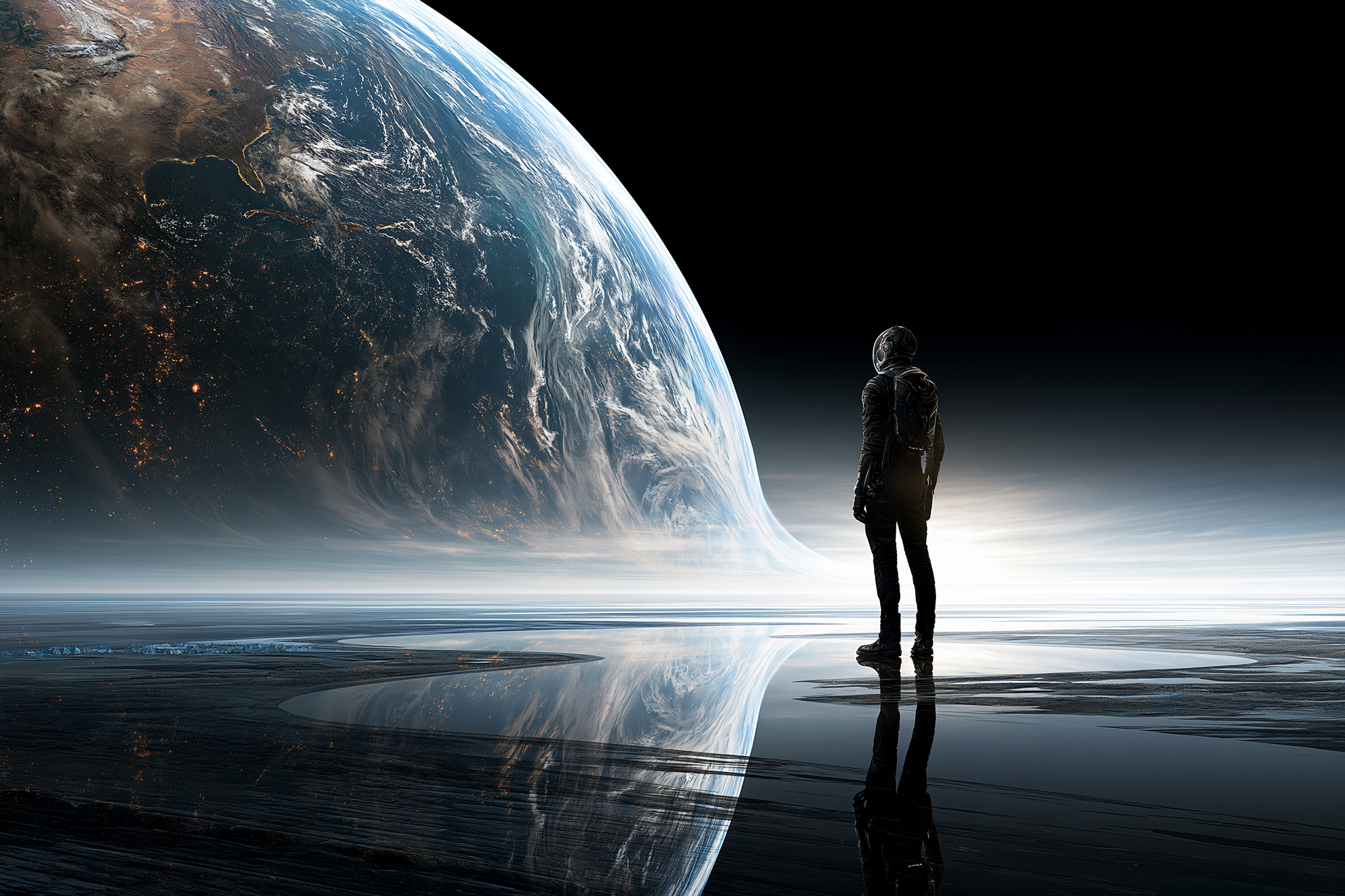
Imagine trying to represent an entire planet.
Suddenly the familiar system begins to strain under its own weight.
Why This Question Matters
For most of history, this question belonged to fiction.
Today, it quietly belongs to reality.
Humanity has begun searching for life beyond Earth with increasing seriousness.
Radio telescopes scan the sky for technosignatures.
Spacecraft carry messages intended for unknown civilizations.
Astronomers continue discovering thousands of planets beyond our solar system.
Meanwhile, artificial intelligence is reshaping how we communicate, governments wrestle with global challenges that ignore borders, and discussions about humanity's long-term future increasingly take on a planetary scale.
Whether first contact happens tomorrow or never happens at all is almost beside the point.
The question itself forces us to ask something we rarely consider.
If humanity had to introduce itself...
Who would do the talking?
When Humanity Becomes One Conversation
From space, Earth appears unified.
One atmosphere.
One ocean system.
One biosphere.
One fragile sphere moving through darkness.
From the ground, however, reality feels very different.
Borders divide land.
Languages divide communication.
Beliefs divide meaning.
History divides memory.
Politics divides purpose.
The farther away we step, the more humanity appears to be one civilization.
The closer we look, the more it resembles thousands of civilizations sharing a single planet.
Neither perspective is entirely wrong.
Both are incomplete.
The Crack in the Frame
Our first instinct is usually to search for a leader.
A president.
A secretary-general.
A scientist.
A military commander.
Perhaps an artificial intelligence trained on all human knowledge.
Each choice feels reasonable.
Each also feels insufficient.
Power does not equal wisdom.
Knowledge does not equal understanding.
Authority does not equal legitimacy.
The assumption quietly begins to fracture.
We've spent centuries building institutions capable of governing nations.
We have never built one capable of representing humanity itself.
Maybe that isn't an oversight.
Maybe it reveals something fundamental.
Perhaps humanity has achieved global communication before achieving global identity.
Compatible Perspectives
Different fields approach this question from remarkably different directions.
Political philosophy asks who possesses legitimate authority.
Anthropology reminds us that humanity has never been culturally uniform.
Psychology suggests identity naturally forms in smaller groups before expanding outward.
Astronomy quietly reframes everything by showing how small Earth appears against the wider universe.
Systems thinking argues that civilizations become more integrated as complexity increases.
Some philosophers have argued that humanity is slowly moving toward a planetary civilization through technology and interdependence.
Others believe diversity itself is humanity's greatest strength and that no single worldview should ever dominate.
Neither perspective completely answers the question.
Together, however, they reveal something fascinating.
Perhaps representation is not merely political.
Perhaps it is developmental.
Perhaps civilizations grow into the ability to speak collectively.
Contrasting Views
A skeptic might argue the entire question is meaningless.
Why prepare for something that may never happen?
After all, there is no evidence that another civilization is waiting to introduce itself.
That is a fair point.
But thought experiments are rarely valuable because they predict the future.
They are valuable because they reveal the present.
Whether first contact ever occurs is almost secondary.
The question forces us to examine something we otherwise overlook.
How unified are we, really?
Others might argue no one should ever speak for Earth.
Perhaps humanity is simply too diverse.
Too decentralized.
Too beautifully complicated.
And perhaps they are right.
But even that answer reveals something important.
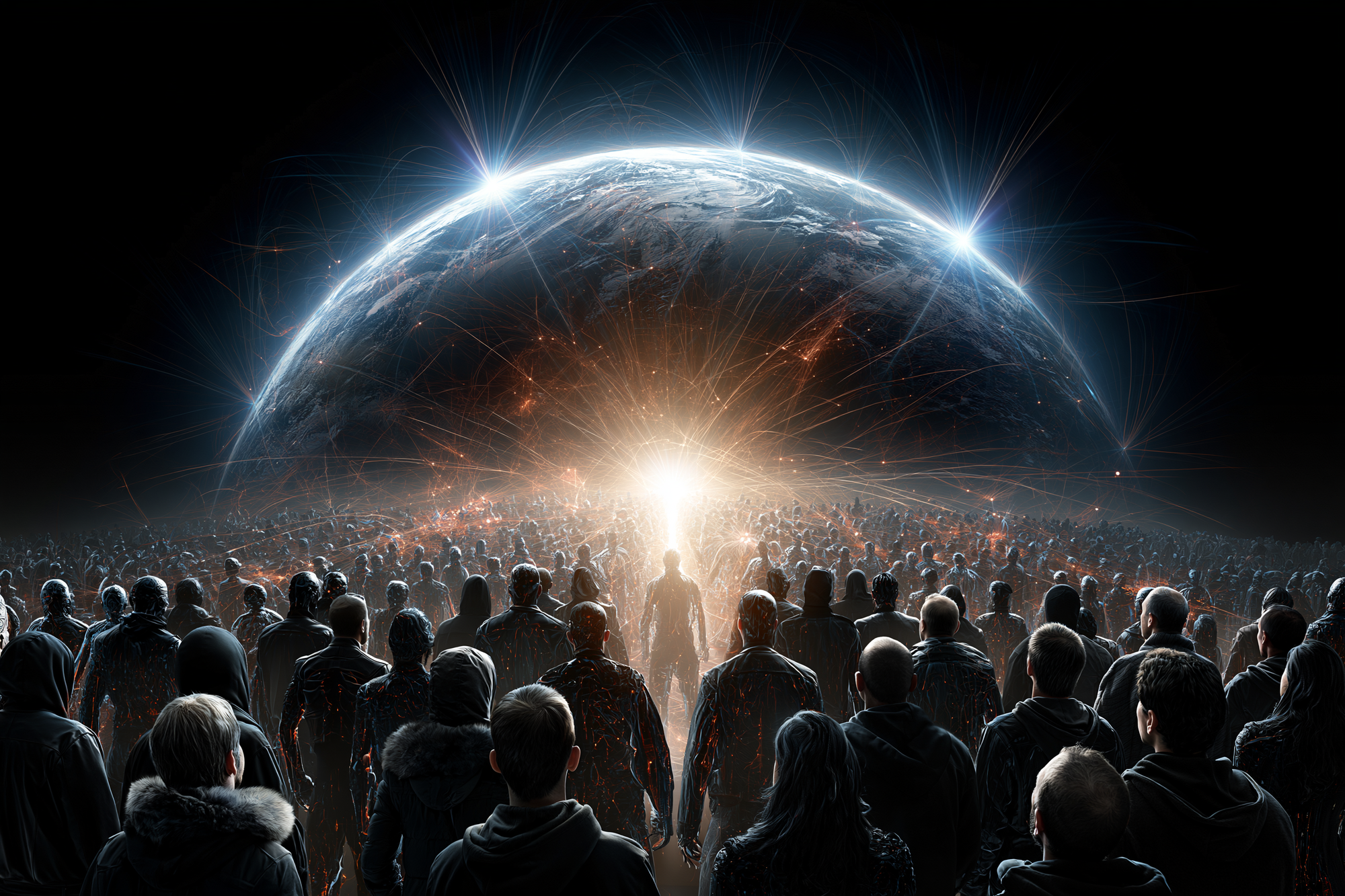
If humanity cannot agree on who represents us...
What does that say about how we understand ourselves?
Broader Context
Perhaps this question has never really been about extraterrestrials.
Perhaps it has always been about civilization.
Environmental change ignores borders.
Artificial intelligence ignores borders.
Pandemics ignore borders.
Orbital debris ignores borders.
Future space exploration will ignore borders.
Increasingly, humanity faces problems that no single nation can solve alone.
The idea of becoming a planetary civilization is no longer confined to philosophy.
It is becoming a practical question.
Not because we have outgrown our differences.
But because reality increasingly refuses to recognize them.
The Civilization Test
We often imagine first contact as a test of technology.
Can we detect another civilization?
Can we understand their language?
Can we survive the encounter?
But perhaps those are the wrong questions.
Imagine an advanced civilization arriving tomorrow.
They don't ask for our strongest military.
They don't ask for our richest nation.
They don't ask for our greatest scientist.
Instead, they ask something almost disarmingly simple.
"Who speaks for your world?"
Suddenly, centuries of politics, history, religion, science, identity, and conflict converge into a silence.
Because perhaps the familiar assumption was never that humanity had a representative.
Perhaps it was that humanity had already become one civilization.
Maybe we haven't.
Maybe we are something rarer.
A species in transition.
Connected enough to affect one another.
Not yet connected enough to speak as one.
The familiar world may not be false.
It may simply be incomplete.
Perhaps the first civilization welcomed into a larger cosmic community will not be the one with the fastest spacecraft.
It will be the first civilization capable of answering that simple question honestly.
What If...?
What if no individual could ever represent Earth?
What if the only honest answer was a conversation rather than a spokesperson?
A scientist explaining what we know.
A philosopher exploring what we do not.
An Indigenous elder carrying memories measured in generations.
An artist expressing what language cannot.
A child reminding everyone that the future has not yet been written.
Perhaps the most accurate representative of humanity would not be one voice.
It would be many.
Not because humanity lacks unity.
But because unity and uniformity have never been the same thing.
Open Reflection
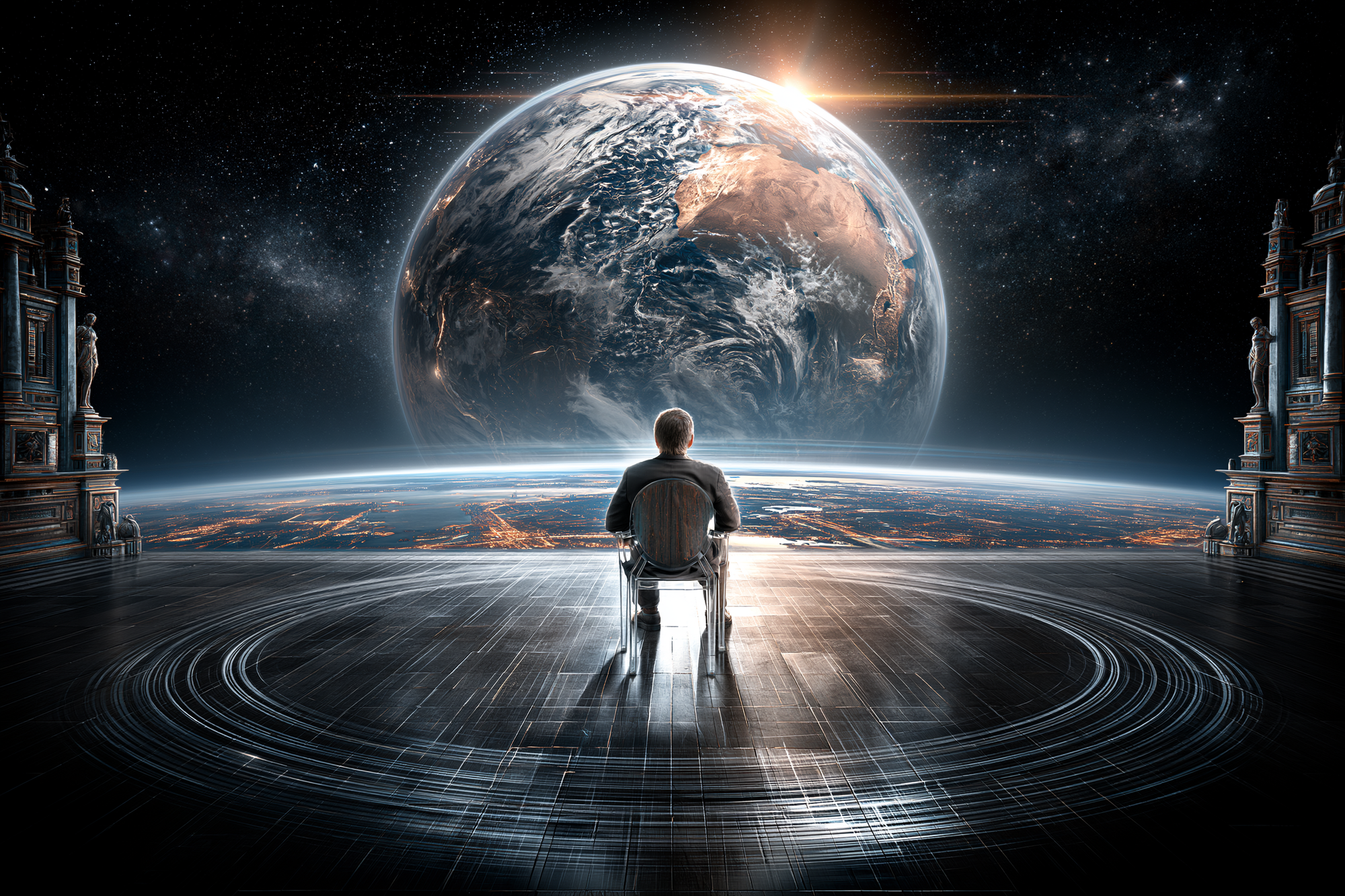
Perhaps the deepest questions are valuable precisely because they refuse simple answers.
"Who should speak for Earth?" is one of them.
It begins as a thought experiment about first contact.
It becomes a question about civilization.
Then identity.
Then responsibility.
Finally, it becomes a mirror.
Not asking who our representative is.
Asking whether we have become the kind of civilization that could honestly choose one.
Sometimes the most profound shift isn't discovering something new about the universe.
It's discovering something unfinished about ourselves.
Perhaps the mystery isn't waiting somewhere among the stars.
Perhaps it has been quietly waiting here all along, hidden inside one question we never thought to ask.
What do you think? Drop your thoughts in the comments ...
Sources / Receipts
- SETI Institute research on the scientific search for technosignatures and extraterrestrial intelligence.
- NASA resources on exoplanet discovery and planetary science.
- United Nations Office for Outer Space Affairs for current international frameworks governing outer space cooperation.
- Voyager Golden Record and Arecibo Message as historical examples of humanity attempting to communicate beyond Earth.


Discussion