
Overview
Bob Lazar is the figure who did more than almost anyone else to fuse Area 51 with the idea of hidden alien technology in the public imagination. In 1989, he told Las Vegas station KLAS that he had worked at a site called S-4 near Area 51, where he says the U.S. government was studying recovered extraterrestrial craft and trying to recreate their propulsion systems. Whether true or not, that claim changed the cultural meaning of Area 51 itself.
What makes Lazar matter is not just the content of his story, but the durability of it. National Geographic wrote in 2025 that he “forever changed” how the base is remembered, and Smithsonian described him years earlier as the self-described physicist whose story helped turn Rachel, Nevada and the surrounding desert into a destination for curiosity, belief, skepticism, and tourism. His story did not stay in fringe circles. It became part of the architecture of modern UFO culture.
Lazar is also relevant because he sits in a peculiar category that keeps resurfacing in disclosure-era conversations: the technically fluent insider whose account sounds specific enough to feel plausible, but whose biography, credentials, and evidence trail remain deeply contested. That tension is why he still matters. He is not just a character in UFO lore. He is one of the earliest prototypes for the modern whistleblower mythos around hidden reality.
Origins and Background
Before Lazar became synonymous with Area 51, he had already built a public persona around eccentric technical bravado. A 1982 Los Alamos Monitor article profiled his jet-powered Honda, and WIRED later described him as the co-creator of Desert Blast, a secretive Nevada pyrotechnics gathering built around homemade fireworks, rockets, and extreme engineering play. In other words, the public Bob Lazar was already part experimenter, part showman, and part outlaw tinkerer before the alien story arrived.
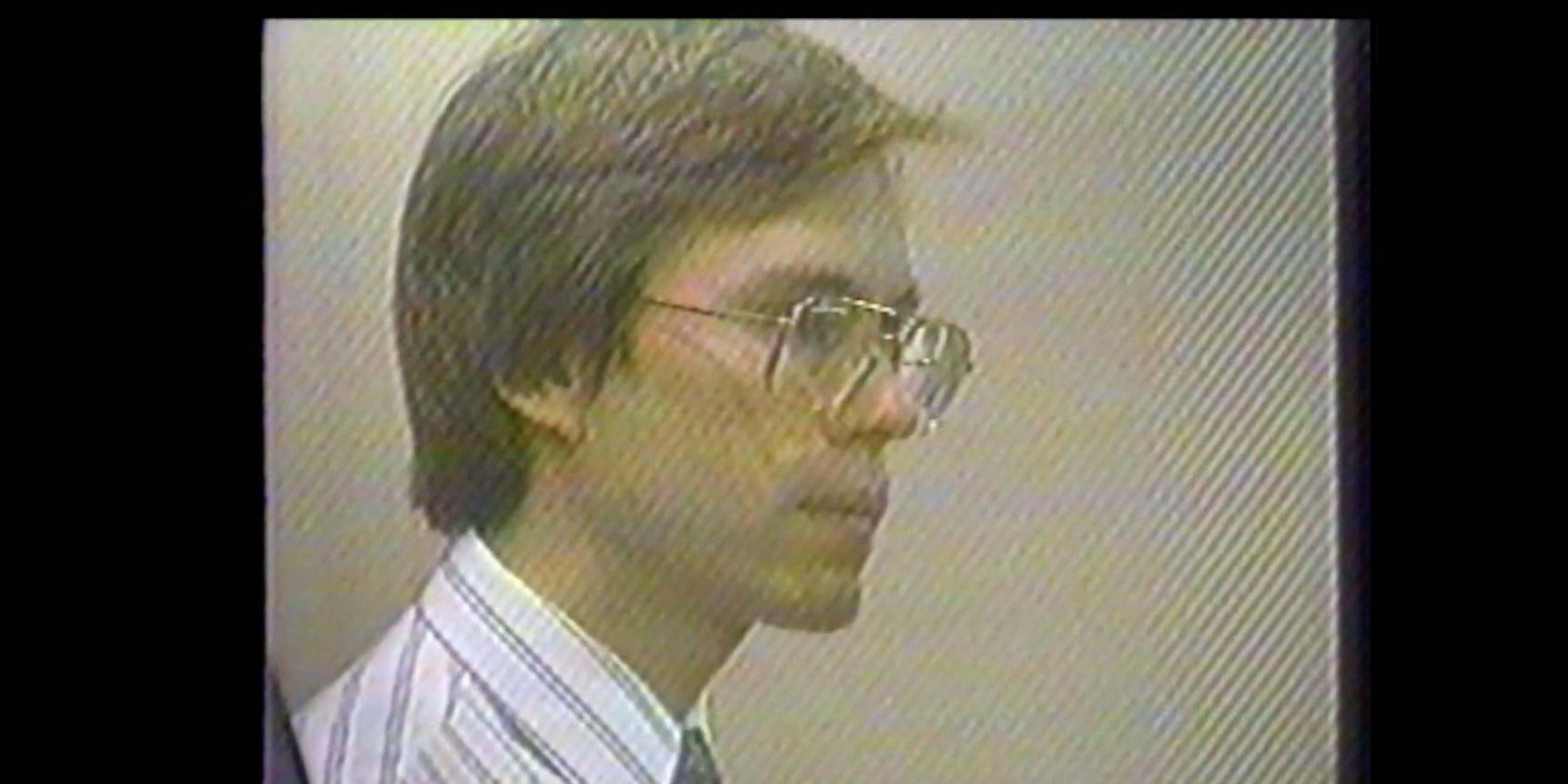
The turning point came on May 24, 1989, when Lazar appeared anonymously as “Dennis” in a live KLAS interview with George Knapp. In that appearance, he claimed he had worked in an unconfirmed section of Area 51 called S-4, helping reverse-engineer extraterrestrial spacecraft. He later went public under his own name and expanded the story: nine craft, hangars built into a mountainside, and a propulsion system powered by a stable form of element 115.
From the beginning, his background was both the hook and the problem. KNPR’s 2018 retrospective reports that George Knapp said he could not verify Lazar’s claim that he attended MIT, and Los Alamos told him Lazar had not worked there. At the same time, Knapp said Lazar was able to walk him around Los Alamos as if he belonged there, and he found a lab phone book and a newspaper article that seemed to place Lazar in that orbit. That ambiguity became part of the story almost immediately.
Lazar’s supporters often treat that ambiguity as evidence of erasure or suppression. His critics treat it as evidence of invention. What is striking is that this split was not a later development layered onto the story. It was present at the beginning. Even the journalists who helped launch Lazar into public view said parts of his account could not be confirmed.
A separate piece of context matters too. In 1990, Lazar pleaded guilty to felony pandering in Nevada and later received probation, community service, and court-ordered psychotherapy. That legal history does not prove or disprove his Area 51 claims, but it became part of the wider credibility dispute around him and remains inseparable from how his public image is judged.
What It’s Known For
Lazar is chiefly known for a handful of claims and consequences:
- Claiming he worked at S-4 near Area 51 helping reverse-engineer one of nine extraterrestrial craft held by the U.S. government.
- Arguing that the craft’s propulsion relied on a stable isotope of element 115, which he said generated gravity effects and powered an antimatter reactor.
- Helping transform Area 51 from a secret test facility into a mainstream symbol of alien secrecy and black-budget mythology.
- Giving UFO culture one of its most enduring technical narratives: not just “the government knows,” but “the government is trying to engineer what it found.”
- Re-entering public consciousness through documentaries, podcasts, and the wider culture around the 2019 “Storm Area 51” moment, which National Geographic directly ties in part to renewed interest in Lazar.
What makes Lazar distinct is not simply that he told an alien story. Plenty of people have done that. What made his version unusually sticky was the level of technical texture. He did not just say he saw something strange. He spoke in the language of reactors, gravity, materials, hand scanners, compartmented facilities, and engineering problems. That made the story feel less like folklore and more like leaked systems knowledge.
The Core Idea
The deeper signal behind Bob Lazar is that believable myth often travels through technical specificity. His story works, culturally, because it sounds like a person trying to describe a machine, not just narrate a mystery. That difference matters. A vague alien tale can be dismissed. A detailed account of hangars, isotopes, propulsion geometry, hiring contractors, and test schedules lingers in the mind differently.
Lazar therefore represents something larger than one man’s truthfulness or dishonesty. He represents a threshold where secrecy, technology, and imagination merge so tightly that they become difficult to separate. In his story, the unknown is not mystical. It is bureaucratic, mechanical, compartmented, and hidden inside state machinery. That is a powerful modern myth form.
This is why his influence survived the evidence problem. Lazar did not need to conclusively prove the existence of alien technology to alter how many people interpret hidden government spaces. He supplied a framework for reading them. After Lazar, Area 51 was no longer just a classified base in the desert. It became a symbol of the possibility that reality-changing knowledge could be hidden in plain sight behind security fences, denials, and missing records.

Perspectives and Interpretations
Supporters tend to argue that Lazar knew too many odd, buried details for the entire story to be fabricated. George Knapp has said Lazar knew EG&G handled hiring, knew how personnel were transported to Groom Lake, named a real background investigator, and mentioned an S-4 designation that Knapp says Nellis once acknowledged in some form. Supporters also point to Lazar leading people into the desert to witness apparent test activity at the times and places he predicted. In that reading, the story has too many points of contact with reality to be written off casually.
Skeptics center a different pattern. They point out that MIT and Caltech reportedly had no record of him, Los Alamos denied employing him directly, and the core of the extraterrestrial reverse-engineering story has never been backed by public documents, physical materials, or independently verifiable evidence. They also note that Lazar’s self-presentation as a physicist has long been disputed and that his legal history complicates any appeal to automatic trust.
Scientific skeptics also focus on the element 115 issue. It is true that element 115 was later recognized and officially named moscovium, but that does not validate Lazar’s propulsion story. Official chemistry sources describe moscovium as a highly radioactive superheavy element of which only a few atoms have ever been made, with known isotopes that decay in fractions of a second. That is very different from Lazar’s claim of a stable, usable isotope powering advanced craft.
Neutral observers often land somewhere in between. They may think Lazar’s alien claims are unproven or highly unlikely, while still recognizing that he had a historic effect on media, tourism, and public imagination. In that view, the most important thing about Lazar may not be whether he saw what he says he saw, but that his story permanently changed the symbolic meaning of Area 51 and helped set the template for later disclosure narratives.
Another interpretation, especially among Lazar’s supporters, is that the contradictions around his background are not proof that he fabricated the story, but signs that elements of his record may have been obscured on purpose. In that reading, the missing school history, disputed employment trail, and decades of ridicule are not random weaknesses in the case. They are exactly what one would expect if Lazar had touched something real inside a deeply compartmentalized system. This does not prove his claims, and it cannot substitute for evidence. But it helps explain why some people see the gaps around Lazar not as disqualifying, but as part of the story itself.
Strengths and Limitations
One strength of the Lazar case is that it did not emerge from nowhere. Area 51 really was a deeply secret installation used for highly advanced aircraft development, and the official history of the site does include technology that would have looked bizarre or impossible to outside observers at the time. National Geographic and the CIA’s declassified historical record both place Groom Lake squarely inside the Cold War machine that produced aircraft like the U-2 and A-12 under intense secrecy. That real secrecy gave Lazar’s story fertile ground.
Another strength is narrative coherence. Lazar’s story has had unusual staying power because it is internally vivid and mechanically specific. Even skeptical journalists who revisited the case have acknowledged why it stayed culturally potent. He gave people a map of hidden knowledge, not just a claim that something spooky existed. That makes him hard to forget.
But the limitations are serious. The most obvious is the evidence gap. Lazar has provided no publicly verifiable extraterrestrial material, no documentation establishing the alien reverse-engineering program, and no evidence that can independently sustain the largest parts of his account. Even journalists sympathetic to the mystery emphasize that crucial parts of his resume and employment claims could not be confirmed.
The education issue is especially damaging because it goes directly to authority. If the MIT and Caltech claims do not hold, then the technical credibility of the story takes a major hit. The Los Alamos issue is more ambiguous, since there are hints he was in that ecosystem in some capacity, but even there the record is murky enough that it raises questions rather than settling them.
The element 115 point, often treated by believers as a confirmation, is weaker than it first appears. Yes, element 115 became an officially recognized element, now called moscovium. But official chemistry sources say it is highly radioactive, only a few atoms have been created, and the known isotopes decay almost immediately. That does not line up with Lazar’s description of a stable fuel source that could sit inside a craft and manipulate gravity.
There is also the problem of myth accretion. In 2019, Lazar suggested an FBI raid on his company might relate to element 115, but Vice reported that documents obtained through public records requests pointed instead to a much more ordinary investigative trail involving toxic materials. That does not mean Lazar lies about everything. It does show how easily his story-world pulls mundane events back into the orbit of grand secrecy.
And then there is the credibility burden created by his legal history. The 1990 pandering case does not invalidate his S-4 account on its own, but it matters because the Lazar story depends so heavily on trusting a narrator in the absence of hard evidence. When the case already rests on missing records, unverifiable programs, and extraordinary claims, character judgments inevitably carry more weight.
Broader Implications
Bob Lazar matters because he reveals how modern myth gets built around real secrecy. Area 51 was not invented. It was genuinely secret, genuinely advanced, and genuinely capable of producing sightings that ordinary people could misread. Lazar inserted an alien engineering narrative into that environment and created a story that could feed on both institutional opacity and public wonder.
That has implications far beyond UFO culture. Lazar shows how a reality-changing narrative can persist even when decisive proof never arrives, as long as the story satisfies several conditions at once: it attaches itself to real hidden institutions, uses believable technical language, offers a totalizing explanation, and arrives through a human messenger whose gaps are interpreted either as fraud or suppression. Once all of that is in place, the story can outlive normal standards of verification.
He also shows how the public digests uncertainty. For some people, missing records are disqualifying. For others, they are exactly what makes the story convincing. That split is bigger than Lazar. It points to a deeper cultural fracture over what counts as evidence when institutions themselves are mistrusted. In that sense, Lazar is not only part of UFO history. He is part of the story of collapsing confidence in who gets to define reality.
Finally, Lazar matters because he helped move the UFO question out of the purely mystical and into the technological imaginary. His story is about propulsion, materials science, and classified engineering. Even when people do not believe him, they often still think through his framework. That is influence. He did not just tell a story about aliens. He changed the visual and conceptual language people use to imagine hidden advanced technology.

The Galactic Mind Perspective
The Galactic Mind should be careful with Lazar even if his story is compelling.
Not because he is uninteresting, but because he is almost too perfect as a modern mythic figure. He stands at the exact intersection of secret bases, missing records, eccentric intelligence, technical detail, legal trouble, charisma by refusal, and cultural timing. That combination makes him fascinating. It does not make him proven.
The more disciplined reading is this: Lazar may have known some real things about the black-world ecosystem around Nevada test sites, and he unquestionably altered the symbolic life of Area 51. But the extraterrestrial reverse-engineering story itself remains unsupported by public evidence and weighed down by major credibility problems, especially around education, employment claims, and scientific plausibility.
What makes him worth studying anyway is that he exposes a deeper pattern. Sometimes the most powerful reality-shaping stories are not the ones best supported by evidence. They are the ones best adapted to an age of secrecy, distrust, and imagination hungry for a hidden layer beneath official life.
Lazar is one of the clearest examples of that pattern in modern American culture.
Open Thread
If Bob Lazar’s story is never fully proven and never fully erased, then what exactly gives it its power: hidden truth, believable storytelling, real contact with black-budget secrecy, or a culture so primed for concealed realities that a technically detailed myth can function like evidence?
Sources / Receipts
- National Geographic, The legend of Area 51 and why it still fascinates us.
- KNPR, A New Film Focuses On Bob Lazar's Area 51 Story, But Is It For Real?
- KNPR / Desert Companion, Out there.
- Smithsonian Magazine, Inexplicable Moments.
- VICE, Bob Lazar Says the FBI Raided Him to Seize Area 51’s Alien Fuel. The Truth Is Weirder.
- WIRED, Ka-Booom!!.
- IUPAC, IUPAC Announces the Names of the Elements 113, 115, 117, and 118.
- Royal Society of Chemistry, Moscovium: Element information, properties and uses.
- Archived Las Vegas Review-Journal reporting on Lazar’s 1990 pandering plea and sentencing.
What do you think? Drop your thoughts in the comments, or better, in the Briefing Roo


Discussion