
Case Overview: The Event
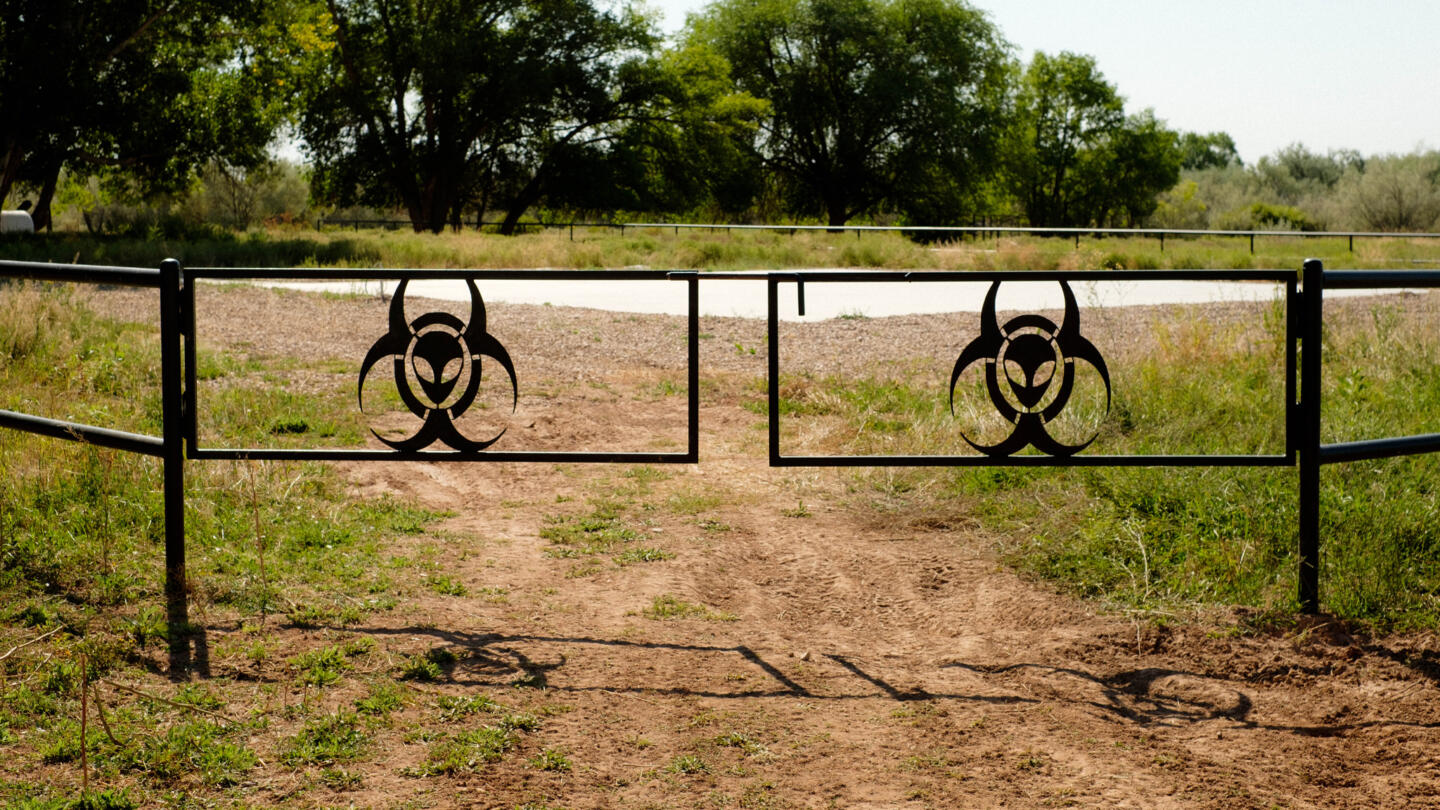
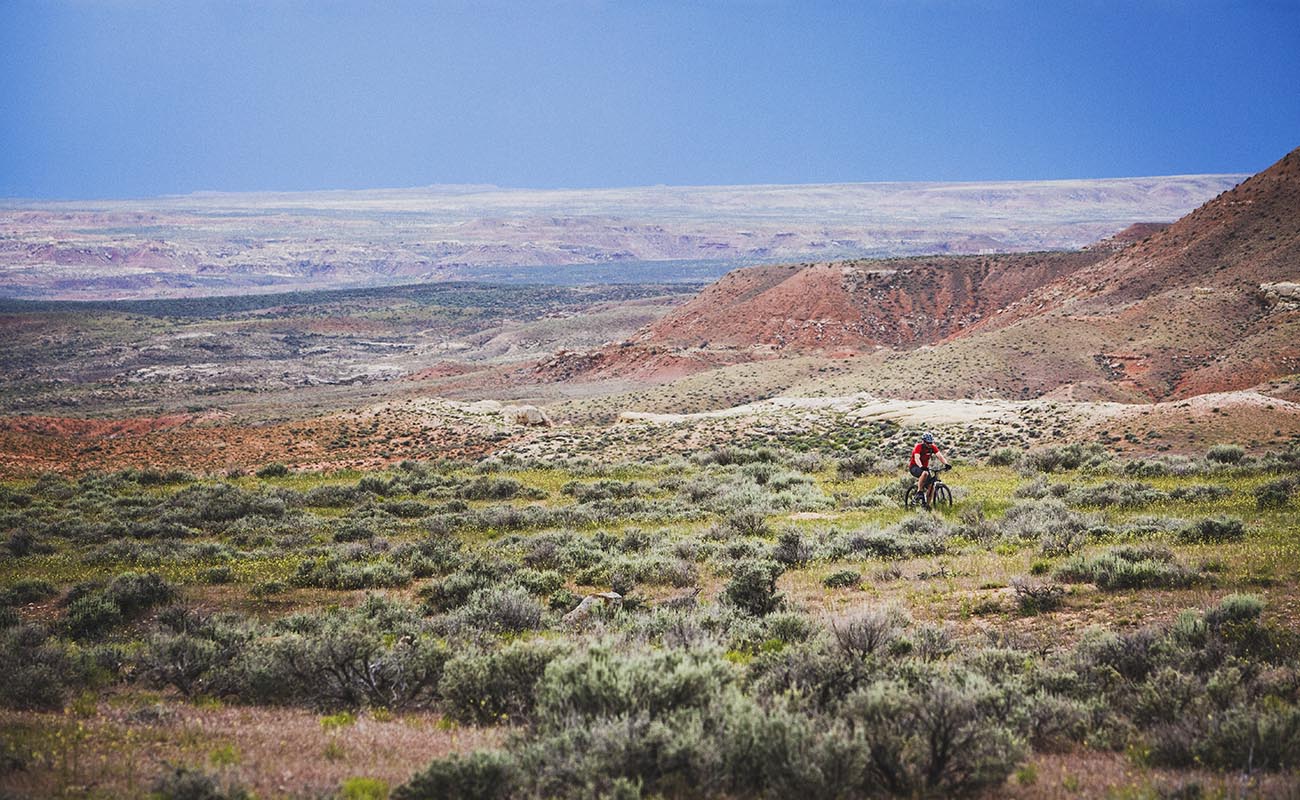
Skinwalker Ranch is a roughly 500-acre property in northeastern Utah’s Uintah Basin. Since the mid-1990s, it has become associated with reports of unidentified aerial phenomena, unusual lights, livestock injuries, alleged electromagnetic disturbances, and experiences described as paranormal.
The modern case began with the Sherman family, who publicly described disturbing events on the property in 1996. Later that year, businessman Robert Bigelow purchased the ranch and placed it under investigation by the National Institute for Discovery Science, or NIDS.
The ranch subsequently became connected to Bigelow Aerospace Advanced Space Studies, or BAASS, which received a Defense Intelligence Agency contract under the Advanced Aerospace Weapon System Applications Program—AAWSAP—in 2008. Official records establish the contract and the contractor’s interest in the property. They do not establish that the ranch’s extraordinary claims were verified.
Real-estate developer Brandon Fugal acquired the property in 2016. Since 2020, experiments conducted by his team have been presented through The Secret of Skinwalker Ranch.
Skinwalker Ranch therefore occupies an unusual evidentiary position. Its ownership history, research programs, federal-contract connection, and continuing investigations are documented. The causes attributed to the reported phenomena remain disputed.
The central question is not whether people have reported strange experiences there. They have. It is whether the ranch has produced a repeatable anomaly that can be separated from environmental effects, equipment limitations, human perception, and the pressures of commercial storytelling.
What Actually Happened
Terry and Gwen Sherman acquired the property in 1994. According to their later accounts, unusual experiences began soon afterward: unidentified lights, large animal-like figures, apparent aerial objects, livestock injuries, and incidents that seemed to resist conventional explanation.
The claims entered the public record through a 1996 Deseret News report. That contemporary article documented what the family said it had experienced, but it also recorded an important limitation: local officials had not received formal reports corresponding to many of the alleged incidents.
This does not establish that the Shermans fabricated their experiences. It means the earliest phase of the case rests primarily on retrospective witness testimony rather than contemporaneous police reports, laboratory results, or independently preserved evidence.
Robert Bigelow purchased the ranch later in 1996. His National Institute for Discovery Science installed equipment, stationed personnel on the property, and attempted to document recurring activity.
Early public reporting from 1997 quoted a NIDS representative as saying that the investigation had produced minor observations but nothing sufficiently decisive to stand behind. Later participant accounts described a much stranger collection of incidents, including unusual lights, animal encounters, physical effects, and phenomena that appeared to evade observation.
Those accounts became central to the ranch’s reputation, particularly after the 2005 publication of Hunt for the Skinwalker. However, the complete observation logs, calibration records, negative results, and underlying data from the NIDS period have never been released as a unified archive for independent analysis.
A second institutional layer appeared in 2008, when the Defense Intelligence Agency awarded BAASS a contract associated with AAWSAP. The formal statement of work concerned advanced aerospace technologies and potential future threats.
AARO’s 2024 historical review concluded that contractor personnel also pursued UAP and paranormal research involving the Utah property, although this work was not specifically requested in the DIA statement of work. Program participants have described the scope more broadly. That disagreement is part of the record.
What the documentation proves is that government money entered the research ecosystem surrounding Bigelow’s organization. It does not prove that the government confirmed portals, non-human intelligence, interdimensional entities, or any other extraordinary interpretation of the ranch.
Brandon Fugal acquired the property in 2016 and assembled a new investigative team. Since 2020, many of its experiments have been presented on television, including rocket launches, radiation measurements, GPS irregularities, aerial observations, and investigations of the mesa.
These experiments have expanded the visible record. But television footage is edited, selectively presented, and produced for an entertainment format. Without complete raw data, control tests, instrument specifications, calibration histories, and independent replication, it cannot function as decisive scientific evidence.
The resulting record is substantial but uneven: decades of testimony, real institutional interest, numerous recorded experiments and no publicly available dataset capable of settling the central claims.
Key Claims and Evidence
Skinwalker Ranch has accumulated a wide range of claims over several decades. They should not all be treated as equal.
Witness Claims
Reported claims include:
- strange lights over the property
- unidentified aerial objects
- cattle mutilations
- large wolf-like or unknown animal encounters
- disembodied voices or poltergeist-type effects
- equipment failures
- unusual electromagnetic readings
- sudden illness or physical effects
- claims of activity following people home after visiting the ranch
Many of these claims come from ranch owners, researchers, television participants, guards, visitors, and investigators.
The difficulty is not that no one has made claims.
The difficulty is that the claims often lack independent, repeatable, publicly testable documentation.
Physical Evidence
The public physical-evidence record remains limited.
There are videos, photographs, environmental readings, animal incidents, and alleged instrumentation anomalies discussed in books, media reports, and the History Channel series.
But there is not yet a publicly available body of evidence that meets the highest scientific standard:
- full raw sensor logs
- calibrated instrumentation records
- independent third-party replication
- peer-reviewed analysis
- blind protocols
- environmental controls
- public release of failed as well as successful tests
- clear chain of custody for samples or measurements
That does not mean nothing happened.
It means the public cannot yet fully test what happened.
Government Documentation
The government connection is real, but its meaning requires precision.
Defense Intelligence Agency records establish that BAASS received an AAWSAP contract in 2008. The released materials include a statement of work, contract documents, program briefings, and technical studies concerning advanced aerospace concepts.
AARO’s later reconstruction states that contractor personnel also investigated alleged UAP and paranormal activity connected to a Utah property. AARO concluded that this component was not specifically requested in the DIA statement of work, even though it developed within the contractor’s wider research activity and had support from the program manager.
Participant accounts describe the ranch investigation as more central to AAWSAP than AARO’s interpretation suggests. The public record therefore contains both an official retrospective assessment and a broader account from people involved in the program.
The documents establish:
- A formal DIA contract awarded to BAASS.
- Government-funded advanced-aerospace research.
- Contractor involvement with UAP and paranormal claims.
- Research activity connected to the Utah property.
They do not establish:
- That the reported phenomena were independently confirmed.
- That a common force caused the different incidents.
- That portals, extraterrestrials, or non-human intelligence were detected.
- That the government accepted the ranch’s extraordinary interpretations as fact.
Government interest is evidence that the subject was investigated. It is not evidence that the investigation reached the conclusions later attached to it.
Television Documentation
The Secret of Skinwalker Ranch provides ongoing public visibility, recurring experiments, and a record of what the team chooses to show.
But television documentation is not the same thing as independent scientific publication.
Editing, narrative structure, incomplete data release, and selective emphasis all affect how viewers interpret what they see.
The show may contain real observations.
The show is also entertainment.
Both can be true.

Points of Tension
The Skinwalker Ranch case becomes difficult because each layer strengthens and weakens the story at the same time.
The Ranch Is Highly Documented, But Poorly Resolved
There are decades of reports, books, interviews, official-adjacent records, and television documentation.
But the public still lacks a clean, open dataset that can be examined independently.
That is the central problem.
The ranch has visibility.
It does not have resolution.
The Government Link Is Real, But Often Misread
AAWSAP is not folklore.
The contract existed.
BAASS was involved.
DIA records confirm unconventional aerospace research.
AARO later acknowledged that AAWSAP/AATIP included unrelated work on alleged paranormal activities at a private organization’s property in Utah.
But none of this equals confirmation of paranormal causation.
Government interest proves interest.
It does not prove the thing being investigated is real.
This distinction is critical.
The Claims Are Broad, Maybe Too Broad
Most cases are built around one type of phenomenon.
Skinwalker Ranch is different.
The claims include lights, UAP, animal mutilations, strange creatures, radiation spikes, electromagnetic anomalies, poltergeist-like events, health effects, underground structures, and possible hitchhiker phenomena.
That range makes the story compelling.
It also makes the case harder to evaluate.
When a single location appears to absorb nearly every category of the unexplained, the pattern can mean two very different things:
Something deeply unusual is occurring there.
Or the site has become a magnet for interpretation, expectation, folklore, and selective attention.
Both possibilities have to remain on the table.

The Name Carries Cultural Weight but It Is Not Evidence
The term “skinwalker” comes from a Diné, or Navajo, spiritual tradition. The ranch, however, is located in Utah’s Uintah Basin near Ute lands, not within the Navajo Nation.
Diné and Ute traditions are distinct. They should not be merged into a generalized story about Indigenous curses, forbidden ground, or ancient paranormal activity.
The property’s modern name became part of its public identity after the Sherman-era accounts entered the media. It now functions as a powerful interpretive frame: before an event is examined, the name already suggests what kind of event it might be.
That cultural framing may influence how experiences are remembered, described, and received. It does not demonstrate that the property belongs to the Diné tradition invoked by the name, or that Indigenous beliefs independently confirm the ranch’s paranormal claims.
The name is part of the case’s mythology. It should not be treated as part of its physical evidence.
The TV Format Creates a Credibility Problem
The current investigation is highly visible because of the History Channel series.
That visibility helps the case reach a larger audience.
It also introduces a problem: the audience sees a produced version of the investigation, not necessarily the full investigation.
We do not see every control.
We do not see every failed test.
We do not always get raw data.
We do not always know how much narrative structure shaped the sequence of events.
That does not make the show false.
It makes it insufficient as final evidence.
The Most Important Question Remains Unanswered
If the ranch produces repeatable anomalies, the path forward is clear:
Release the data.
Invite outside replication.
Pre-register experiments.
Use independent instrumentation.
Let skeptical teams test the same claims under controlled conditions.
Until that happens, Skinwalker Ranch remains one of the most famous unresolved locations in the paranormal world, but not one of the most scientifically settled.
Perspectives and Explanations
A Genuine Anomalous Hotspot
One interpretation is that Skinwalker Ranch is a true hotspot of anomalous activity.
Under this view, the ranch may be a place where UAP, electromagnetic disturbances, animal effects, and other unexplained events cluster in a way that does not fit conventional categories.
Supporters point to the long history of reports, the number of witnesses, the government-linked AAWSAP connection, the NIDS era, and the ongoing instrumentation used by the current team.
The strength of this view is accumulation.
The weakness is verification.
Many claims are intriguing, but not yet publicly demonstrated in a way that outside investigators can fully test.
A Misunderstood Environmental and Technological Site
Another explanation is that some effects may be real, but not paranormal.
Possible conventional contributors include:
- regional electromagnetic interference
- radio-frequency sources
- aircraft, drones, satellites, or military activity
- local geology
- animal predation
- environmental stressors
- instrument artifacts
- human error
- camera compression
- misread thermal or infrared imagery
- unusual but natural atmospheric effects
This explanation does not require every witness to be dishonest.
It only requires that unusual measurements and perceptions may have ordinary causes that have not been properly isolated.
The challenge is that not every claim has enough public data to test against these explanations.
A Folklore Engine
Skinwalker Ranch may also operate as a folklore engine.
Once a place becomes known as haunted or anomalous, every sound, light, illness, animal behavior, equipment glitch, or strange feeling can become part of the larger pattern.
That does not mean witnesses are lying.
It means human perception is shaped by expectation.
The more famous the ranch becomes, the more interpretive gravity it gains.
People arrive already knowing what kind of place it is supposed to be.
That matters.
A Media-Driven Mystery
Another skeptical view is that the ranch’s modern reputation is inseparable from entertainment, branding, and audience demand.
The property has become a television setting, a media object, a conference topic, and a content ecosystem.
This does not automatically invalidate the claims.
But it does create incentives.
Mystery has value.
Unresolved tension keeps audiences watching.
A responsible analysis has to acknowledge that the ranch now exists as both a research site and a media property.
A Government Curiosity That Became Mythologized
The AAWSAP connection may be the most misunderstood part of the story.
The government funded research into unconventional aerospace technologies through BAASS. Some insiders and later reports connect that ecosystem to Skinwalker Ranch. AARO’s historical report acknowledges alleged paranormal work at a private-sector property in Utah.
But public records do not show that the government solved the ranch.
They show that some people in and around government took unusual claims seriously enough to study them.
That is important.
But study is not proof.
Context and Pattern Recognition
Skinwalker Ranch belongs to a broader pattern in unexplained phenomena.
A location gains a reputation.
Witness stories accumulate.
Researchers arrive.
Evidence remains partial.
Skeptics point to gaps.
Believers point to volume.
The location becomes larger than the original reports.
The ranch also fits into the modern UAP era in a unique way. Unlike many UFO cases based on a single sighting, Skinwalker Ranch is framed as a repeat-location anomaly. That makes it potentially more testable than a one-time encounter.
If the phenomena are real and recurring, they should be measurable.
That is what makes the case so important.
It is also what makes the lack of publicly decisive evidence so frustrating.
The Uintah Basin itself has a long history of unusual aerial reports. The ranch did not invent that regional reputation. But the ranch concentrated it into one address, one mythology, and eventually one television franchise.
This is where the pattern becomes clear:
Skinwalker Ranch is not only a place where strange things are said to happen.
It is a place where modern culture sends its unresolved questions.
Are UAP physical craft?
Can consciousness interact with place?
Can folklore preserve something real?
Can instruments capture what witnesses describe?
Can government interest legitimize the unexplained?
Or can belief, media, and ambiguous data create a reality powerful enough to feel like evidence?
Skinwalker Ranch does not answer those questions.
It gathers them.
The Unresolved Ledger
What Is Documented
- The Sherman family publicly reported unusual experiences in 1996.
- Robert Bigelow purchased the property and placed it under NIDS investigation.
- BAASS later received a Defense Intelligence Agency contract under AAWSAP.
- Contractor personnel conducted research involving UAP and paranormal claims connected to the Utah property.
- Brandon Fugal acquired the ranch and established a new investigative program.
- Numerous experiments and alleged anomalies have been recorded for television.
What Is Claimed
- Unidentified objects and lights repeatedly appear over the property.
- Livestock have been injured or killed under unusual circumstances.
- Witnesses have encountered unknown animals, figures, or entities.
- Electromagnetic, radiation, GPS, and physiological effects occur during investigations.
- Some phenomena may anticipate or react to observation.
- The ranch may involve portals, non-human intelligence, or effects extending beyond the property.
What Remains Unresolved
- Whether the different reports share a single cause.
- Which instrumental readings remain anomalous after complete technical review.
- Whether reported effects can be reproduced under controlled conditions.
- Whether environmental, technological, psychological, or human activity accounts for some incidents.
- Why the full historical and contemporary datasets have not been released for independent analysis.
- Whether the strongest unpublished evidence is materially better than what the public has seen.
Why It Matters
A fixed location with decades of reports should be easier to test than a transient encounter. If the ranch cannot produce a transparent and repeatable result despite sustained access, funding, technology, and attention, that evidentiary gap becomes part of the case itself.
Implications: Reality Check
If Skinwalker Ranch contains a repeatable physical anomaly, it should be unusually valuable. Unlike a fleeting aerial encounter, the reported activity is associated with a fixed location where instruments can be positioned, tests repeated, and environmental variables monitored over time.
That makes the continuing lack of decisive public evidence more significant, not less.
A persuasive investigation would require preregistered experiments, calibrated equipment, documented control conditions, complete timestamps, negative results, independent observers, and access to the underlying data. Unexpected readings would need to recur and survive analysis by researchers who are not financially or narratively invested in the outcome.
If the reported effects ultimately prove conventional, the case would still matter. It could demonstrate how environmental conditions, equipment behavior, expectation, folklore, secrecy, and media selection combine to produce an enduring anomalous narrative.
If a repeatable effect survives those controls, the ranch could become one of the most important field laboratories in anomalous research.
At present, neither conclusion has been established. The ranch remains an active claim awaiting an open result.
The Galactic Mind Perspective
The most important fact about Skinwalker Ranch may not be any single reported event. It may be how much time, money, technology, institutional interest, and public attention the property has absorbed without producing a decisive public result.
That does not prove that nothing unusual has happened there.
Witnesses may have experienced events that remain unexplained. Proprietary research, incomplete records, national-security restrictions, failed experiments, and the practical difficulty of field investigation can all leave gaps in the evidence.
But a gap is not evidence for whichever explanation most comfortably fills it.
Government involvement can make a mystery feel validated before the underlying findings are examined. Television can create a similar effect by placing instruments, experts, alarms, and dramatic reactions around an event. Both can increase the perceived authority of a claim without resolving its cause.
Skinwalker Ranch is especially important because it should be testable. A genuine recurring effect ought to become clearer through replication, independent access, calibrated instruments, documented failures, and transparent data. A narrative effect often grows stronger when access remains restricted and each ambiguous result becomes another layer of mystery.
It is possible that the ranch contains a signal researchers have not yet learned how to isolate. It is also possible that “Skinwalker Ranch” now describes a feedback loop between expectation, selective evidence, institutional secrecy, commercial storytelling, and a landscape capable of producing genuinely strange experiences.
The public record does not yet decide between those possibilities.
The responsible position is neither automatic belief nor automatic dismissal. It is sustained curiosity paired with an insistence on receipts, especially from a location that has had more opportunity than almost any other anomalous site to produce them.
Open Question
If the phenomena at Skinwalker Ranch are recurrent and instrument-detectable, what result would allow an independent team to distinguish a genuine anomaly from environmental noise, equipment error, human activity, and narrative selection, and why has that result not yet been made public?
What do you think? Drop your thoughts in the comments ...
More in Case Files
The Hessdalen Lights: Norway’s Instrumented Mystery in the Valley
Recurring lights, decades of observations, and one of the rare anomalous locations studied with a continuing network of instruments.
The O’Hare Airport UFO and the Problem of Detection
Multiple aviation employees reported an object over one of the world’s busiest airports—but the institutional response left the central event unresolved.
The Calvine Photograph: A Genuine Image, an Unknown Object, and a Missing Explanation
A documented photograph, a long-withheld image, and the persistent gap between authentic evidence and a conclusive identification.
Sources / Receipts
- Zack Van Eyck, “Frequent Fliers?”, Deseret News, June 30, 1996. Contemporary reporting on the Sherman family’s claims, including limitations in local official documentation.
- “No UFOs or ETs Have Dropped In at Spooky Ranch”, Deseret News, April 27, 1997. Early reporting on the NIDS investigation and the lack of decisive findings publicly reported at that stage.
- “Private UFO Study Takes a Public Turn”, Deseret News, August 10, 1998. Background on Robert Bigelow, NIDS, and the organization’s approach to anomalous research.
- Defense Intelligence Agency, AAWSAP/AATIP Materials in the DIA FOIA Electronic Reading Room. Primary records including contract documents, the statement of work, briefings, and associated technical materials.
- All-domain Anomaly Resolution Office, Report on the Historical Record of U.S. Government Involvement with UAP, Volume I, 2024. Official retrospective account of AAWSAP, BAASS, and contractor activity involving the Utah property.
- Colm A. Kelleher and George Knapp, Hunt for the Skinwalker, 2005. A participant-based account of the Sherman claims and NIDS investigation; valuable as case testimony rather than independent verification.
- James T. Lacatski, Colm A. Kelleher, and George Knapp, Skinwalkers at the Pentagon, 2021. A program-insider account of AAWSAP and its relationship to the ranch.
- History, “How Skinwalker Ranch Became a Hotbed of Paranormal Activity”. Background on the ranch’s cultural framing and the distinction between Diné and Ute traditions.
- History, The Secret of Skinwalker Ranch. Primary source for the experiments and claims presented by the current television investigation.


Discussion