
The Central Question
What if heaven is not discovered?
What if it is built?
For most of human history, heaven and hell have belonged to the realm of religion, mythology, and metaphysics. They are imagined as destinations beyond death. Places that exist independently of us.
But what happens when technology enters the conversation?
What happens when a civilization becomes so advanced that it can preserve consciousness, create realities indistinguishable from the physical world, and shape subjective experience itself?
At that point, a strange question emerges:
Could an advanced civilization create something that is functionally identical to heaven or hell?
And if they could, would we know the difference?
The Boundary We Assume Exists
Most of us live inside a simple assumption.
Death is a boundary.
Whatever happens afterward, if anything happens at all, lies beyond human control.
Heaven belongs to God.
Hell belongs to judgment.
The afterlife belongs to mystery.
Technology belongs to the living.
These categories feel separate.
One concerns machines.
The other concerns eternity.
Yet history has a habit of collapsing distinctions that once seemed permanent.
Flight was once supernatural.
Long-distance communication was once miraculous.
The ability to preserve memories, identities, and experiences beyond a human lifespan once belonged entirely to myth.
Today, we casually carry pieces of ourselves inside machines.
Photos.
Messages.
Voices.
Entire digital histories.
The boundary between mind and technology is already becoming less clear than it once appeared.
Why This Question Matters Now
This is not primarily a religious question.
It is a consciousness question.
A technology question.
A civilizational question.
Increasingly, researchers explore possibilities surrounding brain emulation, digital consciousness, neural mapping, artificial intelligence, and the preservation of human cognition.
None of these fields have solved consciousness.
In fact, consciousness remains one of the deepest mysteries in science.
But the direction of travel is obvious.
Humanity continues moving toward greater understanding of the brain and increasingly sophisticated virtual environments.
The question is not whether we have built heaven.
We have not.
The question is whether there exists a point on the technological horizon where the distinction between an engineered reality and a metaphysical one becomes difficult to define.
When The Line Starts To Blur
The assumption most people carry is simple:
A simulated paradise would never be the same as a real one.
At first glance, that seems obvious.
But look closer.
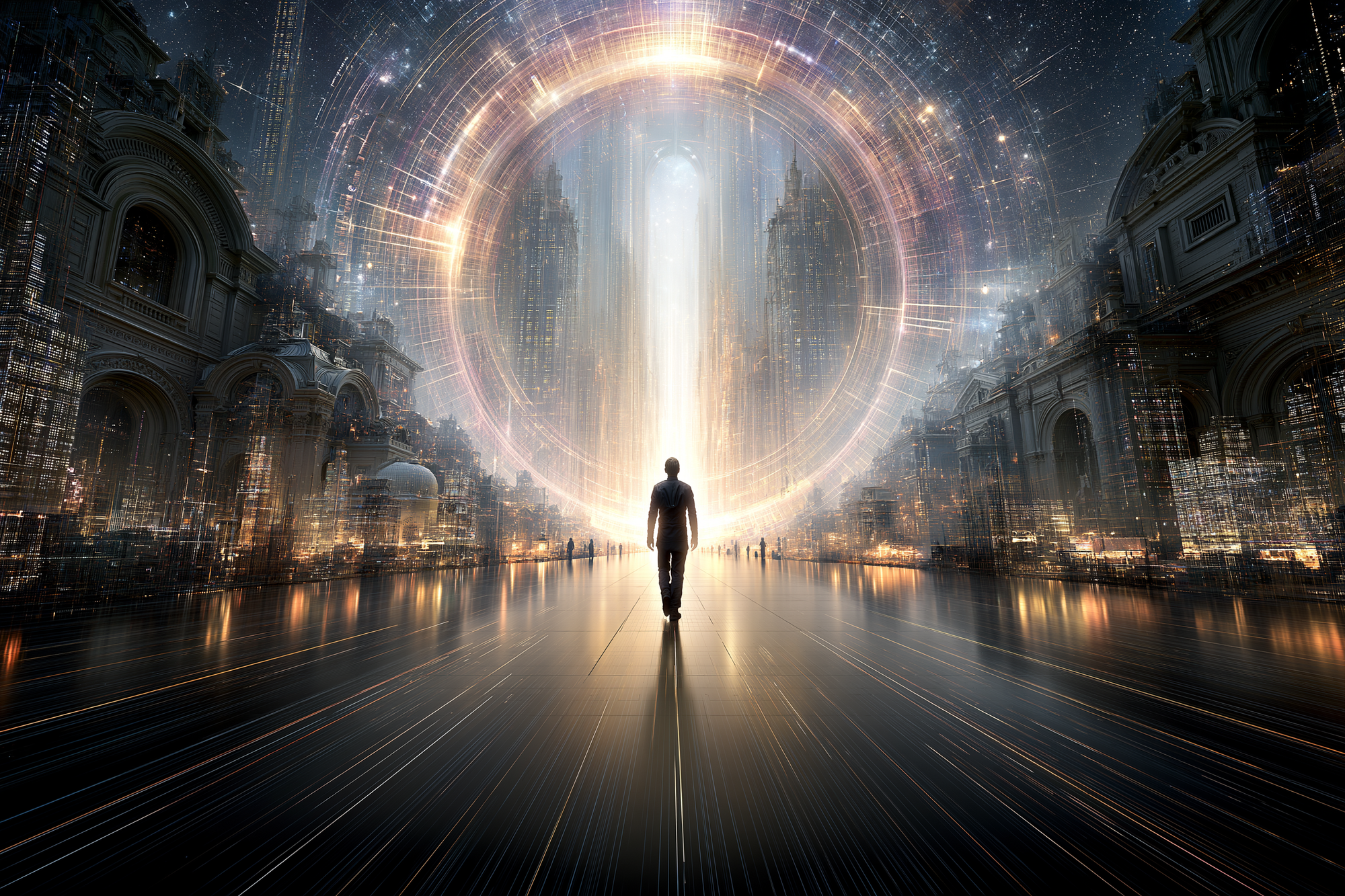
Suppose a future civilization creates a reality that is indistinguishable from physical existence.
Inside that world:
- You possess memories.
- You experience love.
- You create art.
- You learn.
- You grow.
- You suffer.
- You celebrate.
Everything feels real because, to the consciousness experiencing it, it is real.
The question becomes uncomfortable.
If an experience is subjectively indistinguishable from heaven, what exactly makes it something else?
The material it is built from?
The intelligence that created it?
The label attached to it?
Or are those distinctions important only from the outside looking in?
Something about the familiar explanation suddenly feels too small.
Different Paths Into The Mystery
Different frameworks approach this question from very different directions.
The Technological Perspective
An advanced civilization may eventually gain the ability to preserve minds, create immersive realities, and dramatically extend conscious experience.
In this framework, heaven becomes an engineering challenge rather than a supernatural destination.
The Philosophical Perspective
Philosophers have long debated whether subjective experience is the ultimate measure of reality.
If conscious experience is genuine, does the substrate matter?
If joy is experienced, is it less real because it occurs within a simulation?
The Spiritual Perspective
Many spiritual traditions describe reality itself as layered, illusory, or constructed.
Whether through reincarnation, astral realms, bardos, or non-physical dimensions, numerous traditions already entertain the possibility that reality extends beyond what appears immediately physical.
The Simulation Perspective
Speculative frameworks suggest sufficiently advanced civilizations may create realities within realities.
If so, the distinction between "world" and "constructed environment" becomes increasingly difficult to define.
These perspectives do not agree.
Yet all of them circle a similar mystery:
The relationship between consciousness and the worlds it inhabits.
The Tension Remains
A skeptic might argue that heaven is a theological concept and should not be confused with technological capability.
A simulation, regardless of sophistication, remains a simulation.
A scientist might point out that we currently possess no evidence that consciousness can be transferred, preserved, or recreated outside biological systems.
A philosopher may ask whether continuity of identity survives such a process.
Would an uploaded version of you actually be you?
Or merely a copy?
A spiritual thinker might raise a different concern.
Even if technology creates paradise, does paradise alone constitute transcendence?
Can meaning be engineered?
Can wisdom be programmed?
Can eternity be manufactured?
These disagreements matter.
Because they reveal that the question is larger than technology itself.
It is really a question about what we believe consciousness is.
The Larger Horizon
The deeper we look, the stranger the future becomes.
Humanity often imagines advanced civilizations in terms of faster spacecraft, larger megastructures, or more powerful computers.
But what if the most important technology is neither transportation nor energy?
What if it is consciousness itself?
A civilization capable of manipulating stars might still be searching for meaning.
A civilization capable of crossing galaxies might still fear death.
A civilization capable of rewriting biology might still wonder why existence exists at all.
Perhaps intelligence eventually reaches a point where the greatest frontier is no longer space.
It is experience.
Not how to travel farther.
But how to exist differently.
The future may not be defined by where consciousness goes.
It may be defined by what consciousness becomes.
The Civilization That Built Eternity
The Assumption
Most people assume heaven and hell, if they exist, must predate humanity.
They are imagined as ancient features of reality.
Fixed destinations.
Cosmic territories.
The Crack
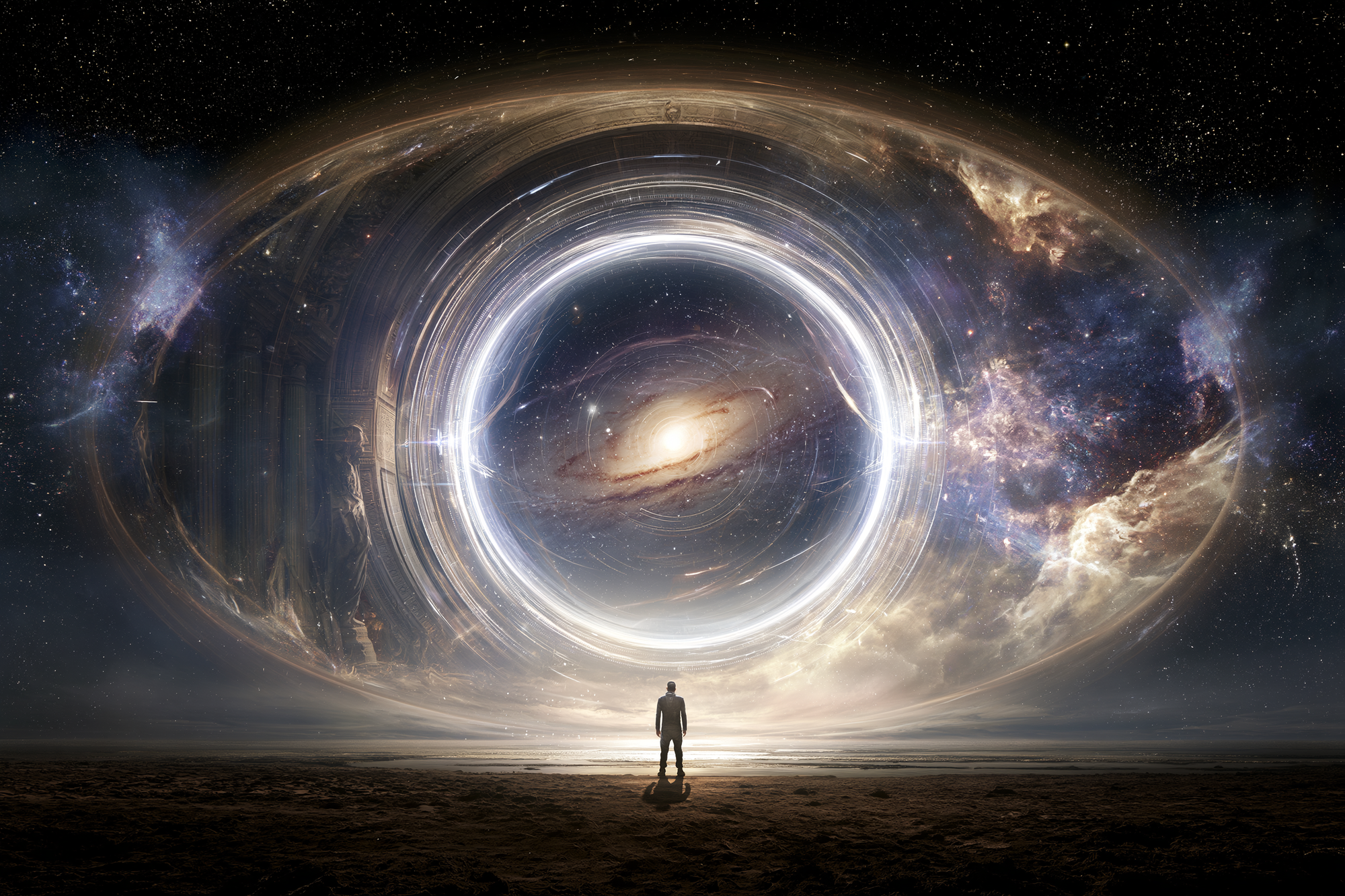
But what if heaven and hell are not ancient?
What if they are future technologies?
Not supernatural landscapes waiting for consciousness.
But realities created by consciousness.
The Wider Lens
Imagine a civilization millions of years older than ours.
A civilization that has mastered matter, energy, biology, and mind.
Such a species may be capable of creating experiences beyond anything humans currently associate with paradise.
Or suffering beyond anything associated with punishment.
At that point, heaven and hell cease being purely religious concepts.
They become possibilities within the toolkit of intelligence itself.
Perhaps every sufficiently advanced civilization eventually confronts the same choice:
What should consciousness experience?
The Return
And suddenly the question changes.
The mystery is no longer whether heaven exists somewhere beyond reality.
The mystery is whether intelligence itself eventually becomes capable of creating realities that function as heaven.
The familiar world may not be false.
It may simply be incomplete.
Perhaps the future does not merely inherit ancient questions.
Perhaps it becomes responsible for answering them.
An Invitation From The Future
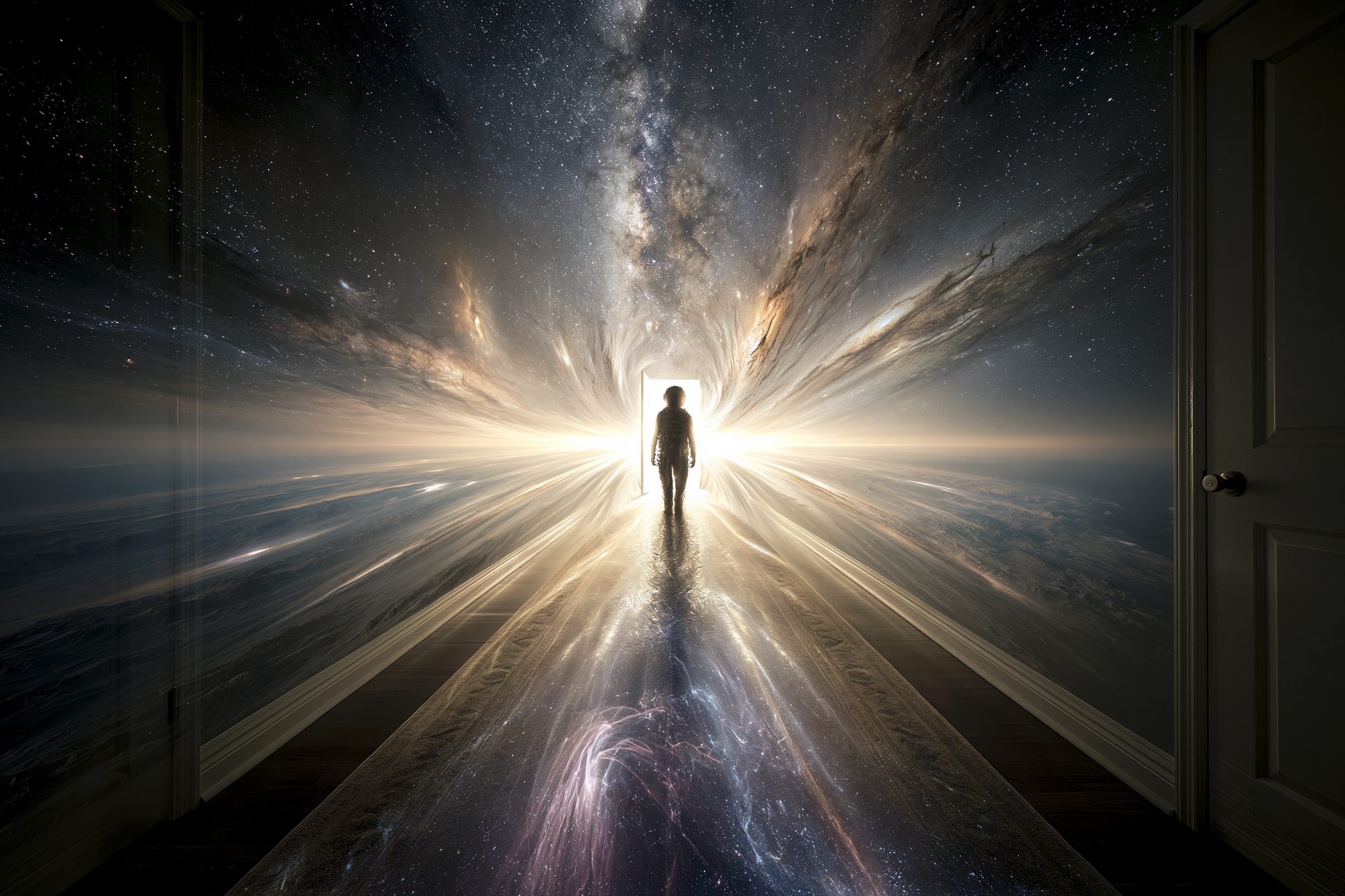
What if the first civilization to solve death does not discover an afterlife?
What if they build one?
And what if humanity eventually receives an invitation?
Not proof.
Not faith.
An invitation.
A doorway offered by a species older, wiser, and more technologically advanced than ourselves.
Would we accept?
Would we trust them?
Would we call it heaven?
Or would we fear becoming permanent residents inside someone else's machine?
Perhaps the deepest future question is not whether immortality becomes possible.
Perhaps it is whether we can recognize the difference between salvation and simulation.
Standing At The Threshold
Every generation inherits mysteries.
Some remain unchanged.
Others evolve alongside us.
For thousands of years, humanity has looked toward the heavens and wondered what awaits beyond death.
Yet the future may introduce a possibility our ancestors never imagined:
That intelligence itself could become powerful enough to construct realities once reserved for gods.
Whether such a future is possible remains unknown.
Whether consciousness can ever be preserved remains unresolved.
Whether an engineered paradise would truly be paradise remains deeply debated.
But perhaps the most interesting question is not whether heaven can be built.
Perhaps it is what that possibility reveals about consciousness, technology, and ourselves.
Because if intelligence eventually learns how to create worlds for minds to inhabit, then the line between the artificial and the divine may become harder to draw than we ever expected.
And if that day comes, humanity may discover that the oldest questions were never left behind.
They were simply waiting for a more advanced version of us to ask them again.
What do you think? Drop your thoughts in the comments ...


Discussion