
Midjourney Medical, Ultrasonic CT, and the strange future of scanning ourselves
There are moments when a technology announcement feels less like a product update and more like a signal flare.
Not because the machine is finished.
Not because the promise has already been proven.
But because the direction itself tells us something.
Midjourney, the company best known for AI-generated images, has revealed a new medical division built around a full-body ultrasound scanner it calls Ultrasonic CT. The pitch is striking: a 60-second body scan, using sound and water instead of radiation or powerful magnetic fields, housed inside a spa-like environment where the scan becomes almost casual.
For a company known for teaching machines how to imagine images, this is a strange turn.
Or maybe it is not strange at all.
First, AI learned to generate the image.
Then it learned to interpret the image.
Now, one of the most culturally visible AI companies is attempting to image the body itself.
The announcement is not just about health technology. It is about a deeper transition. The human body, long treated as private, internal, and hidden, is slowly becoming another layer of readable data.
The question is no longer only what machines can see.
The question is what happens when they begin looking inside us.
Overview
Midjourney has announced Midjourney Medical, a new division focused on a form of full-body imaging it calls Ultrasonic CT.
The company describes the system as a full-body ultrasound scanner. Instead of using ionizing radiation, like X-rays or CT scans, or powerful magnetic fields, like MRI machines, the proposed system uses ultrasonic sound waves moving through water and the human body.
In Midjourney’s description, a person steps into a shallow pool or scanning chamber. The body passes through a ring of underwater sensors. These sensors send sound waves through the body from many angles, then the returning wave patterns are reconstructed into internal images.
Midjourney claims the scan can take as little as 60 seconds.
The company’s long-term ambition is enormous. It says it wants to deploy tens of thousands of scanners around the world and eventually support massive-scale body scanning. Its first public location is planned for San Francisco, attached to a spa-like experience with hot tubs, saunas, cold plunges, and scanning rooms.
The company is not presenting this as a standard hospital product first.
It is presenting it as something closer to a health ritual.
A scan you might do before a sauna.
A body map you might check the way people now check sleep scores, blood oxygen, steps, or heart-rate variability.
That is what makes the announcement so unusual.
This is not only a medical imaging story.
It is a story about normalization.
What Actually Happened
Midjourney released a video and announcement describing its new medical imaging project. The company says the technology is built around sound waves, water, sensors, and heavy computation. It frames the scanner as fast, safe, and potentially more accessible than traditional imaging.
The phrase “no radiation” matters.
Traditional CT scans use ionizing radiation. X-rays use ionizing radiation. MRI machines do not use ionizing radiation, but they do use strong magnetic fields and can be expensive, loud, time-consuming, and inaccessible for many people. Ultrasound, by contrast, uses sound waves and is already widely used across medicine.
Midjourney is attempting to extend ultrasound into something closer to whole-body scanning.
That is the claim.
But the reality is still early.
This is not yet a proven replacement for MRI. It is not yet a public medical diagnostic system. It is not something people should treat as a confirmed revolution in disease detection. Midjourney itself has acknowledged that diagnostic medical capabilities would require regulatory approval, and that the initial direction begins with body-composition maps.
That distinction matters.
A body-composition map is not the same thing as a diagnosis.
A wellness scan is not the same thing as a clinical interpretation.
A beautiful internal image is not automatically a useful medical result.
That is the tension at the center of this case file.
The technology may be promising.
The implication may be enormous.
But the distance between “we can scan the body” and “we can reliably tell you what the scan means” is not small.
Key Claims and Evidence
The central claim is that Midjourney Medical is building a new kind of full-body ultrasound scanner.
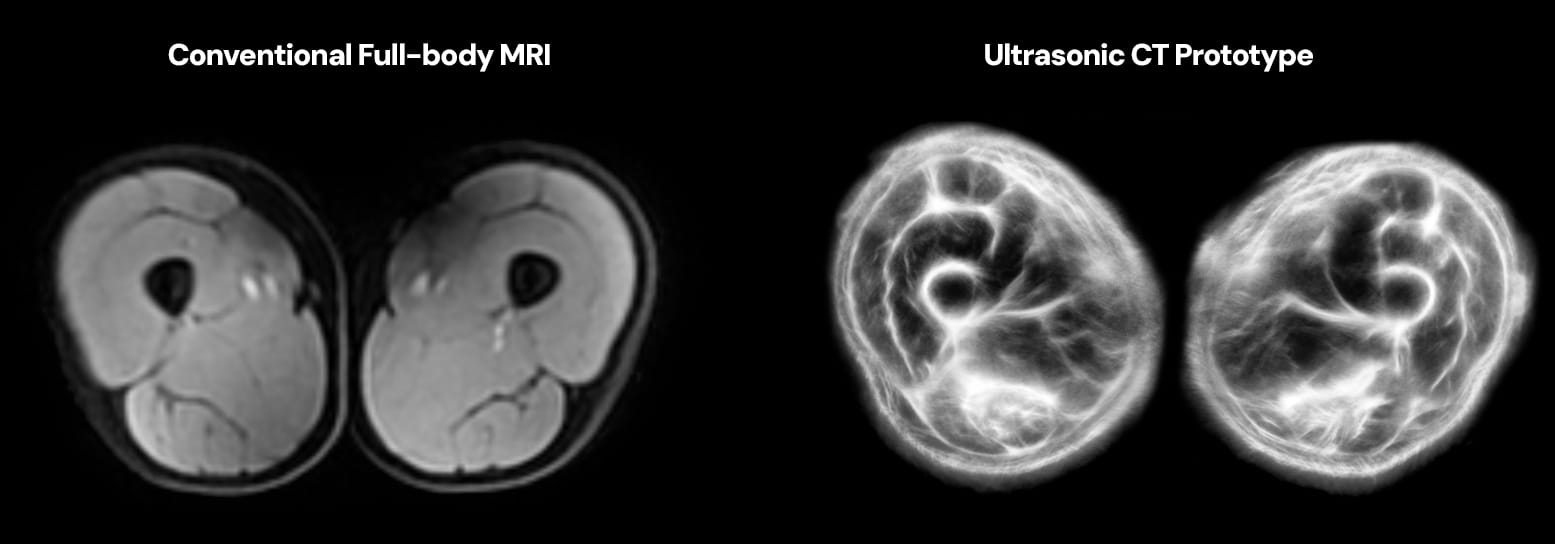
The company calls it Ultrasonic CT, though the name should not be confused with traditional CT scanning, which uses ionizing radiation. In this case, Midjourney is using the term to describe a reconstruction method: gathering sound-wave data from many angles and assembling it into internal body images.
The second major claim is speed.
Midjourney says the scan can take around 60 seconds. If that becomes reliable, it would be a major shift in how people imagine body imaging. MRI scans can take far longer, depending on what is being imaged and how the scan is performed. A quick scan changes the psychology of the experience.
When something becomes fast, it becomes repeatable.
When it becomes repeatable, it becomes trackable.
When it becomes trackable, it becomes part of behavior.
The third claim is safety and comfort.
Midjourney emphasizes that the system uses sound and water, not radiation or powerful magnets. That framing matters because it positions the scanner as something that could become more routine. The spa concept pushes this even further. The scan is not hidden inside a hospital. It is placed inside a wellness environment.
The fourth claim is scale.
Midjourney has described an ambition to deploy thousands of scanners over the next several years. This is not being framed as a niche laboratory prototype. It is being framed as infrastructure.
That is where the story shifts.
Because if the scanner works only as a limited body-composition tool, it is still interesting.
But if the larger vision succeeds, the body becomes a recurring dataset.
Not a one-time medical record.
A living archive.
Points of Tension
The first tension is medical usefulness.
More imaging does not automatically mean better health. Full-body scans can reveal things that are harmless, ambiguous, or difficult to interpret. These are often called incidental findings. A person may discover something that leads to anxiety, extra testing, unnecessary procedures, or a long chain of uncertainty.
The body is full of shadows.
Not every shadow is a threat.
The second tension is interpretation.
A scan is not knowledge by itself. It becomes knowledge only when interpreted correctly. If Midjourney’s scanner produces body maps, who explains them? A doctor? An AI health assistant? A wellness coach? The user?
This is where the technology moves from imaging into meaning.
And meaning is where medicine becomes dangerous if handled casually.
The third tension is regulation.
If the scanner is used for general wellness or body composition, it may occupy one category. If it starts diagnosing disease, detecting tumors, screening organs, or guiding treatment, it enters a different world entirely.
The line between wellness and medicine is not just technical.
It is legal, ethical, and psychological.
The fourth tension is data ownership.
If a person scans their whole body every month, every week, or every day, the result is not just a medical file. It is a biological timeline.
Changes in fat, muscle, organ structure, vascular patterns, tissue density, and anomalies could become part of a personal health archive.
Who owns that archive?
Who can access it?
Can it be shared with doctors?
Can it be used by insurance companies?
Can it be subpoenaed?
Can it be sold, trained on, leaked, hacked, or inferred from?
The fifth tension is cultural.
Once the body becomes measurable in greater detail, the mind begins to change around the measurement.
Fitness trackers already changed how people relate to sleep, steps, heart rate, and recovery. A full-body scanner could do something far more intimate.
It could make the invisible self visible.
And once visible, the body may become another performance dashboard.
Perspectives and Explanations
The Optimistic View
The optimistic view is simple: preventative health is overdue for disruption.
Modern medicine is often reactive. People discover serious health issues after symptoms appear, after disease has progressed, or after routine care fails to catch something early.
If a fast, safe, affordable scan could give people a better understanding of their body over time, that could be transformative.
Imagine detecting changes before they become crises.
Imagine giving doctors longitudinal internal data instead of isolated snapshots.
Imagine making body imaging less expensive, less intimidating, and more accessible.
For people who avoid hospitals, fear medical procedures, or cannot afford advanced scans, a gentler and faster imaging system could change the relationship between person and body.
In this view, Midjourney Medical is not replacing doctors.
It is building a new kind of mirror.
The Skeptical View
The skeptical view begins with a hard truth: medicine is not just sensing.
It is interpretation, validation, evidence, clinical context, and responsibility.
A scanner can produce beautiful images and still fail to answer the question that matters.
Is this finding dangerous?
Does it require action?
Will acting improve the patient’s life?
Could acting cause harm?
Medical history is full of technologies that promised early detection but created complicated tradeoffs. Screening can save lives. It can also over-detect, over-worry, and over-treat.
The skeptical view does not say the scanner is useless.
It says the scanner must earn its claims.
Especially if the marketing language begins drifting toward MRI replacement, disease detection, or mass preventive medicine.
The Philosophical View
The philosophical view asks a different question.
What happens when the hidden body becomes visible on demand?
For most of human history, the body was experienced from the inside. Pain, hunger, fatigue, sensation, aging, movement, breath. The interior was mysterious. Medicine gave us windows into it, but those windows were limited, rare, and usually opened only when something was wrong.
Now the trajectory is different.
We are moving from symptom-based medicine toward continuous self-measurement.
From yearly checkups to real-time metrics.
From the body as lived experience to the body as searchable data.
This is not inherently bad.
But it changes what it means to inhabit a body.
You may no longer simply feel yourself.
You may inspect yourself.
Compare yourself.
Archive yourself.
Optimize yourself.
Fear yourself.
The body becomes less like a mystery and more like a dashboard.
The question is whether that dashboard brings wisdom or obsession.
Context and Pattern Recognition
Midjourney’s move seems strange only if we treat AI image generation as isolated from the rest of technology.
But the pattern is broader.
AI is moving from creative generation into physical interpretation.
It reads medical images.
It reads satellite imagery.
It reads faces.
It reads gestures.
It reads language, voice, movement, and behavior.
It finds patterns where humans cannot easily see them.
Midjourney began as a company that generated images from prompts. But image generation and medical imaging both involve a deeper technical relationship with visual structure. One creates a synthetic image from latent patterns. The other attempts to reconstruct hidden structure from sensor data.
The direction is different, but the obsession is similar.
How do you turn invisible patterns into visible form?
In that sense, Midjourney Medical is not a complete departure.
It is a migration from imagination to anatomy.
The company that helped turn language into images now wants to turn the body into images.
And perhaps eventually, images into insight.
This also fits into a larger cultural pattern: the medicalization of wellness and the consumerization of medicine.
People already track sleep, glucose, heart rate, stress, fertility, recovery, oxygen saturation, and body composition. The next logical step is deeper internal mapping.
The smartphone made the external world searchable.
Wearables made behavior searchable.
Genetic testing made ancestry and risk searchable.
AI health tools may make symptoms searchable.
Full-body scanning may make anatomy searchable.
The body is becoming an interface.
Implications: Reality Check
The immediate reality is more limited than the mythology.
This is not something people can walk into everywhere tomorrow.
It is not yet a proven diagnostic replacement for MRI.
It is not yet clear how accurate it will be across different body types, organs, tissues, and conditions.
It is not yet clear what the final user experience, cost, privacy model, medical oversight, or regulatory pathway will look like.
But the deeper signal is real.
A major AI company is attempting to move into body imaging with a consumer-friendly, wellness-adjacent, spa-like model. That alone is worth paying attention to.
If successful, this could make some forms of imaging more accessible.
It could also blur the line between self-knowledge and self-surveillance.
The same scan that helps someone understand their body could also become a source of anxiety.
The same archive that helps a doctor see change over time could become a privacy risk.
The same technology that democratizes imaging could also create a new market for biological data.
This is why the story matters.
Not because Midjourney has already solved medicine.
But because it is pointing toward a world where the inner body may become part of everyday computation.
The scan is the surface story.
The data layer is the deeper one.
The Unresolved Ledger
What is documented
Midjourney has announced a medical division focused on Ultrasonic CT, a full-body ultrasound scanning system built around sound waves, water, sensors, and computation.
The company says the scan can take around 60 seconds and does not use radiation or powerful magnetic fields.
The company plans a San Francisco spa-like location at the end of 2027.
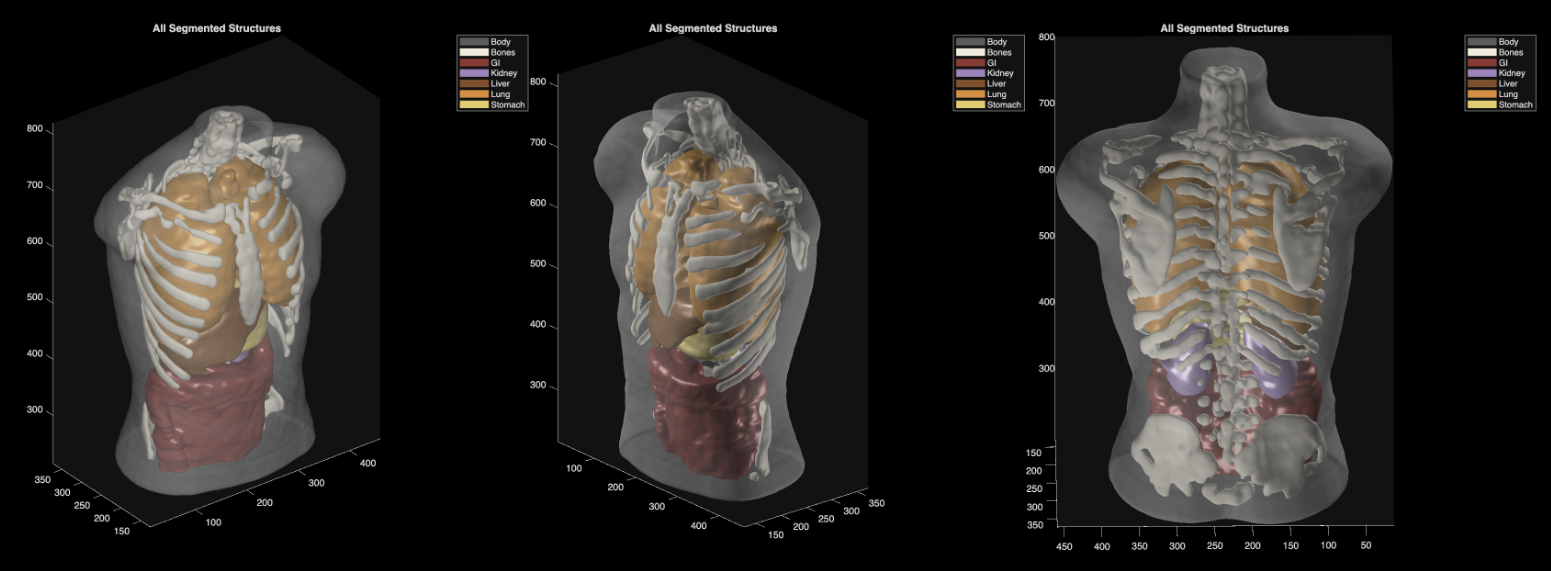
The first publicly described use case appears to begin with body-composition mapping rather than full diagnostic medicine.
What is claimed
Midjourney claims this technology could eventually produce MRI-like internal imaging at much greater speed.
It claims the experience could become casual, comfortable, and repeatable.
It claims the scanner could help people build a deeper awareness of their health.
It has suggested a future where scanning becomes routine enough to generate large personal health libraries.
What remains unresolved
It remains unclear how clinically useful the scanner will be.
It remains unclear whether it can reliably detect disease.
It remains unclear how the system will perform compared to MRI, CT, ultrasound, DEXA, and other established tools.
It remains unclear how privacy, data ownership, medical interpretation, and regulatory approval will work.
It remains unclear whether mass scanning will improve health outcomes or increase anxiety and unnecessary intervention.
Why it still matters
This announcement matters because it reveals a direction.
AI is no longer staying inside text boxes and image generators.
It is moving toward the body.
If the body becomes searchable, medicine could become more preventative, personalized, and accessible.
But if the body becomes searchable without wisdom, privacy, and clinical grounding, the most intimate part of human life could become another data stream to optimize, monetize, and fear.
The Galactic Mind Perspective
The most interesting part of Midjourney Medical is not the scanner itself.
It is the shift in imagination.
A company associated with dreamlike images is now asking us to imagine a world where internal body scans are casual. Not rare. Not frightening. Not locked inside hospitals. Casual.
A scan before the sauna.
A body map after a workout.
A health archive that grows over time.
There is something powerful in that vision. A civilization that can see inside the body more easily may catch more problems, understand aging more clearly, and bring advanced imaging to more people.
But there is also something unsettling.
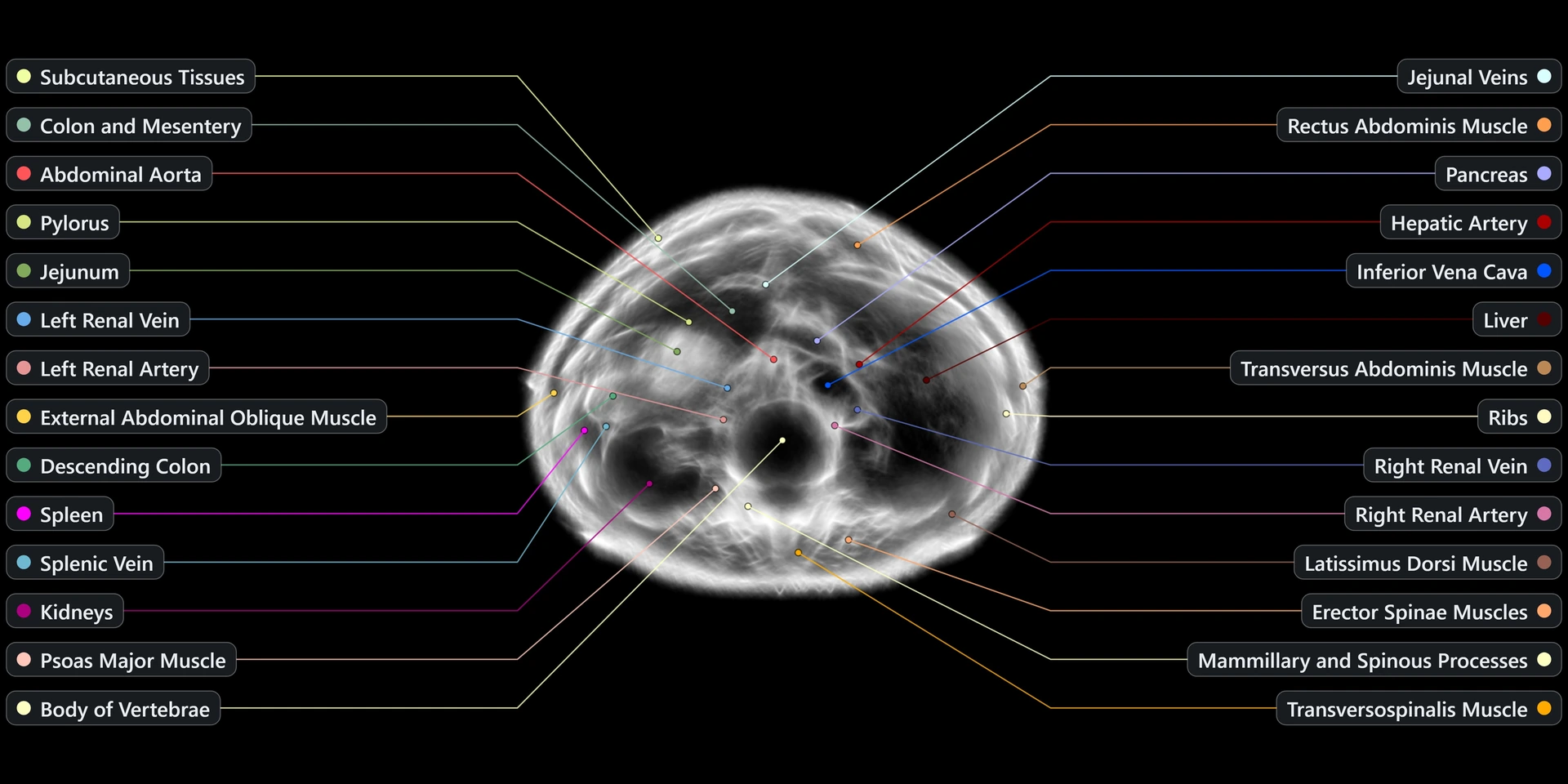
The mystery of the body has always been part of being human. Not because ignorance is good, but because embodiment is not only information. A body is not just a file. It is not just a scan. It is not just a map of tissue densities and segmented organs.
It is the place where consciousness arrives.
It is the vessel through which the world is felt.
It is the hidden interior of a life.
To make the body visible is not wrong.
But to make it constantly visible changes the relationship between self and flesh.
Midjourney Medical may become a useful tool. It may become a limited wellness product. It may struggle against physics, regulation, adoption, or clinical reality. All of that remains open.
But the signal is already here.
The next frontier of AI may not be only the image, the voice, the agent, or the robot.
It may be the body itself.
Not the body as an object.
The body as a searchable field.
The question is whether we will use that field to become healthier, or whether we will turn ourselves into another archive we no longer know how to read.
Open Question
If the human body becomes searchable, will we become more at home inside ourselves, or more alienated from the mystery of being alive?
Sources / Receipts
Primary source: Midjourney Medical official announcement and blog post.
Additional reporting: The Verge coverage of the Midjourney Scanner, including the Butterfly Network ultrasound-on-chip modules, scan process, and initial non-diagnostic framing.
Additional reporting: Business Insider coverage noting medical caution around frequent full-body scanning, incidental findings, and regulatory questions.
Regulatory context: FDA guidance on general wellness products and medical device determination.


Discussion