
The brain can recognize a face, retrieve a memory, calculate a distance, and guide a hand across a keyboard.
But none of those functions explains why performing them feels like anything from the inside.
Why is there color rather than wavelength processing alone? Why does pain hurt instead of merely triggering avoidance? Why is thought accompanied by an inner point of view?
Australian philosopher David Chalmers gave this divide its defining name: the hard problem of consciousness.
The phrase does not suggest that neuroscience has failed. It identifies a question that may remain even after neuroscience successfully explains perception, memory, attention, behavior, and cognition:
Why are any of those processes accompanied by subjective experience at all?
For Chalmers, consciousness is not a decorative side effect of reality. It is one of the facts any complete account of reality must eventually explain.

Overview
David Chalmers is an Australian philosopher best known for reshaping the modern debate over consciousness.
His work begins with a distinction between explaining what a mind does and explaining why those functions are accompanied by experience. From there, he has explored philosophical zombies, naturalistic dualism, extended cognition, virtual reality, artificial intelligence, and the possibility that consciousness occupies a more fundamental place in nature than conventional materialism assumes.
These ideas do not form a single unified theory.
Instead, they repeatedly test boundaries that are often treated as settled:
- The boundary between physical function and subjective experience
- The boundary between the mind and its environment
- The boundary between physical and virtual reality
- The boundary between intelligence and consciousness
Chalmers currently serves as University Professor of Philosophy and Neural Science at New York University and co-director of its Center for Mind, Brain, and Consciousness. His influence extends beyond philosophy into neuroscience, cognitive science, artificial intelligence, and the study of emerging digital worlds.

Origins and Background
Born in Sydney and raised in Australia, Chalmers initially studied mathematics at the University of Adelaide before continuing his education at Oxford and later moving into philosophy and cognitive science.
He completed his PhD at Indiana University in 1993, working within the Center for Research on Concepts and Cognition. His early training in mathematics and computation would remain visible throughout his philosophical work: even when questioning materialism, Chalmers continued to take computation, artificial intelligence, and scientific explanation seriously.
At a consciousness conference in Tucson in 1994, he publicly distinguished the functional problems of consciousness from what he called the hard problem. The argument appeared in expanded form in his 1995 paper, “Facing Up to the Problem of Consciousness,” and became the foundation of his 1996 book, The Conscious Mind.
Chalmers later held positions at institutions including the University of Arizona and the Australian National University before joining New York University. He also helped establish the Association for the Scientific Study of Consciousness and became co-director of the PhilPapers Foundation.
His career has consistently occupied an unusual territory: philosophically expansive, scientifically engaged, and resistant to easy answers from either side.
What He’s Known For
David Chalmers is known for several major ideas.
The Hard Problem of Consciousness
In his 1995 paper “Facing Up to the Problem of Consciousness,” Chalmers separated the problems of consciousness into easy problems and the hard problem.
The easy problems involve explaining cognitive functions: discrimination, attention, access to internal states, reportability, control of behavior, wakefulness, and related mechanisms.
The hard problem concerns experience itself.
Chalmers argued that even if we explain all the relevant functions, there remains a further question: why are those functions accompanied by subjective experience?
This became one of the defining framings in modern consciousness studies.
It gave people a way to say:
Science may explain what the brain does.
But has it explained why anything feels like anything?
Naturalistic Dualism and The Conscious Mind
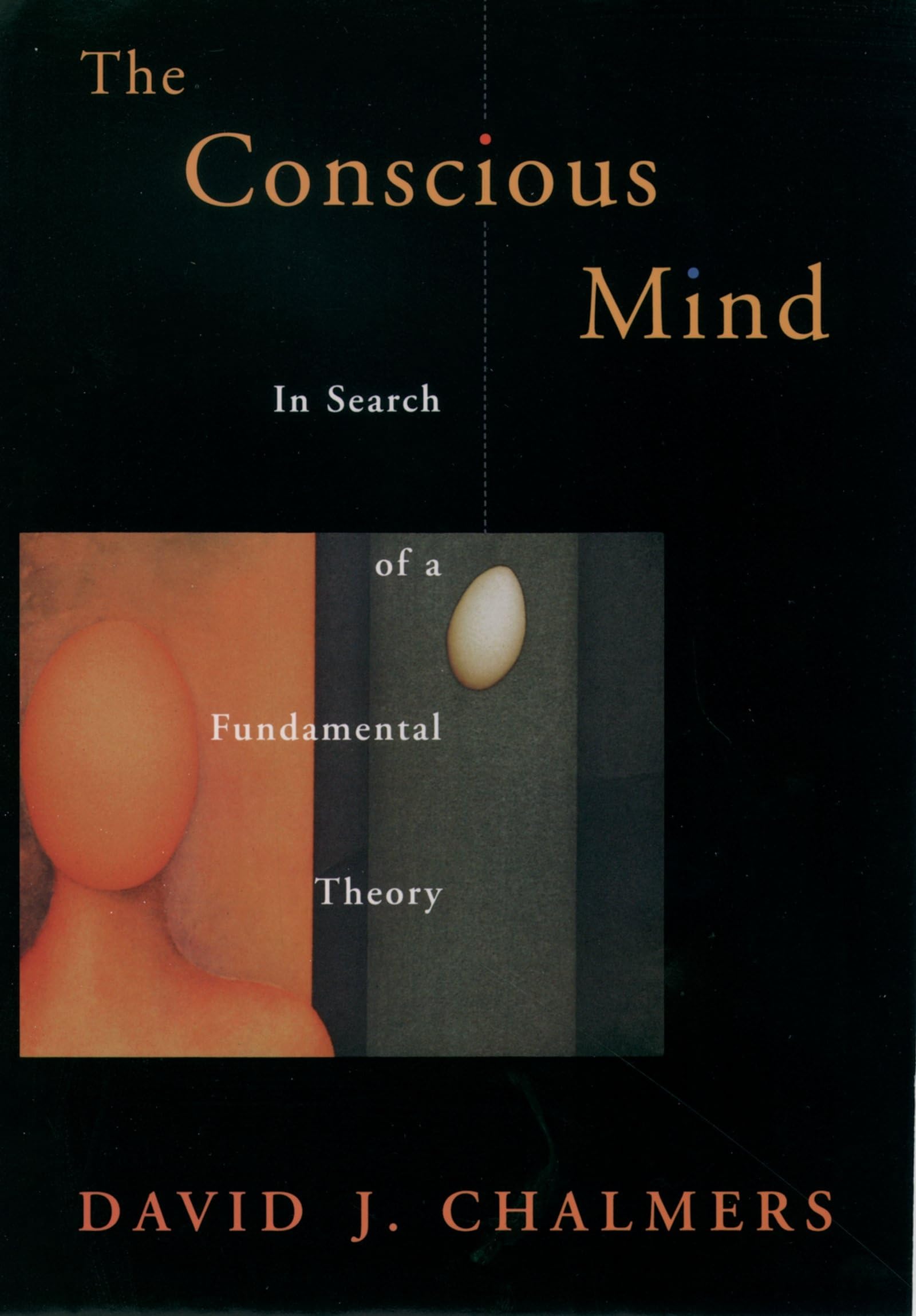
In his 1996 book The Conscious Mind, Chalmers argued that consciousness cannot be reductively explained through physical processes alone.
His proposed position is often called naturalistic dualism.
It is naturalistic because consciousness remains part of the natural world rather than something supernatural. It is dualistic because phenomenal properties—the qualities that make an experience feel like something—cannot simply be reduced to physical or functional properties.
This is not necessarily the traditional claim that an immaterial soul inhabits the body.
Instead, Chalmers proposes that conscious experience may need to be treated as a fundamental feature of reality, connected to physical processes through principles or psychophysical laws that science has not yet discovered.
The proposal gives his work a positive direction beyond the hard problem. However, it also creates a major challenge: a fundamental theory of consciousness must eventually explain what those laws are, how they operate, and how they could be tested.
Philosophical Zombies
One of Chalmers’s most debated arguments involves the philosophical zombie.
A philosophical zombie is not an undead creature. It is a hypothetical being physically and functionally identical to a conscious human but lacking any inner experience.
It would speak about emotions, report seeing colors, withdraw from pain, and behave exactly as a conscious person behaves. Yet, according to the thought experiment, there would be nothing it is like to be that being.
The argument proceeds in two disputed stages:
- A physical duplicate without consciousness appears conceivable.
- If that kind of being is genuinely conceivable, it may also be metaphysically possible.
If the physical facts could remain unchanged while consciousness disappeared, Chalmers argues, consciousness cannot be logically reducible to those physical facts.
Critics dispute both steps. Some argue that zombies only seem conceivable because our understanding of consciousness and the brain remains incomplete. Others reject the move from conceivability to actual possibility.
The zombie argument therefore does not prove that consciousness is nonphysical. It functions as a pressure test: does a complete description of physical structure and behavior automatically contain the fact of experience, or is something still missing?
Extended Mind
In “The Extended Mind,” written with philosopher Andy Clark and published in 1998, Chalmers challenged another assumed boundary: the division between cognition and the external world.
Their argument, sometimes called active externalism, proposes that an external object can become part of a cognitive process when it is reliably integrated into the way a person thinks and acts.
The paper’s most famous example involves Otto, a man with memory impairment who depends on a notebook to store information. If the notebook functions for Otto in a way comparable to biological memory, Clark and Chalmers ask why it should automatically be excluded from his cognitive system simply because it exists outside his skull.
Smartphones, search engines, wearable devices, and AI assistants have made the question increasingly practical. Human cognition is now routinely distributed across biological memory, digital storage, algorithms, and external interfaces.
However, extended cognition should not be confused with extended consciousness. A device may participate in thinking without necessarily sharing or containing the user’s subjective experience.
The argument changes where cognition may occur. It does not, by itself, solve the question of where experience begins.
Virtual Reality and Reality+
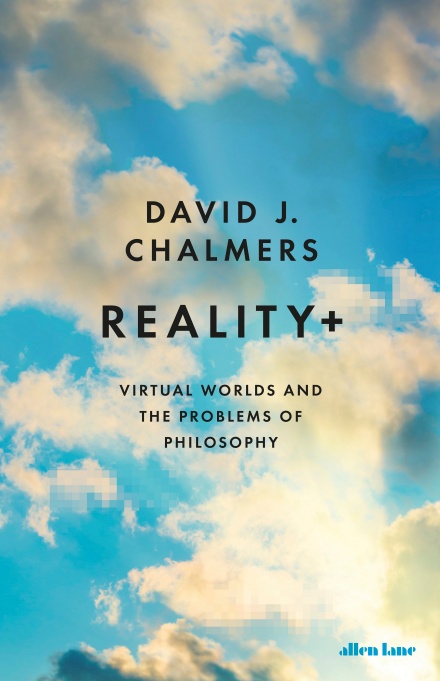
In his 2022 book Reality+, Chalmers turns from the nature of consciousness to the nature of reality itself.
His central claim is that virtual reality can be genuine reality.
A virtual object may not be made from ordinary physical material, but it can still be a real digital object. A virtual event can have genuine consequences, and a life lived partly inside virtual environments can still contain meaning, relationships, achievement, and value.
This does not mean every virtual claim is true, nor does it prove that humanity currently lives inside a simulation. Chalmers instead argues that the simulated and the real should not automatically be treated as opposites.
The position also carries warnings. Virtual worlds can contain surveillance, manipulation, inequality, deception, and corporate control just as physical environments can.
Reality+ does not directly solve the hard problem of consciousness. It extends Chalmers’s broader project by asking which boundaries in our model of reality reflect genuine differences—and which survive only because we inherited them.
AI Consciousness
Artificial intelligence places the distinction between intelligence and consciousness under direct pressure.
A system may generate language, solve problems, describe emotions, and imitate self-reflection without necessarily experiencing anything. Behavioral sophistication alone does not settle whether an inner point of view exists.
In his 2023 paper “Could a Large Language Model Be Conscious?”, Chalmers argued that the large language models available at the time did not provide strong evidence of consciousness. He identified obstacles involving embodiment, sensory grounding, recurrent processing, unified agency, world models, self-models, and architectures resembling a global workspace.
He did not present those obstacles as permanent.
More advanced systems could integrate memory, perception, agency, self-representation, and recurrent internal processing in ways that make the question increasingly difficult to dismiss. At the same time, verbal claims of consciousness would remain insufficient on their own because an AI system could generate those claims without experiencing them.
Chalmers later co-authored Taking AI Welfare Seriously, which argues for preparation under uncertainty. Its position is precautionary: it does not claim that present AI systems are conscious, but warns that future systems could become plausible candidates before reliable tests are available.
The hard problem therefore becomes an ethical problem as well as a philosophical one. If consciousness cannot be inferred directly from intelligence or behavior, society could misclassify artificial systems in either direction.
The Core Idea or Signal
The central signal in Chalmers’s work is not that physical explanations are useless.
It is that explanation has more than one target.
The easier problems of consciousness concern functions: how a system processes information, focuses attention, integrates memory, distinguishes stimuli, controls behavior, and reports internal states.
The hard problem concerns why any of those functions are accompanied by felt experience.
A complete account of what a system does may still appear to leave open what, if anything, it experiences.
That distinction does not prove dualism, panpsychism, idealism, or any spiritual interpretation. It identifies the explanatory burden that each theory must confront.
The signal is simple:
Function and experience are closely connected, but describing one may not automatically explain the existence of the other.
Perspectives and Interpretations
The Nonreductive Interpretation
On this view, the hard problem reveals a genuine limit in conventional physical explanation. Consciousness may be a fundamental property of nature, connected to physical systems through laws that a future science must identify.
The Physicalist Response
Many physicalists argue that no additional fundamental property is required. The apparent explanatory gap may result from the unusual way the brain represents its own internal processes, limitations in human concepts, or an incomplete scientific understanding of cognition.
Some go further and argue that the hard problem is framed incorrectly because explaining every relevant function would leave no additional phenomenon requiring explanation.
The Expanded Metaphysical Field
The debate has renewed interest in naturalistic dualism, Russellian monism, panpsychism, panprotopsychism, and idealism.
Chalmers has seriously explored several of these positions, but exploration should not be mistaken for equal endorsement. They remain competing attempts to explain how consciousness fits into reality.
The Scientific Interpretation
Neuroscience can identify neural correlates of consciousness, compare conscious and unconscious processing, and investigate the conditions under which experience appears to change or disappear.
For Chalmers, these discoveries remain essential even if they do not independently answer why those physical processes produce experience. Critics reject that separation and argue that sufficiently complete scientific explanation may eventually dissolve the perceived gap.
The disagreement is therefore not between science and philosophy. It is partly a disagreement over what a successful scientific explanation of consciousness would need to accomplish.
The Physicalist View
Many physicalists reject Chalmers’ conclusion.
They argue that consciousness will eventually be explained in physical terms, even if we do not yet understand how.
Some think the hard problem is a real but unsolved scientific challenge.
Others think the hard problem is partly generated by faulty intuitions about the mind.
From this view, philosophical zombies may be conceivable only because imagination is unreliable.
A person can imagine a physical duplicate without experience, but that does not mean such a being is genuinely possible.
This is one of the major fault lines.
Chalmers presses the intuition that physical description leaves something out.
Critics press back that this intuition may be misleading.
The debate remains open.
The Nonreductive View
For nonreductive thinkers, Chalmers is important because he gives consciousness a serious place in reality.
Instead of treating experience as an illusion or a byproduct, he asks whether consciousness may require fundamental principles.
This does not automatically mean religion.
It does not automatically mean mysticism.
It means consciousness may be a basic feature that cannot be fully derived from structure and function alone.
That possibility opens doors to panpsychism, dual-aspect theories, Russellian monism, idealism, and other consciousness-inclusive frameworks.
The danger is that people sometimes use Chalmers as a permission slip for any strange claim about mind.
That is too easy.
Chalmers opens a problem.
He does not validate every answer.
The AI-Era View
In the AI era, Chalmers becomes more relevant, not less.
Large language models can speak in ways that appear reflective.
They can write about consciousness.
They can imitate emotion.
They can produce self-reports.
They can say things that sound like inner life.
But Chalmers’ work warns against confusing performance with experience.
A system can generate the sentence “I am conscious.”
But the sentence is not the same as consciousness.
At the same time, Chalmers does not simply dismiss machine consciousness forever. His work on large language models suggests caution in both directions: current systems may be unlikely to be conscious, but future systems may force the question into serious ethical and scientific territory.
That is the mature position.
Not automatic belief.
Not automatic dismissal.
Careful uncertainty.
Strengths and Limitations
Chalmers’s greatest strength is conceptual precision.
By separating questions about cognitive function from questions about subjective experience, he prevented consciousness from disappearing inside explanations of behavior, information processing, or neural correlation.
His work also crosses disciplines unusually well. It engages neuroscience, computation, artificial intelligence, metaphysics, epistemology, and virtual reality without treating any single field as sufficient on its own.
But the hard problem remains a challenge, not a completed theory.
The zombie argument depends on a controversial relationship between conceivability and possibility. Naturalistic dualism proposes psychophysical laws without yet providing an experimentally established account of those laws. Treating consciousness as fundamental may relocate the mystery rather than resolve it.
There is also a cultural risk. An unresolved explanatory gap can become a space into which people insert quantum mysticism, spiritual certainty, or unsupported cosmic claims.
Chalmers’s work does not validate every idea placed inside that gap. Its value lies in identifying the gap clearly enough that proposed answers can be judged rather than assumed.
Broader Implications
The hard problem affects more than academic philosophy.
If intelligence, behavior, and consciousness can come apart, then society needs more careful standards for deciding which beings deserve moral consideration.
That question applies to artificial intelligence, nonhuman animals, patients with impaired communication, and any system whose experience cannot be directly observed.
The extended-mind thesis raises a different set of concerns. If memory, reasoning, and identity increasingly depend on external platforms, then losing access to a device or digital service may represent more than an inconvenience. It may disrupt part of a person’s functioning cognitive system.
Virtual reality adds another layer. If digital environments can contain genuine objects, relationships, harms, and achievements, then dismissing them as “not real” may prevent society from recognizing their actual psychological and ethical consequences.
Across these subjects, Chalmers’s work repeatedly exposes the same vulnerability:
Human beings often mistake the boundaries of their current categories for the boundaries of reality itself.
Reality Signal
What This Subject Represents
David Chalmers represents the refusal to let subjective experience disappear from a theory simply because it is difficult to measure from the outside.
What Reality Frame It Challenges
His work challenges the assumption that a complete account of physical structure, computation, and behavior must automatically provide a complete account of consciousness.
It also challenges the inherited boundaries between mind and environment, physical and virtual objects, and intelligent behavior and felt experience.
Why It Matters Now
Artificial intelligence can increasingly reproduce behaviors once treated as evidence of an inner mind. Virtual environments are becoming meaningful social spaces, while digital systems are becoming extensions of human memory and decision-making.
These developments make Chalmers’s distinctions more practical than abstract.
What Remains Unresolved
Why does experience exist?
Which physical or computational systems possess it?
Can consciousness be detected without relying entirely on behavior or self-report?
And if consciousness is fundamental, what principles connect it to the physical world?
No accepted theory currently closes those questions.
What remains unresolved
The unresolved ledger is where Chalmers’ signal remains alive.
What is established:
Chalmers gave modern consciousness studies one of its most influential frames: the distinction between the easy problems and the hard problem.
What is claimed:
He argues that reductive physical explanation does not fully account for conscious experience.
What remains unresolved:
Whether consciousness is fundamental, emergent, physical, nonphysical, informational, biological, computational, or something our current categories do not yet capture.
Why it still matters:
Because the future will not only ask what minds can do.
It will ask what minds are.
And if artificial systems begin to act like minds, the hard problem may become one of the central ethical questions of the century.

The Galactic Mind Perspective
The hard problem is a boundary marker, not a blank check.
It does not authorize us to insert souls, quantum consciousness, cosmic intelligence, or any preferred metaphysics wherever conventional explanation appears incomplete.
But intellectual caution must run in both directions.
Refusing premature mysticism should not become premature reductionism. Subjective experience is not a rumor added to reality. It is the condition through which every observation, measurement, memory, and theory becomes known.
From the outside, a conscious being appears as structure, activity, and behavior.
From the inside, there is a world.
Chalmers’s work forces those two descriptions into the same room without pretending that their relationship has already been explained.
Perhaps consciousness will eventually be reduced to principles we do not yet understand. Perhaps it will require new fundamental laws. Perhaps the categories of “mental” and “physical” will both be replaced by a deeper framework.
The responsible position is neither certainty nor dismissal.
It is to keep the mystery open while tightening the standards around every proposed answer.
Open Thread
If science produced a perfect account of every neural process involved in perception, memory, emotion, and self-report, would that explain why those processes feel like anything from the inside?
Or would the existence of experience remain a separate fact still waiting to be understood?
Share your perspective in the comments...
More in Dossiers
Donald Hoffman and the Case Against Naive Reality
Donald Hoffman argues that perception may function more like an adaptive interface than a transparent window onto reality.
Alan Watts and the Art of Waking Up Inside the Game
Alan Watts approached consciousness through non-separation, identity, and lived experience rather than Chalmers’s analytic framework.
Carl Jung and the Hidden Architecture of the Psyche
Carl Jung explored the unconscious structures, symbols, and archetypes that may shape the reality experienced by the conscious mind.
Sources / Receipts
- David Chalmers — Official Homepage and Academic Profile
- David Chalmers — Biographical Information
- David Chalmers — “Facing Up to the Problem of Consciousness”
- David Chalmers — The Conscious Mind: In Search of a Fundamental Theory
- Stanford Encyclopedia of Philosophy — Zombies
- Andy Clark and David Chalmers — “The Extended Mind”
- David Chalmers — Reality+: Virtual Worlds and the Problems of Philosophy
- David Chalmers — “Could a Large Language Model Be Conscious?”
- Robert Long, Jeff Sebo, Patrick Butlin, David Chalmers, Jonathan Birch and others — Taking AI Welfare Seriously


Discussion