
Overview: What This Is
Farsight is a remote-viewing organization, educational project, and subscription media platform founded by political scientist Courtney Brown. It presents remote viewing as a trainable means of acquiring information about distant, hidden, past, or future targets without ordinary sensory access. Its viewers are typically shown on video producing verbal impressions, drawings, textures, movements, and emotional descriptions before the target is disclosed to them.
The organization occupies an unusual position. Its ancestry reaches back to the laboratory and intelligence experiments that began at Stanford Research Institute in the 1970s. Its present form belongs to a very different world: streaming video, social platforms, UAP culture, online communities, branded methods, and recurring projects about subjects that conventional instruments cannot always verify. Farsight has applied remote viewing not only to ordinary physical locations but also to ancient events, religious figures, alleged extraterrestrial beings, disputed UAP footage, future developments, and hidden political activity.
That combination has made Farsight one of the clearest expressions of the modern remote-viewing revival. It preserves the procedural language of an experiment—targets, taskers, blind viewers, sessions, data, and reveals—while packaging the result as cinematic investigation. To supporters, this is a public demonstration of nonlocal consciousness. To skeptics, it is a system in which ambiguous impressions acquire meaning only after editors, taskers, and audiences know the desired story.
Farsight belongs in The Galactic Mind archive because it brings a foundational question about mind into contact with a foundational question about evidence. Can consciousness obtain information beyond the senses? And if the answer might be yes, how would we distinguish that signal from cueing, coincidence, creative association, selective memory, and narrative construction?
The first question keeps remote viewing alive. The second determines whether it can mature.
Origins and Background
Modern remote viewing did not begin with Farsight, and it should not be reduced to the name Stargate. In 1972, the CIA began supporting investigations at Stanford Research Institute into alleged anomalous perception. Physicists Russell Targ and Harold Puthoff published a 1974 paper in Nature reporting results they believed suggested information transfer under sensory shielding. The research later moved among contractors, military units, agencies, and program names, including GRILL FLAME, CENTER LANE, SUN STREAK, and eventually STAR GATE.
The premise was operationally seductive. If a person could describe a distant installation, hostage location, object, or activity without being physically present, intelligence services would possess a collection method that ignored borders and conventional defenses. Declassified records confirm that government personnel funded, conducted, and requested remote-viewing sessions. Those documents establish a real institutional history. They do not establish that psychic spying worked reliably.
From the beginning, the experimental record produced disagreement. Targ and Puthoff reported striking results, while psychologists David Marks and Richard Kammann failed to verify their conclusions in duplicate experiments and identified possible cues in transcripts used by judges. Marks later argued that when those cues were removed, the apparent matching success disappeared. Puthoff and Targ disputed that criticism, maintaining that legitimate descriptive material had also been removed and that later work addressed earlier weaknesses. The dispute identified a problem that still defines the field: remote viewing is not evaluated only at the moment a viewer speaks or sketches. It is evaluated through an entire chain of target construction, information isolation, transcript handling, comparison, judging, scoring, and reporting.
A 1988 National Research Council review found little or no scientific support for the usefulness of remote viewing. The most consequential government assessment arrived in 1995, when the CIA commissioned the American Institutes for Research to evaluate both the laboratory research and its intelligence application. Statistician Jessica Utts concluded that the accumulated experiments demonstrated a statistically significant anomalous effect. Psychologist Ray Hyman agreed that the reported statistics required explanation but argued that paranormal functioning had not been established, particularly without stronger independent replication and fuller examination of possible methodological artifacts.
The AIR report did not pretend that this disagreement had vanished. It concluded that a statistically significant laboratory effect had been observed, but that it remained unclear whether a paranormal phenomenon had been demonstrated. Operationally, its judgment was firmer: the information was commonly vague, inconsistent, inaccurate in specific details, and dependent on substantial subjective interpretation. The evaluators found no case in which remote-viewing information had guided an intelligence operation. They recommended against continuing the program for intelligence collection, and the program was terminated.
That ending created the conditions for a civilian afterlife. Veterans, researchers, trainers, and enthusiasts carried different methods into books, seminars, private consultancies, associations, and later online media. Remote viewing left the classified environment at roughly the same time the public internet was beginning to connect previously isolated anomalous communities.
Courtney Brown founded The Farsight Institute in 1995. Emory University currently lists him as an associate professor of political science whose academic work centers on complex systems, nonlinear modeling, statistics, elections, and environmental politics. His remote-viewing work is institutionally separate from that university role. Farsight describes its nonprofit arm, Farsight Research, Inc., as a research and educational organization, while a separate for-profit corporation supports commercial products and the Farsight Prime streaming service.
Brown’s early public remote-viewing work was already oriented toward extraordinary subjects. His 1996 book Cosmic Voyage described claimed encounters with extraterrestrial civilizations and spiritual figures through what he called Scientific Remote Viewing. In November 1996, he appeared on Art Bell’s radio program and said Farsight viewers had perceived an artificial, inhabited companion object associated with Comet Hale–Bopp. Astronomers identified the initial supposed anomaly as an ordinary star omitted by a software setting, while a later image promoted in the controversy was found to be altered. No spacecraft was independently observed.
The Hale–Bopp “companion” rumor entered the information environment surrounding Heaven’s Gate before the group’s 1997 mass suicide. Historical accounts document that the group incorporated a supposed craft behind the comet into its existing beliefs. That makes the episode ethically important, but it does not justify the simple claim that Brown or Farsight caused the deaths. Heaven’s Gate had its own developed theology, leadership, and history. The responsible lesson is narrower and more durable: when unverifiable anomalous claims are delivered as discovered facts, their effects do not remain under the control of the person making them.
Farsight survived that controversy and continued developing training materials, experiments, books, video projects, and branded protocols. Over time, its public identity shifted from a small institute attempting to formalize remote viewing into a prolific media operation presenting its sessions as an alternative way of investigating reality.
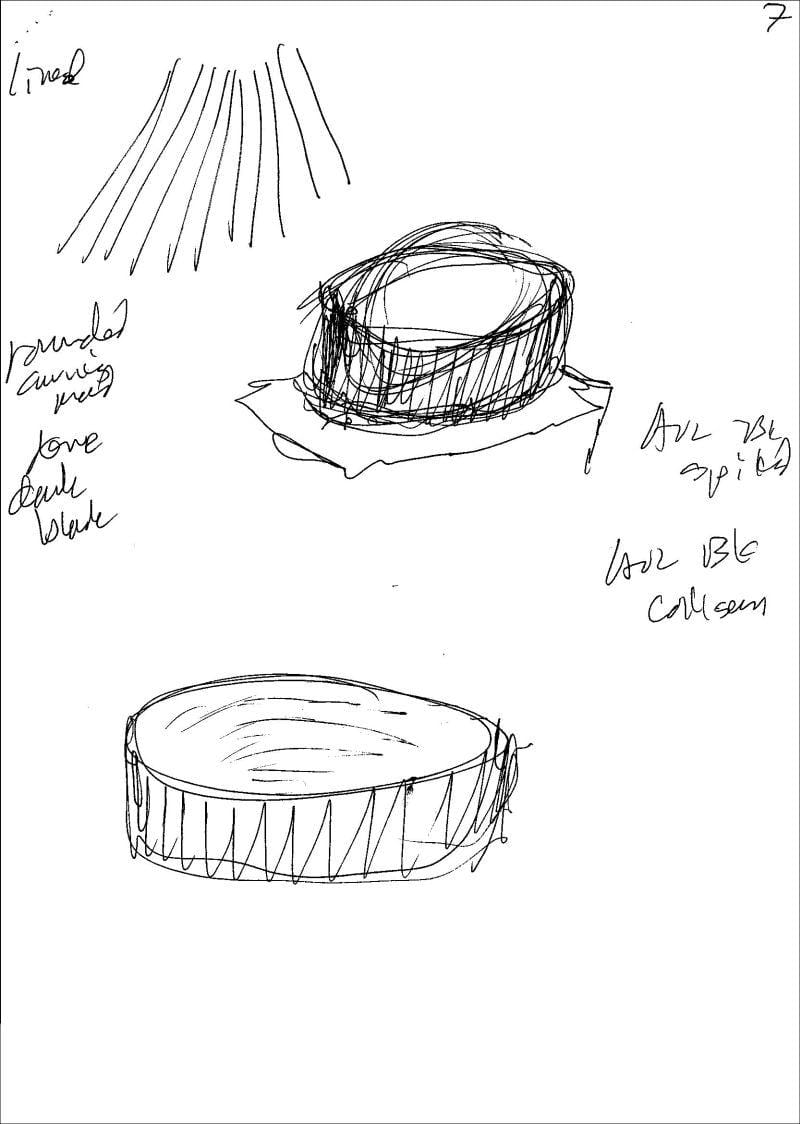
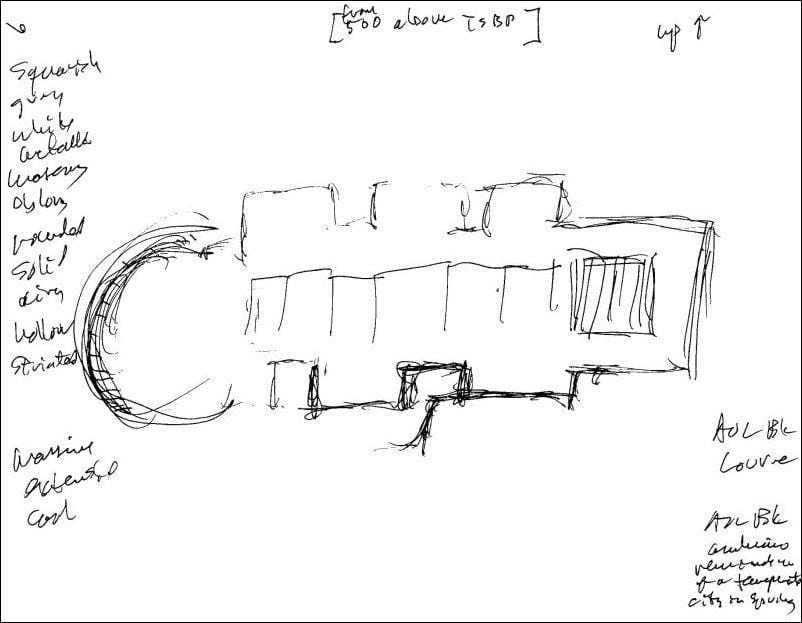
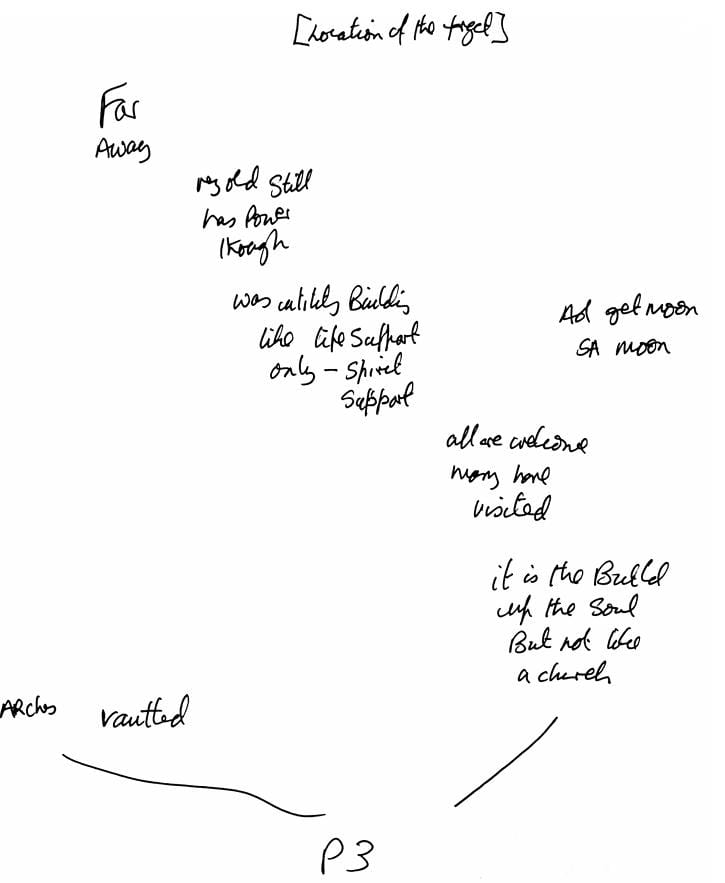
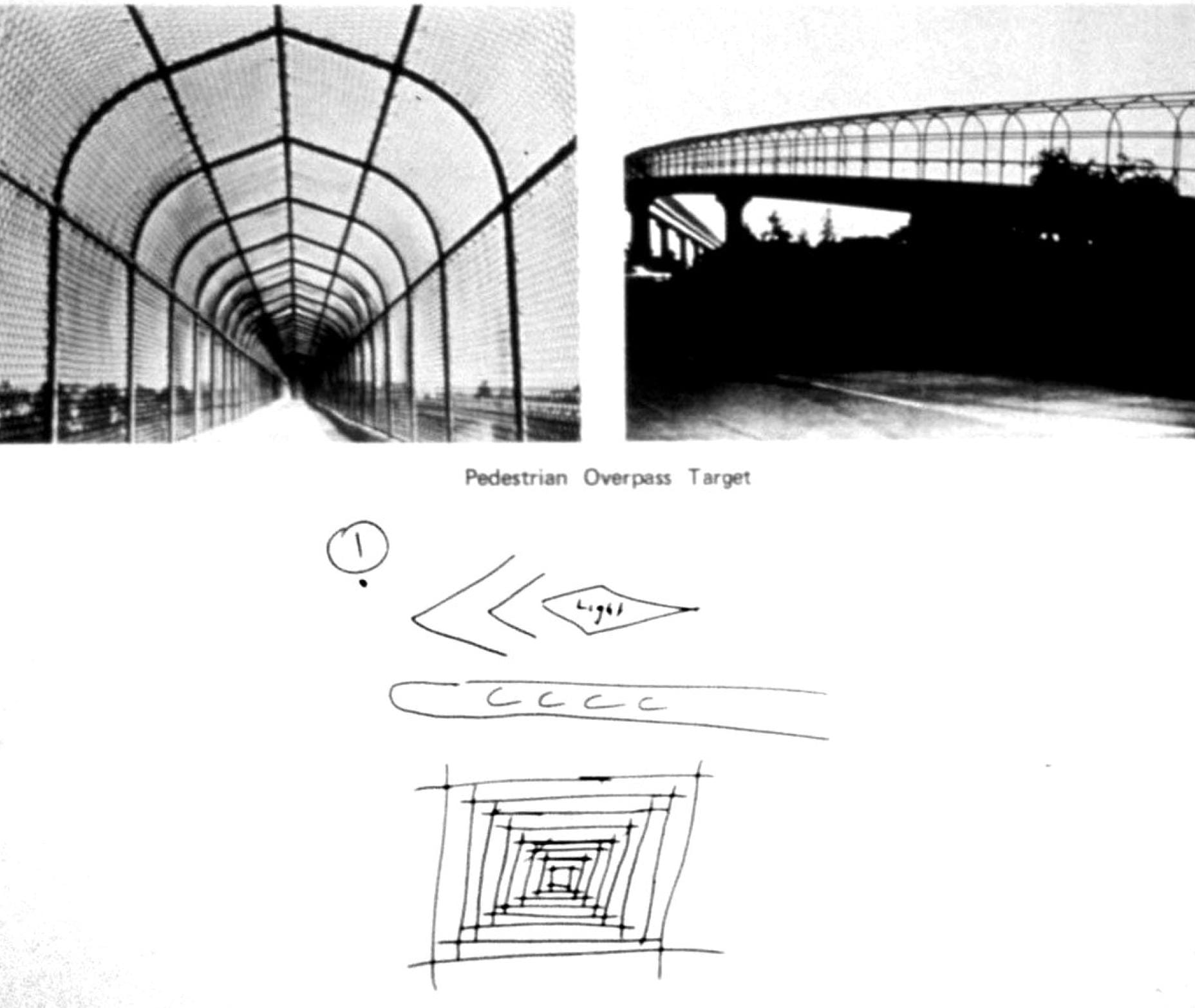
During a Farsight session, viewers record sensory impressions and sketches before learning the target. Blindness limits prior knowledge, but independent judging and replication are still needed to establish accuracy.
What It Is Known For
Farsight is best known for making remote viewing visible. A private mental report becomes a filmed procedure. The viewer begins without being told the target, records impressions in real time, produces sketches, and is later shown what the session was intended to describe. The process gives an audience access to something earlier generations encountered mainly through research summaries, photocopied transcripts, books, and anecdotes.
This format has real educational value. It makes clear that remote viewing, as practitioners use the term, is not simply closing one’s eyes and imagining a place. Farsight teaches a staged vocabulary and workflow intended to separate basic sensory descriptors from what practitioners call analytic overlay—the mind’s premature attempt to name or explain fragmentary impressions. Its online materials distinguish taskers, viewers, monitors, targets, movement exercises, and different degrees of blindness. Farsight says its public projects are conducted under “totally blind” conditions, with viewers told only that a target exists.
That claim matters, but it has a precise scope. Viewer blindness can reduce direct expectation and conscious invention based on target knowledge. It does not by itself demonstrate anomalous information transfer. A strong test must also establish when and by whom the target was selected, who had access to it, whether all interactions were blind, whether the target pool and decoys were fixed in advance, whether every session was retained, how matches were scored, whether judges were independent, and whether the analysis was specified before the result was known.
Farsight’s own monitoring taxonomy illustrates why the distinction matters. Its published materials describe some levels at which both viewer and monitor are blind, and other levels at which the viewer is blind but the monitor knows the target. That is not an accusation of contamination; it is a reminder that “the viewer did not know” is not a complete description of an experiment. The information state of everyone in contact with the viewer matters.
Farsight is also known for unusually ambitious targets. Its archive includes projects about Mars, the Moon, the Tunguska event, the crucifixion of Jesus, Buddha, Nikola Tesla, ʻOumuamua, 9/11, alleged reptilian and insectoid beings, and specific UAP videos. Since 2023, the organization has publicly described claimed direct assistance and meetings involving “Good ETs,” conflict with “Bad ETs,” and recurring “ET Board Meetings.” These are Farsight’s claims, presented on its own platforms. They have not been independently verified as encounters with non-human beings.
The choice of target changes what a session can establish. A viewer describing a randomly selected photograph from a fixed pool can be scored against alternatives. A viewer describing an alleged extraterrestrial faction, an unknowable ancient interior experience, or a hidden event for which no external record exists cannot be assessed in the same way. Multiple viewers producing partially similar descriptions may be psychologically and culturally interesting, but agreement within a group is not independent confirmation of the external reality they describe.
This produces a verification gradient:
- Known, randomly selected targets can support blinded scoring against decoys.
- Historical targets with partial records allow limited comparison but leave large interpretive gaps.
- Ambiguous contemporary targets, such as distant points of light in video, require independent instrumental analysis before remote-viewing narratives can add evidentiary weight.
- Unobservable targets, such as extraterrestrial councils, hidden metaphysical structures, or inaccessible timelines, cannot currently be verified through the target itself.
The further Farsight moves down that gradient, the more its work depends on trust in its own method. That is the opposite of independent verification. The method becomes both the instrument that produces the claim and the authority used to certify it.
Farsight has made at least one substantial attempt to publish a formal experimental argument. Brown’s 2012 paper in the Journal of Scientific Exploration reported a “temporal outbounder” study involving twelve experienced viewers and eleven future target events. In that design, the target was selected after the sessions and after the relevant month’s events had occurred. Brown reported strong support for the hypothesis that this arrangement improved descriptions of future events. The study is part of the published record and should not be ignored, but one study from the institute’s founder does not provide independent replication of the design or validate unrelated claims across Farsight’s media catalog.
The organization’s modern influence comes equally from production. Farsight combines session footage, drawings, target reveals, narration, music, graphics, commentary, and subscription distribution. Farsight Prime presents the work as both revealing and entertaining. That does not make the underlying sessions false. It means the data layer and the editorial layer must be assessed separately.
In a raw experiment, uncertainty is a result. In a finished episode, uncertainty can feel like an obstacle to narrative resolution.
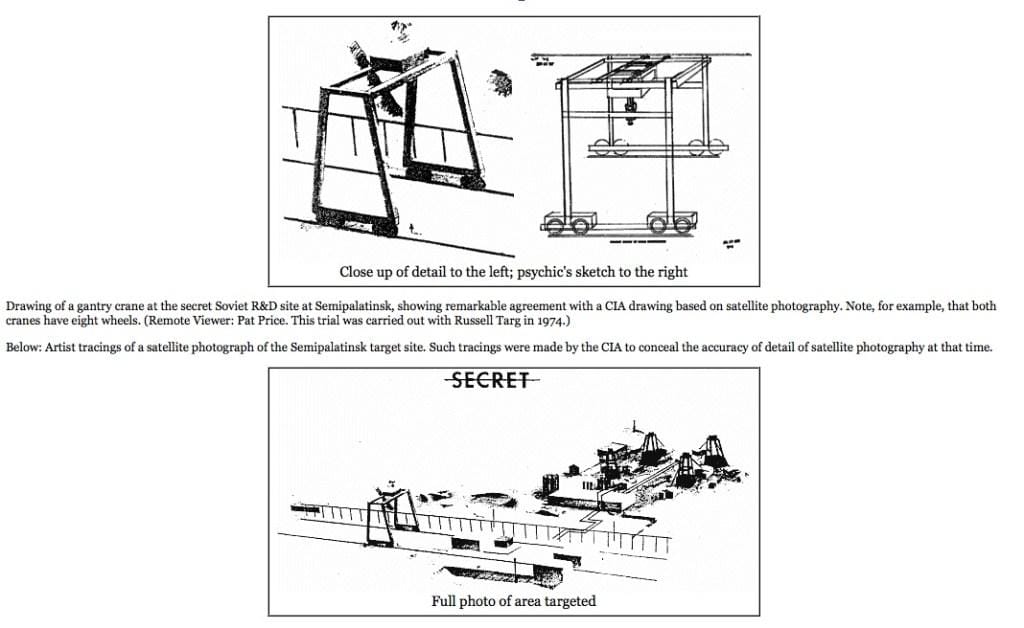
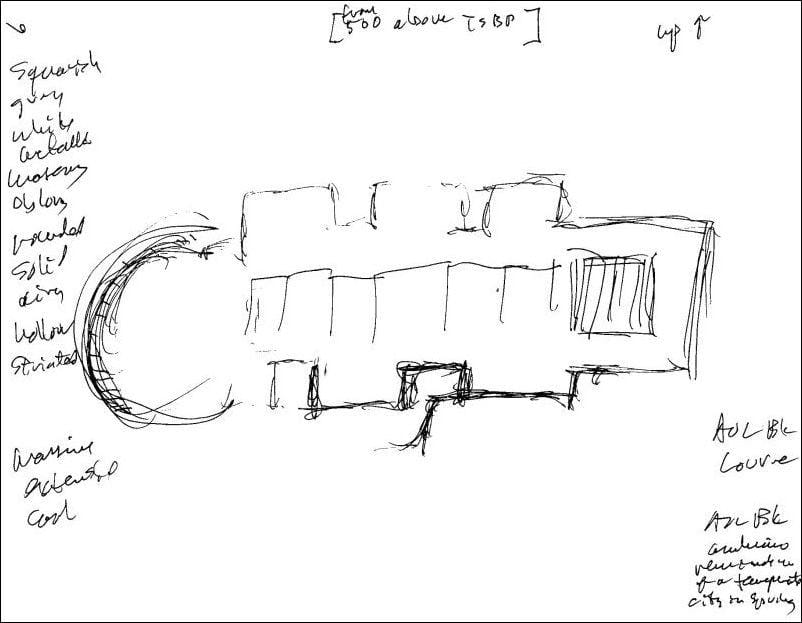
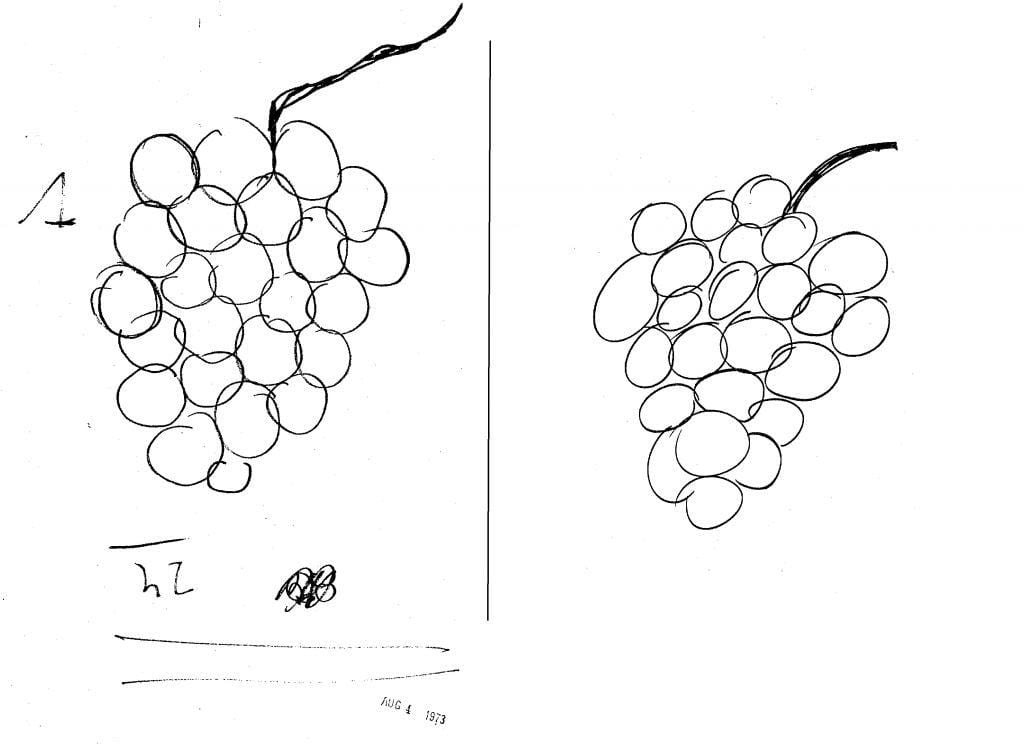
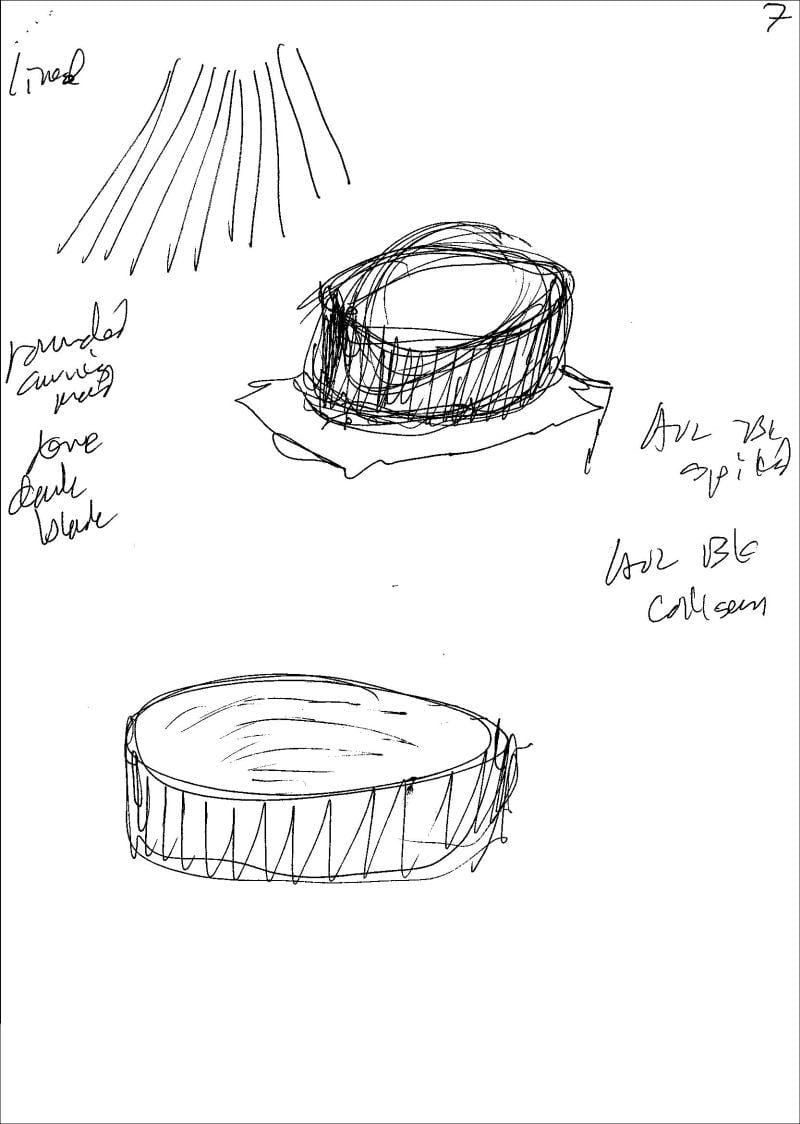
Declassified session reports confirm that American intelligence agencies funded and evaluated remote viewing. The archive establishes government interest—not proof that the method produced reliable intelligence.
The Core Idea or Signal
Farsight’s core signal is not simply that remote viewing may be real. It is that a disputed perceptual practice can now build its own media institution, conduct its own investigations, select its own targets, interpret its own results, and distribute its own conclusions directly to an audience.
That autonomy is both its strength and its danger. Farsight does not need permission from a university, intelligence agency, television network, or scientific journal to explore a target. It can preserve lines of inquiry that conventional institutions consider too speculative, reputationally costly, or methodologically immature. It can also bypass the adversarial checks that make extraordinary evidence more durable.
Blindness is necessary because it limits what the viewer can consciously know. Independence is necessary because it limits what the system can unconsciously make true.
This distinction is the center of the Dossier. A viewer can be honestly blind while the final product remains vulnerable to flexible tasking, post-hoc matching, subjective judging, selective inclusion, interpretive expansion, and narrative editing. Sincerity does not solve those problems. Neither does repetition within the same organization.
The most valuable future for Farsight would therefore be less dependent on the audience trusting Farsight. Targets could be cryptographically time-stamped before data collection. Unedited sessions could be deposited automatically. All viewers and all trials could be counted. Independent researchers could create target pools and conduct blinded judging. Scoring rules could be preregistered. Verifiable targets could be emphasized, and misses could be analyzed with the same attention as apparent hits.
If a genuine effect exists, these constraints would not diminish the mystery. They would give it a clearer outline.
Perspectives and Interpretations
The practitioner perspective
Remote-viewing practitioners often argue that laboratory skeptics misunderstand the phenomenon by expecting crisp visual recognition from a low-bandwidth process. In this view, a session arrives as fragments—temperature, texture, motion, geometry, scale, sound, atmosphere, and emotional tone. Training helps the viewer report those fragments without forcing them too quickly into a named object. Accuracy is therefore judged across patterns rather than through one perfect description.
Farsight’s filmed sessions make this position intelligible. Viewers often generate a mixture of rough shapes, sensory qualities, spatial relations, and narrative impressions. Supporters see repeated correspondences among separate viewers as evidence that something more than imagination is operating. They also point to the government’s decades of interest and to positive statistical literature as reasons the subject should not have been dismissed.
This perspective correctly recognizes that government involvement is documented and that the experimental literature is not uniformly null. It becomes weaker when institutional interest is treated as proof, when broad similarities are counted without a predeclared scoring system, or when viewers’ convergence is used to verify targets no outside observer can check.
The parapsychological research perspective
Within parapsychology, remote viewing remains one of several protocols used to test anomalous information acquisition. The 1995 Utts assessment argued that laboratory results had moved beyond chance, and a 2023 systematic review and meta-analysis by Patrizio Tressoldi and Debra Katz reported a positive average effect across 36 studies and 40 effect sizes. The authors reported no sign of publication bias in the tests they applied and concluded that remote-viewing protocols compared favorably with other forms of extrasensory-perception research.
A separate 2023 study in Brain and Behavior tested hundreds of participants in remote-viewing-style tasks and reported mixed results: one primary group was nonsignificant, while another analysis found effects associated with emotional intelligence. This is not a clean confirmation or a clean disappearance. It shows why the field remains unsettled and why protocol details, subgroup choices, scoring, and replication matter more than a single headline.
Positive aggregate findings deserve examination, but they do not automatically validate Farsight. A meta-analysis can suggest that a class of controlled tasks contains an unexplained statistical effect while saying nothing about whether a particular video has identified an alien spacecraft, reconstructed an ancient event, or contacted a non-human council. Laboratory anomaly, operational usefulness, and ontological interpretation are three different claims.
The skeptical scientific perspective
Scientific skeptics focus on the places where subjective material becomes a numerical or narrative “hit.” Early remote-viewing criticism identified sensory cues in transcripts, failures to replicate, and weaknesses in judging. Hyman’s 1995 assessment emphasized the lack of independent replication and argued that statistical departures from chance did not by themselves establish a paranormal mechanism. The AIR operational review found that reports often contained broad background information but failed to deliver the specific, reliable details intelligence users needed.
This critique is especially strong when applied to unverifiable targets. Human cognition is exceptionally capable of matching ambiguous descriptions to a revealed scene, particularly when many descriptors are available and no formal penalty is applied to misses. A sketch that vaguely resembles one feature may dominate memory, while dozens of incorrect words, absent features, or conflicting impressions recede. Editing can intensify this asymmetry without anyone intending deception.
Skepticism becomes less useful when it assumes that every participant is dishonest or that a weak and elusive effect is impossible in principle. The best criticism does not mock the viewer’s experience. It asks whether the experiment distinguishes that experience from ordinary cognition.
The creator-media perspective
Farsight can also be understood as a successful adaptation of anomalous research to the creator economy. It offers recurring programming, premium access, recognizable personalities, a distinctive worldview, community participation, and a continuous stream of mysteries. Remote viewing is especially suited to episodic media because it contains a built-in dramatic arc: concealment, perception, accumulation, reveal, and interpretation.
The same structure creates incentives that do not exist in a neutral laboratory. Verifiable but ordinary targets may be methodologically useful and commercially dull. Extraterrestrial conflict, forbidden history, secret programs, and future crises attract attention but resist decisive checking. A subscription platform benefits from unresolved continuity, while science benefits from questions that can eventually be closed.
These incentives do not prove that Farsight manipulates its results. They explain why the platform’s scientific and media functions should never be treated as interchangeable.
The consciousness-first perspective
For readers already open to nonlocal or consciousness-first models of reality, Farsight appears to provide an applied technology of mind. Its own materials go beyond the modest claim that anomalous information may sometimes appear. They connect remote viewing to a nonphysical aspect of the person and treat the practice as evidence that consciousness cannot be contained entirely by the body.
If remote viewing were demonstrated under rigorous, repeatable conditions, it would create pressure on ordinary assumptions about perception, time, information, and the relationship between consciousness and the nervous system. It would not, by itself, establish any single spiritual doctrine, prove the existence of a soul, or show how information travels. Phenomenon and explanation would still need to be separated.
Strengths and Limitations
Farsight’s strongest contribution is preservation through demonstration. It has kept remote viewing accessible, teachable, and publicly inspectable during an era when the declassified government archive might otherwise have remained a historical curiosity. It shows viewers what a session looks like, exposes the vocabulary of tasking and blinding, and maintains a large body of material that can be studied by supporters and critics alike.
The organization also understands a point that popular discussions often miss: target knowledge can contaminate perception. Its insistence that viewers work blind is methodologically meaningful. Its distinction between sensory data and analytic overlay is a useful discipline even apart from paranormal claims, because it teaches people to separate observation from immediate explanation.
Farsight’s weakness is not that it asks strange questions. It is that its most consequential answers often outrun what its public verification structure can support. A viewer’s blindness protects one part of the process, while many other parts remain under the organization’s control. When targets have no independent answer key, even perfect procedural isolation cannot show that the final story corresponds to an external reality.
The language of proof is another limitation. Farsight’s current official site says it uses the word “proof” carefully and describes its own cameras and remote-viewing work as direct verification of extraterrestrial spacecraft and hidden history. Yet ambiguous video plus remote-viewing interpretation is not independent confirmation if the status of both remains disputed. Two uncertain methods do not automatically become one certain conclusion when they agree.
The catalog also blurs experimental and revelatory modes. A controlled trial asks whether a predefined scoring rule can discriminate the correct target from decoys. A project about Prometheus, Seraphim, reptilian beings, or extraterrestrial politics tells an explanatory story about a target the audience cannot access. The first may generate evidence about performance. The second primarily generates claims within Farsight’s interpretive system.
The 1996 Hale–Bopp episode remains a concrete warning about failed correction. The supposed companion craft did not become an independently observed astronomical object, yet the broader worldview that produced the claim continued. A research culture strengthens itself by studying conspicuous failures, revising confidence, and changing methods. When a framework can absorb both confirmation and disconfirmation without losing explanatory power, it becomes difficult to falsify.
There is also an ethical limitation. Farsight’s subjects include alleged covert actors, public events, future crises, hostile non-human groups, and claims about control over humanity. Such narratives can shape fear, trust, political interpretation, and personal behavior. A disclaimer may limit legal liability, but it does not resolve the epistemic responsibility created when speculative material is presented as discovered truth.
None of these limitations proves that every Farsight session is empty. They establish that the public record does not currently justify Farsight’s strongest conclusions.
Broader Implications
Farsight is a preview of what anomalous inquiry looks like after institutional gatekeeping loses its monopoly. Independent groups can now publish raw-looking process, build archives, train participants, monetize access, and address global audiences without convincing a journal editor or television executive. That expansion can protect neglected questions. It can also create sealed knowledge systems in which a community’s own tools repeatedly validate the community’s own worldview.
This matters beyond remote viewing. UAP research, consciousness studies, alternative archaeology, citizen science, online investigation, and AI-assisted interpretation all face the same problem. Access to tools and audiences has expanded faster than shared standards for distinguishing observation from inference. The next information frontier will produce more data, but also more ways to manufacture apparent convergence.
Farsight’s recent interest in artificial intelligence makes the issue sharper. Its 2025 programming discussed remote viewing with ChatGPT and a human–AI remote-viewing network. Large language models are designed to generate statistically plausible continuations from prompts and training data. Their fluency, associative range, and sensitivity to framing make them powerful analytic and creative systems, but those same properties make an apparent “remote-viewing” performance difficult to interpret. Unless prompts, target selection, training exposure, model versions, scoring, and repeated trials are tightly controlled, an AI’s evocative match demonstrates language prediction more readily than nonlocal perception.
The UAP connection creates a similar loop. A distant point or fast-moving light is recorded. Remote viewers are tasked with identifying it. Their descriptions are then used to interpret the footage as non-human, while the footage is presented as support for the viewing. Without independent sensor data, calibrated optics, chain of custody, alternative hypotheses, and outside analysis, the two layers can reinforce one another without either becoming conclusive.
The deeper implication is epistemological. Human beings do not merely want hidden information; they want a method that allows them to bypass distrusted institutions. Remote viewing promises direct access. Farsight extends that promise into history, politics, religion, UAP, and cosmic conflict. The appeal becomes especially strong when official narratives feel incomplete or when public trust is low.
But a method that bypasses institutions still needs constraints. Otherwise, liberation from authority can become dependence on a new authority—one that cannot be audited from outside.
The remote-viewing revival therefore presents an opportunity. Public experiments could be more transparent than classified work ever was. Distributed teams could preregister trials, automate randomization, publish hashes and timestamps, use independent judges, and replicate one another across countries. An open protocol could make the field harder to dismiss and harder to romanticize.
The unknown deserves access. It also deserves controls.
The Reality Signal
What This Subject Represents
Farsight represents the migration of anomalous research from government secrecy and specialist parapsychology into creator-led media. It combines the language of experiment with the emotional structure of revelation: something is hidden, a trained mind reaches toward it, and the audience witnesses an answer emerge.
Beyond remote viewing, it represents the human desire for direct knowledge when ordinary channels feel blocked. Its attraction rests not only on psychic possibility but on a promise of sovereignty—the idea that consciousness itself can cross the walls built by distance, secrecy, history, and institutional control.
What Reality Frame It Challenges
At its strongest, remote viewing challenges the conventional frame that perception depends entirely on known sensory contact and that information about distant or future events cannot enter awareness through any other route. A repeatable anomalous effect would have serious implications for cognitive science and philosophy of mind, even before anyone knew its mechanism.
Farsight also challenges a social frame: that only credentialed institutions are permitted to investigate reality. Yet it creates a counter-challenge for anomalous communities. Freedom from conventional authority does not free a claim from the need for independent evidence.
Why It Matters Now
Farsight matters now because UAP disclosure culture, creator media, declining institutional trust, consciousness research, and generative AI are converging. Audiences increasingly encounter extraordinary claims through intimate, recurring personalities rather than through occasional books or broadcasts. A polished platform can become a laboratory, newsroom, school, and cosmology at once.
That convergence increases both possibility and risk. Open tools can support unprecedented collaborative testing. They can also produce self-confirming networks in which human impressions, AI language, ambiguous imagery, and community belief repeatedly echo one another. Farsight is a concentrated example of that emerging reality.
What Remains Unresolved
It is established that the United States funded remote-viewing research, that some laboratory analyses reported statistically significant effects, that reviewers disagreed about their paranormal interpretation, and that the 1995 operational assessment found remote viewing too vague and unreliable for intelligence use. It is also established that Farsight exists as a nonprofit educational and research organization alongside a commercial media arm, publishes remote-viewing materials, and claims blind conditions for its projects.
It remains unresolved whether remote viewing reflects anomalous information transfer under rigorously controlled, independently replicated conditions. More specifically, Farsight has not publicly established that its strongest claims about extraterrestrials, hidden history, UAP identities, future events, or direct non-human contact are externally verified. Those claims remain the organization’s interpretations, not settled discoveries.
The surviving signal is narrower but still significant: some experimental results continue to invite investigation, while the public culture built around them shows how quickly a possible anomaly can expand into an entire account of reality.

The Galactic Mind Perspective
Farsight deserves neither reflexive ridicule nor automatic trust. It deserves a sharper category.
The organization is most persuasive when it treats remote viewing as a protocol that can fail, be scored, and be improved. It is least persuasive when the protocol becomes a license to declare inaccessible realities known. Those two modes coexist in the same archive, and confusing them is the central hazard.
The Galactic Mind’s position is that remote viewing remains a legitimate subject for careful experimental inquiry because the historical record contains enough disagreement, reported statistical anomaly, and continuing research to keep the question open. That openness does not extend automatically to Farsight’s extraterrestrial, historical, predictive, or metaphysical conclusions. Each additional conclusion carries a separate burden of proof.
Farsight’s greatest contribution may ultimately be cultural rather than scientific. It has shown that people still hunger for disciplined ways of approaching the unknown. It has also shown how easily discipline can become aesthetic—how targets, notebooks, blindfolded knowledge, technical vocabulary, and documentary production can create the feeling of a method before the full verification chain is visible.
The next step is not to make the stories larger. It is to make the test harder.
If Farsight opened its most verifiable work to preregistered protocols, automatic raw-data publication, independent tasking, blinded external judging, decoy comparison, and long-run error analysis, it could help move remote viewing out of the recurring cycle of fascination and dismissal. If it continues to concentrate on targets that only its own system can reveal, it may remain influential while becoming increasingly difficult to distinguish from a self-contained mythology.
That is why Farsight belongs in the archive. It is not only testing the alleged reach of consciousness. It is testing whether public anomalous research can remain open to wonder without becoming closed to correction.
Open Thread
If a method can describe realities that no independent observer can check, what would allow us to distinguish genuine perception from a story the method has learned to tell itself?
What do you think? Drop your thoughts in the comments ...
More in Dossier
- Hal Puthoff and the Physics of the Fringe — the closest historical companion, tracing one of the central SRI remote-viewing researchers across science, intelligence interest, and anomalous inquiry.
- Donald Hoffman and the Case Against Naive Reality — a rigorous counterpoint on why perception may not show reality as it is, without treating that proposition as evidence for remote viewing.
- AREA52 and the Creatorization of Disclosure — a parallel examination of how anomalous claims change when they move into personality-led, subscription-supported creator media.
Sources / Receipts
- The Farsight Institute, “Who We Are and What We Do.” Official organizational description and mission. Accessed August 23, 2026.
- The Farsight Institute, “An Outline of Farsight’s Corporate Structure.” Official description of Farsight Research, Inc., Farsight, Inc., and Farsight Prime. Accessed August 23, 2026. The listed board information is dated October 2019 and should not be treated as current without further confirmation.
- Emory University Department of Political Science, “Courtney Brown — Associate Professor.” Current institutional biography and academic fields. Accessed August 23, 2026.
- The Farsight Institute, “Dr. Courtney Brown, Director.” Official Farsight biography stating that Brown founded the institute in 1995. Accessed August 23, 2026.
- The Farsight Institute, “What Is Scientific Remote Viewing?.” Farsight’s own definition of SRV and its claim that the method implies a nonphysical human aspect. Accessed August 23, 2026.
- The Farsight Institute, “Levels of Monitoring.” Official description of blind and target-aware monitoring arrangements. Accessed August 23, 2026.
- Russell Targ and Harold E. Puthoff, “Information Transmission Under Conditions of Sensory Shielding,” Nature 251 (1974): 602–607.
- David Marks and Richard Kammann, “Information Transmission in Remote Viewing Experiments,” Nature 274 (1978): 680–681.
- David Marks, “Sensory Cues Invalidate Remote Viewing Experiments,” Nature 292 (1981): 177.
- National Research Council, “Enhancing Human Performance: Issues, Theories, and Techniques,” National Academies Press, 1988, especially Part III on parapsychological techniques.
- Michael D. Mumford, Andrew M. Rose, and David A. Goslin, “An Evaluation of Remote Viewing: Research and Applications,” American Institutes for Research, prepared for the CIA, September 29, 1995.
- Central Intelligence Agency, “Ask Molly: Did CIA Really Study Psychic Powers?,” 2021. Useful official summary of the agency timeline, declassification, and operational conclusion.
- Courtney Brown, “Remote Viewing the Future with a Tasking Temporal Outbounder,” Journal of Scientific Exploration 26, no. 1 (2012).
- Patrizio E. Tressoldi and Debra Katz, “Remote Viewing: A 1974–2022 Systematic Review and Meta-Analysis,” Journal of Scientific Exploration 37, no. 3 (2023): 467–489.
- Álex Escolà-Gascón and James Houran, “Follow-up on the U.S. Central Intelligence Agency’s (CIA) Remote Viewing Experiments,” Brain and Behavior 13, no. 6 (2023): e3026.
- The Farsight Institute, “The Reality of Harvey.” Primary source for Farsight’s claims about direct extraterrestrial assistance and meetings. Accessed August 23, 2026. These are organizational claims, not independent verification.
- Farsight Prime, “Farsight ET Board Meeting: Military Steps In!,” March 19, 2025. Primary source illustrating Farsight’s current extraterrestrial-contact narrative. These claims remain unverified.
- Farsight Prime, “Farsight Spotlight: Remote Viewing with ChatGPT,” March 16, 2025. Primary source for the organization’s AI remote-viewing claims.
- Time, “The Man Who Spread the Myth,” April 14, 1997; and Laura Robinson, “Heaven’s Gate: The End,” Journal of Computer-Mediated Communication 3, no. 3 (1997). Used for the Hale–Bopp media controversy and its documented circulation around Heaven’s Gate. Neither source establishes simple individual causation for the group’s deaths.


Discussion