
Federico Faggin helped make the machine age small enough to hold between two fingers.
Then he asked whether the mind could ever be reduced to a machine at all.
That is the doorway.
Silicon.
Logic.
Transistors.
Memory.
Instructions.
A central processing unit compressed into a chip.
A world reorganized around computation.
The modern digital age did not arrive all at once. It arrived through a chain of inventions, institutions, business decisions, engineering constraints, and people willing to imagine that a computer could become smaller, cheaper, programmable, and everywhere.
Faggin stands near one of the decisive thresholds.
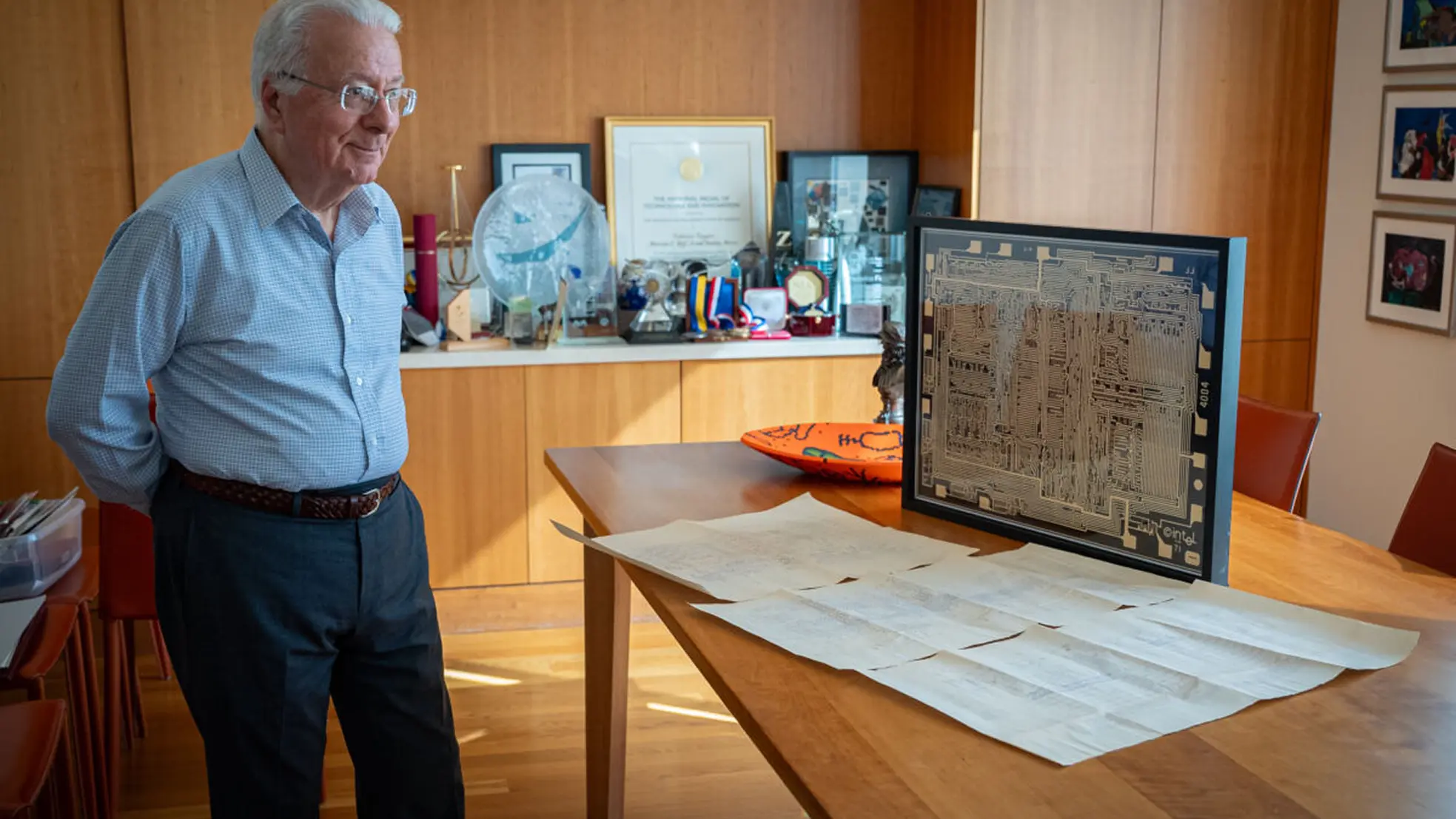
He was a central figure in the creation of the Intel 4004, widely recognized as the first commercially available microprocessor and the first complete CPU on one chip. The Smithsonian describes the 4004 as a 4-bit central processing unit released on November 15, 1971, integrating about 2,300 transistors and executing roughly 92,000 instructions per second.
By today’s standards, that sounds almost primitive.
But origin points often do.
The first signal is rarely the loudest.
It is simply the one that changes what becomes possible.
Faggin helped move computation from a specialized machine into a programmable chip. Later, after decades in technology, he turned toward an even stranger question:
What is consciousness?
Not intelligence.
Not information processing.
Not behavior.
Not the ability to calculate, respond, optimize, or simulate.
Consciousness.
The felt interior of being.
The strange fact that experience exists at all.
That is why Faggin belongs in The Galactic Mind archive.
Not only because he helped build the digital world.
Because he later questioned one of its deepest assumptions:
That the mind is just a machine.

Overview
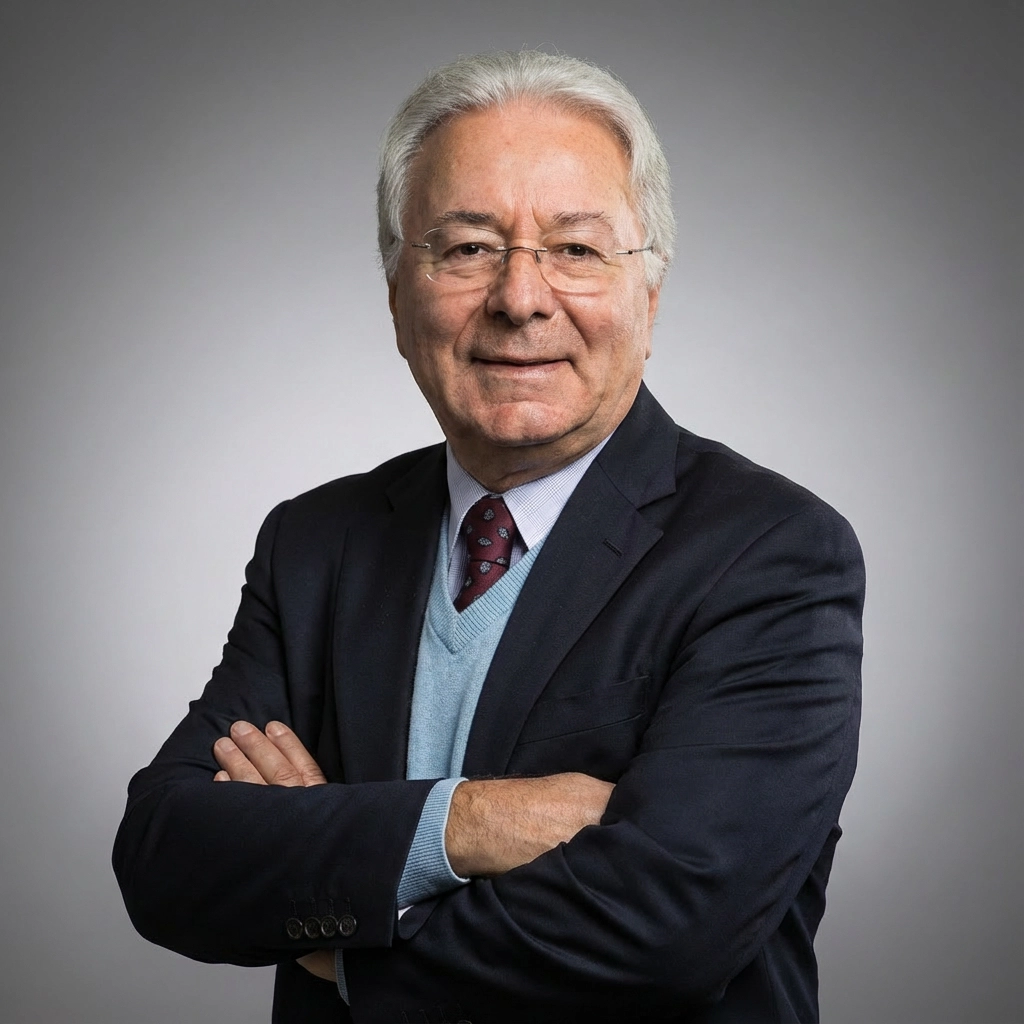
Federico Faggin is an Italian-American physicist, engineer, inventor, entrepreneur, and author best known for his role in the creation of the Intel 4004, the first commercial microprocessor.
The Computer History Museum credits Faggin as part of the team that developed the Intel 4004 and notes that he created MOS silicon gate technology at Fairchild, later co-founded Zilog, conceived and architected the Z80 microprocessor, and co-founded Synaptics, a company associated with touchpads and touchscreens.
That alone would make him historically important.
But his significance does not stop with computing history.
Faggin’s later work moved into consciousness, quantum information, idealism, and the limits of artificial intelligence. His foundation lists Silicon: From the Invention of the Microprocessor to the New Science of Consciousness as his autobiography and Irreducible: Consciousness, Life, Computers, and Human Nature as a book presenting his core theories on the nature of reality.
That arc matters.
Most people who build machines stay inside the machine story.
Faggin did not.
He helped create the symbolic engine of the modern world.
Then he began asking whether symbol manipulation can ever explain the one thing each of us knows most directly:
The fact that we experience.
He is not important because every later claim he makes is settled.
He is important because his life touches one of the central tensions of our age:
We are building machines that appear intelligent.
But we still do not know what consciousness is.
Origins and Background
Federico Faggin was born in Vicenza, Italy, in 1941.
His early path moved through electronics, physics, and semiconductor engineering. The Computer History Museum notes that he received his physics degree from the University of Padua in 1965, worked at SGS-Fairchild in Italy, and moved to Palo Alto in 1968 to work at Fairchild Semiconductor. There, he created MOS silicon gate technology, which CHM describes as the basis of modern CMOS integrated circuits.
That technical detail is not just background.
It is the hinge.
Before microprocessors could become small, dense, and practical, the underlying chip technology had to advance. The breakthrough was not merely conceptual. It had to be built into matter.
A microprocessor is not an idea floating in abstraction.
It is a physical argument made in silicon.
In 1970, Faggin joined Intel.
At the time, Intel was still a young company focused heavily on memory chips. The microprocessor began through a contract with Busicom, a Japanese calculator company that had asked Intel to build a custom chip set for a desktop calculator. Intel’s account says the original request involved a twelve-chip design, but Intel engineers proposed a simpler four-chip system, including a programmable chip that became the Intel 4004.
The 4004 was not the work of one isolated figure.
Ted Hoff, Stan Mazor, Federico Faggin, and Masatoshi Shima all belong in the story. Intel’s own history names Hoff, Faggin, Mazor, and Shima as contributors to making the concept a reality, with Faggin taking over design leadership from Hoff.
This matters because the word “inventor” can flatten history.
The microprocessor was not born from a single lightning bolt.
It emerged from architecture, implementation, business pressure, fabrication technology, and collaboration.
But Faggin’s role was decisive.
The National Science and Technology Medals Foundation credits him for the conception, design, and application of the first microprocessor, describing it as a universal building block of digital electronic systems.
The 4004 was released in 1971.
A tiny chip.
A new architecture.
A signal that computing would no longer remain locked inside specialized machines.
The world would become programmable.
What It’s Known For
Federico Faggin is known for several major contributions.
MOS silicon gate technology
Before the 4004, Faggin helped develop MOS silicon gate technology.
This is one of the less popularized but most important parts of his legacy.
The Computer History Museum describes his MOS silicon gate technology work at Fairchild as foundational to modern CMOS integrated circuits.
That means Faggin’s influence is not limited to one famous chip.
He helped shape the technical substrate that made later chip density, speed, and miniaturization possible.
The modern digital world depends not only on big ideas.
It depends on fabrication.
Materials.
Processes.
Physical constraints solved at microscopic scale.
The Intel 4004
The Intel 4004 is Faggin’s most famous association.
The Smithsonian describes it as the first complete CPU on one chip and the first commercially available microprocessor. It was a 4-bit CPU in a 16-pin ceramic package, released on November 15, 1971.
That is the historical anchor.
The 4004 mattered because it changed the meaning of a computer.
Before this shift, computing was often tied to custom-built hardware, large machines, expensive development, and fixed logic. Intel’s own account describes the 4004 as a general-purpose programmable chip that could be mass-produced and programmed through software for specific functions.
That was the seed of the world we now inhabit.
A world where computation hides inside phones, cars, cameras, watches, appliances, satellites, payment systems, medical devices, weapons, toys, and eventually artificial intelligence.
The 4004 did not create all of that by itself.
But it opened the door.
Zilog and the Z80
Faggin left Intel at the end of 1974 and co-founded Zilog with Ralph Ungermann.
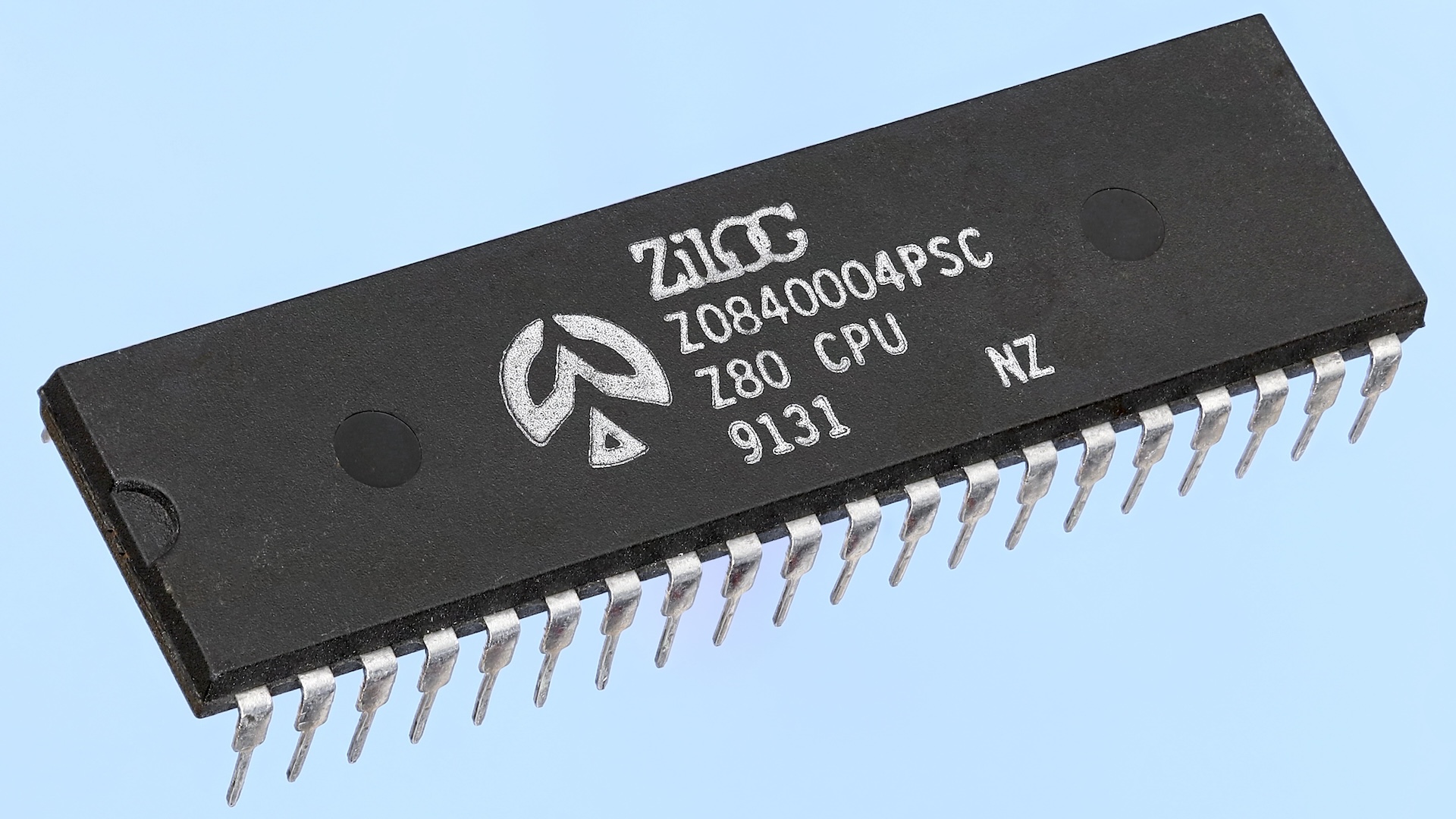
At Zilog, he conceived and architected the Z80 microprocessor and directed its development. The Computer History Museum notes that he served as Zilog’s president and CEO until 1980.
The Z80 became one of the defining processors of the early personal computing era.
This matters because it shows Faggin was not attached to a single accidental success.
His work repeatedly touched the transition from specialized computation to accessible computation.
From rare machine.
To product.
To platform.
To environment.
Synaptics and the human-machine interface
In 1986, Faggin co-founded Synaptics, where he served as CEO. The Computer History Museum describes Synaptics as a company pioneering touchpads and touchscreens.
This part of the story is easy to overlook.
But it is symbolically important.
Faggin did not only help machines calculate.
He helped humans touch computation.
The history of technology is not only about processing power.
It is also about intimacy.
The keyboard.
The mouse.
The touchscreen.
The gesture.
The interface.
Every major shift in computing changes not only what machines can do, but how humans experience them.
The consciousness turn
Later in life, Faggin turned toward consciousness.
Not as branding.
Not as a casual side interest.
As a serious metaphysical and scientific question.
In work with physicist Giacomo Mauro D’Ariano, Faggin co-authored a paper titled “Hard Problem and Free Will: an information-theoretical approach.” The paper proposes a non-reductive approach to consciousness and argues toward a quantum-information-based panpsychism.
The Faggin Foundation also presents consciousness as an irreducible property of nature and argues that computers and robots do not have consciousness in the sense of subjective experience.
That is where Faggin becomes more than a figure in computer history.
He becomes a reality-frame figure.
The man associated with the microprocessor later argues that consciousness cannot be reduced to computation.
That is the tension.
The Core Idea or Signal
The core signal of Federico Faggin is this:
The machine can process symbols.
But consciousness may not be a symbol.
That is the dividing line.
A computer can manipulate information.
A processor can execute instructions.
An AI system can generate language.
A machine can identify patterns, predict next tokens, optimize behavior, simulate dialogue, and mirror human expression.
But does any of that create experience?
Does processing become feeling?
Does intelligence become interiority?
Does enough complexity become a self?
Faggin’s later work says no.
Or at least, not automatically.
That is why his story lands with such force.
He does not critique the machine from ignorance.
He helped build the machine.
He knows computation from the inside.
So when he argues that consciousness is not the same thing as computation, the claim carries a particular kind of weight.
Not because it proves him right.
But because it disrupts the easy story.
The easy story says:
The brain is a biological computer.
The mind is software.
Consciousness is information processing.
AI will eventually become conscious when the system becomes complex enough.
Faggin’s signal challenges that sequence.
He asks whether we have mistaken the external signs of intelligence for the internal reality of experience.
That question will define the AI age.
Perspectives and Interpretations
Faggin can be interpreted through several lenses.
The computer-history view
From the computer-history view, Faggin is one of the major figures in the birth of the commercial microprocessor.
This view is grounded.
Documented.
Institutional.
The Computer History Museum, Smithsonian, Intel, National Science and Technology Medals Foundation, and USPTO all identify Faggin as a central figure in the development of the Intel 4004 and the wider microprocessor revolution.
This is not mythology.
The record is clear.
Faggin belongs inside the history of computing.
But the strongest version of that history is careful.
The 4004 was a team achievement.
Faggin’s role was crucial, but the microprocessor should not be reduced to a single-person origin myth.
A grounded Dossier keeps both truths intact.
The engineering view
From the engineering view, Faggin matters because he worked at the level where ideas become physically possible.
It is one thing to propose a programmable processor.
It is another thing to implement it inside the constraints of chip design, fabrication, logic, layout, timing, yield, and manufacturability.
The engineering view sees Faggin less as a symbol and more as a builder.
A person who knew that the future depends on the smallest details.
The transistor.
The gate.
The mask.
The instruction cycle.
The material process that makes abstraction real.
That is the deeper beauty of the microprocessor.
It is a philosophy of control made physical.
A universe of instructions compressed into matter.

The consciousness view
From the consciousness view, Faggin is a rare bridge figure.
He is not approaching consciousness from religion alone.
He is not approaching it only through mystical experience.
He is not approaching it as someone outside technology, suspicious of machines by default.
He approaches it after a lifetime spent building the digital substrate of modern civilization.
That gives his later work a strange credibility.
Not final authority.
But credibility.
His argument is not simply that machines are bad or artificial intelligence is dangerous.
The deeper argument is that consciousness may belong to a different category than computation.
This places Faggin in the wider conversation around the hard problem of consciousness, panpsychism, idealism, quantum theories of mind, and non-reductive approaches to reality.
The AI-era view
From the AI-era view, Faggin’s work becomes urgent.
For most of computing history, the machine did not confuse us.
A calculator calculated.
A database stored.
A search engine retrieved.
A spreadsheet computed.
But AI systems now speak.
They explain.
They imitate.
They reason in ways that appear human.
They generate personality.
They simulate understanding.
They can seem present.
That shift creates a dangerous temptation:
To treat convincing output as evidence of inner life.
Faggin’s later work cuts directly into that temptation.
The question is not whether machines can become powerful.
They already are.
The question is whether power, intelligence, and simulation are enough to produce experience.
That remains unresolved.
The critic’s view
Critics have reason to be cautious.
Expertise in semiconductor engineering does not automatically settle metaphysics.
A person can be brilliant in one domain and speculative in another.
Quantum language can also become too easy to misuse. Once consciousness, quantum information, panpsychism, free will, and the nature of reality enter the same conversation, the risk of overstatement becomes high.
The Faggin-D’Ariano paper is a serious proposal.
But it is not consensus science.
It is not proof that consciousness is fundamental.
It is not proof that quantum fields are conscious in the way ordinary readers might imagine.
It is one framework in a contested field.
That distinction matters.
A grounded reader can take Faggin seriously without turning him into an oracle.
Strengths and Limitations
Faggin’s greatest strength is that he understands the machine deeply.
He is not arguing from vague anti-technology instinct.
He helped build the architecture that made modern computation possible.
That makes his later critique more interesting.
The person saying “consciousness is not computation” is not someone who misunderstands computation.
He knows what computation is.
He knows what machines do.
He knows what symbolic systems can accomplish.
And he still thinks something is missing.
That missing thing is experience.
The redness of red.
The feeling of pain.
The inwardness of memory.
The sense of being a self.
The difference between processing a sentence about grief and grieving.
That is Faggin’s strongest contribution to the current moment.
He forces the distinction between intelligence and consciousness back into view.
But his limitations are real.
His later metaphysical claims remain debated.
His quantum-information model is not established science.
His authority as a microprocessor pioneer should not be used as a shortcut around evidence.
And his language can be pulled too easily into simplistic claims:
“AI can never be conscious.”
“Quantum fields are conscious.”
“Science has proven idealism.”
“Computers have no inner life, therefore humans are spiritual beings.”
Each of those statements needs careful handling.
Faggin’s work is interesting enough without being inflated.
A grounded ledger helps:
What is documented:
Federico Faggin was a central figure in MOS silicon gate technology, the Intel 4004, Zilog’s Z80, Synaptics, and the history of commercial microprocessors.
What is claimed:
Faggin argues that consciousness is irreducible and that reality may require a framework in which consciousness is fundamental rather than emergent from inert matter. His foundation explicitly frames consciousness as an irreducible property of nature.
What is interpreted:
Supporters see Faggin as one of the rare technologists capable of challenging mechanistic materialism from inside the machine age itself. Critics may see his later work as speculative, metaphysical, or not yet scientifically grounded enough to revise mainstream models.
What remains unresolved:
Whether consciousness is fundamental.
Whether quantum information can explain qualia.
Whether free will can be grounded in the way Faggin proposes.
Whether artificial intelligence can ever become conscious.
Whether the machine model of mind is wrong, incomplete, or simply unfinished.
What is speculative:
Claims that Faggin’s work proves idealism, spirituality, cosmic consciousness, or the impossibility of machine consciousness.
It does not prove those things.
But it does make the question harder to ignore.
Broader Implications
Faggin matters because civilization is now surrounded by machines that imitate mind.
The microprocessor helped make this possible.
The chip became the computer.
The computer became the network.
The network became the platform.
The platform became the AI system.
And now the AI system speaks back.
Human beings are being forced to ask an ancient question in a technological form:
What is a mind?
For centuries, the dominant modern frame pushed toward mechanism.
The universe became a machine.
The body became a machine.
The brain became a machine.
The self became an output.
The mind became computation.
That frame produced extraordinary power.
Medicine.
Engineering.
Computers.
Satellites.
Robotics.
Artificial intelligence.
But power is not the same as completeness.
A model can be useful and still leave something out.
The subjective fact of experience is the pressure point.
No matter how advanced the external description becomes, consciousness remains strangely first-person.
Private.
Immediate.
Known from the inside before it is measured from the outside.
Faggin’s later work pushes that tension into the open.
For AI, it forces a distinction between intelligence and awareness.
For neuroscience, it presses the hard problem instead of dissolving it.
For philosophy, it revives ancient questions about mind and matter.
For spirituality, it creates a bridge to meaning without requiring blind belief.
For technology, it asks whether the civilization built on computation has mistaken the map for the experiencer.
For The Galactic Mind, Faggin belongs in the same reality-frame archive as Alan Turing, David Chalmers, Bernardo Kastrup, Donald Hoffman, John von Neumann, and Carl Jung.
Each approaches the mystery from a different doorway.
Turing challenges intelligence.
Chalmers challenges reduction.
Kastrup challenges materialism.
Hoffman challenges perception.
Von Neumann challenges the architecture of computation.
Jung challenges the hidden depths of the psyche.
Faggin challenges the machine metaphor from inside the machine age.
That is the signal.
The future may be filled with intelligent systems.
But intelligence may not be the deepest thing about mind.
The Reality Signal
What this subject represents
Federico Faggin represents the builder who turns back toward the mystery.
He represents the rare figure who helped create the digital world, then refused to confuse digital power with the full explanation of consciousness.
He represents the boundary between calculation and experience.
Between the machine that processes symbols and the self that feels meaning.
Between intelligence as performance and consciousness as being.
That is why his story carries symbolic force.
Faggin is not only a microprocessor pioneer.
He is a mirror held up to the age of artificial intelligence.
What reality frame it challenges
Faggin challenges the frame that the mind is simply a biological computer.
He challenges the frame that consciousness is only an emergent side effect of complex information processing.
He challenges the frame that subjective experience can be dismissed because it is difficult to measure.
He challenges the frame that science must remain locked inside materialism to remain serious.
He also challenges the spiritual shortcut.
He does not simply say, “consciousness is mysterious, therefore anything is possible.”
The better reading is more disciplined:
The machine model explains much.
But it may not explain the one thing we know from the inside.
Why it matters now
Faggin matters now because AI has made the consciousness question public.
This is no longer only a debate among philosophers.
People are already forming emotional bonds with AI systems.
Companies are already replacing human labor with machine output.
Institutions are already reorganizing around artificial intelligence.
Children will grow up speaking to systems that respond with confidence, memory, emotional tone, and apparent understanding.
The old question has become immediate:
Is there anyone inside?
Faggin’s answer is not the final word.
But his life makes the question sharper.
He helped build the technological road that led here.
Now he is warning that the road may not lead all the way to consciousness.
What remains unresolved
The unresolved ledger is where Faggin’s signal remains alive.
What is established:
Faggin was a major figure in the development of the commercial microprocessor and several later computing technologies.
What is claimed:
He argues that consciousness is irreducible and that reality may require a consciousness-inclusive framework.
What remains unresolved:
Whether his quantum-information framework can be developed into a widely accepted scientific theory with testable consequences.
Why it still matters:
Because the AI age is forcing humanity to distinguish between a system that behaves intelligently and a being that experiences reality.
That distinction may become one of the most important philosophical boundaries of the twenty-first century.
The Galactic Mind Perspective
Federico Faggin belongs in The Galactic Mind archive because his life forms a strange loop.
He helped create the microprocessor.
The microprocessor helped create the digital world.
The digital world helped create artificial intelligence.
Artificial intelligence forced humanity to ask what mind really is.
And Faggin, standing near the beginning of that loop, now argues that consciousness may not be machine-like at all.
That is important.
Many critiques of artificial intelligence come from outside technology.
Faggin’s comes from within.
From silicon.
From circuitry.
From design.
From the intimate knowledge of how machines process information.
That does not make him automatically right.
But it makes his question unavoidable.
The machine can calculate.
The machine can simulate.
The machine can respond.
The machine can optimize.
The machine can even appear to understand.
But appearance is not experience.
And experience is the thing no external observer can fully possess from the outside.
That is the Faggin doorway.
The future may not only ask whether machines can think.
It may ask whether thinking was ever the deepest part of mind.
Maybe the real divide is not between human and machine.
Maybe it is between processing and presence.
Between symbol and meaning.
Between output and interiority.
Between the world described from outside and the world known from within.
Faggin’s gift is not that he closes the question.
It is that he prevents the machine age from closing it too soon.
Open Thread
Federico Faggin leaves us with a question that becomes more important the more intelligent our machines appear.
What is the difference between a system that processes information and a being that experiences meaning?
A chip can execute instructions.
A model can generate language.
A machine can imitate conversation.
An AI can simulate concern, creativity, memory, and insight.
But does anything feel?
Does anything know itself from within?
Or are we staring into mirrors made of computation, mistaking reflection for presence?
If consciousness is more than processing, then the future of artificial intelligence is not only a technical question.
It is a metaphysical one.
And if the inventor of the machine age is right to question the machine model of mind, then perhaps the deepest mystery of technology is not what machines will become.
It is what we have always been.
What do you think? Drop your thoughts in the comments ...
Sources / Receipts
- Computer History Museum profile on Federico Faggin: MOS silicon gate technology, Intel 4004 team role, Zilog, Z80, Synaptics, and awards.
- Intel Virtual Vault history of the Intel 4004 and the Busicom project.
- Smithsonian National Museum of American History object record for the Intel 4004 microprocessor.
- National Science and Technology Medals Foundation page for Federico Faggin.
- USPTO / National Inventors Hall of Fame “From model airplanes to microprocessors” profile.
- Faggin Foundation books page listing Irreducible and Silicon.
- Faggin Foundation purpose page explaining its consciousness framework.
- Giacomo Mauro D’Ariano and Federico Faggin, “Hard Problem and Free Will: an information-theoretical approach,” arXiv.


Discussion