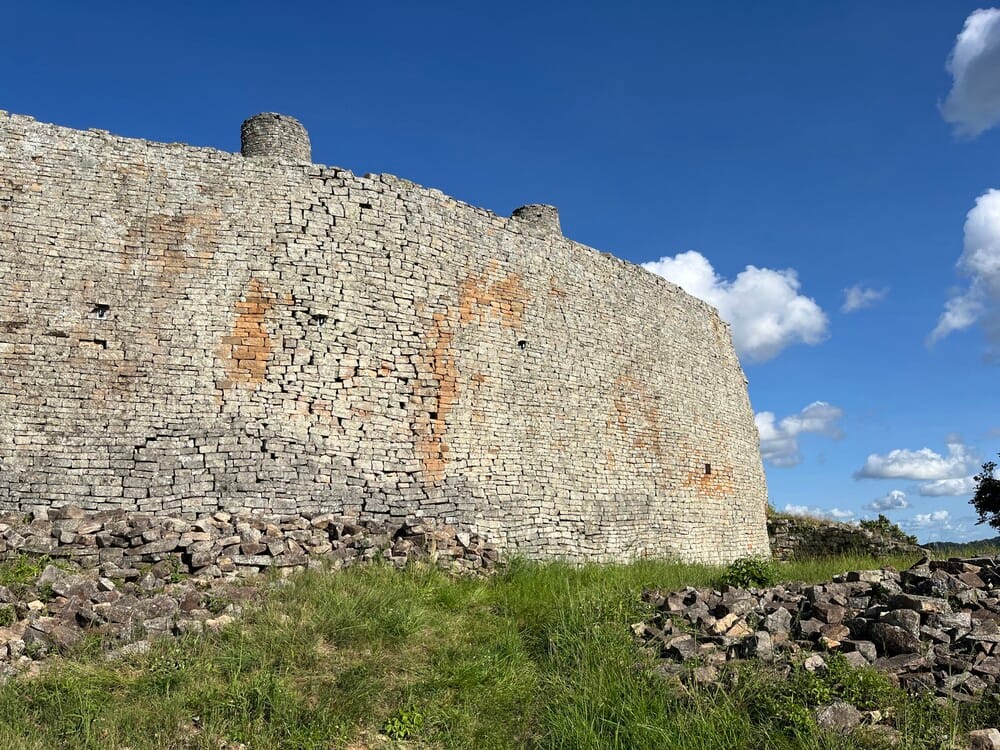
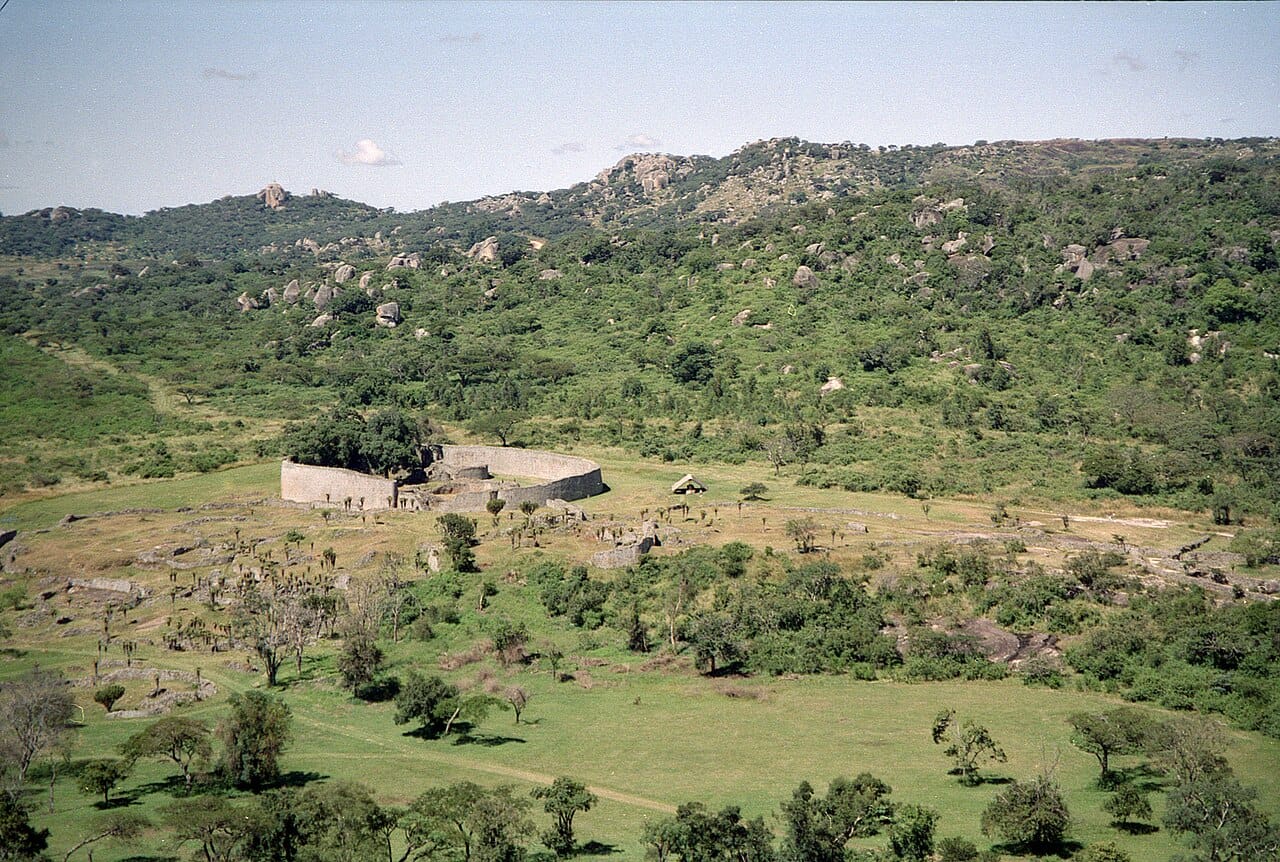
On a granite hill and across the valley below, dry-stone walls curve and climb without a trace of mortar. Inside the enclosures are passages that compress and then open, towers with no doors, and a city plan that favored procession over straight lines. This is Great Zimbabwe, the capital of a medieval Shona polity that controlled inland gold and cattle and linked southern Africa to the Indian Ocean trade. UNESCO World Heritage Centre
It matters because it overturns old myths. For decades, colonial writers tried to credit outsiders for the ruins. Archaeology, materials studies, and radiocarbon work set the record straight. Great Zimbabwe was built between about 1100 and 1450 CE by African builders whose craft and commerce reached far beyond the plateau. UNESCO World Heritage Centre+1
For a curious reader, the site is a field guide in three parts: the Hill Ruins, the Great Enclosure, and the Valley Ruins. Each shows a different chapter of rule, ritual, and residence, and together they map a city whose influence spread by caravan as much as by wall. UNESCO World Heritage Centre
“Stone remembers what stories forget.”
Origins
Great Zimbabwe grew from earlier Iron Age farming communities into an urban center tied to cattle wealth, gold mining, and long-distance trade. Imports at the site include glass beads and Chinese porcelain, a clear signal of links to Swahili coast ports and the wider Indian Ocean. World Monuments Fund+1
The city’s stonemasons worked with local granite. They quarried exfoliating blocks, shaped faces with hammering, and stacked courses that leaned slightly inward for stability. The results are walls that flow with the land and still stand after centuries of weather and earthquakes. Smarthistory
Key dates and milestones
- c. 1100–1450 CE: Main building phases and urban peak. UNESCO World Heritage Centre
- 1500s: First written mentions by Portuguese near Sofala. Wikipedia
- Late 1800s–early 1900s: Early excavations and damaging treasure hunts. ICCROM
- 1986: UNESCO inscription as Great Zimbabwe National Monument. UNESCO World Heritage Centre
- 2023: Updated management planning with local stakeholders. UNESCO
What it is known for
Two images define the site: the curving wall of the Great Enclosure and the tall, solid Conical Tower. The tower’s function is debated, yet most scholars read it as symbolic rather than habitable, part of a grammar of authority. British Museum
Great Zimbabwe is also famous for the soapstone birds found on monoliths, now national symbols. Finds across the city include worked gold, copper, iron tools, spindle whorls, ivory, imported glass beads, and Asian ceramics. Together they show a craft city plugged into regional and oceanic trade. Wikipedia
Key ideas
- Dry-stone engineering without mortar
- Processional space and controlled movement
- Wealth based on cattle, gold, and trade routes
Key works or features
- Hill Ruins acropolis and passages
- Great Enclosure wall and Conical Tower British Museum
- Soapstone birds and elite artifact assemblages Wikipedia
Key themes
- Architecture as authority
- City networked by caravans and coast
- Reclaiming African authorship in the archaeological record
Style and approach
Archaeology at Great Zimbabwe blends architectural survey, excavation, archaeometry, and ethnohistory. Debates center on chronology, social zoning, and meaning. Influential models by Tom Huffman emphasized spatial rules and initiation symbolism, while others, including Innocent Pikirayi and collaborators, argue for more flexible readings that foreground climate, water, craft neighborhoods, and political change. Taylor & Francis Online+1
Conservation practice also shapes interpretation. Past intrusions, including wood removal after early dating campaigns, damaged structures and taught hard lessons about minimal intervention and local stewardship. Current management planning emphasizes community roles and careful stabilization. ICCROM+1
Strengths and blind spots
Where scholarship shines
- Secure construction window and urban scale from the 1100s to 1400s. UNESCO World Heritage Centre
- Clear evidence of long-distance trade through beads and porcelain. World Monuments Fund
- Strong architectural documentation of dry-stone techniques. Smarthistory
Where to be cautious
- Functional readings of the Conical Tower remain interpretive. British Museum
- Over-systematized settlement models can flatten social variability. JSTOR+1
- Early excavation damage and colonial narratives still cast long shadows. ICCROM
Impact and role in the landscape
Great Zimbabwe anchors southern Africa’s medieval story. It sits in a network that includes sites like Mapungubwe and Manyikeni and it helps explain how inland polities leveraged cattle and gold into oceanic exchange. The modern nation took its very name from this city, and the soapstone bird became a state emblem, which makes heritage decisions both cultural and political. Taylor & Francis Online+1
Today the monument is a living place. Festivals, tours, and research share space with conservation. UNESCO and Zimbabwean agencies are aligning management with local benefit and risk reduction, so the stone keeps teaching without being loved to death. UNESCO+1
Closing and further exploration
- UNESCO site page for a clean overview and site map. UNESCO World Heritage Centre
- Smarthistory’s illustrated primer on the architecture and setting. Smarthistory
- World Monuments Fund profile on threats and conservation context. World Monuments Fund
- For deeper debates, read Huffman on spatial models and Pikirayi on climate, water, and political shifts. Taylor & Francis Online+2ScienceDirect+2
If you approach Great Zimbabwe like a field guide, the site repays attention. Watch how the walls bend sightlines, how the passages choreograph movement, and how imported shards whisper of a coast two weeks away by caravan. The ruins are not mute. They speak in granite.