
The Central Question
What if the self is not a thing?
Not a fixed object.
Not a permanent little person living behind your eyes.
Not a private commander sitting inside the skull, steering the body through a world that is separate from it.
What if the self is more like a lens?
A temporary point of view.
A pattern reality forms so experience can happen from somewhere.
This question sits at the center of philosophy, spirituality, neuroscience, psychology, and mysticism. It is also one of the great questions beneath the work of Alan Watts.
Watts did not simply say the ego was bad.
He was pointing toward something stranger.
The self we usually defend, advertise, fear losing, and spend a lifetime trying to perfect may not be the deepest version of what we are.
It may be a useful construction.
A social interface.
A survival tool.
A name tag worn by a much larger process.
That does not mean the self is meaningless.
A wave is not separate from the ocean, but it is still a wave.
A flame is not separate from combustion, but it still has shape.
A song is not separate from vibration, but it still moves through time.
Maybe the self is like that.
Not an illusion in the sense of nothing.
An illusion in the sense of misidentification.
We mistake the aperture for the whole sky.
We mistake the mask for the actor.
We mistake the local experience for the total reality.
So the question becomes:
Is the self an illusion?
Or is it a portal?
The Self Feels Obvious Until You Look Closely
The self feels like the most obvious fact in existence.
Before any theory, belief, religion, or philosophy, there is this:
I am here.
I am me.
I am having this experience.
That feeling is so immediate that we rarely question it.
But the moment we examine it, the edges start to blur.
Where exactly is the self?
Is it in the brain?
The body?
The memories?
The personality?
The voice in the head?
The awareness noticing the voice?
The name?
The story?
The choices?
The body you were born into?
The person other people recognize?
If the self is your body, then which body?
The infant body?
The teenage body?
The adult body?
The aging body?
Your cells have changed.
Your face has changed.
Your beliefs have changed.
Your fears have changed.
Your desires have changed.
Your memories have been edited by time.
And yet you still say:
That was me.
There is continuity.
But the continuity is not as solid as it feels.
It is more like a river than a stone.
A river keeps its name even while its water is constantly moving.
Maybe the self works the same way.
A pattern persists.
But the ingredients flow.
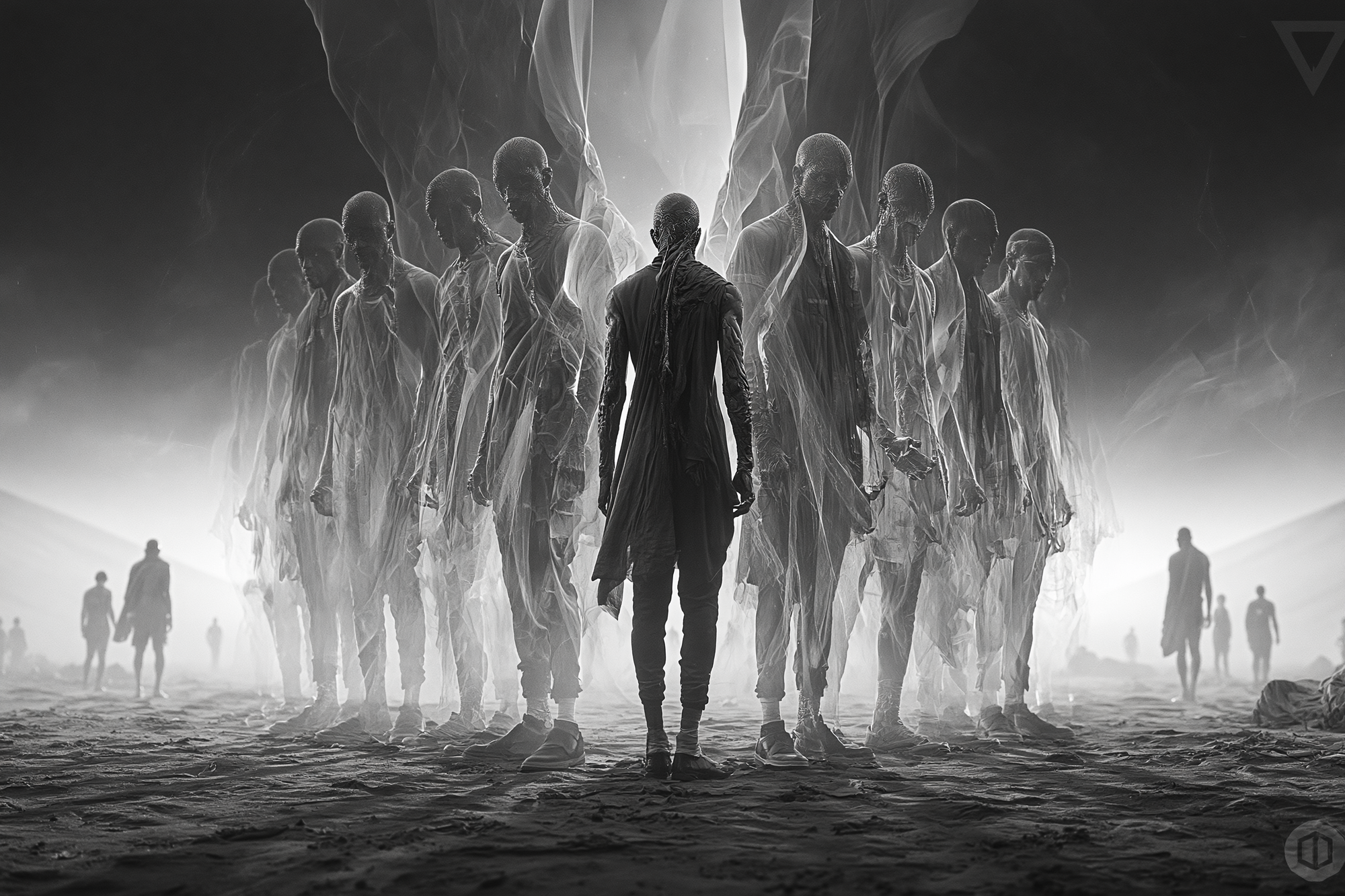
The Self as Story
One grounded way to understand the self is as a story.
Not a fake story.
A living story.
The brain gathers memory, emotion, sensation, social feedback, imagination, and prediction, then ties them together into a coherent “me.”
This is useful.
Without a self-story, life would become difficult to navigate.
You need continuity.
You need to remember that yesterday’s promise belongs to today’s person.
You need to know which body is yours.
You need to protect your future.
You need to learn from pain.
You need to recognize your own name.
You need to understand where you end and another person begins.
So the self is not useless.
It is one of the most powerful organizing patterns the mind creates.
But the problem begins when the story forgets it is a story.
The self says:
I am my trauma.
I am my achievements.
I am my reputation.
I am my failure.
I am my opinions.
I am my body.
I am my thoughts.
I am the image other people hold of me.
I am the role I perform.
I am the voice in my head.
And once the self becomes too rigid, it starts to feel like a prison.
This may be the tension Watts kept circling.
The ego is not the enemy because it exists.
The ego becomes a problem when it mistakes itself for the whole.
Why This Question Matters Now
This question matters because modern life is built around self-construction.
Build your identity.
Find your brand.
Optimize your personality.
Define your purpose.
Curate your image.
Protect your reputation.
Track your metrics.
Tell your story.
Know who you are.
At first, that sounds empowering.
But it can also become exhausting.
The modern self is constantly being asked to perform.
Online, the self becomes content.
In the marketplace, the self becomes a consumer profile.
At work, the self becomes productivity.
In politics, the self becomes a category.
In culture, the self becomes a position.
Even spirituality can turn the self into a project.
Heal yourself.
Upgrade yourself.
Manifest yourself.
Become your highest self.
There is nothing wrong with growth.
But there is a hidden trap here.
The more intensely we try to perfect the self, the more solid the self can feel.
The identity becomes heavier.
The mask becomes tighter.
The story becomes harder to question.
That is why the Watts question matters now.
What if peace does not come from building a more impressive self?
What if peace comes from seeing through the illusion that the self was ever separate?
The Neuroscience of the Constructed Self
Neuroscience does not give us a final answer to the mystery of identity.
But it does make one thing difficult to ignore:
The self appears to be constructed.
There is no single little captain in the brain.
No tiny observer sitting behind the eyes.
No one location where the permanent “I” can be found.
Instead, what we call the self seems to emerge from many systems working together.
Memory.
Body awareness.
Emotion.
Language.
Social prediction.
Attention.
Internal narration.
The brain models the world, but it also models the organism moving through the world.
That self-model is useful because it helps the body survive.
It tells the system:
This is my hand.
This is my memory.
This is my pain.
This is my goal.
This is my future.
This is my place in the social field.
But a model is not the thing itself.
A map is not the territory.
A mirror is not the face.
A self-model may be necessary for human life, but that does not mean it reveals the deepest nature of what we are.
This is where the scientific and spiritual questions begin to overlap.
The mystic says the separate self is an illusion.
The neuroscientist says the self is a constructed model.
The philosopher asks what, if anything, remains when the model is seen clearly.
The Galactic Mind question is:
If the self is constructed, does that make it less real?
Or does it mean reality is stranger than the self can contain?
Illusion Does Not Mean Nothing
This is where the word “illusion” can mislead us.
When people hear “the self is an illusion,” they often think it means:
You do not exist.
Your life does not matter.
Your pain is fake.
Your relationships are meaningless.
Your identity should be erased.
But that is too crude.
An illusion is not always a total falsehood.
Sometimes an illusion is a real experience interpreted incorrectly.
A rainbow is not a physical object floating in the sky.
But it is not nothing.
It is an event.
Light, water, angle, perception, and atmosphere coming together.
The rainbow is real as an appearance.
It is false only if you mistake it for a solid thing you can grab.
Maybe the self is similar.
The self is real as experience.
Real as pattern.
Real as relationship.
Real as memory.
Real as responsibility.
Real as the local way life becomes personal.
But maybe it is false as separation.
False as isolation.
False as the claim that you are a sealed-off ego confronting an alien universe.
That is the subtle move.
The self may not be a lie.
The lie may be that the self is separate.
Watts and the “Skin-Encapsulated Ego”
Alan Watts often challenged the feeling that we are isolated egos locked inside bodies.
That phrase, the “skin-encapsulated ego,” became one of his most powerful ideas.
The ordinary person feels like a small self inside the skin, looking out at a vast external world.
Inside is “me.”
Outside is “everything else.”
Watts thought this division was deeply misleading.
You are not merely in the universe.
You are something the universe is doing.
The same reality that grows trees, forms stars, moves tides, and builds galaxies also grew nervous systems capable of saying “I.”
The human self is not outside nature.
It is nature becoming aware from a particular angle.
This is not just poetic language.
It is a frame shift.
The apple tree apples.
The ocean waves.
The universe peoples.
From this view, the self is not a separate owner of experience.
It is an expression of the whole field.
A temporary center through which reality looks back at itself.
That is where the portal idea begins.
If the ego is an illusion of separation, the self may still be a portal of participation.
Not a wall between you and reality.
A window through which reality becomes intimate.
The Portal Model of Self
So what would it mean to call the self a portal?
It would mean the self is not the final identity.
It is the opening through which experience becomes personal.
A portal has a location.
It has a shape.
It has a frame.
But what passes through it is larger than the frame.
Your body is the frame.
Your nervous system is the instrument.
Your memory gives the portal history.
Your language gives it structure.
Your emotions give it weather.
Your relationships give it meaning.
But the raw fact of awareness may not belong only to the personal story.
Something looks through the portal.
Something hears.
Something feels.
Something witnesses.
The portal does not need to be supernatural to matter.
Even in a grounded sense, each person is a temporary aperture through which the universe becomes experience.
Matter becomes life.
Life becomes sensation.
Sensation becomes memory.
Memory becomes identity.
Identity becomes a question.
And then the question turns around and asks:
What am I?
That is astonishing.
The self may be the universe becoming locally confused enough to ask about itself.
And maybe that confusion is not a mistake.
Maybe it is part of the process.
The Frame Shift: You Are Not Inside Reality. You Are Reality From a Point of View.
The familiar assumption is simple:
You are a person inside the world.
You were born into reality.
You move through it.
You observe it.
You act upon it.
Then one day you leave it.
That view feels natural because ordinary consciousness is built around separation.
Subject and object.
Self and world.
Observer and observed.
Inside and outside.
But the crack appears when we ask:
Where is the line, really?
Your body is made of the same matter as the planet.
Your breath is exchanged with trees, oceans, and atmosphere.
Your food becomes your blood.
Your senses are not windows looking at reality from elsewhere.
They are reality interacting with itself.
Your thoughts are not floating outside nature.
They are biological events.
Your emotions are not private weather sealed off from the world.
They are shaped by relationships, memory, chemistry, culture, and environment.
The wider lens opens:
You are not a ghost inside a machine.
You are not a stranger dropped into the universe.
You are not merely looking at reality.
You are reality appearing as a point of view.
The return is simple.
You look at your hand.
You hear a sound.
You feel your breath.
You notice the voice in your mind saying “me.”
And for a moment, the boundary softens.
Not disappears.
Softens.
The self is still here.
The name still matters.
The life still matters.
The responsibilities still matter.
But the self is no longer a sealed container.
It becomes a doorway.
The frame shift is this:
Maybe awakening is not destroying the self.
Maybe awakening is seeing that the self was never separate from what it was trying to understand.
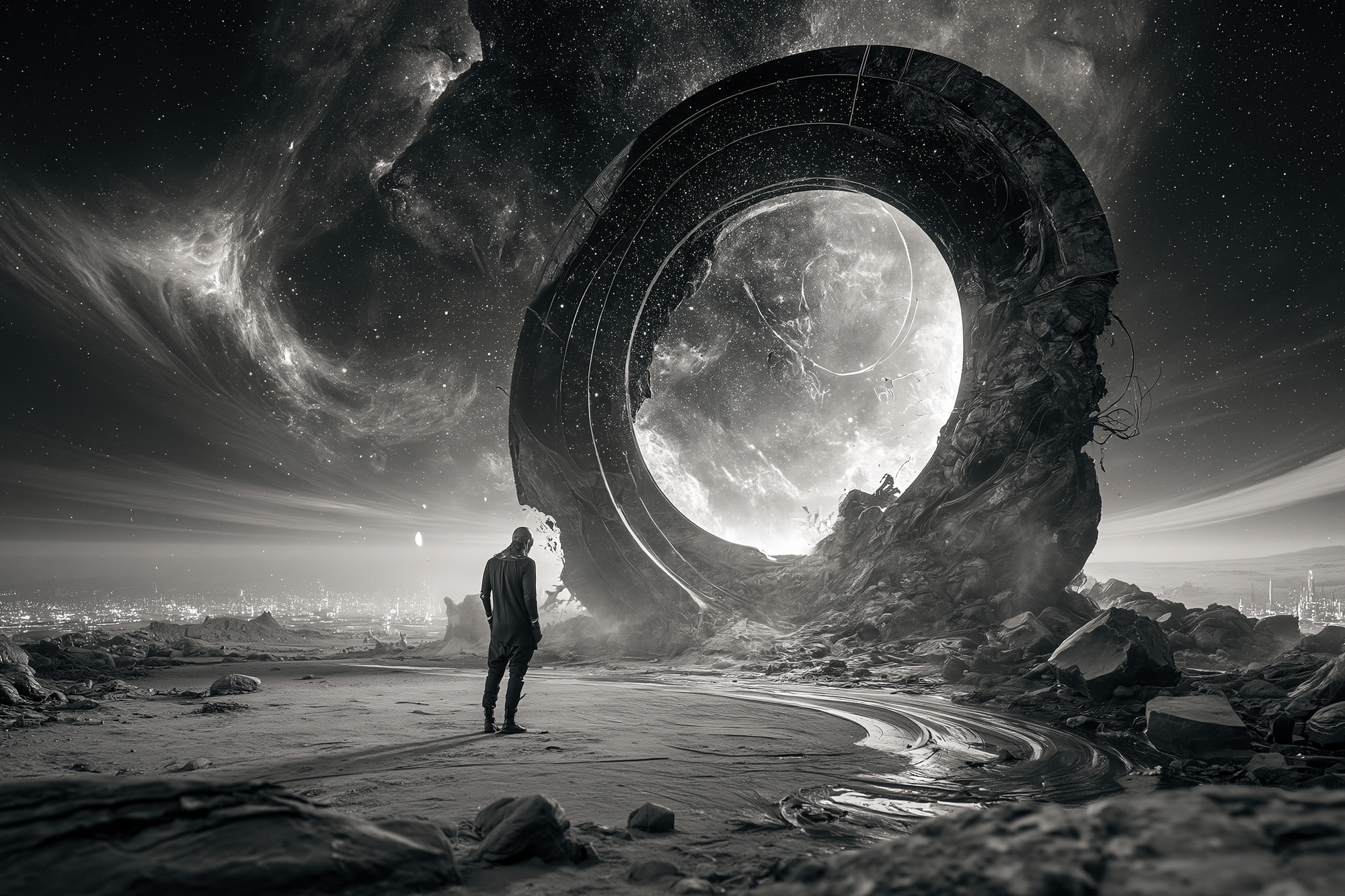
The Danger of Dissolving the Self Too Quickly
There is a risk here.
The idea that the self is an illusion can be beautiful.
It can also be misused.
Some people use it to bypass pain.
If the self is an illusion, why deal with trauma?
If identity is temporary, why honor someone’s boundaries?
If the ego is not ultimately real, why take personal responsibility?
That is not wisdom.
That is spiritual escape.
A healthy self matters.
A stable identity matters.
Boundaries matter.
Memory matters.
Healing matters.
A person who has been harmed does not need to be told their pain belongs to an illusion.
They need safety.
They need dignity.
They need integration.
The self may be constructed, but constructions can be sacred.
A home is constructed.
A body is temporary.
A song ends.
A promise exists because people agree to honor it.
Temporary does not mean worthless.
So the point is not to erase the self.
The point is to loosen the false absoluteness of the self.
The ego should not be king.
But it does have a role.
It helps us survive, love, choose, learn, create, apologize, protect, and participate.
The mature path is not self-worship.
It is not self-erasure either.
It is self-transparency.
A self that can function without pretending to be the whole universe.
The Self as Interface
One of the most useful ways to think about the self is as an interface.
An interface is not fake.
It helps a deeper system become usable.
Your phone screen is not the whole machine.
But without the screen, the machine is difficult to navigate.
The icons are simplified.
The layout is symbolic.
The interface hides complexity so action becomes possible.
Maybe the self works this way.
The “I” is a simplified interface for a vast biological, social, emotional, and cosmic process.
Behind “I decided” is a storm of memory, sensation, prediction, chemistry, desire, fear, culture, and unconscious processing.
Behind “I believe” is inheritance, language, experience, education, mood, body state, and social belonging.
Behind “I am” is a mystery deeper than the sentence can hold.
The interface is useful.
But the problem begins when the interface thinks it is the entire system.
The self says:
I am in control.
I am separate.
I am complete.
I am the author of everything.
I am what my thoughts say I am.
But then meditation, grief, awe, love, psychedelics, prayer, trauma, beauty, birth, death, and deep silence can all interrupt the interface.
Suddenly the self is not as solid.
The world feels closer.
The boundary shifts.
For a moment, the little “I” becomes transparent.
And something larger shines through.
Moments When the Self Opens
Most people have had moments where the ordinary self relaxes.
Awe can do it.
Standing under a night sky.
Watching the ocean.
Holding a newborn.
Hearing music that seems to bypass thought.
Losing yourself in a creative act.
Sitting with someone you love in silence.
Moving through nature until the mind stops narrating.
Facing death.
Surviving grief.
Entering deep meditation.
Experiencing beauty so intense the self forgets to defend itself.
In those moments, the boundary between “me” and “world” can become porous.
You do not vanish.
But you are no longer the center in the usual way.
There is experience without the usual contraction around identity.
There is seeing without so much commentary.
There is being without so much performance.
This is important because it suggests the self is not always experienced at the same intensity.
Sometimes it is loud.
Sometimes it is quiet.
Sometimes it is rigid.
Sometimes it is open.
Sometimes it feels like a wall.
Sometimes it feels like a window.
That variability matters.
If the self were a fixed object, why would it fluctuate so dramatically?
Maybe the self is more like a mode of consciousness.
A useful setting.
A lens that can tighten or widen.
The Nightmare Version: The Ego Becomes the Whole World
The darker version is not that the self exists.
The darker version is that the self becomes total.
A person becomes trapped inside their own identity.
Every disagreement becomes a threat.
Every criticism becomes annihilation.
Every uncertainty becomes weakness.
Every difference becomes enemy.
Every relationship becomes a mirror for the ego.
Every spiritual idea becomes another possession.
Every belief becomes part of the self’s armor.
This is how the self hardens.
It stops being a portal and becomes a fortress.
A culture can do this too.
A society built around isolated selves will treat reality as an external resource.
Nature becomes material.
Animals become units.
People become competitors.
Attention becomes currency.
The body becomes a machine.
Death becomes an insult.
Mystery becomes something to conquer or dismiss.
The separate self does not only create personal anxiety.
It creates a civilization of separation.
This may be one reason Watts still resonates.
He was not only talking about individual psychology.
He was pointing at a civilizational mistake.
A culture that believes humans are separate from nature will behave differently than a culture that believes humans are expressions of nature.
A person who believes they are an isolated ego will live differently than one who feels woven into the whole.
The metaphysics changes the behavior.
The story changes the world.
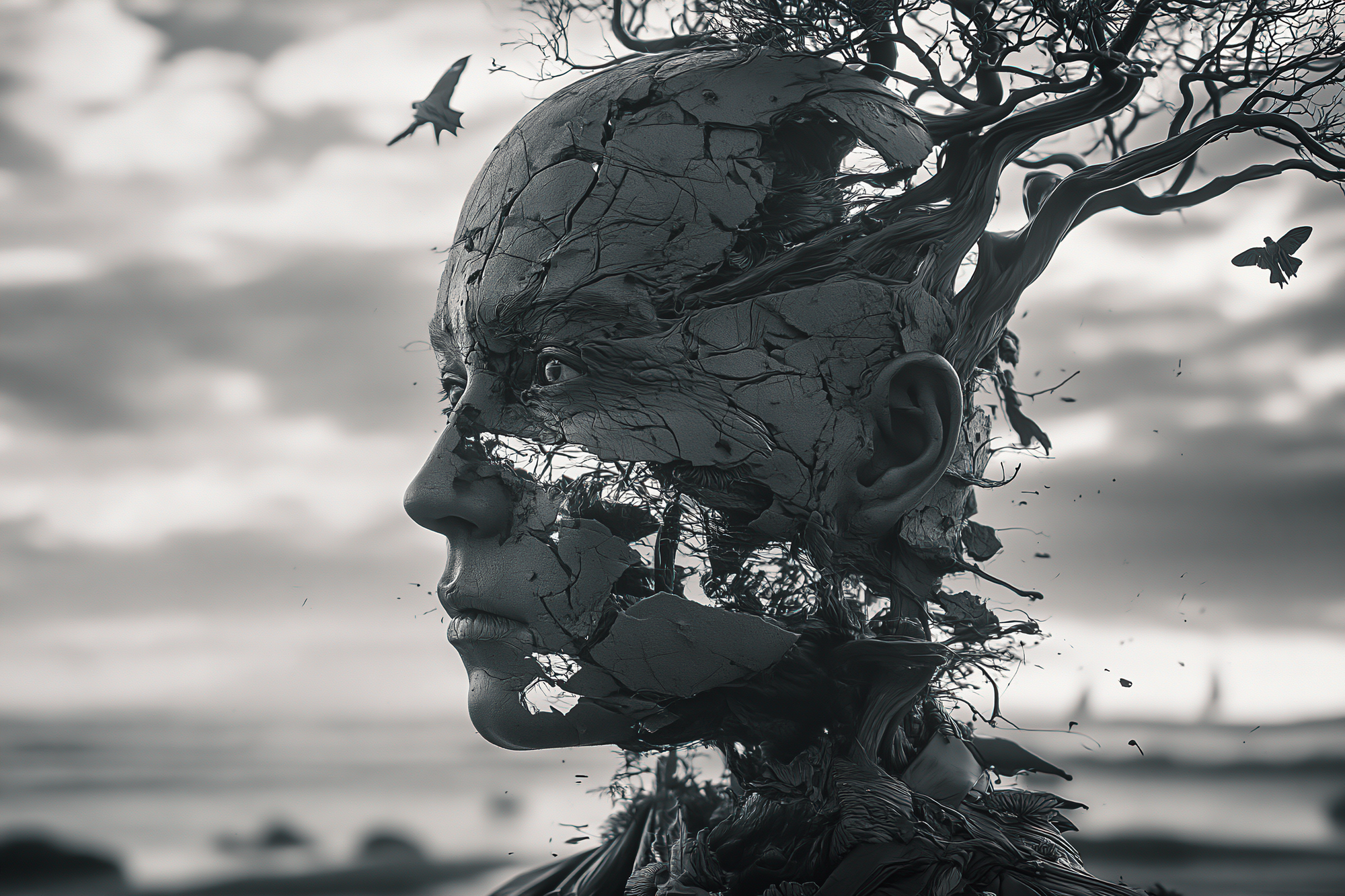
The Beautiful Version: The Self Becomes Transparent
The beautiful version is not self-destruction.
It is transparency.
The self remains.
But light passes through it.
You still have a name.
A history.
Preferences.
Wounds.
Responsibilities.
A body.
A family.
A voice.
A finite life.
But you no longer believe this local pattern is cut off from the rest of existence.
You can care for your personal life without worshiping your personal identity.
You can defend boundaries without believing separation is ultimate.
You can pursue goals without turning achievement into salvation.
You can feel pain without making pain the whole story.
You can love others not as objects outside you, but as other centers of the same mystery.
In this version, the self becomes a sacred instrument.
Not the source of the music.
The instrument.
The portal does not claim to be the universe.
It allows the universe to sing through a particular form.
That is a different kind of humility.
Not smallness.
Participation.
What This Means for Death
Any serious question about the self eventually touches death.
If the self is a fixed personal object, death looks like the total destruction of that object.
The story ends.
The body stops.
The voice goes silent.
The person disappears.
But if the self is a temporary lens, the question changes.
What ends?
The body?
The memory pattern?
The personality?
The point of view?
The sense of separation?
The portal?
And what, if anything, remains of the larger reality that formed it?
This is where certainty becomes dangerous.
No one should pretend to know more than they do.
The honest position is humility.
We know the personal self depends deeply on the brain and body.
We know memory, personality, and identity can change when the brain changes.
We know death ends the organism as we understand it.
But we do not fully understand consciousness.
We do not fully understand why there is experience at all.
We do not know whether awareness is purely produced by matter, somehow fundamental, or something stranger than our current categories allow.
So the question remains open.
Maybe death is the closing of a temporary aperture.
Maybe the personal self dissolves back into the larger process that formed it.
Maybe consciousness is a brief flame.
Maybe it is a local expression of something deeper.
Maybe the “I” does not survive as the story imagines, but the reality behind the “I” was never separate to begin with.
The portal model does not prove immortality.
It does something subtler.
It loosens the fear that the ego’s boundaries define the whole of existence.
The Self Was Never Just Personal
The self feels private.
But it is not created alone.
You learned your name from others.
You learned language from others.
You learned who you were partly through reflection.
Family shaped you.
Culture shaped you.
Pain shaped you.
Love shaped you.
History shaped you.
Biology shaped you.
The Earth shaped you.
The self is not an isolated invention.
It is relational.
You are not only you.
You are also a meeting point.
Ancestors.
Atmosphere.
Food.
Water.
Sunlight.
Language.
Memory.
Culture.
Planet.
Cosmos.
This does not erase individuality.
It deepens it.
A person becomes more miraculous, not less, when seen as a temporary convergence of the whole.
You are not “just” a person.
You are matter organized into memory.
Earth organized into breath.
Time organized into biography.
The universe organized into a question.
That question says:
Who am I?
And maybe the answer is not a sentence.
Maybe the answer is an opening.
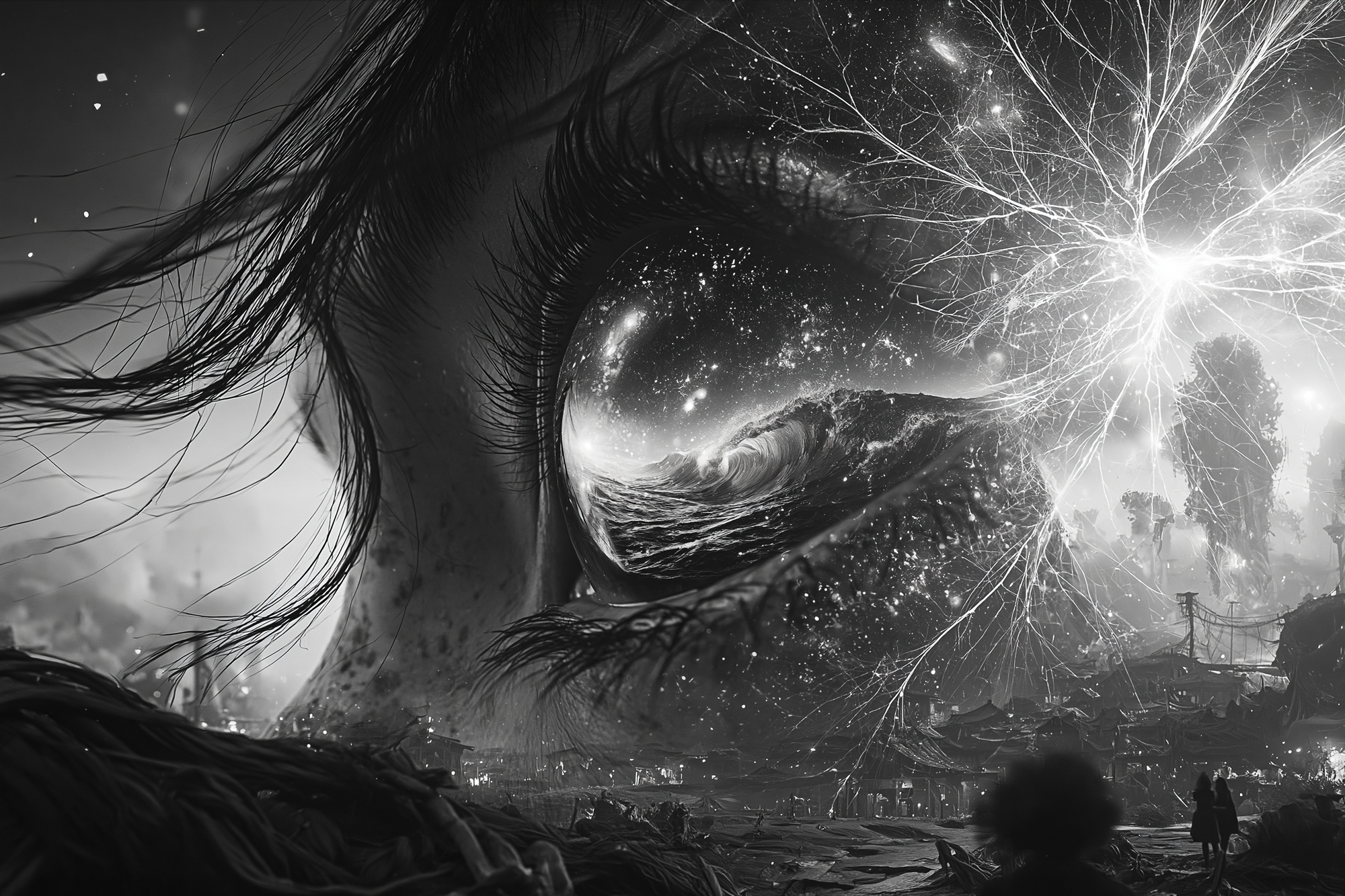
The Galactic Mind Perspective
From The Galactic Mind perspective, the self is best approached with one foot grounded and one foot open.
Grounded first:
The self is shaped by the brain, body, memory, language, and social experience.
It can be studied.
It can be injured.
It can be healed.
It can change.
It can become rigid or flexible.
It is not a magical object floating apart from biology.
But expansive second:
The fact that the universe produces beings capable of self-awareness is astonishing.
The fact that matter can become inwardness is not ordinary.
The fact that reality can generate a creature that asks whether it is separate from reality should stop us in our tracks.
So maybe the self is neither a permanent soul-object nor a meaningless hallucination.
Maybe it is a threshold phenomenon.
A temporary pattern where the universe becomes intimate with itself.
A portal made of body, memory, attention, and mystery.
The ego says:
I am separate.
The mystic says:
Look deeper.
The scientist says:
The self is constructed.
The philosopher says:
Constructed does not mean unreal.
Maybe the self is the place where reality leaves a door open.
The Question That Remains
So is the self an illusion or a portal?
Maybe the answer is yes.
The self is an illusion when it claims to be separate, fixed, and final.
It is a portal when it becomes transparent to the larger reality moving through it.
It is an illusion when it hardens into a fortress.
It is a portal when it opens into relationship.
It is an illusion when it mistakes the story for the whole truth.
It is a portal when it lets the story become a way of participating in something larger.
You do not need to erase the self.
You need to see through it clearly enough that it stops pretending to be the entire sky.
Maybe you are not a little ego trapped inside the universe.
Maybe you are the universe, briefly awake as someone.
A temporary lens.
A living aperture.
A question with a body.
And maybe the deepest self is not the one you defend.
Maybe it is the openness that remains when the defense relaxes.
What do you think? Drop your thoughts in the comments ...
Sources / Receipts
- Alan Watts, The Book: On the Taboo Against Knowing Who You Are
Useful for grounding Watts’ idea that the separate ego is a misleading sensation and that the human being is an expression of the wider universe. - Thomas Metzinger, Being No One: The Self-Model Theory of Subjectivity
Useful for grounding the philosophical argument that the self is not a fixed entity, but a phenomenal self-model. - Thomas Metzinger, The Ego Tunnel
Useful for accessible framing around the brain’s self-model and the experience of being a self. - Yvette I. Sheline et al., “The Default Mode Network and Self-Referential Processes in Depression,” PNAS / PMC, 2009
Useful for grounding the role of the default mode network in self-referential processing. - Evan Thompson, Waking, Dreaming, Being
Useful for grounding the intersection of neuroscience, contemplative traditions, and the question of selfhood. - Evan Thompson, Self, No Self?
Useful for grounding the debate between Buddhist no-self traditions and contemporary philosophy of mind. - Antonio Damasio, Self Comes to Mind
Useful for grounding the idea that selfhood emerges through body, feeling, memory, and consciousness. - Anil Seth, Being You
Useful for grounding the view that conscious selfhood is a controlled, embodied construction rather than a simple inner observer.


Discussion