
Case Overview
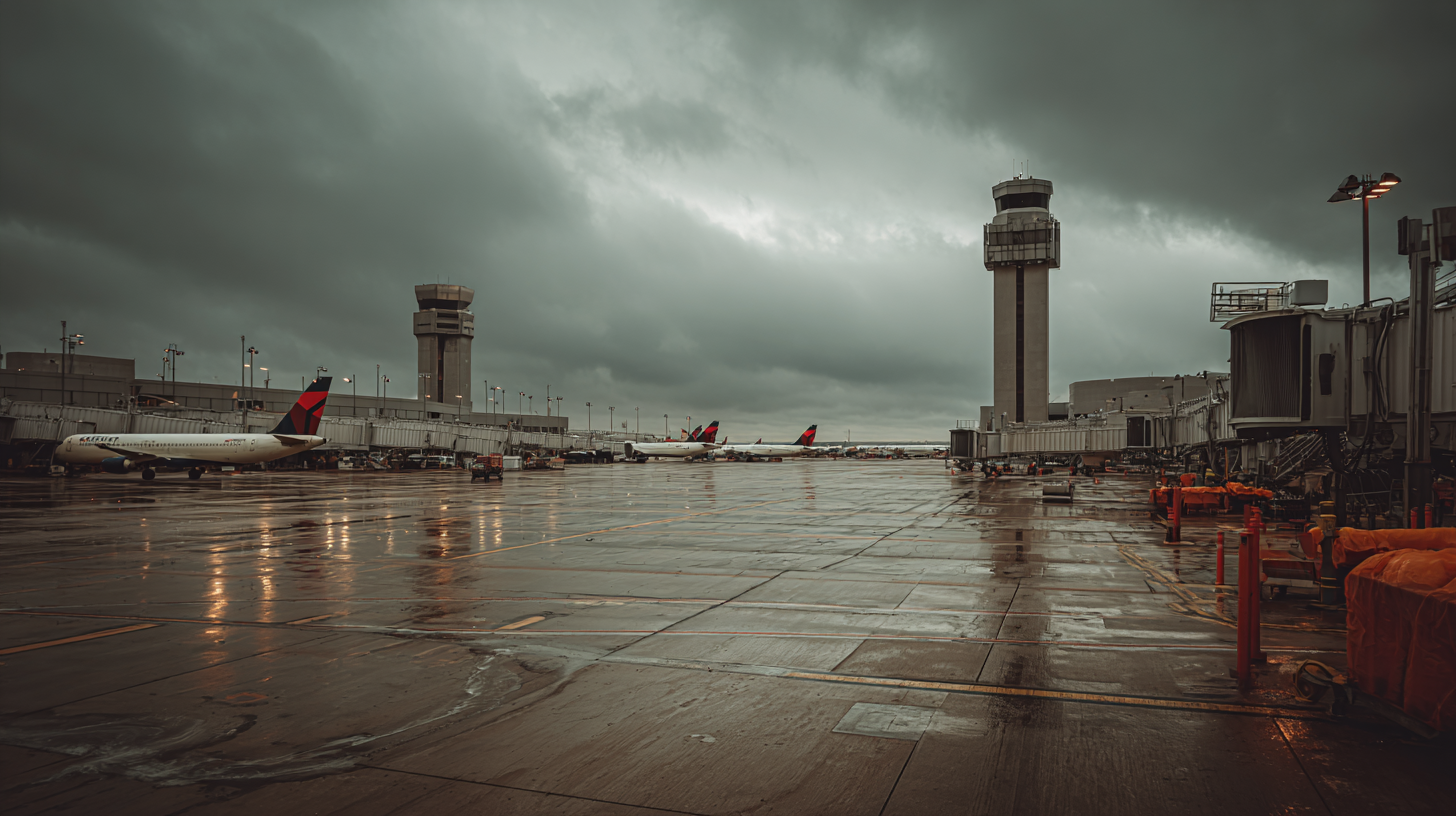
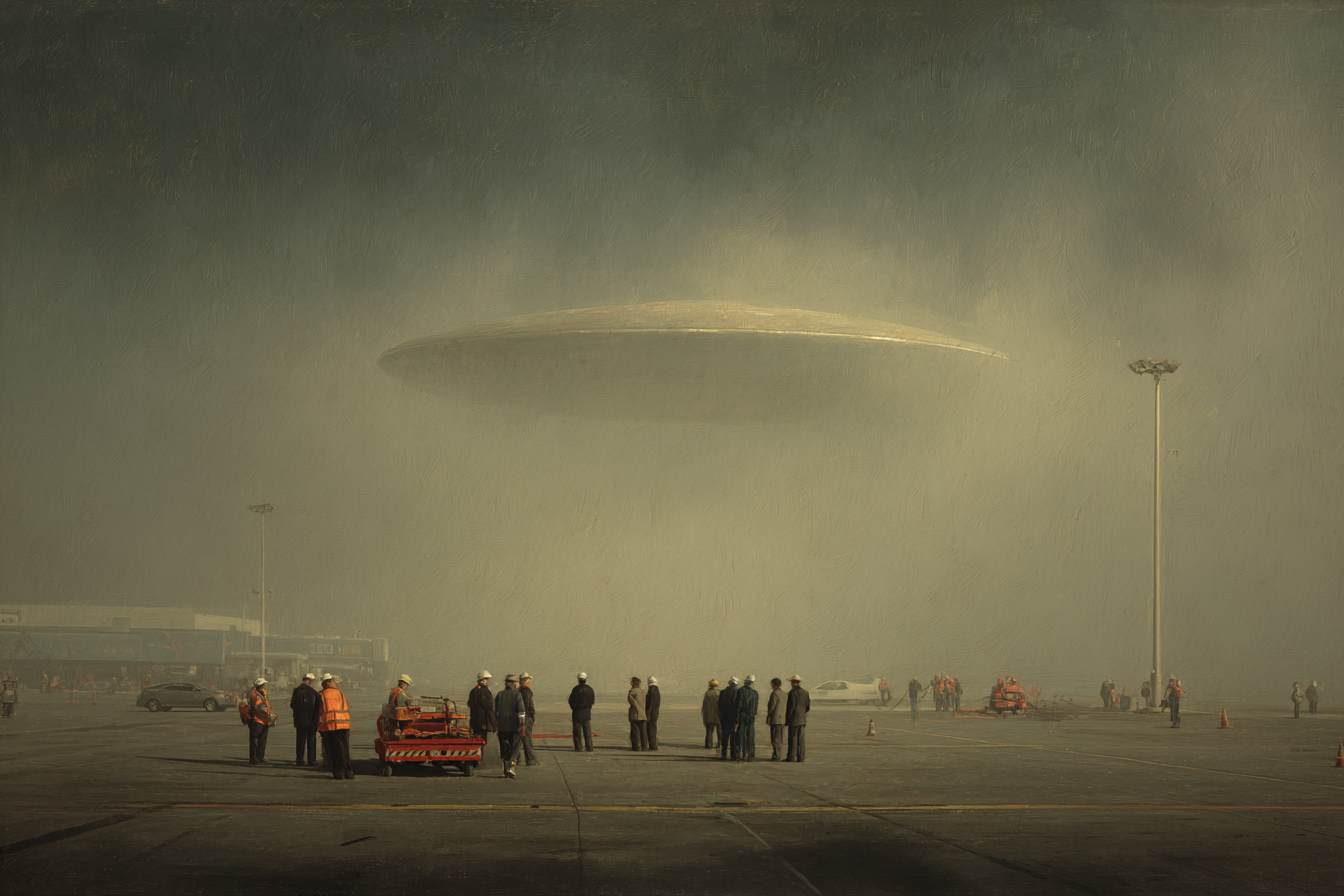
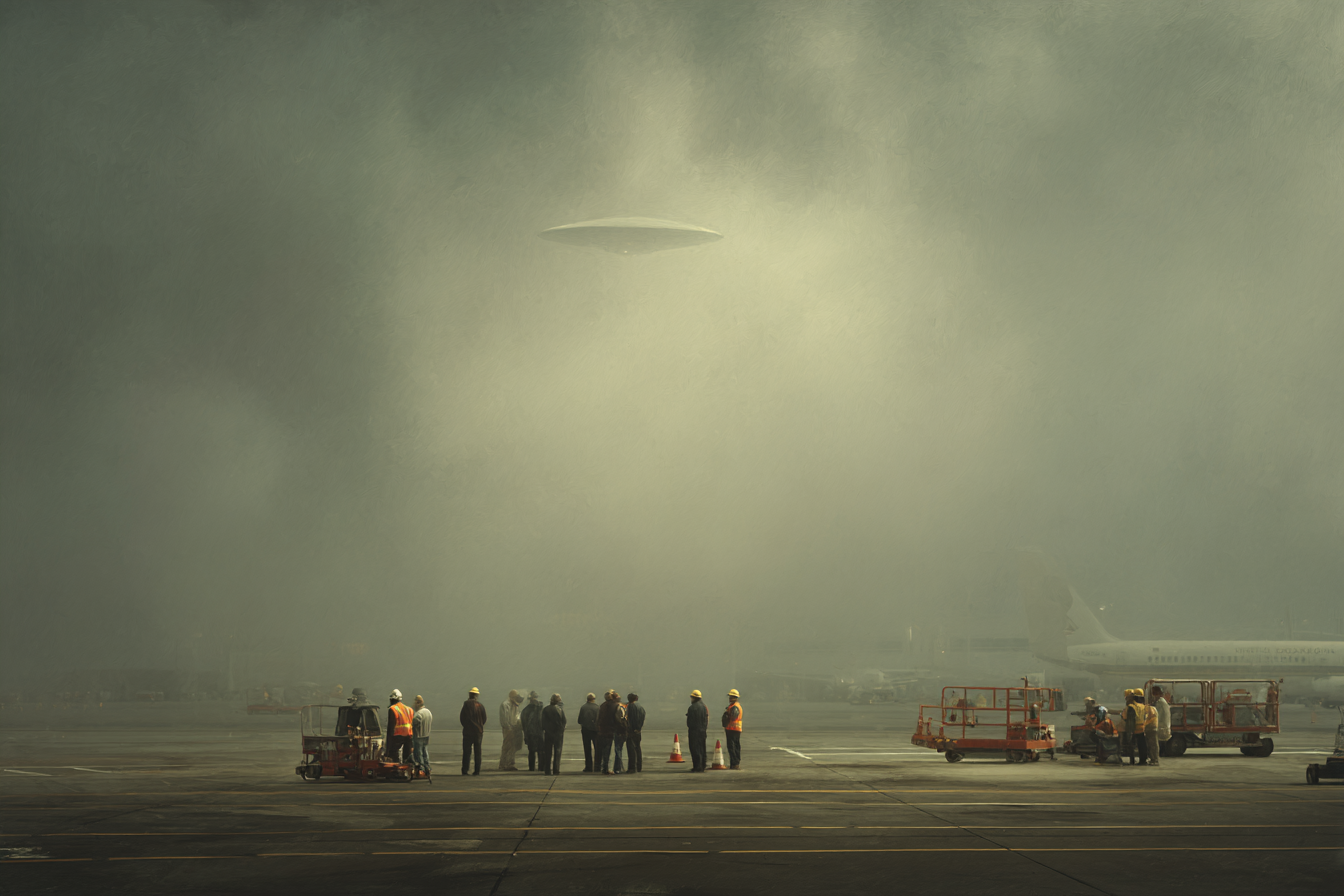
On November 7, 2006, around 4:15 p.m. CST, multiple airline employees at Chicago O’Hare International Airport reported a gray, saucer-like object hovering above Gate C17 in the United terminal area. The object was described as silent, metallic-looking, and visible for several minutes before accelerating upward through the cloud layer.
What makes the case notable is not only the setting, one of the busiest airports in the United States, but the split between the witnesses and the official response. Witnesses said they saw a structured object. The FAA said controllers saw nothing, radar showed nothing unusual, and the agency treated it as a likely weather phenomenon rather than a formal UFO investigation.
What Actually Happened
According to later reporting summarized by WTTW, more than a dozen workers associated with United operations reported seeing the object above Concourse C. Reporter Jon Hilkevitch said the employees independently described a gray disc hovering above Gate C17, somewhere around 1,400 feet up, before it shot upward with what witnesses described as immense speed or energy.
The object was reportedly visible for about five minutes. Witnesses said it made no noise, carried no visible lights, and left behind a noticeable hole in the cloud layer when it departed vertically. CBS’s contemporaneous report similarly said the workers described a hovering craft that then shot up through the clouds, leaving an opening in the overcast that seemed to close a few minutes later.
A United supervisor called the tower to ask if anyone else had seen the object. FAA spokeswoman Elizabeth Cory later confirmed that such a call had come in, but said controllers did not see anything and that a preliminary radar check showed nothing out of the ordinary. She also said the FAA was not investigating.
The public paper trail did not end there. WTTW reports that when Hilkevitch filed a FOIA request for air traffic control recordings, the tapes revealed airport employees and FAA personnel were in fact discussing “a disc out there flying around,” despite the earlier public posture that no meaningful report existed. Even so, neither United nor the FAA opened a full inquiry into the object itself.
Key Claims and Evidence
- Witness reports: More than a dozen airline employees reported seeing a saucer-like or disc-shaped object above Gate C17.
- Behavior described: The object was said to hover silently for several minutes, then shoot upward through the clouds.
- Cloud effect: Witnesses reported a visible opening or “hole” left in the cloud layer after the object departed.
- Tower and radar: The FAA said controllers saw nothing and a preliminary radar review found nothing abnormal.
- Official explanation: The FAA publicly suggested a weather-related interpretation and declined to investigate further.
- FOIA-supported record: Air traffic control tapes later showed personnel had in fact discussed a “disc” near the terminal area.
- Independent aviation analysis: NARCAP later treated the case as a legitimate aviation-safety issue involving multiple witnesses and a possible surveillance gap.
Points of Tension
The first tension is location. This was not a lonely rural road or a single-person nighttime report. It was an alleged structured object over a major commercial airport in daylight conditions, seen by multiple aviation workers in an environment where unusual aerial activity should, in theory, be quickly recognized or ruled out. That setting raises the evidentiary bar, but it also raises the stakes if something truly unidentified was present.
The second tension is witnesses versus instruments. The witnesses described a disc. The FAA said radar showed nothing unusual. That mismatch sits at the center of the case. NARCAP’s later analysis leaned into that problem, arguing that if the witness reports were broadly accurate, then the event revealed a meaningful blind spot in airport-area detection rather than simply a strange story.
The third tension is tower invisibility. Skeptics often point to the fact that tower personnel did not report seeing the object. But NARCAP later calculated that an object directly above Gate C17 at roughly 1,438 feet AGL or higher could have been obscured from the tower’s normal sightline by the tower structure itself, depending on where the viewer was standing. That does not prove the witnesses were right, but it does weaken the simplest version of the “if it were there, the tower would have seen it” argument.
The fourth tension is the weather explanation. The FAA publicly floated “weird weather” and airport-light reflection as its theory. WTTW says the agency also pointed to a hole punch cloud possibility. But NOAA defines fallstreak or hole-punch clouds as openings that form in mid- to high-level altocumulus or cirrocumulus clouds containing supercooled droplets, often triggered by aircraft. A meteorological review published by WRAL noted that O’Hare reportedly had a low overcast around 1,900 feet AGL that day and said there was no obvious weather explanation, even if weather could not be ruled out entirely.
The fifth tension is denial versus record. Publicly, United and the FAA initially minimized the event. But the FOIA tapes later showed airport personnel were in fact talking about a disc near the terminal. That does not prove the object was extraordinary. It does show the public story was cleaner than the internal record.
Perspectives and Explanations
One explanation is that this was a misperceived weather or lighting event. The FAA’s public position was that the conditions that night, including low clouds and bright airport lighting, could create unusual visual effects. Hole-punch or fallstreak cloud phenomena are real, and from below they can produce dramatic circular openings in cloud decks.
A second explanation is that the witnesses saw a genuine structured aerial object that simply was not captured clearly by radar or tower observers. This view gains some support from the number of reported witnesses, the consistency in the disc description, the duration of the sighting, and the FOIA-confirmed tower discussion. It is also the reading that keeps the case alive in aviation-anomaly circles.
A third explanation is more procedural than exotic: the O’Hare event may reveal a systems gap, where something unusual happened, was seen by multiple people, but fell between categories. It was not handled as a safety event, not treated as a scientific event, and not robustly investigated as a human-factors event either. That interpretation is partly inferential, but it matches NARCAP’s framing of the case as a detection and reporting problem as much as an identification problem.
Context and Pattern Recognition
The O’Hare case fits a recurring pattern in anomaly files involving aviation. The strongest cases are not always the ones with the clearest photographs. Sometimes they are the ones where the setting itself creates pressure. An alleged disc over a major airport terminal during operations forces a harder question than a remote light in the countryside: if something was there, why was the official record so thin?
It also fits a broader pattern in modern anomaly reporting, where witness accounts survive, recordings survive, and media coverage survives, but the institutional response remains minimal. The case did not disappear because no one saw anything. It endured because people did report something, and the reporting did not lead to closure.
Implications
If even part of the witness account is accurate in its strongest form, then the implication is not merely “UFO at an airport.” It is that a structured object may have hovered over a major aviation hub without triggering a meaningful official response or producing a decisive sensor trail. That would raise uncomfortable questions about surveillance limits, reporting culture, and aviation safety.
If the case was ultimately a weather or perception event, the implications still matter. It would show how quickly unusual cloud behavior, low ceilings, airport lighting, and group attention can harden into an enduring anomaly narrative, especially when agencies respond dismissively rather than transparently. Either way, O’Hare remains a case about the instability of explanation under pressure.
The Galactic Mind Perspective
The O’Hare airport incident does not endure because it proves something extraordinary. It endures because it exposes a gap between what was reported and what was officially absorbed. The event sits in an uncomfortable zone where the witnesses were numerous enough to matter, the setting was serious enough to matter, and the explanation was never strong enough to settle the case cleanly.
That is what makes it a strong Case File. It is less about aliens over Chicago than about the moment a public system appears to blink, and no one agrees afterward on whether it saw nothing, saw something ordinary, or failed to reckon with something it could not classify.
Open Question
What is more unsettling about O’Hare: the possibility that something unidentified hovered over a major airport, or the possibility that a major airport could host a widely reported anomaly and still produce no real closure?
Credibility Meter
Witness Reliability: 4/5
The case involved multiple aviation-related witnesses in a serious operational setting, which gives the reports weight. But there were no public named sworn statements from a full witness roster, and accounts still came through media and secondary reporting.
Physical Evidence: 2/5
There is no publicly accepted photo, no confirmed radar target, and no recovered material. The strongest tangible evidence is the recorded tower discussion and the witness consistency described in reporting.
Documentation: 4/5
The case has better documentation than many airport-UFO stories because it generated media reporting, FOIA-released tower tapes, and an extensive NARCAP technical report.
Expert Analysis: 3/5
There are plausible weather explanations and plausible objections to them. NARCAP treated the case seriously as an aviation-safety issue, while the FAA dismissed it as weather. Expert interpretation exists, but it does not converge.
Interpretation
O’Hare is a medium-to-high credibility anomaly with a low-evidence ceiling. The witness setting is unusually strong. The sensor and material record is unusually weak. That imbalance is exactly why the case still lingers.
Sources / Receipts
- WTTW Chicago, Was a UFO Once Spotted at O’Hare Airport?
- CBS News / AP, UFO at O’Hare? Officials Say Weird Weather.
- NARCAP Technical Report 10, Report of an Unidentified Aerial Phenomenon and its Safety Implications at O’Hare International Airport on November 7, 2006.
- National Weather Service, Fallstreak - What Are They?
- NOAA NESDIS, Fallstreak Clouds.
- WRAL meteorology explainer on the O’Hare weather theory.
What do you think? Drop your thoughts in the comments


Discussion