
Case Overview
In early February 1959, nine experienced ski hikers from the Ural Polytechnical Institute died on the eastern slope of Kholat Syakhl in the northern Ural Mountains after abandoning their tent during the night in extreme winter conditions. The incident became famous because the tent had been cut open from the inside, many belongings were left behind, several of the bodies were found far from camp, and some of the injuries appeared severe enough to fuel decades of speculation.
What makes Dyatlov Pass endure is not that nothing can explain it. It is that almost every major explanation can account for part of the case, but not every part with equal confidence. The official 1959 inquest closed with the hikers said to have died from a “compelling natural force,” and a reopened Russian inquiry in 2020 favored avalanche-related natural causes. A 2021 scientific paper then argued that a small slab avalanche is physically plausible, while still stopping short of declaring the case fully closed.
What Actually Happened
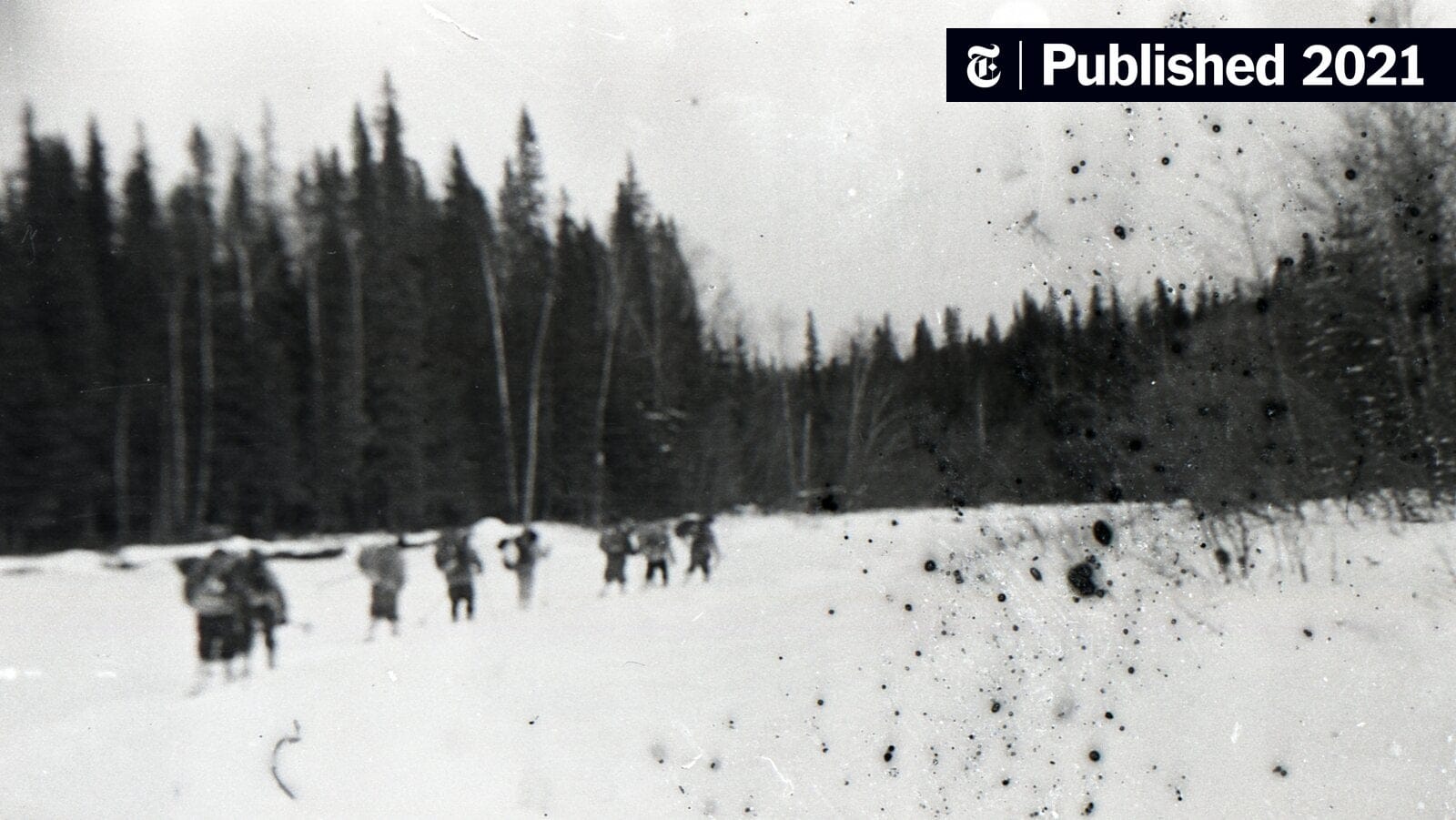
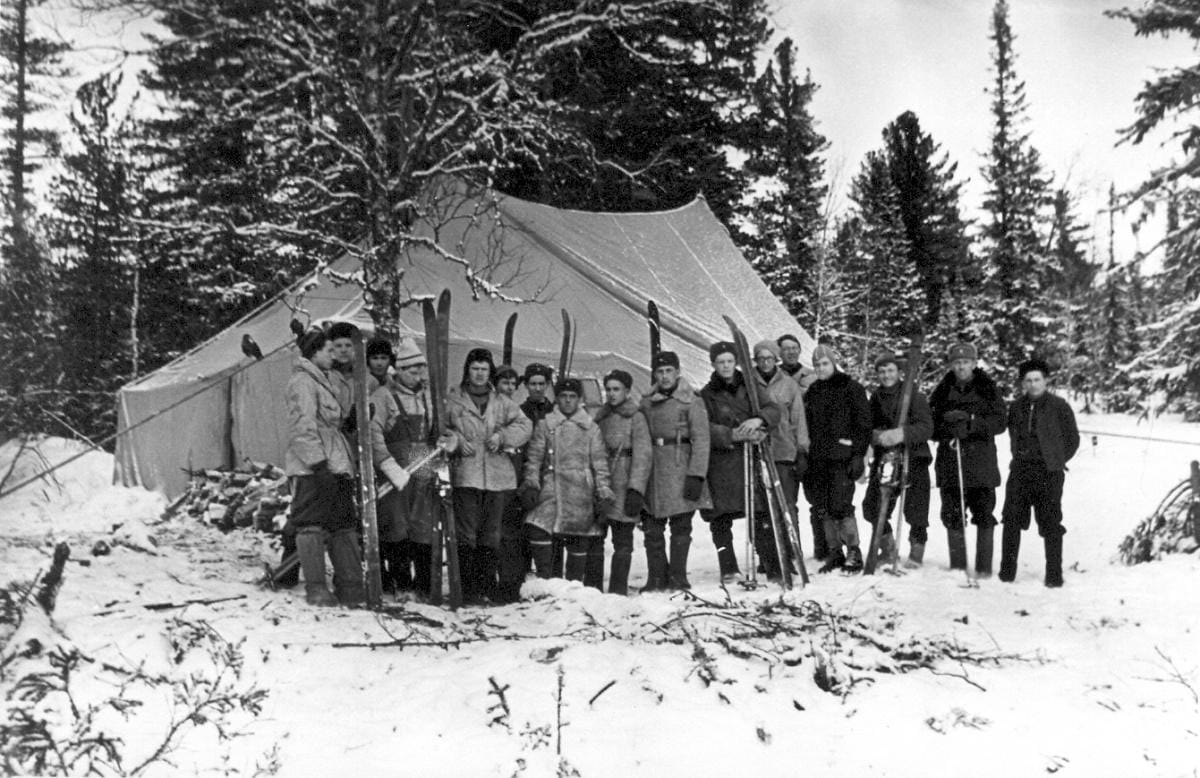
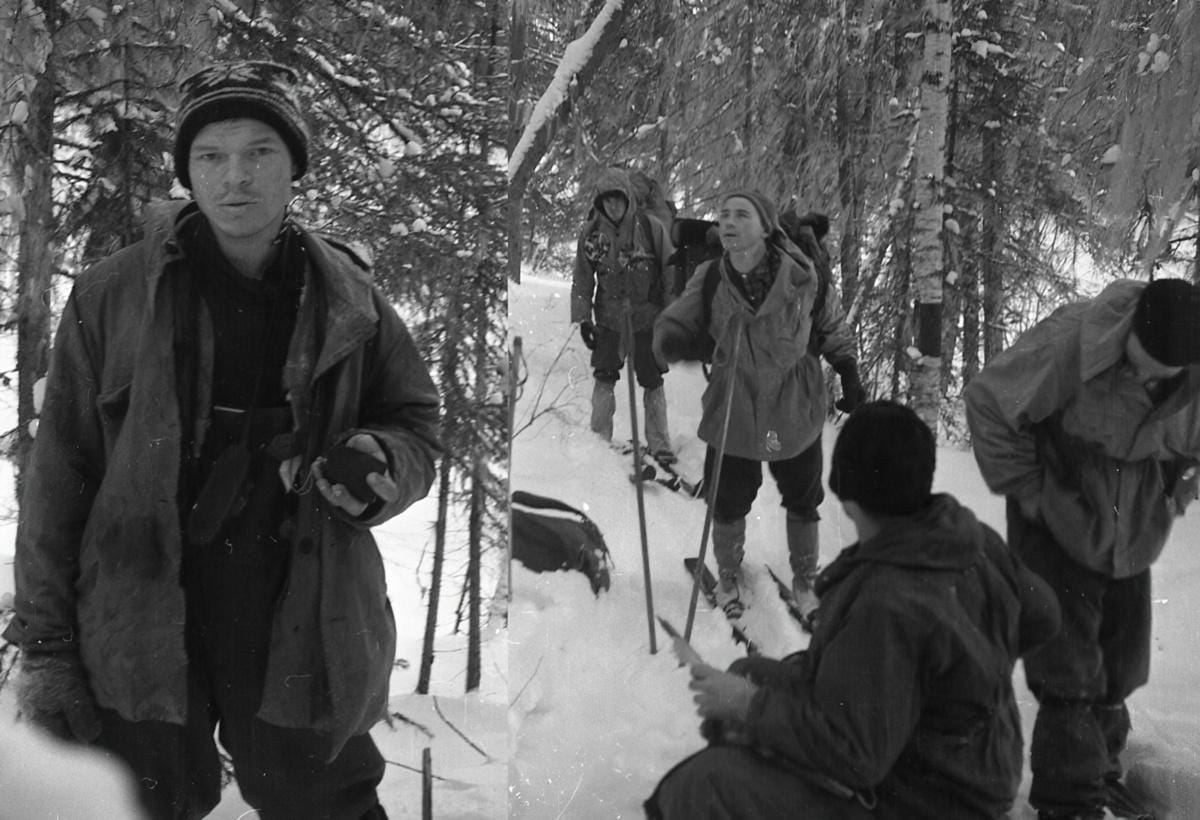
On January 23, 1959, a group of ten hikers set out for a winter expedition in the Urals. One member, Yuri Yudin, turned back due to health problems, leaving nine to continue. By February 1, the group had pitched their final camp on the slope of Kholat Syakhl rather than lower in the forest. Sometime during the night of February 1 to 2, they left that tent in freezing conditions.
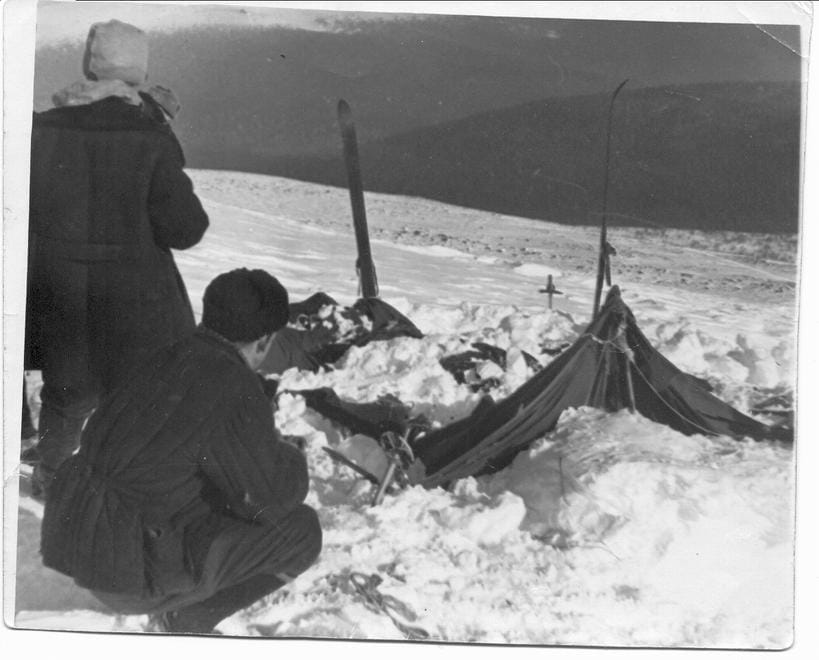
When searchers later found the tent, it was collapsed and snow-covered. Inside were boots, clothing, food, and much of the group’s gear. The tent had been slashed from the inside. The first two bodies were found several hundred yards away near the remains of a fire, underdressed for the cold. Three others were found between that spot and the tent, in positions suggesting they may have been trying to return uphill.
The remaining four were discovered only in May, after snowmelt exposed what appeared to be a snow den or ravine shelter area. Their injuries were the most severe. Nikolay Thibeaux-Brignolle had a major skull fracture, while Semyon Zolotaryov and Lyudmila Dubinina had crushed chests. Zolotaryov and Dubinina were missing eyes, and Dubinina was also missing her tongue. The original Soviet investigation did not conclude that a crime had taken place and instead attributed the deaths to a “compelling natural force.”
Key Claims and Evidence
- Verified facts
- Nine hikers died after leaving their tent during the night in severe winter conditions.
- The tent was cut from the inside and much of the group’s clothing and equipment remained there.
- The first five bodies showed hypothermia-related deaths, while three of the later-discovered victims had severe blunt-force trauma.
- Some clothing showed traces of radioactivity, which later fed speculation about military testing or a cover-up.
- Documented interpretations
- The 2020 reopened Russian inquiry concluded that avalanche-related natural causes and poor visibility best explained the deaths.
- The 2021 Communications Earth & Environment study proposed a delayed slab avalanche mechanism caused by wind-blown snow accumulation, the cut made in the slope for the tent, and katabatic winds.
- The same researchers later reported that follow-up expeditions supported the idea that the area is avalanche-prone and that locally steeper terrain above the tent could allow slab release.
- Persistent disputed elements
- Whether the slope was truly steep enough for the relevant kind of avalanche.
- Whether the blunt-force injuries fit a small slab avalanche or later fall into a ravine better than alternative theories.
- Whether the radiation findings and later stories about lights in the sky indicate anything meaningful beyond contamination and rumor.
Points of Tension
The first tension is the trigger itself. Most modern natural explanations work only if the hikers had a compelling reason to leave the tent quickly, in darkness, without properly dressing. The 2020 prosecutor’s conclusion says avalanche and poor visibility explain that decision. The 2021 slab-avalanche paper argues the physics make such a trigger plausible. But plausible is not the same as proven. Even the study’s authors stopped short of saying they had produced a final explanation.
The second tension is injury pattern versus scene pattern. Dyatlov Pass became famous because several victims had severe internal trauma while others mainly died from exposure. That split has always made the case feel like more than a straightforward cold-weather accident. The avalanche model addresses this by suggesting a small slab could injure some hikers while the rest later succumbed to hypothermia, and by linking the ravine shelter area to the worst injuries. Still, that interpretation remains a model layered onto an old scene, not a direct reconstruction witnessed in real time.
The third tension is evidence versus contamination by time. Searchers found real physical clues: the tent, the line of events implied by body locations, and the autopsy results. But there were no survivors, no live observers, and the most important conclusions all depend on reading a scene after exposure, snow movement, delayed recovery, and months of environmental change. That makes Dyatlov less like a solved accident report and more like a reconstruction with missing pieces.
The fourth tension is ordinary explanation versus enduring anomaly residue. Radiation on some clothing, reports of unusual lights, and the Soviet-era information environment helped keep the case culturally unstable. History notes that at least some of the radioactivity may be explainable through earlier exposure connected to the Kyshtym disaster and cleanup work, but those findings still widened the mystery rather than narrowing it in the public imagination.
Perspectives and Explanations
The strongest conventional explanation today is the slab avalanche plus exposure cascade. In that reading, the hikers cut into the slope to pitch their tent, wind loaded more snow above them, a delayed slab either struck or threatened the tent, and the group evacuated to what they believed was safer ground. Poor visibility and extreme cold then prevented a successful return. The later ravine injuries fit either snow impact or collapse in the shelter area. This is the version most aligned with the 2020 Russian inquiry and the 2021 Nature paper.
A second view is that the event was natural, but not necessarily avalanche-driven in a simple way. Some researchers and commentators have focused more on violent wind, terrain exposure, disorientation, and a chain of survival failures than on one clean snow-slide moment. Even within the avalanche-oriented literature, the case remains unusually dependent on local terrain quirks and delayed wind loading rather than a classic large avalanche.
The alternative interpretations are more dramatic: military testing, parachute mines, infrasound, unknown aerial phenomena, or some concealed Soviet operation. These theories survive because they seem to answer the emotional center of the case, namely why trained people would flee so abruptly and why some injuries seemed disproportionate. But the reopened official investigation excluded criminal explanations and focused on natural causes, and the strongest recent peer-reviewed work also stays within a natural framework.
Context and Pattern Recognition
Dyatlov Pass fits a broader anomaly pattern where a real event with hard physical evidence becomes culturally immortal because the evidence does not reduce to a single clean narrative. There are photographs, dates, a route, bodies, autopsy notes, and a known environment. Yet the last decision that mattered, why they left the tent the way they did, remains inferential. That gap is what keeps the case alive.
It also fits a recurring pattern in frontier investigations. A mystery can remain unresolved for decades not because there is no plausible explanation, but because the explanation arrives later as a model rather than a witnessed event. The slab-avalanche theory did not erase the mystery. It narrowed the zone of uncertainty.
Implications
If the natural explanation is basically correct, Dyatlov Pass still matters because it shows how fast skilled people can be overwhelmed when terrain, weather, visibility, and cold combine into a cascading emergency. The implication is not supernatural. It is that nature can produce scenes strange enough to feel supernatural after the fact.
If, however, the slab-avalanche model only explains most of the case and not the full trigger with confidence, then Dyatlov remains a useful reality-check file. It shows how human beings react when the record is partly physical, partly interpretive, and permanently missing its central witness. That is exactly the kind of case where explanation and imagination begin to overlap.
The Galactic Mind Perspective
Dyatlov Pass may not require aliens, monsters, or secret weapons to remain one of the most haunting anomaly cases on record. Its power comes from something simpler and more difficult: the possibility that a real natural event can still leave behind a scene that feels narratively incomplete.
That is why the case still belongs in the archive. It may be less a proof of hidden forces than a reminder that reality can produce outcomes stranger than the story structures we prefer. Even when science closes much of the gap, one unanswered question can keep the whole event suspended between explanation and unease.
Open Question
Did Dyatlov Pass become a legend because something extraordinary happened on that slope, or because an ordinary but catastrophic natural event left behind evidence just strange enough to never feel fully ordinary again?
Credibility Meter
Witness Reliability: 1/5
There were no survivors to describe the trigger. The case depends almost entirely on scene interpretation after the fact.
Physical Evidence: 4/5
The tent, body locations, clothing patterns, autopsy findings, and recovered expedition materials are real and substantial, even if not complete.
Documentation: 4/5
This case is unusually well documented for a wilderness death mystery, with route records, recovered photographs, inquest findings, later state review, and modern scientific modeling.
Expert Analysis: 4/5
The strongest recent analyses come from a state inquiry and peer-reviewed snow science. They do not close every gap, but they substantially strengthen the natural-cause explanation.
Interpretation
Dyatlov Pass is a high-documentation, medium-uncertainty case. The broad outline is real. The most likely explanation is natural. The last missing piece is the exact trigger and sequence under pressure.
Sources / Receipts
- HISTORY, The Dyatlov Pass Incident: Why the Hiker Deaths Remain a Mystery.
- Reuters, Russia blames avalanche for 1959 Urals mountain tragedy.
- Gaume and Puzrin, Mechanisms of slab avalanche release and impact in the Dyatlov Pass incident in 1959, Communications Earth & Environment (2021).
- Puzrin and Gaume, Follow-up expeditions reveal avalanches at Dyatlov Pass, Communications Earth & Environment (2022).
What do you think? Drop your thoughts in the comments


Discussion