
Case Overview: The Event
On the evening of August 31, 1977, reported disturbances began inside a council-owned house at 284 Green Street in Enfield, North London. Peggy Hodgson lived there with her four children. What started with shuffling sounds, unexplained knocks, and a reportedly moving chest of drawers developed into the case now known as the Enfield Poltergeist.
Over the following months, family members, neighbors, reporters, police officers, and investigators reported moving furniture, thrown objects, unexplained sounds, apparent levitations, and a harsh male voice associated with Janet Hodgson.
The case produced an unusually large archive: witness statements, photographs, press coverage, investigators’ notes, and more than 180 hours of tape recordings. But quantity is not the same as evidential control. Most incidents occurred inside a crowded family home, many were not continuously observed, and deliberate trickery by the children became part of the record.
Enfield is therefore not a cleanly proven haunting or a cleanly resolved hoax. It is an extensively documented dispute over what happened, what was staged, and whether anything remained after the ordinary explanations were applied.
What Actually Happened
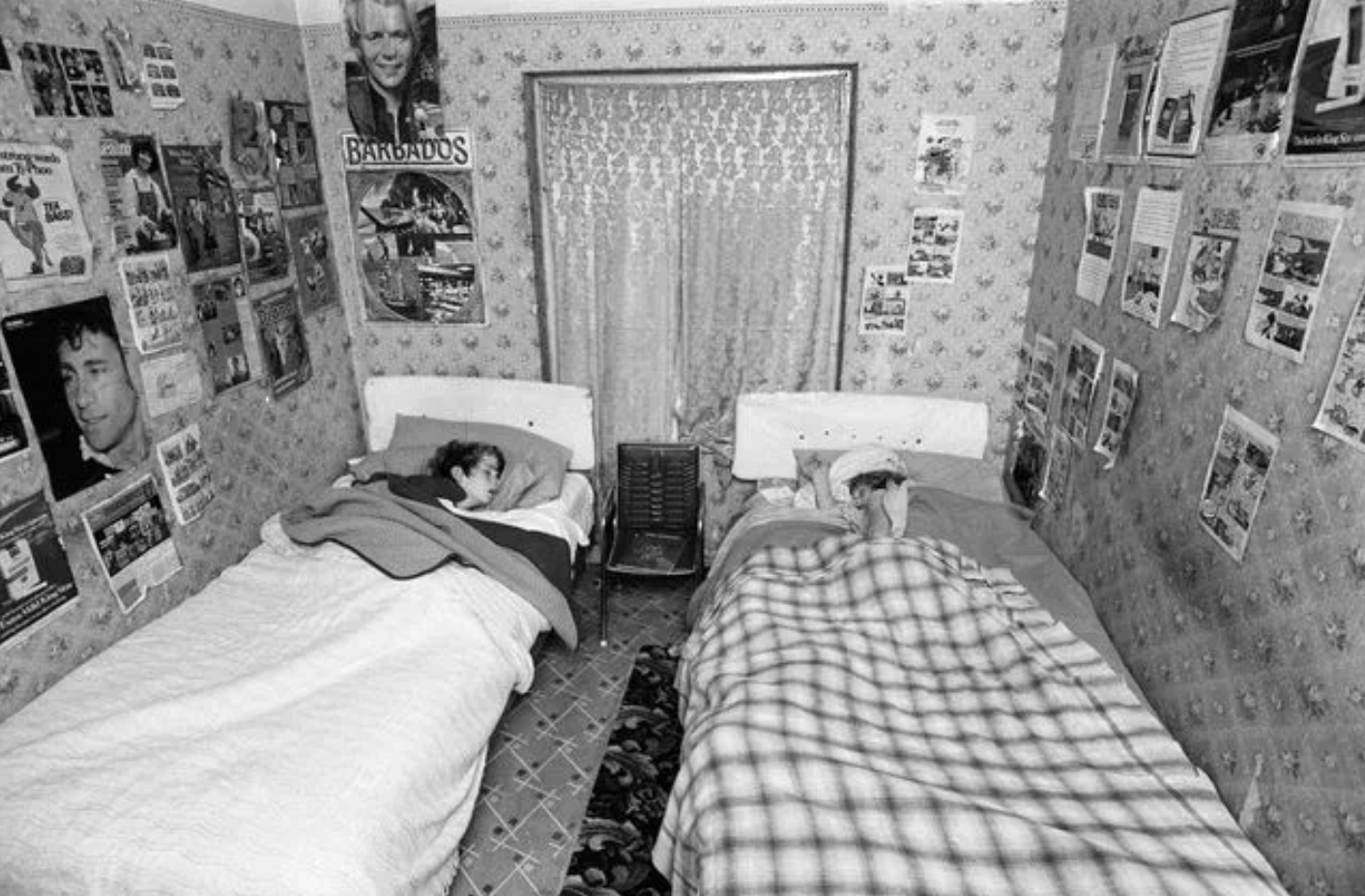
On August 31, 1977, Peggy Hodgson entered her children’s bedroom after Janet and John reported shuffling sounds. According to later accounts, Peggy heard repeated knocking and saw a chest of drawers move toward the bedroom door. Neighbors were called, followed by the police.
A statement attributed to WPC Heeps and preserved in the Society for Psychical Research’s Enfield committee materials says that she heard knocks coming from different walls and saw a chair wobble before sliding approximately three to four feet across the living-room floor. She reported finding no obvious mechanism. The statement is one of the case’s most important third-party records, although it documents a single observation rather than a controlled test.
After the Daily Mirror became involved, the newspaper contacted the Society for Psychical Research. Maurice Grosse began visiting the house in September 1977, followed by Guy Lyon Playfair. They became the case’s principal investigators and chroniclers.
The reported activity expanded to include thrown objects, moving doors, displaced household items, furniture disturbances, unexplained sounds, and episodes in which Janet was said to have been lifted or thrown from her bed. Some events were reportedly witnessed by adults outside the family. Others occurred when sightlines were poor or the children were not being closely observed.
In December 1977, Janet began producing whistles, barking sounds, and eventually a rough male voice identifying itself as “Bill Wilkins.” Grosse and Playfair recorded extended sessions and described tests involving tape over Janet’s mouth or water held inside it. Those procedures were reported by the investigators, but they were not independently validated laboratory controls. Later phonetic testing indicated that a natural false-vocal-fold mechanism could produce a similar sound.
The disturbances continued unevenly through 1978 and gradually diminished. By 1979, the active case had largely ended, leaving an archive substantial enough to sustain decades of argument but not controlled enough to settle the cause.

Key Claims and Evidence
The Enfield record contains several different forms of evidence. They should not be treated as equally strong.
The Police-Witness Statement
A statement attributed to WPC Heeps appears in the Society for Psychical Research’s committee materials. She described hearing knocks and seeing a chair wobble and slide across the living-room floor without an identifiable cause.
This is meaningful third-party testimony. It is not, however, a publicly available Metropolitan Police investigative finding, instrumented observation, or recording of the movement.
The Wider Witness Record
Neighbors, reporters, investigators, tradespeople, and other visitors reported unusual incidents. Their presence makes Enfield more complicated than a story supported only by the Hodgson family.
But witnesses did not all observe the same events under the same conditions. Some arrived after disturbances had begun. Some saw objects already moving without seeing how the movement started. Their testimony establishes that unusual experiences were reported beyond the family; it does not establish a shared paranormal cause.
The Audio Archive
Society for Psychical Research sources describe more than 180 hours of recordings made principally by Grosse and Playfair. These recordings establish that the investigation was sustained and that Janet’s unusual voice was repeatedly documented.
They do not independently establish where the voice originated. A large recording archive can preserve a mystery without resolving its mechanism.
The Voice
The harsh “Bill Wilkins” voice is the case’s most distinctive feature. Investigators cited its duration, tone, and Janet’s apparent ability to sustain it without obvious injury.
Phonetic examination, however, identified plica ventricularis—a sound created using the false vocal folds—as a possible natural mechanism. Tests involving tape or water were described by supportive investigators but were not performed under conditions that eliminated every opportunity for ordinary vocal production.
The recordings document an unusual performance. They do not conclusively identify a separate speaker.
The Photographs
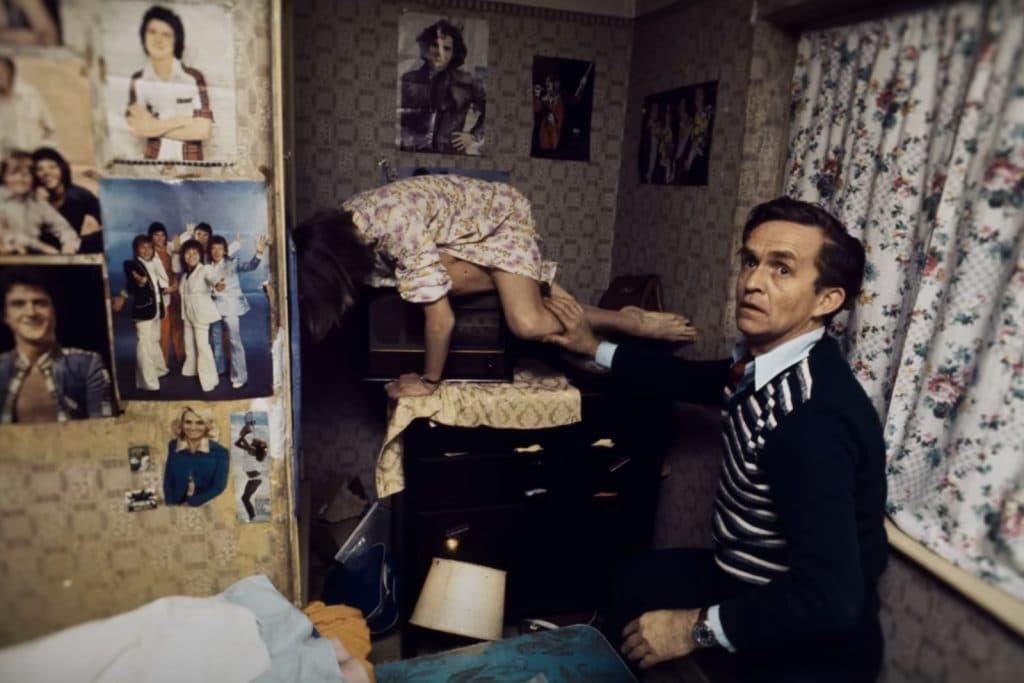
Photographs showing Janet airborne above her bed became the defining images of the case. They are authentic photographs of Janet in the air.
What they do not establish is why she was airborne. The same images are consistent with a person jumping or being thrown from a mattress. Without continuous footage showing the movement’s beginning and end, they cannot distinguish levitation from ordinary motion.
Medical and Psychological Assessments
Janet reportedly underwent medical and psychological examination without researchers identifying a neurological disorder that explained the complete case.
That finding is relevant to her health. It is not positive evidence of paranormal agency. Failing to diagnose a conventional medical cause does not establish a supernatural one.
Admitted and Detected Trickery
Grosse and Playfair acknowledged catching the children attempting to deceive observers. Janet later estimated that approximately two percent of the activity had been faked.
The admission matters, but the percentage cannot be independently measured. Demonstrated trickery weakens confidence in poorly observed incidents. It does not logically prove that every report was staged—but it prevents the remaining archive from being accepted without case-by-case scrutiny.
Points of Tension
Documentation Is Not the Same as Control
Enfield produced recordings, photographs, notes, interviews, and witness statements. That makes it extensively documented by the standards of paranormal case history.
Yet the investigation occurred inside an active family home rather than a controlled environment. Cameras did not continuously cover every room, observers frequently lacked clear sightlines, and investigators sometimes reconstructed events after they occurred.
The archive is large. Its controls are weak.
Independent Witnesses Strengthen the Case but Only to a Point
Reports from police officers, neighbors, and journalists cannot simply be erased because they are inconvenient to a skeptical explanation.
At the same time, an honest witness can accurately report seeing an object move while being unable to determine what caused it. Witness sincerity and explanatory certainty are different questions.
The Voice Was Real; Its Claimed Identity Was Not Established
The recordings show that an unusual voice was produced. They do not establish that it belonged to a deceased former resident or existed independently of Janet.
The distinction between documenting an effect and identifying its cause is central to the entire case.
Fakery Contaminates the Record Without Automatically Explaining It All
Once intentional staging is demonstrated, every poorly observed incident becomes harder to trust. But it would also be an overreach to assume that catching one method automatically explains every report from every witness.
The correct response is neither total acceptance nor total dismissal. It is to assess each claim according to its observation conditions.
Observation May Have Changed the System
As investigators, reporters, photographers, and curious visitors entered the house, the case became more than a sequence of household disturbances. It became an attention system.
The children were no longer simply experiencing events. They were being watched, questioned, recorded, tested, doubted, and rewarded with attention. That environment could encourage performance, intensify stress, shape memory, or alter how ambiguous events were interpreted.
Even if something genuinely unexplained began at Enfield, the investigation may have become part of the phenomenon it was attempting to observe.
Perspectives and Explanations
One interpretation is that Enfield reflects a genuine poltergeist-type outbreak mixed with occasional copying or opportunistic fakery by the children. This was essentially the position of Playfair and Grosse. They conceded trickery occurred, but argued it was limited and could not account for the total volume and strangeness of the reported events.
A skeptical interpretation is that the case was driven primarily by prank behavior, suggestion, poor controls, and investigator credulity. Anita Gregory, John Beloff, Chris French, and Joe Nickell all represent versions of this view. They differ in emphasis, but the core argument is the same: the best-known features of the case, especially the Voice and the airborne-bed photos, can be explained without invoking anything paranormal.
A middle view is that Enfield may be less useful as proof of haunting than as a case study in how anomalies form in public. In this reading, even if no paranormal force was present, the case still reveals something important about attention, belief, performance, stress, and the way a household can become a stage once investigators and media arrive. That is an inference, but it is strongly supported by the way the case evolved and divided its own observers.
Context and Pattern Recognition
Enfield fits a recurring pattern in modern anomaly cases: an ordinary domestic setting, a child or adolescent focal point, a period of escalating manifestations, outside attention, and then a split archive in which every major piece of evidence can be read in more than one way. What makes Enfield stand out is scale. It was not just a family story. It became a national media event and one of the most archived cases in British psychical research.
It also fits a broader pattern inside paranormal history where the strongest surviving cases are often not the cleanest cases, but the messiest. Enfield persisted because it offered too much for either side to dismiss easily. There were too many witnesses for some skeptics to call it trivial, and too many compromised moments for believers to call it pure.
Implications: Reality Check
Nothing in the publicly accessible Enfield record establishes that a ghost, discarnate personality, or unknown physical force caused the disturbances.
The police-witness statement records an unexplained observation, not a demonstrated mechanism. The photographs show motion without establishing levitation. The recordings preserve an unusual voice without confirming its claimed identity. The medical examinations ruled out certain conditions without providing positive evidence for paranormal agency.
At the same time, reducing the entire case to a single proven prank would go beyond what the archive can demonstrate. The surviving record contains observations from people outside the family, but the quality and circumstances of those observations vary considerably.
The strongest defensible conclusion is narrower: a North London household became the center of a prolonged and heavily observed disturbance in which sincere testimony, ambiguous evidence, demonstrated trickery, family pressure, media attention, and unresolved incidents became inseparably mixed.
That is less dramatic than declaring the haunting proven. It is also more difficult to dismiss.
The Unresolved Ledger
What Is Documented
- The reported disturbances began at 284 Green Street in August 1977.
- Members of the Hodgson family, neighbors, reporters, police officers, and investigators reported unusual incidents.
- A statement attributed to WPC Heeps describes unexplained knocks and a chair moving across the living room.
- Maurice Grosse and Guy Lyon Playfair conducted an extended investigation.
- The investigators produced notes, photographs, interviews, and more than 180 hours of tape recordings.
- Janet produced a distinctive harsh voice during recorded sessions.
- Photographs show Janet airborne above her bed.
- The children were caught attempting to stage some incidents.
- Investigators and Society for Psychical Research members disagreed about the case.
What Is Claimed
- Furniture and household objects moved without physical contact.
- Janet was lifted or thrown by an unseen force.
- The harsh voice represented “Bill Wilkins,” a deceased former resident.
- The voice continued under conditions intended to prevent Janet from producing it normally.
- Some incidents occurred despite close observation.
- The admitted trickery accounted for only a small portion of the activity.
What Remains Unresolved
- What caused the chair movement described by WPC Heeps.
- Whether any object movement occurred under conditions that fully excluded human action.
- How much of the archive was affected by staging, suggestion, incomplete observation, or retrospective reconstruction.
- Whether the voice required anything beyond an unusual natural vocal technique.
- Whether the children initiated the entire case or began imitating experiences they believed were already occurring.
- Whether any surviving incident remains genuinely anomalous after the limitations of its observation conditions are considered.
Why It Still Matters
Enfield demonstrates how difficult anomaly research becomes when an event unfolds inside an uncontrolled human environment.
A large archive can preserve testimony while also preserving contamination. Multiple witnesses can strengthen the historical record without resolving causation. Detected deception can damage a case without explaining every experience within it.
The result is not reliable proof of a haunting. It is a durable lesson in how evidence, attention, belief, stress, and performance can become entangled around an unresolved event.
The Galactic Mind Perspective
The central mystery of Enfield may not be whether every disturbance was paranormal or every disturbance was staged. It may be what happens when observation becomes part of the event.
The house contained more than a family and a possible anomaly. It eventually contained investigators, recording equipment, journalists, skeptics, expectations, incentives, fear, and the growing cultural idea of “the Enfield Poltergeist.”
From that point forward, no observation occurred in isolation. Every knock was heard inside an existing story. Every movement was interpreted by people already waiting for something to happen. Every failed recording increased the mystery, while every detected trick deepened the suspicion.
This does not prove that the case began as a performance. It means the investigation created a feedback system in which experience and interpretation became increasingly difficult to separate.
Enfield remains valuable because it exposes that problem so clearly: sometimes the observer does not merely document the anomaly. The observer becomes one of its conditions.
Open Question
When a case produces witnesses, recordings, admitted fakery, and still no final resolution, what exactly are we looking at: a haunting, a performance, or a deeper failure in how we observe reality under pressure?
More in Case Files
Skinwalker Ranch: A Haunted Landscape, a Federal Contract, and a Missing Dataset
A modern anomaly archive where decades of testimony and institutional interest still exceed the publicly available evidence.
The 1917 Fátima Case: Apparition, Crowd, and the Sun That Seemed to Move
A mass-witness event examined across prediction, perception, religious meaning, and incomplete physical evidence.
The Pam Reynolds Operation: What Did She Perceive During Standstill?
A medically documented procedure and contested perceptual account that demonstrates why chronology and interpretation must be separated.
Sources / Receipts
- Melvyn Willin, “Enfield Poltergeist,” Psi Encyclopedia, Society for Psychical Research — An extensive archive-based chronology covering the family, investigation, reported phenomena, voice recordings, and internal controversy.
- Society for Psychical Research, Report of the Enfield Poltergeist Investigation Committee (1978) — The committee report containing witness material, including the statement attributed to WPC Heeps. The report is preserved within the SPR archive at Cambridge University Library.
- Guy Lyon Playfair, This House Is Haunted: An Investigation of the Enfield Poltergeist (1980; later editions 2007 and 2011) — A principal investigator’s detailed but supportive account of the case.
- Society for Psychical Research, “Book Reviews: Apparitions, Hauntings and Poltergeists” — Documents Anita Gregory’s skeptical 1980 review, the dispute over apparent play-acting, criticism of the photographs, and subsequent correspondence between Gregory and Maurice Grosse.
- Joe Nickell, “Enfield Poltergeist,” Skeptical Inquirer 36, no. 4 (2012) — A skeptical reconstruction emphasizing trickery, weak observation conditions, and ordinary explanations for the principal evidence.
- Michael Nahm, review of The Enfield Poltergeist Tapes, Journal of Scientific Exploration 33, no. 4 (2019) — A secondary review describing the tape archive, previously unpublished committee material, admitted staging, and disagreement among investigators.
Source note: The main archive was assembled largely by investigators who differed sharply over its interpretation. Its size is documented. Its paranormal meaning is not independently established.


Discussion