
Case Overview: The Event
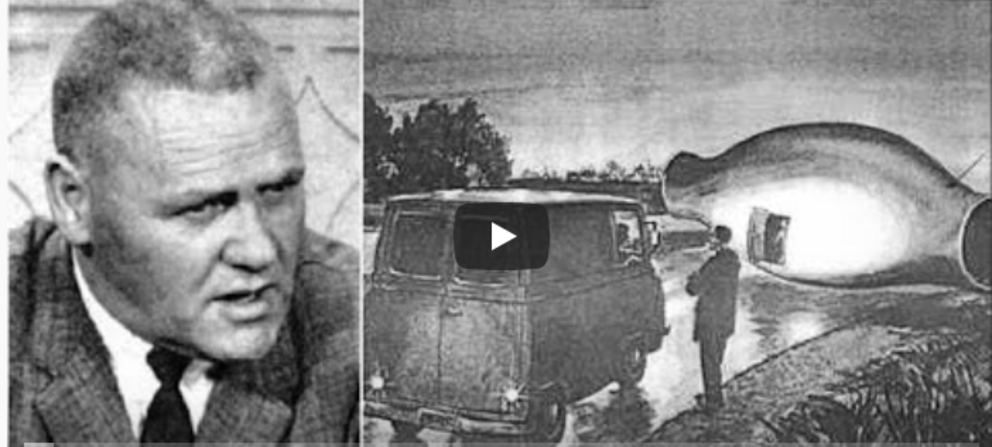
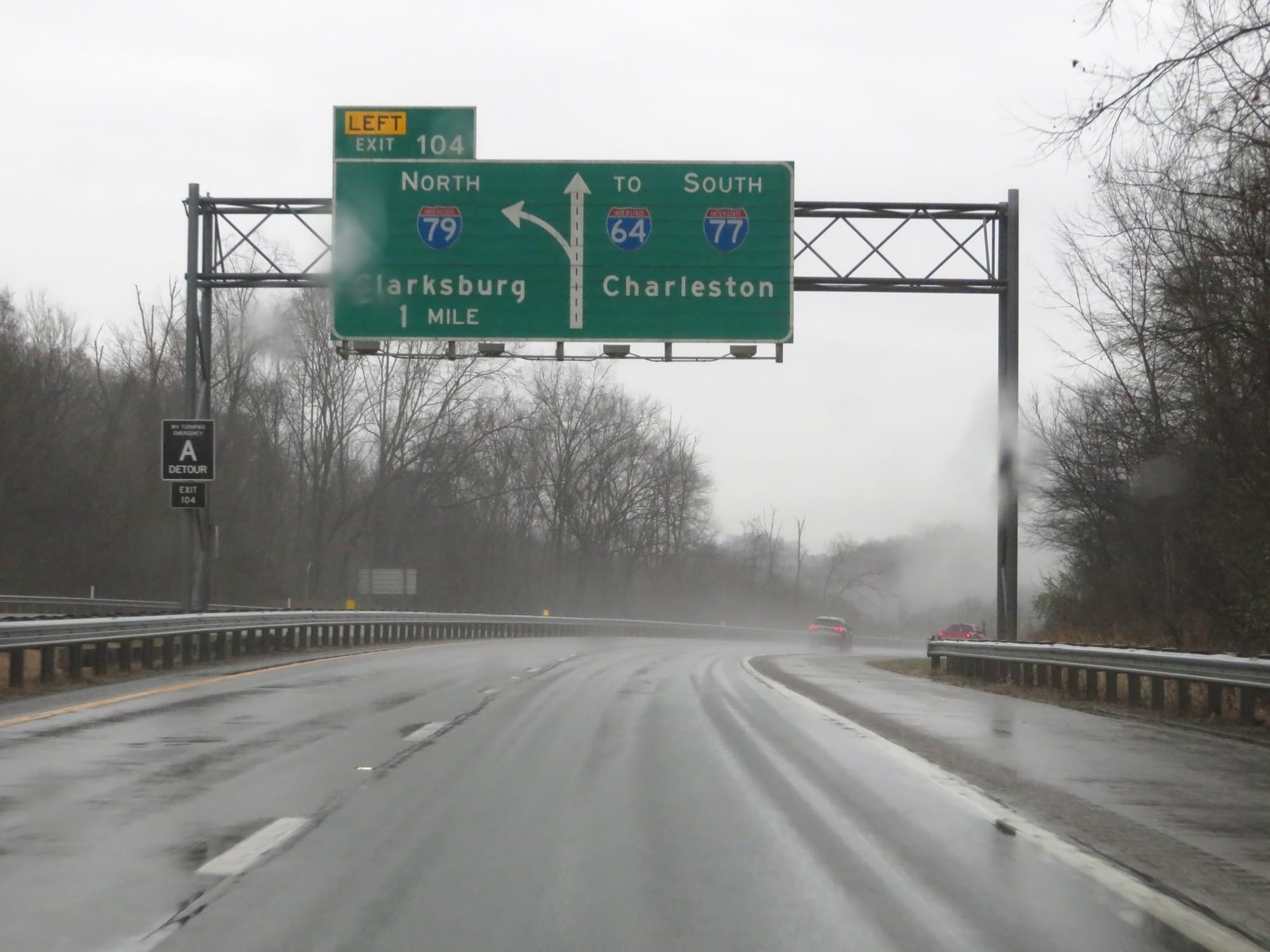
At approximately 7:25 p.m. on November 2, 1966, traveling salesman Woodrow Derenberger was driving home toward Mineral Wells, West Virginia, when he said an unusual object intercepted him on Interstate 77 near the Route 47 interchange.
According to Derenberger, the object moved in front of his truck and forced him to stop.
He compared its shape to an old kerosene lamp globe or chimney: broad through the center, narrower at the ends, and unlike any ordinary vehicle he recognized.
Then a man stepped out.
Derenberger described him as approximately human in appearance, with dark hair, a tan or olive complexion, dark clothing, and a pleasant smile.
The man approached the passenger side of the truck.
His mouth did not appear to move.
Yet Derenberger said he heard the visitor’s words clearly inside his mind.
The figure was calm.
Courteous.
Reassuring.
And, according to Derenberger, identified himself by the name Cold.
The naming record is not completely clean. The surviving early interview uses “Cold,” while contemporary summaries and later accounts preserve the fuller name Indrid Cold. The available public record does not establish precisely when the first name entered the story.
What is clearer is how quickly Derenberger went public.
By the following afternoon, he was describing the encounter on local television. A United Press International report appeared in regional newspapers on November 4.
That immediacy gives the case a traceable beginning.
It does not verify the encounter.
No authenticated photograph of the object exists.
No physical trace has been publicly confirmed.
No instrument record establishes that an unusual craft occupied the highway.
And no independent close-range witness has definitively confirmed Derenberger’s conversation.
The evidence establishes that Derenberger made the claim almost immediately.
It does not establish that Indrid Cold existed.
In the years that followed, the story expanded beyond the original roadside encounter. Derenberger described repeated communication, additional visits, and alleged travel to a world called Lanulos.
Writers including John Keel later placed the story within the wider field of Mothman reports, Men in Black encounters, UFO sightings, and West Virginia folklore.
The original report became a contactee narrative.
The contactee narrative became a legend.
And the legend became the Smiling Man.
What Actually Happened
The public history of the case can be divided into distinct stages.
November 2, 1966 — The reported encounter
Derenberger said an unusual object stopped him on Interstate 77 near the Route 47 interchange at approximately 7:25 p.m.
He reported that a human-looking man emerged, approached his truck, and communicated without visibly moving his mouth. Derenberger interpreted the exchange as telepathic.
The visitor was described as friendly rather than threatening.
After several minutes, the figure allegedly returned to the object and departed.
November 3, 1966 — The televised interview
Derenberger appeared on local television the following afternoon and described the event publicly.
A surviving recording and community-hosted transcription preserve what is presented as that early interview. Although the surviving material is not housed in an official public broadcaster archive, it provides one of the closest available records of Derenberger’s initial account.
November 4, 1966 — Contemporary press coverage
United Press International distributed a story commonly headlined “Parkersburg Salesman Speaks With Spaceman.”
This confirms that the claim entered the public record almost immediately.
It confirms the report.
It does not confirm the visitor.
1970 — The Grinning Man association
John Keel discussed Derenberger’s visitor in Strange Creatures from Time and Space and placed the account alongside other reports of unusually smiling or grinning humanoids.
This helped transform a courteous visitor with a pleasant smile into the broader figure later called the Smiling Man or Grinning Man.
1971 — The Lanulos narrative
Derenberger’s expanded account was published as Visitors from Lanulos, credited to Woodrow W. Derenberger and Harold W. Hubbard.
By this stage, the story included repeated contact, a larger extraterrestrial society, telepathic communication, and alleged travel beyond Earth.
These later claims should not be projected backward onto the original roadside report.
1975 and afterward — The Mothman mythology
Keel’s The Mothman Prophecies helped pull several West Virginia stories into one interconnected paranormal landscape.
Indrid Cold became associated with Mothman, Men in Black, ultraterrestrials, and the Point Pleasant anomaly wave.
That association became culturally powerful.
It was never empirically established.
The evidence therefore exists in three layers:
The original roadside testimony.
The later Lanulos contact narrative.
The mythology built around both.
They are connected.
But they are not equally supported.

Key Claims and Evidence
The Indrid Cold case is built almost entirely from testimony, interviews, press coverage, later books, and folklore transmission.
That makes it important to separate what is documented from what is claimed.
What Is Documented
The strongest documented elements are:
- Woodrow Derenberger was a real person.
- He publicly reported a strange roadside encounter in November 1966.
- Contemporary newspapers covered the story.
- He appeared in interviews and spoke on record about the event.
- He later claimed ongoing contact with the being he called Indrid Cold.
- In 1971, his claims were published in Visitors from Lanulos.
- John Keel and other writers later incorporated the story into wider Mothman-era and UFO lore.
- The Indrid Cold figure became a durable part of West Virginia paranormal folklore.
- The story became associated, rightly or wrongly, with the broader Point Pleasant anomaly wave.
These facts establish the case as a documented story.
They do not establish the reality of the visitor.
The Witness Claim
The central account comes from Derenberger himself.
He claimed that:
- an unusual object moved in front of his truck on Interstate 77;
- the object caused him to stop;
- a human-looking man emerged;
- the man approached the passenger side of the vehicle;
- communication occurred without visible speech;
- the visitor identified himself as Cold;
- the visitor behaved calmly and peacefully;
- the object departed after the exchange.
Derenberger attached his identity to the story immediately.
He appeared publicly.
He accepted questions.
He allowed his face and name to accompany the claim.
That makes the report more traceable than an anonymous story revealed decades afterward.
But immediacy and sincerity are not independent verification.
No authenticated photograph confirms the craft.
No physical trace has been publicly verified.
No radar or instrument record establishes the object’s presence.
No definitive second witness confirms the close-range exchange.
The case contains strong documentation of a claim.
It does not contain strong evidence for the claimed visitor.
The Media Layer
The story became public almost immediately.
This is important.
Media attention can preserve early details, but it can also shape a story very quickly.
Once Derenberger spoke to journalists, police, and broadcasters, the encounter entered the feedback loop of public curiosity.
People heard the story.
People repeated it.
People compared it to other strange reports.
People began placing it inside the larger West Virginia wave.
That media layer is part of why the story survived.
It is also part of why the story became unstable.
Every retelling adds pressure.
A detail can sharpen.
A phrase can become iconic.
A man who smiles can become “the Smiling Man.”
A gentle visitor can become an eerie cryptid.
A contact claim can become a supernatural archetype.
The Later Contact Claims
Derenberger’s later claims moved far beyond the event reported on November 2.
He described additional communication with Cold, repeated visits, other human-looking beings, and a civilization associated with a world called Lanulos. He eventually claimed that he traveled aboard craft and visited this other world.
These accounts were presented more fully in Visitors from Lanulos in 1971.
The distinction matters.
The original event was a brief roadside encounter reported almost immediately.
The Lanulos material became an extended contactee cosmology developed over the following years.
Later expansion does not logically prove that the first report was fabricated.
A person can sincerely experience one event and interpret it more expansively over time.
But each additional claim increases the evidentiary burden.
Repeated visits should create opportunities for corroboration.
Continuing communication should produce testable information.
Travel to another world should leave evidence beyond testimony.
None of that publicly verifiable evidence emerged.
The original encounter remains unresolved testimony.
The Lanulos narrative remains an extraordinary later claim without corresponding proof.
The Mothman Connection
Indrid Cold is frequently presented as part of the Mothman story.
The chronology explains why.
Derenberger reported his encounter on November 2, 1966.
The central Point Pleasant Mothman sighting was reported on November 15—thirteen days later.
Both stories emerged in West Virginia during the same season of unusual reports.
But they did not describe the same event.
Derenberger’s encounter occurred near Parkersburg and Mineral Wells.
The best-known Mothman reports centered on Point Pleasant and the former military explosives area known locally as the TNT plant.
The witnesses were different.
The reported beings were different.
The locations were different.
No contemporary evidence establishes that one caused, predicted, or participated in the other.
The strongest connection came through interpretation.
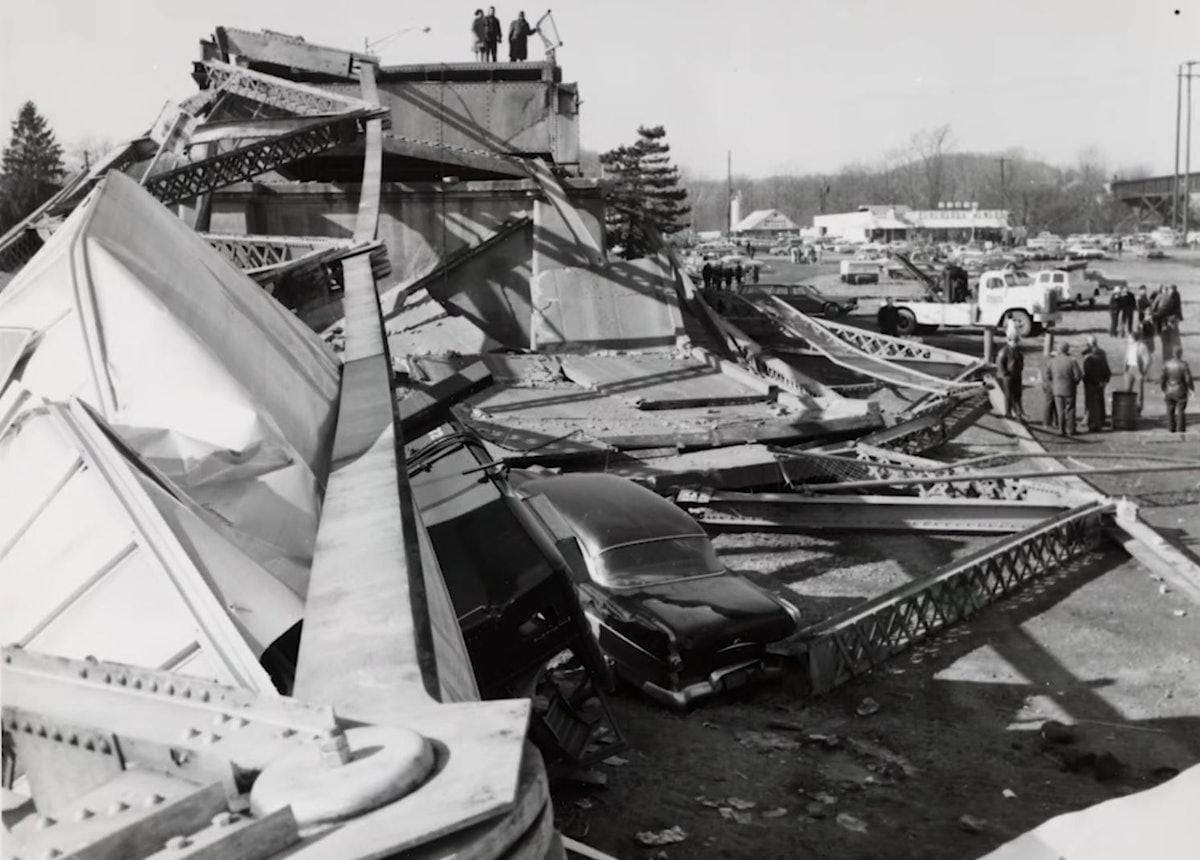
John Keel and later writers placed UFOs, humanoid encounters, Men in Black reports, psychic experiences, Mothman sightings, and the Silver Bridge disaster within a larger paranormal system.
That framework became one of the defining stories of Point Pleasant.
It remains a framework.
The Indrid Cold and Mothman reports may reflect one phenomenon.
They may reflect separate experiences.
Or their connection may exist mainly in the literature that followed them.
The Case File should preserve all three possibilities without treating any of them as established.
Physical Evidence
There is no strong physical evidence.
No recovered object.
No landing trace.
No confirmed biological sample.
No photographs of Cold.
No authenticated image of the craft.
No instrumented data.
No independent scientific record.
This is the major weakness.
The Indrid Cold case is rich in story and weak in physical proof.
That does not make it worthless.
It defines what kind of case it is.
It is a testimony and folklore case, not a material-evidence case.
Points of Tension
The Indrid Cold case survives because it sits between categories.
It is not just a UFO sighting.
It is not just a cryptid encounter.
It is not just a contactee story.
It is not just folklore.
It is all of these at once.
The First Report Was Immediate, But Not Independently Verified
Derenberger reported the encounter quickly.
That helps the case.
He did not wait decades.
He spoke to police, reporters, and broadcasters while the experience was fresh.
But immediacy is not the same as verification.
The event still lacks a second confirmed close-range witness, physical evidence, or instrumented record.
The early report makes the case harder to dismiss as a late invention.
It does not make the visitor real.
The Entity Was Friendly, Not Menacing
Many later versions make Indrid Cold eerie or sinister because of the “smiling man” image.
But Derenberger’s original portrayal was not simply horror.
Cold was calm.
Courteous.
Nonthreatening.
Curious.
That makes the case unusual.
The visitor did not attack.
Did not abduct.
Did not threaten.
Did not deliver a terrifying warning.
Instead, he communicated reassurance.
That places the story closer to contactee literature than monster folklore.
The later horror tone may be something added by culture.
The Smile Became Bigger Than the Testimony
Modern retellings frequently describe Indrid Cold as the Grinning Man: an unnaturally smiling figure whose expression feels threatening or inhuman.
That is not exactly how Derenberger initially portrayed him.
His visitor appeared pleasant.
Courteous.
Friendly.
The smile was part of the description, but it was not originally presented as a monstrous physical feature.
In Strange Creatures from Time and Space, John Keel associated Derenberger’s account with an October 1966 report from Elizabeth, New Jersey, in which two boys described a tall stranger who grinned at them from behind a fence.
That comparison helped merge two separate stories into a single paranormal archetype.
A friendly smile became an unnatural grin.
A contactee visitor became the Grinning Man.
A witness detail became the identity of the being.
That transformation does not belong entirely to Derenberger’s original testimony.
It belongs to the interpretation and folklore that followed.
The smile was part of the report.
The Smiling Man was what culture built from it.
The Story Expanded Over Time
The later Lanulos claims create one of the biggest tensions.
If Derenberger had only reported a strange roadside encounter, the case would remain narrow and difficult.
But the story expanded into repeated visits, telepathic communication, and off-world travel.
For believers, expansion shows the depth of ongoing contact.
For skeptics, expansion suggests narrative drift, fantasy, confabulation, or the influence of existing contactee themes.
The expansion does not automatically disprove the first report.
But it makes the whole case harder to defend as literal history.
The Mothman Connection Is Powerful, But Unproven
The Indrid Cold story is often placed inside the Mothman wave.
This makes narrative sense.
The dates overlap.
The geography is close.
John Keel wrote about both.
West Virginia in 1966 and 1967 produced a remarkable cluster of strange reports.
But clustering is not causation.
A UFO report near Parkersburg does not prove a connection to Mothman in Point Pleasant.
A contactee story does not prove an ultraterrestrial system.
The link may be more about storytelling than phenomenon.
The Case Has Receipts, But Not the Kind People Want
There are receipts for the story.
Interviews.
Newspapers.
Books.
References.
Folklore.
There are not receipts for the being.
That distinction is the center of the file.
We can document that Derenberger said these things.
We can document that people listened.
We can document that the story spread.
We cannot document that Indrid Cold existed.
The case is real as a record.
Unproven as contact.
Perspectives and Explanations
A Literal Non-Human Encounter
The most extraordinary interpretation is that Derenberger encountered a real non-human visitor on Route 77.
This interpretation takes his account largely at face value.
A craft appeared.
A human-like being emerged.
Telepathic communication occurred.
Further contact followed.
If true, the case would be one of the strangest close encounters in American history.
But this interpretation has the highest burden of proof.
It requires accepting a single-witness event, a telepathic exchange, a craft with no physical record, and later off-world travel claims without testable evidence.
Possible is not the same as established.
Misperception Under Stress
A grounded explanation is that Derenberger saw something unusual on the road and misinterpreted it under stress.
Possible triggers include:
- another vehicle;
- unusual lights;
- aircraft seen from a strange angle;
- roadside machinery;
- a person in unusual clothing;
- weather, darkness, or fatigue;
- a moment of fear that altered perception.
This explanation does not require deception.
It only requires that the mind made sense of an ambiguous event in extraordinary terms.
The weakness is that it does not easily account for the full confidence and detail of Derenberger’s later account.
Hoax or Performance
Another explanation is that the story was invented or performed.
A hoax could explain the lack of physical evidence and the later expansion.
But it does not fully explain why Derenberger attached his real identity to a claim that brought ridicule, pressure, and long-term public scrutiny.
People do hoax.
But a hoax claim still needs evidence.
The safer conclusion is that fabrication is possible, not proven.
Contactee Narrative Formation
A more nuanced explanation is that Derenberger’s first report may have been sincere, but later developed into a contactee narrative.
In this model, something happened.
Then media attention, UFO culture, personal reflection, and outside interest shaped the experience into a larger cosmology.
Cold became Indrid Cold.
A roadside conversation became a continuing relationship.
A visitor became a representative of Lanulos.
A single event became a world.
This is one of the strongest middle-ground explanations because it does not require Derenberger to be lying from the beginning.
It allows story and belief to evolve together.
Folkloric Compression
Another perspective is that Indrid Cold became a symbol because the story arrived at the right moment.
West Virginia in 1966 was already becoming a stage for strange reports.
UFO sightings.
Mothman.
Men in Black.
Electrical disturbances.
Ominous visitors.
Rural roads.
Industrial edges.
Cold entered that environment and became a face for the uncanny.
In this reading, the case matters less as a literal event and more as folklore forming in real time.
Ultraterrestrial or Interdimensional Hypothesis
John Keel’s broader interpretation of the Point Pleasant wave involved the idea that strange phenomena may not fit simple extraterrestrial categories. Later readers often place Indrid Cold in an “ultraterrestrial” or interdimensional frame.
This interpretation is attractive because Cold does not behave like a simple space alien.
He is too human.
Too theatrical.
Too symbolic.
Too perfectly placed in a wave of anomalies.
But this explanation is still speculative.
It may describe the feeling of the case better than the evidence.
Context and Pattern Recognition
The Indrid Cold encounter belongs to a specific moment in American UFO history.
By 1966, the flying saucer era had already produced many kinds of stories:
- lights in the sky;
- landed craft;
- contactees;
- Men in Black;
- humanoid visitors;
- psychic communication;
- warnings about humanity;
- mysterious vehicles;
- official silence.
Indrid Cold enters that stream as a hybrid figure.
He is not a classic saucer pilot in a silver suit.
Not a gray alien.
Not a monster.
Not a ghost.
He looks almost human, which may be what makes him more unsettling.
The case also belongs to the Appalachian weird tradition.
West Virginia’s landscape matters.
Rural roads.
Isolated hills.
Industrial towns.
Abandoned wartime sites.
River crossings.
Local newspapers.
Radio voices.
People who know each other.
These settings make strange stories feel both intimate and cosmic.
Derenberger’s account also fits the “threshold encounter” pattern.
He is between places.
Driving.
Alone.
At night.
On a road.
A strange vehicle blocks the path.
A figure appears.
A message is delivered.
Then the figure vanishes.
This is an ancient story structure wearing a 20th-century UFO costume.
A traveler meets the otherworld on the road.
What changes in 1966 is the technology.
The fairy road becomes Route 77.
The shining visitor becomes a spaceman.
The magical speech becomes telepathy.
The otherworld becomes Lanulos.
The myth updates its machinery.
Implications: Reality Check
If Derenberger’s account was a misperception, the case still matters.
It shows how a brief, frightening, ambiguous roadside event can become a lifelong story.
If the case was a hoax, it matters as a study in how media and folklore can reward a strange claim until it expands beyond its original form.
If the first encounter was sincere but later embellished, the case becomes a powerful example of narrative growth.
A real experience may have occurred.
Then culture gave it a language.
UFOs.
Telepathy.
Visitors.
Lanulos.
Indrid Cold.
If the encounter was literal, the implications would be profound.
A human-like non-human intelligence made direct contact with an ordinary man on a West Virginia road.
It communicated mind-to-mind.
It framed itself as peaceful.
It entered not through government, military, or science, but through a working man driving home.
That would be a very different contact model from the usual disclosure fantasy.
No presidential meeting.
No crashed craft.
No secret hangar.
Just a stranger at the window.
But the evidence does not reach that conclusion.
The responsible implication is narrower:
The Indrid Cold case reveals how close encounter stories function when there is testimony, media, belief, ridicule, and no physical proof.
It is not evidence of contact in the hard scientific sense.
It is evidence of how the idea of contact takes shape.
The Unresolved Ledger
What Is Documented
- Woodrow Derenberger reported a strange roadside encounter in West Virginia in November 1966.
- Contemporary press covered his account.
- Derenberger spoke publicly about the event.
- He described a human-like visitor associated with a strange craft.
- He said the visitor communicated telepathically.
- The name “Cold,” later “Indrid Cold,” became attached to the story.
- Derenberger later claimed ongoing contact.
- In 1971, Visitors from Lanulos presented an expanded version of the story.
- John Keel and later writers helped connect Indrid Cold to the wider Point Pleasant and Mothman-era mythology.
- The figure of Indrid Cold remains part of modern West Virginia folklore and paranormal culture.
What Is Claimed
- Derenberger claimed a craft blocked or approached his vehicle.
- He claimed a man exited the craft and spoke without moving his mouth.
- He claimed the man was peaceful and told him not to fear.
- He later claimed the being’s full name was Indrid Cold.
- He claimed Cold came from Lanulos.
- He claimed further contacts followed.
- He claimed he traveled aboard craft and visited another world.
- Later retellings claim Cold is connected to the Mothman, Men in Black, ultraterrestrials, interdimensional beings, or a larger paranormal system.
These claims do not all carry equal weight.
The first roadside report is stronger than the later cosmic expansion.
The later folklore is stronger culturally than evidentially.
What Remains Unresolved
- What did Derenberger actually encounter on the road that night?
- Was there an object, another vehicle, a person, or a misperceived light source?
- Did police or media records preserve the earliest version accurately?
- How much did later interviews and UFO culture shape the story?
- Was “Indrid Cold” part of the original wording or a later elaboration?
- Were any independent reports from Route 77 that night ever verified?
- Why did the story expand into repeated contact and off-world travel?
- Is the Mothman connection meaningful, or mainly a literary association created by later writers?
- Why did this particular figure remain so durable in American folklore?
The central unresolved tension is this:
Derenberger’s report is documented, but Indrid Cold is not verified.
Why It Still Matters
The Indrid Cold case matters because it shows a legend forming with unusual clarity.
We can see the stages.
A man tells a strange story.
The press notices.
Interviewers record him.
Writers interpret him.
The story expands.
The figure gains a name.
The name becomes an archetype.
The archetype joins a larger mythology.
That is rare.
Most legends feel ancient by the time we inherit them.
This one is modern enough to track.
That is why the case belongs in the archive.
Not because it proves Lanulos.
Not because it proves telepathy.
Not because it proves Mothman was part of a larger intelligence.
But because it shows how modern contact mythology is built from testimony, media, place, and human need.

The Galactic Mind Perspective
The Indrid Cold encounter sits in a strange category.
Too documented to ignore.
Too unsupported to accept literally.
Too culturally powerful to dismiss as nothing.
The grounded reading is clear:
Woodrow Derenberger said he experienced something extraordinary.
He spoke publicly.
The story was recorded.
The physical evidence never arrived.
The claims expanded.
The legend took over.
That does not make the case worthless.
It makes the case honest about what it is.
A Case File is not a verdict.
It is a record of tension.
And Indrid Cold is almost pure tension.
A smiling visitor who behaves like a contactee alien.
A road encounter that feels like folklore.
A telepathic message that sounds religious, cosmic, and oddly human.
A name that continues to echo because it feels invented and ancient at the same time.
The value of this case is not that it proves non-human intelligence.
The value is that it reveals how the unknown enters culture when proof is absent but story is strong.
Maybe Derenberger met something.
Maybe he misread something.
Maybe the encounter became larger than the event.
Maybe Indrid Cold is less a being than a mask worn by the modern myth of contact.
The file does not close.
It smiles back.
Open Question
If Indrid Cold was only a story, why did it become one of the most durable figures in West Virginia paranormal lore, and if Woodrow Derenberger truly met something on that road, why did the evidence never move beyond testimony?
What do you think? Drop your thoughts in the comments ...
More in Case Files
The 1896–97 Mystery Airship Wave: When the Unknown Looked Like the Future
Before airplanes became ordinary, witnesses reported strange machines and human-like occupants moving across American skies. A useful comparison for how anomalous encounters borrow the technological language of their era.
The Pascagoula Enigma: Robotic Visitors from the Stars?
Two fishermen reported a close encounter with unfamiliar humanoid figures in 1973. Their emotional testimony endured, but the case still struggles with the boundary between witness sincerity and physical proof.
The Ariel School Incident: The Children Who Said Something Landed
More than sixty pupils reported seeing an object and unusual figures near their school. The larger witness pool created an unusually rich testimony record without producing decisive material evidence.
Sources / Receipts
Contemporary and Near-Contemporary Records
- “Parkersburg Salesman Speaks With Spaceman,” The Raleigh Register, November 4, 1966 — Part One — United Press International coverage published two days after the reported encounter.
- “Parkersburg Salesman Speaks With Spaceman” — Part Two — Continuation of the contemporary newspaper report.
- The Woodrow Derenberger Interview — Community-hosted transcription attributed to Derenberger’s November 3, 1966, WTAP interview. Useful as an archival reproduction, but not an independently authenticated official station transcript.
Participant Account and Later Interpretations
- Woodrow W. Derenberger and Harold W. Hubbard, Visitors from Lanulos — The expanded contact narrative, published by Vantage Press in 1971.
- John A. Keel, Strange Creatures from Time and Space — Keel’s 1970 synthesis, including the later association between Derenberger’s visitor and the Grinning Man motif.
- John A. Keel, The Mothman Prophecies — Keel’s broader interpretation of the Point Pleasant reports and surrounding paranormal claims; originally published in 1975.
Historical and Folklore Context
- “Mothman,” The West Virginia Encyclopedia — Historical overview of the Point Pleasant sightings and John Keel’s role in connecting surrounding stories.
- “An Ode to a Hometown Creature: Mothman of Point Pleasant, West Virginia,” Smithsonian Center for Folklife and Cultural Heritage — Examination of Mothman as West Virginia folklore, local identity, and evolving cultural mythology.


Discussion