
Case Overview
On the night of November 22, 1987, two Chicago television broadcasts were interrupted by an unauthorized pirate signal featuring a person in a Max Headroom mask. The first intrusion struck WGN-TV during its 9 p.m. news, and the second hit WTTW later that night during a broadcast of Doctor Who. The hijacker was never identified.
The case is notable because it sits at the intersection of broadcast engineering, media culture, and unresolved attribution. Unlike many anomaly stories, this one is not built on rumor alone. The interruptions happened live, were seen by viewers, were recorded, and triggered an FCC investigation. What remains uncertain is not whether it happened, but exactly who did it, from where, and with what gear.
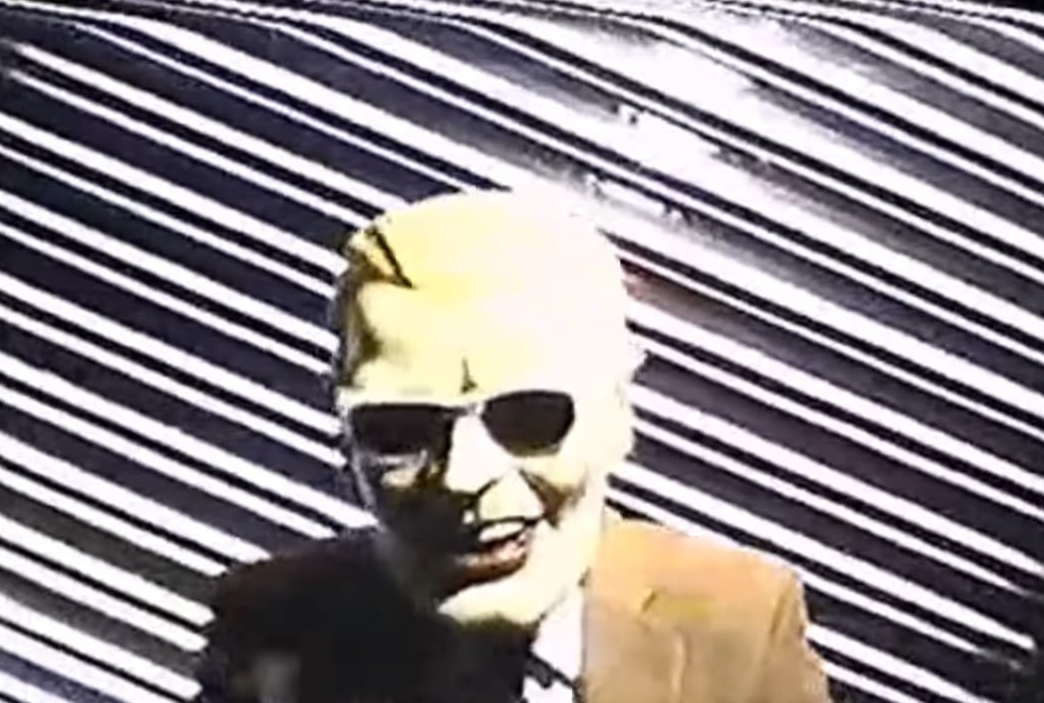
What Actually Happened
The first interruption occurred during WGN’s evening news sports segment. Contemporary and retrospective reporting describes the WGN hit as lasting roughly 20 to 30 seconds, with a masked figure appearing against a corrugated metallic background and little more than a harsh buzzing sound on the audio. When the station regained control, sportscaster Dan Roan responded on air: “Well, if you’re wondering what happened, so am I.”
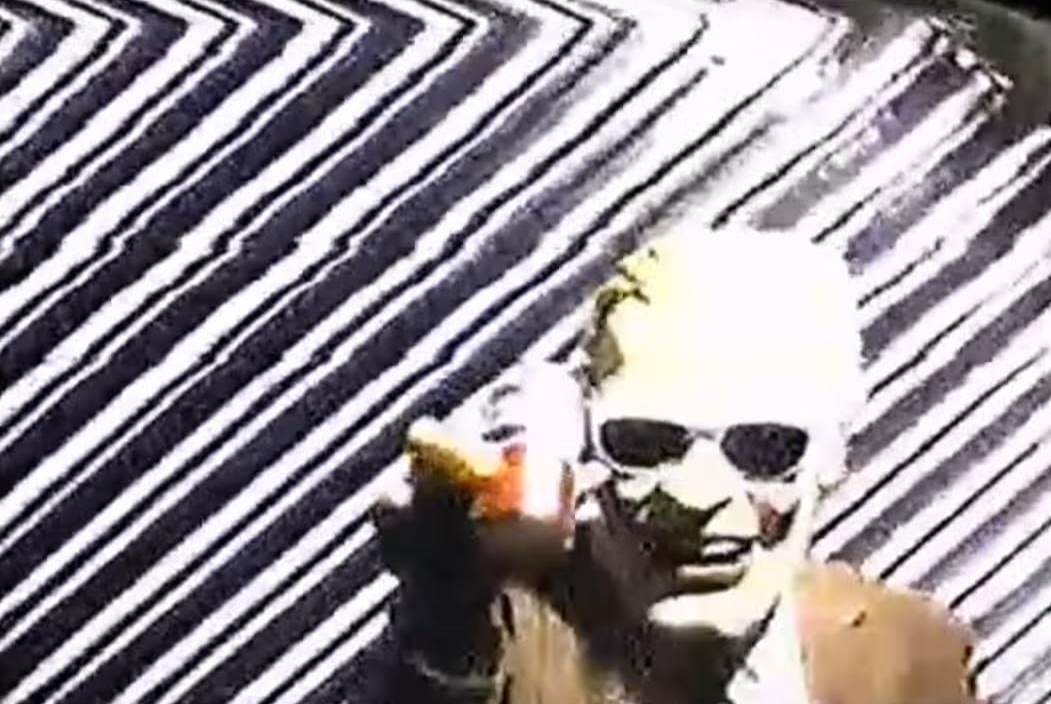
Roughly two hours later, WTTW’s broadcast of Doctor Who was interrupted by what appeared to be the same masked character. This second intrusion lasted about 90 seconds and included distorted audio. WTTW staff later described the experience as increasingly stressful because they could not stop it from master control while it was happening.
By the next morning, both stations and federal investigators were trying to determine what had happened. WTTW engineer Al Skierkiewicz later said the culprit likely had meaningful technical knowledge, while FCC investigator Michael Marcus came to believe the intruder had likely overridden a microwave studio-to-transmitter link rather than seizing control of a full-power transmitter directly.
No perpetrator was publicly identified, and no definitive confession has ever been verified. The event passed into media lore almost immediately, but the underlying case never fully moved from “famous” to “solved.”
Key Claims and Evidence
- Verified fact: Two Chicago stations, WGN-TV and WTTW, were interrupted on the same night by an unauthorized masked broadcast.
- Verified fact: The WGN interruption was short and largely silent except for buzzing; the WTTW interruption was longer and carried distorted speech.
- Verified fact: The FCC investigated the incident and never publicly named a culprit.
- Documented technical interpretation: Michael Marcus, the FCC’s lead investigator, believed the most likely method was overpowering the stations’ studio-to-transmitter microwave links with a stronger nearby signal.
- Documented station interpretation: WTTW personnel believed the hijacker likely had serious broadcast, satellite, or ham-radio-level technical knowledge.
- Open point: The exact transmission point, equipment configuration, and number of participants were never confirmed publicly.
Points of Tension
The first tension is public certainty versus technical uncertainty. We know the hijack happened. We have recordings. We know two stations were affected in the same city on the same night. But the best-known explanation, microwave STL override, remains a reconstruction, not a courtroom-proven account. The event is real. The mechanism is plausible. The final technical picture is still inferential.
The second tension is simplicity versus sophistication. To the average viewer, the broadcast looked like a bizarre prank. To engineers, it implied planning, line of sight, timing, and enough technical fluency to hit vulnerable signal paths. Marcus later argued that the gear may not have been impossibly exotic or expensive, especially on the used market, but the operation still required know-how and positioning.
The third tension is visibility versus anonymity. This was not a hidden cyber intrusion buried in server logs. It was a public act seen by large numbers of people, recorded on tape, and discussed immediately in the press. Yet despite that visibility, the case produced no publicly confirmed suspect. That mismatch is part of what keeps the event culturally alive.
The fourth tension is performance versus intent. The content of the hijack was rambling, juvenile, and theatrical. That makes it easy to dismiss as nonsense. But nonsense can still be deliberate. The references to Chicago media culture, the timing, and the two-station sequence all suggest a prank with structure behind it, even if its message was incoherent on the surface. That last point is partly an inference, but it is grounded in the recorded sequence and the local references embedded in the WTTW interruption.
Perspectives and Explanations
One conventional explanation is that this was a well-planned act of broadcast piracy carried out by technically capable pranksters exploiting weaknesses in analog signal infrastructure. This remains the strongest documented explanation because it matches both station recollections and Michael Marcus’s reconstruction of how the link could have been overpowered.
A more skeptical interpretation is that the case has been mythologized beyond its actual complexity. In this view, the hijack was bold, but not supernatural, not deeply coded, and not evidence of a hidden conspiracy. It was a media-era prank amplified by rarity, timing, and the unnerving quality of the performance. That interpretation is not directly stated in one source, but it is a fair inference from the contrast between the juvenile content and the otherwise technical execution.
A middle view is that the real anomaly is not the mask or the weird monologue, but the exposure of a structural weakness in analog broadcasting. In that reading, the event matters because it showed that a public communications system could be hijacked in plain sight by people who were neither omnipotent nor easily traceable.
Context and Pattern Recognition
The Max Headroom hijack belongs to a broader family of signal intrusions and broadcast piracy cases, but it stands out because it combined three things at once: visual strangeness, technical plausibility, and unresolved attribution. Many incidents are remembered either because they were technically impressive or because they were culturally bizarre. This one was both. That is an inference, but it is strongly supported by how often later coverage returns to the same combination of engineering curiosity and media unease.
It also reflects something particular to the analog era. The incident depended on a broadcast environment where signal paths could be powerful, predictable, and vulnerable in ways that later hardened or digitally restructured systems made far less practical. Marcus’s comments about the STL path are central here: the weak point was not the whole television system, but a specific link inside it.
Implications
If even the standard technical explanation is correct, the implication is striking enough. It means a small team with the right timing, equipment, line of sight, and broadcast knowledge was able to seize part of a city’s media flow, however briefly, and replace it with their own image. That is not just a prank. It is a reminder that information systems often look more solid from the outside than they are in practice.
The broader implication is cultural. The Max Headroom hijack lingers because it exposed a crack in something people usually treat as seamless: the public signal itself. Television, especially in the 1980s, carried authority simply by appearing stable. For ninety seconds on WTTW, that stability failed in a way that was absurd, intimate, and impossible to fully trace afterward.

The Galactic Mind Perspective
This case does not need a hidden cabal or a grand explanation to remain compelling. Its power comes from a simpler pressure point: a real public system was interrupted, the interruption was recorded, the likely pathway is understood in broad terms, and yet the event still resists closure.
That is why the Max Headroom hijack fits the Case File framework so well. It is not a paranormal event. It is a reality fracture in infrastructure, performance, and public trust. The anomaly is not whether the signal broke. It is how easily it broke, how strange the replacement was, and how cleanly the culprits vanished back out of view.
Open Question
Was the Max Headroom hijack ultimately just an analog-era prank with unusual flair, or was it an early warning about how fragile public systems become when technical vulnerability meets theatrical intent?
Credibility Meter
Witness Reliability: 5/5
The event was live, public, and observed by station staff as well as home viewers. This is not a rumor-based case.
Physical Evidence: 4/5
Recordings of both interruptions exist, but no transmission hardware or perpetrator was publicly recovered.
Documentation: 4/5
The case is supported by station recollections, press coverage, and reporting on the FCC/FBI investigation. The archive is real, but not complete.
Expert Analysis: 4/5
Broadcast engineers and the FCC’s lead investigator converged on a technically plausible explanation involving microwave STL override, even though the exact setup was never proven publicly.
Interpretation
This is a high-credibility event with medium unresolvedness. The intrusion itself is beyond dispute. The remaining mystery sits in attribution and exact method, not in whether it happened.
Sources / Receipts
- WTTW News, 30 Years Later, Notorious ‘Max Headroom Incident’ Remains a Mystery.
- Vice Motherboard, The Mystery of the Creepiest Television Hack.
- Chicago Sun-Times, 27 years ago Saturday: Chicago TV got hacked in the ‘Max Headroom Incident’.
What do you think? Drop your thoughts in the comments


Discussion