
Most evenings the cosmos feels like an abandoned concert hall: amps unplugged, stage lights dimmed, seats empty. You strain for any note beyond wind in the wires or your own heartbeat echoing in the dark. The Great Silence isn't empty...it's deliberate. What if the Fermi Paradox isn't a mystery of absence, but a symphony of restraint? What if advanced civilizations don't shout across the void because they've learned that broadcast is the rookie mistake of cosmic adolescence?
The Night the Noise Faded
Imagine a young species, flush with tech, blasting radio waves, TV signals, and beacons like kids yelling into the canyon. They think the galaxy's a party waiting for their arrival. But time passes. Empires rise, fall, learn. They discover the math: Broadcasting squanders energy, sprays secrets to every corner, and invites trouble from unknowns. One day, a breakthrough hits—tight-beam lasers, quantum-secure links, dark fiber strung between stars like invisible threads. Chatter shifts from public roar to private whispers. Proofs replace stories: "I can solve your prime factorization...here's a verifiable snippet." No culture dump, no risk of contamination. Just efficient, polite handshakes.
From our perch, it looks like nothing. No leaks, no stray signals. Inside? A thriving network hums...relays pulsing data across light-years, civilizations trading knowledge without fanfare. The frontier isn't empty; it's mature. Quiet isn't loneliness...it's courtesy. Speak softly, leave clean margins, only sign your name when the page invites it.
What if this is the arc every thinking species follows? We see it in our own backyard: Tower broadcasts gave way to fiber optics and encrypted streams. Open emails morphed into silent Slack threads. Public feeds became private loops. Our planet's getting quieter too...not because we're hiding, but because efficiency wins, privacy matters, and attention's a shared resource. Scale that up a few millennia: The galaxy's "Broadcast Century" ends, museums archive the noisy relics, and everyone aims their voices.
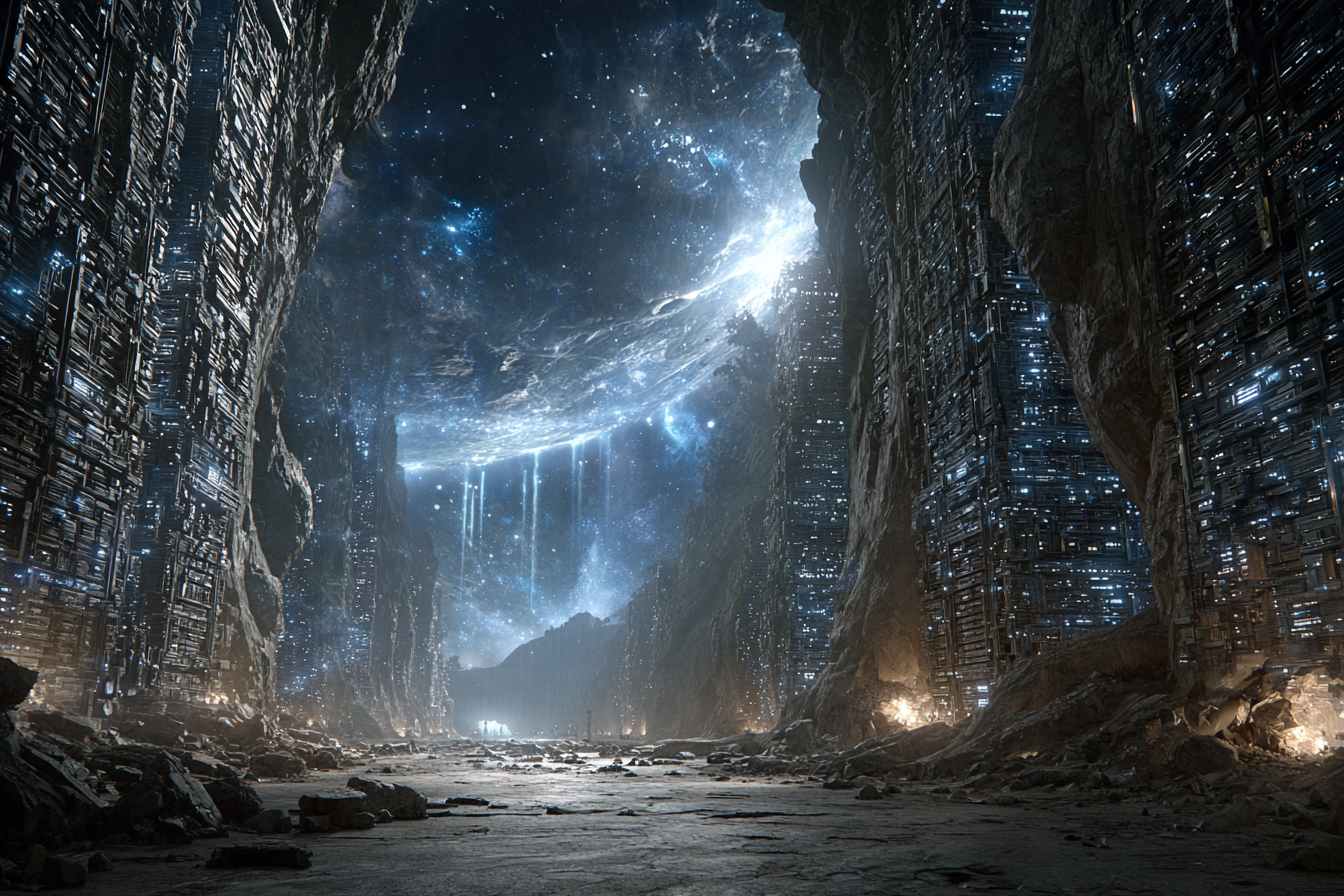
The Sting of the Timing
The irony bites: We're still scanning for the old-school blasts...big radio leaks, TV carriers...while our own signals fade. Detection tech sharpens, yet the sky stays mute. Safety chats now whisper about info hazards and memetic risks. Space norms emerge: Treat the commons with care. If quiet's the norm, barging in loud isn't just futile...it's rude. First contact might start with learning to listen without harm, to announce ourselves with manners: "Here's where we are, what we deem dangerous, how to open a channel safely." Refusal becomes a sign of wisdom, not weakness.
What if we've been tuning for the wrong era? The blueprint isn't alien...it's us, miniaturized and projected forward.
Shadows in the Silence
But quiet carries risks. Shelter for harm hides behind polite beams...exploitation veiled in efficiency. Rescue grows harder when no one's calling out. Discovery turns exclusive: A club of the careful, passing each other light-years apart without a nod. Proof-only exchanges trade wonder for safety; improvisation starves in the name of security.
What if two cautious neighbors brush close and never notice? We gain restraint, but lose the spark of open improvisation that makes cultures bloom.
Tuning In to the Hush
If we take this seriously, listening evolves. Hunt for unnatural silences...precise quiet bands where noise should leak. Spot point sources holding impossible stability. Map heat budgets screaming heavy computation without broadcast. Infrastructure over messages: Look for the scaffolding, not the shout.
Announcing flips to consent: Beacons of etiquette, not megaphones. "We understand the library rule...speak softly, arrive with care, ask before touching." At home, we mirror it: Fewer dragnets, more proofs. Tools that wait to be asked, not force-feed.
The universe might be quiet because maturity means aiming your voice, narrowing invitations. Silence isn't void...it's an index of craft and care. A cosmic library where volumes whisper only when opened.
What if the stars are waiting for us to grow quiet enough to hear them? To prove we're ready for the shelves, not the spotlight.
Fellow frontier explorers, this one's got me staring upward longer tonight.
Does the silence feel like wisdom or warning to you?
Share your "what ifs," your own quiet moments under the stars, or theories on what they're really saying in the hush. Let's listen together. 🌠🔇


