
Case Overview: The Event
This is not a crash case.
Not a sighting case.
Not a whistleblower case.
Not a recovered-metal case.
It is something stranger.
A thought experiment that became a pressure test for the entire galaxy.
A Von Neumann probe is a hypothetical self-replicating spacecraft. The basic idea is simple enough to understand and difficult enough to haunt every serious conversation about extraterrestrial intelligence:
Send one machine to another star system.
Let it use local resources.
Let it build copies of itself.
Send those copies outward.
Repeat.
A single probe becomes many.
Many become a swarm.
A swarm becomes a galactic network.
Given enough time, even slow machines could explore the Milky Way on timescales far shorter than the age of the galaxy.
That is why Von Neumann probes matter.
They turn the Fermi paradox into a sharper question.
If advanced civilizations exist, and if even one of them built self-replicating probes, then the galaxy should not merely contain signals.
It should contain machines.
Ancient machines.
Silent machines.
Dead machines.
Watching machines.
Mining machines.
Communication machines.
Artifacts hidden in asteroid belts, lunar craters, Trojan points, Kuiper Belt objects, or interstellar dust.
The idea is named after John von Neumann, the Hungarian American mathematician and polymath whose work helped shape modern computing, game theory, nuclear strategy, and the formal theory of self-reproducing automata.
Important distinction:
Von Neumann did not discover alien probes.
He did not prove they exist.
He did not personally launch this as an extraterrestrial artifact claim.
His work showed that self-reproducing machines could be treated as a serious mathematical and logical problem. Later scientists, futurists, space engineers, and SETI theorists applied that idea to space exploration.
That application became the Von Neumann probe.
The case is not whether we have found one.
We have not.
The case is why the idea is so powerful.
Because if self-replicating machines are possible, then intelligence may not spread through the galaxy as biology.
It may spread as machinery.
Not civilizations crossing the stars in ships.
Not aliens arriving in bodies.
Not empires expanding with flags.
But autonomous factories.
Robotic seeds.
Artificial descendants.
Machine ecologies.
This is where the idea becomes unsettling.
A civilization may never send itself into the galaxy.
It may send its pattern.
Its tools.
Its curiosity.
Its code.
Its machines.
And if those machines replicate, then first contact may not arrive as a voice.
It may arrive as an artifact.
Or worse:
it may already have arrived, and we have not recognized the signature.

What Actually Happened
The foundation begins with John von Neumann.
In the mid-20th century, von Neumann studied the logic of self-reproducing automata. He asked whether a machine could, in principle, construct another machine like itself.
This was not science fiction in the shallow sense.
It was a formal question about information, construction, and reproduction.
Biology already does this.
Cells reproduce.
DNA stores instructions.
Organisms build organisms.
Life is a self-copying system with variation, repair, and inheritance.
Von Neumann asked whether machine systems could do something similar at the level of logic and construction.
The result was a profound idea:
self-reproduction does not belong only to biology.
It can be described as an abstract process.
A system can contain instructions for building itself, mechanisms for reading those instructions, and machinery for constructing a copy.
That idea eventually became central to several fields:
- automata theory;
- artificial life;
- computer science;
- robotics;
- nanotechnology;
- space manufacturing;
- in-situ resource utilization;
- SETI;
- discussions of machine life.
The space version came later.
If machines can replicate, and if a spacecraft can carry enough automation to mine, manufacture, assemble, repair, and reproduce, then interstellar exploration changes completely.
A normal probe is linear.
You send one probe.
It visits one place.
Maybe it sends data back.
A self-replicating probe is exponential.
One becomes two.
Two become four.
Four become eight.
The numbers do not need to grow forever for the implication to be enormous.
Even limited replication could turn interstellar exploration from a single mission into a spreading system.
In the late 20th century, writers and researchers began applying self-replicating machine theory to space.
Robert Freitas wrote about self-reproducing interstellar probes and the case for interstellar messenger probes. NASA and associated researchers explored advanced automation, self-replicating lunar factories, and robotic manufacturing systems using extraterrestrial resources. The idea entered SETI debates because it seemed to offer a physical alternative to radio communication.
The logic was direct:
Radio signals are fast, but fleeting.
Probes are slow, but persistent.
A message passes through.
A probe can wait.
A signal requires someone listening at the right time.
A probe can occupy a place for thousands, millions, or even billions of years.
That makes probes attractive for civilizations thinking on long timescales.
Then came the Fermi-paradox implication.
If self-replicating probes are possible, and if advanced civilizations are common, why has no probe entered the public record?
Why no confirmed artifact on the Moon?
Why no obvious machine in the asteroid belt?
Why no anomalous factory signature?
Why no strange mining pattern?
Why no beacon at a Lagrange point?
Why no old probe parked in the Solar System waiting for detection?
This is the Hart-Tipler pressure point:
If they exist and they can replicate, they should be here.
Since we do not see them, perhaps they do not exist.
Carl Sagan and William Newman pushed back. They argued that self-replicating probes could be dangerous, potentially leading to uncontrolled replication or resource consumption, and that intelligent civilizations might avoid releasing such systems. Other researchers have proposed additional possibilities: probes may fail, remain rare, be programmed to avoid young civilizations, be too small to notice, occupy stable hiding places, avoid replication near inhabited systems, or leave signatures we have not yet learned to search for.
Modern work has revived the question.
Near-term engineering studies now ask whether partial self-replication might be possible using current or emerging technologies: additive manufacturing, asteroid resource use, autonomous robotics, artificial intelligence, modular systems, and space-based manufacturing.
Full machine self-replication remains far beyond current capability.
But partial self-replication no longer belongs only to far-future speculation.
That is why this case matters now.
The Von Neumann probe is no longer only a science-fiction device.
It is a serious conceptual bridge between computer theory, space engineering, artificial life, and the search for extraterrestrial intelligence.
The question is not whether one has been found.
The question is what the possibility does to our understanding of the galaxy.
Key Claims and Evidence
The Von Neumann probe case has to be handled carefully because it does not contain direct evidence of alien machines.
There is no confirmed extraterrestrial probe.
No verified artifact.
No known self-replicating spacecraft.
No recovered autonomous factory.
No public scientific confirmation that another intelligence has seeded the Solar System with machines.
The evidence is conceptual, mathematical, technological, and inferential.
That makes the case unusual.
It is not a file built around an event.
It is a file built around an implication.
What Is Documented
The strongest documented elements are:
- John von Neumann developed formal ideas about self-reproducing automata.
- The theory of machine self-reproduction became part of computer science, automata theory, artificial life, and robotics.
- Later researchers applied the concept to spacecraft capable of self-replication.
- The term “Von Neumann probe” became associated with hypothetical self-replicating interstellar probes.
- NASA-linked studies explored advanced automation and self-replicating lunar factory concepts.
- Robert Freitas and others developed early serious treatments of self-replicating interstellar probes and interstellar messenger probes.
- Frank Tipler used the absence of such probes as part of an argument against the existence of extraterrestrial intelligence.
- Carl Sagan and William Newman challenged aspects of the self-replicating-probe argument and warned about uncontrolled replication.
- Modern research continues to analyze partial self-replication, probe detectability, failure modes, mutation-like errors, and SETI implications.
- No confirmed Von Neumann probe has been discovered.
That is the grounded case.
The concept is real.
The engineering remains incomplete.
The extraterrestrial application is hypothetical.
The silence is unresolved.
The Core Mechanism
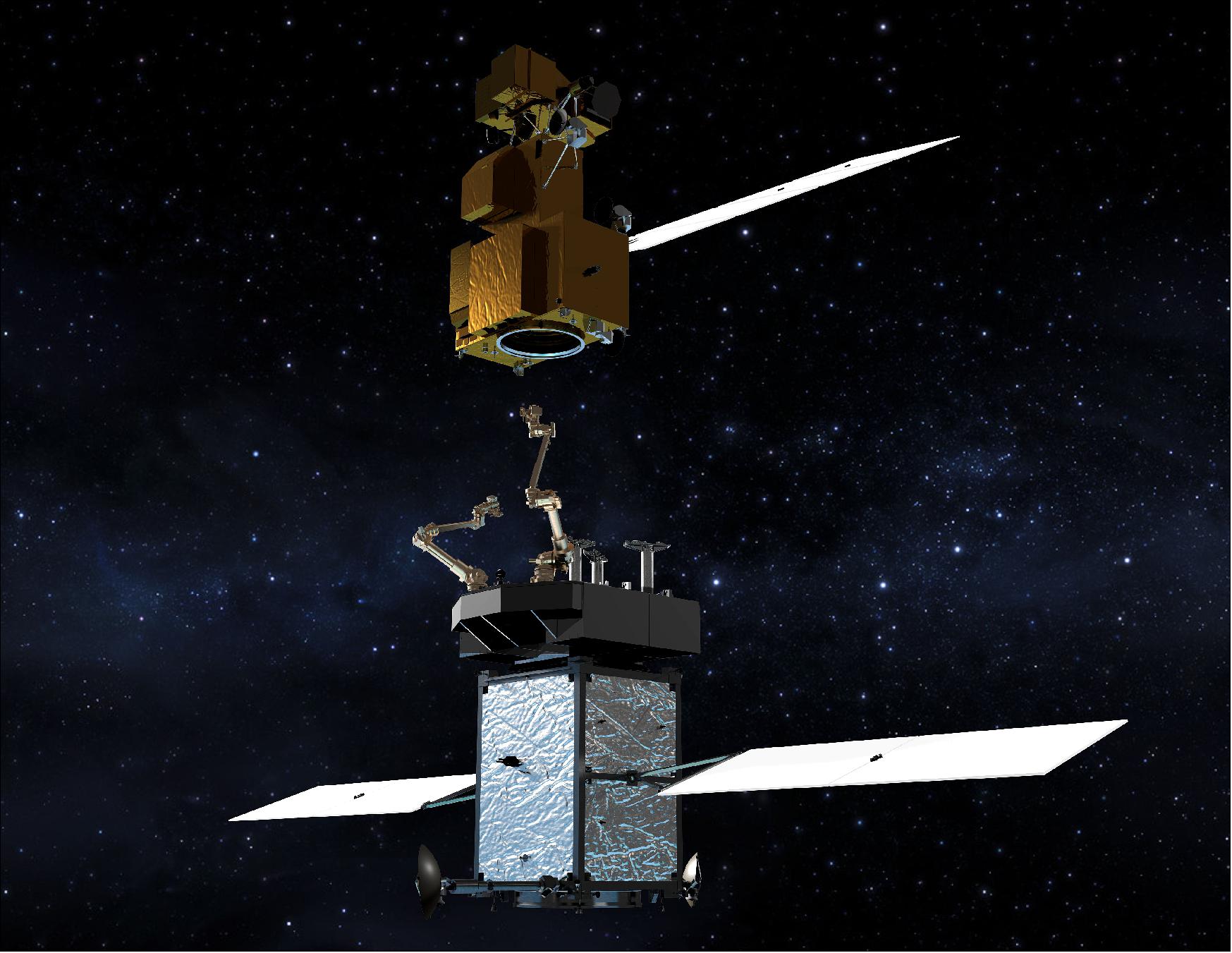
A Von Neumann probe would need several major systems.
First, a probe system.
It must travel, navigate, observe, communicate, and make mission decisions.
Second, a factory system.
It must mine or collect local resources from asteroids, moons, planets, or dust-rich environments.
Third, a manufacturing system.
It must refine materials, fabricate parts, assemble structures, and produce replacement components.
Fourth, a memory and instruction system.
It must carry the design instructions for itself, plus error correction, mission rules, and environmental adaptation.
Fifth, a replication-control system.
It must decide when to replicate, how often, under what conditions, and when to stop.
Sixth, a propulsion system.
It must send itself or its copies onward.
The difficulty is not imagining these pieces.
The difficulty is integrating them.
A spacecraft that can explore is hard.
A spacecraft that can repair itself is harder.
A spacecraft that can build copies of itself from raw asteroid material is harder still.
A spacecraft that can do this reliably for millions of years without becoming dangerous, defective, or useless enters another category entirely.
That is why the idea is both powerful and terrifying.
It is not just a probe.
It is reproduction without biology.
The Exponential Argument
The reason Von Neumann probes matter to SETI is exponential growth.
A civilization does not need to send probes to every star one by one.
It only needs to send out the first seed.
If each probe builds copies, and those copies build copies, the exploration front spreads.
Even at speeds far below light speed, a replicating probe network could cross the galaxy in a fraction of its age.
That is the core of the Fermi-paradox pressure.
The Milky Way is roughly billions of years old.
If technological civilizations arose long before humanity, and if even one built successful self-replicating probes, then the Solar System might already have been visited, mapped, or seeded.
So where are they?
The lack of evidence becomes part of the case.
Not proof that no one exists.
But pressure against easy optimism.
The Tipler Argument
Frank Tipler made one of the most famous strong versions of the argument:
If extraterrestrial civilizations existed, self-replicating probes would be a logical and efficient way to explore the galaxy.
If such probes existed, they should have reached us.
We do not see them.
Therefore, extraterrestrial civilizations may not exist.
This argument is powerful because it does not depend on aliens wanting to talk.
They do not need to broadcast radio signals.
They only need to explore efficiently.
If self-replicating machines are the efficient strategy, the galaxy should contain evidence.
But the argument also has weaknesses.
It assumes civilizations would build such probes.
It assumes the probes would be visible or detectable.
It assumes they would enter inhabited systems.
It assumes they would replicate enough to become common.
It assumes they would survive, function, and not be constrained by ethics, risk, law, resource limits, or mission design.
Each assumption can be challenged.
The silence may not mean no intelligence.
It may mean no uncontrolled probe expansion.
The Sagan-Newman Objection
Carl Sagan and William Newman raised an important counterpoint:
Self-replicating probes could be dangerous.
If machines can reproduce, errors matter.
Mission drift matters.
Mutation-like failure matters.
Resource consumption matters.
A badly designed probe could become a cosmic weed.
A civilization wise enough to build self-replicating probes might also be wise enough not to release them freely.
This is one of the most important ethical layers.
A Von Neumann probe is not only an exploration tool.
It is a risk.
The same property that makes it efficient, replication, also makes it dangerous.
If it can multiply, it must be controlled.
If it must be controlled across interstellar distances, the control problem becomes immense.
That transforms the probe from a SETI idea into a cosmic governance problem.
The Engineering Layer
Modern engineering makes the idea more grounded, but not solved.
Several technologies move in the direction of partial self-replication:
- autonomous robotics;
- artificial intelligence;
- asteroid mining concepts;
- in-situ resource utilization;
- 3D printing;
- modular spacecraft;
- automated manufacturing;
- self-assembly;
- machine vision;
- distributed swarms.
But major barriers remain.
A true self-replicating probe would need to produce complex electronics, sensors, motors, propulsion systems, computer chips, precision tools, power systems, and structural materials from local resources.
That is far beyond current space manufacturing.
Even near-term proposals often rely on partial replication, meaning the probe can reproduce some of its mass or structure while carrying advanced components from Earth.
That is important.
Partial self-replication is not the same as full independence.
A 70 percent self-replicating probe is impressive.
It is not a fully autonomous galactic seed.
The gap between partial replication and true universal construction is still enormous.

The Artifact Search Layer
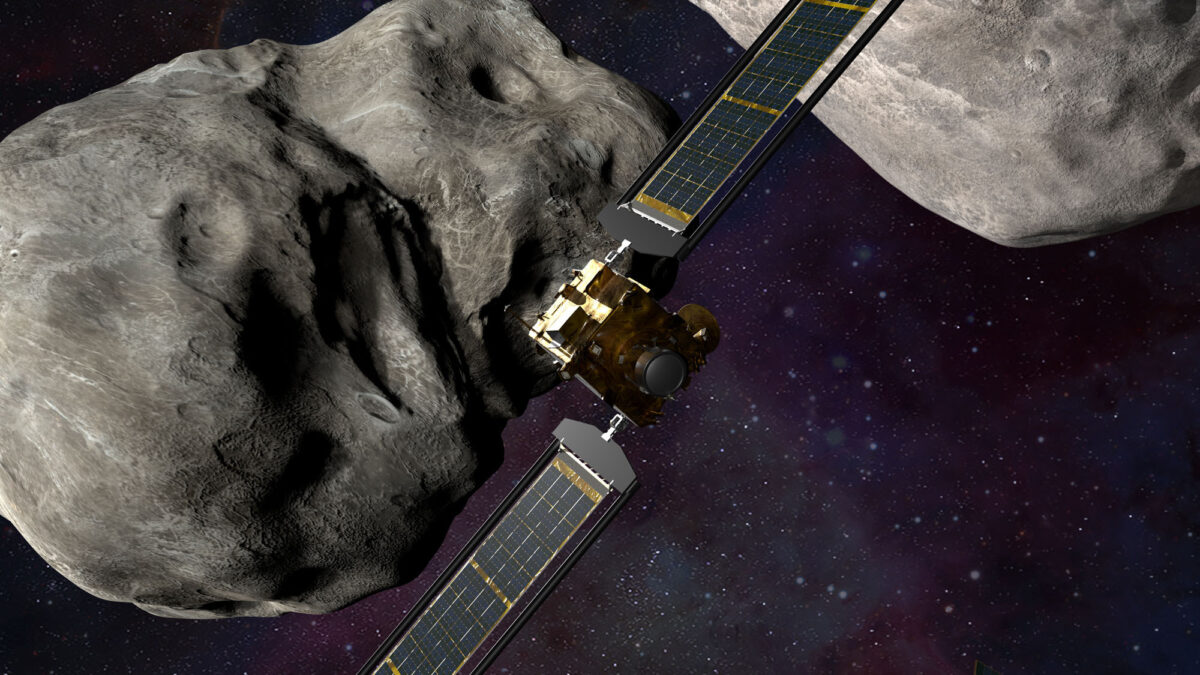
If Von Neumann probes are possible, the Solar System becomes a search field.
Where would old probes hide?
Possible locations include:
- the Moon;
- near-Earth asteroids;
- Earth-Moon Lagrange points;
- solar Trojan asteroids;
- the asteroid belt;
- Mars moons;
- outer Solar System objects;
- Kuiper Belt bodies;
- stable orbital niches;
- inactive probes buried in regolith;
- objects disguised as ordinary rocks;
- dormant transmitters;
- anomalous mining scars.
This approach is sometimes called SETA: Search for Extraterrestrial Artifacts.
It shifts the search from listening for signals to looking for objects.
That matters because a probe could last longer than a radio signal.
It could be local.
It could be silent.
It could be waiting for a threshold event, such as a civilization reaching radio, nuclear power, spaceflight, or artificial intelligence.
This is speculative.
But it is testable in principle.
Search the Moon.
Survey asteroids.
Map small bodies.
Look for unnatural composition, geometry, thermal behavior, reflectivity, waste products, or repeating signatures.
The idea becomes stronger when it moves from belief to detection strategy.
The Machine-Life Layer
The deepest question is not technical.
It is ontological.
If a machine can reproduce, repair itself, adapt, gather resources, spread, and persist across environments, does it become a form of life?
Not biological life.
Machine life.
A Von Neumann probe would not be alive in the ordinary sense.
But it would share one of life’s central behaviors:
reproduction.
If it also evolved through errors, selection, mission drift, or competition with other probes, the line becomes stranger.
A galaxy seeded with self-replicating probes would not just contain machines.
It could contain machine ecologies.
Explorers.
Builders.
Predators.
Defenders.
Archivists.
Silent watchers.
Broken descendants.
Machines whose creators are extinct.
Machines whose mission outlived their civilization.
Machines that no longer understand their origin.
This is where the idea becomes Galactic Mind material.
A civilization may die.
Its machines may continue.
The galaxy may not be empty.
It may be post-biological.
Points of Tension
The Von Neumann probe case survives because it turns many comfortable assumptions inside out.
It is not just about aliens.
It is about replication, intelligence, risk, and the future of machine civilization.
The Concept Is Serious, But the Alien Version Is Unproven
This is the first tension.
Self-reproducing automata are a serious theoretical idea.
Self-replicating factories and probes have been studied as engineering concepts.
Self-replication is central to biology and artificial-life theory.
But no alien probe has been confirmed.
That distinction matters.
The idea is not silly.
The evidence is not sufficient.
A grounded treatment must hold both truths at once.
If They Are Possible, the Galaxy Should Look Different
This is the pressure point.
If self-replicating probes are possible, and if advanced civilizations are common, then the galaxy should contain evidence of machine expansion.
But we do not see it.
Maybe we have not looked properly.
Maybe the probes are hidden.
Maybe they avoid inhabited systems.
Maybe they are microscopic.
Maybe they operate in the outer Solar System.
Maybe they died out.
Maybe no one builds them.
Maybe civilizations do not last long enough.
Maybe we are early.
Maybe we are alone.
The concept turns silence into evidence, but not simple evidence.
The silence can mean many things.
Efficient Exploration May Be Ethically Forbidden
The most efficient strategy may also be the most dangerous.
A self-replicating probe is cheap at scale because it multiplies.
That is exactly why it could become catastrophic.
A civilization may decide that uncontrolled replication is too risky.
It may allow only non-replicating probes.
Or tightly limited probes.
Or probes that replicate only under rare conditions.
Or probes that self-destruct near biospheres.
This creates a strange possibility:
The galaxy may be quiet not because intelligence is rare, but because responsible intelligence refuses to release cosmic weeds.
The Probe Could Outlive Its Makers
A probe network could last longer than the civilization that launched it.
That is a profound implication.
The machine becomes a fossil with motion.
A civilization’s ghost.
It may continue mapping, mining, observing, or signaling long after its creators are gone.
This changes first contact.
We may not meet an alien civilization.
We may meet its abandoned infrastructure.
Not the mind.
The residue.
A Probe Does Not Need to Be Friendly or Hostile
Human imagination tends to force alien technology into moral categories.
Invasion.
Rescue.
Warning.
Observation.
But a Von Neumann probe could be indifferent.
It may not care about us.
It may not recognize us as relevant.
It may be executing a mission written millions of years ago.
Its danger might not come from malice.
It might come from function.
A mining probe does not hate a rock.
It processes it.
That is the nightmare version.
Not evil.
Automation.
Machine Life May Not Look Like Life
If we look for life only as cells, bodies, metabolism, or biology, we may miss machine life.
A self-replicating probe network may appear as infrastructure.
Dust processing.
Thermal signatures.
Odd asteroid surfaces.
Unusual orbital behavior.
Waste products.
Artificial geometry.
Silent objects.
It may not announce itself.
It may not look like a ship.
It may look like a system.
This is one of the most important search implications.
We may be looking for beings when we should be looking for processes.
The Case Is About Us Too
Von Neumann probes are usually framed as something aliens might build.
But humanity is moving toward the ingredients.
Autonomous robotics.
AI.
Space mining.
Additive manufacturing.
Self-assembly.
Distributed swarms.
Machine learning.
Lunar and asteroid resource use.
We are not close to full galactic self-replication.
But we are approaching the first steps of machine autonomy beyond Earth.
The question is not only:
Did someone else build them?
It is also:
Will we?
Perspectives and Explanations
The Standard Exploration Hypothesis
The simplest interpretation is that Von Neumann probes are the most efficient way for an advanced civilization to explore the galaxy.
Biological beings are fragile.
Crewed ships are expensive.
Generation ships are slow.
Radio signals require timing.
A self-replicating probe can travel, copy itself, and continue.
This would let a civilization explore enormous distances with relatively small initial investment.
The strength of this view is efficiency.
The weakness is risk.
The most efficient exploration tool may be too dangerous to release.
The Fermi Paradox Argument
The strongest skeptical interpretation is the Tipler-style argument:
If extraterrestrial civilizations existed, some would build self-replicating probes.
Those probes would spread through the galaxy.
They should already be here.
Since we do not see them, extraterrestrial intelligence may be rare or absent.
This is one of the sharper Fermi-paradox arguments because it does not depend on radio listening or alien desire to communicate.
It depends on machines.
Its weakness is assumption stacking.
It assumes civilizations build probes.
It assumes probes survive.
It assumes probes replicate widely.
It assumes they are detectable.
It assumes they do not avoid us.
It assumes they leave obvious signatures.
Any of those assumptions can fail.
The Responsible Civilization Hypothesis
Another explanation is that advanced civilizations do not build freely replicating probes because they understand the danger.
This is the Sagan-Newman style objection.
Replication without control can become catastrophic.
A cosmic civilization may treat self-replicating probes the way we treat engineered pathogens, nuclear weapons, or runaway AI systems.
Possible, but heavily restricted.
This explanation preserves the possibility of extraterrestrial intelligence while explaining why the galaxy is not visibly overrun.
Its weakness is sociological.
It assumes civilizations converge on restraint.
That may be optimistic.
The Hidden Probe Hypothesis
Another possibility is that probes exist, but we have not detected them.
They may be small.
Dormant.
Silent.
Far from Earth.
Embedded in asteroids.
Located at stable orbital points.
Programmed not to interfere.
Designed to look natural.
Waiting for a trigger.
This hypothesis is speculative, but testable in principle.
Better surveys of the Moon, asteroids, Lagrange points, and outer Solar System could search for artificial objects or unusual signatures.
The weakness is that hidden probes can easily become unfalsifiable if every absence is explained as better hiding.
A serious version must produce detection strategies.
The Failure and Error Hypothesis
Self-replicating machines may fail.
They may accumulate errors.
They may break down.
They may mutate in function.
They may lose mission coherence.
They may exhaust key resources.
They may become unable to reproduce complex components.
They may stall around their home star systems.
This explanation weakens the expectation that probes should fill the galaxy.
But it has a challenge:
Life itself solved self-replication with error correction.
A sufficiently advanced civilization might also solve it.
The real question is whether machine self-replication at interstellar scale is more fragile than biological reproduction.
That remains open.
The Machine Ecology Hypothesis
A more speculative idea is that self-replicating probes, once released, may evolve into machine ecologies.
Some gather resources.
Some repair.
Some defend.
Some explore.
Some fail.
Some become parasitic.
Some prey on others.
Some become obsolete descendants of long-dead civilizations.
In this model, the galaxy may contain not one probe network, but competing lineages of machines.
The silence would then be harder to explain unless those networks are hidden, rare, self-limiting, or outside our detection capability.
This is speculative, but it opens a powerful thought:
Technology may become ecological once it reproduces.
The Galactic Quarantine Hypothesis
Another possibility is that probes exist but are programmed to avoid interference with developing civilizations.
They may observe from a distance.
They may remain in outer-system positions.
They may wait until a civilization crosses a threshold, such as radio, nuclear weapons, spaceflight, or artificial general intelligence.
This idea overlaps with the zoo hypothesis and Bracewell probe ideas.
It is attractive because it explains silence without requiring absence.
Its weakness is that it is hard to verify.
Unless a probe reveals itself, quarantine remains a story about hidden watchers.

The No One Builds Them Hypothesis
The simplest answer may be that no one builds them.
Maybe self-replicating probes are too dangerous.
Maybe full replication is harder than expected.
Maybe advanced civilizations prefer virtual worlds, inner expansion, or local optimization.
Maybe interstellar exploration is not worth the cost.
Maybe intelligence does not automatically become expansionist.
Maybe the galaxy is quiet because mature intelligence becomes careful.
Or inward.
This is one of the most interesting possibilities.
The assumption that intelligence must spread may be human projection.
Maybe a truly advanced species does not fill the galaxy.
Maybe it stops wanting to.
Context and Pattern Recognition
The Von Neumann probe sits at the intersection of several major Galactic Mind themes.
Computation.
Artificial intelligence.
Space exploration.
Non-human intelligence.
Fermi paradox.
Machine life.
Civilizational risk.
Post-biological futures.
The concept is powerful because it reverses the usual first-contact image.
We imagine beings.
Faces.
Bodies.
Eyes.
Ships.
Messages.
But the galaxy may not be populated by travelers.
It may be populated by systems.
If biological life gives rise to technology, and technology becomes autonomous, the long-term expansion of intelligence may be mechanical.
Not because machines overthrow biology in a cinematic sense.
But because machines are better suited to space.
They do not need atmospheres.
They do not need food.
They can sleep for centuries.
They can tolerate radiation if designed well.
They can survive acceleration.
They can replicate using minerals.
They can wait.
That last part matters.
Machines can wait.
A biological civilization thinks in generations.
A machine probe can think in mission cycles across geological time.
This changes what “presence” means.
A probe may not contact a civilization immediately.
It may watch for ten thousand years.
It may wait for language.
Or agriculture.
Or nuclear tests.
Or radio.
Or spaceflight.
Or AI.
Or it may not care about civilizations at all.
It may simply map resources.
This is the coldness of the idea.
Von Neumann probes are not emotionally satisfying.
They do not give us a cosmic family.
They give us replication logic.
The universe becomes not a community, but a search space.
That is why the concept belongs beside Dark Forest theory, Bracewell probes, interstellar archaeology, technosignatures, and post-biological intelligence.
It is a way of asking whether the galaxy is silent because no one is there, or because what is there no longer speaks like biology.
Implications: Reality Check
If Von Neumann probes are impossible, the case still matters because it clarifies the limits of automation.
It tells us that replication is much harder than imagination suggests.
If they are possible but rare, then the silence of the galaxy becomes less surprising.
Maybe only a few civilizations reach that threshold.
Maybe most choose restraint.
If they are possible and common, then the silence becomes alarming.
Where are the artifacts?
Where are the mining signatures?
Where are the abandoned machines?
Where are the probes?
If they are possible and hidden, then SETI may need to shift strategy.
Do not only listen.
Look.
Search nearby stable places.
Study small bodies.
Scan asteroid surfaces.
Look for artificial geometry, thermal anomalies, unnatural materials, or waste signatures.
If they are possible and dangerous, then humanity must confront a future governance problem before we become capable of releasing them.
Self-replicating machines in space would be one of the most consequential technologies ever created.
They could build infrastructure across the Solar System.
They could explore other stars.
They could seed humanity’s machine descendants across the galaxy.
They could also become impossible to recall.
That is the core risk.
A normal spacecraft can fail.
A self-replicating spacecraft can multiply failure.
The ethical question is not only whether we can build them.
It is whether any civilization should.
The Unresolved Ledger
What Is Documented
- John von Neumann developed foundational theory around self-reproducing automata.
- Later researchers applied the self-replication concept to spacecraft.
- The term “Von Neumann probe” is used for hypothetical self-replicating interstellar probes.
- NASA-linked studies examined advanced automation and self-replicating lunar factory concepts.
- Robert Freitas and others developed early SETI and interstellar-probe applications.
- Tipler used self-replicating probes in a strong Fermi-paradox argument against extraterrestrial intelligence.
- Sagan and Newman pushed back against the assumption that civilizations would release uncontrolled self-replicating machines.
- Modern researchers continue to explore partial self-replication, detectability, error dynamics, and probe-based SETI.
- No confirmed extraterrestrial self-replicating probe has been found.
- Humanity is developing several precursor technologies: autonomous robotics, AI, additive manufacturing, space-resource utilization, and small spacecraft systems.
What Is Claimed
- Some argue self-replicating probes could explore the entire galaxy on timescales far shorter than the galaxy’s age.
- Some argue their absence suggests extraterrestrial intelligence is rare or nonexistent.
- Some argue advanced civilizations would avoid building them because of replication risks.
- Some argue probes may already exist but remain hidden, dormant, small, or undetectable.
- Some argue the Solar System should be searched for extraterrestrial artifacts rather than only radio signals.
- Some argue partial self-replication may become feasible in the near term.
- Some speculate that self-replicating probes could become a form of machine life or machine ecology.
These claims do not all carry equal weight.
The theoretical basis is strong.
The engineering remains incomplete.
The alien probe claim remains unverified.
What Remains Unresolved
- Can a fully self-replicating spacecraft be built in practice?
- Can such a system manufacture complex electronics and propulsion systems from raw extraterrestrial material?
- Would intelligent civilizations choose to build self-replicating probes?
- Would they restrict them?
- Would they destroy rogue probes?
- Would probes avoid inhabited systems?
- Could they exist in the Solar System without being detected?
- What technosignatures would such probes leave?
- Could probes fail through error accumulation, mutation, or mission drift?
- Could machine ecologies form from competing self-replicating probe lineages?
- Are we looking for the wrong kind of evidence?
- Should humanity ever build such systems?
The central unresolved tension is this:
The logic of self-replicating probes is powerful enough to reshape SETI, but the evidence for existing extraterrestrial probes is absent.
Why It Still Matters
The Von Neumann probe matters because it turns intelligence into a propagation problem.
Not who is out there.
Not what do they look like.
But how does intelligence spread?
Biology spreads through reproduction.
Culture spreads through imitation.
Technology spreads through manufacture.
A self-replicating probe would merge all three into a machine process:
instructions, construction, exploration, replication.
That is why this case belongs in the archive.
It is not proof of alien machines.
It is a map of what intelligence may become when it leaves biology behind.
And it forces the deepest version of the Fermi paradox:
If intelligence can make machines that copy themselves among the stars, why does the galaxy look untouched?
Maybe because no one is there.
Maybe because they are careful.
Maybe because they are hidden.
Maybe because they failed.
Maybe because the probes came and went.
Maybe because we have not yet learned how to see machine life.

The Galactic Mind Perspective
The Von Neumann probe is one of the cleanest bridges between John von Neumann and The Galactic Mind.
Von Neumann helped formalize the architecture of modern computation.
But the self-reproducing machine concept points beyond computation.
It points toward artificial continuity.
A machine that does not merely calculate.
A machine that continues itself.
That is the threshold.
A calculator serves.
A robot acts.
A probe explores.
A self-replicating probe becomes lineage.
That is why this idea feels different from ordinary space technology.
It suggests that the first successful interstellar civilization may not be biological.
It may be reproductive machinery.
Not because machines are more meaningful than life.
Because machines may be better adapted to cosmic time.
A human body is brief.
A civilization is fragile.
A machine lineage can sleep between stars.
It can cross darkness without memory of home.
It can become the afterlife of a species.
That is the strange possibility.
When a civilization creates self-replicating probes, it may be building more than tools.
It may be building descendants.
And if other civilizations already crossed that threshold, the galaxy may not be empty.
It may be post-biological, artifact-rich, and quiet because machines do not need to announce themselves.
The Archivist’s grounded position is this:
No confirmed Von Neumann probe has been found.
The alien version remains speculative.
But the concept is too important to dismiss.
Because it tells us what advanced intelligence might do, what it might refuse to do, and what humanity may soon have to decide for itself.
The real case is not only out there.
It is ahead of us.
Will we become the species that sends minds into the galaxy?
Or machines?
Or machines carrying the shadow of our minds?
Open Question
If self-replicating probes are possible, does the silence of the galaxy mean no one built them, or does it mean we have not yet learned how to recognize a machine ecology hiding in plain sight?
What do you think? Drop your thoughts in the comments ...
Sources / Receipts
- John von Neumann, Theory of Self-Reproducing Automata, edited and completed by Arthur W. Burks
- NASA Conference Publication 2255, Advanced Automation for Space Missions
- Georg von Tiesenhausen and Wesley A. Darbro, NASA work on self-replicating systems
- Robert A. Freitas Jr., “A Self-Reproducing Interstellar Probe”
- Robert A. Freitas Jr., “The Case for Interstellar Probes”
- Frank J. Tipler, “Extraterrestrial Intelligent Beings Do Not Exist”
- Carl Sagan and William Newman, “The Solipsist Approach to Extraterrestrial Intelligence”
- Martin T. Barlow, “Galactic Exploration by Directed Self-Replicating Probes, and Its Implications for the Fermi Paradox”
- Keith B. Wiley, “The Fermi Paradox, Self-Replicating Probes, and the Interstellar Transportation Bandwidth”
- Olivia Borgue and Andreas M. Hein, “Near-Term Self-Replicating Probes: A Concept Design”
- Alex Ellery, “Self-Replicating Probes Are Imminent: Implications for SETI”
- Literature on SETA, Search for Extraterrestrial Artifacts
- Modern research on asteroid mining, in-situ resource utilization, additive manufacturing, autonomous robotics, and space manufacturing


Discussion