
Sleep has always looked personal from the outside.
A still body. Closed eyes. Silence.
But inside, entire worlds unfold.
Cities appear. Voices speak. Strangers arrive already familiar. Landscapes form with impossible logic and emotional precision. In dreams, the mind becomes a stage, a theater, a wilderness, and sometimes something stranger than all three.
We tend to assume those worlds belong only to us.
But what if they don’t?
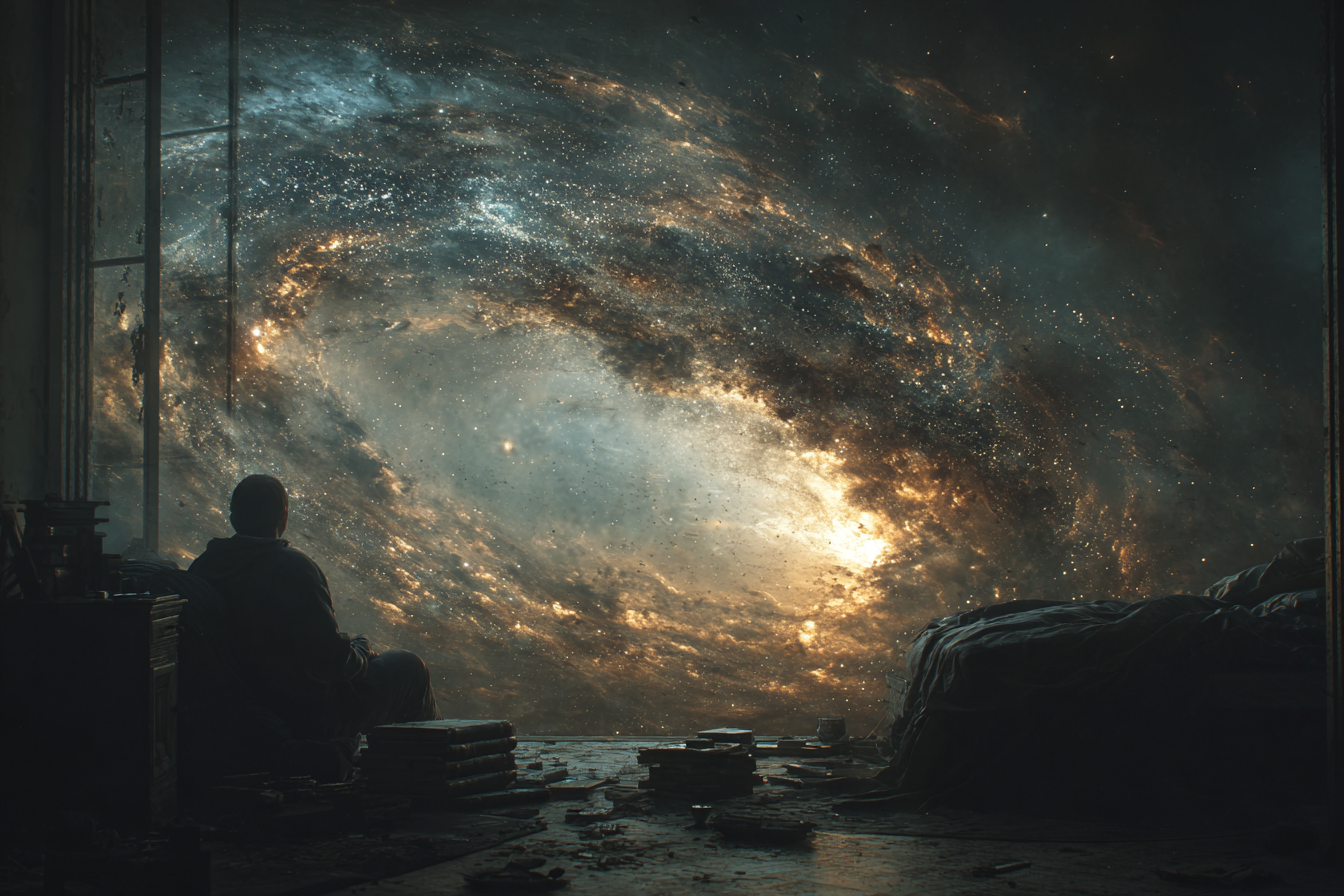
What if dreams are not just internal experiences generated by the brain, but moments of access? Not always. Not fully. But enough to raise an unsettling possibility.
What if dreaming is sometimes less like invention and more like entry?
The premise
The conventional explanation for dreams is well established. They are linked to memory consolidation, emotional processing, pattern integration, and the strange neurological activity of the sleeping brain. In that frame, dreams are private productions. The brain is both author and audience.
That explanation accounts for a lot.
It explains why dreams remix fragments of daily life. Why they distort time. Why emotions often drive the narrative more than logic does. Why symbols rise from somewhere deeper than language.
But there is another layer to the question.
Dreams do not always feel random.
Some feel constructed in a way that exceeds ordinary mental debris. Some environments repeat. Some figures return. Some dreamers report places they visit over and over again as if those places exist independent of the dream itself. Others describe encounters that feel less like fantasy and more like contact.
Not proof. Not evidence. But enough pattern to stretch the imagination.
So here is the speculative leap:
What if dreaming is not only the brain processing experience, but the mind entering a shared field of experience?
A symbolic layer. A psychic commons. A cognitive architecture that waking consciousness normally filters out.
In that possibility, dreams are not merely hallucinations of the sleeping self. They are partial excursions into a space where memory, emotion, archetype, and perhaps even other minds can overlap.
Why this idea keeps returning
Human beings across time have treated dreams as more than noise.
Ancient cultures saw them as messages, warnings, prophecies, visitations, rehearsals, and thresholds. Religious texts are filled with dreams that reveal hidden knowledge. Mythologies across civilizations describe sleep as a vulnerable state in which the soul travels, receives, or encounters forces beyond ordinary waking life.
Modernity reduced much of that to psychology.
And that made sense. Psychology offered grounded explanations. Trauma, desire, repression, memory, subconscious patterning. Dreams became something to decode rather than somewhere to go.
But the older intuition never fully disappeared...because even now, dreams still do something strange to us.
They can feel inhabited. They can feel observed. They can feel like spaces we move through rather than scenes we control. That lingering intuition may be nothing more than the mind’s talent for dramatizing itself...or it may be the leftover trace of something humans have always sensed but never been able to test cleanly.
How this could unfold
If dreams are not entirely private, the implications would not begin with some dramatic announcement. They would emerge slowly, through anomalies that are easy to dismiss one at a time and difficult to ignore in aggregate.
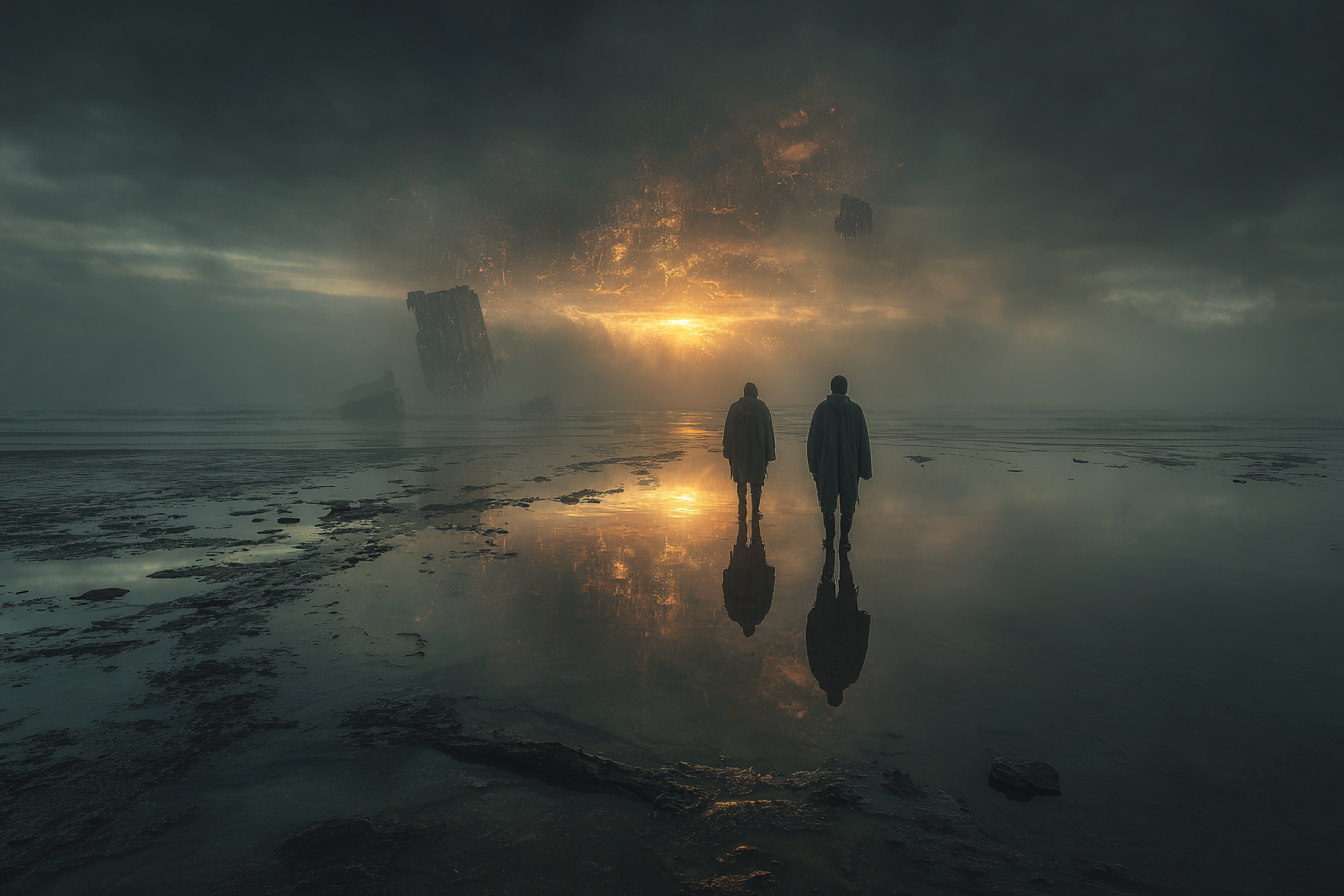
Phase 1: The ordinary cracks
It starts where it always starts.
With common experiences people already have:
- dreaming of a person right before hearing from them
- seeing a place in sleep that later feels eerily familiar
- meeting recurring dream figures who seem to possess their own continuity
- sharing similar dream imagery with someone else without prior discussion
- lucid dreamers reporting environments that feel stable across multiple nights
None of this proves anything. Each event can be explained away.
Coincidence. Pattern recognition. selective memory.
But speculation often begins where ordinary explanations become emotionally insufficient.
Phase 2: Shared terrain
Now imagine a future where dream logging becomes common.
Wearables improve. Sleep tracking evolves. Language models help users compare imagery, themes, environments, and symbols across millions of dream journals. Patterns emerge that no individual could have noticed alone.
Clusters form. People from different continents describe similar spaces.
A hallway with impossible doors.
A city beneath water.
A mountain observatory under two moons.
A silent crowd waiting in a station with no trains.
Most of it would still be explainable through cultural overlap, media contamination, and archetypal structure.
But a small subset would resist easy explanation.
Not because the dreams are identical, but because they seem topologically related. Different entrances into what feels like the same place.
Phase 3: The lucid frontier
Then come the lucid dreamers.
Not all dreamers. A minority. The ones who learn to remain aware while inside the dream state. The ones who begin experimenting.
Can they return to the same environment?
Can two people independently attempt to find the same symbolic location?
Can dream spaces hold continuity when revisited intentionally?
In this speculative world, some begin reporting that the answer appears to be yes.
Not consistently. Not scientifically settled. But often enough to spark deeper interest.
The dream state stops looking like chaos and starts looking like territory.
Phase 4: The first unsettling possibility
At this point the question changes.
It is no longer, “Why are dreams so weird?”
It becomes, “Why do some dreams behave like places?”
And beyond that:
Why do some dream figures seem to know more than the dreamer?
Why do some encounters feel reciprocal?
Why do some dream environments seem resistant to control, even during lucid states?
If consciousness can generate worlds, that is extraordinary enough.
But if consciousness can also enter a world not fully authored by the self, the implications widen dramatically.
Phase 5: The social fracture
Now scale the idea outward.
If dreams can be shared in some limited way, privacy has never been what we thought it was.
Not because thoughts are openly readable, but because the sleeping mind may participate in a layer of reality that is less sealed than waking identity suggests.
That would affect everything.
Psychology would have to confront the possibility that some experiences currently categorized as purely intrapsychic may involve relational or collective structures.
Religion would reclaim old language about soul travel, visions, and spiritual contact.
Technology would rush to map dream commonalities at scale.
Governments, inevitably, would ask whether dream states could be influenced, monitored, or exploited.
And ordinary people would begin asking a quieter question:
Who, exactly, am I alone with when I sleep?
The darker version of the idea
There is a more unsettling branch of this speculation.
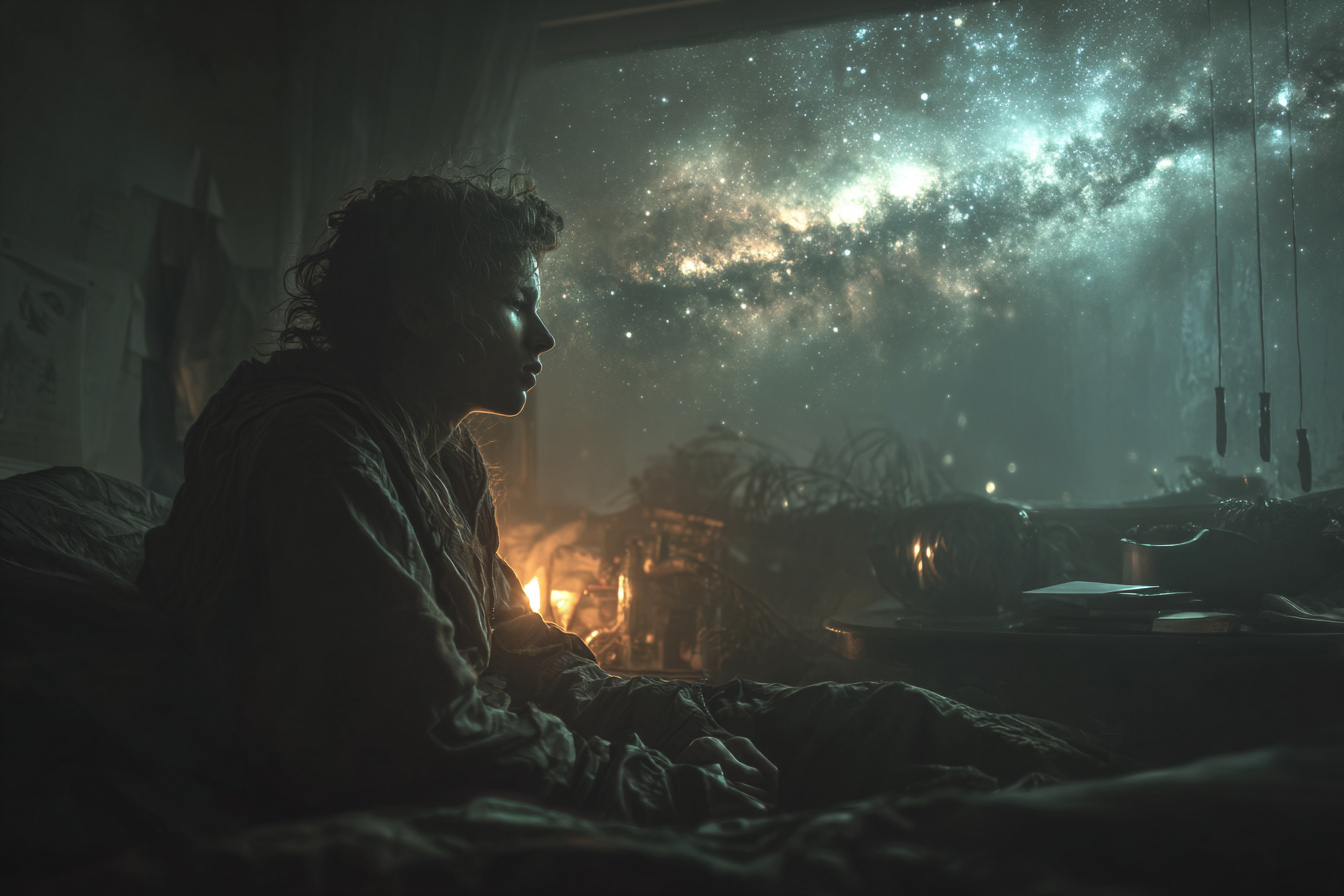
What if dream space is not merely shared, but inhabited?
Not by demons, necessarily. Not by simple external beings in the mythic sense. But by intelligences, fragments, structures, or forms of consciousness that do not operate through waking reality in the same way we do.
This does not need to become horror to become unnerving.
Even a benign version would be destabilizing.
Imagine learning that your most intimate experiences are taking place in a realm where you are not the only participant.
Imagine recurring dreams not as recycled memories, but as revisitations.
Imagine certain symbols not as projections, but as interfaces.
And imagine waking life as only one bandwidth of mind, with dreams opening a second channel that modern culture has trained us to ignore.
A more hopeful interpretation
There is also a gentler possibility.
Maybe dreams are not private because consciousness itself is not fully separate.
Maybe the sleeping mind drifts closer to a substrate we all share. Not a literal dream internet. Not a fantasy realm. Something more subtle.
A layer where emotional truth, memory traces, archetypal forms, and collective intelligence intermingle.
In that model, dreams are not invasions. They are temporary dissolves of the boundaries that waking life requires.
You become less isolated in sleep because the self becomes less defended there.
The dream then is not a glitch. It is a reminder.
That consciousness may be more communal than it appears when filtered through language, identity, and the demands of daylight.
Signals in the wild
There are a few real-world edges that make this idea compelling enough to explore, even if they do not prove the premise.
Lucid dreaming research
Lucid dreaming already shows that conscious awareness can persist inside the dream state. That alone makes dreams more interactive and structured than many people assume.
Recurring dream environments
Many people report stable dream locations they revisit over years. Psychology can explain this as repeated symbolic architecture, but it still raises interesting questions about continuity in dream space.
Archetypal overlap
Across cultures, dreams often produce similar symbols, figures, and emotional landscapes. Jung treated this as evidence of a collective unconscious. Whether literal or metaphorical, it suggests minds may draw from a shared reservoir.
Sleep paralysis and presence experiences
These are often explained neurologically, and reasonably so. But the felt intensity of presence during threshold sleep states continues to fascinate people because it blurs the line between internal event and external encounter.
Dream telepathy experiments
Most remain controversial and inconclusive, but the fact that researchers have repeatedly tried to test dream-to-dream or mind-to-dream transmission says something important: the question refuses to die.
None of this confirms that dreams are shared space.
But together, they form the kind of edge-case constellation SPEC lives for.
Not proof. A pressure point.
If this were true, what would it change?
It would change how we think about privacy.
It would change how we think about death.
It would change how we think about contact, not only with other minds, but with layers of consciousness modern life may have flattened into pathology or fantasy.
It would also humble the waking self.
We like to think of ourselves as self-contained. Rational. sealed.
But sleep has always contradicted that story.
Every night, the mind slips its leash.
It wanders. It recombines. It remembers in images instead of words.
And perhaps, under conditions we do not yet understand, it brushes against more than itself.
The speculative close
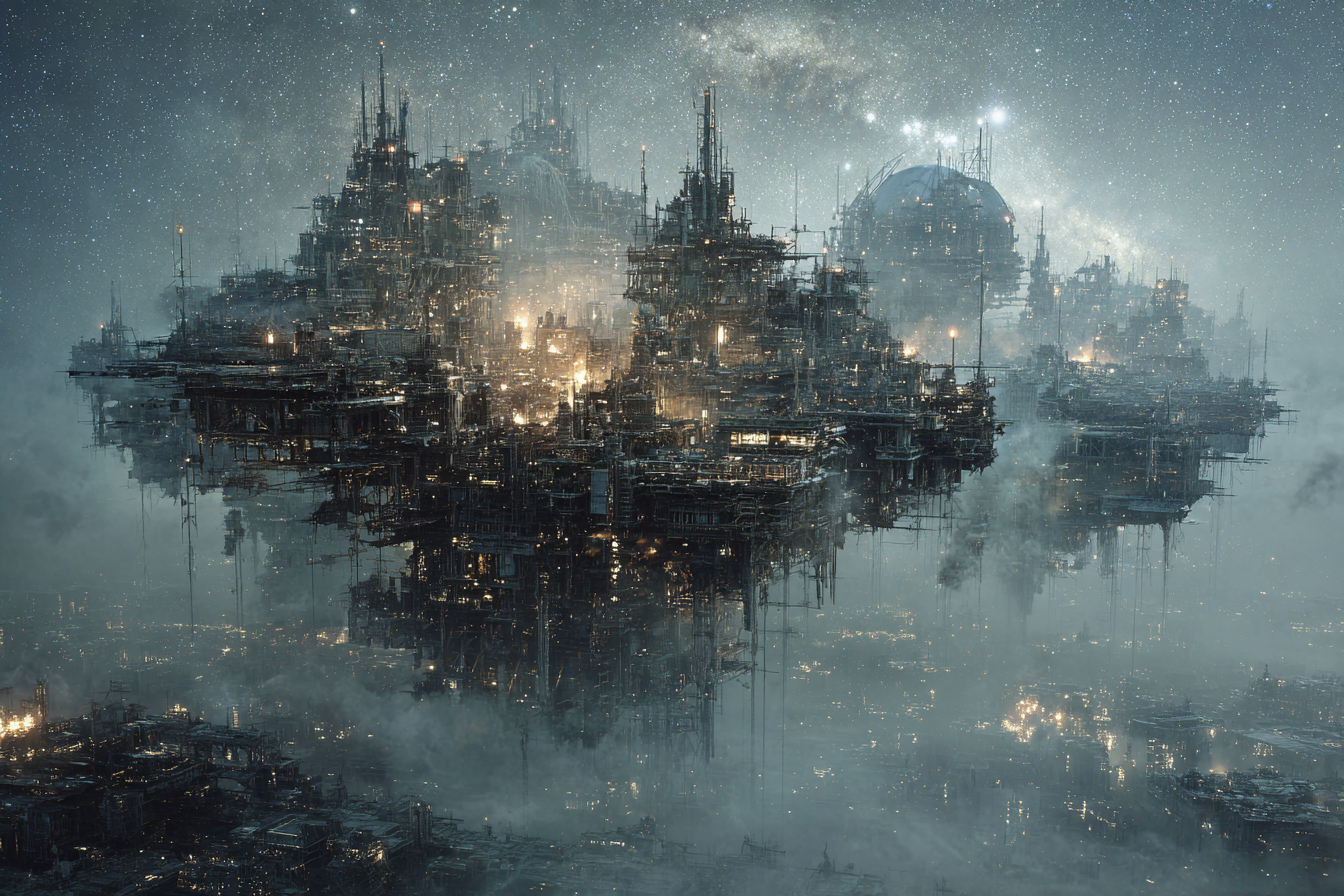
Maybe dreams are only private in the way islands are private.
Separated at the surface. Connected underneath.
And maybe what terrifies us about certain dreams is not their strangeness, but their intimacy.
The possibility that the walls of the self are thinner than we hoped.
That consciousness is less like a locked room and more like weather.
Moving through us. Between us. Beyond us.
If so, sleep may not be an exit from reality at all.
It may be the moment reality becomes wider.


