
Central Question
Imagine that you are still alive three hundred years from now.
Your body has not frozen at one perfect age, but it no longer deteriorates toward death. Damaged tissue can be repaired. Most cancers can be stopped. The processes that once made aging inevitable are now manageable. You still face accident, violence, and choice, but time itself is no longer killing you.
You have crossed the threshold humanity once called immortality.
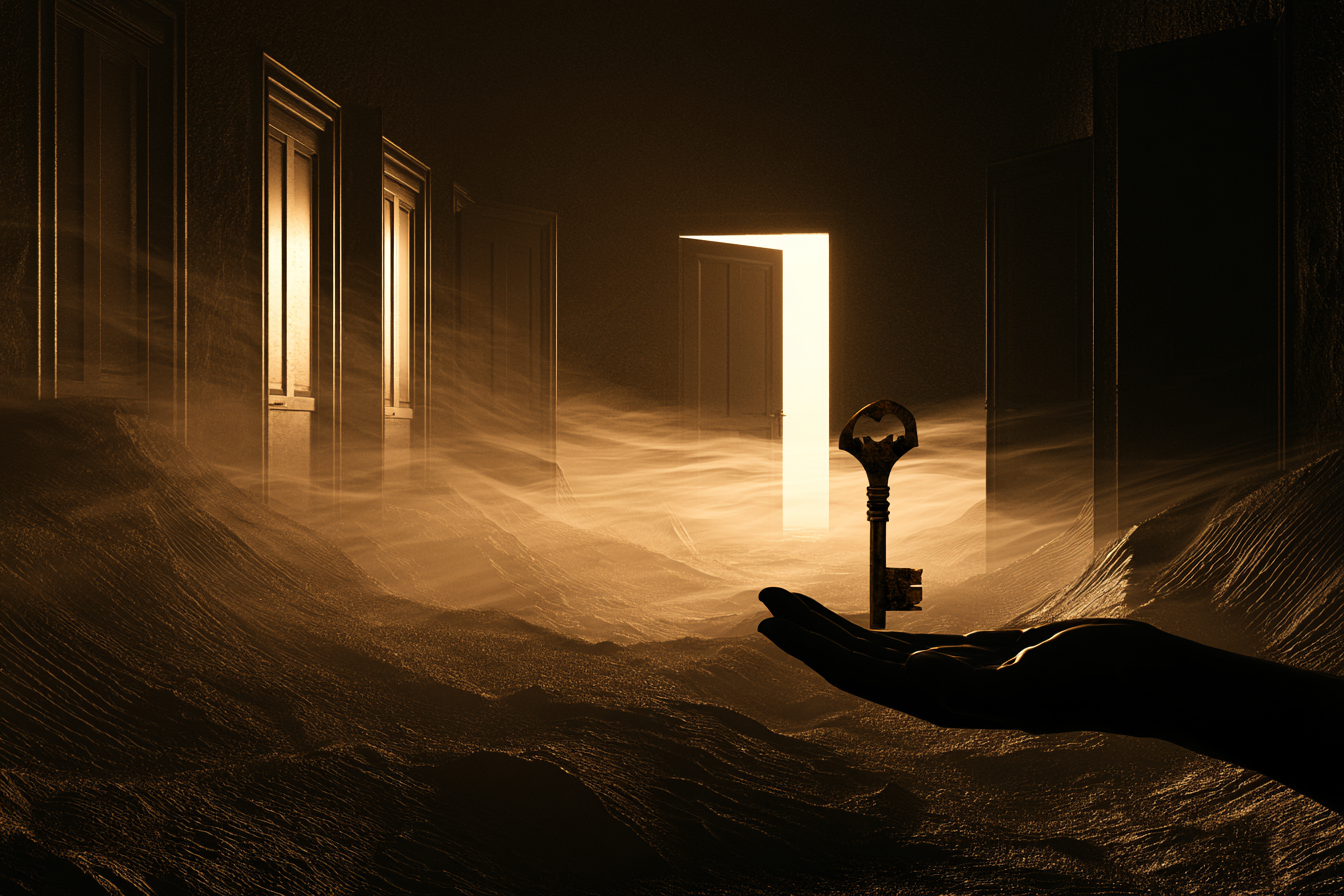
The room around you is quiet. On a table sits a photograph of people who have been gone for two centuries. You remember the afternoon it was taken, although not perfectly. You remember the weather more clearly than one of the faces. You remember who you were beside them, and you know that person no longer exists in quite the same way.
Since then, you have loved other people. You have used other names. You have lived in cities that were rebuilt twice. You have watched political movements rise, harden, and become museum exhibits. There are promises you kept for a century and resentments you carried for longer than the nations in which they began.
The usual question about immortality is whether an endless life would become boring. The deeper question is whether a human being could remain psychologically alive while never permitting any part of life to end.
If we learned how to preserve the body but not how to release grief, identity, possession, power, and the selves we have outgrown, would immortality free us from death—or trap us inside everything death once allowed the world to relinquish?
The Dream We Inherited
Human beings rarely imagine immortality neutrally. We imagine it from inside mortal lives, where time is scarce and death interrupts almost everything. More years would mean more mornings with the people we love, more books, more journeys, more chances to repair a mistake, and more time to become the person we keep postponing.
That longing is not irrational. Death deprives a person of experiences they might still value, and aging often takes health before it takes life. A treatment that prevented dementia, frailty, cancer, and cardiovascular disease would not be a philosophical curiosity. It would relieve enormous suffering.
But this is not what science can currently offer. Aging research has identified a network of interacting biological processes—including genomic instability, cellular senescence, mitochondrial dysfunction, chronic inflammation, and stem-cell exhaustion—but describing those processes is not the same as controlling them. A 2024 demographic analysis of the world’s longest-lived populations found that gains in life expectancy have slowed since 1990 and concluded that radical human life extension remains implausible this century unless biological aging itself can be markedly slowed.
The realistic goal today is healthier longevity: helping people remain physically, cognitively, and socially capable for more of the years they already live. The National Academy of Medicine’s roadmap for healthy longevity emphasizes that this is not only a biomedical project. Longer healthy lives require changes to work, education, housing, health systems, social inclusion, and the distribution of opportunity.
Immortality, then, remains a thought experiment. But it is a useful one because it separates two desires that are often treated as the same. Wanting relief from age-related suffering is not necessarily the same as wanting an existence with no natural ending. One asks medicine to protect life. The other asks life to assume an entirely new shape.
A Body Without an Expiration Date
For this inquiry, immortality does not mean invulnerability. An immortal person could still die in an accident, be killed, or eventually choose to stop treatment. The premise is narrower: a healthy body no longer ages toward an unavoidable biological deadline.
Even that version would transform the architecture of human motivation. Psychological research suggests that what people believe about the time remaining in their lives influences what they value. Socioemotional selectivity theory, developed by Laura Carstensen and colleagues, finds that when time feels limited, people tend to prioritize emotionally meaningful relationships and present experience. When the future feels expansive, exploration, knowledge, and long-range goals become more attractive.
This does not prove how a five-hundred-year-old mind would behave. No such population exists. It does reveal something important, however: mortality is not merely an event waiting at the end of life. The perception of an ending reaches backward and helps organize attention now.
Remove the horizon and familiar priorities may change. An immortal person might invest in forests they expect to walk through in two hundred years. They might study several disciplines deeply, undertake projects too large for a mortal career, or become accountable to ecological consequences that current leaders will never live to see. Long life could make patience rational.
It could also make postponement nearly limitless. Why reconcile today when there is another century? Why choose one craft when every path remains open? Why leave a relationship that has been unhappy for thirty years when thirty years feels like a difficult season rather than a significant portion of life?
Scarcity does not create all meaning. But deadlines convert possibility into decision. An open future may enlarge freedom while weakening the pressure that turns freedom into a life actually lived.
Memory Was Never an Archive
The original fantasy of immortality often treats the mind as a container. If the brain remains healthy, the container simply holds more: a thousand years of faces, languages, skills, griefs, and discoveries. Yet human memory does not behave like a recording system whose success is measured by how much it keeps.
Autobiographical memories are reconstructed through the goals and self-understanding of the present. What people remember shapes who they think they are, but who they think they are also changes the way the past is retrieved and interpreted. Identity depends partly on continuity and partly on revision.
Forgetting is not always a defect in that system. Neuroscientists Blake Richards and Paul Frankland have argued that the balance between persistence and transience helps intelligent decision-making. Letting outdated details lose influence can support flexibility and generalization in a changing environment. More recent work likewise treats some forms of natural forgetting as adaptive neuroplasticity rather than simple storage failure.
This matters because the psychological danger of immortality may not be that every memory remains equally vivid. It may be that an immortal person demands that every former loyalty, wound, role, and self retain authority over the present.
A five-hundred-year-old person would not need perfect recall to feel crowded by the past. A handful of defining betrayals could survive while thousands of ordinary days disappear. A first marriage might remain central to identity long after its details become unreliable. A political humiliation from one century could shape decisions in the next. Memory’s selectivity could make an extended life lighter, but it could also preserve exactly the experiences a person has never learned to reinterpret.
The question is therefore not how many memories a brain can hold. It is whether a person can remain in relationship with their past without remaining ruled by it.
The Difference Between Carrying and Clinging
The phrase “letting go” is often used carelessly. It can sound like an order to forget the dead, erase pain, forgive the unforgivable, or become untouched by what happened. Human grief does not usually work that way.
Contemporary models of bereavement do not require a clean severing from the person who died. Bonds may continue through memory, ritual, values, conversation, and identity. The relationship changes form. In the dual-process model developed by Margaret Stroebe and Henk Schut, adaptation involves movement between attending to the loss and rebuilding life around the world it changed. Grief is not a ladder climbed once. It is an oscillation between carrying what matters and restoring the ability to live.
That distinction would become essential in an immortal life. The person in the three-hundred-year-old photograph need not be discarded. Love does not become pathological because its object is gone. The danger appears when remembrance becomes a veto against every new attachment, or when loyalty to the past requires the present to remain permanently arranged around an absence.
Letting go, in this sense, is not the opposite of remembering.
It is the act of changing what a memory is allowed to demand from the future.
An immortal person might need this skill repeatedly. They would grieve not only people but languages, neighborhoods, professions, nations, ecosystems, moral certainties, and earlier versions of themselves. They might become the last living witness to an era everyone else knows only through history. Their continuity could be a gift, but only if witnessing did not become a claim that the vanished world must be restored forever.

Would Forever Become Empty?
Philosopher Bernard Williams gave one of the most influential arguments against immortality through the fictional case of Elina Makropulos, who lives for centuries and becomes terminally bored. His concern was not merely that she runs out of entertainment. A recognizably continuous person has a character, commitments, and “categorical desires”—the projects and attachments that make continued life worth wanting. Given eternity, Williams argued, those desires would eventually be exhausted. If the immortal changed so radically that entirely new desires always appeared, it becomes less clear whether the same person has survived in the way they originally hoped.
The argument exposes a genuine tension. To want immortality, I must want it to be me who continues. But to endure immortality, I may need to become someone my present self would barely recognize.
Critics have challenged the conclusion that boredom is unavoidable. Human beings revisit pleasures. Curiosity generates new questions. The world changes, new relationships appear, and memory fades. Lisa Bortolotti and Yujin Nagasawa distinguish temporary boredom from a supposedly permanent condition and argue that Williams does not show why an immortal life must become pervasively tedious. Others note that an endless sequence of new art, sciences, places, and persons could continue producing reasons to live.
Both sides can be partly right. Immortality need not be boring in any simple sense. Reality may be too rich, and minds too capable of renewal, for experience to be exhausted. Yet avoiding boredom would not settle the identity problem. An immortal life could remain interesting while becoming unbearably congested with unfinished obligations. The crisis might not be a shortage of novelty, but an inability to grant any chapter the status of finished.
A mortal life contains endings we do not choose. Immortality would remove some of them, but it would not remove the need for endings. It would transfer responsibility for creating them to us.
When Power No Longer Makes Room
So far the inquiry has remained personal. The civilizational consequences may be larger.
Mortality is a brutal mechanism of political and economic turnover, but it is a mechanism. Every ruler, founder, judge, landlord, professor, celebrity, and billionaire eventually loses direct control. Wealth may pass through inheritance and institutions can preserve old hierarchies, so death hardly guarantees justice. It does, however, prevent any individual from possessing an office, fortune, reputation, or grievance forever.
Biological immortality would remove that default release valve. If access began unequally, the wealthy might not merely found dynasties; they could remain their own dynasties. Compounding assets across centuries could turn temporary advantage into a durable biological class. A person born before a reform might still own the infrastructure on which the reform depends. The first generation able to buy longevity could acquire not just more years, but more time in which to acquire everything else.
Bioethicists disagree about what follows. Some argue that inequality is not, by itself, a sufficient reason to deny a life-extending treatment to everyone who could benefit. Others maintain that justice requires broad access because a longer healthy life expands a person’s opportunity to have a complete life. More recent work warns that dramatically unequal lifespans could damage civic equality itself, encouraging the long-lived wealthy to see shorter-lived groups as a different and lesser kind of person.
These arguments reveal why “should immortality exist?” is too blunt a question. A therapy’s value cannot be separated from the institutions distributing it. The same technology could reduce the tragedy of early death or convert economic inequality into unequal membership in time.
Even universal access would not solve the turnover problem. If no one aged out of authority, societies would need deliberate mechanisms for renewal: strict term limits, periodic redistribution, sunset clauses for institutional control, limits on land and capital accumulation, recurring constitutional revision, and protected space for new generations to govern a world they did not inherit from people who refuse to leave it.
Without such systems, civilization might continue accumulating knowledge while losing the ability to change its mind.

The Frame Shift: Death Has Been Doing More Than Ending Us
The familiar assumption is that immortality changes one variable: the number of years a person receives. Everything else—love, identity, ownership, ambition, grief, government—simply continues across a longer timeline.
The crack in that frame is that mortality has never been only a number. It is woven into the turnover of roles, the urgency of decisions, the structure of generations, and the expectation that possession is temporary. Death ends lives, but it also ends tenures. It interrupts monopolies of memory. It prevents a single self from making an unlimited claim on the future.
Once biological aging is removed, those endings do not disappear as human needs. They reappear as design problems.
An immortal civilization would not merely need technologies of preservation. It would need technologies of release.
Some would be legal: offices that expire even when officeholders do not, wealth that must recirculate, and institutions that cannot be owned indefinitely. Some would be cultural: respected ways to complete a career, leave a community, dissolve a centuries-long partnership, relinquish a public identity, or step outside history for a while without treating every departure as failure. Some would be psychological: practices for revising a life story without falsifying it, and for keeping love while releasing the demand that the world remain as it was.
This changes the central fear. The tragedy of immortality may not be that a person lives too long. It may be that nothing they touch is ever allowed to become complete.
Return to the photograph on the table. The question is no longer whether you can remember every face. It is whether those faces can remain part of you without occupying every chair. The past need not vanish. It needs a form that allows the present to have guests.
What a Livable Forever Would Require
If radical life extension ever moves from thought experiment to policy, the engineering challenge will arrive first. Can aging be slowed safely? Can cognitive health be preserved? Can cancer risk be controlled? Can the treatment be made available beyond a small elite? Those questions are difficult enough.
But a civilization focused only on cellular repair could produce bodies prepared for centuries and cultures still designed for eight decades. Education would no longer belong mainly to youth. A single career could not define an adult life. Marriage, parenthood, retirement, inheritance, punishment, and citizenship would need to be reconsidered. A two-hundred-year prison sentence means something different when the prisoner may live for a thousand years. So does a promise made at twenty-five.
A livable long life might require several forms of renewal:
- Psychological renewal. People would need permission to reinterpret old identities without denying responsibility for them. Continuity could not mean permanent sameness.
- Relational renewal. Commitments might remain profound while allowing periodic recommitment, revision, or humane completion. Endless duration could not substitute for active consent.
- Civic renewal. Authority would need to expire by rule rather than biology. No one should own the future merely by surviving into it.
- Economic renewal. Wealth, land, and access to longevity would require structures that prevent time itself from becoming the strongest engine of inequality.
- Meaningful exit. If ending treatment remained possible, societies would need to distinguish a considered completion of life from abandonment, coercion, despair, or pressure placed on those deemed too costly to keep alive.
None of these proposals can be tested against truly immortal humans. They are philosophical extrapolations from present psychology, institutions, and ethics. The point is not to draft a constitution for eternity. It is to notice that extended lifespan would require more than extending today’s arrangements.
The body could be maintained indefinitely while a marriage, office, worldview, or identity should not be.
Learning to End Without Disappearing
The most coherent interpretation is neither that immortality would save humanity nor that it would inevitably destroy meaning. More time is a real good when it preserves a life a person still has reason to value. Boredom is not guaranteed, wisdom is not guaranteed, and grief cannot be projected linearly across centuries as though minds never adapt.
What does appear plausible is that human flourishing depends on a rhythm deeper than the lifespan itself: attachment and release, memory and revision, continuity and renewal. Mortality currently imposes the second half of each pair. It takes people from us, ends our roles, and eventually closes our own story whether or not we are ready.
Defeating biological aging would be an extraordinary act of preservation. It would not teach us how to use preservation wisely.
The mature form of immortality may therefore look less like holding everything forever and more like learning what can continue only by changing form. A person may remain while a profession ends. Love may remain while a relationship completes. Memory may remain while resentment loses jurisdiction. Civilization may remember its founders without allowing them permanent ownership of what comes next.
In that sense, letting go is not a concession to death. It is one of the ways life keeps moving while something survives.
The Life in Front of Us
We do not need immortality to confront this problem. Mortal people already confuse continuity with sameness. We remain loyal to identities that no longer fit, protect institutions after their purpose has vanished, and carry pain as proof that love mattered. We sometimes treat an ending as evidence that everything before it failed.
The thought experiment makes those habits visible by stretching them across centuries. It asks whether we want more life or merely more time in which to avoid deciding what our life has become.
There is no need to romanticize death. An ending can give shape to a life without making cancer, dementia, or premature loss desirable. The fact that mortality performs certain social and psychological functions does not mean suffering should be preserved so those functions continue. It means that if technology removes the mechanism, wisdom must take over its work.
Perhaps humanity will never become biologically immortal. Perhaps the far more realistic future is one of longer healthspans and gradually altered expectations. Even that future will ask versions of the same questions: How long should power last? How often can a person begin again? What do generations owe one another? What must be remembered, and what must be released from control?
The dream of immortality begins with a refusal to lose life. A livable immortality would require a subtler achievement: learning how to let parts of life end without treating every ending as death.
If forever became possible, what would you choose to carry and what would you finally have to set down so that something new could live?
What do you think? Drop your thoughts in the comments ...
More in Deep Think
- Is the Self Temporary or Eternal? — Examines what would actually need to persist for a changing person to remain the same self, clarifying the identity problem hidden inside immortality.
- Could a Civilization Build Heaven? — Asks whether technology can create a lasting utopia, and whether eliminating suffering would also require changes in meaning, desire, and human nature.
- How Do You Preserve Knowledge Without Preserving the Mistakes That Broke the World? — Explores the difference between carrying the past forward and giving the past permanent control over the future.
Sources / Receipts
- Carlos López-Otín, Maria A. Blasco, Linda Partridge, Manuel Serrano, and Guido Kroemer, “Hallmarks of Aging: An Expanding Universe,” Cell 186, no. 2 (2023): 243–278. Reviews twelve interconnected biological hallmarks of aging and the criteria by which interventions might slow, stop, or reverse aspects of them.
- S. Jay Olshansky, Bradley J. Willcox, Lloyd Demetrius, and Hiram Beltrán-Sánchez, “Implausibility of Radical Life Extension in Humans in the Twenty-First Century,” Nature Aging 4 (2024): 1635–1642. Analyzes mortality trends in long-lived populations and argues that radical extension is implausible without major advances that slow biological aging.
- National Academy of Medicine, Global Roadmap for Healthy Longevity (Washington, DC: National Academies Press, 2022). Treats healthy longevity as a whole-of-society project involving health, work, education, infrastructure, inclusion, and equity.
- Laura L. Carstensen, Derek M. Isaacowitz, and Susan T. Charles, “Taking Time Seriously: A Theory of Socioemotional Selectivity,” American Psychologist 54, no. 3 (1999): 165–181. Reviews evidence that perceived time horizons shape social goals and motivational priorities.
- Anne E. Wilson and Michael Ross, “The Identity Function of Autobiographical Memory: Time Is on Our Side,” Memory 11, no. 2 (2003): 137–149. Reviews the reciprocal relationship between autobiographical memory and personal identity.
- Martin A. Conway and Christopher W. Pleydell-Pearce, “The Construction of Autobiographical Memories in the Self-Memory System,” Psychological Review 107, no. 2 (2000): 261–288. Presents a model in which autobiographical memories are constructed through interaction between stored knowledge and the current working self.
- Blake A. Richards and Paul W. Frankland, “The Persistence and Transience of Memory,” Neuron 94, no. 6 (2017): 1071–1084. Argues that both remembering and forgetting support adaptive decision-making.
- Tomás J. Ryan and Paul W. Frankland, “Forgetting as a Form of Adaptive Engram Cell Plasticity,” Nature Reviews Neuroscience 23 (2022): 173–186. Proposes that some natural forgetting reflects environmentally responsive changes in memory accessibility.
- Margaret Stroebe and Henk Schut, “The Dual Process Model of Coping with Bereavement: Rationale and Description,” Death Studies 23, no. 3 (1999): 197–224. Describes adaptation to bereavement as movement between loss-oriented and restoration-oriented coping.
- Bernard Williams, “The Makropulos Case: Reflections on the Tedium of Immortality,” in Problems of the Self (Cambridge University Press, 1973), 82–100. Develops the classic argument that an immortal life threatens either inexhaustible desire or recognizable personal identity.
- Lisa Bortolotti and Yujin Nagasawa, “Immortality Without Boredom,” Ratio 22, no. 3 (2009): 261–277. Challenges the claim that immortal life must necessarily become pervasively boring.
- Michal Masny, “Healthspan Extension, Completeness of Life and Justice,” Bioethics 37, no. 3 (2023): 239–245. Argues that justice can support broad access to healthspan-extending technologies.
- Michael Blake, “Life Extension and Civic Virtue,” AMA Journal of Ethics 27, no. 12 (2025): E853–E858. Examines how radically unequal access to life extension could weaken civic equality and moral recognition.


Discussion