
The Central Question
When the brain goes silent, where does the mind go?
For most of modern science, the answer seems obvious.
Nowhere.
The mind does not go anywhere because the mind is what the brain does.
When the brain stops functioning, consciousness fades.
When circulation collapses, oxygen disappears.
When coordinated neural activity breaks down, the self dissolves.
The lights go out.
That is the familiar model.
Clean.
Material.
Grounded.
And in many ways, deeply reasonable.
But near-death experiences complicate the simplicity of the answer.
Not because they prove an afterlife.
That would be too easy.
Not because every account should be accepted literally.
That would be careless.
Near-death experiences matter because they press on a boundary science has not fully resolved:
What is the relationship between the brain and consciousness?
Is the brain a producer of mind?
A receiver of mind?
A filter of mind?
A temporary organizer of something deeper?
Or is consciousness an emergent process that can become radically altered during the biological transition we call dying?
This is the real question beneath the cases, the testimonies, the operating rooms, the tunnels of light, the life reviews, the out-of-body claims, the peace, the terror, the return.
Not simply:
Do near-death experiences prove life after death?
But:
Why do some people report vivid, structured, deeply meaningful experiences precisely when the ordinary systems supporting consciousness appear to be failing?
If the mind becomes brighter near the edge of biological collapse, are we witnessing the brain’s final construction?
Or the brief removal of a boundary we did not know was there?
Death Is Supposed to Be the End of Experience
Most of us imagine death as a switch.
On.
Off.
Alive.
Dead.
Present.
Gone.
A person is speaking, breathing, remembering, reacting, deciding.
Then the body fails.
The heart stops.
The brain loses oxygen.
The person disappears.
This is the intuitive version of death.
It feels obvious because our ordinary experience ties consciousness tightly to the body.
Injury changes the mind.
Sleep removes the world.
Anesthesia turns off awareness.
Brain damage can alter memory, personality, perception, language, impulse control, and identity.
A drug can transform reality.
A seizure can create visions.
A tumor can change belief.
A lack of oxygen can distort perception.
The evidence that the brain matters is overwhelming.
No serious inquiry into consciousness can ignore it.
The brain is not an optional part of human experience.
It is deeply involved in making ordinary awareness possible.
So when someone says they had vivid consciousness during a period of clinical death, the grounded response is not to leap immediately into metaphysics.
It is to ask:
What was the brain doing?
When did the experience occur?
How reliable is the memory?
What drugs were present?
Was there residual activity?
Was circulation partially restored during CPR?
Could the experience have formed during recovery?
Could the mind have reconstructed a narrative afterward?
Could the experience be real to the person without being evidence of consciousness leaving the body?
These questions are not dismissive.
They are necessary.
A mystery becomes stronger when it survives careful questions.
Why This Question Matters Now
Near-death experiences used to sit mostly at the edge of culture.
Spiritual testimony.
Strange memory.
Hospital folklore.
Books about the afterlife.
Private stories whispered by people who came back changed.
But the subject is no longer only anecdotal.
Resuscitation science is changing.
Cardiac arrest is not always the instant endpoint it once was.
People can sometimes be revived after longer periods than earlier generations would have thought possible.
Researchers can monitor brain activity during critical states with more precision.
Studies now examine memories, awareness, EEG patterns, and the timing of consciousness during resuscitation.
At the same time, psychedelic science is reopening questions about the brain’s ability to generate experiences that feel more real than ordinary life.
Ketamine, DMT, and other altered states can produce experiences that overlap with some near-death features.
Out-of-body sensations.
Ego dissolution.
Encounters.
Timelessness.
Brilliant light.
Mystical unity.
Profound emotional transformation.
This matters because we now have multiple doors into the same question.
The dying brain.
The anesthetized brain.
The psychedelic brain.
The dreaming brain.
The traumatized brain.
The meditating brain.
The resuscitated brain.
Each one asks:
How does consciousness change when the ordinary self is disrupted?
And in the background sits the deeper metaphysical question:
Is consciousness created by brain activity?
Or does brain activity normally shape, limit, translate, and localize something more fundamental?
The answer is not settled.
But the question is no longer easy to ignore.
The Brain Production Model
The production model is the most conventional explanation.
In this view, the brain produces consciousness.
Not metaphorically.
Literally.
The self, the inner world, the feeling of being alive, the stream of experience, the sense of leaving the body, the tunnel, the light, the life review, the presence of loved ones, the feeling of peace or unity ... all of it arises from brain activity.
Under this model, near-death experiences are not glimpses of another realm.
They are extraordinary experiences generated by a brain under extreme conditions.
The mechanisms may include oxygen deprivation, carbon dioxide shifts, neurotransmitter release, seizure-like activity, REM intrusion, temporal lobe instability, anesthesia awareness, memory reconstruction, stress chemistry, or disorganized but meaningful brain activity during collapse and recovery.
This model has strength.
It fits what we know about how strongly experience depends on the brain.
It explains why drugs can produce experiences that resemble certain NDE features.
It explains why altered states can feel spiritually real without requiring the experience to come from outside the nervous system.
It allows NDEs to be meaningful without making them metaphysical proof.
The production model says:
The experience is real.
The meaning may be real.
The transformation may be real.
But the source is still the brain.
In this view, the brain at the edge of death may produce one final interior event.
A last dream.
A protective hallucination.
A neurochemical storm.
A memory-saturated reconstruction.
A profound biological farewell.
The dying brain, under this interpretation, does not reveal a world beyond death.
It reveals how powerful the brain can be when its ordinary filters break down.
The Strength of the Grounded Explanation
The grounded explanation should not be treated as boring.
It is astonishing enough.
If the brain can generate a panoramic life review under extreme conditions, that is extraordinary.
If the brain can create a realm of light, peace, encounter, and meaning in the final moments of biological crisis, that is extraordinary.
If consciousness can become hyper-symbolic, deeply emotional, and transformative during the breakdown of ordinary neural regulation, that is extraordinary.
A natural explanation does not make the experience meaningless.
It may make the brain more mysterious.
There is a tendency in spiritual culture to treat brain-based explanations as reductions.
As if saying “the brain was involved” means saying “nothing happened.”
But that is not fair.
The brain is not a trivial object.
It is the most complex known structure in the human body.
It generates worlds every night in dreams.
It constructs color from wavelength.
Sound from vibration.
Selfhood from memory.
Meaning from pattern.
If it also generates near-death experiences, that does not make them cheap.
It means the human mind contains a final symbolic capacity we barely understand.
The production model deserves serious respect because it protects the inquiry from overclaiming.
It says:
Do not mistake intensity for evidence.
Do not mistake transformation for proof.
Do not mistake memory for timestamp.
Do not mistake mystery for survival.
That discipline matters.
Because if near-death experiences are going to teach us anything, they must be studied without turning every light into heaven and every tunnel into proof.
Where the Production Model Strains
But the production model has its own pressure points.
Near-death experiencers often report that the experience felt more real than ordinary reality.
Some describe clear awareness, coherent thought, heightened perception, and emotional clarity, not confusion.
Some report life reviews with intense moral perspective.
Some describe encounters that transform their values for decades.
Some claim perceptions of events that occurred while they were apparently unconscious.
Researchers such as Bruce Greyson have spent decades documenting and measuring these reports, not as proof of survival, but as phenomena requiring explanation.
The harder cases are not simply the ones with light and peace.
The harder cases are the ones that involve apparent perception during periods when ordinary consciousness should be severely impaired.
These reports remain controversial.
Some may be explained by timing errors.
Some may be memory reconstruction.
Some may be details heard before or after the critical period.
Some may be cultural shaping.
Some may be sincere but inaccurate.
But the pressure remains.
If even a small number of cases suggest structured experience under conditions of severely compromised brain function, then the production model must explain not only the content of NDEs, but their timing, clarity, consistency, and aftereffects.
That does not defeat the model.
It sharpens the work.
The grounded explanation is strongest when it does not wave away the hardest cases too quickly.
Because the true question is not whether the brain is involved.
Of course it is.
The true question is whether the brain fully explains the experience.
The Persistence Model
The persistence model begins from a different possibility.
What if consciousness is not produced by the brain in the same way bile is produced by the liver or electricity by a generator?
What if the brain is more like a filter, receiver, limiter, translator, or interface?
Under this interpretation, ordinary waking consciousness is not the full field of mind.
It is the narrowed version that can function through a body.
The brain does not create consciousness from nothing.
It shapes consciousness into a human channel.
A self.
A body.
A location.
A biography.
A stream of attention.
Then, near death, the ordinary filtering system weakens.
The boundary loosens.
The mind expands beyond its normal constraints.
The near-death experience, under this model, is not the final hallucination of the brain.
It is a glimpse of consciousness when the brain’s usual limiting function is disrupted.
This model appears in different forms across philosophy, spirituality, psychical research, and some consciousness studies.
It is speculative.
It is not established science.
But it persists because it speaks to features of NDEs that some people find difficult to reduce to neurochemistry alone.
The clarity.
The coherence.
The transformative power.
The reports of perception during unconsciousness.
The sense that the self becomes more awake, not less.
Greyson’s work belongs here carefully.
Not as proof.
Not as a verdict.
But as a challenge.
His research helped give NDEs a more consistent clinical language. The Greyson scale allowed researchers to compare experiences more systematically rather than relying only on dramatic stories.
That matters.
Because once a phenomenon can be described with more rigor, it becomes harder to dismiss as mere fantasy.
But harder to dismiss is not the same as proven.
The persistence model remains a doorway, not a conclusion.
The Filter Question
The filter model changes the meaning of the brain.
Instead of asking whether the brain creates mind, it asks whether the brain restricts mind.
This is a radical shift.
In ordinary life, the brain may function like a reducing valve.
It narrows the overwhelming field of possible experience into a manageable human world.
You do not perceive all wavelengths.
You do not hear all vibrations.
You do not remember every detail.
You do not attend to every signal.
You experience a curated reality.
A survival interface.
A version of the world shaped by the needs of the organism.
If consciousness were somehow wider than the brain, then the brain’s job might not be to generate awareness from nothing.
It might be to localize awareness into a body.
The near-death experience would then become a temporary failure of localization.
The self loosens.
The boundary dissolves.
The ordinary stream of awareness opens into something larger.
This is philosophically powerful.
It also has a major problem:
How do you test it?
If consciousness is said to exist beyond the brain, what would count as evidence?
What would count against it?
How do you distinguish non-local consciousness from a brain-generated experience that feels non-local?
How do you avoid turning every unexplained report into confirmation?
These questions matter.
A model that cannot be challenged becomes belief.
The persistence model can be meaningful, but it must remain humble.
It asks a serious question.
It does not yet close the case.
The Transitional Model
There is a third possibility that may be the most scientifically useful right now.
Maybe death is not a switch.
Maybe it is a transition.
A process.
A cascade.
The heart can stop, but the body does not instantly become biologically silent.
Circulation fails.
Oxygen drops.
Cells begin to struggle.
Electrical activity changes.
Networks collapse, surge, reorganize, or fragment.
CPR may partially restore blood flow.
Drugs may alter chemistry.
The brain may move through states we do not yet understand.
In this model, near-death experiences do not require consciousness to exist independently of the brain.
But they also do not require the brain to behave normally.
The mind may enter a transitional condition.
Not ordinary waking consciousness.
Not sleep.
Not dream.
Not anesthesia.
Not coma.
Not full death.
Something between categories.
This is where the AWARE II study becomes important.
The study examined cardiac-arrest survivors, memories, awareness, and brain activity during resuscitation. Some survivors reported memories or perceptions associated with the event. In some monitored cases, researchers observed organized EEG patterns during prolonged CPR that are normally associated with cognitive processes.
But the careful point is this:
AWARE II did not prove consciousness exists independently of the brain.
It suggested that the boundary between unconsciousness and death is more complicated than the old switch model.
That is still profound.
Because if death is a process, then consciousness at the edge of death may also be a process.
Not simply on or off.
Not here or gone.
But altered.
Fragmented.
Intensified.
Released.
Constructed.
Or translated through a brain in crisis.
The transitional model does not solve the mystery.
It gives us a better place to study it.
The Strange Biology of the Dying Brain
The dying brain may be more active than older assumptions allowed.
Some research has found surges of organized electrical activity near death, including gamma activity and connectivity patterns associated with conscious processing.
This does not prove that the person was having an experience.
Brain activity is not the same as reported consciousness.
But it does weaken the simplistic idea that the brain always shuts down instantly and cleanly.
The dying brain may not be a fading light.
It may be a storm.
A system under extreme pressure.
When the normal constraints collapse, unusual patterns may emerge.
This matters because it provides a possible bridge between the production model and the transitional model.
A near-death experience may be produced by a brain in a rare transitional state that ordinary neuroscience has barely mapped.
Not a normal brain.
Not a dead brain.
A boundary brain.
A brain caught between failure and recovery.
A brain losing ordinary control and entering a state where memory, emotion, perception, and meaning may combine with unusual intensity.
This would explain why NDEs can feel deeply real without requiring them to be literally external.
It would also explain why they are not random in the way ordinary hallucinations are often assumed to be.
The brain at the edge may be doing something structured.
Not because it is reaching heaven.
But because dying itself may be one of the most extreme altered states available to consciousness.
That is enough to make the question worthy.
Why the Experience Feels More Real Than Real
One of the most striking features of many NDE accounts is the phrase:
More real than real.
People do not simply say they had a strange dream.
They often say they entered a state of clarity.
A wider reality.
A realm where meaning felt direct.
A place where ordinary life seemed dim by comparison.
A skeptic might say this intensity is exactly what the brain can generate under extreme conditions.
Dreams can feel real while they are happening.
Psychedelics can produce overwhelming certainty.
Temporal lobe phenomena can create religious intensity.
Memory can amplify the meaning of an event after survival.
Trauma can burn experience into identity.
The mind is capable of producing conviction.
But the experiencer may respond:
This was not like a dream.
This was not confusion.
This was not fantasy.
This was clearer than waking life.
This tension cannot be resolved by tone alone.
The fact that an experience feels real does not prove its external reality.
But the fact that it can be explained neurologically does not exhaust its meaning.
The “more real than real” quality may be the deepest clue.
Whether brain-generated or not, it suggests that ordinary waking consciousness may not be the only mode in which reality can be experienced.
Maybe the question is not only whether NDEs reveal the afterlife.
Maybe they reveal how narrow ordinary awareness might be.
The Frame Shift: The Brain May Be the Door, Not Just the Room
The assumption is simple:
The brain is the room where consciousness happens.
When the room goes dark, experience ends.
The crack appears when near-death experiences show vividness near collapse.
Not proof.
Pressure.
A strange fact pattern that forces the question open.
The production model says the room creates the light.
The persistence model says the room receives or filters the light.
The transitional model says the room may flicker, surge, and transform before darkness arrives.
The wider lens is this:
The brain may not be easily reduced to one metaphor.
It may be producer, filter, receiver, interface, limiter, generator, and translator depending on which level of consciousness we are describing.
Ordinary awareness may require the brain.
But the deepest nature of consciousness may not yet be fully explained by the brain.
This is not a loophole for certainty.
It is a demand for humility.
The return is quiet.
You think about death differently.
Not as a solved absence.
Not as a proven doorway.
But as a boundary event where the most intimate mystery in existence meets the collapse of the body.
The question is no longer:
Do NDEs prove the afterlife?
The better question is:
What kind of thing is consciousness, if it can become so vivid at the edge of disappearance?
Maybe the brain is not just the room where the mind lives.
Maybe it is also the door through which the mystery enters.
If Consciousness Is Produced
If the production model is correct, near-death experiences remain extraordinary.
They would show that the brain can generate profound spiritual experience during biological crisis.
That does not make them meaningless.
It may reveal that the architecture of the brain contains a hidden mercy.
At the edge of death, the mind may protect itself.
It may flood the person with peace.
It may organize memory into moral vision.
It may transform terror into surrender.
It may create a final symbolic experience so powerful that survivors return less afraid of death.
In this version, the tunnel, the light, the life review, and the encounter are not evidence of another world.
They are evidence of the human brain’s capacity to turn collapse into meaning.
That is still sacred in a grounded sense.
The brain becomes not merely a machine.
It becomes a meaning-making organ capable of producing one last revelation before it fails.
The mystery does not leave.
It relocates.
Not beyond the brain.
Inside the brain.
And that may be stranger than dismissal allows.
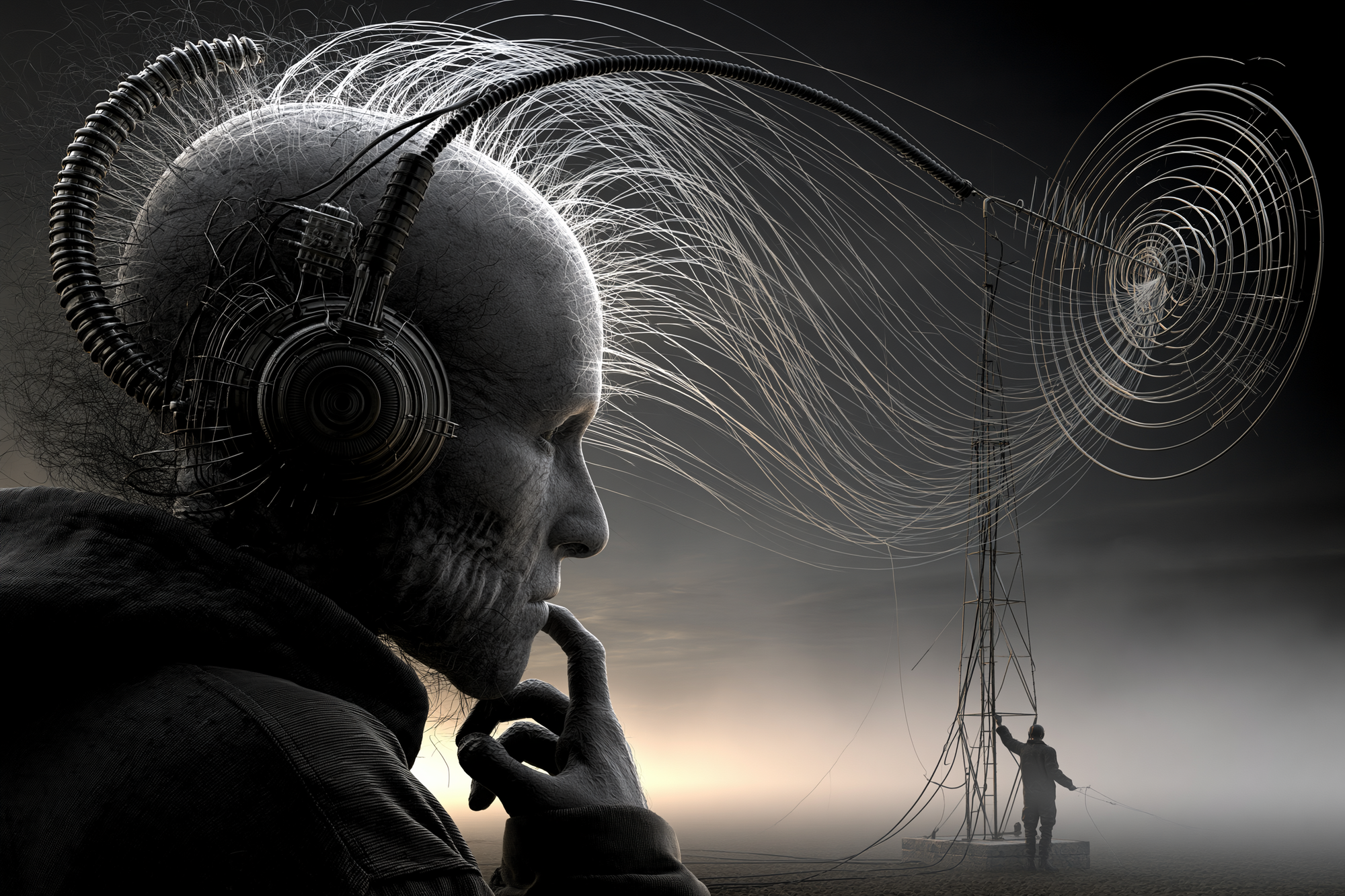
If Consciousness Persists
If the persistence model is correct, the implications are enormous.
It would mean consciousness is not fully dependent on ordinary brain function.
It would mean death is not simply the destruction of mind.
It would mean the brain is a mediator of consciousness rather than its ultimate source.
It would force science, philosophy, religion, and medicine into a new relationship.
But this model carries danger too.
People may rush to certainty.
They may turn every NDE into proof.
They may dismiss neurological explanations too quickly.
They may use testimony as a weapon in religious arguments.
They may sell comfort as evidence.
A true persistence model would need to be more disciplined than belief.
It would need verifiable perception.
Careful timing.
Prospective testing.
Repeatable patterns.
Clear distinctions between testimony, interpretation, and evidence.
Because if consciousness does persist, the subject deserves more rigor, not less.
The possibility is too important to be protected by exaggeration.
If Death Is Transitional
If the transitional model is correct, then death becomes less like a wall and more like weather.
A changing field.
A process with phases.
A biological storm in which consciousness may appear, disappear, alter, return, or transform.
This model may be the most useful bridge because it does not require us to decide too quickly between materialism and survival.
It says:
Study the border.
Map the states.
Measure what happens.
Listen to survivors.
Compare reports.
Record brain activity.
Test perceptions.
Do not assume the old categories are enough.
The transitional model may also change medicine.
If awareness can occur during resuscitation, even rarely, then how we treat patients during cardiac arrest matters.
What is said in the room matters.
Pain management matters.
Sedation protocols matter.
The dignity of the person matters even when they appear absent.
That may be one of the most immediate ethical lessons.
Even before we know what consciousness is, we should behave as if the boundary is not as simple as it looks.
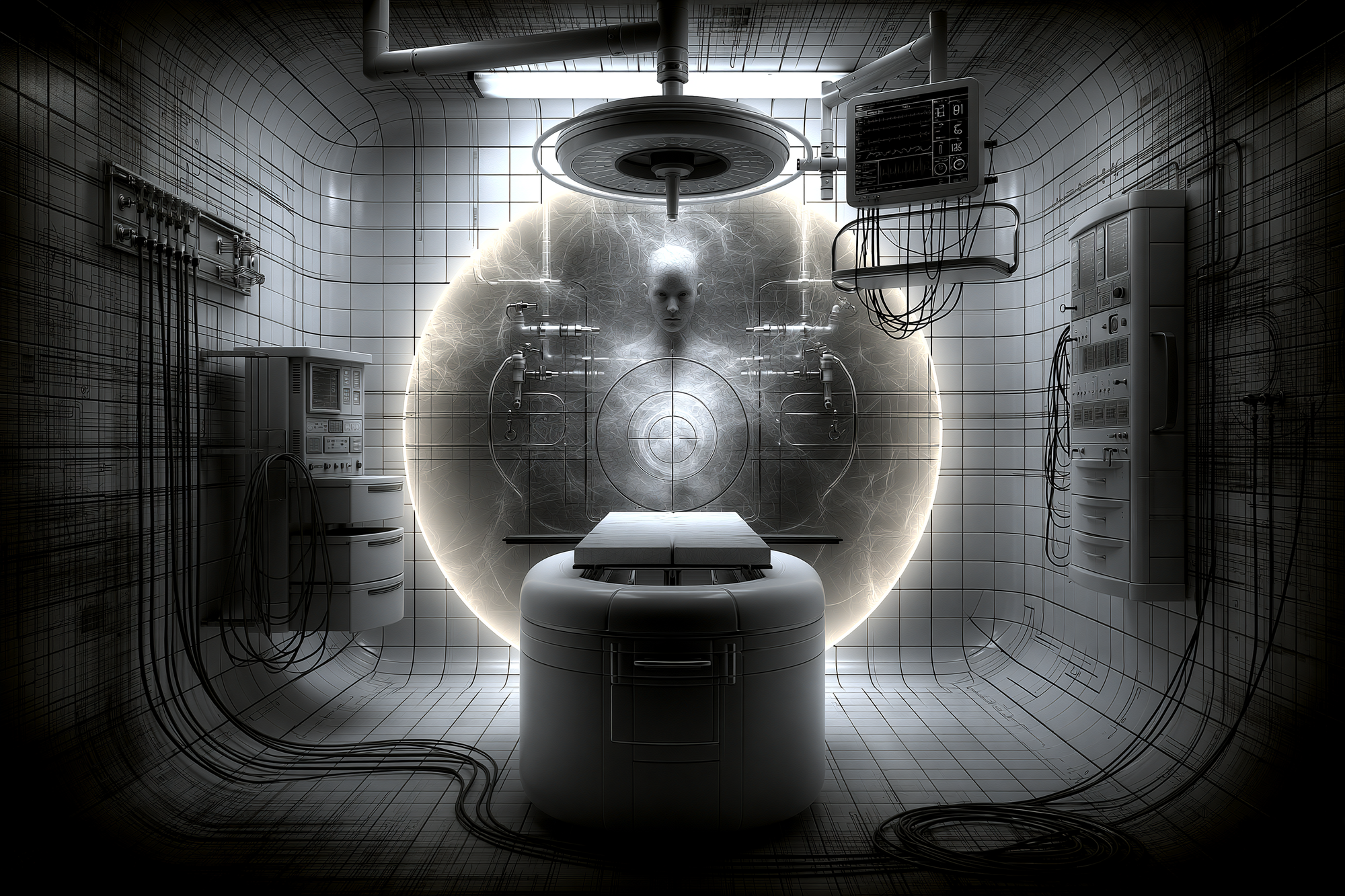
The Experience After the Experience
Near-death experiences matter not only because of what happens during them.
They matter because of what happens after.
Many experiencers report reduced fear of death.
Changed values.
Less materialism.
More compassion.
Greater spiritual sensitivity.
A sense of purpose.
Difficulty reintegrating into ordinary life.
Strained relationships.
A feeling that the world is both more fragile and more meaningful than before.
This is one of the most important clues.
Whatever NDEs are, they can transform people.
A hallucination can transform someone.
A dream can transform someone.
A mystical experience can transform someone.
A trauma can transform someone.
A genuine encounter with a deeper reality, if such a thing occurs, would transform someone too.
The transformation alone does not prove the source.
But it proves the experience has force.
That is why dismissal fails emotionally, even when skepticism is intellectually necessary.
To the person who came back changed, the experience is not an argument.
It is an event.
They are not always trying to prove a theory.
They are trying to live after something impossible-feeling happened to them.
A mature culture should be able to hold both truths:
The experience may not prove what the experiencer thinks it proves.
And the experiencer should not be treated as if nothing happened.
The Mistake on Both Sides
There are two easy mistakes.
The first is to say:
NDEs prove the afterlife.
That goes beyond the evidence.
The second is to say:
NDEs are only hallucinations, so they do not matter.
That goes beneath the experience.
The better position is harder.
NDEs are real experiences reported by people near death, often with profound and lasting effects.
Their causes remain debated.
Some features may be explained by neurobiology.
Some reports raise unresolved questions.
The timing problem is difficult.
The brain’s behavior near death is not fully understood.
The relationship between consciousness and the brain remains one of the deepest unsolved problems in science and philosophy.
That is the disciplined middle.
Not fence-sitting.
Precision.
The unknown does not belong exclusively to believers.
It also does not belong exclusively to skeptics.
It belongs to the inquiry.
The Last Boundary
Death is the one place no living person can fully report from.
Every near-death experience is, by definition, a return.
The person did not remain dead.
The story comes from the border, not from the far country.
That matters.
The border may tell us something real.
But it may not tell us everything.
A person revived from cardiac arrest may have experienced a transitional state of the dying brain.
Or a glimpse of consciousness beyond ordinary embodiment.
Or a memory formed during recovery.
Or some mixture of biology, psychology, meaning, and mystery we do not yet know how to separate.
This is why humility is the only honest ending.
The brain clearly matters.
Near-death experiences clearly matter.
The evidence does not justify certainty.
The mystery does not justify dismissal.
The question remains open, but sharper than before.
When the brain goes silent, maybe the mind disappears.
Maybe the brain generates one final world before the end.
Maybe consciousness persists in a way we cannot yet measure.
Maybe death is not a switch, but a threshold condition where ordinary categories fail.
The unsettling possibility is not simply that consciousness survives.
It is that consciousness may be stranger than either side of the debate has allowed.
If consciousness can become vivid precisely when the systems supporting ordinary awareness are collapsing, what are we seeing?
The brain’s final construction?
Or the brief removal of a boundary we did not know was there?
What do you think? Drop your thoughts in the comments ...
Sources / Receipts
- Bruce Greyson, “The Near-Death Experience Scale: Construction, Reliability, and Validity,” 1983
Useful for grounding Greyson’s role in standardizing NDE research. - Bruce Greyson, After: A Doctor Explores What Near-Death Experiences Reveal About Life and Beyond
Useful for grounding the persistence/filter interpretation while keeping it framed as interpretation rather than proof. - Sam Parnia et al., “AWARE — AWAreness during REsuscitation — A Prospective Study,” Resuscitation, 2014
Useful for grounding early prospective cardiac-arrest awareness research. - Sam Parnia et al., “AWAreness during REsuscitation — II: A Multi-Center Study of Consciousness and Awareness in Cardiac Arrest,” Resuscitation, 2023
Useful for grounding the transitional model, reported memories, and EEG findings during CPR. - Charlotte Martial et al., “Neurochemical Models of Near-Death Experiences: A Large-Scale Study Based on the Semantic Similarity of Written Reports,” Consciousness and Cognition, 2019
Useful for grounding the overlap between NDE reports and drug-state reports, especially ketamine-related similarities. - Christopher Timmermann et al., “DMT Models the Near-Death Experience,” Frontiers in Psychology, 2018
Useful for grounding controlled psychedelic comparison to NDE phenomenology. - Jimo Borjigin et al., research on gamma activity and the dying brain
Useful for grounding the idea that the dying brain may show unexpected organized activity near death. - Pim van Lommel et al., “Near-death experience in survivors of cardiac arrest,” The Lancet, 2001
Useful for grounding one of the most cited prospective NDE studies in cardiac-arrest survivors. - Susan Blackmore, Dying to Live
Useful for a skeptical neuroscience and psychology-informed interpretation of NDEs. - Anil Seth, Being You
Useful for grounding the idea that conscious experience is constructed through embodied predictive processing.


Discussion