
Case Overview: The Event
Some near-death experiences become famous because of what the person claims to have seen.
The Pam Reynolds case became famous because of where she claimed to see it from.
In 1991, Pam Reynolds, an Atlanta-based singer and songwriter, underwent one of the most unusual and high-risk neurosurgical procedures ever associated with a near-death experience.
She had a giant aneurysm near the base of her brain, close to the brain stem. Its location made ordinary surgery extremely dangerous. If the aneurysm ruptured, it could kill her. If surgeons attempted to repair it under normal conditions, that might kill her too.
The surgical solution was radical.
Her body temperature would be lowered.
Her heart would be stopped.
Her breathing would stop.
Blood flow to the brain would be halted.
Brain activity would be monitored.
Her eyes would be taped shut.
Molded speakers would be placed in her ears to deliver clicking sounds used to monitor brainstem function.
The goal was not mystical.
It was surgical.
Doctors needed to create a temporary state of profound physiological standstill so they could safely operate on the aneurysm.
Reynolds survived.
Then she reported something extraordinary.
She said she left her body.
She said she observed the operating room from above.
She described a surgical instrument that looked unlike what she expected.
She reported hearing comments from the surgical team.
She recalled music played during the operation.
She described moving through a tunnel-like environment.
She said she encountered deceased relatives.
She said she was told she had to return.
For many NDE researchers and survival-of-consciousness proponents, the case became one of the strongest modern examples of possible perception beyond normal brain function.
For skeptics, it became a case study in why timing matters.
The dispute is not whether Reynolds had a powerful experience.
She did.
The dispute is not whether the surgery was extreme.
It was.
The dispute is not whether parts of her reported observations appear to correspond with real surgical details.
Some do.
The dispute is whether those perceptions occurred during the period when measurable brain activity had ceased, or whether they occurred earlier or later in the operation, while her brain was still functioning under general anesthesia.
That is the center of the file.
The Pam Reynolds case does not require a forced verdict.
It requires reconstruction.
What was medically documented?
What did she report?
What was allegedly verified?
When could she have perceived it?
What can anesthesia awareness explain?
What remains unresolved?
This is not a simple proof-of-the-afterlife case.
It is more interesting than that.
It is a case about consciousness at the edge of measurable brain function.

What Actually Happened
Pam Reynolds began experiencing neurological symptoms before the operation.
Accounts describe dizziness, loss of speech, and difficulty moving parts of her body. Medical imaging revealed a giant aneurysm near the basilar artery, close to the brain stem.
That location made the case dangerous.
The brain stem controls essential life functions. A major aneurysm in that region is not simply a vascular problem. It is a threat to the core systems that keep the body alive.
Reynolds was referred to Dr. Robert F. Spetzler at the Barrow Neurological Institute in Phoenix, Arizona. Spetzler was known for treating complex aneurysms using advanced neurosurgical techniques, including deep hypothermic circulatory arrest.
This procedure is sometimes called a “standstill” operation.
The term matters.
It does not mean ordinary sleep.
It does not mean a standard surgery under anesthesia.
It means the surgical team temporarily creates conditions in which normal circulation is stopped so surgeons can work on a dangerous vascular structure with reduced risk of catastrophic bleeding.
The general sequence was this:
Reynolds was placed under general anesthesia.
Her eyes were taped shut.
Molded earphones were placed in her ears and secured.
Those earphones delivered clicking sounds used for brainstem auditory evoked potential monitoring, a way to measure whether the brainstem was responding.
Her scalp was opened.
A specialized surgical saw was used to remove a section of skull.
The aneurysm was evaluated.
Because of the aneurysm’s size and danger, the team proceeded toward hypothermic circulatory arrest.
Reynolds was cooled.
Her heart was stopped.
Circulation was halted.
Blood was drained from the head and body to allow the aneurysm to collapse enough for repair.
During the deepest phase, monitors indicated absent brain activity by the measures being used.
After the repair, circulation was restored.
She was rewarmed.
Her heart was restarted.
Her brainstem responses returned.
The operation was successful.
Reynolds survived and recovered.
The medical drama alone is extraordinary.
But the case became famous because Reynolds later described an experience that seemed to overlap with parts of the operation.
She said that at some point she became aware of a sound that seemed to pull her out of her body. She described seeing the operating room from above, with unusual clarity. She reported seeing a surgical instrument that she compared to an electric toothbrush, with interchangeable bits in a case. This became important because the instrument used to open the skull was not the kind of saw a layperson might imagine.
She also reported hearing a comment about her veins and arteries being too small. That detail corresponded with a moment in the procedure when the surgical team was working with femoral blood vessels for bypass access.
Later, she recalled hearing the song “Hotel California” during the closing phase of the operation.
The NDE portion went beyond the operating room.
Reynolds described leaving the surgical environment, entering a light or tunnel-like space, meeting deceased relatives, and encountering a sense of love, knowledge, and reluctance to return.
In the most famous version, she did not want to re-enter her body.
She described the return as sudden, cold, and unpleasant, like being pushed back into ice water.
This is where the case divides.
For proponents, Reynolds perceived accurate surgical details when she should not have been able to perceive anything through ordinary sensory channels.
For critics, the key verifiable details can be placed outside the deepest standstill period.
The surgical saw episode occurred early, during skull opening, before circulatory arrest.
The “small veins and arteries” comment occurred during preparation for bypass, also before the deepest phase.
The “Hotel California” memory occurred late, when the operation was ending, after circulation and warming had resumed.
If that timeline is correct, the case is still strange, but different.
It becomes a case of possible awareness under anesthesia, altered perception, memory formation, and later NDE interpretation.
Not necessarily perception during a brain-off state.
The deepest mystery depends on chronology.

Key Claims and Evidence
The Pam Reynolds case has several evidence layers.
They must not be collapsed into one.
There is the medical condition.
There is the surgical procedure.
There is the monitoring.
There is Reynolds’s testimony.
There are the allegedly verified details.
There is the timing dispute.
There are NDE interpretations.
There are skeptical explanations.
Each layer has a different evidentiary strength.
What Is Documented
The strongest documented elements are:
- Pam Reynolds had a giant aneurysm near the brain stem.
- She underwent surgery in 1991 at the Barrow Neurological Institute in Phoenix.
- The lead neurosurgeon was Robert F. Spetzler.
- The procedure involved deep hypothermic circulatory arrest.
- Reynolds was placed under general anesthesia.
- Her eyes were taped shut.
- Molded earphones were placed in her ears for brainstem auditory evoked potential monitoring.
- During the deepest phase, her heartbeat and breathing were stopped, circulation was halted, and neurological monitoring indicated profound inactivity.
- Reynolds survived the operation.
- She later reported a detailed near-death experience.
- Her account was presented by cardiologist Michael Sabom in Light & Death.
- Her case became one of the most cited examples in debates over NDEs and survival of consciousness.
- Critics later argued that the verifiable perceptions occurred outside the deepest standstill phase.
- Anesthesiologist Gerald Woerlee argued that hearing and anesthesia awareness could explain the auditory details.
- The case remains disputed because the subjective experience cannot be time-stamped with certainty.
The Medical Condition
Reynolds’s aneurysm was not a minor condition.
It was a dangerous vascular abnormality near the base of the brain. The danger was not only that the aneurysm could rupture. Its location made surgical access extremely difficult.
This matters because the operation was not ordinary.
The case’s power depends on the extremity of the medical setting.
A patient under routine anesthesia reporting a strange dream is one kind of file.
A patient undergoing deep hypothermic circulatory arrest, with brainstem monitoring and blood flow interruption, is another.
That does not prove survival of consciousness.
But it raises the threshold of seriousness.
The medical context is part of why the case has remained influential.
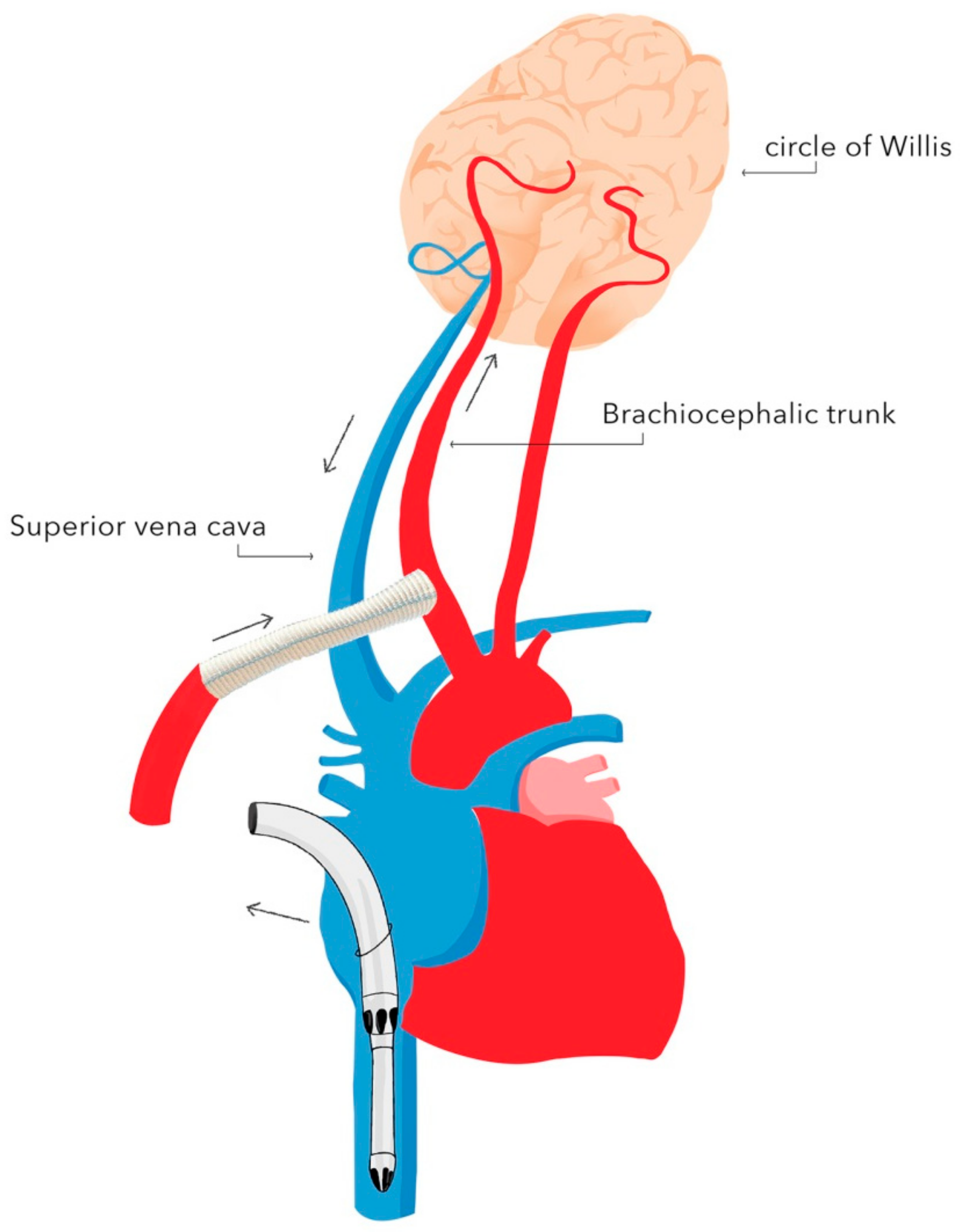
The Standstill Procedure
Deep hypothermic circulatory arrest is sometimes used in rare, high-risk procedures where blood flow must be stopped for a limited time.
The body is cooled to reduce metabolic demand.
The heart is stopped.
Circulation is halted.
In Reynolds’s case, the surgical goal was to make the aneurysm operable by temporarily eliminating the blood pressure and flow that made it so dangerous.
This is not the same thing as permanent death.
The procedure is controlled, temporary, and reversible.
But it creates a state close enough to clinical death that the case became central to near-death research.
The key question is not whether Reynolds was permanently dead.
She was not.
The question is whether any part of her reported conscious experience occurred during the interval when the brain was not producing measurable activity by the monitors in use.
That remains the hard question.
The Monitoring
The monitoring is one of the strongest parts of the case.
Reynolds was not simply under anesthesia with no neurological data.
She was monitored with brainstem auditory evoked potentials. These involve clicking sounds delivered through earphones while clinicians measure the brainstem’s response.
The earphones themselves are important.
Supporters argue that because her ears were occupied with loud clicking sounds and her eyes were taped, normal seeing and hearing should have been blocked or severely limited.
Critics respond that the earphones did not necessarily eliminate all hearing and that some of the reported auditory details could have been perceived during periods of partial awareness under anesthesia.
This is one of the most important tensions.
The monitoring makes the case stronger.
But it also creates the skeptical pathway.
Because if one knows when the brainstem responses were present or absent, one can ask whether the reported perceptions occurred before, during, or after that loss of response.
The Operating Room Observations
The most famous operating-room observations include:
- the sound that seemed to begin the out-of-body experience;
- the surgical saw description;
- the interchangeable blades or bits;
- the comment about small veins and arteries;
- the later memory of “Hotel California.”
These are the details often described as veridical, meaning they corresponded to real elements of the operation.
The saw description is compelling because Reynolds reportedly compared it to an electric toothbrush rather than a normal saw.
The small-vessels comment is compelling because it matched an actual surgical issue during femoral access.
The music memory is compelling because it corresponded to a real song played during the operation.
But timing is everything.
If these details occurred while Reynolds was in the deepest standstill phase, the case becomes more difficult for conventional neuroscience.
If they occurred before cooling, during preparation, or after rewarming, conventional explanations become more plausible.
The operating room details are strong as reported correspondences.
They are weaker as proof of consciousness during brain inactivity unless they can be precisely tied to that interval.

The NDE Content
Reynolds’s experience also contained classic NDE elements:
- leaving the body;
- heightened clarity;
- movement toward light;
- tunnel-like transition;
- deceased relatives;
- reluctance to return;
- a sense of being told she had to go back;
- a difficult re-entry into the body.
These features are consistent with many NDE accounts.
That matters because her experience was not only a set of operating-room details. It followed a broader pattern seen in near-death literature.
Supporters argue that the pattern suggests consciousness can operate independently of normal brain function.
Skeptics argue that similar patterns can arise from brain states, anesthesia, memory construction, oxygen changes, cultural expectations, dreamlike cognition, and the mind’s response to trauma.
The NDE content is powerful.
But unlike the operating-room details, it is not externally verifiable.
It belongs to testimony, meaning, and interpretation.

The Timing Dispute
The timing dispute is the core of the case.
Many popular retellings compress the story into a simple claim:
Pam Reynolds saw and heard the operation while her brain was flatlined.
That statement may be too broad.
The more careful version is:
Pam Reynolds reported a complex NDE during an operation that included a period of profound brain inactivity, and some of her reported observations corresponded with surgical events. Critics argue that the verifiable observations can be placed before or after the deepest brain-inactive interval.
That difference matters.
A case can be fascinating and still be overstated.
The strongest responsible question is not:
Did Pam Reynolds prove life after death?
The stronger question is:
Can any verifiable perception in her account be securely placed during the period of deepest hypothermic circulatory arrest?
If the answer is yes, the case becomes extraordinary.
If the answer is no, the case remains significant, but not decisive.
The Anesthesia Awareness Hypothesis
Anesthesia awareness is the leading skeptical explanation.
In rare cases, patients under anesthesia may have some awareness of sounds, sensations, or events without being able to move or speak, especially if paralytic drugs are used.
Woerlee argued that Reynolds could have heard sounds and speech during periods of partial awareness, even with earphones in place. He also argued that the verifiable auditory fragments are better explained through hearing than through a disembodied mind.
This explanation is not dismissive in the shallow sense.
It takes the reported perceptions seriously.
It asks whether they could have occurred through ordinary sensory channels during imperfect or partial anesthesia.
Its strength is that it directly targets the verifiable fragments.
Its weakness is that it must account for Reynolds’s subjective report of clarity, the broader NDE sequence, and the unusual surgical conditions.
It also does not fully settle the case unless the timeline is accepted.
The Survival Hypothesis
The survival interpretation argues that Reynolds’s consciousness separated from her body and perceived events during a period when her brain could not support ordinary awareness.
This interpretation is powerful because it addresses the whole experience as Reynolds described it: operating-room observation, movement beyond the body, encounter with deceased relatives, and return.
Its strength is that it honors the phenomenology of the case.
Its weakness is evidentiary.
It requires stronger timing certainty than the public record cleanly provides.
A survival-of-consciousness claim cannot rest only on the fact that the operation included a brain-inactive interval.
It must show that the accurate perceptions occurred during that interval.
That is the unresolved hinge.
Points of Tension
The case remains famous because every simple reading leaves something out.
The Operation Was Extreme, But Not Permanent Death
Reynolds was brought into a temporary, medically controlled standstill state.
That matters.
Her body was cooled.
Her heart was stopped.
Circulation was interrupted.
Brain activity, by the monitors used, reached profound inactivity.
But she was not permanently dead.
She was in a reversible surgical condition created to preserve life.
This distinction matters because popular retellings often turn “clinical death” into a more final condition than it was.
The case is extraordinary enough without exaggeration.
The Brain Was Monitored, But Monitoring Has Limits
Brainstem auditory evoked potentials and EEG monitoring are powerful tools.
They indicate whether certain measurable brain responses are present.
But a monitor is not identical to consciousness itself.
A flat or absent signal means no detectable activity by that method, at that time, in that measured system.
It does not automatically answer every philosophical question about awareness.
At the same time, one cannot simply ignore the monitors.
If there was no measurable brainstem response during the deepest phase, any claim of perception during that interval demands serious attention.
The monitoring both strengthens and complicates the case.
Accurate Details Matter, But Timing Matters More
The saw description matters.
The small-vessels comment matters.
The music matters.
But these details do not all carry the same weight unless we know when they were perceived.
The strongest version of the case says Reynolds perceived operating-room details while her brain was unable to support consciousness.
The skeptical version says the details were perceived during lighter or earlier phases of anesthesia, then later woven into the NDE memory.
That is why timing is the battlefield.
The case rises or falls not on whether she remembered something real, but on when she remembered perceiving it.
Earphones Blocked Hearing, But Maybe Not Completely
Supporters often point out that Reynolds’s ears were fitted with molded speakers producing loud clicks.
This seems to make normal hearing unlikely.
But critics argue that the system may not have completely blocked all sound, especially speech or music occurring during periods of partial awareness.
The earphones are important evidence.
But they are not an absolute seal against all auditory perception.
This makes the auditory details intriguing, but not decisive.
The OBE Description Is Powerful, But Not Fully Testable
Reynolds described floating above the operating room and seeing the scene with unusual clarity.
That experience is powerful.
It is also hard to test after the fact.
No hidden visual target was placed above the operating table.
No instrument verified an external point of perception.
The visual claim rests on her account and the matching of certain details.
That does not make it worthless.
It places it in the testimony category.

The NDE Pattern Is Consistent, But Interpretation Is Open
Her tunnel-like movement, relatives, light, reluctance to return, and difficult re-entry match common NDE patterns.
For proponents, this suggests a real transition beyond bodily consciousness.
For skeptics, it suggests a recognizable brain-mind response under extreme conditions.
The pattern is important.
The meaning is unresolved.
The Case Is Often Overstated By Both Sides
Believers sometimes simplify the case into “Pam saw the surgery while brain dead.”
Skeptics sometimes simplify it into “she just heard things under anesthesia.”
Both framings flatten the case.
The better file is more precise:
Pam Reynolds underwent a rare operation that included a period of profound brain inactivity. She later reported an elaborate NDE with some veridical elements. The exact timing of those elements remains disputed.
That is the case.
And that is enough.
Perspectives and Explanations
The Survival of Consciousness Interpretation
The most expansive interpretation is that Reynolds’s consciousness separated from her body and perceived events while her brain could not support ordinary awareness.
This view treats the operating-room observations and the encounter with deceased relatives as parts of one coherent NDE.
The strength of this interpretation is that it matches Reynolds’s own experience.
She did not describe a normal dream.
She described a clear, structured encounter that included apparent perception from outside her body.
The weakness is that the external verification depends heavily on timing.
If the verifiable details occurred before or after the deepest standstill phase, the case becomes less decisive as survival evidence.
Anesthesia Awareness
The strongest conventional explanation is anesthesia awareness.
Under this view, Reynolds may have become partially aware during parts of the operation, heard sounds or speech, and later integrated those perceptions into a larger NDE framework.
This explanation can address several reported details:
- the sound associated with the surgical saw;
- the comment about small blood vessels;
- the music heard near the end;
- the sense of paralysis or inability to respond;
- the later memory of operating-room events.
The strength of this interpretation is that it does not dismiss the observations.
It explains them through known medical possibilities.
The weakness is that it must account for how a patient under deep anesthesia, with eyes taped and earphones in place, formed such vivid memories and placed them inside a meaningful NDE sequence.
Memory Reconstruction
Another explanation is memory reconstruction.
After surgery, Reynolds may have combined real sensory fragments, unconscious auditory processing, preoperative knowledge, later conversations, and NDE imagery into a coherent narrative.
This does not mean she lied.
Memory is not a recording.
It is reconstruction.
The mind organizes fragments into story.
Under trauma, anesthesia, and near-death conditions, that reconstruction may become especially vivid and meaningful.
The strength of this view is that it explains how accurate and inaccurate elements might coexist.
The weakness is that it can become too broad if used to explain away every difficult detail.
Brain-Based NDE Model
A brain-based model interprets the experience as the result of extreme physiological stress, anesthesia drugs, altered oxygen and carbon dioxide dynamics, sensory deprivation, memory processes, neurotransmitter activity, and the brain’s response to threat.
This model can explain many common NDE features:
- tunnel imagery;
- light;
- out-of-body perspective;
- life review;
- encounters with beings or relatives;
- peace;
- reluctance to return;
- altered time;
- heightened clarity.
The challenge is that Reynolds’s case includes a period of profound monitored brain inactivity.
A brain-based model must either place the experience before or after that interval, or explain how memory could form around it.
Nonlocal Consciousness Hypothesis
A more open-ended interpretation is that consciousness may not be fully reducible to measurable brain activity.
This does not necessarily mean an afterlife in a religious sense.
It could mean that the brain acts as a receiver, filter, interface, or local expression of a deeper consciousness field.
The Pam Reynolds case is often cited in this wider argument because it seems to challenge the assumption that consciousness always requires normal brain function.
This interpretation is philosophically powerful.
But scientifically unresolved.
It needs more than one famous case.
It needs repeatable evidence, controlled targets, better time-stamping, stronger monitoring, and prospective study.
The Boundary Case Interpretation
The most balanced view is that Pam Reynolds is a boundary case.
It does not close the debate.
It sharpens it.
The case shows how hard it is to study consciousness at the edge of death because three timelines overlap:
- the medical timeline;
- the monitoring timeline;
- the subjective timeline.
The medical timeline can be reconstructed.
The monitoring timeline can be measured.
The subjective timeline must be reported from memory.
The mystery lives in the gap between them.
Context and Pattern Recognition
The Pam Reynolds case belongs to the larger field of near-death studies, but it stands apart from many accounts because the medical setting was so unusual.
Many NDEs occur during cardiac arrest, trauma, drowning, surgery, or sudden collapse.
Those cases often lack detailed monitoring.
Reynolds’s case had monitoring.
That made it famous.
But it also made the case more vulnerable to detailed critique.
The better the documentation, the more precise the questions become.
That is how real investigation works.
The case also reveals a recurring pattern in NDE debate:
The public wants a verdict.
Science wants mechanisms.
Witnesses want their experience respected.
Skeptics want timing and controls.
Philosophers want definitions of consciousness.
Spiritual readers want meaning.
Physicians want medical accuracy.
The Pam Reynolds case sits at the intersection of all those needs.
That is why it remains so difficult.
It is not only about what happened in an operating room.
It is about what kind of evidence we require before changing our model of mind.
The case also shows the problem of retrospective investigation.
No one placed hidden visual targets in the operating room to test out-of-body perception.
No one knew this would become one of the world’s most cited NDE cases.
The data were collected for medical survival, not for consciousness research.
That limits what the case can prove.
But it also makes the case human.
A woman entered surgery to survive.
She returned with an experience that neither medicine nor metaphysics could easily contain.

Implications: Reality Check
If the skeptical explanation is correct, the Pam Reynolds case still matters.
It would show how anesthesia awareness, sensory fragments, memory, trauma, and NDE imagery can combine into a powerful and meaningful experience.
That would not make the experience fake.
It would make it a profound event generated through the brain and body under extraordinary stress.
If the survival interpretation is correct, the implications are enormous.
It would mean consciousness can perceive, remember, and experience while the brain is not measurably functioning in the way neuroscience expects.
That would not simply prove one religion.
It would challenge the foundation of materialist models of mind.
If the truth lies between those positions, the case may point toward something subtler.
Perhaps consciousness depends on the brain in ordinary life, but extreme states reveal aspects of mind we do not yet understand.
Perhaps the brain does not create experience in the simple way we imagine.
Perhaps the subjective timeline of an NDE does not map neatly onto clock time.
Perhaps the experience occurred during transitions into or out of standstill, when brain activity was changing rapidly.
That possibility matters.
Threshold states may be where the mind becomes strangest.
Not fully awake.
Not fully gone.
Not ordinary anesthesia.
Not ordinary death.
A border zone.
The responsible reality check is this:
Pam Reynolds does not prove consciousness survives death.
But the case does expose a serious unresolved problem.
How do we explain vivid, structured experience, with some apparently accurate operating-room elements, in a medical context designed to suppress consciousness almost completely?
That question remains worth asking.
The Unresolved Ledger
What Is Documented
- Pam Reynolds had a giant aneurysm near the brain stem.
- She underwent surgery in 1991 at Barrow Neurological Institute.
- Robert F. Spetzler was the lead neurosurgeon.
- The procedure involved deep hypothermic circulatory arrest.
- Reynolds was placed under general anesthesia.
- Her eyes were taped shut.
- Molded earphones delivered clicking sounds for brainstem auditory evoked potential monitoring.
- The operation included a period in which her heart was stopped and circulation to the brain was halted.
- During the deepest phase, monitors indicated profound neurological inactivity.
- Reynolds survived the operation.
- She later reported a detailed NDE.
- Her report included out-of-body perception, operating-room details, deceased relatives, and a return-to-body experience.
- Michael Sabom presented the case as important evidence in NDE research.
- Gerald Woerlee argued that anesthesia awareness and normal hearing could explain the veridical auditory elements.
- The case remains widely debated in NDE, consciousness, anesthesia, and survival-of-consciousness discussions.
What Is Claimed
- Reynolds claimed she left her body and viewed the operation from above.
- She claimed she saw or understood aspects of the surgical procedure.
- She claimed the surgical instrument looked like an electric toothbrush.
- She claimed she heard comments about her veins and arteries being too small.
- She claimed she heard music during the operation.
- She claimed she moved through a tunnel-like environment.
- She claimed she encountered deceased relatives.
- She claimed she was told she had to return.
- Some researchers claim parts of her account correspond with real surgical details.
- Some proponents claim the experience occurred when her brain could not support consciousness.
- Critics claim the verified perceptions likely occurred outside the deepest standstill period.
What Remains Unresolved
- Can any verifiable perception in Reynolds’s account be securely placed during the exact period of absent measurable brain activity?
- How much normal hearing was possible through the earphones and surgical environment?
- Could anesthesia awareness explain the operating-room details?
- Could unconscious auditory processing later become conscious memory?
- Did Reynolds’s subjective NDE sequence map onto the surgical timeline, or was it reconstructed afterward?
- How reliable are memories formed around anesthesia and extreme physiological stress?
- Did the broader NDE content occur during standstill, during transition, or outside normal time perception?
- What kind of evidence would be needed to test similar cases prospectively?
- Does the case challenge materialist assumptions, or only popular exaggerations of the timeline?
The central unresolved tension is this:
Pam Reynolds’s surgery included a period of profound brain inactivity, but the timing of her reported perceptions remains disputed.
Why It Still Matters
The Pam Reynolds case matters because it forces precision.
It is not enough to say “she was dead.”
It is not enough to say “she hallucinated.”
It is not enough to say “science explains it.”
It is not enough to say “the afterlife is proven.”
The real case is narrower and more difficult.
A woman underwent a rare operation that temporarily shut down many of the systems normally associated with consciousness.
She returned with a vivid NDE.
Some details corresponded to real surgical events.
The timing remains debated.
That is exactly why the case belongs in the archive.
It sits at the boundary between medicine and mystery.
Between monitoring and memory.
Between brain activity and subjective experience.
Between what can be measured and what can only be reported.
The case does not give us a final answer.
It gives us a better question.

The Galactic Mind Perspective
The Pam Reynolds operation is one of the strongest examples of why The Galactic Mind should treat consciousness cases carefully.
Not as proof.
Not as dismissal.
As pressure.
This case applies pressure to the assumption that consciousness is simple.
It also applies pressure to the assumption that every extraordinary experience must be nonphysical.
Both positions are too easy.
The grounded reading says that Reynolds underwent an extreme, medically documented procedure and reported a profound experience afterward.
The expansive reading asks why consciousness at the edge of death so often arrives with structure, clarity, encounters, and meaning.
The skeptical reading asks whether the strongest details can be explained by anesthesia awareness and timing.
The open question asks whether our current tools are good enough to know.
That may be the deepest lesson.
Maybe the Pam Reynolds case is not only about the afterlife.
Maybe it is about the limits of measurement.
A monitor can tell us whether a certain signal is present.
It cannot tell us what subjectivity is.
It cannot tell us why experience exists.
It cannot tell us whether the self is produced entirely by the brain or whether the brain is the local interface of something deeper.
The case does not solve that mystery.
It sharpens it.
Pam Reynolds did not give the world a clean answer.
She gave it a file.
An operating room.
A stopped heart.
A monitored brain.
A reported departure.
A return.
And a question that still has not been fully closed:
What is consciousness when the body approaches silence?
Open Question
Did Pam Reynolds perceive the operating room while measurable brain activity had ceased, or has the chronology of her experience been misunderstood?
What do you think? Drop your thoughts in the comments ...
Sources / Receipts
- Michael Sabom, Light & Death: One Doctor’s Fascinating Account of Near-Death Experiences
- Gerald M. Woerlee, “Could Pam Reynolds Hear? A New Investigation into the Possibility of Hearing During this Famous Near-Death Experience,” Journal of Near-Death Studies, 2011
- Emily Williams Kelly, Bruce Greyson, and Ian Stevenson, “Can Experiences Near Death Furnish Evidence of Life After Death?”
- Robert F. Spetzler et al., “Aneurysms of the Basilar Artery Treated with Circulatory Arrest, Hypothermia, and Barbiturate Cerebral Protection”
- Salon / Duke Science & Society summary of the Pam Reynolds case and medical condition
- Studies and debates on anesthesia awareness during surgery
- Research on deep hypothermic circulatory arrest as a model for reversible clinical death
- NDE literature on veridical perception, cardiac arrest experiences, and prospective testing methods
- BBC documentary The Day I Died, which helped bring the Reynolds case to wider public attention


Discussion