
Some subjects enter science through instruments.
Others enter through patients.
A person flatlines.
A heart stops.
A body is pulled back.
Then the patient wakes with a story no one in the room knows how to place.
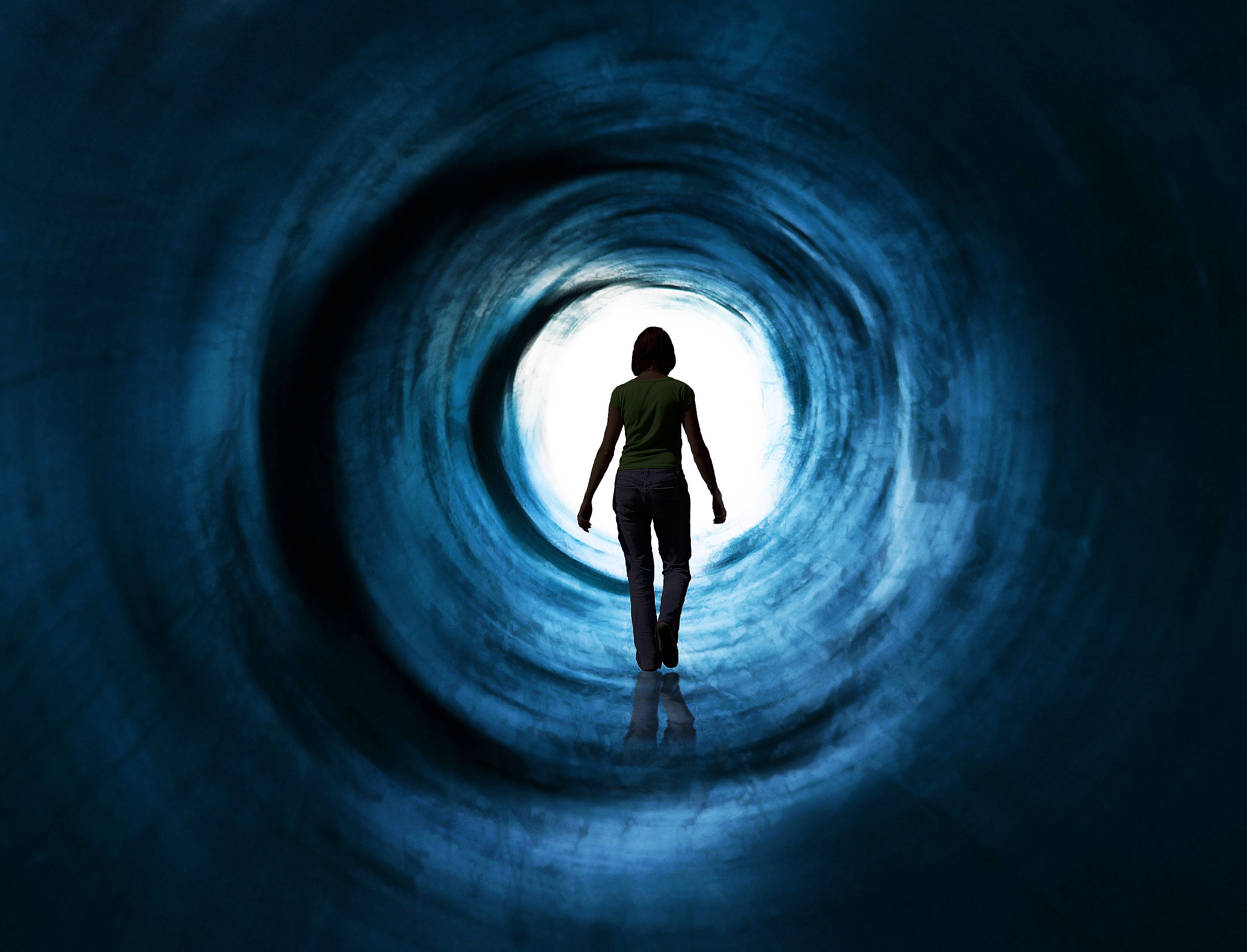
A tunnel.
A light.
A life review.
A dead relative.
A sense of leaving the body.
A peace so complete it changes the rest of life.
For many years, near-death experiences lived in a strange cultural space.
Too spiritual for medicine.
Too clinical for religion.
Too personal for laboratory science.
Too strange to dismiss completely.
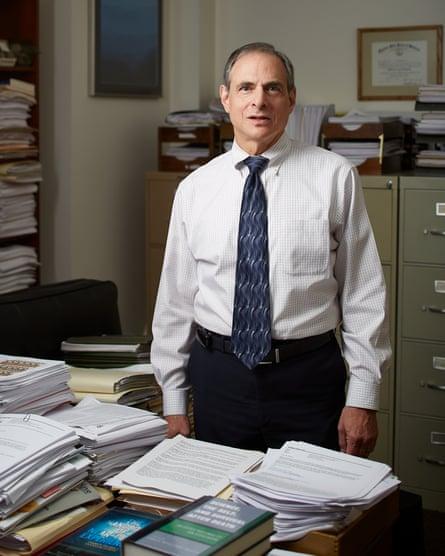
Bruce Greyson stepped into that space as a psychiatrist.
Not as a preacher.
Not as a mystic.
Not as someone trying to sell certainty about the afterlife.
As a clinician trained to listen carefully when the mind says something reality does not yet know how to classify.
Greyson is Professor Emeritus of Psychiatry and Neurobehavioral Sciences at the University of Virginia School of Medicine, former director of UVA’s Division of Perceptual Studies, co-founder and former president of the International Association for Near-Death Studies, and longtime editor of the Journal of Near-Death Studies. UVA describes him as having published more than one hundred scholarly articles on near-death experiences and focused his research for decades on their aftereffects and implications.
Greyson did not make near-death experiences respectable by proving every claim attached to them.
He made them harder to ignore.
He gave the experience a scale.
A vocabulary.
A clinical seriousness.
A place in peer-reviewed discussion.
A way to ask the question without immediately collapsing into belief or dismissal.
For The Galactic Mind, Bruce Greyson matters because he stands at one of the most intimate edges of reality:
The place where consciousness appears to approach death ... and returns with a report.
Overview
Bruce Greyson is an American psychiatrist and one of the most influential researchers in the modern study of near-death experiences, often shortened to NDEs.
A near-death experience is typically reported by someone who has come close to death, suffered a life-threatening crisis, or been resuscitated after cardiac arrest. Reports vary, but common features include altered time, unusual clarity, peace, separation from the body, encounters with deceased people or presences, bright light, life review, or a border the person feels unable or unwilling to cross.
Greyson’s work became central because he approached these reports not as entertainment or religious testimony, but as data about human experience.
He created the Greyson Near-Death Experience Scale, a 16-item measure used to assess the depth and features of an NDE. IANDS notes that a score of 7 or higher is generally considered an NDE for research purposes, and the scale includes cognitive, affective, paranormal, and transcendental components.
That may sound technical.
But it changed the conversation.
Before a field can study something carefully, it has to define what it is studying.
Greyson gave researchers a way to separate near-death experiences from ordinary stress responses, vague spiritual impressions, or general medical trauma. His 1983 paper on the scale described it as reliable, valid, and clinically useful for differentiating NDEs from organic brain syndromes and nonspecific stress responses.
That is why his work matters.
He did not simply ask, “Do people see something when they almost die?”
He asked:
What do they report?
How consistent are the reports?
How do we measure them?
What happens to people afterward?
And what might these experiences imply about the relationship between brain, mind, death, and consciousness?

Origins and Background
Greyson’s path into near-death research began inside conventional medicine.
His UVA profile lists his undergraduate education at Cornell University, medical school at SUNY Upstate Medical School, and psychiatric residency at the University of Virginia Medical Center. It also records faculty appointments at UVA, the University of Michigan, the University of Connecticut, and later UVA again, where he became Chester F. Carlson Professor of Psychiatry and Neurobehavioral Sciences and director of the Division of Personality Studies, now known as the Division of Perceptual Studies.
That background is important.
Greyson was not coming from outside psychiatry trying to overthrow it.
He came from within.
He was trained to evaluate unusual experiences, altered states, trauma, hallucination, dissociation, psychosis, fear, memory, and meaning.
Then he kept encountering people whose reports did not fit neatly into those categories.
UVA Today describes one early case that stayed with him: a patient who said she had perceived events while unconscious and in a different room, including details involving Greyson himself. That encounter did not prove anything by itself, but it made dismissal difficult.
That is often how frontier fields begin.
Not with certainty.
With a case that refuses to be filed away.
Greyson’s research eventually placed him inside the University of Virginia’s Division of Perceptual Studies, one of the rare academic homes for topics that challenge ordinary models of mind: near-death experiences, children’s reports of past-life memories, apparitions, altered consciousness, and other anomalous human experiences.
This does not mean the conclusions are settled.
It means the questions were given an institutional room.
That room matters.
Many strange experiences disappear because no respectable system is willing to hear them.
Greyson helped build a method for listening.
What He’s Known For
Bruce Greyson is known for several major contributions.
The Greyson Near-Death Experience Scale
The Greyson NDE Scale is his most important technical contribution.
It gave researchers a way to quantify experiences that had previously been discussed mostly through stories.
The scale asks about features such as altered time, accelerated thoughts, life review, sudden understanding, peace, joy, unity, light, vivid senses, extrasensory awareness, separation from the body, entrance into an unearthly realm, encounters with beings or deceased figures, and reaching a border or point of no return.
That list matters because it shows the structure of the phenomenon.
NDEs are not only “seeing a light.”
They often include cognitive, emotional, perceptual, and transcendental layers.
The scale does not prove what causes those layers.
It gives researchers a way to compare them.
That is the disciplined move.
Anecdote becomes pattern.
Pattern becomes research.
Research becomes a question science cannot ignore as easily.
Bringing NDEs Into Psychiatry
Greyson’s deeper contribution was clinical.
He helped frame near-death experiences as meaningful human events rather than automatic signs of pathology.
This matters because many experiencers fear being judged.
UVA Today reports Greyson saying that patients often worry they will not be believed or will be seen as “crazy,” and that reluctance can affect what they are willing to report.
That fear is not trivial.
A person can return from a medical crisis with the most powerful experience of their life, then remain silent because the culture has no safe category for it.
Greyson’s work gave clinicians a different posture:
Do not rush to diagnose.
Do not rush to sanctify.
Listen.
Ask.
Document.
Study the aftereffects.
That alone changed the field.
Aftereffects and Transformation
Greyson’s research has focused heavily on what happens after an NDE.
This may be the most important part of the subject.
NDEs are not only strange because of what people say happened during the crisis.
They are strange because of how often people say the experience changed them.
In a 2006 paper on NDEs and spirituality, Greyson wrote that NDEs often change values, reduce fear of death, increase empathy, deepen spiritual consciousness, and shift people from ego-centered concerns toward other-centered consciousness.
UVA Today similarly reports that many experiencers describe a sense of peace afterward and that Greyson sees implications for bereavement, suicide, death anxiety, and the way people think about life.
This is where the phenomenon becomes clinically serious even if its ultimate cause remains unresolved.
A hallucination can be vivid.
A dream can be powerful.
A memory can be distorted.
But when an experience produces long-term changes in values, identity, fear of death, and compassion, medicine has reason to pay attention.
Not because it proves heaven.
Because it changes the living.
After
In 2021, Greyson published After: A Doctor Explores What Near-Death Experiences Reveal About Life and Beyond, his major trade book for a general audience.
His official site describes the book as presenting first-person accounts and research that lead scientists to rethink the relationship between the brain and the mind, consciousness, life, and death.
That book brought decades of clinical and academic work into public conversation.
It also revealed the tension at the heart of Greyson’s position.
He does not present himself as someone who has solved death.
He presents himself as someone who has studied enough cases to believe the standard assumptions may be incomplete.
That difference matters.

The Institutional Field of Near-Death Studies
Greyson helped shape the field around him.
UVA Engagement notes that he was a co-founder and president of the International Association for Near-Death Studies and editor of the Journal of Near-Death Studies, described there as the only peer-reviewed academic journal devoted to near-death experiences.
This is part of his legacy.
He did not only write about near-death experiences.
He helped create structures where the subject could be studied, debated, and archived.
That is how a taboo topic becomes a research field.
Slowly.
Carefully.
Against resistance.
The Core Idea or Signal
The core signal of Bruce Greyson is this:
The experience of death’s threshold deserves serious study, even when it resists the categories we already have.
That is the doorway.
Greyson’s work does not ask the reader to accept every near-death account as literal proof of an afterlife.
It asks something more disciplined:
What if the people reporting these experiences are not simply confused?
What if the experience is not reducible to psychosis, fantasy, wishful thinking, oxygen deprivation, or cultural expectation?
What if the mind at the edge of death is telling us something important — even if we do not yet know what kind of thing it is telling us?
That is the tension.
Near-death experiences sit between medicine and metaphysics.
Between brain and mind.
Between subjective report and objective measurement.
Between the dying body and the possible survival of consciousness.
Between personal transformation and scientific uncertainty.
Greyson’s signal is not certainty.
It is disciplined attention.
He took a topic many professionals avoided and asked whether avoidance was really scientific.
That question still matters.
Perspectives and Interpretations
Bruce Greyson can be interpreted through several lenses.

The Clinical View
From the clinical view, Greyson matters because he gave healthcare workers a better way to treat near-death experiencers.
The experience itself may be metaphysically unresolved.
But the patient is real.
The fear of being dismissed is real.
The aftereffects are real.
The confusion after returning to ordinary life is real.
The loss of death anxiety, the shift in values, and the difficulty explaining the experience to family or clinicians are real enough to affect a person’s life.
This makes Greyson’s work useful even for people who reject any afterlife interpretation.
A psychiatrist does not have to know what happens after death to recognize that near-death experiences can change how people live.
The Consciousness Studies View
From the consciousness studies view, Greyson is important because NDEs pressure the standard brain-mind relationship.
The dominant materialist model says consciousness is produced by the brain.
Damage the brain, and consciousness changes.
Stop the brain, and consciousness stops.
Near-death experiences complicate that story because some experiencers report vivid, structured, meaningful consciousness during periods of severe physiological crisis.
The strongest version of this question does not say:
“The brain was off, therefore consciousness survived death.”
That is too simple.
The better question is:
How do we explain reports of intense clarity, memory, and transformation during states where ordinary consciousness should be impaired?
That is why NDEs remain relevant to consciousness studies.
They are not the whole answer.
They are a stress test.
The Spiritual View
From the spiritual view, Greyson’s work is powerful because it gives language to experiences people often interpret as contact with a larger reality.
Many experiencers do not return with a doctrine.
They return with a shift.
Less fear.
More compassion.
A sense that love matters.
A feeling that consciousness is not limited to the body.
A conviction that death is not annihilation.
Greyson’s work documents these shifts without forcing them into one religion.
That is important.
NDEs often appear across belief systems.
The descriptions may be shaped by culture, but the deeper themes recur: peace, light, love, review, encounter, return.
Greyson has noted that culture affects how people describe what they experienced, not necessarily the core of the experience itself.
This is why NDEs remain spiritually disruptive.
They do not belong completely to one tradition.
They appear at the threshold.
The Skeptical View
From the skeptical view, NDEs are real experiences but not evidence of survival beyond death.
Skeptical researchers argue that bright lights, out-of-body sensations, encounters, bliss, and altered time can be explained by brain processes under extreme stress. In a 2011 Trends in Cognitive Sciences article, Dean Mobbs and Caroline Watt argued that near-death experiences can be understood as normal brain function “gone awry” during traumatic or sometimes non-life-threatening events.
This view should be taken seriously.
The brain can generate profound realities.
Dreams feel real while we are in them.
Psychedelics can produce encounters, unity, and cosmic meaning.
Seizures can alter perception.
Oxygen changes, anesthesia, REM intrusion, trauma chemistry, and memory reconstruction may all play roles in some NDE-like reports.
A careful Dossier does not dismiss those explanations.
It asks whether they explain enough.
The Middle View
The middle view may be the most honest.
Near-death experiences are not proof of the afterlife.
They are also not easily dismissed.
They are human experiences with recurring features, measurable patterns, profound aftereffects, and unresolved implications for the mind-body question.
Greyson himself has been careful about proof. In a 2021 conversation hosted by the Virginia Festival of the Book, he said that as a scientist he does not call NDEs proof of anything, but rather evidence suggestive of certain possibilities.
That is the tone The Galactic Mind should hold.
Not belief.
Not dismissal.
Suggestive evidence.
Unresolved reality.
A door not yet closed.
Strengths and Limitations
Greyson’s greatest strength is that he made the near-death experience researchable.
He did not leave it only in memoir, religion, or paranormal culture.
He created a scale.
He published in medical and psychological journals.
He listened as a psychiatrist.
He built institutional pathways.
He studied aftereffects.
That matters because fields dealing with strange experience need discipline more than ordinary fields do.
The stranger the claim, the stronger the method must be.
Greyson’s second strength is his restraint.
His public posture is not “I have proven the afterlife.”
It is closer to:
The data do not fit easily inside our current model.
That humility protects the subject from becoming pure belief.
But the limitations are real.
First, NDEs are difficult to study prospectively.
They are unpredictable, brief, often reported after the fact, and depend heavily on memory and subjective testimony. The Guardian’s 2021 profile of Greyson noted the basic methodological problem: these events happen suddenly and are hard to capture under controlled conditions.
Second, physiological explanations remain plausible for at least some cases.
A serious study of NDEs has to account for brain chemistry, trauma, oxygen levels, anesthesia, memory formation, REM states, expectation, cultural framing, and retrospective interpretation.
Third, the most extraordinary claims are the hardest to verify.
Out-of-body perceptions, encounters with deceased people, and reports of knowledge gained during unconsciousness are often compelling, but they need careful documentation before they can carry strong scientific weight.
Fourth, the field has a public-image problem.
Near-death experiences are often discussed in sensational, religious, or commercial ways. That can make serious researchers easier to dismiss.
A grounded ledger helps.
What is documented:
Bruce Greyson is a psychiatrist, UVA professor emeritus, former director of the Division of Perceptual Studies, co-founder and former president of IANDS, former editor of the Journal of Near-Death Studies, and author of many scholarly works on near-death experiences.
What is well established:
Many people report structured experiences near death or during life-threatening crises, and some of these reports include recurring features such as peace, altered time, life review, separation from the body, light, encounters, and a border or return point. The Greyson Scale formalized many of these features for research.
What is clinically important:
NDEs can have long-term psychological and spiritual aftereffects, including reduced fear of death, changes in values, increased empathy, and greater concern for meaning.
What is debated:
Whether NDEs are fully explainable by brain processes under stress, or whether they suggest some form of mind-brain separation.
What remains speculative:
Claims that NDEs prove heaven, God, survival after death, reincarnation, or a fixed map of the afterlife.
Greyson’s work does not prove those things.
It makes them harder to dismiss without further investigation.
Broader Implications
Bruce Greyson matters because near-death experiences challenge the modern boundary between the private and the real.
Science is strongest when dealing with public evidence.
Measurements.
Images.
Replicable experiments.
Data anyone can examine.
But consciousness is partly private by nature.
Pain is private.
Dreams are private.
Love is private.
Meaning is private.
The fact that these things are private does not make them unreal.
It makes them difficult.
Near-death experiences intensify that difficulty because they occur at the edge where the subject may be least available to measurement.
The dying person is not usually inside a controlled neuroscience experiment.
They are in a hospital room.
A crash site.
A river.
An operating theater.
A battlefield.
A suicide attempt.
A moment of collapse.
Then they return with a report.
That report may be incomplete.
It may be interpreted through culture.
It may be shaped by memory.
It may still matter.
This is why Greyson belongs in The Galactic Mind archive.
His work asks whether reality includes forms of evidence that are meaningful but difficult to instrument.
That question extends far beyond NDEs.
It touches consciousness research.
Psychedelic studies.
Mystical experience.
Dreams.
Terminal lucidity.
Anomalous perception.
Spiritual transformation.
AI consciousness.
The limits of neuroscience.
The question is not whether every extraordinary experience is true in the way the experiencer interprets it.
The question is whether modern science has built enough categories to study experience without flattening it.
NDEs also matter because they change how people live.
That is not secondary.
A culture terrified of death behaves differently from a culture that believes death is not final.
A person who loses fear of death may become freer, more compassionate, or more reckless.
A patient who returns from cardiac arrest convinced they encountered a larger reality may need care that medicine is not trained to provide.
A bereaved family may hear these accounts as comfort, confusion, or evidence.
The implications are personal, clinical, spiritual, and civilizational.
If consciousness is only brain activity, NDEs are still one of the most powerful altered states the brain can generate.
If consciousness is not only brain activity, NDEs may be among the most important clues we have.
Either way, they deserve attention.
The Reality Signal
What this subject represents
Bruce Greyson represents the disciplined study of the threshold.
He represents the psychiatrist willing to listen when patients return from the edge of death with reports that do not fit standard categories.
He represents the attempt to move NDEs from anecdote into research without stripping them of their existential force.
More deeply, he represents a question modernity has never resolved:
Is consciousness only what the brain does?
Or is the brain one interface through which consciousness appears?
Greyson does not close that question.
He keeps it open responsibly.
What reality frame it challenges
Greyson challenges the frame that unusual experiences are automatically pathological.
He challenges the frame that death-adjacent consciousness can be dismissed as hallucination before it is studied.
He challenges the frame that subjective reports are meaningless because they are difficult to measure.
He also challenges spiritual certainty.
Near-death experiences may suggest survival.
They do not provide a simple tourist map of the afterlife.
The most grounded reading is this:
NDEs disturb the assumption that consciousness is fully explained by the brain.
They do not, by themselves, replace that assumption with a finished theory.

Why it matters now
Greyson matters now because consciousness has become one of the central questions of the age.
AI forces us to ask whether intelligence and experience are the same.
Neuroscience forces us to ask how the brain generates awareness.
Psychedelic research forces us to ask why altered states can transform identity.
UAP and anomalous studies force us to ask how much of reality our instruments miss.
Medical resuscitation keeps returning people from states once considered final.
The border between life and death is no longer only theological.
It is medical.
Technological.
Scientific.
Experiential.
And still unresolved.
Greyson’s work matters because it slows the conversation down.
It asks us not to confuse “we do not know” with “nothing is there.”
What remains unresolved
What is established:
Near-death experiences are reported by a meaningful minority of people after life-threatening crises or cardiac arrest. Dutch prospective research on 344 resuscitated cardiac-arrest patients found that 18% reported an NDE.
What is documented:
Greyson developed a widely used scale for assessing NDEs and spent decades studying their features, aftereffects, and implications.
What is debated:
Whether NDEs are fully produced by brain processes under stress, or whether they point to consciousness operating in a way not yet explained by current neuroscience.
What remains speculative:
Any final claim that NDEs prove life after death.
What remains open:
Why these experiences are often described as more real than ordinary life.
Why they produce lasting transformation.
Why some reports include apparently veridical details.
Why similar themes appear across different people and cultures.
And why the edge of death remains one of the places where the mystery of consciousness becomes hardest to ignore.

The Galactic Mind Perspective
Bruce Greyson belongs in The Galactic Mind archive because he did something rare.
He took an experience surrounded by belief, fear, stigma, and longing and gave it a careful frame.
He did not remove the mystery.
He protected it from careless handling.
That is what serious reality inquiry requires.
The subject of near-death experiences attracts extremes.
One side wants instant proof of heaven.
The other wants instant dismissal.
Greyson’s work occupies the more difficult middle.
He says: listen first.
Measure carefully.
Do not ridicule the experiencer.
Do not overstate the conclusion.
Do not confuse a transformative experience with a complete cosmology.
Do not pretend the existing model explains more than it does.
That is the Archivist’s terrain.
Ground the reader.
Reveal the tension.
Expand the frame.
Leave a door open.
The deeper question is not whether every near-death account is literally accurate.
The deeper question is why consciousness at the edge of death keeps producing reports that alter the living.
Some figures matter because they solve the mystery.
Greyson matters because he made the mystery admissible.
He brought the dying report into the room and asked science to listen without flinching.
Open Thread
Bruce Greyson leaves us with a question that does not fade.
What would count as evidence that consciousness is more than the brain?
A verified perception during unconsciousness?
A reproducible pattern across cultures?
A measurable transformation after clinical death?
A theory that links subjective experience to something deeper than neural activity?
Or are we still missing the instrument that could make the threshold visible?
Near-death experiences may not prove what comes after death.
But they do reveal something about life.
They show that the border can change the person who returns.
They show that consciousness remains the most intimate and least understood fact of reality.
And they leave us standing before the same unresolved door:
When the body approaches its end, what exactly is it that looks back?
What do you think? Drop your thoughts in the comments ...
Sources / Receipts
- University of Virginia Division of Perceptual Studies profile for Bruce Greyson: official role, education, faculty appointments, and publications.
- UVA Engagement speaker biography: professor emeritus status, former DOPS directorship, IANDS role, Journal of Near-Death Studies editorship, publications, and research focus.
- IANDS page on the Greyson Near-Death Experience Scale: structure, scoring, and research threshold.
- PubMed record for Greyson’s 1983 NDE Scale paper: construction, reliability, validity, and clinical usefulness.
- Bruce Greyson official author site for After.
- UVA Today, “There and back: UVA psychiatrist researches near-death experiences,” for recent institutional context, Greyson’s role, common NDE features, and clinical relevance.
- Greyson, “Near-Death Experiences and Spirituality,” Zygon, 2006, for aftereffects and spiritual transformation.
- Van Lommel et al., prospective Dutch cardiac-arrest research summary on PubMed.
- Mobbs and Watt, “There is nothing paranormal about near-death experiences,” Trends in Cognitive Sciences, for the skeptical neuroscientific interpretation.
- Virginia Festival of the Book conversation with Greyson on NDEs and scientific caution around proof.


Discussion