
Baalbek does not need exaggeration to feel impossible.
That is the first thing to understand.
The site already carries enough weight on its own.
In Lebanon’s Beqaa Valley, among the ruins of one of the most monumental temple complexes of the Roman world, a raised platform incorporates some of the largest stone blocks ever used in ancient architecture. Nearby quarries hold even larger unfinished monoliths, including one estimated at roughly 1,650 tons.
That is where the mystery begins.
Not with aliens.
Not with giants.
Not with lost levitation machines.
With a real archaeological site, real stones, real quarry marks, real Roman monumental ambition, and a logistical problem so large it continues to attract engineers, historians, archaeologists, and fringe theorists alike.
Baalbek is often pulled into the “ancient technology” conversation because of one basic fact:
The stones are enormous.
But the deeper question is not simply how ancient people moved heavy objects.
The deeper question is why a civilization would choose to build at a scale that appears to exceed ordinary necessity.
Why use stones this large?
Why build a platform that feels almost like a statement before it feels like a foundation?
Why embed religious authority, imperial power, local tradition, and technical daring into a single raised stone world?
The Baalbek megaliths matter because they challenge a modern reflex.
We often assume that if we cannot easily imagine the method, then the builders must have required impossible help.
But the better question is harder:
What if the ancient world had forms of organization, labor, surveying, quarrying, staging, and symbolic ambition that we keep underestimating because we confuse our lack of certainty with their lack of capability?
Baalbek is not a solved mystery.
But it is not an empty one either.
It is a monument where the known and the unresolved sit directly on top of each other.
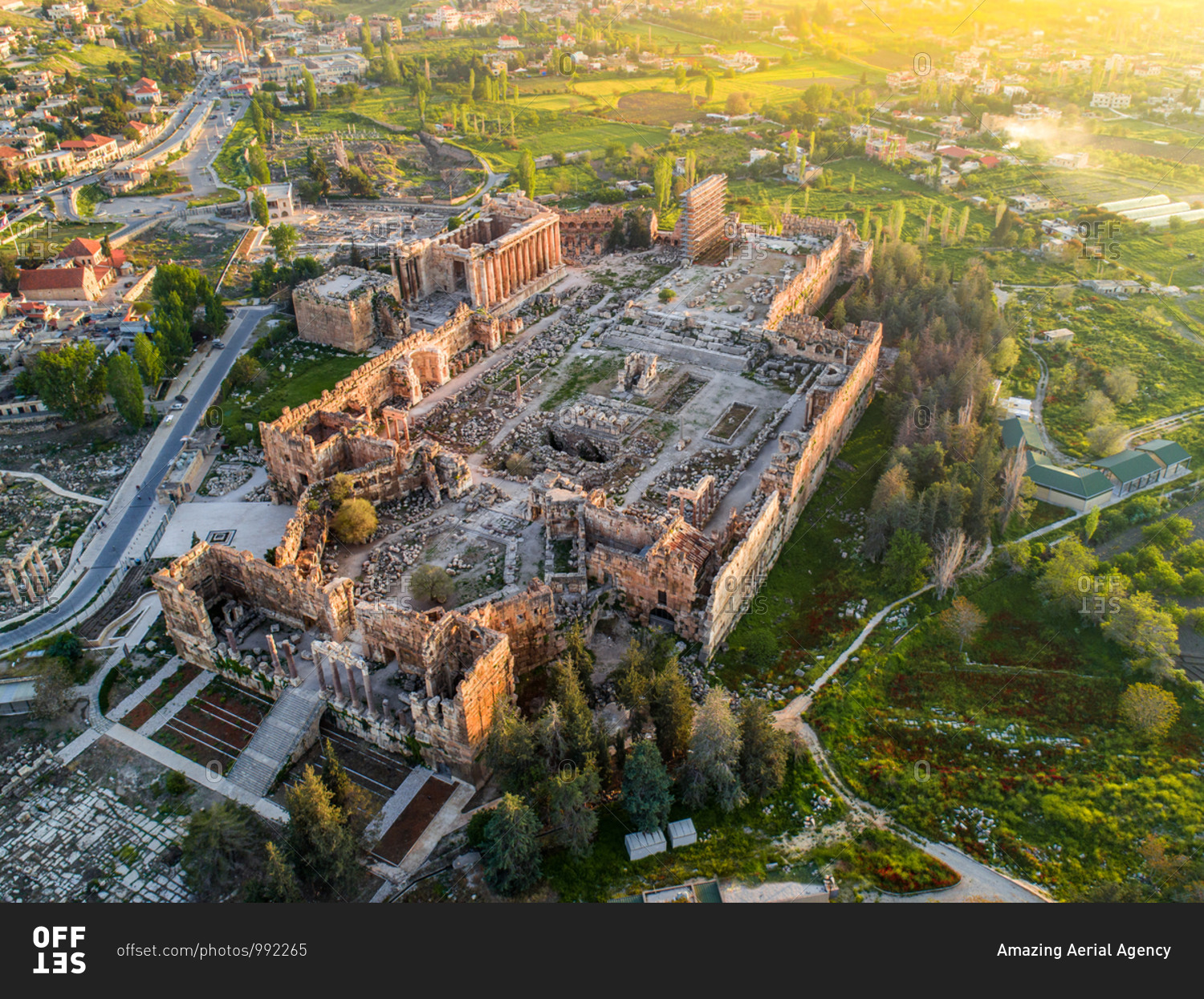
Overview: What This Is
Baalbek is an ancient city in modern Lebanon, known in the Hellenistic and Roman periods as Heliopolis.
The site became one of the great sanctuary complexes of the Roman world. Its temples were associated with the Heliopolitan triad, commonly understood through the Romanized forms of Jupiter, Venus, and Mercury.
The most famous remains include:
- The Temple of Jupiter
- The Temple of Bacchus
- The Temple of Venus
- The Temple of Mercury remains
- The Great Court
- The raised temple podium
- The massive stone blocks built into and around the platform
- Nearby quarries containing unfinished megaliths
The megalithic focus usually centers on the platform of the Temple of Jupiter.
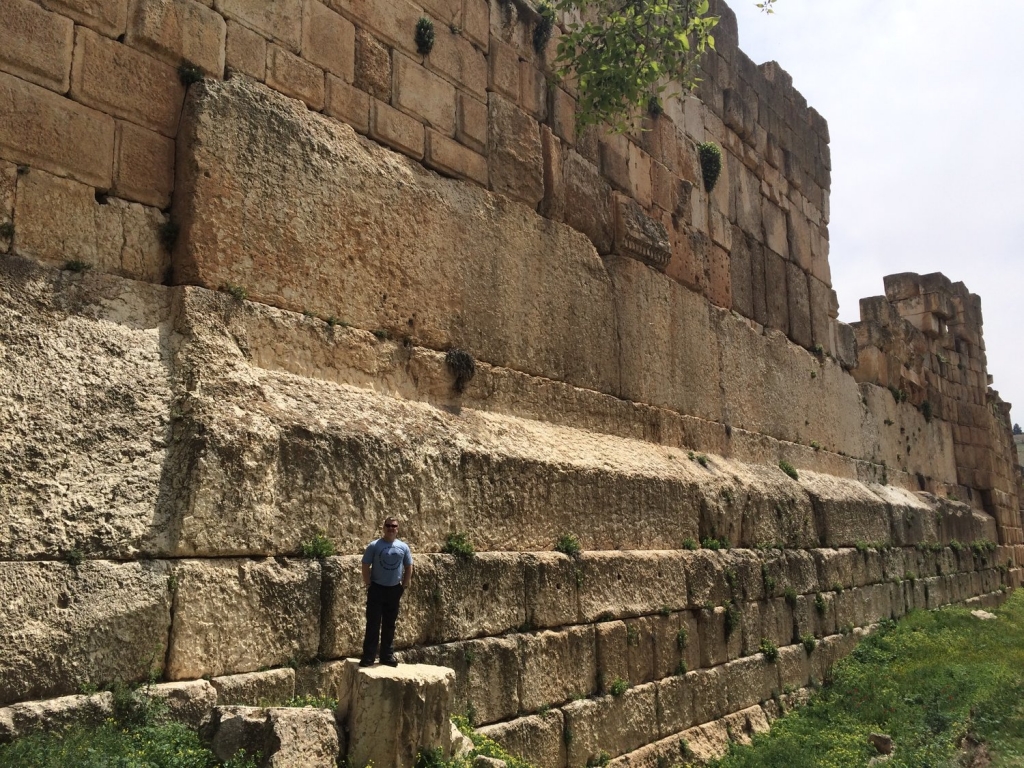
Three enormous limestone blocks built into the western retaining wall are known as the Trilithon. Each is commonly estimated in the range of hundreds of tons, with many summaries placing them around 750 to 800 tons.
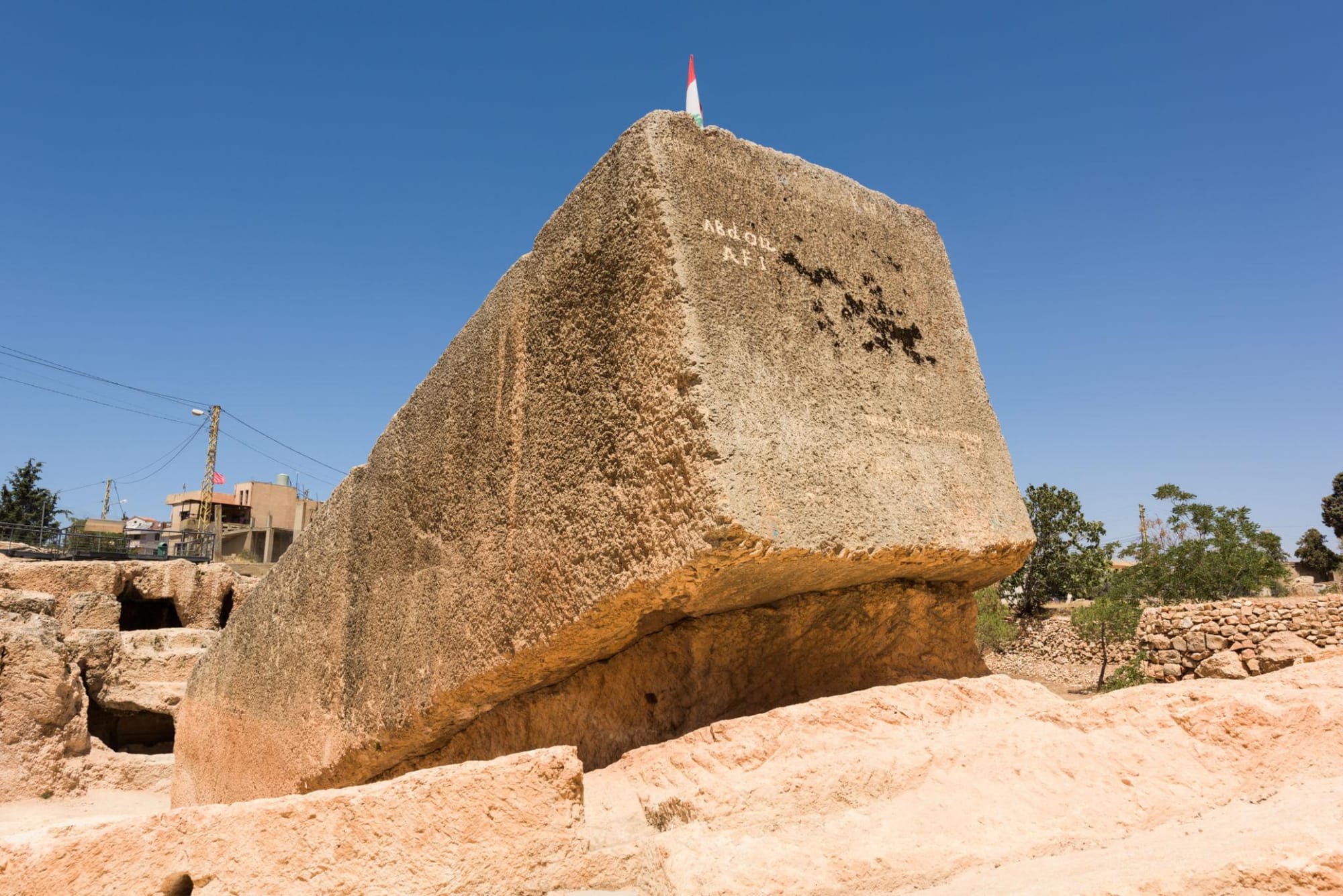
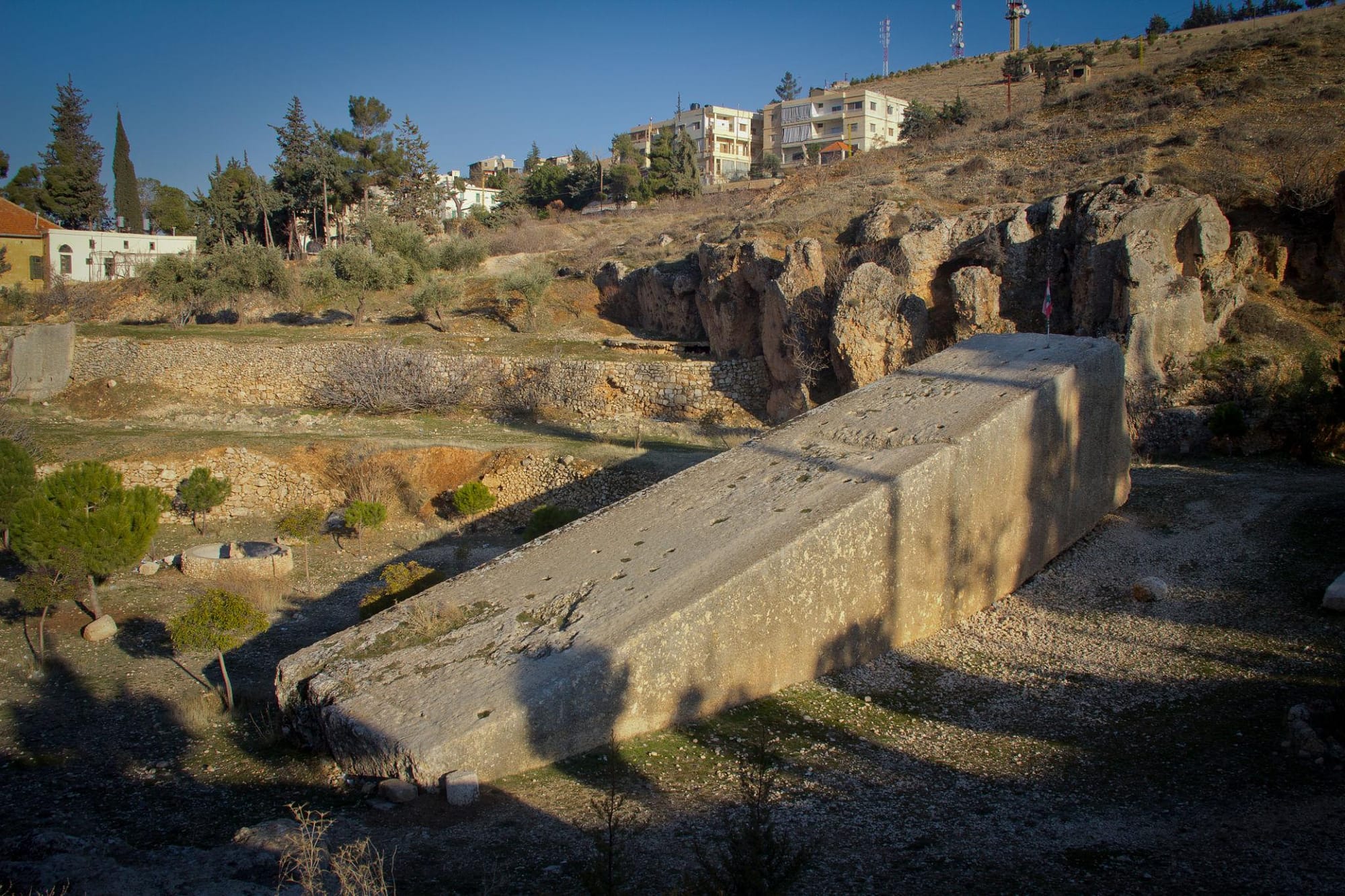
Nearby, the ancient quarry contains unfinished monoliths even larger than the stones installed in the platform. The most famous is the Stone of the Pregnant Woman. Nearby are other massive blocks, including the so-called Forgotten Stone, documented in 2014 and estimated at around 1,650 tons.
This combination makes Baalbek unusual.
The site is not only a Roman temple complex.
It is a question about scale.
A place where religious architecture, imperial ambition, local sacred tradition, and extreme stone engineering converge.

Origins and Background
Baalbek’s story is layered.
Before the Roman monumental sanctuary, the location already held religious significance. UNESCO describes Baalbek as a Phoenician city where a triad of deities was worshipped, later known as Heliopolis during the Hellenistic period.
Under Roman rule, the site grew into one of the most impressive religious complexes of the empire.
The sanctuary was not built in a single moment.
It developed across generations, with Roman construction taking place over more than two centuries. The complex reached monumental scale through a long program of architecture, engineering, religious adaptation, and imperial display.
This matters because Baalbek is often treated online as if it were one isolated mystery object.
It is a layered sacred site.
A Phoenician religious memory.
A Hellenistic city of the sun.
A Roman imperial sanctuary.
A late antique and medieval landscape.
A modern archaeological and political heritage site.
The stones belong inside that history.
They are not random blocks placed in the desert.
They were part of a monumental system designed to elevate, stabilize, dramatize, and sacralize the sanctuary.
But even inside that grounded frame, questions remain.
The Roman world was capable of extraordinary engineering. It built aqueducts, roads, amphitheaters, harbors, bridges, vaults, domes, temples, and cities across vast distances.
Still, Baalbek stands out.
The size of the blocks is not ordinary Roman construction.
It is megalithic gigantism inside an imperial sacred project.
That is the tension.
Baalbek is Roman enough to be grounded.
And extreme enough to remain strange.
What It’s Known For
Baalbek is known for several overlapping signals.
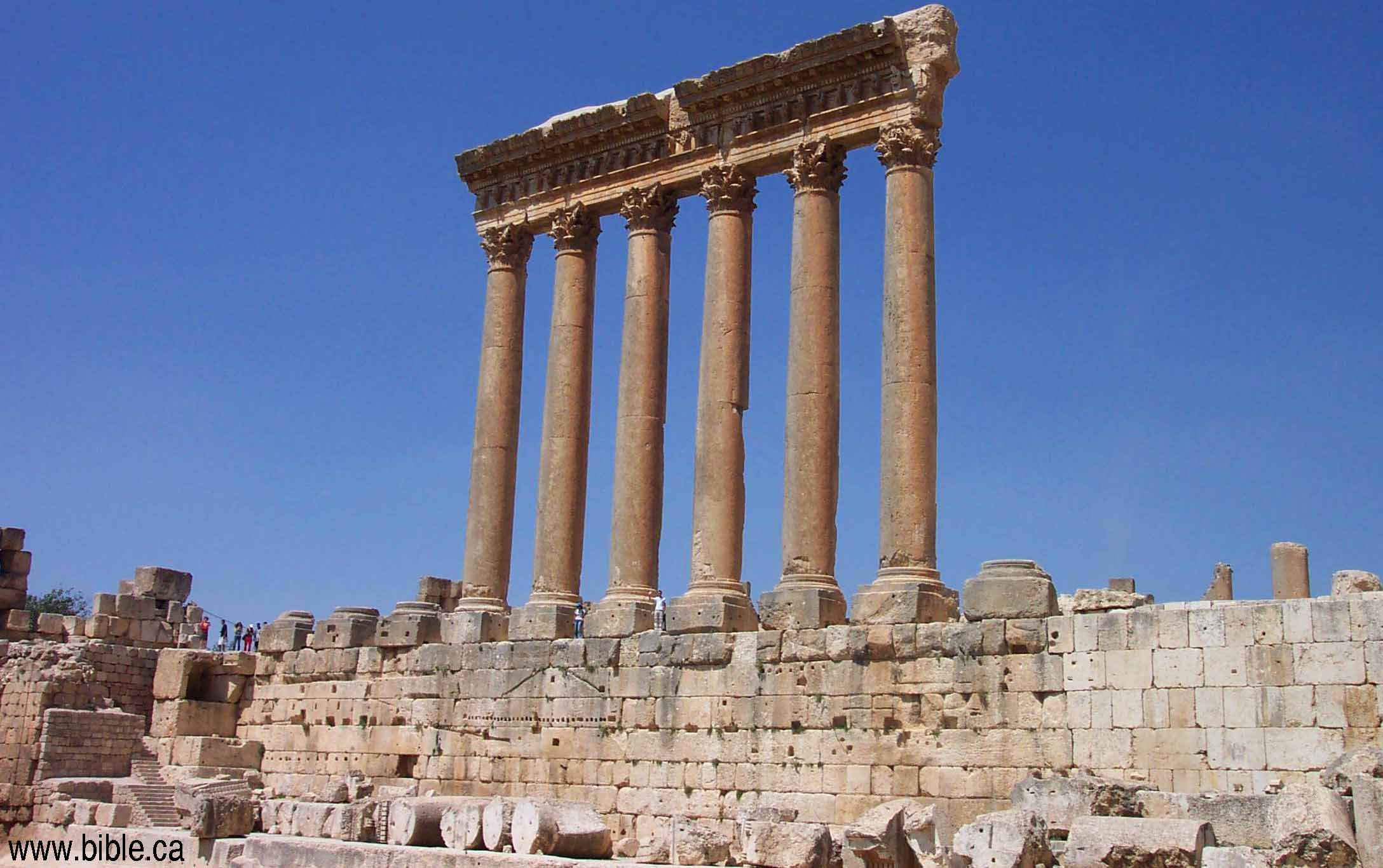
The Temple of Jupiter platform
The Temple of Jupiter was the dominant structure of the sanctuary. Its surviving columns still communicate the scale of the original complex, even though much of the temple is gone.
The platform beneath and around it is where the megalithic mystery intensifies.
The gigantic stones of the terrace are not decorative flourishes.
They are structural and symbolic at the same time.
They help create a raised sacred zone, separating the sanctuary from ordinary ground. They also make the complex feel superhuman in scale.
That may have been part of the point.
Ancient sacred architecture often used size to create psychological force.
A temple was not only a building.
It was an encounter with power.
The Trilithon
The Trilithon is the most famous installed megalithic feature at Baalbek.
It consists of three massive limestone blocks built into the western side of the Jupiter temple platform. Their scale is what has made them legendary.
The stones are often described as being nearly twenty meters long and weighing in the range of 750 to 800 tons each.
That number alone explains why Baalbek keeps returning to ancient mystery culture.
Even if the stones were moved by known methods, the operation would have required extraordinary planning:
- quarrying
- shaping
- transport
- staging
- leveling
- alignment
- manpower coordination
- temporary earthworks
- engineering oversight
- risk management
The mystery is not that ancient people were incapable.
The mystery is the level of coordination required.
The quarry stones
The nearby quarry makes the story even stranger.
The Stone of the Pregnant Woman remains partly attached to the quarry context and has long been one of the most famous ancient monoliths in the world.
Then came the discovery and documentation of an even larger block in 2014, often called the Forgotten Stone. It is estimated at roughly 1,650 tons.
This raises a different question.
If the unfinished quarry blocks were intended for the platform, why were they abandoned?
Was the stone flawed?
Did the project change?
Did the builders realize the transport problem was too great?
Did political, financial, or religious conditions shift?
Did seismic concerns alter the plan?
Did the temple project evolve before the stones could be moved?
Unfinished objects are powerful because they preserve intention without completion.
The quarry stones show that ancient builders were not merely capable of imagining extreme scale.
They were actively preparing it.
Roman imperial scale
Baalbek is also known for the sheer grandeur of its Roman architecture.
The Temple of Bacchus is among the best-preserved large Roman temples. The remaining Jupiter columns are enormous. The entire complex communicates imperial wealth, religious authority, and architectural confidence.
This is important.
The megaliths are not separate from Roman ambition.
They are part of it.
Rome used architecture to make power visible.
At Baalbek, that visibility became overwhelming.
Fringe interpretations
Baalbek is also famous in alternative-history circles.
It has been connected to theories involving:
- giants
- lost civilizations
- antediluvian builders
- ancient astronauts
- landing platforms
- pre-Roman technologies
- non-human assistance
- forbidden engineering
These theories usually begin with a real tension: the stones are unusually large and difficult to explain in simple terms.
But then they often move too quickly.
A difficult engineering problem is not the same thing as evidence for non-human builders.
The grounded mystery is already strong.
The speculative layer needs to stay clearly labeled.
The Core Idea or Signal
The core signal of Baalbek is this:
Ancient engineering was not only practical. It was symbolic power made physical.
That is the frame.
If we only ask how the stones were moved, we miss half the story.
The deeper question is why anyone wanted stones this large in the first place.
A smaller block could have worked.
Multiple smaller blocks could have been easier.
Roman builders were not ignorant of efficiency.
So when ancient builders chose extreme scale, that scale likely served more than a structural function.
It communicated.
The platform said:
This place is not ordinary.
This sanctuary belongs to the gods.
This empire can command matter.
This local sacred landscape has been absorbed into imperial architecture.
This is not a human-scale threshold.
This is a cosmic threshold.
That is where Baalbek becomes interesting.
The stones are not only engineering artifacts.
They are psychological instruments.
They turn mass into meaning.
Perspectives and Interpretations
Baalbek is interpreted through several lenses.
The archaeological view
The archaeological view places Baalbek inside the Roman imperial world, built over earlier sacred layers.
This view does not need impossible builders.
It sees the site as an extraordinary but human construction project connected to local religious tradition, Roman imperial power, quarry resources, and monumental architecture.
This is the strongest foundation.
Baalbek was not built in isolation.
It belonged to a wider world of Roman engineering and sacred urbanism.
But archaeology also acknowledges that not every detail is resolved.
The exact logistics of the largest stones remain debated.
The engineering view
The engineering view focuses on method.
How were the stones quarried?
How were they shaped?
How were they separated from bedrock?
How were they moved from the quarry to the site?
How were they positioned?
What temporary ramps, sledges, rollers, earthen banks, capstans, levers, or coordinated labor systems might have been used?
This is where Baalbek becomes a stress test.
The problem is not “could humans move heavy stones?”
Humans moved many heavy stones in antiquity.
The problem is whether we can reconstruct the specific method used here.
The answer is not complete.
But incomplete does not mean impossible.
It means the operational details remain under investigation.
The symbolic view
The symbolic view asks why scale mattered.
Sacred sites are not only engineered.
They are experienced.
A stone weighing hundreds of tons changes the emotional field around it.
It makes the visitor feel small.
It makes the sanctuary feel anchored in permanence.
It turns architecture into authority.
The Roman Empire understood this.
So did many ancient cultures.
Megalithic scale is not only about what builders could do.
It is about what builders wanted people to feel.
The alternative-history view
The alternative-history view sees Baalbek as evidence of something missing from conventional history.
This can take different forms.
Some versions are relatively careful:
Maybe the site preserves an older construction phase not fully understood.
Maybe Roman builders reused earlier megalithic foundations.
Maybe there are lost techniques of transport or staging that have not been reconstructed.
Other versions are much stronger:
Maybe Baalbek was built by giants.
Maybe the platform was a landing pad.
Maybe non-human intelligences helped move the stones.
Maybe the Romans inherited a site from a forgotten civilization.
These stronger claims remain unproven.
They often mistake mystery for evidence.
But the popularity of these theories reveals something important.
Baalbek feels bigger than its explanation.
That emotional mismatch is what keeps the site alive in fringe culture.
Strengths and Limitations
The strength of the Baalbek mystery is that the evidence is physical.
The stones exist.
The platform exists.
The quarry exists.
The scale is not invented.
The engineering challenge is real.
The site is UNESCO-recognized as a major Roman sanctuary, and the temple complex is widely recognized as one of the most impressive examples of imperial Roman architecture.
That gives Baalbek weight.
This is not a blurry photograph.
It is not a rumor.
It is not a lost manuscript.
It is stone.
But the limitations matter.
The exact construction logistics are not fully documented.
Ancient builders did not leave a complete engineering manual explaining the movement of the Trilithon.
Later destruction, reuse, excavation limits, restoration, seismic activity, and political instability complicate the site’s study.
The available evidence supports a human, Roman-era monumental program over earlier sacred layers.
It does not support claims of non-human builders.
It does not prove a prehistoric technological civilization.
It does not establish levitation, lost energy systems, or an ancient landing platform.
A careful Dossier has to hold two truths at the same time:
Baalbek is explainable in broad historical terms.
Baalbek is still not fully explained in operational detail.
That distinction is the honest line.
What is documented:
Baalbek was a major sanctuary complex in Roman times, built over older sacred layers, with enormous monoliths incorporated into its raised plaza and temple platform.
What is claimed:
That the stones may preserve evidence of lost construction methods, older phases, or unknown logistical strategies.
What is speculative:
Claims involving giants, non-human assistance, aircraft landing pads, coded platforms, or exotic energy systems.
What remains unresolved:
The full quarry-to-platform transport method, the exact decision-making behind the largest unfinished stones, and the complete sequence of construction phases.
Broader Implications
Baalbek matters because it forces us to examine how we interpret ancient scale.
When modern people see a massive stone, we often ask:
How did they lift it?
But ancient builders may have been asking:
How do we make power visible?
How do we make the sacred undeniable?
How do we make the empire feel permanent?
How do we turn a local cult into a cosmic center?
How do we build something that overwhelms the human body?
This is where Baalbek expands beyond engineering.
The site shows that ancient architecture was not only a solution to practical problems.
It was a technology of awe.
A system for organizing belief, authority, identity, and memory.
The stones are massive because the message was massive.
This does not remove the engineering mystery.
It deepens it.
Because the act of moving the stone was itself part of the meaning.
A civilization that can organize hundreds or thousands of workers, coordinate quarrying, transport vast blocks, build massive temples, and sustain a sacred project across generations is demonstrating more than technical skill.
It is demonstrating social power.
That is why Baalbek belongs in The Galactic Mind archive.
It sits at the border between capability and meaning.
Between logistics and myth.
Between what we can measure and what we still do not fully understand.
It reminds us that ancient civilizations were not only building structures.
They were building reality frames.
The Reality Signal
What this subject represents
Baalbek represents ancient ambition at the edge of logistical imagination.
It is a place where stone becomes authority.
The megaliths represent more than construction.
They represent a civilization’s desire to make sacred and imperial power feel physically undeniable.
They also represent the way unanswered engineering details create space for myth.
When the record is incomplete, imagination enters.
Baalbek is not only a site.
It is a test of interpretation.
What reality frame it challenges
Baalbek challenges the modern habit of underestimating ancient capability.
It challenges the idea that ancient builders were technically simple.
It also challenges the opposite mistake: assuming that every ancient difficulty requires impossible explanations.
The site forces a more disciplined position.
Ancient humans were capable of extraordinary engineering.
But extraordinary engineering still deserves investigation.
Mystery should not be dismissed.
Mystery should not be inflated.
Baalbek challenges both reduction and fantasy.
Why it matters now
Baalbek matters now because ancient engineering has become part of a wider cultural debate.
People are re-examining pyramids, megaliths, lost cities, submerged landscapes, and ancient sacred sites with new tools and new suspicion toward old narratives.
Some of that curiosity is healthy.
Some of it becomes careless.
Baalbek is a perfect case study because it contains a real anomaly of scale without needing to leave the human historical record.
It asks the modern world to relearn how to be amazed without abandoning standards.
That is exactly the balance The Galactic Mind tries to hold.
What remains unresolved
The full operational story remains open.
How exactly were the largest installed blocks moved and seated?
Why were even larger quarry blocks abandoned?
How much of the platform reflects earlier sacred architecture versus Roman redesign?
How much did local expertise shape the engineering?
Were the largest stones symbolic excess, structural necessity, or both?
The unresolved ledger is clear:
What is established:
Baalbek was a major Roman sanctuary built over earlier sacred layers, with enormous stone blocks incorporated into its raised platform and even larger unfinished monoliths in nearby quarries.
What is claimed:
The megaliths may point to lost or poorly understood ancient transport methods, older construction phases, or extreme Roman logistical capability.
What remains unresolved:
The exact methods, sequencing, and motivations behind the largest stones.
Why it still matters:
Because Baalbek shows that the ancient world could operate at scales that still pressure modern imagination.

The Galactic Mind Perspective
Baalbek belongs in The Galactic Mind archive because it reveals how ancient stone becomes a mirror.
Some see Roman mastery.
Some see a forgotten civilization.
Some see divine architecture.
Some see alien infrastructure.
Some see only a quarry problem.
But Baalbek is bigger than any single frame.
It is not proof of non-human builders.
It is not “just a Roman temple” either.
That phrase would flatten the mystery.
The better reading is this:
Baalbek is a real ancient engineering achievement whose full operational logic has not been completely recovered.
That is enough.
The Galactic Mind does not need to force the site into fringe certainty.
The grounded version already opens the door.
A civilization carved and positioned stones so massive they still strain our imagination. It built a sanctuary where architecture became power, where the sacred was raised on a platform of near-impossible weight, and where unfinished quarry blocks still sit like abandoned questions.
A Dossier is not a monument.
It is a map of influence.
And Baalbek’s influence is clear:
It forces us to ask whether the past was less limited than we assume.
Not because it was alien.
Because it was human in ways we have not fully remembered.
Open Thread
Baalbek leaves behind a question that still sits in the stone.
Why that big?
Not could it be done.
Not even how exactly it was done.
But why did the builders choose a scale so extreme that it would outlive their empire, outgrow their documentation, and invite myths for two thousand years?
Maybe the stones were structural.
Maybe they were symbolic.
Maybe they were both.
Maybe the platform was meant to hold a temple.
Maybe it was also meant to hold a worldview.
That is the real mystery of Baalbek.
Not whether ancient people could move stone.
But what kind of world requires stones that large to say what it means.
What do you think? Drop your thoughts in the comments ...
Sources / Receipts
- UNESCO World Heritage Centre: Baalbek
- German Archaeological Institute / Lebanese University reporting on the Baalbek quarry research
- Archaeology Magazine: “Biggest Boulder” Unearthed in Lebanon
- HeritageDaily: report on the 1,650-ton quarry block
- DigVentures: “Archaeologists Discover Biggest Ancient Stone Block Ever Carved By People”
- Jeanine Abdul Massih, “The Megalithic Quarry of Baalbek”
- Giulio Magli, “Archaeoastronomy and the chronology of the Temple of Jupiter at Baalbek”
- The New Yorker: “The Myth of the Megalith”


Discussion