
Case Overview: The Event
Late on October 4, 1967, several people near Shag Harbour on Nova Scotia’s southwestern coast reported a horizontal group of lights descending toward the water. The first callers did not report an extraterrestrial craft. They reported what appeared to be an aircraft going down and asked the Royal Canadian Mounted Police to respond to a possible emergency.
Police, local fishermen and a Canadian Coast Guard vessel searched the area. A pale light was reported on the surface for several minutes, patches of unusual-looking foam were found, and the Rescue Coordination Centre in Halifax determined that no aircraft was missing. Maritime Command later sent divers to search below the surface. They recovered no wreckage, bodies, debris or identifiable object.
That sequence made Shag Harbour one of Canada’s most durable UFO cases. It left a contemporaneous government paper trail, entered the University of Colorado’s UFO study as Case 34, and was still named among Canada’s best-known UAP incidents in the federal Sky Canada Project decades later. Yet the record establishes an official response more securely than it establishes an impact.
The central tension is precise: witnesses saw lights descend, officers later saw a light on the water, and searchers found foam but the most detailed near-contemporaneous reconstruction states that no one actually saw an object cross the waterline.
What Actually Happened
The most useful early reconstruction appears in Case 34 of the University of Colorado’s Scientific Study of Unidentified Flying Objects, commonly called the Condon Report. Its investigator did not visit Shag Harbour. He gathered information by telephone from Canadian Naval Maritime Command, the RCMP and other sources while the event was still recent. That makes the account important, though not equivalent to a complete on-site investigation.
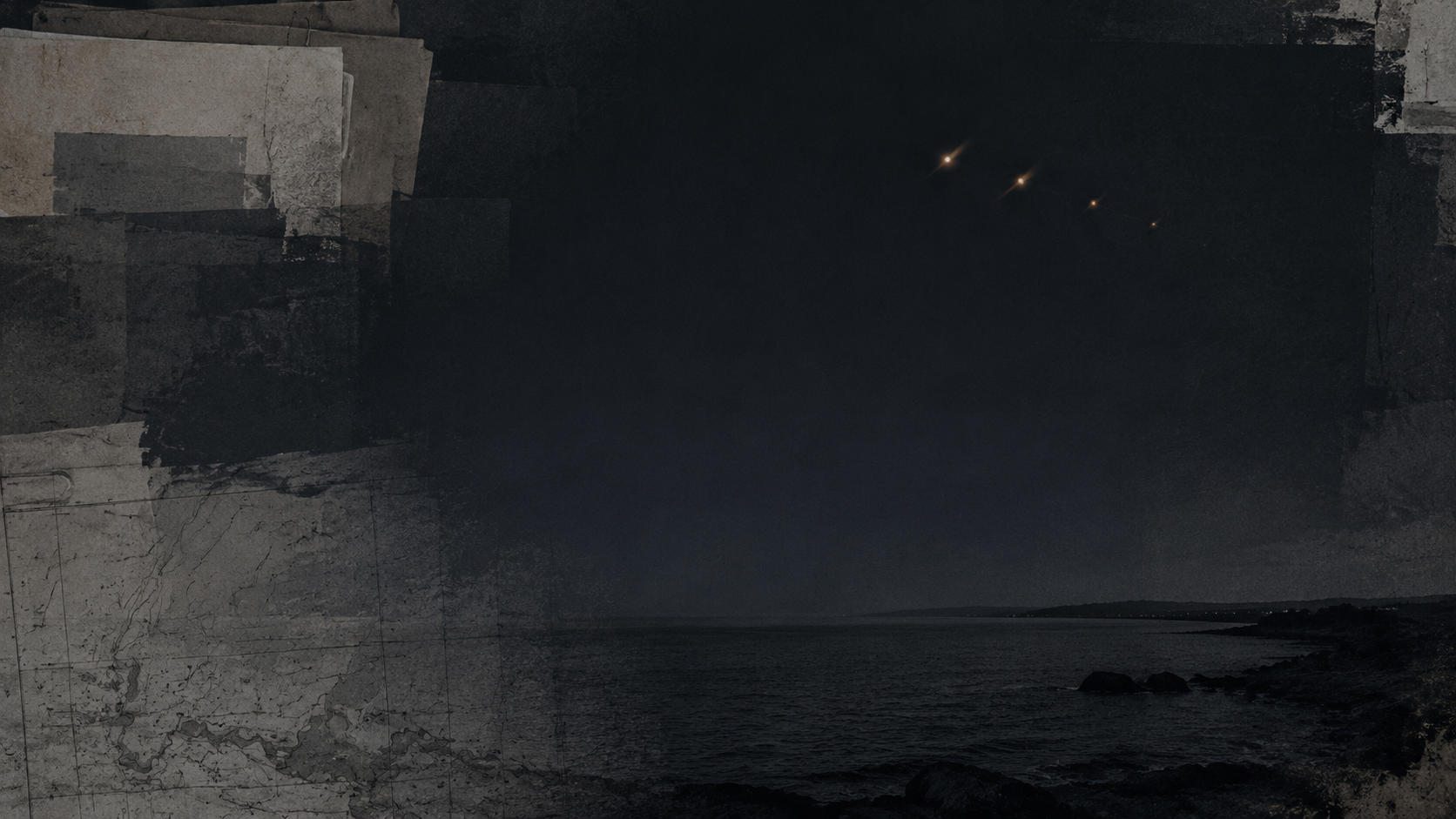
According to the RCMP account relayed to the project, five young people between approximately fifteen and twenty years old were driving near the shore when they saw three or four yellow lights arranged horizontally and descending at an angle of roughly forty-five degrees. The lights appeared comparable in span to a fair-sized aircraft. The witnesses lost sight of them for about ten seconds while passing a small hill. When the water came back into view, they saw one white light on the surface near where they thought the descending lights should have reached it.
The group continued for roughly a quarter mile and reported the incident to the RCMP. Later interviews identified Laurie Wickens as the driver who made the call. He consistently described the original interpretation as an aircraft accident rather than a UFO encounter.
Two officers and an RCMP corporal reached the area about fifteen minutes later, according to Case 34, and saw the white light remain on the water for about five more minutes. The report says the light appeared to move with the ebbing tide. After it went out, officers entered the area in a rowboat; a Coast Guard boat and several fishing vessels also joined the search.
The boats did not find an aircraft, survivors or wreckage. They did find patches of foam, described in the Condon account as approximately thirty to forty yards across and considered unusual by local fishermen. No sample with a documented chain of custody survives, and no publicly available laboratory analysis identifies what the foam was.
The Rescue Coordination Centre checked the most urgent possibility. No aircraft was reported missing in the area. The RCMP corporal also told the Colorado investigator that a nearby RCAF radar station reported no Canadian or American air operations that accounted for the event and no unusual radar target. This weakened the crash interpretation without identifying what the witnesses had seen.
The incident then moved through military channels. Surviving Department of National Defence summaries used the heading “UFO REPORT” and described a large lighted object descending, reaching the surface, floating and sinking. Another memorandum stated that the preliminary investigation had found the sighting was “not caused by a flare, float, aircraft or in fact any known object.” That language is consequential, but the released summary does not show the full tests, logs or reasoning used to eliminate each category.
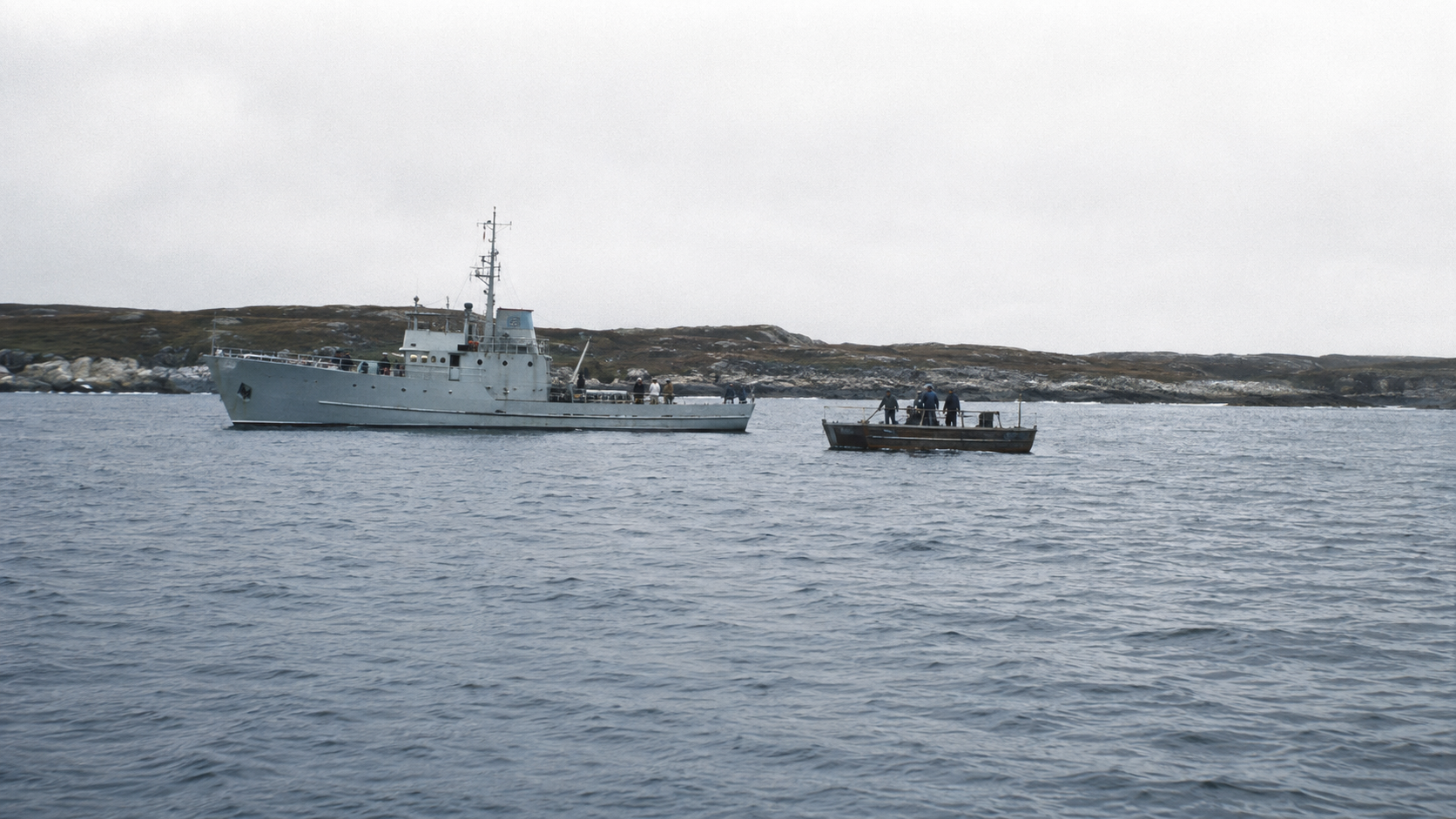
Maritime Command was asked to investigate. A naval officer and diving team, assisted by Coast Guard Cutter 101, searched the area during the days that followed. The operation ended without relevant debris or wreckage. Contemporary newspaper coverage in the Halifax Chronicle-Herald followed the search from the possibility that investigators might find “something concrete” to its termination on October 9.
The Colorado project reached no conventional identification. It also did not treat the incident as proof of an extraordinary craft. Case 34 concluded that further investigation was not justified because the RCMP and Maritime Command had already carried out an immediate search that found nothing.
The official operation was real. The searched-for object was never recovered. Those two facts are the foundation of the case.
Key Claims and Evidence
Multiple witnesses saw a descending formation of lights
This is the strongest observational claim. The early inquiry records a group of five young people, two young women observing from another location, and a separate witness who saw three red-orange lights descend while hearing a whistling sound. Later accounts expanded the named witness pool, but exact totals vary because some retellings combine the original observers, people who saw the surface light, police who arrived afterward, and other aerial reports from elsewhere in the region.
The convergence is meaningful: several people described horizontally arranged lights descending over the same coastal area within the same time window. The limitations are equally clear. The event occurred at night, over water, without photographs, calibrated angular measurements or a preserved instrument record. The witnesses agreed on the general movement more readily than on the number, colour and physical form of the lights.
Police saw a light on the water
The RCMP response adds corroboration after the initial sighting. Case 34 states that three officers arrived in time to observe a white light on the water for several minutes. That establishes that the incident did not end solely with the teenagers’ report.
It does not establish that the surface light was attached to the same physical object as the descending lights. The witnesses briefly lost the aerial lights behind terrain before seeing the light offshore. The reported surface light drifted with the tide, behaviour compatible with a floating source as well as a disabled or submerged object. The official summary fused the sequence into one object that descended, floated and sank; the underlying interview record preserves more uncertainty.
The search and naval dive operation occurred
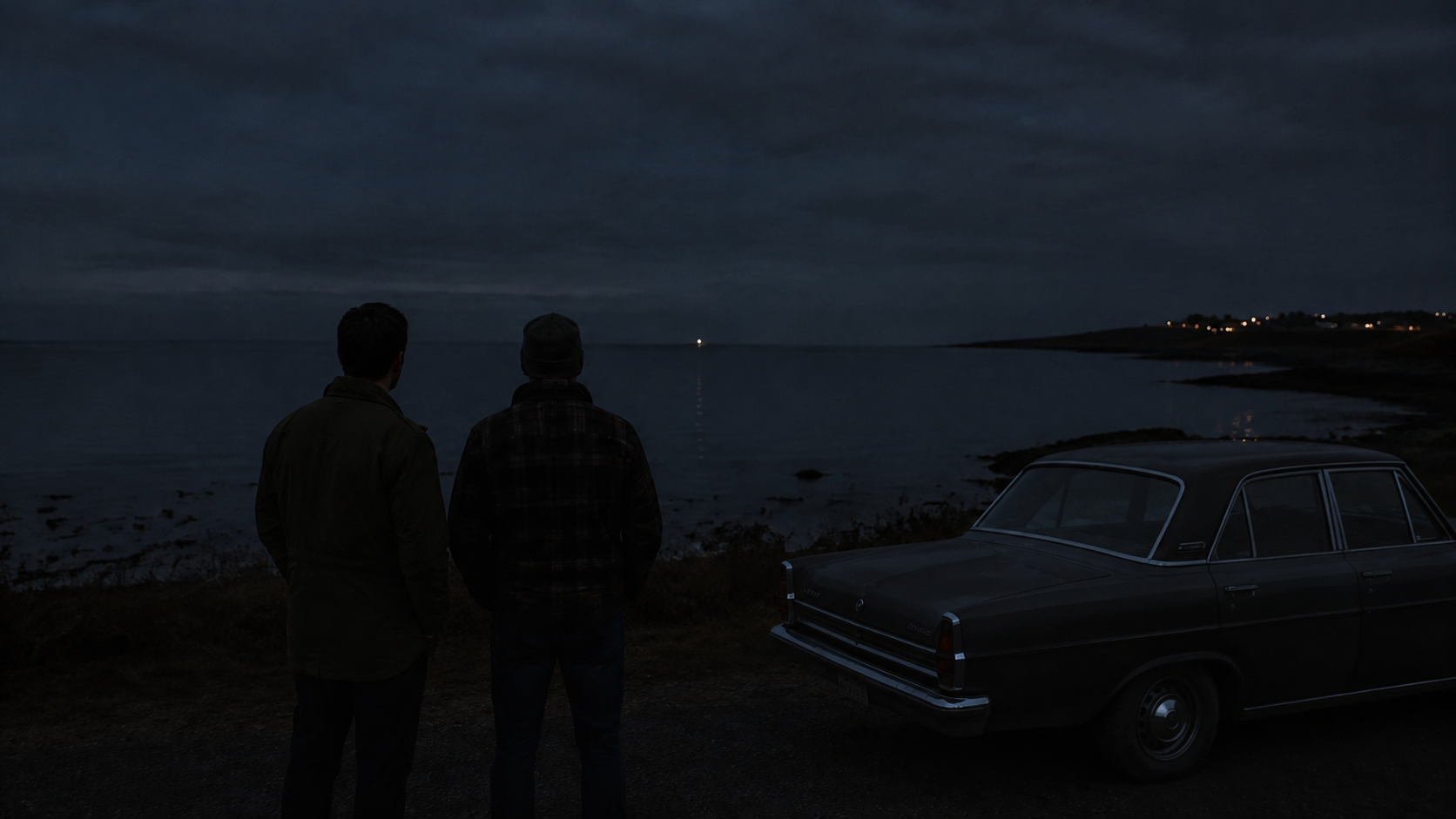
The search is the case’s strongest documentary layer. Police, fishermen, the Coast Guard, the Rescue Coordination Centre and Maritime Command all became involved. Government records and the contemporaneous Condon inquiry agree that boats and divers searched and found no wreckage connected to the sighting.
That response proves that authorities treated a possible accident seriously. It does not prove that a solid craft entered the water. Search-and-rescue agencies act on credible risk before the cause of a report is known. The negative result rules against a conventional aircraft crash more strongly than it supports any particular alternative.
The foam was observed but never preserved as evidence
The foam gives Shag Harbour a physical detail that many distant-light cases lack. Searchers reported patches on the water where the light had been seen, and local fishermen considered them unusual.
But the foam never became forensic evidence. There is no publicly documented sample, chemical analysis or chain of custody. It could have resulted from disturbed water, marine organisms, ordinary sea foam, fuel or pyrotechnic residue, or an unrelated local condition noticed because a search was underway. Without a sample, those possibilities cannot be ranked with confidence.
Canadian officials used “UFO” and rejected several ordinary categories
The government language matters because it shows that the event was not immediately dismissed. Library and Archives Canada preserves records from the Department of National Defence, Transport, the National Research Council and the RCMP, including entries associated with Lower Woods Harbour and Barrington Passage in October 1967. The federal memoranda called the matter a UFO report and stated that aircraft, flare and float explanations had been discounted.
“UFO” described the status of the report, not the origin of the lights. The documents do not say extraterrestrial, non-human or technologically impossible. Nor does the surviving public file provide the complete operational material needed to evaluate how comprehensively every conventional possibility was checked. The paperwork establishes official uncertainty, not an official theory of origin.
The Shelburne underwater narrative came later
Researchers Chris Styles and Don Ledger later developed a larger account in which an object allegedly travelled underwater from Shag Harbour toward Government Point near Shelburne, was joined by a second object and was monitored by Canadian and American forces. Styles based the narrative on interviews with former military personnel and other sources conducted years after the event.
No publicly available contemporaneous document, sonar record, vessel log or named chain of command has verified that extension of the story. A 2017 Canadian Press investigation described the Shelburne claims as lacking hard evidence. They belong in the archive as later testimony, not as a confirmed continuation of the October 4 incident.
Points of Tension
The “impact” is less direct than the legend suggests
Later retellings commonly say that witnesses watched a large craft strike the Atlantic. The early Condon inquiry is more restrained: the primary group lost sight of the descending lights behind a hill, then saw a white light on the water. Its investigator wrote that apparently no one actually saw anything enter the water.
This does not mean the witnesses imagined the descent. It means the crucial transition from sky to sea—was inferred across a short interruption in visibility. That gap is small in time but large in evidentiary consequence.
The official summary is more definite than the underlying account
The Department of National Defence summary describes a single object that descended, produced a flash, floated and sank. The RCMP interview relayed through Case 34 separates those observations: descending lights, a brief obstruction, and then one light on the water. Administrative summaries often compress complex reports, but here the compression makes the event sound physically continuous when the source chronology is not.
Officials rejected ordinary explanations without preserving the full analysis
The memorandum saying the event was not a flare, float, aircraft or known object is an unusually strong piece of official language. Yet a conclusion is not the same as a transparent investigation. The public record does not include complete air-traffic logs, flare inventories, vessel positions, search grids, photographs, foam analysis or detailed dive reports sufficient for an independent reconstruction.
The case may have remained unidentified because the evidence was genuinely unusual. It may also have remained unidentified because the data needed to resolve it were never collected or retained.
The empty search cuts in both directions
If an aircraft or large conventional craft crashed in shallow coastal water, some debris might reasonably be expected. Finding none helped eliminate the original rescue scenario. But the same absence also weakens the claim that a large solid object struck the water at all.
The search is therefore not physical evidence of a craft. It is evidence that qualified responders searched for one and could not find it.
The case grew beyond its strongest sources
The immediate event has government messages, emergency response and a near-contemporaneous external inquiry. The later Shelburne story relies on retrospective testimony and researcher reconstruction. Earlier airline, shipboard and Halifax-area sightings have also been connected to Shag Harbour, sometimes decades after the fact, without a demonstrable common track.
Those additions may contain useful leads. They should not be allowed to borrow the documentary strength of the original search.
Perspectives and Explanations
A conventional aircraft accident
This was the witnesses’ first interpretation and the reason authorities responded. It fits the descending formation of lights and the urgency of the call. It fails against the absence of a missing aircraft, distress transmission, wreckage, occupants or debris. Unless an unreported classified or foreign platform was involved, an ordinary aircraft crash is the weakest surviving conventional explanation.
Flares, markers or marine pyrotechnics
Flares can descend slowly, appear as multiple lights, change brightness and create the impression of hovering over dark water. A floating flare or marker could also account for a light that remained on the surface and drifted with the tide. This category can explain more of the observed sequence than a meteor alone, and it does not require witnesses to be dishonest.
Its weakness is the official record stating that flares and floats were considered and discounted. Because the supporting elimination work is not publicly preserved in detail, that conclusion deserves weight without being treated as experimentally final. A flare theory also has to explain why several lights appeared arranged like an aircraft and how the reported foam fits—or accept that the foam was unrelated.
A meteor or fireball followed by an unrelated surface light
A fragmenting bolide could produce several descending lights, a flash and an apparent fall toward the horizon. Sound can arrive later, and nighttime distance is difficult to judge. The event’s motion may therefore have had a natural astronomical component.
A meteor does not remain illuminated on the water for several minutes. For this explanation to work, the surface light and foam must be separate stimuli incorporated into one narrative after the aerial event. That is possible, but it makes Shag Harbour a compound misidentification rather than a single-object case.
Night-over-water misperception
The disappearance of the horizon, reflections, limited depth cues and moving viewpoints can make distant lights appear lower, closer or attached to the water. The witnesses’ brief loss of sight behind a hill created an opportunity for one set of lights to be replaced perceptually by another. The ebbing tide could make a floating light appear to move away or sink.
This is a strong general framework, but not a complete identification. It explains how the sequence could be misread; it does not identify the actual sources of the aerial and surface lights.
Classified or foreign military activity
Nova Scotia’s Atlantic approaches were strategically important during the Cold War. Aircraft surveillance, anti-submarine operations and the joint Canadian-American listening facility near Shelburne create a plausible context for secrecy. An undisclosed exercise, marker, test article or foreign device could account for official uncertainty and the reluctance or inability to provide a public explanation.
No specific platform, operation or authenticated record has been connected to Shag Harbour. The Cold War setting makes the category plausible; it does not make the hypothesis established.
A genuinely unknown craft
The extraordinary interpretation is that a structured object of unknown origin descended to the sea, remained on or beneath the surface and escaped detection or moved away. It fits the official summary and later underwater claims most directly.
It also carries the largest evidentiary burden. There is no photograph, recovered material, confirmed radar track, sonar record or publicly verified trace of a craft. Non-human origin cannot be ruled out as a logical possibility, but the existing file does not provide affirmative evidence for it.
Context and Pattern Recognition
Shag Harbour occurred during a year of intense UFO reporting and Cold War attention to the sky and sea. Canada did not have one unified UFO investigation agency. Reports moved through the RCMP, Transport, the National Research Council and defence channels depending on who received them and whether they appeared to involve aviation, security or scientific interest. Library and Archives Canada now describes approximately 9,500 digitized records accumulated across those institutions from 1947 into the early 1980s.
The case also reached the American University of Colorado UFO project while the search was still recent. Case 34 is important because it preserved a less polished chronology than later retellings. It confirmed that police and naval authorities responded and that no aircraft or wreckage explained the report. It also exposed the observational gap at the centre of the claimed impact. The committee neither solved the incident nor endorsed an extraordinary interpretation.
Shag Harbour is often grouped with other water-related UAP reports because the phenomenon appeared to continue at the surface. The comparison is useful only at the level of reported behaviour. A light apparently entering water, a radar track descending toward the sea and a recovered object are different evidentiary categories. Resemblance does not establish a shared class of underwater craft.
Over time, the incident became part of local and national memory. The Shag Harbour UFO Incident Society established an interpretive centre, the coastal site became a visitor destination, and the Royal Canadian Mint issued a glow-in-the-dark collector coin in 2019. These acts document the cultural afterlife of the case—not the identity of the 1967 lights.
The federal Sky Canada Project’s modern reference to Shag Harbour is similarly easy to misread. Its inclusion confirms the case’s historical prominence in Canadian UAP reporting. It is not a new scientific validation of an extraterrestrial or non-human explanation.
Implications: Reality Check
If Shag Harbour resulted from flares, reflections or a compound misidentification, the case still matters. It would demonstrate how several ambiguous observations can converge into an urgent and rational search-and-rescue response. That is not a story about foolish witnesses. It is a lesson in human perception, maritime uncertainty and the necessity of acting before complete information is available.
If a classified or foreign device caused the incident, the case becomes a study in how secrecy can preserve an anomaly. Responders may search sincerely while lacking access to the information that would explain what triggered the search. An unresolved public file could then coexist with a conventional answer held elsewhere—or with no answer at all.
If a genuinely unknown craft entered or operated near the water, the implications would extend beyond UFO history. It would raise questions about maritime-domain awareness, cross-agency data retention and how governments investigate phenomena that move between air and sea. But the Shag Harbour record does not yet cross that threshold. It identifies the institutional problem more clearly than the physical object.
The deepest reality check is that official documentation can prove an event entered government attention without proving the event happened exactly as later memory describes it. At Shag Harbour, the archive is strongest when it records the report, response and failed search. It becomes weakest at the precise point where the story becomes most extraordinary.
The Unresolved Ledger
What Is Documented
Multiple people near Shag Harbour reported a horizontal group of lights descending toward the water late on October 4, 1967. The RCMP responded to what was reported as a possible aircraft accident. Officers subsequently observed a light on the water, local boats and a Coast Guard vessel searched, and patches of foam were reported.
The Rescue Coordination Centre found no missing aircraft that accounted for the incident. Canadian defence communications labelled the matter a UFO report and recorded that common categories including aircraft, flares and floats had been discounted. Maritime Command deployed a diving team, the search ended without relevant wreckage, and the incident entered both Canadian government files and the Condon study.
What Is Claimed
Witnesses claimed that three or four lights descended at an angle and appeared connected to an aircraft-sized or larger object. Some reported a whistling sound, flash or impact-like event. Later accounts described the surface light as a large glowing object and assigned more precise size, colour and motion to it than the earliest surviving reconstruction consistently supports.
Researchers later claimed that the object travelled underwater toward Shelburne, was joined by another object and was monitored by Canadian or American military forces. Those claims remain dependent on retrospective interviews and are not corroborated by publicly available contemporaneous operational records.
What Remains Unresolved
The sources of the descending lights and the later surface light remain unidentified. It is not known whether they were parts of one event or separate stimuli linked by timing and expectation. The nature of the foam is unknown because no testable sample survives. The released record does not reveal how authorities excluded flares and floats, and the public archive is insufficient to determine whether the search covered the correct location with enough precision to find a small object.
Most importantly, the file cannot establish that a physical craft entered the water. It also cannot identify an ordinary source that reproduces the complete reported sequence.
Why It Still Matters
Shag Harbour shows why “officially documented” and “physically demonstrated” are not interchangeable. The event generated genuine institutional action, but that action preserved the report more successfully than the phenomenon. It is one of the clearest examples of an unknown surviving not because the evidence proves something extraordinary, but because the evidence is substantial enough to resist dismissal and incomplete enough to prevent identification.
The case also demonstrates how a mystery grows. A cautious sequence—descending lights, interrupted visibility, a surface light and a failed search became an impact, then a submerged craft, then a secret underwater operation. Preserving the distinctions between those layers does not weaken Shag Harbour. It reveals where the real mystery remains.
The Galactic Mind Perspective
Shag Harbour deserves its place in the archive, but not for the reason most often advertised. It is not the world’s clearest documented UFO crash. The public record does not demonstrate a crash, and it does not contain physical evidence of a craft.
What it does contain is more disciplined and, in its own way, more revealing: several witnesses reporting descending lights, police arriving in time to see a surface light, a coordinated search, an official inability to match the event to an aircraft, and a naval operation that recovered nothing.
A conventional explanation remains more economical than a non-human craft. Flares, marine lights, perspective over dark water and the fusion of separate stimuli can plausibly account for much of the sequence. Yet no single ordinary source has been demonstrated from the surviving evidence, and the official conclusion that common categories had been checked cannot simply be ignored.
The responsible position is therefore narrower than belief and more open than dismissal. Something prompted a credible emergency response. The response did not identify its cause. Later storytelling made the transition from sky to sea appear more certain than the early reconstruction allows.
Shag Harbour belongs in The Galactic Mind because it exposes a recurring problem at the edge of reality: institutions can respond to an unknown without capturing enough evidence to preserve it. Once that happens, the file becomes a contest between memory, paperwork and the blank space where decisive data should have been.
The sea did not return a craft.
The archive did not return an answer.
Open Question
Did one unidentified object move from the sky to the water at Shag Harbour or did darkness, distance and an urgent search bind several ordinary lights into a mystery that no surviving record can now separate?
What do you think? Drop your thoughts in the comments...
More in Case Files
Trans-en-Provence: The French Landing Trace That Refused to Explain Itself
A reported landing, documented ground trace and official investigation provide a useful contrast with Shag Harbour’s search operation and absence of preserved physical evidence.
Rendlesham Forest: The Military UFO Case That Still Refuses to Close
Military witnesses, a memorandum and an audio recording show how an official file can preserve a real incident while later testimony expands beyond the earliest evidence.
USS Nimitz Tic Tac: The 2004 Navy UAP Encounter That Remains Unresolved
A modern maritime UAP case where official provenance and credible testimony survive, but the sensor data needed to test the strongest claims remains incomplete.
Sources / Receipts
- Library and Archives Canada. “Canada’s UFOs: The Search for the Unknown.” Official guide to approximately 9,500 digitized federal UFO records from National Defence, Transport, the National Research Council and the RCMP.
- Library and Archives Canada. “1967 Shag Harbour UFO Sighting and Related Research.” Curated research list containing archival and published holdings related to the incident.
- Levine, Norman E. “Case 34: North Atlantic, Fall 1967.” In Scientific Study of Unidentified Flying Objects, University of Colorado, 1969. Contemporary telephone inquiry involving Canadian Naval Maritime Command and the RCMP; hosted as a transcription by Project 1947.
- Government of Canada, Office of the Chief Science Advisor. “Management of Public Reporting of Unidentified Aerial Phenomena in Canada.” Sky Canada Project, 2025. Includes Shag Harbour among Canada’s best-known historical UAP reports.
- MacDonald, Michael. “Canada’s Best-Documented UFO Sighting Still Intrigues, 50 Years On.” The Canadian Press via CityNews, September 21, 2017. Includes interviews with Laurie Wickens and Chris Styles and reproduces key defence-memo language.
- MacLeod, Ray. “Could Be Something Concrete in Shag Harbour UFO—RCAF.” Halifax Chronicle-Herald, October 7, 1967; and “UFO Search Called Off,” October 9, 1967. Contemporaneous newspaper coverage of the naval search; copies are referenced in archival and later research collections.
- Styles, Chris, and Don Ledger. Dark Object: The World’s Only Government-Documented UFO Crash. Dell, 2001. Principal published source for the later Shelburne and underwater-movement narrative; those claims are not independently established by the surviving contemporaneous file.
- Dunning, Brian. “The Shag Harbour UFO.” Skeptoid, Episode 565, April 4, 2017. Skeptical examination emphasizing flares, meteors, witness variation and limits in the documentary record.
- Royal Canadian Mint. “The Royal Canadian Mint Makes a Splash With a Coin Illustrating Canada’s Famous UFO Crash Story.” October 1, 2019. Primary source for the collector coin and the case’s national cultural commemoration.
- Shag Harbour UFO Incident Society. Official site and interpretive-centre history. Used for the case’s present-day local preservation and cultural legacy, not as independent verification of the 1967 object.


Discussion