
Some people enter the UAP conversation through classified programs.
Others enter through science, government, military service, or direct testimony.
James Fox entered through a camera.
That may sound smaller at first. A filmmaker does not command a government office. A filmmaker does not declassify records. A filmmaker does not prove the origin of an object in the sky.
But documentary film has a different kind of power.
It preserves voices.
It arranges memory.
It gives the public a way to sit with witnesses long enough to feel the weight of what they are saying.
For decades, Fox has built his career around that function. He has interviewed pilots, military personnel, government figures, civilians, researchers, and ordinary witnesses who claim to have encountered something that did not fit the accepted frame of reality.
His films do not settle the UAP question.
They do something more culturally important.
They keep the best stories from being swallowed by ridicule.
Overview
James Fox is a documentary filmmaker best known for his long-running work on UFOs and unidentified anomalous phenomena.
His major films include UFOs: 50 Years of Denial?, Out of the Blue, I Know What I Saw, The Phenomenon, Moment of Contact, and The Program. Across these projects, Fox has returned again and again to the same basic method: bring witnesses into the light, give them time to speak, and ask the audience to judge whether the subject deserves more serious investigation.
That method has made him one of the most visible filmmakers in the modern UAP space.
Fox is not primarily a theorist. He is not building a grand metaphysical system around the phenomenon. His work is built around testimony, cases, emotional credibility, and the pressure created when many unrelated witnesses describe experiences that seem to point beyond ordinary explanation.
His films often sit in the contested space between journalistic investigation and advocacy.
That is what makes him interesting.
Fox does not merely document the UAP conversation.
He helps shape how the public feels about it.
Origins and Background
James Fox began making UFO-related documentaries well before the modern UAP era changed the tone of the subject.
In the 1990s and early 2000s, UFOs were still largely treated by mainstream culture as either entertainment, conspiracy, or embarrassment. Serious witnesses often carried reputational risk. Military personnel, pilots, and officials who spoke publicly could be dismissed before their claims were even examined.
Fox built his early work inside that environment.
His 2003 documentary Out of the Blue, narrated by Peter Coyote, presented UFO cases through interviews, archival material, and government-related testimony. The film helped establish Fox’s basic style: sober presentation, a focus on credible witnesses, and a belief that some cases deserve more attention than the public record has allowed.
He followed that path with I Know What I Saw, which continued the witness-centered approach and brought together people who claimed direct experience with UAP events, including pilots and officials.
By the time The Phenomenon arrived in 2020, the public environment had changed dramatically. The New York Times had already reported on the Pentagon’s UAP-related work. Military videos had entered mainstream conversation. Former officials were speaking publicly. Congress was beginning to take the subject more seriously.
Fox’s film arrived at the exact moment when the UFO subject was being rebranded into the UAP question.
That timing mattered.

What He Is Known For
James Fox is known for making documentaries that treat UAP witnesses as central evidence in the public conversation.
His work repeatedly returns to several themes:
The phenomenon has a long history that cannot be reduced to one viral clip or recent military video.
Some witnesses are not easily dismissed. They include pilots, military personnel, officials, police officers, civilians, and people with reputations to lose.
Government secrecy has shaped public understanding of the subject.
The stigma around UFOs has prevented serious inquiry.
The public evidence remains incomplete, but the witness record is too persistent to ignore.
Fox’s most widely discussed modern films are The Phenomenon, Moment of Contact, and The Program.
The Phenomenon attempted to present the UAP issue as a long historical arc, moving from older cases into the modern government conversation.
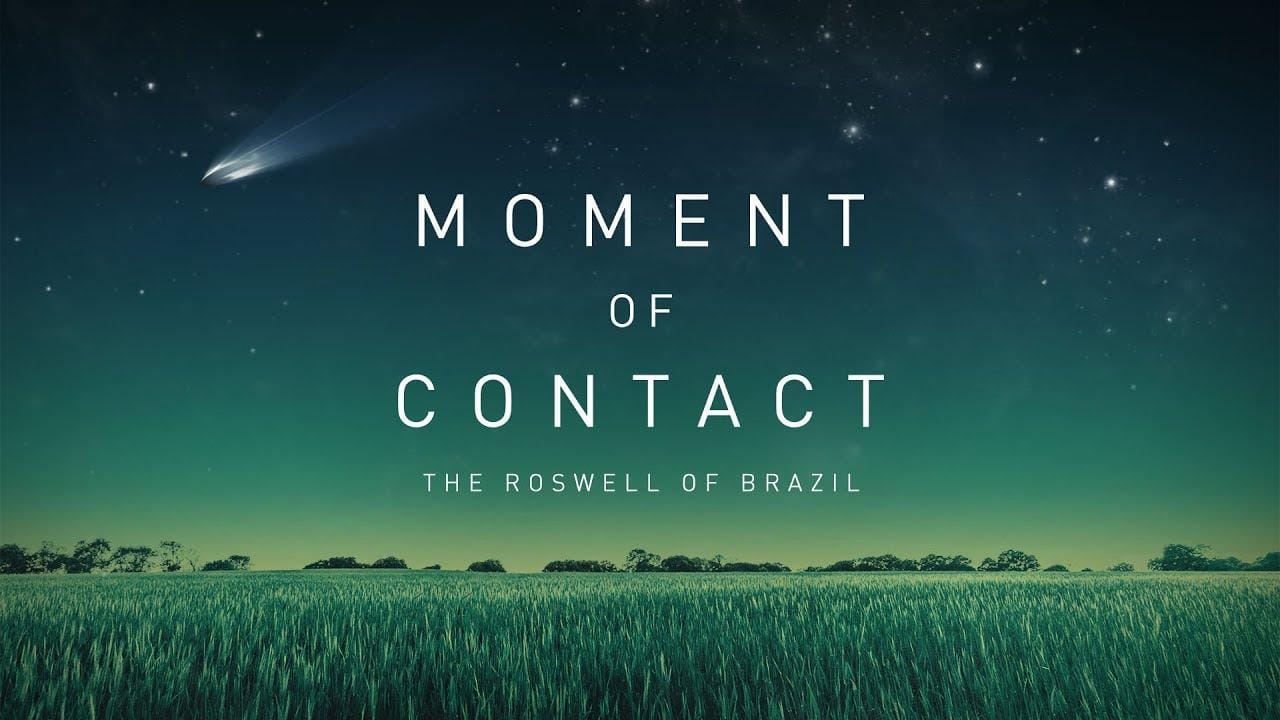
Moment of Contact focused on the alleged 1996 Varginha incident in Brazil, sometimes described by believers as the “Roswell of Brazil.” The film leaned heavily on witnesses connected to the local event and the claim that something extraordinary happened there.
The Program moved into the post-Grusch and congressional-hearing era, focusing on the growing bipartisan effort to determine what U.S. intelligence agencies know about UAP.
Taken together, these films show Fox’s evolution.
He began by asking whether UFO witnesses deserved to be believed.
He is now asking whether institutions are withholding reality-changing information from the public.
The Core Idea
The core idea behind James Fox’s work is simple:
The witness record matters.
In many areas of mainstream science, witness testimony is treated with caution, and often for good reason. People misperceive. Memory changes. Culture influences interpretation. Stories can spread. Extraordinary claims demand more than sincerity.
Fox understands this, but his films push back against the opposite failure: dismissing testimony so quickly that serious cases are never properly investigated.
His work asks a difficult question.
What happens when many witnesses, across decades, across countries, and across professions, describe events that seem to resist ordinary explanation?
Do we dismiss them all?
Do we accept them all?
Or do we preserve the testimony, compare patterns, demand records, and investigate the best cases with the seriousness they were denied?
That is Fox’s lane.
He does not prove the final answer.
He keeps the question alive.
The Phenomenon and the Mainstream Shift
The Phenomenon became one of Fox’s most important films because it arrived during a period when the UAP subject was moving out of fringe culture and into official discussion.
The documentary connected older cases, government secrecy, military testimony, and modern UAP reporting into one public narrative. It featured high-profile voices and attempted to make the case that the subject deserved serious investigation rather than ridicule.
The film’s importance was not that it proved extraterrestrial visitation.
Its importance was tonal.
It treated the subject as serious.
It presented witnesses without turning them into caricatures.
It connected individual cases to a broader institutional question.
By 2020, the public had already begun hearing about Pentagon UAP programs and military videos. The Phenomenon gave viewers a broader historical frame for understanding that shift.
In that sense, Fox helped do for documentary audiences what serious journalism was doing for news audiences.
He moved the subject into a more credible room.
Moment of Contact and the Risk of the Witness-First Method
Moment of Contact is one of Fox’s most ambitious and controversial films.
The documentary focuses on the alleged 1996 Varginha incident in Brazil, where local witnesses claim unusual beings were encountered and that authorities became involved. To supporters, the case is one of the most compelling alleged crash and retrieval stories outside the United States. To skeptics, it remains a powerful but unproven account built largely on testimony, local memory, and claims that have not been publicly verified through physical evidence.
This is where Fox’s method is both strongest and most vulnerable.
His strength is that he finds people who often appear sincere, ordinary, and emotionally affected by what they say happened. He lets the human reality of the story come through. In a subject often flattened into arguments, this matters.
His vulnerability is that emotional force is not the same as proof.
A moving witness can still be mistaken.
A consistent story can still lack verification.
A local legend can still gather power over time.
That does not make the film worthless. It makes the boundary important.
Moment of Contact is strongest as a preservation of testimony and local memory.
It is weaker as public proof of a non-human event.
For The Galactic Mind, that tension is exactly why Fox deserves a Dossier.
He operates at the border where testimony becomes culture, and culture begins demanding evidence.

The Program and the Disclosure Era
With The Program, Fox moved directly into the current disclosure moment.
The film focuses on the congressional effort to uncover what intelligence agencies know about UAP, now framed less as a fringe mystery and more as an issue involving oversight, national security, whistleblowers, and public accountability.
This is the natural endpoint of Fox’s earlier work.
For years, his films asked people to take witnesses seriously.
Now the question has become institutional.
If even a fraction of the strongest claims are true, who has access to the evidence?
Who controls it?
Who has the authority to classify it?
What does Congress know?
What does the public have a right to know?
And why has the subject remained so difficult to resolve despite decades of testimony?
The Program reflects the new terrain of the UAP conversation. The mystery is no longer only in the sky. It is in hearings, records, agencies, contractors, whistleblower channels, and the struggle between secrecy and oversight.
Fox’s role in that terrain remains cinematic.
He is not the investigator with subpoena power.
He is the storyteller trying to keep public pressure focused.
Perspectives and Interpretations
One interpretation of James Fox is that he is one of the most important documentarians in the modern UAP movement.
In this view, his films have helped protect credible witnesses from being erased by stigma. He gives them a serious platform and creates a historical record that future researchers, journalists, and the public can revisit.
Another interpretation is that Fox is a disclosure advocate as much as a documentarian.
His films are not neutral in the detached sense. They are built around the idea that the public has not been told the full truth and that the witness record points toward a larger hidden reality. For supporters, that conviction gives his work urgency. For skeptics, it can make his films feel too invested in a conclusion before the public evidence has caught up.
A third interpretation is more balanced.
Fox may be best understood as a narrative bridge. He takes fragmented cases, scattered testimony, and complex historical threads and turns them into emotionally coherent public stories.
That is valuable.
But it also means viewers must remember the difference between a compelling documentary and a closed case.
Film can reveal.
Film can preserve.
Film can persuade.
But film cannot replace physical evidence, data transparency, chain of custody, or scientific validation.
Strengths and Limitations
Fox’s greatest strength is witness access.
He has spent years gaining trust inside a difficult field. People speak to him because they believe he will take them seriously. That trust allows his films to capture stories that might otherwise remain buried, fragmented, or dismissed.
His second strength is pacing and emotional clarity.
Fox understands that the UAP subject can overwhelm audiences with names, dates, agencies, acronyms, cases, and competing claims. His films simplify without always flattening. They give viewers a path through the material.
His third strength is seriousness of tone.
Fox rarely presents the subject as camp. He wants the viewer to feel the gravity of the claim, even when the evidence remains incomplete.
His limitation is the same one facing nearly everyone in the UAP space.
The public record has not caught up to the strongest claims.
NASA’s independent UAP study found no conclusive evidence in peer-reviewed scientific literature suggesting an extraterrestrial origin for UAP. AARO’s historical review has stated that it found no empirical evidence that UAP cases represent extraterrestrial technology or that the U.S. government possesses recovered off-world technology.
Those official conclusions do not automatically invalidate every witness Fox has filmed.
But they do define the public evidence problem.
The gap remains.
Fox’s films live inside that gap, between testimony and proof, between public denial and insider claims, between witness memory and institutional record.
Broader Implications
James Fox matters because the UAP question is not only a scientific or governmental issue.
It is also a media issue.
How the subject is shown determines how the subject is understood.
If UAP are presented as jokes, the public laughs before it listens.
If they are presented as certainty without proof, the public either believes too quickly or rejects the whole topic.
If they are presented through credible witnesses, historical context, and unresolved questions, the conversation becomes harder to dismiss.
That is where Fox has been effective.
His films have helped create a public archive of seriousness.
They tell viewers that the subject is not reducible to internet clips, hoaxes, and wild claims. There are people who have carried these experiences for decades. There are officials who believe the public story is incomplete. There are cases that still produce discomfort because the easy explanation does not fully satisfy everyone.
That does not mean the extraordinary answer is correct.
It means the question deserves better handling.
Fox’s work also raises a deeper issue for disclosure culture.
If the public is ever shown definitive evidence of Non Human Intelligence, it will not arrive into an empty cultural field. It will arrive into a world already shaped by documentaries, journalism, whistleblowers, podcasts, government hearings, and decades of media framing.
Filmmakers like Fox are part of that preparation.
They do not merely report the myth.
They help build the mental room where the myth might become policy, science, or history.

The Galactic Mind Perspective
James Fox is important because he understands the emotional architecture of testimony.
A witness is not just a data point.
A witness is a person asking reality to make room for something they experienced and could not explain.
That does not mean every witness is correct. It does not mean every story is evidence of Non Human Intelligence. It does not mean sincerity can replace proof.
But it does mean that dismissal has a cost.
For too long, the UFO subject was kept in a cultural prison built from ridicule. Serious witnesses learned to stay quiet. Pilots hesitated. Officials avoided the topic. Ordinary people buried experiences that did not fit the world they were allowed to describe.
Fox’s films push against that silence.
They do not solve the mystery.
They preserve the voices that make the mystery impossible to ignore.
That is why his work matters to The Galactic Mind.
The truth about UAP, whatever it becomes, will not be built from belief alone. It will require documents, data, materials, oversight, scientific testing, and public accountability.
But before a civilization demands evidence, it often needs someone to convince it that the question is worth asking.
James Fox has spent much of his career doing exactly that.
Open Question
If the strongest UAP testimony continues to accumulate, but the strongest public evidence remains hidden, missing, or disputed, where does that leave the public?
At what point does a witness record become too large to ignore?
And at what point must testimony either be converted into evidence or released from the burden of proving what only institutions may be able to confirm?
That may be the real tension in James Fox’s work.
He has built films around people saying, “This happened.”
The next phase of disclosure may depend on whether institutions can finally answer:
“Here is what we know.”
What do you think? Drop your thoughts in the comments ...
Sources / Receipts
-The Phenomenon official film materials
Useful for the film’s framing, trailer, release context, and its focus on UAP history and government-related testimony.
-The Program official listings and trailer
Useful for confirming the 2024 film’s focus on congressional hearings, UAP oversight, and claims about what intelligence agencies know.
-Moment of Contact official listings and trailer
Useful for confirming the film’s focus on the 1996 Varginha case in Brazil.
-The Guardian: “It’s not a question of belief”
Useful for mainstream coverage of The Phenomenon and Fox’s attempt to treat the UFO issue as a serious government and witness record story.
-The Hollywood Reporter: The Phenomenon acquisition and trailer coverage: Useful for industry context around the release and distribution of Fox’s modern UAP work.
-Variety: Varginha / Moment of Contact acquisition coverage
Useful for industry confirmation of Fox’s Varginha-focused follow-up project.
-Apple TV: The Program
Useful for the 2024 documentary description, runtime, director credit, and its congressional-hearing focus.
-Rotten Tomatoes: The Program
Useful for public-facing synopsis and cast and crew details.
-IMDb: The Phenomenon, Moment of Contact, and The Program
Useful for filmography, credits, runtime, director information, and public release details.
-NASA UAP Independent Study Team Report, 2023
Important balance source stating that there is no conclusive evidence in peer-reviewed scientific literature suggesting an extraterrestrial origin for UAP, while also calling for better data.
-AARO Historical Record Report, Volume 1, 2024
Important balance source stating that AARO found no empirical evidence that UAP cases represent extraterrestrial technology or that the U.S. government possesses recovered off-world technology.


Discussion