
J. Allen Hynek began as a scientist asked to explain UFOs away.
That is what makes his story matter.
He was not an outsider trying to force the subject into public attention. He was not a fringe believer trying to prove a theory. He was an astronomer, professor, and government consultant brought into the official UFO problem because he represented something the subject badly needed:
Scientific authority.
For years, Hynek worked with the U.S. Air Force on Projects Sign, Grudge, and Blue Book. His role was to examine reports and determine whether witnesses were seeing stars, planets, meteors, aircraft, balloons, atmospheric effects, or something else that could be explained inside ordinary categories.
Most cases could be.
But not all of them.
Over time, Hynek moved from skeptical consultant to one of the most important advocates for serious UFO study in the twentieth century. Not because he claimed to have solved the mystery. Not because he proved extraterrestrial visitation. But because he became convinced that some reports were being dismissed too quickly, handled too loosely, or buried beneath ridicule before they could be studied properly.
His legacy is not certainty.
His legacy is method.
Hynek helped give the UFO subject a structure, a vocabulary, and a scientific posture that still echoes inside the modern UAP conversation.
The deeper question is not whether Hynek answered the UFO mystery.
The deeper question is why one of the scientists brought in to close the file eventually became one of the strongest voices arguing that the file had never really been handled correctly.
Overview
J. Allen Hynek was an American astronomer and professor best known for his long association with the U.S. Air Force’s UFO investigations and for creating the “Close Encounter” classification system.
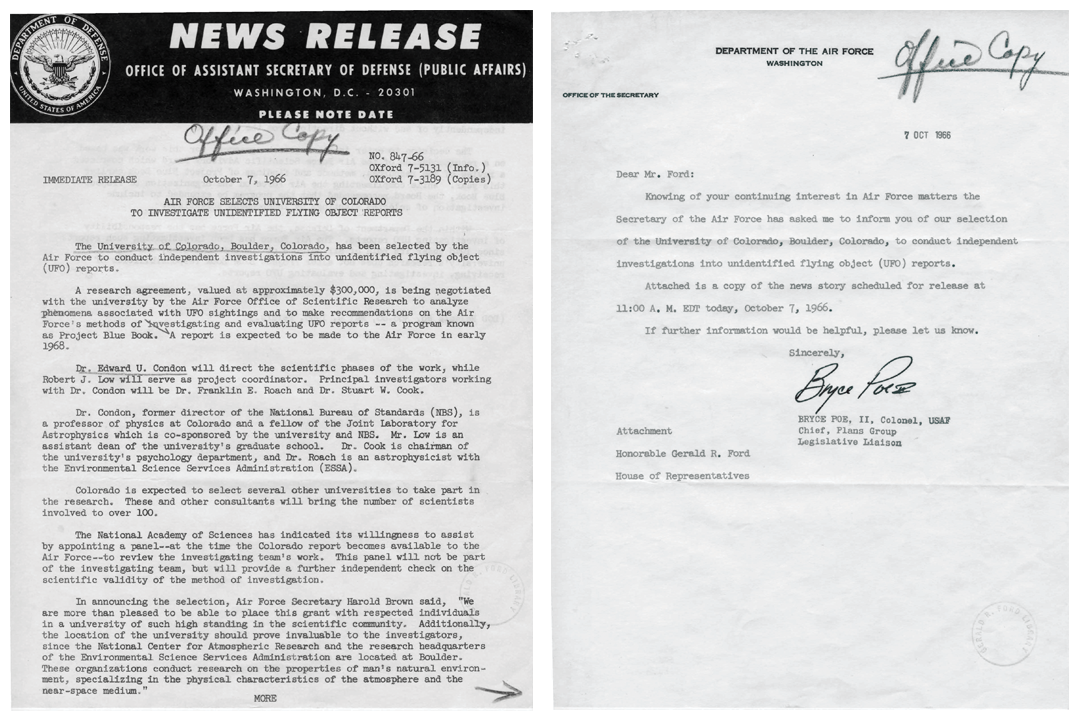
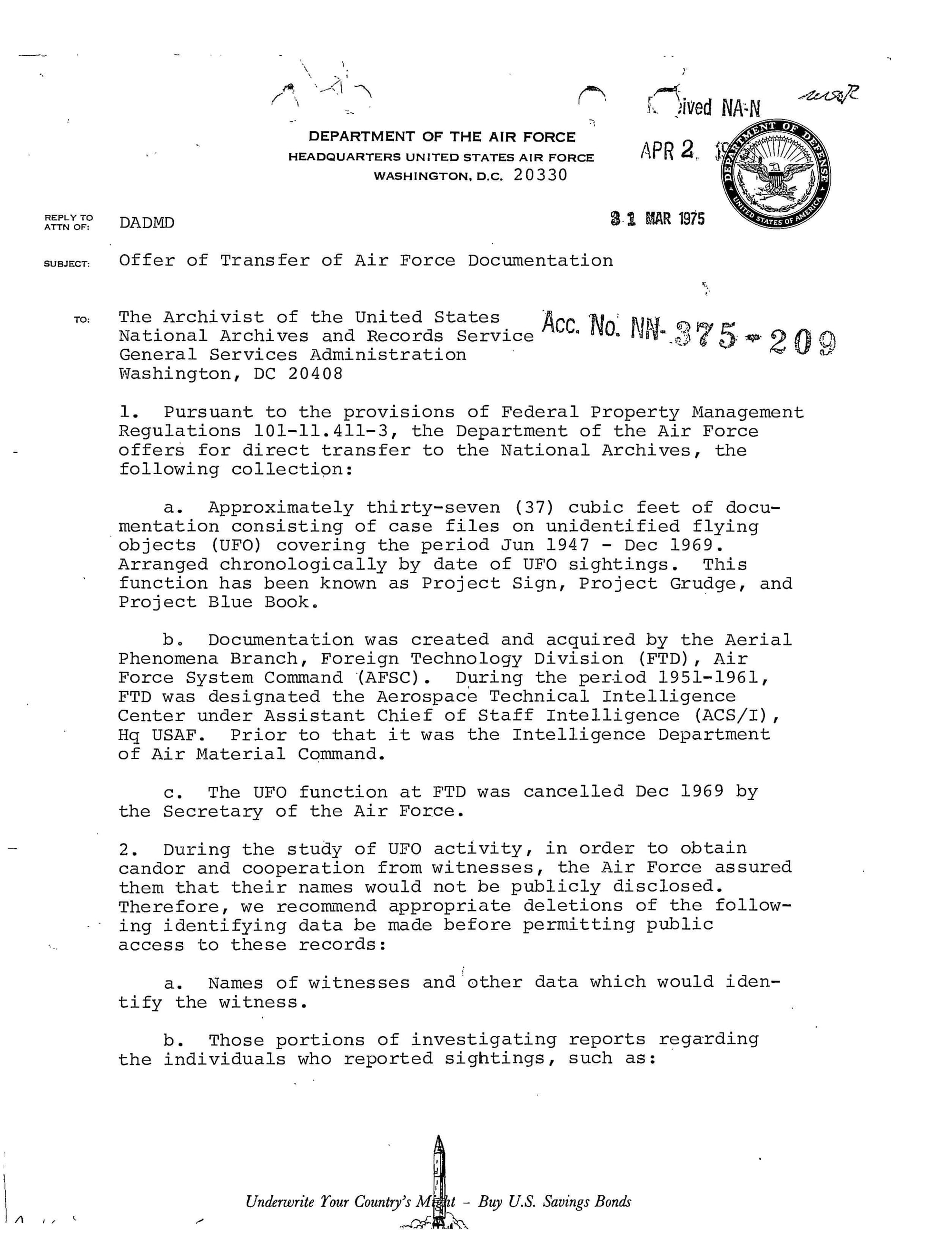
He served as a scientific consultant during the classic government UFO era, including Project Blue Book, the Air Force program that collected thousands of UFO reports before closing in 1969.
At first, Hynek approached UFOs as a problem of misidentification.
That was reasonable.
Many reports were explainable. Venus, meteors, aircraft, weather balloons, atmospheric effects, and faulty witness interpretation all played a role. Hynek understood that the sky is easy to misread, especially under strange conditions.
But as the years passed, he became increasingly dissatisfied with how the stronger cases were being treated.
That shift is the center of the Hynek story.
He did not move from science into fantasy.
He moved from institutional skepticism into disciplined uncertainty.
That distinction matters.
Because Hynek’s real contribution was not telling people what UFOs were. It was arguing that the unknown should not be dismissed simply because it made science uncomfortable.

Origins and Background
Josef Allen Hynek was born in Chicago in 1910. Before he became associated with UFOs, he was a serious academic astronomer.
He studied at the University of Chicago, worked at Yerkes Observatory, taught at Ohio State University, and later became chairman of the astronomy department at Northwestern University.
His scientific career was not minor.
Hynek worked on astronomical observation, satellite tracking, telescope technology, and space-age research. He was part of the world of formal science before the UFO subject ever attached itself to his public name.
That background matters because it separates Hynek from many later UFO figures.
He did not enter the topic through belief.
He entered through assignment.
In 1948, the Air Force brought him in to consult on reports of unidentified flying objects. The early modern UFO era had already begun. Kenneth Arnold’s 1947 sighting had entered newspapers. Reports were spreading. The Cold War was intensifying. Unknown objects in the sky were not just a curiosity. They were also a national security problem.
The Air Force needed explanations.
Hynek was useful because he could identify astronomical causes.
A witness reports a brilliant object near the horizon.
Could it be Venus?
A strange light streaks across the sky.
Could it be a meteor?
A pilot sees something moving oddly.
Could it be a star, reflection, balloon, or aircraft?
This was Hynek’s early role.
He helped filter the noise.
But the longer he stayed near the archive, the more the residue mattered.
There were always cases that did not fit cleanly.
Not enough to prove aliens.
Enough to prevent easy closure.
What It’s Known For
Hynek is known for several major contributions.
First, he was the scientific face attached to the Air Force’s official UFO investigations.
That placed him inside the institutional machinery of the subject. He saw how cases were collected, categorized, explained, disputed, and eventually folded into public messaging.
Second, he created the “Close Encounter” classification system.
In his 1972 book The UFO Experience: A Scientific Inquiry, Hynek organized UFO reports into categories such as nocturnal lights, daylight discs, radar-visual cases, and close encounters.
The close encounter scale became his most famous contribution:
- Close Encounter of the First Kind: a UFO is seen at close range, but leaves no physical effect.
- Close Encounter of the Second Kind: the sighting is associated with physical traces or environmental effects.
- Close Encounter of the Third Kind: the report includes occupants or beings associated with the object.
This language later entered popular culture through Steven Spielberg’s Close Encounters of the Third Kind, where Hynek also served as technical advisor and appeared briefly on screen.
Third, Hynek founded the Center for UFO Studies.
After Project Blue Book ended, he did not simply return to academic silence. He helped create an organization dedicated to continued UFO research, archival preservation, and case investigation.
That move is important.
Hynek did not only criticize the old system.
He tried to build a better one.
Fourth, he became a symbol of scientific reversal.
The public remembers him as the astronomer who began skeptical and ended up arguing that UFOs deserved serious study.
That is true, but it needs careful handling.
Hynek did not become a careless believer.
He became dissatisfied with careless dismissal.
That is a much stronger and more useful signal.
The Core Idea
The central signal behind J. Allen Hynek is this:
The unexplained should not be protected from belief by ridicule. It should be protected from belief by method.
That is the Hynek line.
He understood why skepticism was necessary.
A field like UFOs attracts misidentification, hoaxes, exaggeration, faulty memory, wishful thinking, and myth-making. Without skepticism, the subject dissolves into noise.
But Hynek also understood that ridicule is not the same thing as skepticism.
Ridicule closes the file before the evidence is weighed.
Skepticism weighs the evidence before deciding what can be responsibly said.
That difference became the heart of his work.
Hynek’s deeper importance is not that he validated every UFO report. He did not.
His importance is that he helped clarify the difference between weak cases, explainable cases, unresolved cases, and cases that might deserve deeper study.
He gave the UFO question a kind of grammar.
Not proof.
Grammar.
A way to speak about the unknown without turning it immediately into belief, fantasy, or institutional embarrassment.
The unknown does not become meaningless just because it is difficult to classify.
Perspectives and Interpretations
Hynek sits in an unusual position because nearly every side of the UFO conversation can claim part of him.
To skeptics, he is a complicated figure.
They can point to his early work debunking many cases and argue that his scientific instincts were strongest when he was reducing sightings to ordinary explanations. They can also argue that his later influence helped give too much legitimacy to a field where evidence often remains weak, anecdotal, or poorly controlled.
That criticism should not be dismissed.
The UFO field has often been harmed by overstatement. Too many claims jump from “unexplained” to “alien” without enough evidence in between. Hynek himself understood that danger.
To believers, Hynek is often treated as a conversion story.
The scientist came in skeptical.
The files changed his mind.
The institution failed.
The truth remained.
There is a reason this version is powerful. It gives the UFO subject a credible witness from inside the official system.
But it can also flatten Hynek.
He did not simply “switch sides.” He resisted simple sides. His position was more uncomfortable than belief. He argued for investigation without claiming final answers.
To historians, Hynek represents a key hinge between the government UFO era and modern civilian ufology.
Before Hynek, UFOs were already part of public culture. After Hynek, the subject had a more formal vocabulary. His work helped move the discussion from vague flying saucer stories into classified case types, witness categories, and investigative frameworks.
To institutions, Hynek was more difficult.
He was useful when explaining cases.
Less useful when asking why the unresolved cases remained unresolved.
That is where his story becomes larger than one man.
Hynek reveals the problem institutions face when the public asks questions that cannot be answered cleanly.

Strengths and Limitations
Hynek’s strength was not that he solved UFOs.
His strength was that he helped discipline the conversation.
He knew that not every witness was reliable.
He knew that the sky creates illusions.
He knew that a report could be sincere and still be wrong.
But he also knew that “most cases are explainable” does not automatically erase the cases that are not.
That was his pressure point.
Most of the time, institutions use the majority category to reduce the importance of the minority category.
If 90 or 95 percent of reports can be explained, the remaining percentage can be made to sound statistically irrelevant.
Hynek resisted that move.
A small residue can matter if the cases inside it are strong enough.
That does not mean the residue proves non-human intelligence.
It means the residue deserves better handling.
Still, Hynek’s limitations are real.
UFO research in his era often lacked the sensor quality, metadata, chain of custody, and repeatable observation standards that modern science would require. Witness testimony can be valuable, but it is also fragile. Memory changes. Perception fails. Social context shapes interpretation.
Even the strongest Hynek-era cases often remain trapped inside incomplete records.
A good witness is not the same thing as a controlled measurement.
A strange trace is not the same thing as a verified technology.
An unexplained case is not automatically an extraordinary object.
That is where Hynek should be read carefully.
His work strengthens the case for serious inquiry.
It does not remove the need for evidence.
The Swamp Gas Moment
No episode shaped Hynek’s public reputation more than the 1966 Michigan sightings.
After reports of strange lights, Hynek suggested that some sightings may have involved swamp gas. The phrase became infamous almost immediately.
To many people, it sounded absurd.
Not just wrong.
Dismissive.
The explanation became a symbol of official condescension. Future president Gerald Ford, then a congressman from Michigan, called for a congressional investigation into the Air Force’s handling of the matter.
The moment damaged Hynek.
But it also changed him.
The swamp gas episode revealed how fragile public trust becomes when an explanation feels rushed, incomplete, or imposed from above.
That is one of the most important lessons in the entire UFO subject.
People do not only reject explanations because they want mystery.
Sometimes they reject explanations because the explanation does not feel earned.
Hynek learned that the hard way.
From that point forward, he became more openly critical of dismissive scientific and institutional attitudes toward UFO reports.
The phrase “swamp gas” became a joke.
But behind the joke was a serious problem:
What happens when the public believes the institution is more interested in closing the case than understanding it?
Broader Implications
Hynek matters today because the modern UAP conversation is still living inside the structure he helped expose.
The names have changed.
UFO became UAP.
Flying saucers became anomalous phenomena.
Witness reports became sensor reports.
Civilian sightings became military encounters.
The Air Force archive became a multi-agency question involving AARO, NASA, Congress, pilots, intelligence officials, journalists, researchers, and public records.
But the deeper tension remains the same.
How do we study a subject that is culturally contaminated before the evidence is even examined?
This is the Hynek problem.
The phenomenon may be a mixture of many things: misidentified aircraft, drones, balloons, classified technology, atmospheric effects, sensor artifacts, rare natural phenomena, psychological interpretation, and possibly categories not yet understood.
That mixture makes the subject difficult.
But difficulty is not a reason to abandon method.
In fact, difficulty is the reason method matters.
Hynek’s relevance has increased because modern UAP research keeps returning to questions he would recognize immediately:
What counts as good data?
How should reports be classified?
How do we protect witnesses from stigma?
How do we avoid turning every unknown into a claim?
How do we keep institutions honest without turning uncertainty into conspiracy by default?
How do we study anomalous reports without letting imagination outrun evidence?
These are not just UFO questions.
They are knowledge questions.
They touch the way a civilization decides what can be studied, what must be ignored, and what becomes embarrassing before it becomes understood.
The Reality Signal
What this subject represents
J. Allen Hynek represents the disciplined investigator standing at the border of the unacceptable question.
He is not important because he proved the UFO phenomenon was extraterrestrial.
He is important because he showed that some subjects become scientifically neglected not because they are empty, but because they are socially dangerous.
Hynek represents the uncomfortable middle.
Not belief.
Not dismissal.
A refusal to let stigma do the work that evidence should do.
What reality frame it challenges
Hynek challenges the idea that science is always neutral about what it chooses to study.
In theory, science follows evidence wherever it leads.
In practice, subjects carry reputation costs.
Some questions are easier to ask than others.
Some data is easier to fund.
Some witnesses are easier to respect.
Some anomalies are easier to laugh at than investigate.
Hynek’s life exposed that tension.
He challenged the believer by insisting that mystery is not proof.
He challenged the skeptic by insisting that ridicule is not analysis.
He challenged the institution by showing that official closure is not always the same thing as complete understanding.
Why it matters now
Hynek matters now because UAP has re-entered official conversation.
Governments are creating offices.
NASA has studied how the subject could be approached scientifically.
Archives are being organized.
Military witnesses are being encouraged to report.
Researchers are discussing sensor quality, stigma, data standards, and the need for better collection systems.
In other words, the modern world is returning to the Hynek question:
Can the unknown be studied without being sensationalized?
That question is larger than UFOs.
It applies to consciousness.
It applies to anomalous experience.
It applies to emerging science.
It applies to any subject where evidence, culture, and belief collide.
What remains unresolved
Hynek did not solve the UFO mystery.
Project Blue Book did not solve it either.
The Air Force concluded that its investigations found no national security threat, no evidence of technology beyond known science, and no evidence that unidentified sightings were extraterrestrial vehicles.
That is the official frame.
But a residual category remained.
Some cases were not explained.
The unresolved question is what that residue means.
It may represent incomplete data.
It may represent human error.
It may represent classified systems.
It may represent rare natural effects.
It may represent something stranger.
Hynek’s value is that he did not force the residue into one answer.
He kept the question alive without pretending to own the answer.
That is why he still matters.

The Galactic Mind Perspective
J. Allen Hynek belongs in The Galactic Mind archive because he reveals how reality is interpreted, challenged, protected, and expanded.
He is not a monument.
He is a map of influence.
His life shows how the unknown moves through institutions. First as a problem to be explained. Then as a category to be managed. Then as a public embarrassment. Then as a cultural myth. Then, sometimes, as a legitimate question returning under a new name.
Hynek did not give the world disclosure.
He gave the world a framework.
That framework still matters because the UAP conversation does not suffer only from a lack of answers.
It suffers from a lack of disciplined interpretation.
Too much belief turns the unknown into mythology.
Too much dismissal turns the unknown into noise.
Hynek’s work asks for a third path:
Stay close to the evidence.
Admit what is weak.
Preserve what is unresolved.
Do not confuse uncertainty with proof.
Do not confuse ridicule with reason.
Some figures matter not because they solved the mystery, but because they changed where people were willing to look.
Hynek was one of those figures.
Open Thread
J. Allen Hynek’s story leaves behind a question that still has not been answered.
What would happen if the UFO question had been studied from the beginning without stigma?
Would the archive look different?
Would the public conversation be healthier?
Would the strongest cases be clearer?
Or would the same uncertainty remain, only with better instruments and fewer excuses?
Maybe Hynek’s real legacy is not the close encounter scale.
Maybe it is the warning that a civilization can dismiss an anomaly for so long that it forgets how to study it properly.
And maybe the modern UAP era is still trying to recover from that mistake.
What do you think? Drop your thoughts in the comments ...
Sources / Receipts
- Northwestern University Archives: J. Allen Hynek biography and J. Allen Hynek Papers
- U.S. Air Force: Unidentified Flying Objects and Air Force Project Blue Book fact sheet
- National Archives: Project BLUE BOOK records
- Center for UFO Studies: J. Allen Hynek biography and CUFOS history
- Smithsonian / library records for The UFO Experience: A Scientific Inquiry
- NASA UAP Independent Study Report
- AARO official website
- National Archives UAP Records Collection


Discussion