
Overview
Project Blue Book was the United States Air Force’s longest-running public investigation of unidentified flying objects. Its institutional lineage began with Project Sign in December 1947, continued through Project Grudge in 1949, and became Project Blue Book in March 1952.
The program had two formal objectives: determine whether reported UFOs represented a threat to national security and analyze the reports for information of scientific or technical value.
By the time Blue Book was terminated on December 17, 1969—with operations ending the following month—the Air Force had recorded 12,618 reports. It classified 701 of them as unidentified.
The Air Force reached three official conclusions: the investigated reports showed no threat to national security, no evidence of technology beyond contemporary scientific knowledge, and no evidence that the unidentified objects were extraterrestrial vehicles.
Those conclusions require careful framing.
They describe what the Air Force determined its collected evidence could establish. They do not mean that all 701 unidentified reports represented extraordinary objects. They also do not mean that every unresolved event received a complete explanation. “Unidentified” described the status of a case, not the nature of whatever produced it.
Project Blue Book therefore matters for more than its remaining mysteries. It offers a documented example of how an institution receives anomalous reports, sorts them into administrative categories, communicates conclusions to the public, and eventually decides that an unresolved subject can be officially closed.
Origins and Background
Project Blue Book emerged from an atmosphere of Cold War anxiety.
The late 1940s and early 1950s were filled with fear of Soviet weapons, nuclear escalation, secret aircraft, psychological warfare, and the possibility that American airspace could be penetrated by unknown technology.
The first Air Force UFO investigation effort was Project Sign, established in 1947. It was followed by Project Grudge in 1949, then Project Blue Book in the early 1950s.
By then, the modern flying saucer era had already begun.
Kenneth Arnold’s 1947 sighting had entered the newspapers. Reports multiplied. The Roswell story, though not yet the pop-cultural force it would later become, had already occurred. Military and civilian sightings created pressure for some kind of official response.
Project Blue Book was born from that pressure.
It was not created in a vacuum of curiosity. It was created inside a national security state trying to decide whether unknown aerial reports represented enemy technology, public hysteria, misidentification, or something outside the existing categories.
That context matters.
Blue Book was never simply about “Are UFOs real?”
It was also about:
Can the Air Force explain what is being reported?
Can military channels handle the volume?
Could foreign adversaries exploit UFO panic?
Could unknown reports mask real threats?
How much should the public be told?
And how should the government speak about a phenomenon it did not fully control?

What It Is Known For
Project Blue Book is known for several major things.
It became the most famous official UFO investigation in American history.
It collected thousands of reports from civilians, pilots, military personnel, police officers, radar operators, and other witnesses.
It gave the public a numbered archive: 12,618 total reports, 701 unidentified.
It involved key figures such as Captain Edward J. Ruppelt, who helped shape the early Blue Book era, and astronomer J. Allen Hynek, who served as a scientific consultant and later became one of the most important critics of the Air Force’s handling of the UFO subject.
It produced or inherited major analytical efforts, including Special Report No. 14, which attempted to statistically analyze thousands of cases.
It was shaped by the 1953 Robertson Panel, a CIA-convened scientific advisory panel that recommended public education and debunking to reduce public fascination with UFOs and prevent reporting channels from being overwhelmed.
It ended after the Condon Report concluded that further UFO study was unlikely to produce major scientific breakthroughs.
Project Blue Book is remembered as both an archive and a symbol.
For skeptics, it represents the government’s long investigation that found no evidence of extraterrestrial vehicles.
For believers, it represents the beginning of official minimization, selective framing, and public debunking.
For serious researchers, it remains something more useful than either extreme:
A flawed but essential historical record of how institutions handled the unknown.
Core Idea
Project Blue Book was both an investigative program and a system for managing uncertainty.
Its documented work was practical: collect reports, compare them with conventional explanations, identify possible threats, refer selected cases for analysis, and communicate conclusions to the public. Most reports were eventually attributed to aircraft, balloons, astronomical objects, atmospheric effects, or insufficient information.
But the surviving record also reveals a second institutional problem. The Air Force was not only evaluating objects in the sky. It was responding to growing public attention, repeated demands for explanation, overloaded reporting channels, and concern that UFO stories could be exploited during a period of Cold War tension.
That does not prove Blue Book operated under a secret mandate to conceal an extraterrestrial conclusion. The surviving directives establish no such conclusion. It does show that the social consequences of UFO reports became part of the government’s response to them.
The 1953 Robertson Panel made that concern unusually explicit. Its members worried that mass reporting could clog communications, encourage false alarms, and create vulnerabilities that hostile actors could exploit. Its recommendations included public education and the reduction of the subject’s perceived mystery.
Blue Book therefore did more than ask what witnesses had seen. It helped determine how unresolved sightings would be classified, how seriously they would be treated, and when an accumulation of unexplained cases was or was not enough to keep an official investigation open.
Its deeper legacy is the difference between resolving a phenomenon and closing the institution responsible for studying it.
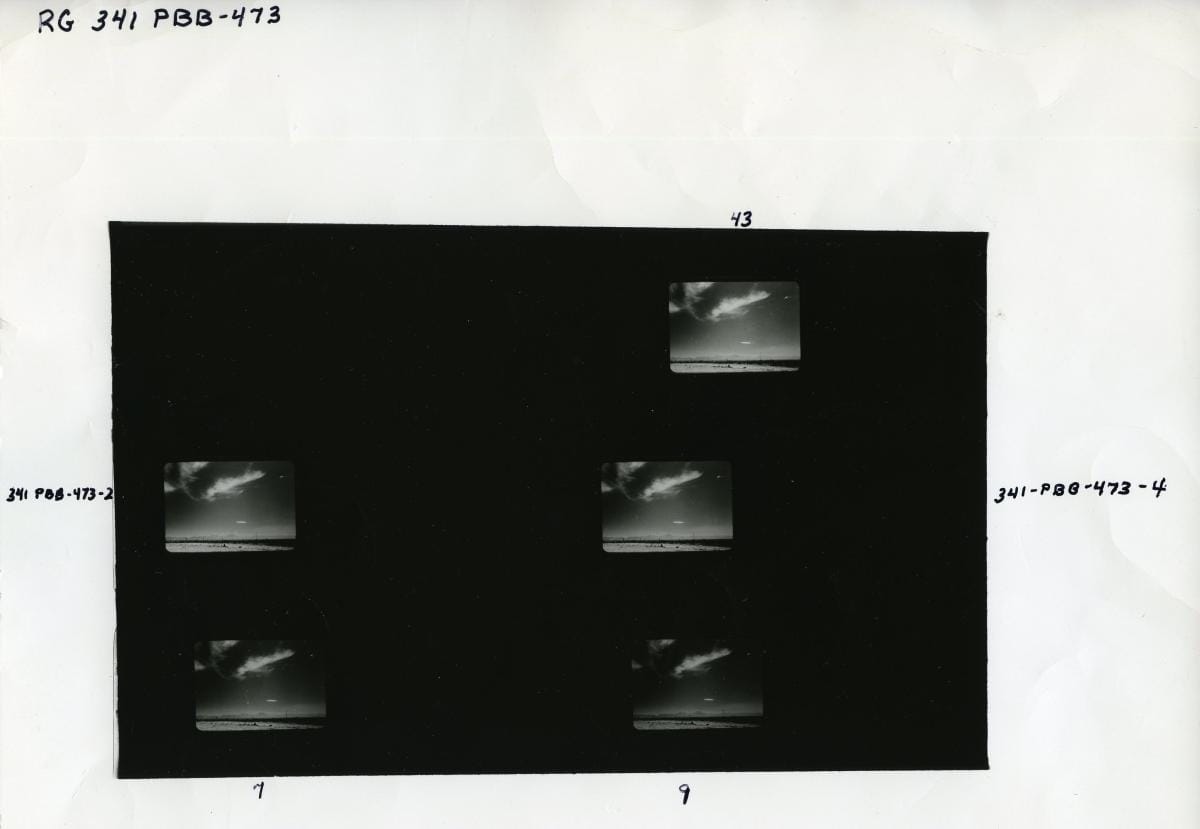
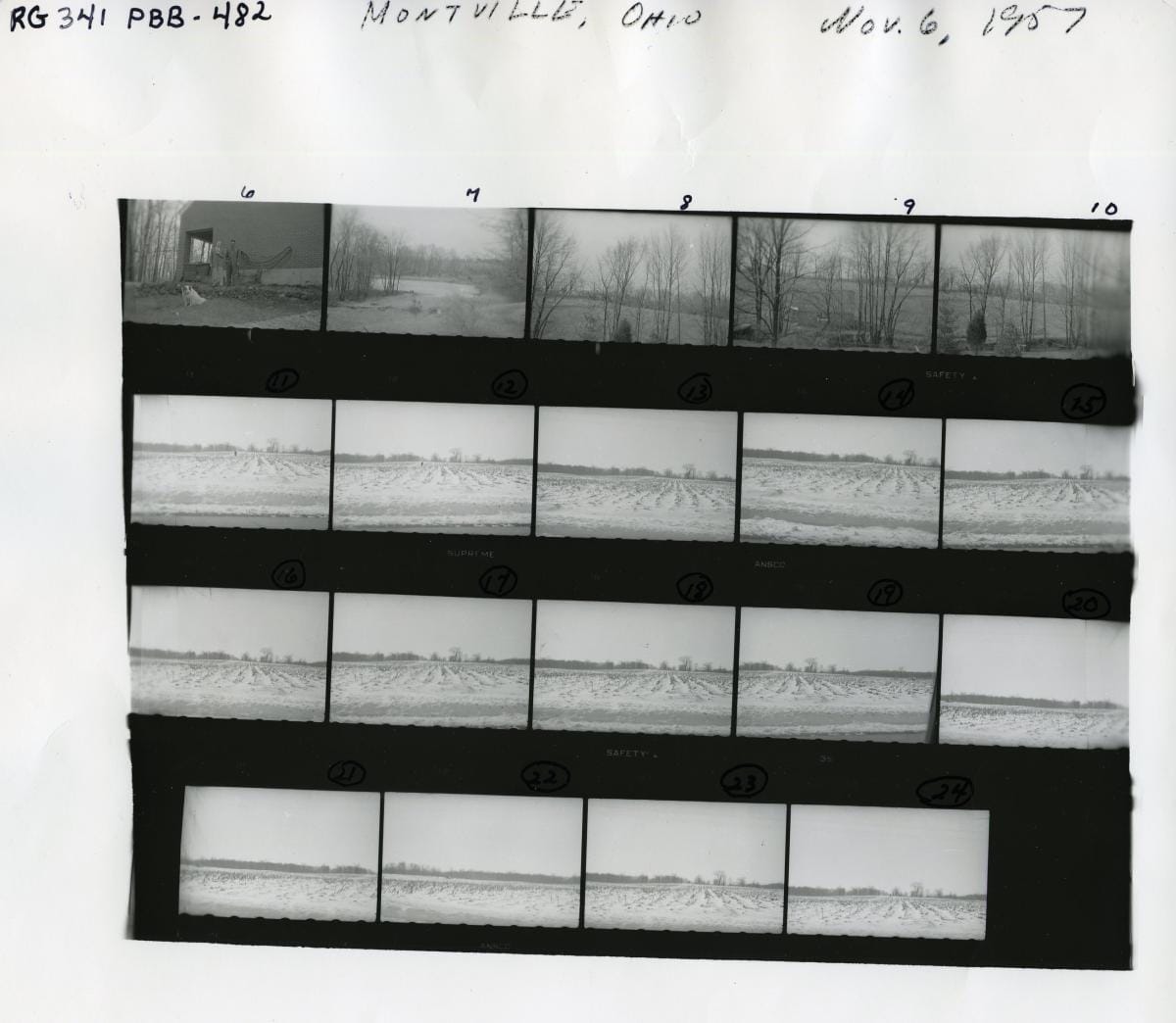
The 701 Cases That Refused to Vanish
The number 701 has become the ghost inside Project Blue Book.
Officially, 701 cases remained unidentified out of 12,618 total reports.
That does not mean 701 alien spacecraft.
It does not mean 701 examples of non-human technology.
It does not even mean 701 cases of extraordinary physics.
“Unidentified” can mean several things. It can mean there was not enough information. It can mean the data did not allow a confident explanation. It can mean the witness report was too incomplete. It can mean an ordinary cause was likely but not demonstrable. It can also mean the case was genuinely puzzling.
That ambiguity is important.
The word “unidentified” is not proof.
But it is also not nothing.
The 701 cases matter because they show the limits of the official system. Even inside a program designed to explain, classify, and close cases, a residual remained.
For The Galactic Mind, this is the real signal.
The mystery is not simply that some cases were unexplained.
The mystery is how quickly institutions learned to make “unexplained” sound irrelevant.
The residual became statistically small.
But culturally, it became enormous.
Because if even a small percentage of reports remained unresolved after official investigation, then the question could never be completely buried.
The Robertson Panel and the Birth of Debunking Strategy
One of the most important moments in the Project Blue Book story happened in January 1953.
The CIA convened a scientific advisory panel, later known as the Robertson Panel, to evaluate UFO reports and consider any potential threat to national security.
The panel concluded that UFO reports showed no evidence of a direct physical threat and no evidence of extraterrestrial visitation. But its concern was not limited to whether objects in the sky were hostile.
It worried about the effects of the reports themselves.
The panel was concerned that UFO reporting could clog intelligence channels, create mass anxiety, and potentially be exploited by foreign adversaries. Its recommendation included public education and debunking efforts designed to reduce public fascination with flying saucers.
This is one of the most revealing parts of the entire Blue Book legacy.
The official concern shifted from the phenomenon to the public response.
The issue was no longer only:
What are people seeing?
It became:
How do we reduce the social power of what people think they are seeing?
That distinction changed everything.
Once debunking became part of the strategy, the UFO subject entered a new psychological landscape. People were not merely reporting unusual events. They were reporting events inside a culture increasingly trained to treat the subject as foolish, embarrassing, or unserious.
This helped create the stigma that modern UAP reforms now claim to be undoing.
Project Blue Book did not invent UFO ridicule.
But the Robertson Panel helped institutionalize the logic of managing it.
Special Report No. 14 and the Statistical Problem
Project Blue Book Special Report No. 14 was one of the most significant analytical products connected to the Air Force’s UFO files.
Produced by the Battelle Memorial Institute, it examined thousands of cases and attempted to classify them statistically.
The report is important because it complicates the simple story.
It did not show that UFOs were extraterrestrial.
But it did show that a meaningful portion of studied cases remained unknown after analysis, even when broken down by quality categories.
This matters because it introduces a deeper question:
What counts as a solved case?
A weak report can be explained easily or dismissed as insufficient data.
But a higher-quality unknown creates more tension. If a case has better witness detail, better observational conditions, or stronger supporting information and still remains unresolved, the unknown category becomes harder to ignore.
This is where Blue Book becomes more than a pile of reports.
It becomes a problem in data quality.
The modern UAP field still faces the same problem.
A case is only as strong as its metadata.
Time, location, sensor data, observer reliability, environmental conditions, radar returns, visual records, chain of custody, and access to classified context all matter.
Blue Book gathered a huge archive.
But it did not always gather the kind of data modern science would require.
That is part of why the archive remains valuable and frustrating at the same time.

A New Official Access Point
In June 2026, the Department of Defense’s PURSUE archive included a CIA-held copy of Project Blue Book Special Report No. 14 in its third document release.
This should not be framed as the discovery of a previously unknown analysis. Special Report No. 14 had already been available to researchers for decades. The newer release matters because it places another government-held copy inside a current official UAP archive, making its provenance and contents easier for the public to verify directly.
The reappearance of the report also illustrates a recurring feature of the UAP debate: historical documents often return to public attention through new institutions, even when the underlying evidence has not changed. A new release can improve access without producing a new conclusion.
J. Allen Hynek and the Insider Who Changed His Mind
No figure captures the tension of Project Blue Book better than J. Allen Hynek.
Hynek began as a scientific consultant to the Air Force and was often associated with conventional explanations. Over time, however, he became increasingly critical of how UFO cases were handled.
His later work helped create the close encounter classification system and made him one of the most important scientific voices arguing that some UFO reports deserved serious study.
Hynek’s transformation matters because he was not an outsider shouting at the institution from the beginning.
He saw the system from inside.
He understood the categories.
He understood the explanations.
And he came to believe that the phenomenon had not been adequately addressed.
That does not mean Hynek proved extraterrestrial visitation.
But it does mean one of Blue Book’s own scientific consultants eventually became a major critic of the dismissive posture around the subject.
In a Dossier about Blue Book, Hynek is not a side character.
He is the warning sign.
He shows what happens when an official system explains enough cases to justify closure, but not enough to satisfy the people who paid close attention to the best unresolved ones.

The Condon Report and the Closing of the File
The end of Project Blue Book came through science, or at least through the authority of science.
In the late 1960s, the Air Force funded a University of Colorado study led by physicist Edward Condon. The final report, usually called the Condon Report, concluded that further study of UFOs was unlikely to produce major scientific discoveries.
The National Academy of Sciences reviewed the report and supported its general conclusion.
After that, the Air Force closed Project Blue Book in 1969.
The official conclusions were direct:
No UFO investigated by the Air Force indicated a threat to national security.
No evidence showed that unidentified sightings represented technology beyond modern scientific knowledge.
No evidence indicated that unidentified sightings were extraterrestrial vehicles.
Those conclusions became the final institutional script.
But the Condon Report itself became controversial. Critics argued that the report’s conclusions did not always match the complexity of the cases inside it, and that the framing discouraged future scientific interest in the subject.
This is one of the strangest legacies of Blue Book.
The report that closed the official investigation did not close the cultural debate.
In some ways, it intensified it.
To skeptics, the closure meant the case had been examined and found empty.
To critics, the closure meant the government had ended the inquiry before the strongest questions were resolved.
The file closed.
The suspicion expanded.
Perspectives and Interpretations
One interpretation of Project Blue Book is that it was a rational government response to a noisy public phenomenon.
In this view, the Air Force did what it could. It investigated thousands of reports, explained the overwhelming majority, found no national security threat, found no evidence of extraterrestrial vehicles, and eventually ended a costly program that was not producing meaningful scientific results.
This interpretation is important because it may be largely true for many cases.
Most sightings probably were misidentifications, aircraft, balloons, astronomical objects, weather effects, hoaxes, or insufficient observations.
A second interpretation sees Blue Book as a debunking machine.
In this view, the program’s real function became less about open investigation and more about reducing public concern. The Robertson Panel’s recommendations, the public education strategy, and the official tendency to emphasize resolved cases over unresolved ones all contributed to the perception that Blue Book was designed to close the subject rather than understand it.
A third interpretation is more balanced.
Project Blue Book was both an investigation and a filter.
It collected real reports.
It explained many correctly.
It likely mishandled or under-investigated some.
It operated inside Cold War pressures that shaped its priorities.
It left behind a valuable archive and an unresolved trust problem.
That is the most useful reading.
Blue Book was not simply a coverup.
It was not simply a clean scientific victory.
It was a government system trying to process an anomalous public phenomenon inside a national security framework that did not know how to tolerate open-ended mystery.
Strengths and Limitations
Project Blue Book’s greatest strength was scale.
No serious discussion of UAP history can ignore it. The project gathered thousands of reports across more than two decades of official Air Force interest. It created a historical foundation that researchers still use.
Its second strength was documentation.
Even with redactions, incomplete files, inconsistent standards, and uneven investigation quality, the Blue Book archive gives researchers something concrete to examine.
Its third strength was categorization.
The program tried to impose structure on a chaotic subject. It separated likely explanations from unknowns, tracked annual reports, and generated statistical summaries.
But its limitations were equally serious.
The program operated under shifting standards.
It was shaped by public-relations concerns.
Its data quality varied widely.
Some cases lacked the kind of metadata needed for serious modern analysis.
Its public conclusions often moved faster than public confidence.
And its debunking posture may have helped create the stigma that prevented better reporting later.
Project Blue Book’s legacy is not only what it found.
It is what its methods trained the public to expect from official UAP investigations:
explanation first,
residual mystery second,
institutional closure third.

Broader Implications
Project Blue Book matters today because the modern UAP conversation is still living in its shadow.
AARO, congressional hearings, military pilot reports, whistleblower claims, NASA’s UAP study, and new reporting channels all exist in a world shaped by the old Blue Book pattern.
The names have changed.
UFO became UAP.
Flying saucers became anomalous phenomena.
Air Force files became multi-agency reviews.
But the deeper problem remains:
How does a government investigate something that may be ordinary in most cases, extraordinary in a few, and politically dangerous in all cases?
Blue Book shows that the answer is never purely scientific.
It is also institutional.
Who controls the data?
Who classifies the records?
Who decides when a case is solved?
Who explains uncertainty to the public?
Who protects witnesses from ridicule?
Who prevents false claims from overwhelming serious inquiry?
And who admits when a case remains truly unresolved?
These questions are not historical leftovers.
They are the center of the modern disclosure debate.
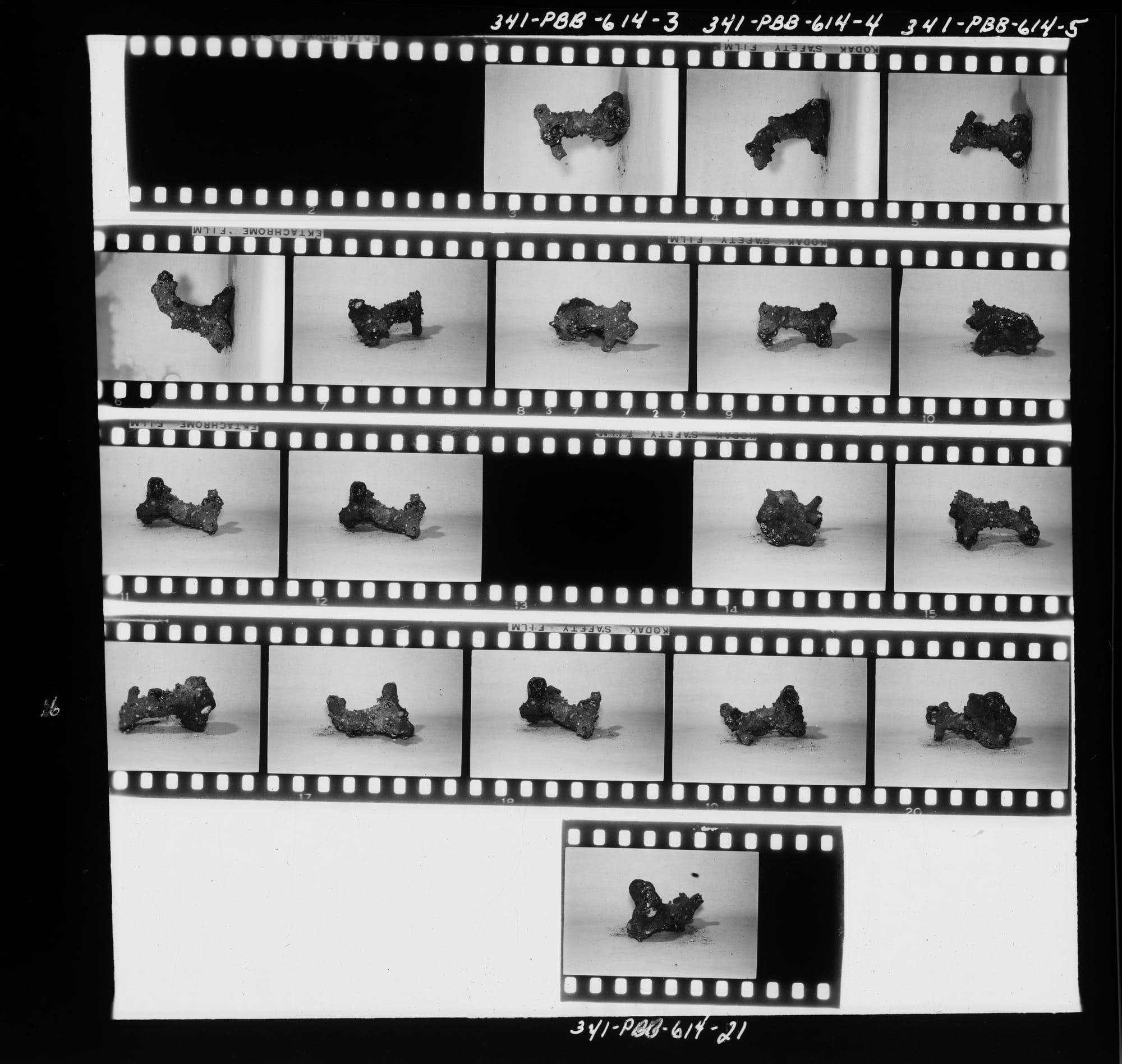
Reality Signal
What this subject represents
Project Blue Book represents the point where anomalous experience enters an institutional system. A sighting begins as an observation, but it becomes an official case only after forms, interviews, classifications, evidentiary standards, and administrative decisions shape what can be recorded.
What reality frame it challenges
Blue Book complicates the familiar choice between “the government solved the UFO question” and “the government covered everything up.” The surviving record supports neither conclusion in its strongest form.
Most reports received conventional explanations. Some remained unidentified. Institutional concern extended beyond the objects themselves to public reaction, military communications, and national-security pressure. The resulting history is less cinematic—and more revealing—than either absolute certainty or total conspiracy.
Why it matters now
Modern UAP offices face many of the same structural problems: inconsistent sensor data, incomplete reporting, witness stigma, public distrust, classification barriers, and pressure to reach conclusions before the available evidence allows them.
New official archives such as PURSUE also continue to circulate documents from earlier programs. That makes Blue Book more than a closed historical episode. It is a reference point for evaluating whether current institutions have improved their methods or merely updated the language surrounding the same uncertainties.
What remains unresolved
The 701 unidentified cases do not collectively prove a single extraordinary cause. Their evidentiary quality varies, and “unidentified” can result from missing information as easily as from genuinely unusual observations.
The unresolved questions are therefore narrower but still important: How many cases contained information strong enough to resist ordinary explanations? How much did institutional pressure affect the depth of particular investigations? And could a modern system preserve uncertainty without turning it into either proof or dismissal?
The Galactic Mind Perspective
The most important number in Project Blue Book may not be 701. It may be the distance between an official conclusion and public confidence in how that conclusion was reached.
Blue Book succeeded at collecting reports, eliminating many ordinary explanations, and creating an archive that researchers can still examine. What it did not create was a durable sense that the unresolved remainder had been handled transparently and consistently.
That distinction matters whenever an institution says it found “no evidence” for an extraordinary claim. Properly understood, the phrase means that the evidence examined did not sufficiently establish that conclusion. It is not a universal declaration about everything that could exist, every event that could have occurred, or every record another agency might possess.
The reverse is equally important. An unexplained report is not positive evidence for extraterrestrial visitation, non-human intelligence, or hidden technology. Uncertainty must not be promoted into proof simply because it survived an investigation.
A stronger modern system would publish more than conclusions. It would preserve raw data when security permits, state confidence levels, explain competing hypotheses, document why cases remain unresolved, and distinguish absence of evidence from evidence of absence.
Blue Book’s enduring lesson is not that the unknown defeated science. It is that institutional closure and complete understanding are not the same achievement.
The Open Question
Project Blue Book ended more than half a century ago, but the system surrounding unexplained aerial reports did not disappear. It changed names, moved between agencies, acquired new sensors, and entered a different media environment.
The question is whether the underlying logic has changed with it.
Can a government investigate anomalous reports without allowing secrecy to destroy public trust? Can it acknowledge uncertainty without encouraging speculation? And what would a genuinely improved successor to Blue Book release—not merely about its conclusions, but about the methods, confidence levels, and limitations behind them?
The future of UAP research may depend less on producing another dramatic claim than on building an investigative system whose conclusions remain credible even when the answer is incomplete.
What do you think? Drop your thoughts in the comments ...
More in Dossiers
J. Allen Hynek and the Scientific Edge of the UFO Question
The astronomer who entered the UFO question as an Air Force consultant and emerged as one of the most influential critics of how unexplained reports were being studied.
David Grusch: The Defining UAP Whistleblower
How one intelligence officer’s allegations moved the modern UAP debate from public speculation into congressional testimony and official investigation.
Karl Nell and the Controlled Disclosure Problem
A decorated military officer expresses certainty about non-human intelligence—but the public evidence remains separated from the confidence of the claim.
Sources / Receipts
The following sources document the official program, its records, government conclusions, and the institutional response to UFO reporting. They establish what agencies recorded and concluded; they do not independently determine the cause of every unidentified case.
- National Archives — Project Blue Book Records and Air Force Fact Sheet
Overview of the archived Blue Book collection, official case totals, termination date, and stated Air Force conclusions. - National Archives — Project Blue Book’s 50th Anniversary
Chronology of Projects Sign, Grudge, and Blue Book, along with a description of the surviving records. - Air Force Declassification Office — Project Blue Book
The Air Force’s official summary of the program, its 12,618 reports, 701 unidentified cases, and final conclusions. - Robertson Panel Report — Appendix U of the Condon Report
The panel’s findings concerning national security, overloaded reporting channels, public education, and reduction of the UFO subject’s perceived mystery. - Scientific Study of Unidentified Flying Objects — Condon Report
The authorized online edition of the University of Colorado study commissioned by the Air Force. - Condon Report — Conclusions and Recommendations
Edward Condon’s conclusions concerning the scientific value of continued large-scale UFO research and the consideration of future individual cases. - Department of Defense PURSUE Archive — UAP Records
The current official archive containing historical government records related to unidentified anomalous phenomena. - AARO — Congressional and Historical Products
Official reports from the All-domain Anomaly Resolution Office, including its historical review of United States government UAP investigations.


Discussion