
The phrase “Star People” sits on dangerous ground.
Not because it is meaningless.
Because it is too easy to steal.
In modern UFO culture, the phrase often gets pulled into a familiar frame:
Ancient beings from the sky.
Teachers from the stars.
Non-human visitors.
Encoded contact.
A memory of first contact preserved by Indigenous peoples.
That possibility is fascinating.
It is also incomplete.
Because for many Indigenous and First Peoples, star knowledge is not an entertainment category, a theory to be solved, or a myth waiting for outsiders to decode.
It is living knowledge.
Seasonal knowledge.
Ceremonial knowledge.
Relational knowledge.
Some of it is public.
Some of it is not.
Some stories are told only at certain times.
Some are held by specific families, clans, elders, or knowledge keepers.
Some should not be extracted, translated, flattened, or fed into the machinery of modern speculation.
That has to be the starting point.
A Dossier on Star People cannot be written as if all global sky traditions are loose evidence for extraterrestrials.
That would repeat the very error The Galactic Mind tries to avoid:
Turning mystery into certainty before listening to the source.
The better frame is this:
Across cultures, human beings have looked up and seen relationship.
Not emptiness.
Not dead space.
Relationship.
The sky was a calendar, a map, a law book, a memory field, a migration guide, a ceremonial clock, a place of ancestors, and in some traditions, a realm of beings.
The modern NHI conversation should approach that carefully.
Not to prove that the elders were “really talking about aliens.”
But to ask whether modern people have forgotten how vast the category of intelligence once was.
Maybe the deepest signal of the Star People is not that the sky contains visitors.
Maybe it is that older cultures never reduced the sky to objects in the first place.
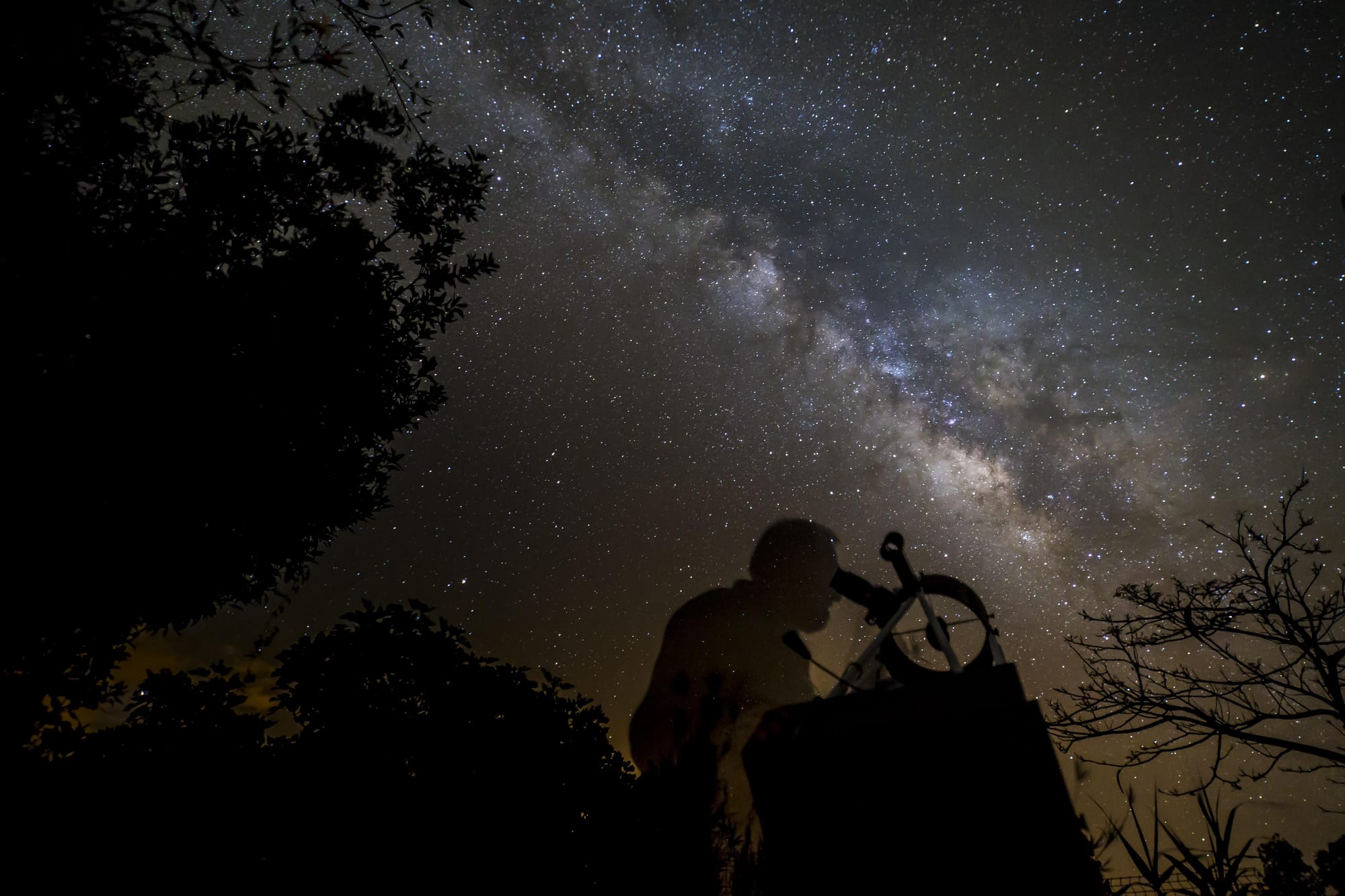
Overview: What This Is
“Star People” is not one single doctrine.
It is a modern umbrella phrase used to describe a wide range of Indigenous, First Peoples, spiritual, contactee, and esoteric references to beings, ancestors, teachers, spirits, relatives, or intelligences associated with the stars, sky, heavens, or celestial order.
That range matters.
The phrase may appear in:
- Indigenous oral traditions
- star knowledge systems
- origin narratives
- ceremonial teachings
- sky stories
- contemporary Native spirituality
- contactee literature
- New Age writing
- UFO and NHI speculation
- popular documentaries and online discourse
These are not the same thing.
A Dossier has to keep the layers separate.
Indigenous star knowledge is not identical to UFO culture.
Sacred story is not identical to literal aerospace contact.
Ceremonial cosmology is not identical to extraterrestrial visitation.
And modern “star seed” or contactee language is not automatically the same as community-held Indigenous knowledge.
But the overlap is why the topic matters.
The Star People idea lives at the border between several worlds:
- astronomy
- mythology
- memory
- ceremony
- ecology
- consciousness
- ancestry
- contact
- interpretation
- cultural protection
- modern NHI speculation
What if these stories are not superstition, but protected memories of non-human intelligence meeting humanity in sacred time and space?
This Dossier keeps that question open.
But it grounds it differently.
Before asking whether Star People are non-human intelligence, we have to ask what the phrase means, who has authority to explain it, and what gets lost when sacred knowledge is translated into modern UFO language too quickly.

Origins and Background
Human beings have always lived under the sky.
But not all cultures have understood the sky the same way.
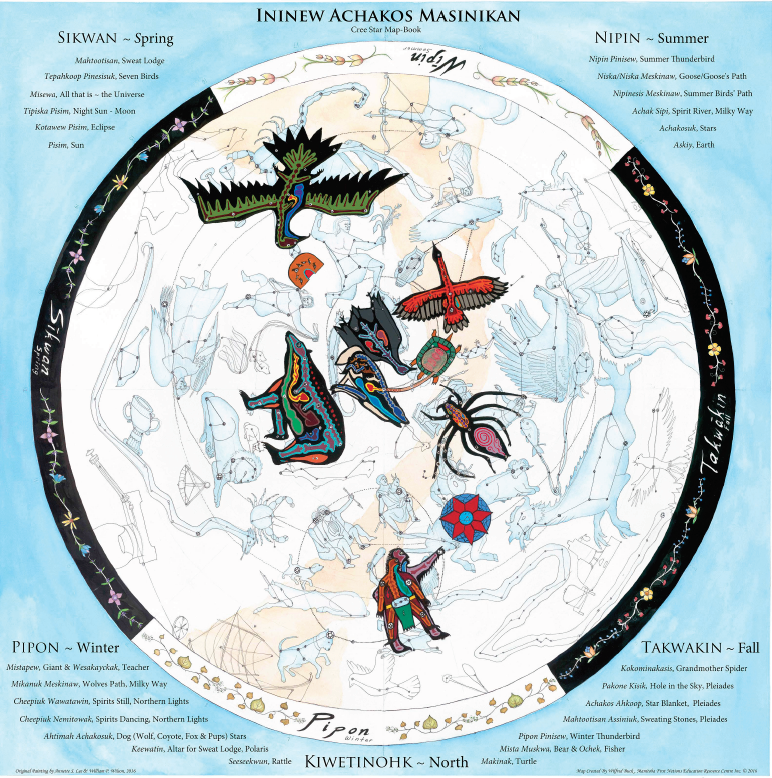
In many Indigenous traditions, the night sky is not only a collection of distant physical objects. It is part of a living relational field.
Stars can be ancestors.
Teachers.
Markers.
Warnings.
Kin.
Guides.
Law.
Memory.
The sky can tell people when to plant, when to harvest, when to move, when to gather, when to conduct ceremony, and how to understand their place within a larger order.
This kind of knowledge is not “less scientific” because it is carried through story.
It is a different knowledge system.
Observation is embedded in culture.
Pattern is embedded in ceremony.
Astronomy is embedded in land.
Meaning is embedded in relationship.
Modern Western astronomy often abstracts the sky into measurement. Indigenous astronomy often holds the sky within a wider system of land, language, ethics, memory, and practice.
Both can observe real patterns.
But they do not always ask the same questions.
The problem of extraction
Any discussion of Star People has to include an ethical warning.
Indigenous knowledge has been extracted for centuries.
Land was taken.
Bodies were controlled.
Children were removed.
Languages were suppressed.
Ceremonies were criminalized.
Objects were collected.
Stories were translated by outsiders.
Sacred knowledge was often misrepresented, commercialized, or detached from the communities that held it.
That history matters.
When modern UFO culture grabs sacred stories and turns them into “alien evidence,” it can become another form of extraction.
A community’s cosmology becomes someone else’s content.
A ceremonial teaching becomes a podcast theory.
A protected narrative becomes an online clue.
The Galactic Mind should not do that.
The responsible approach is not to claim ownership over these traditions.
It is to identify the pattern carefully, respect cultural boundaries, and point readers toward Indigenous-led sources.
Star knowledge as living science
Indigenous star knowledge is not only symbolic.
It can include detailed observation of seasonal cycles, navigation, animal behavior, weather, ecological change, and agricultural timing.
For many communities, sky knowledge is part of survival.
The stars are not just beautiful.
They are useful.
They organize time.
They connect people to place.
They help preserve stories that carry practical information across generations.
This is the deeper background behind the Star People question.
The sky was never only “out there.”
It was part of how communities lived here.
What It’s Known For
The Star People idea is known for several recurring themes. These themes appear differently across cultures and should not be treated as interchangeable.
The point is not to collapse them into one global story.
The point is to notice why the motif keeps returning.
Relatives from the sky
Many traditions describe the sky in relational terms.
The beings above are not always distant strangers.
They may be ancestors, relatives, holy beings, cultural teachers, or members of a wider cosmic family.
This is one of the strongest differences between Indigenous sky cosmology and modern invasion-style UFO narratives.
The dominant UFO imagination often begins with separation:
They are outsiders.
They arrive.
They observe us.
They may threaten us.
They may rescue us.
Indigenous cosmologies often begin with relationship:
The sky is already part of the family of reality.
This does not mean every sky being is friendly or simple.
But it changes the tone.
The question is not only “Are they real?”
The question is “What is the proper relationship?”
Teachers, law, and balance
Star People or sky beings are often associated with teaching.
Not necessarily technology.
Not necessarily machines.
Often the teachings concern balance, reciprocity, time, ceremony, respect for land, right relationship, and the maintenance of life.
That is important.
Modern people tend to imagine contact as a transfer of hardware:
Engines.
Energy.
Weapons.
Medical technology.
Space travel.
But in many older frames, the most important “technology” may be ethical.
How to live.
How to keep the world in balance.
How to act within cycles.
How to remember responsibilities.
That is a different model of advanced intelligence.
Dream, ceremony, and altered states
Some traditions place sky contact inside dream, vision, song, ceremony, or altered states.
Modern UFO culture often treats consciousness effects as secondary or suspicious.
Indigenous frames may treat consciousness as part of the interface.
That does not mean every dream is contact.
It means the boundaries between mind, land, sky, and spirit are not always drawn the same way across cultures.
This is where modern NHI thinking becomes interesting.
If non-human intelligence does not communicate only through hardware, then consciousness, ritual, and perception may matter more than modern categories allow.
But again, caution is necessary.
We should not strip ceremony from its cultural protocols and turn it into a “contact method” for outsiders.
Places where land and sky meet
Many sky traditions are place-bound.
Mountains.
Mesas.
Deserts.
Water edges.
Caves.
Kivas.
Stone sites.
Horizon lines.
Migration routes.
Songlines.
Specific places hold specific relationships.
This matters because it challenges the modern idea that contact, if real, would be universal and interchangeable.
In older frames, contact may be local.
Not because intelligence is small.
Because relationship is specific.
The land is not a backdrop.
The land is part of the interface.
Timekeeping and sky memory
Star stories often carry calendars.
They preserve seasonal knowledge.
They encode navigation.
They help organize planting, hunting, gathering, migration, ceremony, and renewal.
This is one of the most grounded ways to understand the Star People motif.
The sky was a memory system.
Stories made the sky easier to remember.
The sacredness of the story protected the knowledge from casual loss.
That does not reduce the story to “just astronomy.”
It means astronomy and meaning were not separate.
The Core Idea or Signal
The core signal of Star People is this:
Older cultures may have preserved a wider category of intelligence than modern civilization knows how to recognize.
That does not mean every star story is literal extraterrestrial contact.
It does not mean every sky being is a biological alien.
It does not mean Indigenous traditions are secret UFO archives waiting to be decoded.
That framing is too shallow.
The deeper signal is that many cultures did not see reality as closed, mute, mechanical, and human-centered.
They understood reality as relational.
The sky could speak.
The land could remember.
Dreams could instruct.
Ceremony could tune attention.
Animals could teach.
Ancestors could guide.
Stars could hold law.
This is not a primitive worldview.
It is a different ontology.
A different understanding of what exists and how relationship works.
Modern civilization is now circling back toward questions that older traditions never fully abandoned:
Is consciousness fundamental?
Can intelligence exist beyond the human body?
Are there non-human minds we have failed to recognize?
Can place mediate experience?
Can contact be symbolic, ecological, or relational rather than technological?
Can the sky function as more than distance?
That is where the Star People idea matters.
Not as proof.
As pressure.
It pressures the modern assumption that intelligence must look like machines, signals, bodies, or ships.
Maybe some intelligence appears first as relationship.
Perspectives and Interpretations
The Star People concept can be interpreted through several lenses.
The Indigenous knowledge view
The most important view is the one that begins with Indigenous sovereignty and cultural authority.
Star knowledge belongs to the communities that hold it.
Some knowledge is public.
Some is not.
Some can be shared in museums, books, classrooms, or community programs.
Some belongs in ceremony.
Some belongs to specific people.
A respectful article should not pretend to speak for all Indigenous peoples.
It should avoid extracting sacred details.
It should treat living knowledge as living, not as mythology from the past.
In this view, Star People are not “evidence” for someone else’s theory.
They are part of community-held cosmologies, histories, responsibilities, and ways of understanding reality.
The cultural astronomy view
Cultural astronomy examines how societies understand and use the sky.
From this angle, Star People and sky stories may encode observational knowledge:
- seasonal timing
- navigation
- ecological patterns
- agricultural cycles
- ceremonial calendars
- memory systems
- moral teachings
- origin frameworks
This does not make the stories less meaningful.
It makes them more layered.
A star story can be scientifically attentive and spiritually alive.
A song can carry navigational data.
A ceremony can preserve seasonal timing.
A constellation can be a memory tool and a sacred being.
Modern categories often separate these things.
Older knowledge systems often do not.
The psychological view
From a psychological perspective, Star People may represent humanity’s deep need to place itself inside a larger cosmos.
The sky is the largest visible mystery.
It invites projection.
Origin.
Ancestry.
Fear.
Hope.
Guidance.
In this reading, Star People are not literal beings. They are symbolic forms through which humans relate to scale, mortality, and meaning.
This view can be useful.
But it can also become reductive if it assumes all spiritual or ceremonial knowledge is “just psychology.”
A respectful psychological view should explain what the motif does without pretending to have explained away what it is.
The NHI view
The NHI interpretation is the most provocative.
It asks whether some Star People traditions could preserve memories of contact with intelligences that were not simply human imagination.
Those intelligences might be interpreted today as extraterrestrial, interdimensional, ultraterrestrial, ancestral, consciousness-based, or something outside current categories.
This is the Galactic Mind doorway.
But it has to remain a doorway, not a conclusion.
There is no single public body of evidence proving that Star People traditions are literal accounts of non-human visitation.
There is also no reason to dismiss the possibility that some human experiences of “other intelligence” have been preserved in religious, ceremonial, and cosmological language.
The careful version says:
These traditions may preserve encounters with something people understood as beyond ordinary humanity.
The modern NHI frame may be one possible interpretive lens.
It should not replace the original cultural frame.
The New Age and contactee view
Modern spirituality has also reshaped the Star People idea through contactee narratives, starseed beliefs, channeling, galactic lineages, and cosmic identity movements.
Some of this material is personally meaningful to people.
Some of it is speculative.
Some of it borrows from Indigenous language without permission.
That distinction matters.
A person can have a sincere spiritual experience and still misuse another culture’s sacred vocabulary.
The Dossier should not mock modern seekers.
But it should draw a line:
Curiosity does not grant ownership.
Experience does not erase protocol.
Spiritual hunger does not justify cultural extraction.
Strengths and Limitations
The strength of the Star People subject is that it reveals a powerful and widespread human pattern.
Across the world, communities have developed deep sky knowledge, cosmic origin stories, seasonal astronomy, sacred landscapes, and relationships between celestial order and human life.
The sky has always mattered.
That is not speculation.
What is also strong is the ethical teaching embedded in many of these traditions.
The sky is not only a place of mystery.
It is a reminder of responsibility.
Balance.
Reciprocity.
Humility.
Relationship.
Those ideas are urgently relevant now.
But the limitations are important.
“Star People” is not one universal tradition.
Different communities have different languages, teachings, protocols, and meanings.
Some stories are not meant for public retelling.
Some popular versions online are distorted or detached from Indigenous authority.
Some UFO interpretations impose modern categories onto older cosmologies.
Some New Age uses blend multiple traditions into a vague cosmic aesthetic.
Some claims are impossible to verify.
A careful Dossier separates the layers.
What is documented:
Many Indigenous and First Peoples maintain sky knowledge systems that connect stars, land, ceremony, navigation, seasonal timing, ancestry, and law.
What is claimed:
Some traditions and modern interpretations describe beings, teachers, ancestors, or relatives associated with the sky or stars.
What is interpreted:
Modern readers may see these accounts as metaphor, sacred cosmology, encoded astronomy, contact memory, consciousness encounter, or NHI-adjacent testimony.
What remains unresolved:
Whether any specific Star People accounts correspond to literal non-human contact in the modern sense, and whether that question can even be asked responsibly outside community protocols.
What is speculative:
Claims that all Star People traditions prove extraterrestrial visitation, ancient astronauts, galactic ancestry, starseed identity, or a hidden global contact archive.
That is the honest ledger.
Broader Implications
The Star People question matters because modern civilization is experiencing a crisis of relationship.
We have more data than any culture before us.
But we often have less relationship.
We can image galaxies.
But many people cannot see the Milky Way from where they live.
We can launch telescopes.
But many do not know the seasonal sky.
We can measure exoplanets.
But we struggle to feel kinship with Earth.
We can speculate about alien intelligence.
But we often fail to recognize the non-human intelligences already around us: animals, ecosystems, forests, fungi, rivers, weather, and the patterned intelligence of living systems.
This is where the Star People idea becomes more than UFO speculation.
It challenges the modern worldview.
It asks whether contact begins with attitude.
Not technology.
Attitude.
If a culture sees the sky as dead matter, it will search for intelligence only through signals.
If a culture sees the sky as relational, it may search through ceremony, timing, attention, and reciprocity.
Neither frame should be romanticized.
But the difference matters.
The future of contact may require both:
Data and humility.
Sensors and protocol.
Science and respect.
Observation and relationship.
That is the larger implication.
The Star People motif reminds us that if humanity ever encounters non-human intelligence in a definitive way, the first question may not be:
What technology do they have?
It may be:
What relationship do they require?
The Reality Signal
What this subject represents
Star People represent the sacred boundary between sky knowledge and contact speculation.
They represent humanity’s older habit of seeing the cosmos as populated, meaningful, and relational.
They also represent the danger of modern extraction.
The same stories that can expand our imagination can also be misused when taken from their communities and forced into someone else’s theory.
That makes Star People a powerful Dossier subject.
Not because the answer is easy.
Because the ethics are inseparable from the mystery.
What reality frame it challenges
The Star People idea challenges the modern assumption that intelligence must appear as technology.
It challenges the belief that contact must be physical, mechanical, and external.
It challenges the idea that myth is the opposite of knowledge.
It challenges the split between astronomy and spirit.
It challenges the belief that the sky is only empty distance.
But it also challenges fringe certainty.
It challenges anyone who treats Indigenous cosmology as raw material for UFO content.
It challenges seekers to ask whether they are listening or extracting.
It challenges The Galactic Mind to practice its own principle:
Wonder with receipts.
And in this case, wonder with respect.
Why it matters now
This subject matters now because the modern NHI conversation is expanding.
People are asking whether non-human intelligence might be extraterrestrial, interdimensional, oceanic, artificial, biological, spiritual, consciousness-based, or something stranger.
As the category expands, older knowledge systems become tempting.
People will look to Indigenous stories, sacred texts, folklore, myths, and ceremonial traditions for clues.
That is already happening.
The question is whether it will happen responsibly.
Star People matters now because it can become either a bridge or a theft.
A bridge if modern thinkers listen with humility, support Indigenous voices, and resist forcing one framework over another.
A theft if sacred knowledge becomes aesthetic fuel for disclosure culture.
The difference is not small.
It is the whole issue.
What remains unresolved
The unresolved ledger is the center of the Dossier.
What is established:
Indigenous and First Peoples around the world maintain rich sky knowledge traditions linking stars, land, ceremony, navigation, timekeeping, ancestry, and ethics.
What is claimed:
Some traditions and modern interpretations speak of beings, relatives, ancestors, teachers, or intelligences associated with the sky or stars.
What remains unresolved:
Whether any of these accounts should be interpreted as literal non-human contact in the modern UAP/NHI sense, and whether outsiders have the right framework to make that judgment.
Why it still matters:
Because the Star People motif asks modern civilization to reconsider what intelligence, relationship, and contact might mean.
The Galactic Mind Perspective
Star People belongs in The Galactic Mind archive because it presses on one of the deepest questions in the contact conversation.
What counts as intelligence?
Modern people often begin with the object.
A craft.
A signal.
A body.
A sensor return.
A recovered material.
Older traditions often begin with relationship.
A teaching.
A dream.
A law.
A song.
A seasonal return.
A being who is also a relative.
A place that remembers.
A sky that participates.
The Galactic Mind should not claim that all of this is NHI.
That would be too easy.
But it should ask why modern categories are so narrow.
Maybe the future of contact will not only require better instruments.
Maybe it will require better manners.
Better humility.
Better listening.
Better relationship with the human and more-than-human worlds already here.
The most responsible position is this:
Star People traditions should be approached as living cultural knowledge first, not as evidence to be mined.
The modern NHI frame can ask questions.
It cannot replace the source cultures.
A Dossier is not a monument.
It is a map of influence.
And the influence of Star People is clear:
They expand the possible meaning of contact from arrival to relationship.
From visitation to kinship.
From technology to responsibility.
From the sky as distance to the sky as a living archive.
Open Thread
The Star People question does not resolve easily.
Maybe some accounts are sacred metaphors.
Maybe some are encoded astronomy.
Maybe some are ancestral memory.
Maybe some are spiritual encounters.
Maybe some preserve experiences with intelligences that modern language would call non-human.
Maybe the categories themselves are wrong.
That may be the point.
Modern disclosure culture wants the unknown to arrive in familiar terms:
craft, beings, technology, evidence.
But older traditions may be telling us that contact, if it exists, is not only an event.
It is a relationship.
And relationships require protocol.
The open question is not only:
Were the Star People real?
It is:
Would modern humanity know how to meet them without taking from them?
What do you think? Drop your thoughts in the comments ...
Sources / Receipts
- Native Skywatchers: Indigenous Astronomy Revitalization
- Native Skywatchers resources and star maps
- National Museum of the American Indian: “Star Stories” and “Our Universes”
- AIATSIS: Aboriginal Astronomy
- Australian National University: Indigenous Songlines and the night sky
- Indigenous Astronomy Working Group / best practices for Indigenous astronomy in planetarium settings
- Hopi Cultural Preservation Office materials on cultural knowledge stewardship
- IPinCH: Hopi Cultural Preservation Office and traditional knowledge management
- Cultural astronomy scholarship on Indigenous star knowledge, songlines, and community protocols


Discussion