
Nine experienced hikers head into the winter mountains.
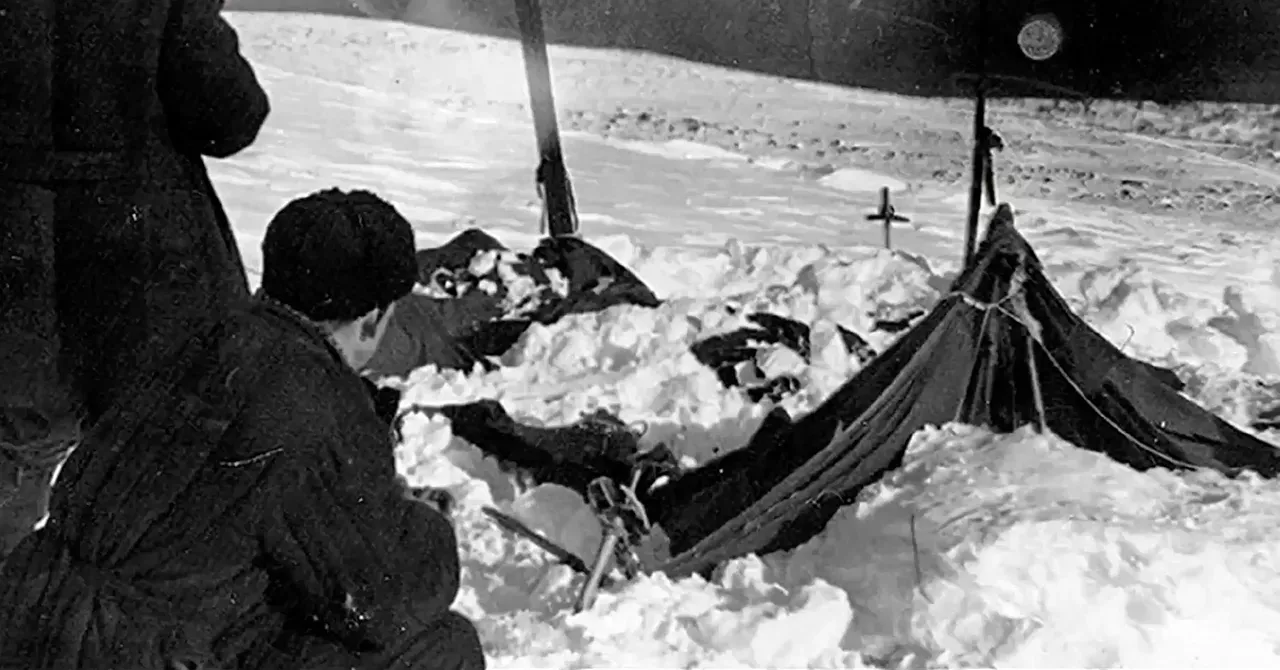
A storm rises. Their tent is found days later, cut open from the inside.
Footprints lead into the dark timber. Bodies are recovered over weeks, some with puzzling injuries.
People care because the case has hard edges — dates, photos, autopsy notes — yet still leaves room for interpretation.
What actually happened
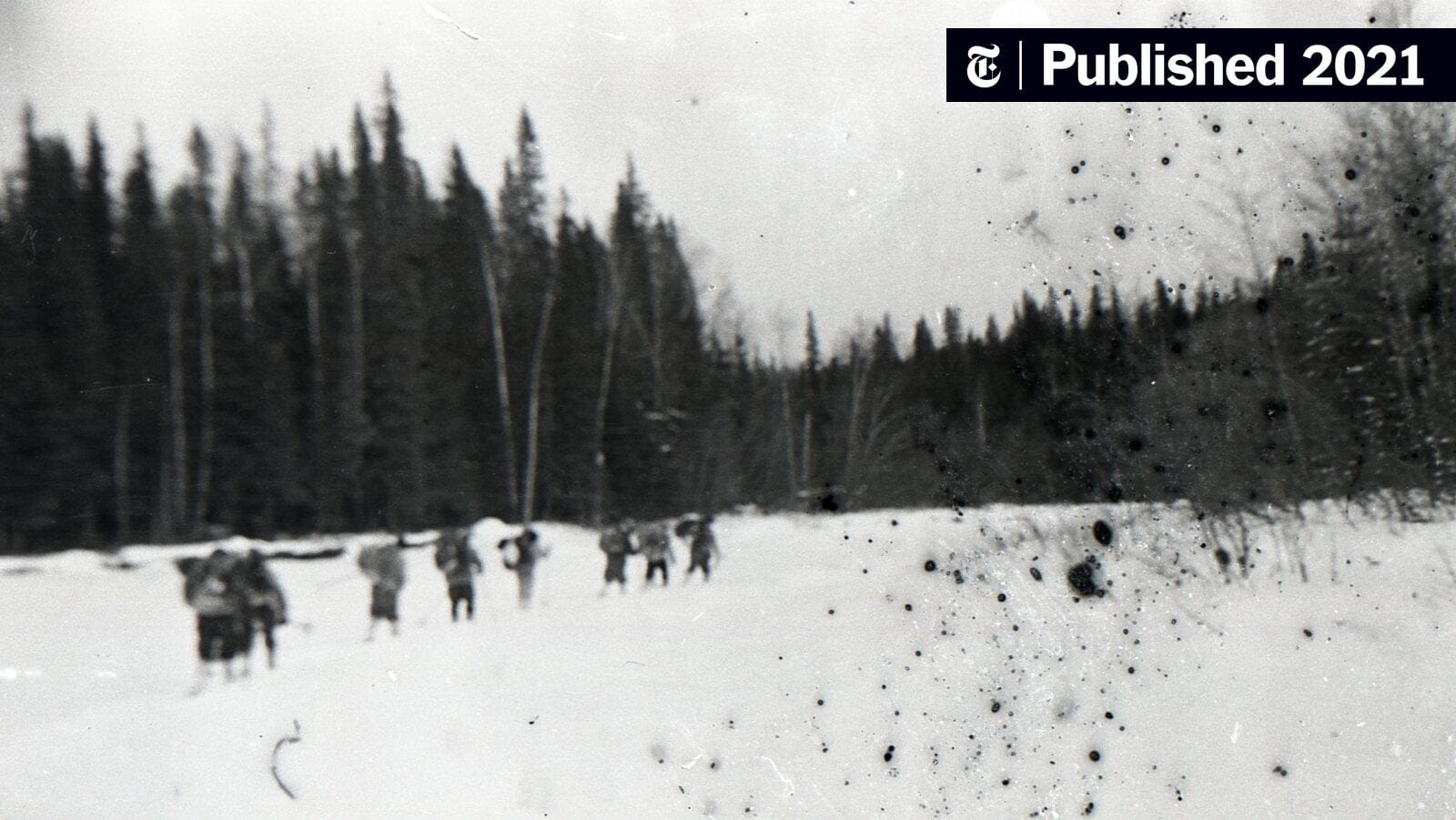
In late January 1959, a group of nine students and graduates from the Ural Polytechnical Institute, led by Igor Dyatlov, set out on a ski trek toward Mount Otorten. They made steady progress until worsening weather pushed them off course onto the eastern slope of Kholat Syakhl.
Sometime the night of February 1 to 2, the team abandoned their tent on the slope, cutting exits from the inside and moving downslope in socks or light footwear toward a forested ravine. Searchers who arrived in mid February found the collapsed tent, intact gear, and a single line of footprints leading into the trees. Over the next weeks, bodies were recovered at three locations: near a cedar with evidence of a fire, between the cedar and the tent, and in a ravine with deeper snow where the last four were found in May.
Autopsy notes described hypothermia as the primary cause for most, with significant trauma in a few: rib fractures and a skull injury without external wounds, and postmortem soft-tissue losses on two victims later recovered in the ravine.
Brief timeline after the prose
- Jan 23–31: Group departs and moves north through the Urals.
- Feb 1–2 night: Event on the slope. Tent cut open from inside.
- Feb 26: Tent located. First bodies found near cedar.
- Mar: Additional recoveries on the slope.
- May: Final four found in a ravine under snow.
- 1959 inquest closes with a generic “overwhelming force of nature.”
- 2010s–2020s: Renewed studies propose slab avalanche and katabatic winds as primary triggers.
Key claims and evidence
At issue is what forced the tent evacuation and how to square injuries with environment and recovery conditions.
- Main claims
- Small slab avalanche or wind-loaded snow compromised the tent, forcing a rapid but organized retreat to safer ground.
- Katabatic winds and low visibility made return difficult, leading to hypothermia.
- Ravine injuries are consistent with a fall into a snow-covered gully under poor light and freezing conditions.
- Main pieces of evidence
- Tent location on a modest slope with wind exposure, cut from inside, gear left behind.
- Track line that appears orderly at first, then disperses near the trees.
- Autopsy notes: hypothermia for most, blunt chest trauma and skull injury for a few, minimal external wounds.
- Tree and camp evidence near the cedar indicating attempts to make a fire and climb for branches.
- Spring thaw recovery context for the ravine victims, explaining soft-tissue losses by normal taphonomy.
- Main contradictions or disputes
- Why pitch on an exposed slope rather than returning to the forest line.
- Whether injuries exceed what a fall or snow load could produce.
- Reports of low-level radioactivity on some clothing and how to interpret it.
- Claims about military tests, infrasound panic, or a violent encounter with locals.
How people interpret this
- Believer lens for exotic causes
Military parachute mines, secret weapons, or unknown forces prompted flight from the tent and produced unusual injuries. The quick inquest and restricted area feeds the view that something was hidden. - Skeptic lens for environmental causes
A wind-deposited slab failed above the tent or threatened to, prompting a controlled retreat. Hypothermia and a later fall into a ravine explain injuries. Tissue losses are from water flow and scavenging during months under snow. - Middle ground
A real environmental trigger plus human factors created a cascading emergency. Details like radioactivity can have mundane sources such as prior lab or industrial work, while the site choices can be explained by training goals and weather.
If you treat Dyatlov as a high-strangeness event, the trigger isn’t a snow slab but a shock from above: a low, silent light sliding over the ridge, a sudden glare that nukes night vision, a pressure wave like a mine but with no crater, or a pulse that scrambles senses. The cut tent becomes an emergency exit, not panic. The split recoveries read like a group trying to get under trees while something in the sky keeps their heads down. You don’t have to believe in craft to see the pattern. You just need an external force that arrives fast, leaves no easy fingerprint, and makes trained people move.
Credibility meter (1–5)
- Witnesses: 0–1
No survivors. Evidence comes from searchers and documented site work. - Physical evidence: 3
Tent, tracks, locations, and autopsy notes are solid. Some items were lost or contaminated by time and handling. - Documentation: 3
Inquest files, site photos, recovery notes, and later analyses exist, but raw measurements are limited. - Expert review: 3
Competing models remain. Modern snow science suggests a plausible slab-avalanche scenario, but not all uncertainties are closed.
Overall: ~2.8
Strong environmental context and recoveries, but no direct witness record and some gaps that keep debate alive.
Closing
We know nine hikers left a slashed tent on an exposed slope, moved downslope, built a fire, and died in the cold. We know a few carried blunt-force trauma that fits a fall but not a fight.
What we do not know is the spark. Was it a wind-loaded slab, a pressure blast, a bright aerial intruder, or something entirely outside our current playbook?
Until someone proves the trigger with hard reconstruction or new physical evidence, Dyatlov lives in the borderlands. Nature can explain most of it. The last missing piece may still belong to the night sky.


