
An object can prove that another intelligence was here while leaving us almost everything to learn about the world it belonged to.
We tend to imagine first contact as an arrival. Something enters our skies, a signal reaches our instruments, or another mind answers a question. The encounter has a present tense. Somewhere, on the other side of it, someone is available to respond.
But an intelligence can leave consequences long after it has left a place.
What if our first certain evidence of another technological civilization were a broken object beneath the Moon’s surface? No greeting. No recognizable writing. No one waiting beside it. Just matter arranged in a way that nature did not arrange it, sealed into a landscape before humanity existed.
The discovery would open several different investigations. We would need to establish that the object was manufactured, determine when it arrived, reconstruct what it did, and ask what any of this revealed about its makers. Success at one would not guarantee success at the next.
We might become certain that someone had been there long before we understood what being there had meant to them.
A search for things that do not answer
The possibility of finding extraterrestrial technology within our own Solar System is a real research subject. In his June 2026 review, Technosignatures in the Solar System, astronomer T. Joseph W. Lazio considers searches for probes and artifacts alongside other possible technological traces. A technosignature is observable evidence of technology. An inactive manufactured object could qualify without broadcasting anything.
This is a search framework, not a reported discovery. No extraterrestrial artifact has been independently established. Lazio also emphasizes a practical distinction: detecting an unusual object and identifying it as technology are separate achievements.
There are specific proposals. Paul Davies and Robert Wagner have suggested examining lunar imagery for possible artifacts, including through automated analysis. Their proposal treats existing exploration data as an opportunity to look; it does not establish that anything alien is present.
Even a convincing artificial object requires a human-origin check. In 2020, an apparent small asteroid called 2020 SO turned out to be a discarded Centaur rocket stage. Researchers combined its orbital history with spectroscopic observations of its material. Humanity already supplies the Solar System with objects that can become unfamiliar to us.
For an ancient discovery, the Moon offers a more specific possibility. Its surface contains regolith: loose fragments and dust produced largely by impacts. Older regolith can become buried beneath later lava flows. Researchers call these buried ancient soils palaeoregoliths. Ian Crawford and colleagues have explored their scientific value, including in Oceanus Procellarum, the immense volcanic plain on the Moon’s near side. Dating the surrounding lava layers could help constrain the age of a preserved record.
Preservation would be selective. Impacts churn exposed ground, and the heat of a covering lava flow can destroy what lies beneath it. Thermal modeling by Sarah Fagents and colleagues shows how an insulating layer of regolith can protect some buried material, depending on the conditions. That research concerns natural records, including implanted solar particles. It is not evidence that machinery could emerge intact after a billion years.
It gives us a physically motivated place to set the question: an old lunar surface, protected imperfectly beneath a younger one.
Under an older Moon
Here is where the thought experiment begins. Suppose a future robotic mission drilling in Oceanus Procellarum finds fragments of an engineered structure in a buried regolith layer. Follow-up investigation establishes that the structure is nonhuman and was already there when an overlying lava flow formed more than a billion years ago. The site, object, and findings from this point onward are imagined.
Let the object be modest: a fractured housing about a meter long, made from joined ceramic and metallic materials. Inside are repeated channels, thin conducting layers, and attachment points for components that no longer exist. One surviving insert differs slightly from its neighbors. Nothing emits a signal. Nothing moves.
The first drill sample would be a clue. The decisive work would happen around untouched portions of the object, using additional cores, subsurface measurements, and a carefully recorded excavation. The surrounding material would matter as much as the strange fragment in the sample container.
This scenario requires a particular preservation history. The object must have become sufficiently buried in the old soil before the later lava arrived; its durable parts must have survived that heating and the subsequent impacts, radiation, and geological disturbance. Delicate elements have disappeared. The surviving geometry is enough to investigate. We are recovering wreckage, with all the missing information that implies.
The Moon would look much as it did before. The change would lie in a small volume of darkness underneath it, where a piece of someone else’s activity had remained while our entire human story unfolded.
The evidence around the object
A straight edge would not establish manufacture. Crystals form ordered structures. Fractures produce suggestive shapes. An unfamiliar composition would also be insufficient: unfamiliarity describes the limits of an investigation, not the origin of a sample.
The persuasive case would come from several kinds of evidence agreeing. Distinct materials occupy different functional positions. Conducting layers connect particular chambers. Repeated parts fit within controlled tolerances. Interfaces preserve a sequence in which pieces were made and joined. Wear follows the paths predicted by the internal architecture.
Together, these features would support an explanation in terms of fabrication and use, with natural alternatives tested against the same observations. The strongest discovery would be one that different teams could examine independently and reach the same conclusion about, using openly available measurements and documented samples.
Establishing nonhuman origin creates another problem. A very old mineral inside a component would not date its manufacture. Human engineers also make new things from ancient material. Nor would an isotope ratio, by itself, settle whether a sample was technological or who made it.
The crucial evidence in our scenario is the object’s position in an undisturbed geological sequence. If the covering basalt solidified more than a billion years ago, and the object demonstrably lies beneath that original cap without a later route of intrusion, it must have been present before the cap formed. Researchers would have to exclude later fractures, displaced blocks, impact mixing, and contamination introduced by the mission itself.
That would establish a minimum age for its emplacement. Manufacture might be older still. The dates of making, using, discarding, and burying a thing need not coincide.
An engineered object securely placed before humans existed would exclude human manufacture. It would establish nonhuman technological activity on the Moon. It would not, by itself, identify the makers’ homeworld, prove that biological beings visited, or show that anyone came to Earth.
The conclusion would be enormous because it was specific: someone else’s technology had become part of this landscape.
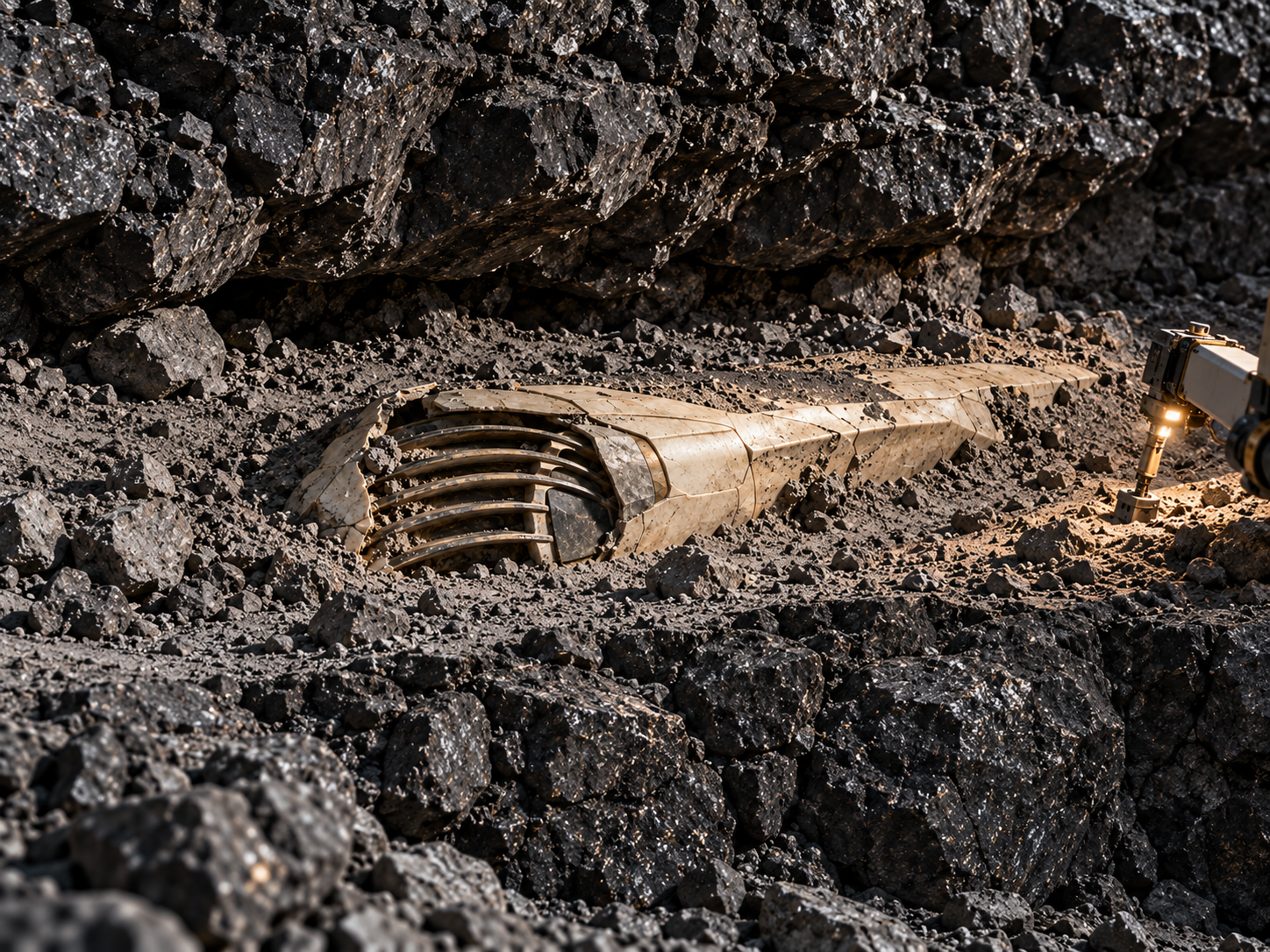
A history written into materials
Once that conclusion held, the object would begin to yield a smaller, more intimate history.
Its material boundaries could reveal how it was assembled. Changes in crystal structure might constrain heating and cooling during manufacture, provided investigators could separate those changes from later burial damage. Deposits inside protected channels could indicate what passed through them. Worn attachment points could suggest that the housing once belonged to something larger.
None of these clues would require miraculous substances. An alien artifact made from familiar elements would still be alien. A close match to local lunar material might favor manufacture using nearby resources, although it would not establish that origin by itself. Visitors need not carry every component across interstellar space.
The different insert would offer a particularly tempting clue. Suppose its boundary cuts across an earlier wear pattern, while later wear continues over both insert and housing. That sequence would support replacement during the object’s working life. A repair would become a stronger interpretation than a decorative variation or an original design feature.
We could then recover an event: a part wore out or became unsuitable, another took its place, and the larger assembly continued operating.
It would be easy to turn that into a story about patience, thrift, or affection. The evidence would not yet take us there. An automated maintenance system can replace a component. Replacement may reflect scarce supplies, expensive transport, or simple efficiency.
Even so, a repair contains a recognizable structure of action. A condition was detected. An alternative was implemented. Continued operation was worth some expenditure of resources. Across the enormous interval, we would have recovered one decision embedded in matter, without knowing whether anyone experienced it as a decision at all.
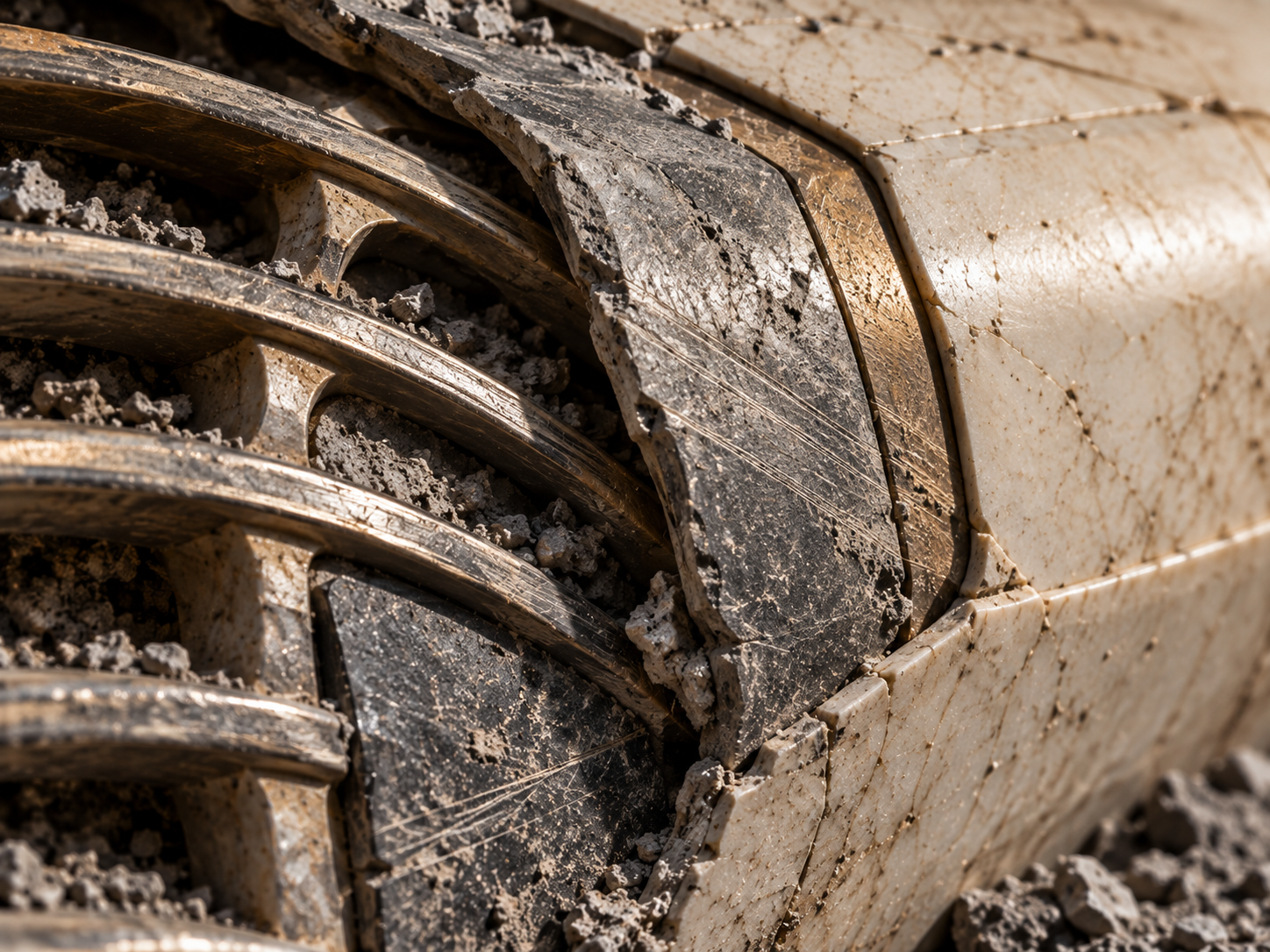
Knowing how it worked
Imagine that laboratory analysis eventually makes one part of the mechanism intelligible. Its conducting surfaces could have generated electric fields that directed charged particles along different paths. A reconstruction, supplied with human equipment and power, reproduces the predicted behavior.
This would be a major achievement. It would demonstrate a physical function. The original could remain inert, its power source missing and much of its assembly destroyed, while a partial replica taught us something about its engineering.
Yet the same function could belong to very different activities.
As part of a scientific instrument, the channels could have separated incoming particles so that a detector could measure them. Different trajectories would turn an otherwise mixed stream into useful information about its source. In that model, the housing belonged to an investigation. Surviving calibration features, a place for a detector, and small quantities of captured material would strengthen the interpretation. They would not reveal what question the investigation was intended to answer.
As part of a processing unit, the same sorting action could have delivered selected material to another machine. The purpose would be production. Collection chambers, residues associated with sustained throughput, and connections suitable for moving material onward would favor this model. The Moon would have been a place where something was being made, even if this fragment never told us what.
The assembly could also have helped maintain a controlled environment by removing unwanted charged particles from a stream passing through it. Then its immediate role would have been protection or regulation. Evidence of a return path, repeated circulation, or attachment to a sealed enclosure could support that possibility. Such an enclosure might have housed equipment; calling it a habitat would require additional evidence.
These models overlap at the level of mechanism and diverge at the level of the surrounding system. They become testable through the traces that system should have left. If the relevant connections and residues are gone, several interpretations may remain compatible with the same successful reconstruction.
Human archaeology offers a useful comparison. Researchers studying the Antikythera Mechanism used imaging, surviving gears, and inscriptions to reconstruct astronomical functions. They could relate the object to known languages and traditions of astronomy. With the lunar housing, much of that surrounding knowledge would be missing.
We might learn how to build an equivalent component before we could say what activity the original served. A working replica on a laboratory bench could sit beside several incompatible accounts of its meaning.
A civilization cannot fit inside a component
The uncertainty would deepen when we tried to move from engineering to culture.
A redundant circuit might suggest that a particular failure was expensive. It would not tell us whether the designers valued individual lives, uninterrupted measurements, prestige, or the protection of another machine. Several motives can produce the same practical choice.
An absence of handles would tell us little about the makers’ bodies. The assembly may never have been intended for direct manipulation. A scale that seems comfortable to a human hand could result from material strength or particle flow rather than anatomy. Even a repeated preference for symmetry could reflect structural convenience before it reflected beauty.
Recovering culture would require relationships among things. A second housing made to the same dimensions could suggest a shared manufacturing standard. Different versions could reveal revision. Repeated repairs could establish a practice. A deliberate mark might become interpretable if it appeared in enough contrasting contexts, but a lone pattern would not come with its own dictionary.
This leaves room for real knowledge. We could infer some constraints the builders faced, distinguish certain choices from physical necessities, and reconstruct sequences of work. The mistake would be expanding a local finding into a portrait of an entire civilization. A component built for a hostile environment may tell us more about that environment than about everyday life elsewhere.
There is also the question of who the makers were. The entity that fabricated the housing, the agent that operated it, and the intelligence that originated the design might have been different. Calling all three “the aliens” would compress an unknown social and technological history into one imagined character.
Nothing about precision alone would establish conscious experience. A machine can preserve evidence of accomplished tasks without preserving evidence of what accomplishment felt like. We would have firmer access to what happened than to whether anyone was proud, bored, afraid, or even capable of those states.
The object would bring another intelligence into reach through its consequences. Its inner life could remain as inaccessible as it had been before the excavation.
Silence is not an obituary
An inactive artifact would tell us that this particular object was inactive when we found it. Its makers’ fate would remain a different question.
The housing could have failed, been replaced, or been discarded when a larger installation was removed. It could have belonged to a temporary operation whose participants departed as planned. The absence of a power connection might explain its silence without requiring any catastrophe at all.
A civilization could leave an object behind and continue elsewhere. Its descendants might become unrecognizable to those who built it. The original community might disappear while other communities inherited parts of its knowledge. Extinction belongs among the possibilities, alongside migration, transformation, and ordinary abandonment.
Even evidence of a hurried departure would describe an event at this site. A damaged work area does not establish the end of every society connected to it. The more distant our reconstruction moved from the preserved evidence, the more additional support it would need.
The age would make the uncertainty emotionally difficult. A billion years invites us to imagine an ending because it exceeds the scale of any familiar human continuity. But the great distance between then and now is not a record of everything that happened in between.
Nor would there necessarily be someone available to answer a message. We would not yet know where to send it, and communication across interstellar distances would take time even with a destination. Discovering a trace in our neighborhood would give us a location in the makers’ past, not their current address.
The excavation could therefore become the beginning of a relationship with questions that outlived the people who first asked them.
The missing world around it
Return to the attachment points. They may be the object’s most important features precisely because they lead away from it.
A connection implies something it connected to. Wear may indicate a load. Residue may suggest a flow of material. An exposed conductive surface may have transferred power or information. Each clue would help investigators ask a narrower question of the surrounding site.
The search would become archaeological in method as well as metaphor. Map the position of each fragment before moving it. Compare deposits inside and outside the housing. Look for matching pieces in the same buried layer. Preserve samples that later instruments might be able to interrogate in ways ours cannot.
If compatible fragments formed an ordered arrangement, the discovery could grow from an isolated object into evidence of a working installation. Repeated units might indicate a common supply or collection system. Different orientations might distinguish a collapsed structure from debris scattered by an impact. These would be new findings to establish, not details licensed by the first extraordinary result.
An installation would change the meaning of the site again. The Moon would have been a place within someone else’s practical world: somewhere with conditions to manage, resources to obtain, or measurements to make. What we call an alien presence might once have been a routine assignment.
That possibility has a peculiar intimacy. We would be studying evidence of a task whose importance had expired before our species emerged. The housing might be an ordinary component from an unremarkable day in a history we could barely imagine. Its makers need never have intended to leave a monument.
The same realization would make the discovery fragile. Removing everything to obtain the most spectacular exhibit could destroy the relationships needed to understand it. Preserving the arrangement would preserve future questions. Public access to records and independent study would help keep one institution’s interpretation from becoming the only available version of another intelligence’s past.
The first responsibility of contact might be to leave some evidence where it was found.
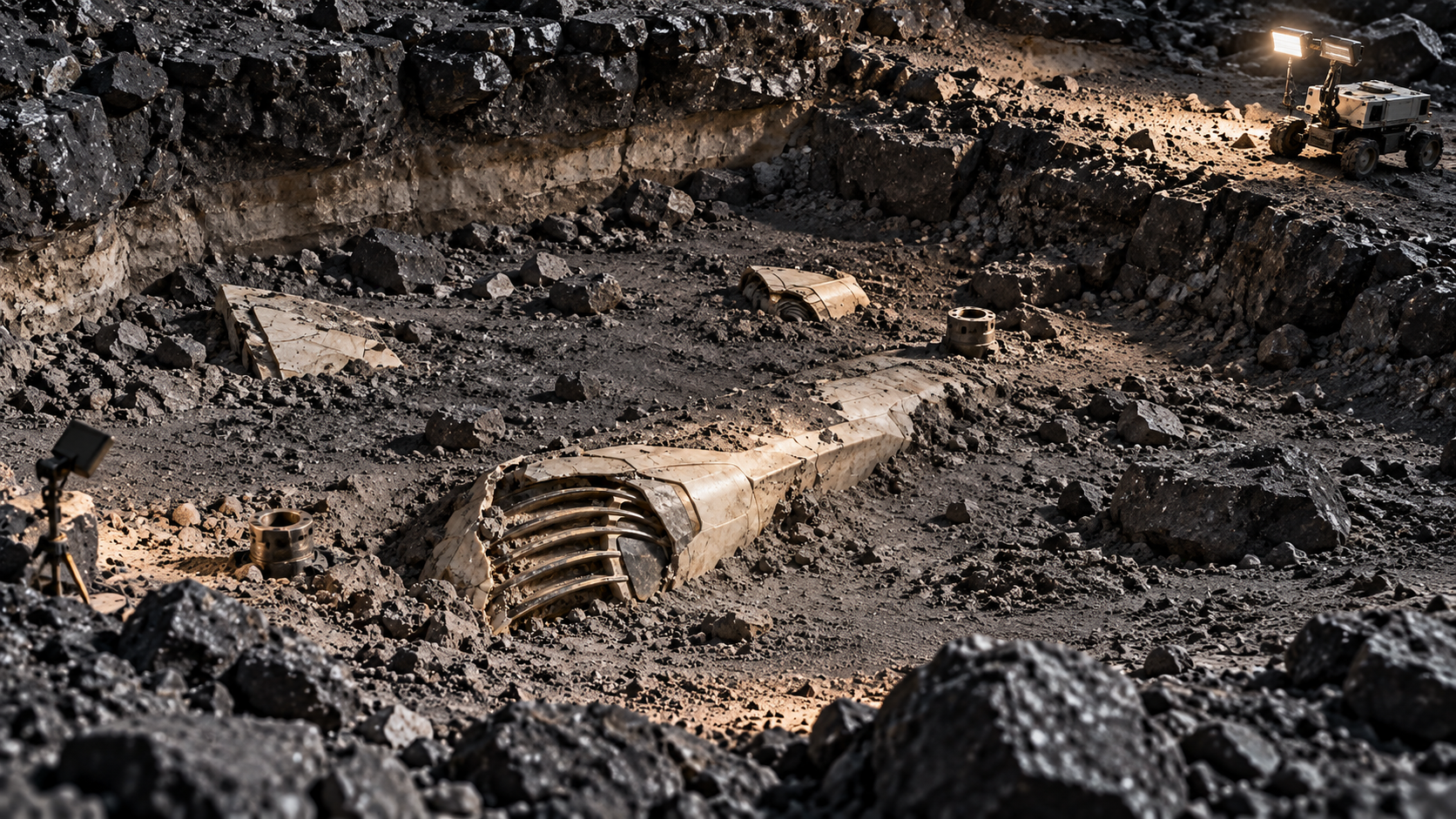
Our first place in someone else’s past
Humanity would have to absorb a new kind of historical fact: technological activity had taken place nearby before there were humans to witness it.
That would not tell us how common intelligence is. One artifact could not establish a crowded galaxy, a pattern of visits to Earth, or a universal sequence through which civilizations develop. What it would establish is a second history of purposeful construction, intersecting the physical neighborhood we had come to think of as the setting of our own beginning.
We could still be alone here now. We would no longer be able to treat our arrival as the beginning of technology here.
There is a further possibility. Suppose the recovered engineering taught us something useful. The reconstruction could become a component in human instruments. An arrangement devised for an unknown purpose would acquire a new one, separated from its origin by an interval longer than our species could remember.
At that point, contact would involve more than acquiring knowledge that someone existed. Their work would enter our own chain of invention. Something they did would alter what we could do, despite the absence of a shared language, a common present, or any intention to teach us.
A material trace can create that kind of relationship. It carries consequences beyond the span of the agent that produced it. We would be adding another chapter to the object’s history while remaining unable to read much of its first chapter.
Such an inheritance would be selective. A later civilization could adopt a useful technique without recovering the goals that produced it, then build that technique into tools its originators would never recognize. The same engineering would serve a new set of purposes. Contact through remains could therefore change a civilization without making either civilization well understood. We would inherit an effect of another intelligence while supplying much of its meaning ourselves.
Perhaps this is one form a larger cosmic history could take: encounters between communities whose periods of activity never overlap, mediated by things durable enough to travel through time. The conditions are demanding. Traces must survive, be found, and remain interpretable. Each failure removes a possible connection.
The lunar housing would show that at least one such connection had held.
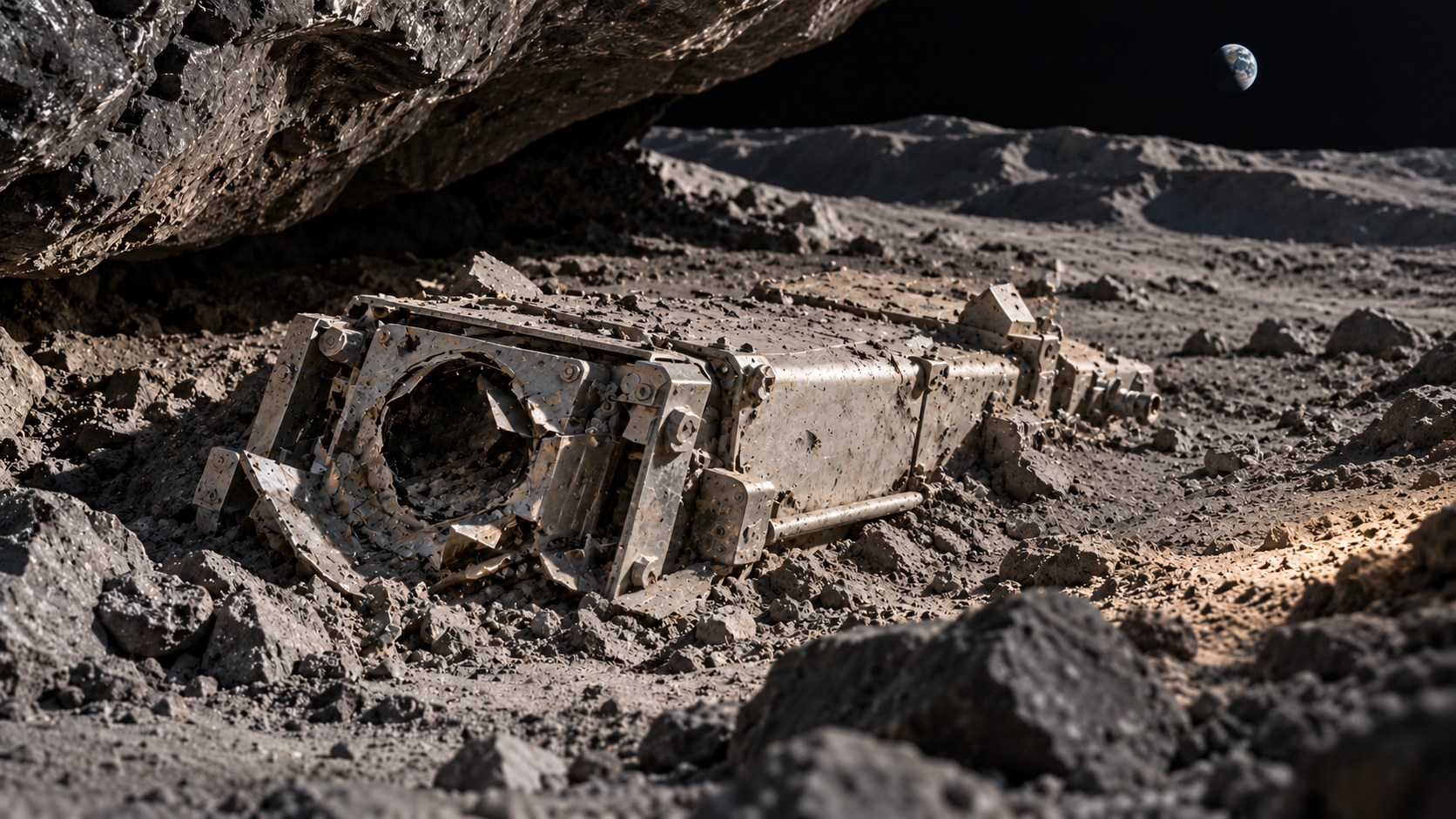
What survives of us
The object would eventually turn our attention toward the equipment we have left beyond Earth.
We also leave housings, instruments, fasteners, and dead machines. Some carry deliberate messages. Much of what we leave is simply the residue of getting something done. Whether any particular object survives into a remote future will depend on its materials, its surroundings, and accidents no designer can fully anticipate.
A later intelligence could encounter one surviving human instrument and face the same ladder of inference. Manufactured. Used. Altered. Abandoned. With enough context, perhaps part of its function would become clear. Much of the world that made the function worthwhile could remain absent.
They might reconstruct a sensor and never recover the sky it helped us imagine. They might recognize a repair without knowing whether it was performed routinely or under desperate pressure. They could infer a capacity for precision from a single fitting while finding almost nothing about our capacity for tenderness.
Our durable remains would be a profoundly uneven account of us. They would preserve some acts more readily than the reasons those acts mattered. A civilization rich in conversation, disagreement, play, attachment, and grief could reach another mind chiefly as a problem in materials science.
That would lend the buried lunar object a different weight. Every missing part would become a reminder of how much a trace can exclude. The successful reconstruction would deserve its wonder; so would the recognition that a working mechanism could leave an entire lived world unrecovered.
We would look again at the worn insert, replaced so long ago, and know that something once continued because it had been changed.
One day, someone may know that much about us. Enough to understand what we made. Still searching for what it meant to be here.
More in SPEC
- What If First Contact Is an Archive? — Explores contact through preserved information, extending the contrast between an intended record and an object whose meaning must be reconstructed.
- What If the Visitors Are Another Civilization’s AI? — Examines why an encountered technology may reveal little about the creators, purposes, or authority behind it.
- What If an Alien Civilization Could Share One Consciousness Across Many Bodies? — Opens the possibility that the minds behind unfamiliar material traces could be organized in ways human artifacts would never prepare us to recognize.
Sources / Receipts
- T. Joseph W. Lazio, “Technosignatures in the Solar System”, arXiv:2606.13797v1, June 2026. This review/preprint supplies the Solar System technosignature framework and the distinction between finding an object and identifying its origin. It reports no confirmed extraterrestrial artifact; the discovery developed here is a thought experiment.
- Paul C. W. Davies and R. V. Wagner, “Searching for alien artifacts on the moon”, Acta Astronautica 89 (2013), 261–265. A research proposal for using lunar imagery to search for technological traces. It supports treating artifact searches as a scientific possibility, not treating unusual lunar features as established artifacts.
- Ian A. Crawford, Sarah A. Fagents, Katherine H. Joy, and M. Elise Rumpf, “Lunar Palaeoregolith Deposits as Recorders of the Galactic Environment of the Solar System and Implications for Astrobiology”, 2010. Supports the choice of buried lunar regolith, the relevance of Oceanus Procellarum, and the use of surrounding geological layers to constrain a preserved record. The article’s discovery site and age are invented.
- Sarah A. Fagents and colleagues, “Preservation potential of implanted solar wind volatiles in lunar paleoregolith deposits buried by lava flows”, Icarus 207 (2010), 595–604. Models the balance between burial, heating, and insulation for natural lunar records. Survival of recognizable manufactured structures under the imagined conditions remains an additional assumption, not a result established by this study.
- NASA/JPL, “New Data Confirm 2020 SO to be the Upper Centaur Rocket Booster from the 1960’s”, December 2, 2020. Documents the use of orbital analysis and spectroscopy to identify an apparently natural small object as human space hardware. It illustrates why “artificial” and “extraterrestrial in origin” require separate investigations.
- Tony Freeth and colleagues, “Decoding the ancient Greek astronomical calculator known as the Antikythera Mechanism”, Nature 444 (2006), 587–591. Imaging, surviving mechanisms, and inscriptions helped recover astronomical functions from a damaged human artifact. The comparison shows the value of cultural context; it does not imply that alien engineering would resemble ancient Greek machinery.


Discussion