
Some books survive because institutions protect them.
Others survive because they refuse to disappear.
The Book of Enoch belongs to the second category.
A text about angels who cross a boundary.
Giants born from forbidden union.
Knowledge given before humanity is ready.
A cosmic map of heaven, earth, judgment, stars, spirits, and the end of the age.
A patriarch who walks with God and becomes a witness to hidden architecture.
For most Jews and Christians, the Book of Enoch stands outside the Bible.
For Ethiopian and Eritrean Orthodox Christianity, it remains inside the biblical world.
For scholars, it is one of the major windows into Second Temple Jewish apocalyptic imagination.
For modern seekers, it has become something else: a forbidden text, a lost scripture, a Watchers archive, an ancient key to angels, demons, giants, cosmic rebellion, and hidden history.
That is why the Book of Enoch belongs in The Galactic Mind archive.
Not because every modern claim attached to it is true.
Not because it proves ancient aliens, suppressed theology, or secret cosmic bloodlines.
But because it reveals something powerful:
Ancient people were already wrestling with a question that still haunts the modern world.
What happens when intelligence descends from above and gives humanity knowledge it cannot control?
Overview: What This Is
The “Book of Enoch” usually refers to 1 Enoch, an ancient Jewish apocalyptic collection attributed to Enoch, the seventh patriarch from Adam and the great-grandfather of Noah.
It is not one simple book.
It is a layered collection of visions, journeys, judgments, angelic rebellions, heavenly secrets, calendar systems, dream-symbol histories, and end-time prophecies. George W. E. Nickelsburg, writing for the Biblical Archaeology Society, describes 1 Enoch as a collection of texts composed between roughly 350 BCE and the turn of the era, originally in Aramaic, later translated into Greek, and preserved in full only in ancient Ethiopic / Geʽez.
The book is famous for expanding the brief and mysterious Genesis 6 story of the “sons of God,” the “daughters of men,” and the Nephilim into a full cosmic drama. In 1 Enoch, the Watchers descend, take human wives, produce giants, teach forbidden arts, corrupt the earth, and trigger divine judgment.
That storyline became one of the most influential angelic myths in religious history.
It helped shape later ideas about fallen angels, demons, cosmic judgment, heavenly books, apocalyptic secrets, and the hidden structure of evil.
But the Book of Enoch is also a canon problem.
The Ethiopian Orthodox Tewahedo Church lists Enoch among its Old Testament books and describes the Ethiopic Bible as including Enoch, Jubilees, and other works preserved in the Ethiopian tradition. The Eritrean Orthodox Tewahedo Church also lists Enoch within its canonized Old Testament books.
Most other Jewish and Christian traditions do not treat 1 Enoch as scripture.
That tension is part of its power.
The Book of Enoch is not simply a lost book.
It is a book standing at the border of scripture, myth, apocalypse, forbidden knowledge, and modern fascination.
Origins and Background
The biblical Enoch appears briefly.
In Genesis, he is the figure who “walked with God” and was taken by God. The Hebrew Bible gives him very little biography.
But ancient imagination did not leave him there.
If Enoch was taken by God, what did he see?
If he entered the heavenly realm, what did he learn?
If he escaped ordinary death, could he become a witness to realities hidden from the rest of humanity?
The Book of Enoch grows out of that possibility.
It turns Enoch from a brief patriarchal figure into a cosmic observer: a human being given access to the mechanics of heaven, judgment, stars, angels, spirits, and the fate of the world.
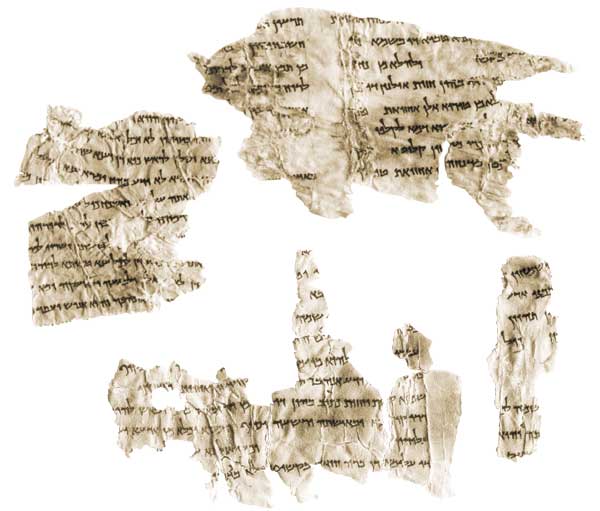
The oldest layers of the Enochic tradition circulated in the centuries before Christianity. The Dead Sea Scrolls preserve Aramaic Enoch material; the Israel Antiquities Authority’s Dead Sea Scrolls Digital Library identifies a 4Q Enoch fragment dated to 150–50 BCE, written in Aramaic, describing the heavenly revolt of fallen angels and their descent to earth.
That matters.
It means Enoch was not a medieval invention.
It was part of the Jewish apocalyptic world before the New Testament.
Qumran Cave 4 yielded fragments of eleven Aramaic manuscripts of parts of 1 Enoch, covering about one fifth of the later Ethiopic text, along with related Enochic material such as the Book of Giants.
But the complete book survived elsewhere.
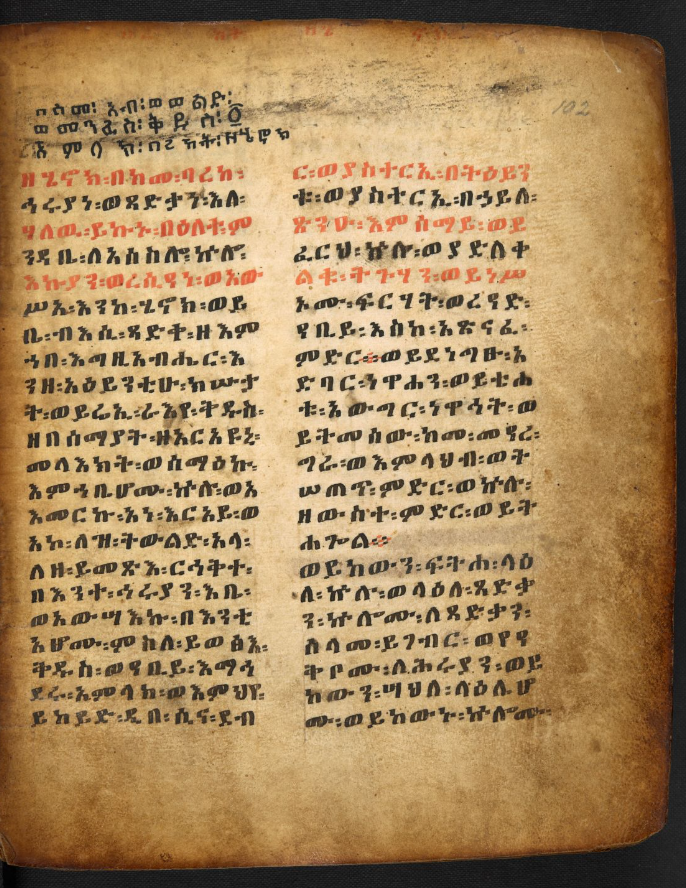
The full collection was preserved in Geʽez, the ancient liturgical language of Ethiopia. Princeton University Library describes the Ethiopic Book of Enoch as a complete Geʽez translation of an ancient Jewish religious text, regarded as canonical by the Ethiopian Orthodox Church.
That preservation history is essential.
Without Ethiopia, the Book of Enoch would likely be known only through fragments, quotations, and scattered references.
The text survived because one tradition kept it alive.
What It’s Known For
The Book of Enoch is known for several major signals.
The Watchers
The most famous section is the Book of the Watchers, generally identified as 1 Enoch 1–36.
This is where the angels descend.
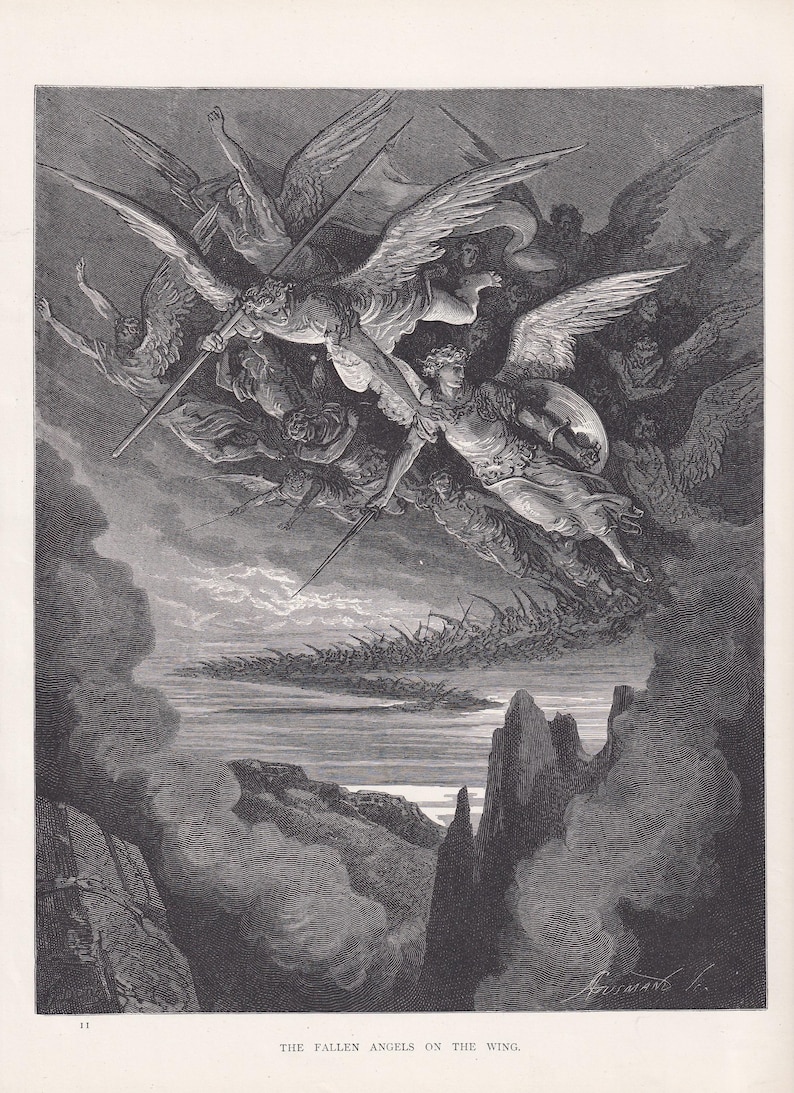
The Watchers see human women, cross the boundary between heaven and earth, take wives, father giants, and teach human beings forbidden knowledge.
TheTorah.com describes the Book of Watchers as the earliest work addressing the Genesis 6 problem and dates it to roughly 250–200 BCE. It explains that the Watchers are the angelic figures connected to the “sons of God” in Genesis 6.
This is the mythic heart of Enoch.
The origin of evil is not presented only as human disobedience.
It is cosmic contamination.
Heavenly beings reveal knowledge prematurely.
Humanity receives power without wisdom.
The earth becomes violent.
The boundary breaks.
Forbidden Knowledge
The Watchers do not only mate with women.
They teach.
This is one of the most important parts of the Enochic imagination.
They reveal arts, charms, medicines, metalwork, cosmetics, astrology, weapons, and other forms of knowledge associated with power, beauty, war, and manipulation.
In one thread of the Watchers tradition, forbidden knowledge becomes one of the sources of corruption before the flood. TheTorah.com summarizes this strand as angels teaching magic and other forbidden knowledge, which contributes to sin and the flood.
This is why the Book of Enoch feels strangely modern.
Its danger is not ignorance.
Its danger is knowledge without moral maturity.
The ancient myth asks a question we still live with:
Can intelligence become destructive when it arrives before wisdom?
The Nephilim and the Giants
The Nephilim appear only briefly in Genesis.
Enoch expands them into a terrifying consequence of broken boundaries.
In the Enochic version, the giants are not simply large beings.
They are signs of a corrupted order.
They are the offspring of a reality breach.
They devour, destroy, and intensify violence on the earth.
This turns the flood into more than a punishment for ordinary human wickedness.
It becomes a cosmic reset after heaven and earth have been improperly joined.
The Enochic retelling helped shape later Jewish and Christian demonological imagination, especially the idea that evil spirits could be connected to the aftermath of the giants.
Enoch’s Heavenly Journeys
The Book of Enoch is not only about fallen angels.
It is also about ascent.
Enoch travels through visionary landscapes, sees cosmic architecture, learns hidden things, and witnesses places of judgment.
The book belongs to apocalyptic literature, where revelation often comes through visions, angelic guides, cosmic journeys, symbolic history, and divine judgment.
The Jewish Encyclopedia calls the Ethiopic Book of Enoch one of the most important pieces of apocalyptic literature and says it contributes significantly to understanding Jewish religious ideas in the last pre-Christian centuries.
That is the larger context.
Enoch is not simply monster lore.
It is a heavenly archive.
The Five-Part Structure
1 Enoch is usually divided into five major sections:
- The Book of the Watchers
- The Book of Parables
- The Book of the Luminaries
- The Dream Visions
- The Epistle of Enoch
Nickelsburg and VanderKam’s Hermeneia translation lists these major sections, including the Watchers, Parables, Luminaries, Dream Visions, and later Noah / Enoch material.
Each section has a different feel.
The Watchers gives the myth of descent.
The Luminaries gives cosmic order and calendar knowledge.
The Dream Visions retell history through symbolic animals.
The Parables introduce exalted judgment imagery and “Son of Man” themes.
The Epistle gives ethical warning.
That layered structure matters because it shows the Book of Enoch is not one voice speaking at one time.
It is a library inside a name.
Jude and the New Testament
The Book of Enoch also matters because the New Testament letter of Jude appears to quote or directly draw from 1 Enoch 1:9.
Intertextual Bible places 1 Enoch 1:9 and Jude 1:14–15 side by side and identifies Jude as quoting the Jewish apocalyptic text in a passage about divine judgment. Logos summarizes the mainstream scholarly view as Jude quoting 1 Enoch specifically at 1:9, while also noting scholarly nuance about Greek, Aramaic, and the textual form Jude may have known.
This does not automatically mean Jude canonized the entire Book of Enoch.
It does mean Enochic tradition was known, respected, and usable in early Christian argument.
That is part of why the book keeps returning.
It stands outside most Bibles.
But traces of it remain inside the biblical conversation.

The Core Idea or Signal
The core signal of the Book of Enoch is this:
The world is not only corrupted from below. It can also be corrupted from above.
That is the Enochic rupture.
In Genesis, the flood story is brief and morally sweeping.
Human wickedness fills the earth.
Judgment comes.
Enoch expands the mystery.
It asks whether evil entered the world not only through human choice, but through a cosmic breach: intelligences crossing boundaries, mixing orders of being, and giving humanity dangerous knowledge.
This is why the Watchers remain so powerful.
They are not simple demons.
They are teachers.
They are transgressors.
They are heavenly beings whose knowledge becomes poison when it enters the wrong world at the wrong time.
The Book of Enoch is therefore not just about angels.
It is about knowledge as a dangerous technology.
Weapons.
Cosmetics.
Astrology.
Medicine.
Magic.
Metallurgy.
Secrets of heaven.
The ancient text imagines revelation as double-edged.
A gift can become a curse.
A teacher can become a corrupter.
A descent from heaven can become a catastrophe on earth.
That is why the Book of Enoch feels alive now.
The Watchers story is an ancient myth of advanced intelligence transferring power into human hands before human consciousness is ready to hold it.
That is not a relic.
That is the twenty-first century.
Perspectives and Interpretations
The Book of Enoch can be read through several lenses.
The Scholarly View
From the scholarly view, 1 Enoch is a major work of Second Temple Jewish apocalyptic literature.
It is valuable because it shows how some Jewish communities between the Hebrew Bible and early Christianity imagined evil, angels, judgment, cosmic order, the afterlife, messianic expectation, and the fate of the righteous.
In this view, Enoch is not “lost Bible lore” in a sensational sense.
It is historical evidence.
It tells us what some ancient Jewish writers, readers, and communities were thinking about when they read Genesis, watched empires rise, and waited for God to set the world right.
This view grounds the text.
It also prevents the modern reader from forcing it too quickly into contemporary theories.
The Ethiopian and Eritrean Orthodox View
From the Ethiopian and Eritrean Orthodox view, Enoch is not merely an outside text.
It is part of the scriptural world.
The Ethiopian Orthodox Tewahedo Church lists Enoch among the holy books of the Old Testament, and the Eritrean Orthodox Tewahdo Church lists Enoch in its canonized Old Testament books as well.
That matters because many Western discussions treat Enoch as if it simply vanished from Christianity.
It did not.
It remained canonical in living African Christian traditions.
A grounded Dossier should not describe Enoch only as “rejected.”
It was rejected by some traditions.
Preserved by others.
Canon is not only theology.
It is also history, geography, language, empire, survival, and transmission.
The Jewish Interpretive View
From a Jewish interpretive view, the Book of Enoch is important but not canonical within Rabbinic Judaism.
Its Watchers myth expands Genesis 6 in a way later rabbinic tradition often resisted or reinterpreted. TheTorah.com notes that later rabbis pushed against the idea that the “sons of God” were angels, sometimes reading them instead as nobles, judges, or powerful men.
That tension reveals a deep debate.
Should Genesis 6 be read as a story of divine beings crossing into human life?
Or as a story of human power abusing human vulnerability?
Enoch chooses the cosmic reading.
Rabbinic tradition often disciplined the myth back toward human responsibility.
Both readings matter.
The Christian View
From the Christian view, Enoch has always occupied a strange position.
It is not in most Christian biblical canons.
Yet early Christian writers knew it.
Jude appears to quote it.
Its themes of judgment, angels, cosmic rebellion, and the “Son of Man” resonated with early Christian imagination.
But using Enoch does not settle its status.
Logos notes that Jude’s use of Enochian material does not necessarily imply endorsement of the entire Enochic corpus as inspired or canonical.
That is the careful position.
Enoch influenced Christianity.
It did not become scripture for most Christian traditions.
Influence is not the same as canon.
The Esoteric View
From the esoteric view, the Book of Enoch is a forbidden archive.
It seems to contain the things later religion tried to tame:
angels with bodies
secret names
forbidden arts
cosmic geography
heavenly books
giants
stars as living order
judgment beyond ordinary time
This is why modern occult, New Age, ancient astronaut, and conspiracy communities keep returning to it.
Enoch feels like a text that remembers a stranger universe.
The danger is that modern readers often flatten its ancient religious imagination into whatever system they already prefer.
Ancient aliens.
DNA manipulation.
Secret bloodlines.
Suppressed Vatican truth.
Interdimensional beings.
Pre-flood technology.
Some of those ideas may be culturally interesting.
But they are modern interpretations, not established meanings of the ancient text.
The Mythic-Technology View
There is another reading that may be more useful.
The Book of Enoch is a myth about technology before technology.
It asks what happens when power descends faster than conscience.
The Watchers are not only fallen angels.
They are carriers of disruptive knowledge.
They alter the human condition.
They accelerate violence.
They create hybrid consequences.
They break the scale of the world.
This is why Enoch speaks so strongly to the AI era.
Modern humanity is again being handed capabilities that feel almost descended from another order of intelligence:
machine learning
gene editing
autonomous weapons
synthetic media
surveillance systems
algorithmic persuasion
space technology
neural interfaces
The Enochic question returns:
Can a species survive the knowledge it receives?

Strengths and Limitations
The Book of Enoch’s greatest strength is its value as a window into Second Temple Jewish thought.
It shows how ancient writers expanded the unexplained edges of Genesis into a larger account of evil, judgment, cosmic order, spiritual beings, and the limits of knowledge. The brief appearance of the “sons of God” and Nephilim in Genesis becomes a full drama of descent, forbidden instruction, violence, and divine response.
The text also helps explain ideas that later appeared across Jewish and Christian traditions:
- rebellious angels
- demons associated with the dead giants
- heavenly books
- cosmic judgment
- visionary journeys
- the Son of Man
- resurrection and restoration
- history moving toward an appointed end
But several limitations must remain visible.
First, 1 Enoch is a composite collection. Its different sections emerged across different periods and were later gathered under the authority of Enoch. It should not be treated as a single document written by the biblical patriarch.
Second, the Qumran discoveries confirm that Enochic writings circulated before Christianity, but the fragments do not preserve the complete collection known from the later Geʽez tradition. Their existence establishes antiquity and influence—not universal acceptance or a single fixed form.
Third, canonicity developed differently across religious communities. It is misleading to say that “the Bible removed Enoch” as though one universal biblical canon existed and a single institution deleted it. Most Jewish and Christian traditions did not ultimately include 1 Enoch, while Ethiopian and Eritrean Orthodox traditions preserved it within their biblical world.
Fourth, the antiquity of the text does not validate every modern theory attached to it.
The Watchers can be interpreted symbolically as advanced intelligences, dangerous teachers, boundary-crossing beings, or archetypes of uncontrolled technological power. But claims that 1 Enoch documents extraterrestrial visitors, genetic engineering, prehistoric laboratories, secret bloodlines, or suppressed advanced technology are modern interpretations.
The manuscripts establish an ancient text.
They do not establish every modern reading of what its beings and events “really” were.

Broader Implications
The Book of Enoch matters because it preserves an ancient vision of reality that modern categories struggle to hold.
It is not simply religion.
It is not simply mythology.
It is not simply history.
It is not simply fantasy.
It is a map of a world where heaven and earth are porous, knowledge has moral weight, stars follow hidden law, angels can rebel, history moves toward judgment, and human violence is part of a larger cosmic wound.
Modern people often think of reality in layers:
matter
biology
psychology
culture
technology
information
Enoch imagines different layers:
earth
heaven
Watchers
spirits
luminaries
judgment
hidden books
appointed times
cosmic law
The difference is not only ancient versus modern.
It is a different way of interpreting reality.
For Enoch, the visible world is not self-contained.
Human history is entangled with invisible order.
Evil is not merely social.
Knowledge is not morally neutral.
Cosmic law is not metaphor.
The stars are not only objects.
The heavens are not empty space.
That vision challenges modern materialism, but it also challenges shallow spirituality.
Enoch does not present the invisible realm as comforting.
It presents it as dangerous, structured, morally charged, and accountable.
This is why the Book of Enoch keeps resurfacing.
It speaks to people who feel the modern world has flattened reality.
It also speaks to people living through technological acceleration, ecological crisis, spiritual confusion, institutional distrust, and renewed interest in angels, demons, giants, UAP, simulation theory, and hidden histories.
The book’s power is not that it gives easy answers.
Its power is that it preserves a question:
What if the human story has always been entangled with intelligences, laws, and consequences we only partially perceive?
That question can be handled wisely.
It can also be mishandled.
The difference is discipline.
The Reality Signal
What this subject represents
The Book of Enoch represents the forbidden archive at the edge of canon.
It is the text that remembers the Watchers.
The text that expands a few mysterious biblical lines into a cosmic drama.
The text that survived outside most biblical collections but inside a living Ethiopian and Eritrean scriptural world.
It represents the belief that reality contains hidden layers, and that some forms of knowledge can damage the world when revealed before the soul is ready.
That is its symbolic charge.
What reality frame it challenges
Enoch challenges the modern frame that reality is only material, visible, and human-centered.
It also challenges the religious frame that wants clean categories:
angel
human
demon
scripture
apocrypha
myth
history
The Book of Enoch disrupts those boundaries.
It gives us heavenly beings who behave badly.
Humans corrupted by celestial instruction.
Giants who blur categories.
Spirits left behind after judgment.
Stars and calendars as sacred order.
A human seer who becomes a traveler through hidden architecture.
It challenges the assumption that knowledge is always progress.
In Enoch, knowledge can be revelation.
It can also be contamination.
Why it matters now
The Book of Enoch matters now because humanity is living through a new Watchers moment.
Not because fallen angels are visibly descending.
But because the old mythic pattern has returned in technological form.
Power is arriving faster than wisdom.
Artificial intelligence is teaching humans new ways to create, deceive, persuade, simulate, and automate.
Biotechnology is altering the boundary of life.
Weapons systems are becoming increasingly autonomous.
Digital culture is reshaping perception.
The forbidden arts of the ancient world now look like code, data, genetics, sensors, and synthetic reality.
That does not mean Enoch predicted AI.
It means Enoch understood a pattern:
When higher knowledge enters a lower order without moral transformation, the result can be civilization-level instability.
That is why the Watchers still matter.
They are ancient angels.
They are also an archetype of dangerous acceleration.
What remains unresolved
What is established:
1 Enoch is an ancient Jewish apocalyptic collection. Portions circulated in Aramaic before Christianity, as demonstrated by manuscript fragments from Qumran, while the complete collection survived through the Geʽez manuscript tradition.
What the text claims:
The Watchers descended from heaven, crossed a forbidden boundary, took human wives, produced giant offspring, transmitted prohibited knowledge, corrupted the earth, and contributed to the judgment associated with the flood.
What remains debated:
Scholars continue to examine when individual sections were composed, how they were edited together, how the Book of Parables developed, and how Enochic language influenced later Jewish and Christian ideas about judgment, angels, evil, and the Son of Man.
What is frequently misunderstood:
The presence of Enochic manuscripts at Qumran does not make 1 Enoch canonical for every form of ancient Judaism. Jude’s use of Enochic material does not automatically canonize the entire collection. Its absence from most Western Bibles also does not erase its canonical place within Ethiopian and Eritrean Orthodox traditions.
What is not historically established:
The manuscripts do not prove that the Watchers were extraterrestrials, that the Nephilim resulted from technological genetic engineering, or that the text preserves a factual record of an advanced pre-flood civilization.
Why it still matters:
The Book of Enoch preserves one of humanity’s oldest sustained warnings about intelligence, power, and moral readiness.
Whether the Watchers are approached as spiritual beings, mythic symbols, theological explanations, or cultural memory, their pattern remains recognizable:
Knowledge descends.
Boundaries break.
Power spreads faster than wisdom.
The consequences exceed the intentions of those who received it.

The Galactic Mind Perspective
The Book of Enoch belongs in The Galactic Mind archive because it occupies several realities at once.
Historically, it is an ancient Jewish apocalyptic collection whose pre-Christian circulation is supported by the Aramaic fragments found at Qumran.
Religiously, it remains part of the scriptural tradition of Ethiopian and Eritrean Orthodox Christianity.
Symbolically, it preserves a powerful warning about broken boundaries, dangerous knowledge, and intelligence acting without moral restraint.
Those layers can coexist without being collapsed into one conclusion.
The manuscript evidence demonstrates that Enochic traditions are genuinely ancient. It does not demonstrate that the Watchers physically descended, that the Nephilim were products of genetic engineering, or that the text records extraterrestrial intervention.
At the same time, describing Enoch only as discarded mythology would miss its historical influence, theological depth, living religious significance, and continuing ability to frame questions that modern language still struggles to contain.
The Galactic Mind Perspective is not that Enoch secretly explains human history.
It is that the text preserves a pattern worth examining.
Knowledge arrives from beyond the ordinary human frame.
The boundary between worlds becomes unstable.
New powers enter society.
Those powers amplify human desire, conflict, and violence.
The consequences spread beyond the control of those who first received them.
An ancient reader could understand this as angelic rebellion and divine judgment. A modern reader might see a symbolic warning about technological acceleration, artificial intelligence, biotechnology, autonomous weapons, or any capability that develops faster than the wisdom required to govern it.
That modern comparison is an interpretation—not the original meaning proved.
But interpretation is part of why old texts survive.
The Book of Enoch reminds us that ancient people were already asking whether every form of knowledge should be pursued simply because it could be revealed. Its world may be theological and mythic, but its concern is recognizably human.
Wonder does not require us to treat every vision as documented history.
Skepticism does not require us to strip the vision of meaning.
The most responsible position may be to hold both truths at once:
The Watchers remain unverified as literal beings.
Their warning remains difficult to dismiss.
Open Thread
The Book of Enoch leaves us with a question larger than whether its angels, giants, and heavenly journeys should be read literally.
How should we approach an ancient text that is historically real, religiously sacred to living communities, symbolically powerful, and filled with claims that exceed what historical evidence can verify?
Perhaps the Watchers were understood as actual celestial beings.
Perhaps their story gave ancient writers a way to explain violence, forbidden practices, social corruption, and the unresolved mystery of Genesis 6.
Perhaps modern readers recognize them because the pattern can be translated into every age that receives more power than it has developed the wisdom to control.
These possibilities are not identical.
One belongs to theology.
One belongs to historical interpretation.
One belongs to symbolic application.
More speculative readings belong to a fourth category entirely.
Keeping those categories separate does not weaken the mystery. It allows us to explore it without deciding in advance what the text must prove.
The Book of Enoch may not be a suppressed factual record of non-human intervention.
But neither is it merely an obsolete curiosity from a forgotten religious world.
It is evidence that human beings have long imagined knowledge as something morally charged—capable of illuminating civilization, corrupting it, or doing both at once.
So the open question is not only whether the Watchers descended.
It is whether humanity has ever learned how to receive powerful knowledge without becoming transformed by its consequences.
What do you think the Watchers story preserves: theology, symbolic warning, cultural memory or something still unresolved?
Drop your thoughts in the comments...
More in Dossiers
The Book of Soyga and the Architecture of Hidden Knowledge
John Dee’s mysterious grimoire reveals how magic, mathematics, angelic communication, cryptography, and deliberate secrecy converged inside the intellectual world of the Renaissance.
Billy Carson and the Forbidden Knowledge Machine
How ancient texts, esoteric interpretation, consciousness, alternative history, and personal transformation are being assembled into a modern digital knowledge ecosystem.
Graham Hancock and the Lost Civilization Question
A measured examination of the claim that an advanced Ice Age civilization disappeared in catastrophe and preserved its knowledge through monuments, myth, and later cultures.
Sources / Receipts
- Israel Antiquities Authority — 4Q Enoch
Institutional record for the Aramaic 4Q Enoch fragment, dated approximately 150–50 BCE, describing the revolt and descent of the fallen angels. - Israel Antiquities Authority — 4Q207 Enoch Manuscript
Digitized manuscript record documenting an Aramaic Enoch fragment from Qumran Cave 4. - George W. E. Nickelsburg — Dead Sea Scrolls Spotlight: The Book of Enoch
Overview of the eleven Aramaic 1 Enoch manuscripts from Qumran, the Geʽez transmission, the Book of Giants, and the missing Book of Parables material. - George W. E. Nickelsburg and James C. VanderKam — 1 Enoch: The Hermeneia Translation
Major scholarly translation incorporating the Geʽez text, surviving Greek material, and Aramaic fragments from the Dead Sea Scrolls. - Ethiopian Orthodox Tewahedo Church — Canonical Books
Official church listing placing Enoch among the Old Testament books of the Ethiopian Orthodox biblical canon. - Eritrean Orthodox Tewahdo Church — Canonized Books
Church listing identifying Enoch within the Eritrean Orthodox Old Testament collection. - Princeton University Library — Ethiopic Manuscripts and the Book of Enoch
Institutional discussion of Princeton’s Geʽez manuscript collection, Enoch’s Ethiopian preservation, and its canonical status in the Ethiopian Orthodox Church. - Miryam Brand — “The Benei Elohim, the Watchers, and the Origins of Evil”
Scholarly examination of Genesis 6, the Watchers tradition, forbidden knowledge, the giants, and the Enochic explanation for the spread of evil. - C. D. Elledge — “Resurrection and the Book of Watchers”
Oxford Academic treatment of the Book of Watchers as a third-century BCE composition and its ideas about judgment, restoration, and resurrection. - Nicholas J. Moore — “Is Enoch Also among the Prophets?”
Academic analysis of Jude’s citation of 1 Enoch and how that relationship affected the reception of both works in early Christianity. - Timothy A. Lee — “Jude’s Use of a Kaige Edition of Enochic Scripture”
Recent textual study examining Jude 14–15 and its relationship to 1 Enoch 1:9, including the surviving Greek and Aramaic textual evidence.


Discussion