
Central Question
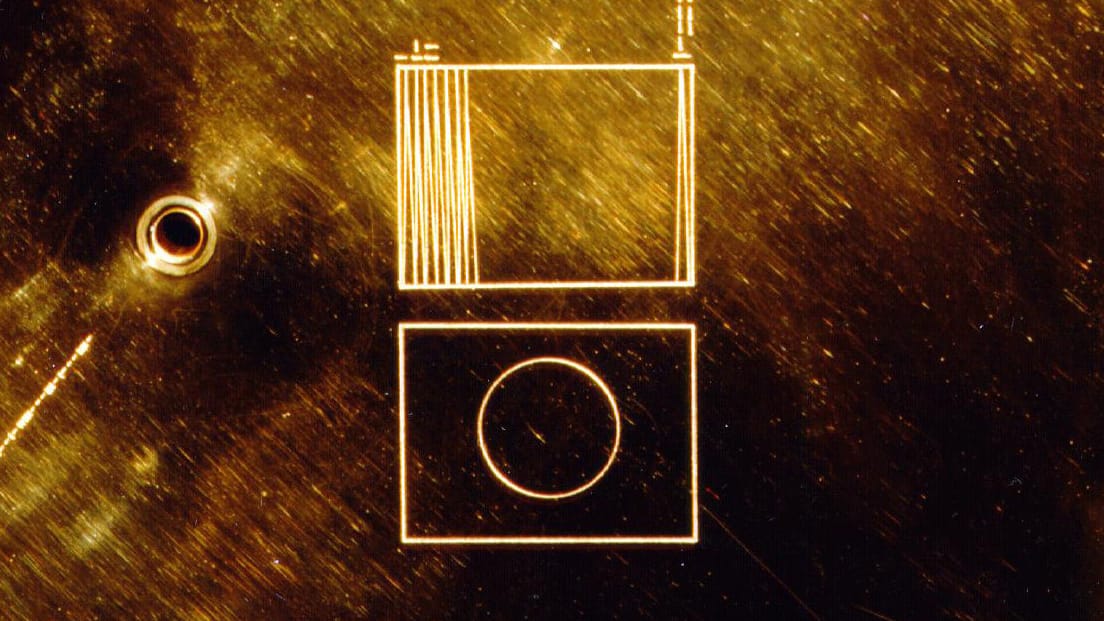
The first picture on Voyager’s Golden Record should come out as a circle. A drawing on the record’s protective cover shows a finder what to expect. If it reconstructs an oval, it can adjust the picture’s width relative to its height until the proportions match.
NASA’s twin Voyager spacecraft each carried a copy of the record when they left Earth in 1977. In NASA’s account of the project, Ann Druyan, the record’s creative director, recalled a mother greeting her newborn for the first time. Imagine a finder that reconstructs both the circle and that sound flawlessly. The drawing tells it how to check the circle. What could it check about the greeting?
If another intelligence reproduced a human sound perfectly, what could it know about what that sound meant to the people in the room?
What You Know From the Hallway
Give the same finder one more recording, this time a human lullaby. The song is our thought experiment; the sound Druyan described was a greeting. Imagine a parent who has forgotten the next verse and hums the first one over again. Coming down the hall with something to tell them, you might hear three notes through the half-open door and decide it can wait.
You have understood enough to do the considerate thing. But you heard those notes in a house, late at night, outside a door you knew. The finder gets the notes without the hallway.
Three Ways to Hear the Same Tune
Suppose the finder recognizes a phrase each time it comes round and can supply the notes when the recording cuts out. It has learned something about musical form. It could do just as well with a song that keeps people rowing in time.
It might work out that one being is trying to soothe another and still find the sound piercing. Or reverse the case: the tune settles it so completely that it takes this for music humans make to comfort themselves when alone. Its calm would be real. It would have missed the child.
The Babies Who Had Never Heard the Songs
In an experiment with 144 U.S. infants aged two to fourteen months, animated characters appeared to sing unfamiliar songs from other societies. During lullabies, the babies’ heart rates slowed more, on average, than during songs used for dancing, healing, or expressing love.
A baby’s heart can also slow when something catches its attention. Two other observations favored relaxation: skin conductance, which changes with sweating, rose less during lullabies, and pupils were smaller in the subgroup whose eyes were measured.
The measurements tell us something about how the babies responded. They cannot tell us whether a baby understood what a singer intended. Each listener also brought a human ear and some experience of human voices. The tune crossed a cultural boundary; how much of its effect depends on what two human beings already share remains open.
What the Finder Could Piece Together
The finder has the rest of the record. Voyager’s pictures include a fetus, a birth, a father with his daughter, and a family portrait. Large and small figures that seemed to be different species might turn out to be adults and young. The finder could compare adult and child voices among the recorded greetings, then listen again to the mother-and-child passage. The pictures give it grounds to consider a relationship of care, even though they don’t identify the people we hear.
That interpretation gives it something to check. A rowing song ought to keep time with the pull of the oars. Our imagined lullaby might break time the instant one small listener stirs. Given another performance to observe, the finder could watch whose movements the singer follows. That would tell it more about the song’s purpose than a hundred perfect playbacks.
Who the Singer Is Listening To
Back in the dark room, suppose the child stays awake through every verse. The parent pauses, hears a small protest, and begins again. If falling asleep were the test of whether this was a lullaby, we would have to change the name of the song on some very long nights.
For the finder, the whole tune might register as a shape moving across its skin. We have no idea what that would feel like to it. Yet it might understand exactly why the parent started singing again. The circle was drawn for whoever might find it; the singer in our thought experiment already had a listener. A stranger who recognizes when it is overhearing an act of care knows something intimate about us.
Before You Press Play
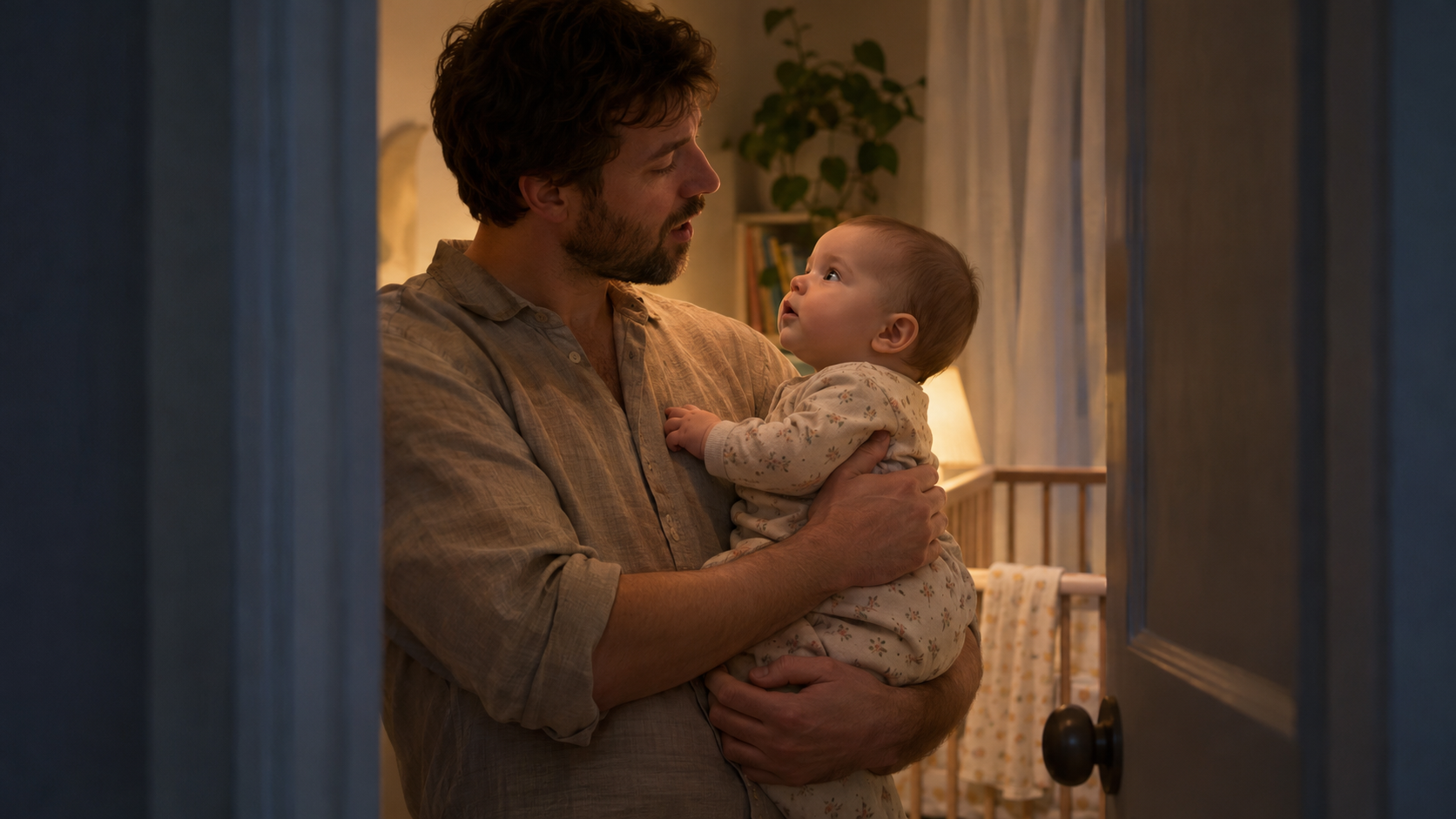
Return to Druyan’s description: a mother greeting her newborn. Before you play the mother-and-child passage in NASA’s collection, notice whether you’ve already brought two faces close together. You might even have lowered the voice in your imagination.
In his history of the recording, Jonathan Scott describes what the editors joined: a newborn’s cries, then a mother soothing a six-month-old. Druyan’s description helps us hear the care in that passage. It also gives those two sounds a single room in our imagination.
How much of what we hear comes from the recording, and how much did the words mother and newborn just give us?
What do you think? Drop your thoughts in the comments
More in Deep Think
- Could AI Become Humanity’s First Translator for Non-Human Minds? — What a translator would need beyond the ability to find a pattern.
- Would We Recognize a Mind That Was Never Biological? — The question in reverse: what another mind’s behavior could tell us about its experience.
- Is Physics the Language of the Universe or the Language of the Human Mind? — Why agreeing on a physical measurement need not mean sharing a way of seeing.
Sources / Receipts
- NASA — Golden Record Cover: the reference image and its purpose as a check on reconstructed picture proportions.
- NASA — Voyager at 30: Looking Beyond and Within – The Golden Record: Ann Druyan’s role and her recollection of the mother’s first greeting. NASA’s Sounds of Earth player carries the excerpt titled “Kiss, Mother and Child.”
- Jonathan Scott — The Vinyl Frontier, “Mixing and Mastering,” p. 179, footnote: Scott distinguishes the newborn’s cries from the subsequent sound of a mother soothing a six-month-old. The article attributes the recollection and the account of the edit separately.
- Constance M. Bainbridge, Mila Bertolo and colleagues — Infants relax in response to unfamiliar foreign lullabies (authors’ copy of the published paper). Nature Human Behaviour 5, 256–264 (2021; online 2020). Heart rate was the prespecified comparison; pupil and skin-conductance analyses supplied additional evidence. The study tested human infants, not extraterrestrial listeners.
- NASA’s inventory of images and collection of spoken greetings ground the clues available to the finder. The extra lullaby, the rowing comparison, and the finder’s sensations and predictions are thought experiments.
- NASA — Carl Sagan (1934–1996): source for the November 9 birthday in the Digest copy.


Discussion