
Case Overview: The Event
The people who gathered around a table in Toronto already knew that Philip was fictional. They had supplied his history, his appearance, and the tragedy that supposedly made him a ghost. When they later reported knocks answering to his name, the mystery concerned a response to a character they had deliberately invented.
Beginning in September 1972, members of the Toronto Society for Psychical Research developed an experiment that eventually involved eight regular participants. After months of unsuccessful attempts to produce an apparition, they adopted a more sociable séance method. During 1973, they began reporting raps, table movements, and exchanges that seemed to express Philip’s personality.
Participant reports, published analyses, photographs, and film excerpts survive. They establish that the experiment took place and that its claims were recorded during the 1970s. They do not establish that a ghost was created or that minds moved matter without an ordinary physical connection. The case turns on the distance between experiencing a response, identifying its cause, and knowing who—if anyone—has answered.
What Actually Happened
The earliest detailed account is Iris M. Owen and Margaret H. Sparrow’s report, dated October 17, 1973 and published in January 1974. Their original aim was to generate an apparition, potentially a collective hallucination, through sustained attention to an imaginary person. None of the regular participants claimed to be a medium.
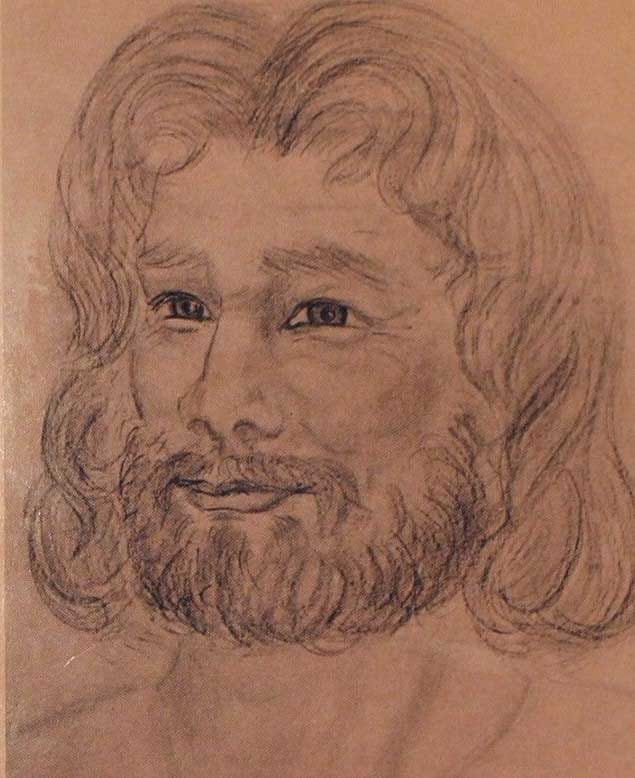
Philip’s invented life supplied the emotional material. He was an English Catholic and Royalist living in the seventeenth century, unhappily married to Dorothea and in love with Margo. In the group’s story, Margo was accused of witchcraft and executed; Philip’s failure to protect her led to remorse and suicide. The participants agreed on a portrait and elaborated the character together. This was a fictional biography, not a historical discovery.
Initially, they met for meditation and discussion. No agreed apparition emerged. In late August 1973, they adopted methods associated with the British investigators Kenneth Batcheldor, Colin Brookes-Smith, and D. W. Hunt: relaxation, singing, jokes, and encouragement directed toward the table. The first report describes vibrations, then felt and audible raps, followed after roughly four weeks of rapping sessions by table movement.
The group used one knock for yes and two for no. According to the January 1974 editorial accompanying the report, answers came more readily when the participants agreed about the response; uncertainty or disagreement could accompany delays and weaker knocks. George Owen interpreted this as evidence that the communicator reflected the group.
The filming history needs care. That same editorial says a Canadian Broadcasting Corporation crew had recorded a brightly lit session for two hours, with excerpts broadcast on Man Alive. Separately, Iris Owen’s 1975 continuation describes a professional film proposed in January 1974, financed by society member Bruce Raymond and directed by Ian Brims. It combined a recreation of the experiment’s development with filmed demonstrations. These descriptions should not be collapsed into one supposedly definitive recording.
Demonstrations and further investigations followed. Owen and Sparrow’s book, Conjuring Up Philip: An Adventure in Psychokinesis, appeared in 1976. A report dated April 18, 1977 describes the original eight still meeting regularly. The familiar story of an invented ghost compresses a sustained social experiment, several changes of procedure, and multiple kinds of evidence into a single dramatic event.
Key Claims and Evidence
The strongest readily inspectable visual evidence is also easy to overread. Surviving excerpts collected by the Museum of Tarot show people around a table, hands in contact with it, with the table appearing in tilted and overturned positions. A separate upload by researcher Barrie Colvin is described as a summary of table phenomena with an Iris Owen interview and Joel Whitton’s comments. These are edited presentations, not an accessible, continuous record of every experimental session.
A film can establish visible movement more securely than recollection alone. It cannot automatically establish the forces responsible. Contact matters: a table may move while everyone sincerely feels they are following it. An angle that shows several hands does not necessarily reveal the pressure they apply, every foot, the underside, or the distribution of weight. The published descriptions of raps add another question: a recorded sound needs its source identified before it can demonstrate an unusual mechanism.
Levitation is a particularly important distinction. The October 1973 report states that there had been “no real and obvious levitation.” In the 1975 continuation, Owen describes a later occasion when the table allegedly rose about an inch and travelled several feet. This occurred in a private session after filming had stopped; she says no adequate photograph was obtained. That specific claim therefore rests on testimony, including the witnesses she names, rather than the publicly circulating moving-table footage.
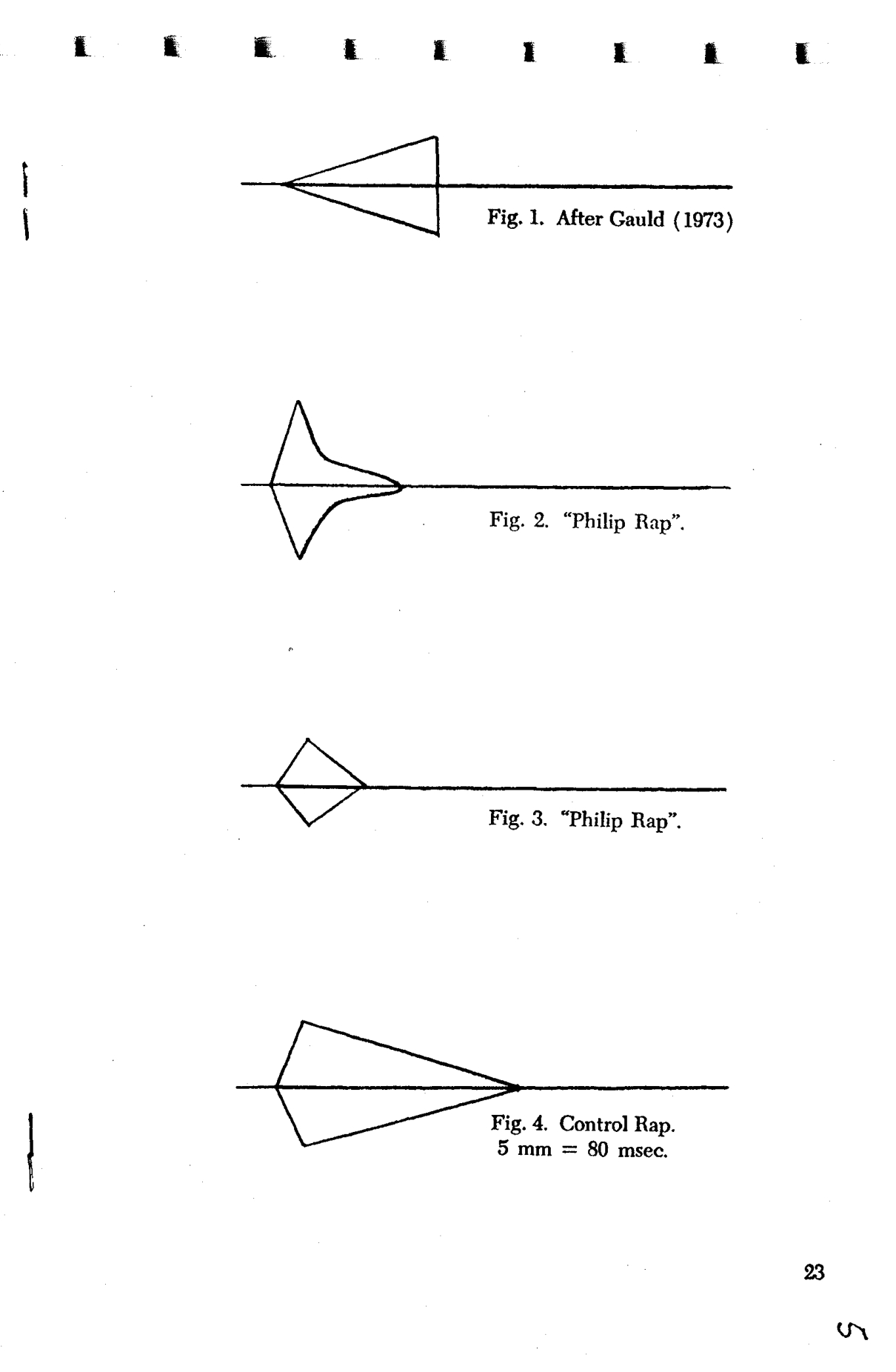
The investigators also attempted measurement. In Joel Whitton’s 1975 acoustic study, a microphone attached beneath the table recorded sounds later examined with a chart recorder. He compared seven selected raps with deliberately produced sounds, including knocks, kicks to a table leg, and other impacts. He reported differences in the way the sounds faded. This was an effort to move beyond impressions, and it deserves to be described accurately.
Its limits were substantial. The seven raps were selected because the group had verbally recognized them as responses, rather than classified by observers unaware of their origin. Whitton acknowledged unknown characteristics in parts of the recording system. A difference from a particular set of comparison knocks does not exclude all ordinary ways of exciting a table’s surface, frame, or joints. The analysis identified a proposed acoustic distinction; it did not identify a paranormal force.
Whitton’s 1976 follow-up compared further Philip recordings, now from a suspended steel plate, with older recordings from another group using a wooden table. In a later paper, Colvin recounts an assessment by acoustics engineer John Shelton, who questioned comparisons across different structures and recording arrangements, and the effects of the chart recorder’s limited frequency response. Colvin remained interested in possible anomalous sounds; his account nevertheless records a serious technical objection. Similar-looking traces can partly reflect how signals were recorded and filtered.
There was also a reported force measurement. Owen’s 1976 account of the group’s March 1975 visit to Kent State University says a strain gauge registered upward force exceeding twenty pounds while participants’ hands were on the tabletop. The short report does not supply enough apparatus detail, calibration information, or synchronized measurements of contact forces to audit the result. Detecting force at one point would still leave its source to be established.
The same account includes a revealing information test. The group was asked to identify which of ten containers held a steel ball rather than a glass marble. Owen reports that they were unsuccessful, while Philip’s answers followed the participants’ majority choices. Without full trial data, this is not a precise statistical result. It nevertheless supplies no demonstration that the supposed communicator possessed knowledge independent of the group.
Later claims included raps from other objects in the room. Owen describes participants keeping their hands on a suspended metal plate while requesting sounds from pipes or chairs. These reports deserve to remain in the record, but they are not equivalent to an instrumented test of an isolated, untouched object. The distinction matters when retellings turn “some sounds were attributed to other objects” into “physical contact was ruled out.”
Points of Tension
The participants’ confidence and the quality of their causal controls are different questions. Bright lighting, visitors, and cameras reduced some opportunities for concealment. They did not measure every force transmitted through hands, feet, furniture, or the floor. Several people agreeing that they were not pushing establishes their reported experience; it does not independently measure their contribution to movement.
The change in method is similarly suggestive without being decisive. Singing, joking, movement, attention, expectations, and group confidence changed together. The experiment did not isolate one variable and establish that a particular mental state generated an otherwise unavailable force. A livelier setting could encourage both stronger experiences of response and ordinary collective movement.
The strongest physical claims also exceed what the accessible recordings can settle. A brief rise above a carpet requires an unobstructed view and an account of all supporting forces. An apparently remote knock requires reliable sound localization and control of mechanical connections. Where those records are missing, an unresolved mechanism reflects limited evidence rather than a demonstrated violation of ordinary physics.
This does not make the surviving material worthless. The reports preserve changes in method, unsuccessful attempts, technical comparisons, and occasions when participants admitted they could not document an event adequately. Reading those qualifications alongside the confident conclusions produces a more informative case than either a triumphal retelling or a blanket dismissal.
Perspectives and Explanations
Ordinary muscular action is the leading explanation to investigate for table movement under contact. Some movement may be deliberate and unnoticed by others; some may be unintentional. The latter is commonly called ideomotor action: expectations and ideas influence movement without the person experiencing a conscious decision to produce it. Neither possibility requires the whole group to be deceiving an audience.
There is a direct historical precedent for testing this distinction. In Michael Faraday’s 1853 investigation of table-turning, indicators showed that participants’ hands exerted movement before the table followed, although they believed the table was leading. Making that relationship visible changed the outcome. Faraday did not investigate the Philip group, so his experiments cannot explain every Toronto episode. They establish why sincere testimony about passivity is insufficient to exclude muscular force.
Raps require their own investigation. Impacts, friction, shifting loads, and movement within furniture can produce sounds whose apparent location is misleading. These are candidate mechanisms, not a claim that every recorded Philip rap has been reconstructed. A satisfactory ordinary explanation for a particular sound would reproduce it under comparable conditions and account for the recording arrangement. Conversely, failing to identify its exact source from an old excerpt does not favor psychokinesis.
The participants’ preferred explanation was group psychokinesis: a mental influence producing physical effects beyond ordinary muscular action. Their fictional communicator helped them separate that proposal from the identity of a dead person. But excluding Philip as a historical source did not establish psychokinesis. That further conclusion required ordinary forces to be excluded, which the accessible reports and excerpts do not adequately accomplish.
Owen also reported correspondence from spiritualists proposing that spirits were acting through the invented characters. Such an interpretation adds an unseen impersonator without supplying a distinctive test or independent evidence. It can accommodate almost any reply, including an incorrect one, and therefore explains little predictively. The published record does not require fraud, psychokinesis, or a spirit to account for the appearance of an answering personality; shared expectations and ordinary interaction provide the better-supported starting point.
Context and Pattern Recognition
The follow-up experiments are frequently presented as replication. Their relationship to the original group needs to be retained. Owen’s 1975 report describes a different Toronto group working with an invented character called Lilith, but explicitly says its members had watched Philip demonstrations and benefited from the original group’s experience. Different participants do not automatically create an independent test of the proposed cause.
Her 1977 report describes visiting Montreal groups associated with characters including Sebastian and Axel. According to that account, Axel’s group had obtained table vibrations and movement, but its first definite answering raps occurred during a joint session with the Philip group. That connection is material evidence about how the practice spread, not a detail to remove from the replication story.
These reports suggest that other groups could learn to produce or experience similar sessions. They do not establish independent, adequately controlled replication of psychokinesis. Replicating an appearance and identifying its mechanism are different achievements. Strong replication would require comparable controls, complete records, defined success criteria, and independent assessment—not simply another invented name and another report of knocks.
Modern research offers a relevant, narrower comparison. In Marc Andersen and colleagues’ study of Ouija-board sessions, published online in 2018, eye tracking and participant reports linked meaningful responses to interaction between players, while believers reported a reduced sense of personal agency. That study used a different apparatus and did not test Philip’s raps or levitation claims. Its relevance is that jointly produced activity can feel as though it comes from somewhere beyond the participants.
Implications: Reality Check
The experiment demonstrates a problem of identification even without resolving every physical event. A response that fits a fictional biography cannot authenticate that biography as a deceased person’s life. The information supplied by the group must first be separated from anything that could have arrived independently. Otherwise, familiarity is mistaken for identification.
A stronger investigation would preserve the group’s social setting while measuring what that setting leaves uncertain. Continuous synchronized views could cover hands, feet, the tabletop, and its underside. Calibrated force sensors and vibration measurements could track ordinary mechanical inputs. Multiple microphones, matched comparison impacts, and blinded analysis could test whether an unusual sound signature survived changes in recording equipment.
Questions with answers unknown to the participants would address a separate claim: access to information. Hidden targets would need random selection, protection against information leakage, predetermined scoring, and publication of failures as well as successes. Independent teams would then need to reproduce the result under the same conditions.
If a reproducible physical effect survived those tests, it would warrant further investigation. Showing that it depended on mental activity would require additional evidence. Establishing a communicating intelligence, and then its identity, would require more again. An unexplained force, an apparently meaningful answer, and a dead person are not interchangeable findings.
The Unresolved Ledger
WHAT IS DOCUMENTED
Contemporary participant publications document a Toronto experiment beginning in 1972, an explicitly invented communicator, changing procedures, and continuing investigations through at least 1977. Photographs and surviving film excerpts document the group and its table demonstrations. Published papers preserve attempts to analyze sounds and report measurements.
WHAT IS CLAIMED
Owen, Sparrow, Whitton, and associated observers attributed raps and movements to psychokinesis. Owen reported levitation, an upward-force measurement, and sounds from objects away from the principal table or plate. The records establish that these claims were made; they do not independently establish the proposed causes.
WHAT REMAINS UNRESOLVED
The precise production of every reported sound and movement cannot be reconstructed from the material examined. Missing continuous records, incomplete measurement details, physical contact, and uncertain provenance of edited footage limit retrospective testing. No adequately controlled, independently replicated paranormal effect is established by this record.
WHY IT STILL MATTERS
Philip makes a usually hidden problem visible: an answering personality may draw its identity from the people seeking an answer. The case shows why testimony, recorded events, physical mechanisms, and communicator identity must be evaluated separately, even when the experience connects them convincingly.
The Galactic Mind Perspective
The most revealing feature of this case is that the participants knew the biography was invented and still experienced the sessions as responsive. That coexistence deserves attention. Knowing the story’s source did not prevent the table from acquiring preferences, moods, and a recognizable role in their conversations.
Ordinary movement, group expectation, and the interpretation of ambiguous sounds offer the strongest supported account of how such a setting can feel inhabited. The remaining gaps concern particular physical episodes that were not recorded or controlled well enough to settle. Those gaps warrant precision about what is missing; they do not supply evidence for an additional being.
There is also a human achievement in the record: people continued meeting, developed friendships, documented frustrations, and tried to understand an experience they found remarkable. Their explanations can be questioned without flattening that experience. For this Halloween edition, Philip belongs in the archive because it asks us to examine how a response becomes a presence—and what evidence would justify taking that next step.
Open Questions
What would an answer have to contain—or a measurement have to show—before we could place its source beyond the people around the table?
What do you think? Drop your thoughts in the comments
More in Case Files
- The Face They Never Chose: Inside the Choice Blindness Experiment — A related examination of how confidently people explain experiences whose causes they have misidentified.
- Betty and Barney Hill: The Abduction Claim and the Problem of Memory — Another case requiring a distinction between sincere testimony and the methods used to interpret it.
- The 1917 Fátima Case: Apparition, Crowd, and the Sun That Seemed to Move — A comparison in assessing collective experience without treating agreement as proof of a shared extraordinary cause.
Sources / Receipts
The original reports carry the chronology; they are participant publications, not independent confirmation of their paranormal interpretations. The research also distinguishes a surviving document from the website currently hosting it.
- Iris M. Owen and Margaret H. Sparrow, “Generation of Paranormal Physical Phenomena in Connection with an Imaginary ‘Communicator’,” New Horizons 1(3), January 1974, pp. 6–13. Report dated October 17, 1973. Scanned original issue. Read directly; accessed through an Internet Archive snapshot of a Survival Research Institute of Canada PDF. A Museum of Tarot transcription was also consulted and then checked against the scan.
- A. R. G. Owen, editorial, New Horizons 1(3), January 1974, pp. 1–5. Same scanned issue, editorial beginning. Used for contemporary discussion of response content and the CBC filming account.
- Iris M. Owen, “‘Philip’s’ Story Continued,” New Horizons 2(1), April 1975, pp. 14–20. Report dated February 10, 1975. Collected scan, page 2 onward. Used for film production, the unphotographed levitation claim, and Lilith. This collection was accessed through a third-party Internet Archive snapshot of SRIC’s former hosting.
- Joel L. Whitton, “Qualitative Time-domain Analysis of Acoustic Envelopes of Psychokinetic Table Rappings,” New Horizons 2(1), April 1975, pp. 21–24. Collected scan, pages 5–7. Used for apparatus, sample selection, comparison sounds, and reported differences.
- Iris M. Owen, “Continuation of the Philip Experiment,” New Horizons 2(2), June 1976, pp. 3–6. Collected scan, pages 7–9. Used for Kent State, the hidden-object test, and the suspended-plate procedure.
- Joel L. Whitton, “Paramorphic Table Rappings: Acoustic Analysis,” New Horizons 2(2), June 1976, pp. 7–11. Collected scan, pages 9–11. Used for the later acoustic comparisons and recording arrangements.
- Iris M. Owen, “‘Philip’s’ Fourth Year,” New Horizons 2(3), June 1977, pp. 11–15. Collected scan, pages 16–18. Used for continued meetings and the Montreal follow-ups.
- Iris M. Owen with Margaret H. Sparrow, Conjuring Up Philip: An Adventure in Psychokinesis (1976). English edition catalogue; 1979 German translation, Eine Gruppe erzeugt Philip, translated by Heinrich Wendt. Publication information and selected translated passages were checked. The full English text was not accessed; no English quotation has been reconstructed from the translation.
- K. M. Wehrstein, “Philip Psychokinesis Experiments,” Psi Encyclopedia. Overview and documentary images. Used as a participant-account-based guide and visual source, not independent corroboration. The original reports take precedence for chronology.
- Surviving recordings. Museum of Tarot’s compiled footage was visually inspected; Barrie Colvin’s Vimeo upload and its description were verified. No claim is made to have examined the original master reels, a complete continuous session, or the acoustic tapes analyzed by Whitton. The compilation’s sound was not subjected to acoustic analysis, and dialogue is not quoted from it.
- Barrie G. Colvin, “The Acoustic Properties of Unexplained Rapping Sounds.” Author-uploaded paper. Used for his account of John Shelton’s technical criticism. Shelton’s underlying 25-page report was not independently accessed.
- Michael Faraday, letter of June 28, 1853, published in The Times, June 30, 1853. Scholarly transcription in the Epsilon correspondence archive. Historical experimental comparison; not a direct investigation of Philip.
- Marc Andersen and colleagues, “Predictive Minds in Ouija Board Sessions,” Phenomenology and the Cognitive Sciences 18, 577–588; online July 17, 2018, volume publication 2019. Full paper. Used as a limited comparison concerning joint action and the sense of agency.
- University of Manitoba Archives & Special Collections. Psychical research and spiritualism collection guide. Verifies the existence of relevant Owen and Henwood archival collections. Their unscanned holdings were not examined for this article; this draft does not imply that every surviving record has been exhausted.


Discussion