
The Central Question
Is nostalgia a sign of a dying civilization?
That question sounds dramatic at first.
Almost too heavy for something as ordinary as an old song, a childhood movie, a vintage logo, a familiar video game, or the sudden ache of remembering a world that no longer exists.
Nostalgia can feel harmless.
Warm.
Human.
A soft return.
A way of touching something that time took away.
But what happens when nostalgia stops being personal and becomes cultural?
What happens when an entire civilization seems less interested in imagining the future than endlessly remixing the past?
Old franchises return.
Old fashion cycles repeat.
Old songs are sampled.
Old aesthetics dominate.
Old political myths resurface.
Old internet eras become romanticized.
Old futures are rebooted.
Even the future itself starts to look vintage.
We do not simply remember the past anymore.
We market it.
Stream it.
Repackage it.
Aestheticize it.
Fight over it.
Try to live inside it.
So the deeper question becomes:
Is nostalgia a healthy form of memory?
Or does a civilization become nostalgic when it has lost confidence in the future?
Maybe nostalgia is not the disease.
Maybe it is the symptom.
A sign that the culture still has memory, but no longer knows where it is going.
The Ache of a World That Vanished
Everyone knows nostalgia.
It can arrive without warning.
A song from childhood.
A smell after rain.
An old commercial.
A place you used to live.
A photo you forgot existed.
A game console sound.
A holiday memory.
A summer that feels larger now than it felt while you were living it.
Nostalgia is not simply remembering.
It is remembering with longing.
The past returns, but not as history.
It returns as atmosphere.
The light feels warmer.
The people feel closer.
The world feels simpler.
Even if it was not.
That is part of the mystery.
Nostalgia does not always show us the past as it was.
It shows us the past as it feels from the distance of loss.
The childhood home may have had tension in it.
The old era may have had suffering in it.
The decade we romanticize may have been full of fear, limitation, or confusion.
But nostalgia edits.
It softens edges.
It turns time into a room we can visit without having to live there again.
On the personal level, this can be beautiful.
Memory gives shape to identity.
We need continuity.
We need roots.
We need to feel that life was not only a sequence of losses, but a story that mattered.
The problem begins when nostalgia stops helping us remember and starts preventing us from becoming.
Why This Question Matters Now
This question matters because modern culture seems trapped in a loop.
The past is not merely remembered.
It is constantly resurfacing.
Movies return as sequels, prequels, reboots, remakes, cinematic universes, and legacy continuations.
Music revives old sounds.
Fashion cycles collapse into shorter and shorter waves.
Video games are remastered.
Brands resurrect old designs.
Social media turns childhood decades into consumable aesthetics.
Even political movements often run on nostalgia: a promise to restore a lost greatness, a lost order, a lost purity, a lost version of the world.
The strange part is not that we remember the past.
Every culture does that.
The strange part is how often the past now appears as the safest imaginative option.
The future feels unstable.
Climate anxiety.
AI disruption.
Economic uncertainty.
Institutional distrust.
Loneliness.
Information overload.
Wars and rumors of wars.
The collapse of shared narratives.
When the future becomes hard to imagine, the past becomes emotionally available.
It may not be accurate.
But it is familiar.
And familiarity becomes powerful in an age of acceleration.
Nostalgia offers a kind of shelter.
A world whose ending we already survived.
That may be why it has become so attractive.
The past cannot surprise us in the same way the future can.
It has already happened.
So we return to it, not because it was perfect, but because it is no longer unknown.
When Memory Becomes a Market
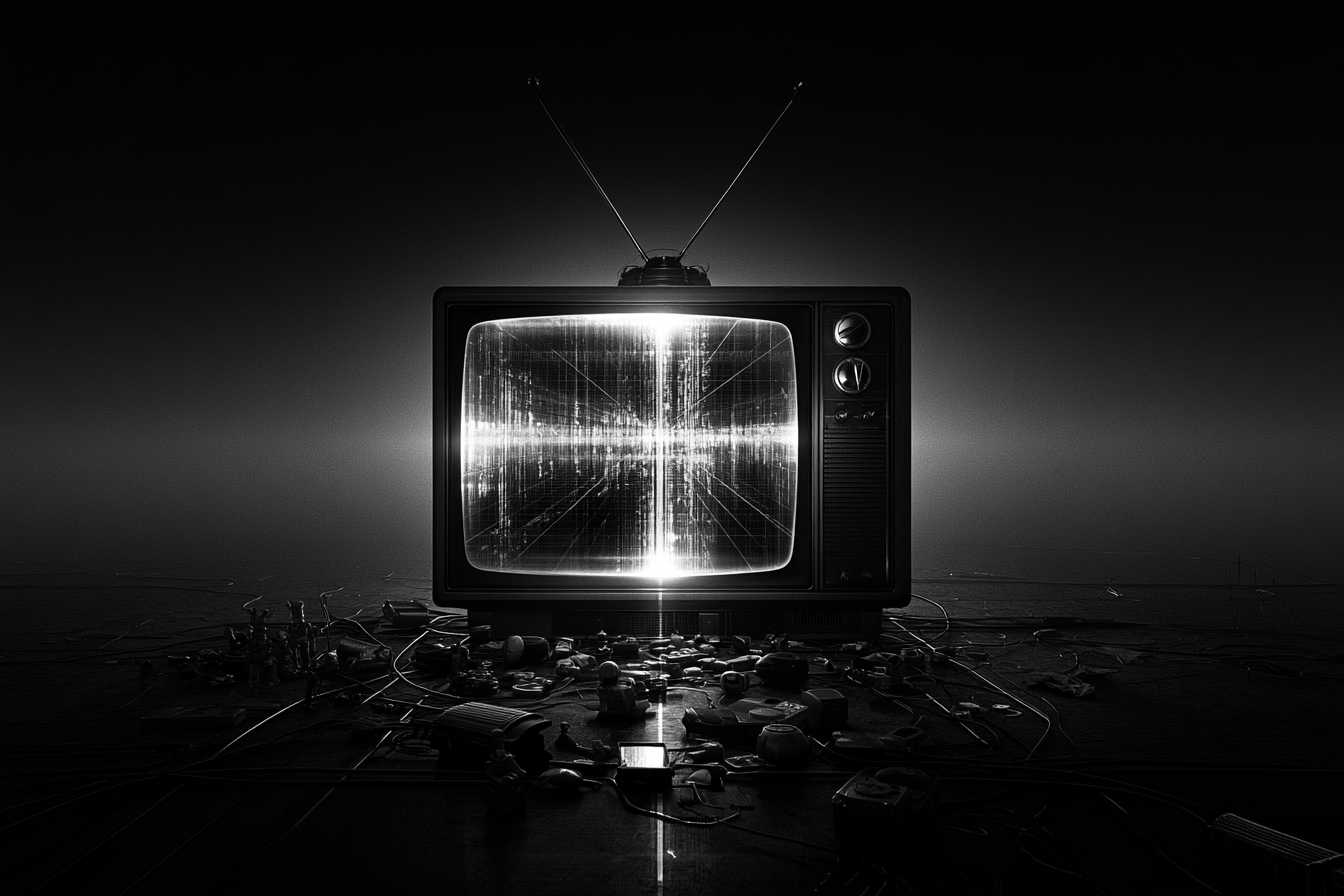
The crack in the frame begins when nostalgia becomes infrastructure.
Not just a feeling.
A business model.
A political tool.
A design language.
A cultural operating system.
Streaming platforms recommend comfort.
Studios reduce risk by reviving known properties.
Algorithms learn that old songs, old clips, old aesthetics, and old memories hold attention.
Brands sell not only products, but recovered emotions.
Social media turns personal history into public identity.
A childhood decade becomes a costume.
A past era becomes a filter.
A memory becomes an aesthetic.
A wound becomes content.
This changes nostalgia.
Once the market learns to monetize longing, memory becomes something that can be farmed.
A person does not simply remember.
They are invited to consume their own past.
Buy the toy again.
Watch the show again.
Wear the style again.
Return to the franchise again.
Experience the “simpler time” again.
The problem is not that old things return.
Some old things deserve return.
The problem is when the culture becomes better at recycling memory than generating possibility.
That is when nostalgia begins to look less like remembrance and more like exhaustion.
A civilization still capable of the future can honor the past without living inside it.
A civilization afraid of the future may begin using the past as anesthesia.
The Difference Between Roots and Retreat
Nostalgia is not automatically decay.
That distinction matters.
A culture without memory is also sick.
Tradition can anchor people.
Ancestral memory can carry wisdom.
Old stories can help civilizations survive.
Ritual can connect generations.
Historic preservation can protect meaning from erasure.
A person who remembers where they came from may be better prepared to move forward.
The danger is not memory.
The danger is retreat.
Roots nourish growth.
Retreat avoids it.
Roots say:
This is where we came from.
Retreat says:
This is where we must return.
Roots allow the future to deepen.
Retreat tries to cancel the future.
This is why nostalgia has two faces.
One form is reflective.
It remembers with tenderness and honesty.
It knows the past was complex.
It does not demand return.
It lets memory become wisdom.
Another form is restorative.
It wants to rebuild the lost world.
It edits out the suffering.
It imagines purity.
It turns the past into a political, spiritual, or cultural homeland.
It says:
Everything went wrong when we left.
That second form is more dangerous.
Because it can turn longing into ideology.
The remembered world becomes sacred.
The present becomes fallen.
The future becomes betrayal.
And a civilization begins confusing memory with destiny.
The Lost Future
A culture does not become obsessed with the past only because the past was beautiful.
It may become obsessed with the past because the future has stopped feeling believable.
For much of the modern era, the future had shape.
Space travel.
Flying cars.
Better cities.
Scientific breakthroughs.
Technological progress.
Social transformation.
Cures.
Abundance.
Exploration.
Even when these visions were naive, they gave civilization a direction.
The future was something to build.
Now, for many people, the future feels less like a promise and more like a threat.
Will AI replace jobs?
Will climate systems destabilize?
Will housing remain unreachable?
Will institutions hold?
Will children inherit a livable world?
Will truth survive the information environment?
Will loneliness deepen?
Will technology connect us or absorb us?
When the future becomes a pressure field, nostalgia becomes psychologically reasonable.
People go backward because forward feels dangerous.
This is where the question becomes civilizational.
A healthy civilization can imagine futures worth sacrificing for.
A declining civilization may only imagine futures it wants to avoid.
When imagination loses forward motion, culture begins circling what it already knows.
Not because the past is better.
Because the future has become emotionally uninhabitable.
The Beauty of Looking Back
Still, nostalgia should not be treated only as weakness.
There is beauty in looking back.
A song from childhood can remind you that you were once open to the world.
An old family photo can restore tenderness toward people time has changed.
A place you miss can reveal what mattered before ambition, grief, or adulthood hardened you.
A cultural memory can reconnect a people to wisdom they were moving too quickly to notice.
Sometimes nostalgia is not escape.
Sometimes it is the soul asking for continuity.
Modern life often fractures time.
Everything updates.
Everything scrolls.
Everything expires.
Everything becomes content.
Nostalgia resists that.
It says:
Something mattered before the feed refreshed.
Something existed before the market renamed it.
Something in me began before this current version of myself.
That can be healthy.
To remember is to refuse total erasure.
A person without memory becomes manipulable.
A civilization without memory becomes rootless.
The question is not whether nostalgia is good or bad.
The question is what nostalgia is doing.
Is it helping us carry meaning forward?
Or is it preventing us from entering the future?
The Frame Shift: Nostalgia Is Not About the Past
The assumption is simple:
Nostalgia is about the past.
A longing for what was.
An emotional return to an earlier time.
But the crack appears when we ask why nostalgia intensifies at certain moments.
People often become nostalgic during transition.
Aging.
Loss.
Displacement.
Crisis.
Loneliness.
Cultural instability.
Civilizational uncertainty.
The past becomes vivid when the present feels unstable and the future feels unclear.
The wider lens is this:
Nostalgia may be less about the past than about the future.
It appears when the future has lost emotional credibility.
When people no longer trust what is coming, they turn toward what already happened.
Not because it was perfect.
Because it is complete.
The return is uncomfortable.
The next time an old song makes you ache, or a culture revives another franchise, or a political movement promises restoration, the question is not only:
What past are we remembering?
It is:
What future are we unable to imagine?
That is the frame shift.
Nostalgia is not always a desire to go back.
Sometimes it is evidence that forward has become difficult to feel.
The Civilization That Can Only Reboot
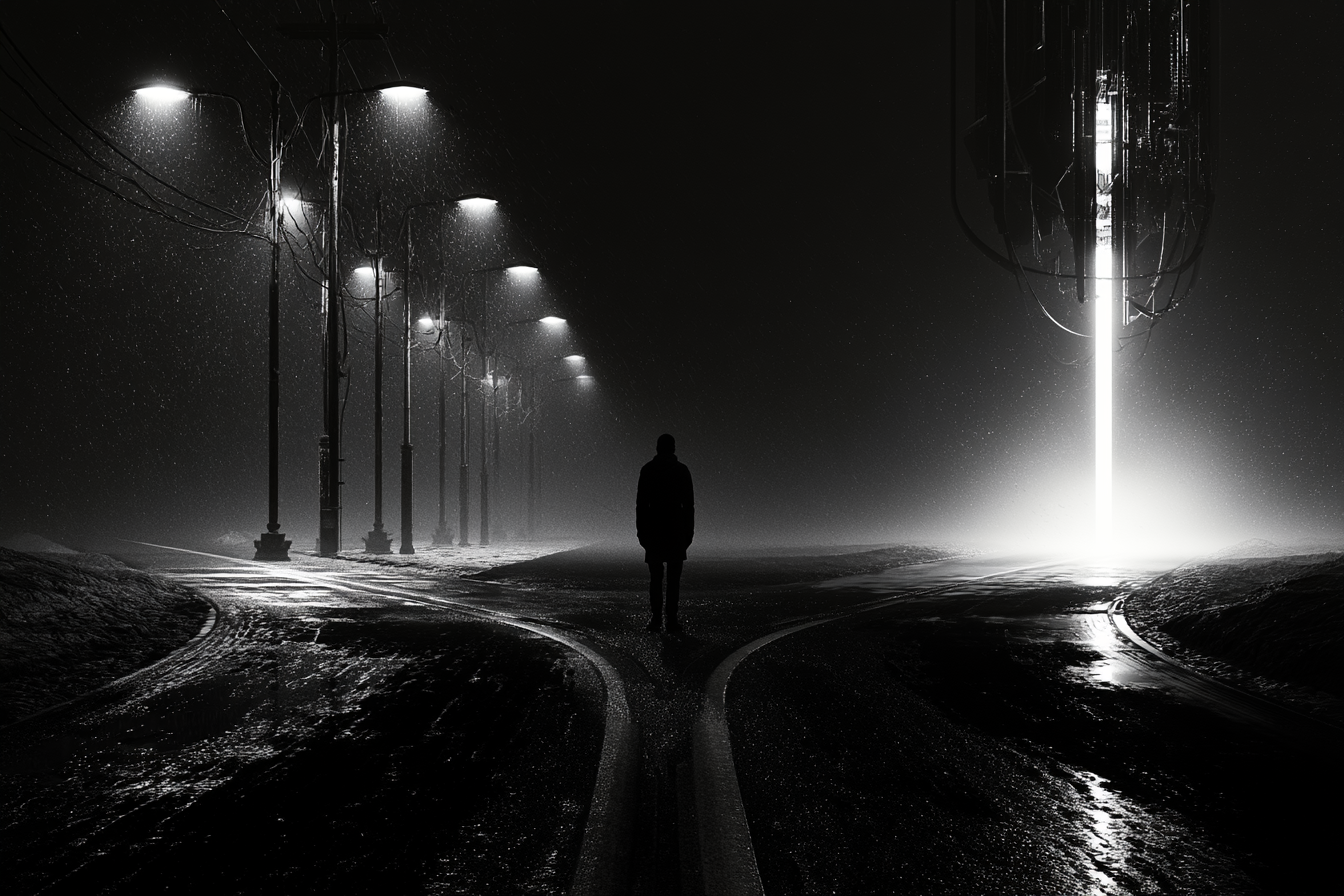
Imagine a civilization that loses the ability to dream forward.
At first, nothing looks wrong.
The screens are bright.
The cities still function.
The markets still move.
The entertainment keeps coming.
But the stories begin to change.
No one wants new myths.
Only safer versions of old ones.
No one wants unknown heroes.
Only familiar characters with updated costumes.
No one wants new worlds.
Only expanded universes of worlds that already sold.
No one wants future architecture.
Only retro-futurism.
No one wants risk.
Only recognition.
At first, this feels comforting.
Then it becomes claustrophobic.
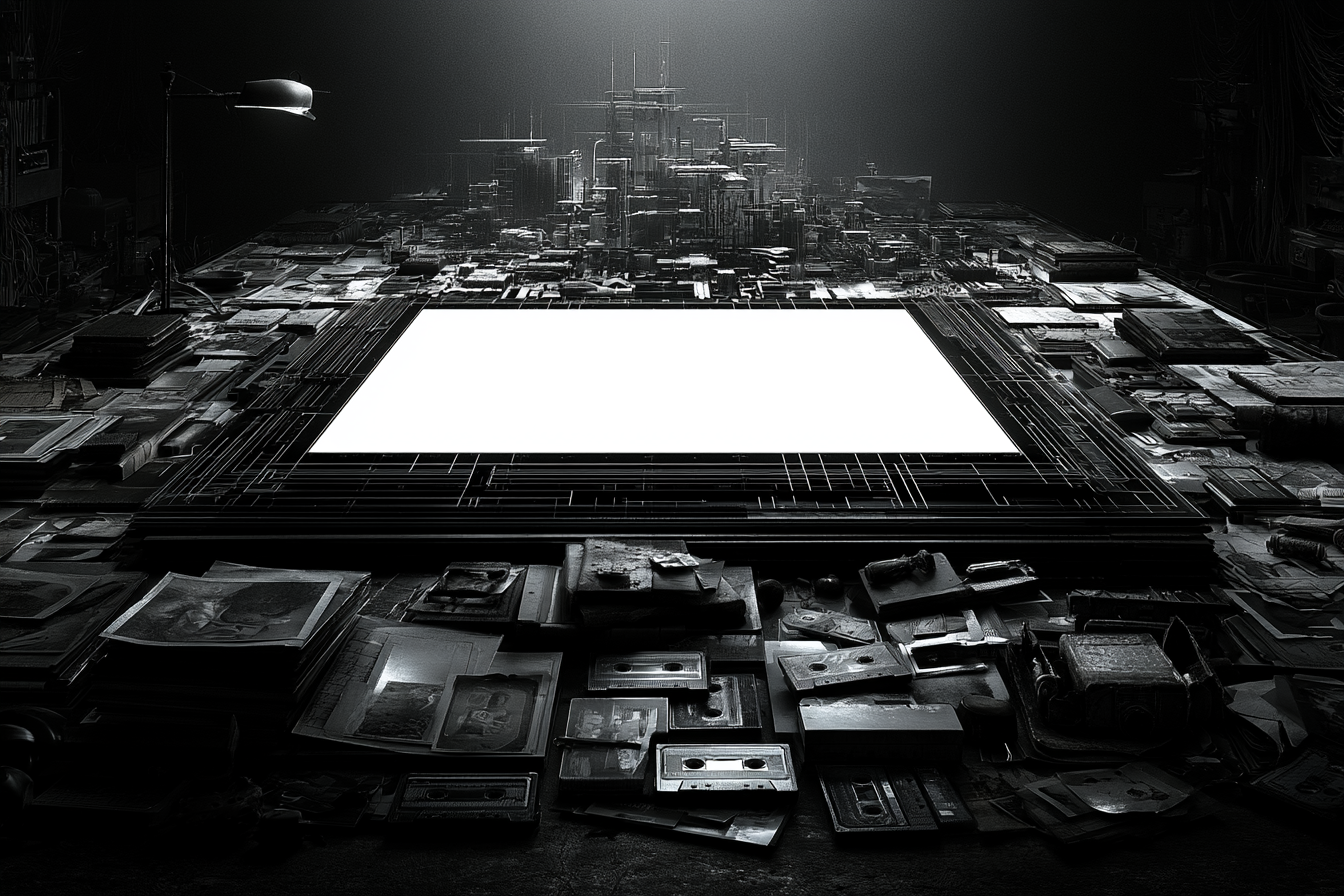
Culture becomes a museum with a gift shop.
The past is not preserved.
It is endlessly franchised.
Every memory becomes intellectual property.
Every childhood becomes a market segment.
Every generation is invited to buy back the symbols of its own formation.
This is not the same as tradition.
Tradition transmits meaning across time.
Reboot culture often transmits familiarity without transformation.
The story returns, but the ritual is gone.
The symbol returns, but the soul is thinner.
The past keeps coming back, but something essential does not.
That is when nostalgia becomes eerie.
Not because the past is present.
Because the future is absent.
Political Nostalgia and the Myth of Return
Nostalgia becomes especially dangerous when it enters politics.
Personal nostalgia says:
I miss what I lost.
Political nostalgia says:
We must restore what was taken.
This can be powerful because it transforms grief into direction.
A population feels instability, humiliation, economic fear, cultural change, or loss of status.
Then someone offers a story:
There was once a better time.
You belonged then.
The world made sense then.
The people who ruined it can be named.
Give us power, and we will bring it back.
This kind of nostalgia rarely wants the full past.
It wants a purified version.
The suffering is removed.
The exclusions are hidden.
The complexity is flattened.
The old order becomes golden.
The future becomes restoration.
This is where nostalgia can become a civilizational trap.
Because no society can return to a past that never fully existed.
It can only build a present haunted by a fantasy.
That does not mean every desire for preservation is wrong.
Cultures should protect what is sacred, beautiful, inherited, and hard-won.
But preservation is not the same as regression.
A civilization must be able to ask:
What should be carried forward?
What should be mourned?
What should be repaired?
What should be left behind?
Nostalgia becomes dangerous when it refuses the last question.
Why the Past Feels More Real Than the Present
There is another reason nostalgia has power.
The past feels complete.
The present is chaotic.
The future is uncertain.
But the past has shape.
Even painful memories can become meaningful because they belong to a story whose next chapter we already know.
This gives the past a strange authority.
It feels more solid than the present because it no longer has to choose.
The present is full of ambiguity.
The future is full of risk.
The past is edited by survival.
That is why people can become nostalgic for eras they did not enjoy while living through them.
The past becomes meaningful because it is no longer open.
Its uncertainty has been removed.
We confuse that closure with truth.
But the people living in the past did not experience it as golden.
They experienced it as a present.
Messy.
Uncertain.
Threatened.
Full of arguments, bills, losses, confusion, fears, and futures that did not yet exist.
That is the illusion.
The past looks stable only because we are looking at it from after the storm.
The future may one day feel nostalgic too.
Even this strange unstable moment may become someone’s lost world.
That should make us careful.
We may be living inside a future memory right now.
The Spiritual Dimension of Nostalgia
Nostalgia also has a spiritual undercurrent.
Sometimes what we long for is not an era.
It is a state of being.
Innocence.
Belonging.
Wonder.
Safety.
Presence.
A feeling that the world was enchanted before it became explained.
Many people do not actually want the past.
They want the way reality felt before disillusionment.
Before grief.
Before adulthood.
Before economic pressure.
Before the screen colonized attention.
Before mystery became content.
Before the world became something to manage.
This kind of nostalgia is not reactionary.
It is metaphysical.
It suggests a hunger for lost contact with meaning.
The problem is that we often misplace the longing.
We think we want the old decade.
The old neighborhood.
The old media.
The old culture.
But maybe we want the old openness.
The capacity to be moved.
The feeling that life was not yet fully explained.
The sense that the future could still surprise us.
In that sense, nostalgia may be pointing toward a real need, but in the wrong direction.
It tells us something is missing.
But it may not be telling us where to find it.
The Technological Loop
Technology has intensified nostalgia because it has made the past instantly accessible.
Earlier generations lost things more completely.
A song disappeared unless someone owned the record.
A show ended unless it reran.
A childhood object broke and vanished.
Old photos sat in boxes.
Memory had distance.
Now the past is searchable.
Every song.
Every clip.
Every commercial.
Every theme song.
Every game soundtrack.
Every old interview.
Every aesthetic.
Every vanished subculture.
The archive is alive.
This is miraculous.
It is also dangerous.
When the past is always one click away, it never fully becomes past.
It remains available as emotional refuge.
The algorithm learns your longing.
It notices what you replay.
It feeds you the era you miss.
It builds a personalized museum of lost time.
Soon nostalgia is not something you visit.
It becomes an atmosphere.
The past follows you.
Recommends itself.
Autoplays.
Loops.
This changes memory from reflection into environment.
A civilization with total archives may struggle to let time move.
Not because time stopped.
Because memory became too accessible to release.
The Healthy Use of Nostalgia
So what does healthy nostalgia look like?
It does not deny loss.
It does not worship the past.
It does not erase complexity.
It does not demand restoration.
It does not use memory as a weapon against the future.
Healthy nostalgia asks:
What was beautiful there?
What did we lose?
What did we misunderstand?
What should we carry forward?
What should we refuse to repeat?
What did that memory reveal about what humans need?
This kind of nostalgia becomes compost.
Old meaning breaks down and feeds new growth.
The past is not rebuilt as a museum.
It becomes soil.
A civilization needs this.
Without memory, progress becomes shallow.
Without future, memory becomes a tomb.
The task is not to defeat nostalgia.
It is to metabolize it.
To turn longing into wisdom.
To let the ache become orientation rather than escape.
A living civilization can look backward and still move forward.
A dying civilization looks backward because it has forgotten how to move.
The Question Under the Question
The deeper question is not:
Is nostalgia bad?
The deeper question is:
Why are we so hungry for it?
What does the hunger reveal?
Maybe people are not only nostalgic for the past.
Maybe they are starving for continuity in a world that constantly resets.
Maybe they miss a time before everything felt optimized.
Maybe they miss shared culture.
Maybe they miss slower attention.
Maybe they miss social trust.
Maybe they miss childhood.
Maybe they miss local life.
Maybe they miss a future that once felt open.
If that is true, then mocking nostalgia misses the point.
The longing is data.
It tells us what the present is failing to provide.
Belonging.
Meaning.
Beauty.
Stability.
Ritual.
A sense of tomorrow.
A culture that only tells people to stop looking back may ignore why they turned around in the first place.
The answer is not to live in the past.
But it may be to build a future with enough meaning that the past no longer has to carry all the emotional weight.
The Future Needs Memory, Not Worship
A civilization does not die because it remembers.
It dies when it can only remember.
There is a difference.
Memory is alive when it helps a people become wiser.
Memory is dead when it becomes a shrine to avoidance.
The future does not need amnesia.
It needs inheritance.
It needs people who can carry beauty forward without embalming it.
It needs old wisdom translated into new conditions.
It needs tradition without paralysis.
Innovation without contempt.
Continuity without regression.
A civilization mature enough to remember honestly and imagine bravely.
Maybe nostalgia is a warning light.
Not proof of death.
Not proof of decline.
A signal.
A culture saying:
Something has gone missing.
We do not trust what is coming.
We are not sure who we are becoming.
We need meaning that can survive time.
That warning should be heard.
But it should not be obeyed blindly.
Because the past can teach.
It cannot live for us.
The Open Door
So is nostalgia a sign of a dying civilization?
Sometimes.
When it becomes a substitute for imagination.
When it edits history into myth.
When it sells memory back to people as identity.
When it turns politics into restoration fantasy.
When it makes the future feel like betrayal.
When it traps culture inside endless repetition.
But nostalgia can also be a sign that something sacred has not been fully lost.
A civilization still capable of longing is not dead.
It remembers that life once felt different.
It remembers beauty.
It remembers belonging.
It remembers wonder.
The danger is mistaking the direction of the signal.
Nostalgia points backward, but the need beneath it may point forward.
The goal is not to return to the past.
It is to understand what the past still knows about being human, then carry that knowledge into a future worth inhabiting.
Maybe a dying civilization dreams backward because it cannot imagine tomorrow.
But a living civilization can look backward, recover what mattered, and build again.
The question is not whether we feel nostalgia.
The question is what we do with it.
Do we turn memory into a museum?
A market?
A myth?
A weapon?
Because the past is not where civilization goes to live.
It is where civilization goes to remember what it must not lose.
What do you think? Drop your thoughts in the comments ...
More in Deep Think
- When the Brain Goes Silent, Where Does the Mind Go?
- If Angels Appeared Today, Would We Call Them Aliens?
- If Your Unconscious Could Speak, Would You Trust It?
- Is the Self an Illusion or a Portal?
- The Species That Solved the Stars, But Not the Source
Sources / Receipts
Use these as grounding references if you want a Sources / Receipts section below the article:
- Svetlana Boym, The Future of Nostalgia
Useful for distinguishing between reflective nostalgia and restorative nostalgia. - Simon Reynolds, Retromania
Useful for grounding the idea that pop culture increasingly recycles its own past. - Mark Fisher, Ghosts of My Life
Useful for hauntology, lost futures, and the feeling that culture is haunted by futures that failed to arrive. - Fredric Jameson, Postmodernism, or, The Cultural Logic of Late Capitalism
Useful for grounding pastiche and the cultural recycling of historical styles. - Zygmunt Bauman, Retrotopia
Useful for the idea that societies may turn backward when future visions lose credibility. - David Lowenthal, The Past Is a Foreign Country
Useful for understanding how societies use, reshape, preserve, and mythologize the past. - Robert N. Bellah et al., Habits of the Heart
Useful for grounding questions of memory, individualism, and the erosion of shared civic meaning. - Cultural studies on reboots, remakes, and franchise media
Useful for grounding the reboot/franchise culture section if you want contemporary media examples.


Discussion