
Area 52 Interview with Paul Hynek
What if the “craft” is not the visitor?
What if the craft is the translation?
In a 2025 AREA52 interview, Paul Hynek raised the possibility that interdimensional beings would not necessarily require craft in the way humans imagine them. The comment did not establish a scientific theory or provide evidence for interdimensional intelligence.
It opened a question.
The phrase “craftless UAP hypothesis” is The Galactic Mind’s shorthand for the possibility raised by that question: could some encounters represent intelligence events, manifestations or perceptual interfaces rather than machines arriving from somewhere else?
That would be a significant change in category.
For most of the modern UFO era, the phenomenon has been imagined through a machine-based frame: metallic discs, advanced aerospace vehicles, engineered propulsion and biological occupants crossing physical distance inside constructed craft.
That model remains possible.
Some reported objects may represent classified systems. Others may be conventional aircraft, balloons, drones, atmospheric effects, sensor artifacts or simple misidentifications. A smaller number may remain unresolved because the available evidence is incomplete.
But another line of thought has always moved beside the aerospace interpretation.
J. Allen Hynek became increasingly dissatisfied with treating every serious case as a mistake waiting to be explained away. Jacques Vallée explored whether the phenomenon behaved less like extraterrestrial visitation and more like a system interacting with culture and perception. John Keel connected modern encounters with older folkloric patterns, sometimes at the cost of moving beyond what could be tested.
Paul Hynek’s remark belongs to that lineage, but it should not be mistaken for its conclusion.
This Dossier does not claim that interdimensional beings exist.
It does not establish that UFOs are alive.
It does not prove that consciousness creates physical objects or that altered states provide access to another reality.
It examines a model.
The question beneath that model is simple:
What if some UAP are misunderstood not because we observe them poorly, but because we place them in the wrong category?
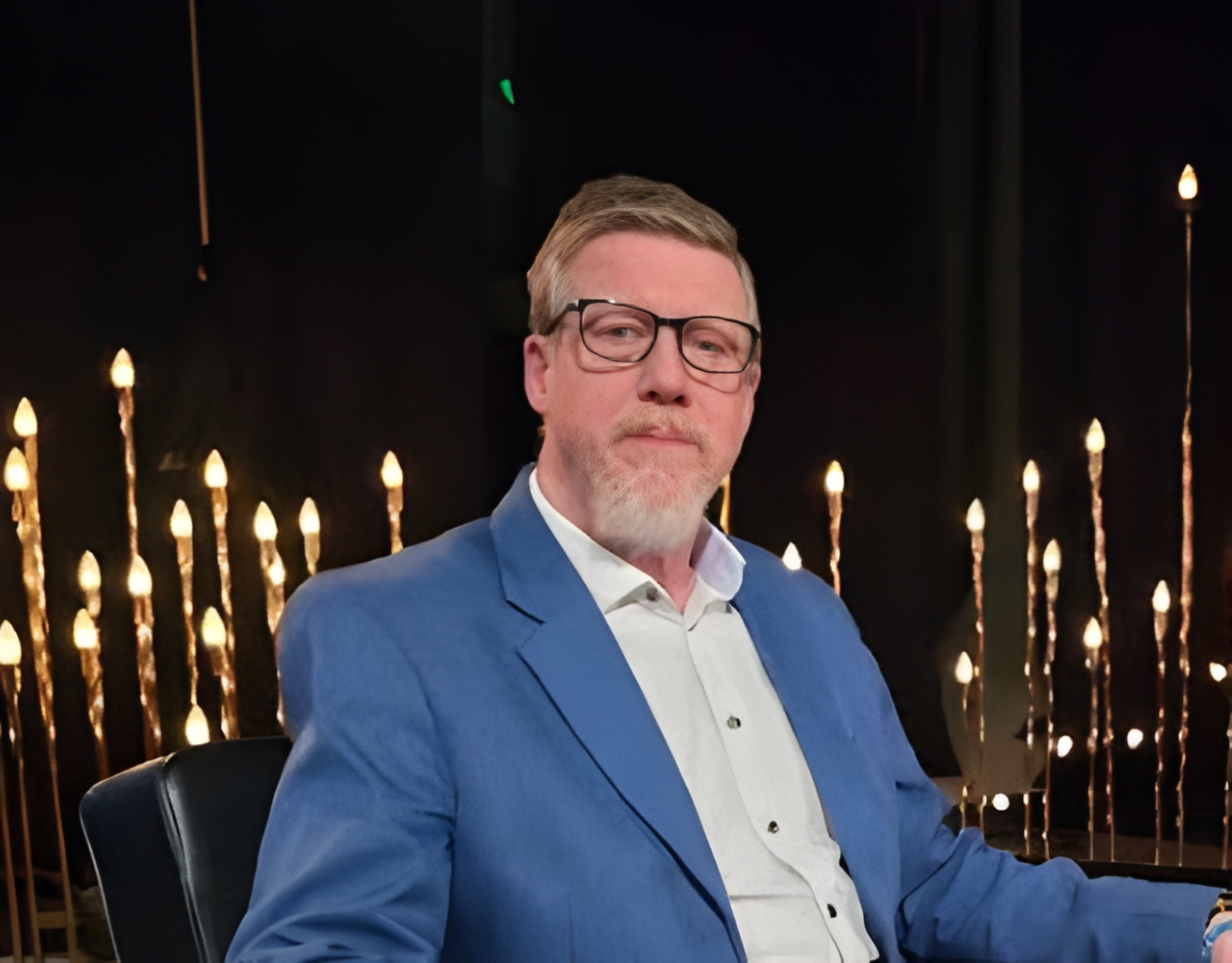
Overview: Who This Is
Paul Hynek is a technology and finance executive, professor, media consultant and son of astronomer Dr. J. Allen Hynek.
His relationship to his father is central to his place in the UAP conversation, but it is not his entire identity.
WorkingNation describes Hynek as an executive with experience across finance, technology, entertainment and startups. The Hollywood Disclosure Alliance lists him as its Chief Financial Officer and identifies him as a consultant on the History Channel’s Project Blue Book television series.
This places him at an unusual intersection:
- the scientific and cultural legacy of J. Allen Hynek
- the history of Project Blue Book
- modern UAP disclosure
- entertainment and narrative construction
- virtual and augmented reality
- technology’s growing ability to mediate human perception
- speculative models of non-human intelligence
That combination helps explain why the “craftless” idea appears in Paul Hynek’s work.
His father investigated reported objects, witnesses and physical traces during an era shaped by aircraft, rockets and the beginning of the Space Age.
Paul Hynek operates in an era of artificial intelligence, simulation, virtual environments, digital agents and realities increasingly experienced through technological interfaces.
That background does not make the craftless hypothesis true.
It helps explain the metaphor through which the question is being asked.
The original AREA52 clip was presented under the title “Interdimensional Beings Don’t Need Crafts.” Hynek’s remarks function less like a complete theory than a conceptual challenge:
If an intelligence could interact with our reality from outside the physical conditions familiar to us, why assume it would need a vehicle?
The deeper question is not simply whether Paul Hynek is correct.
It is whether the modern UAP conversation has confused one possible interpretation (the vehicle) with the phenomenon itself.
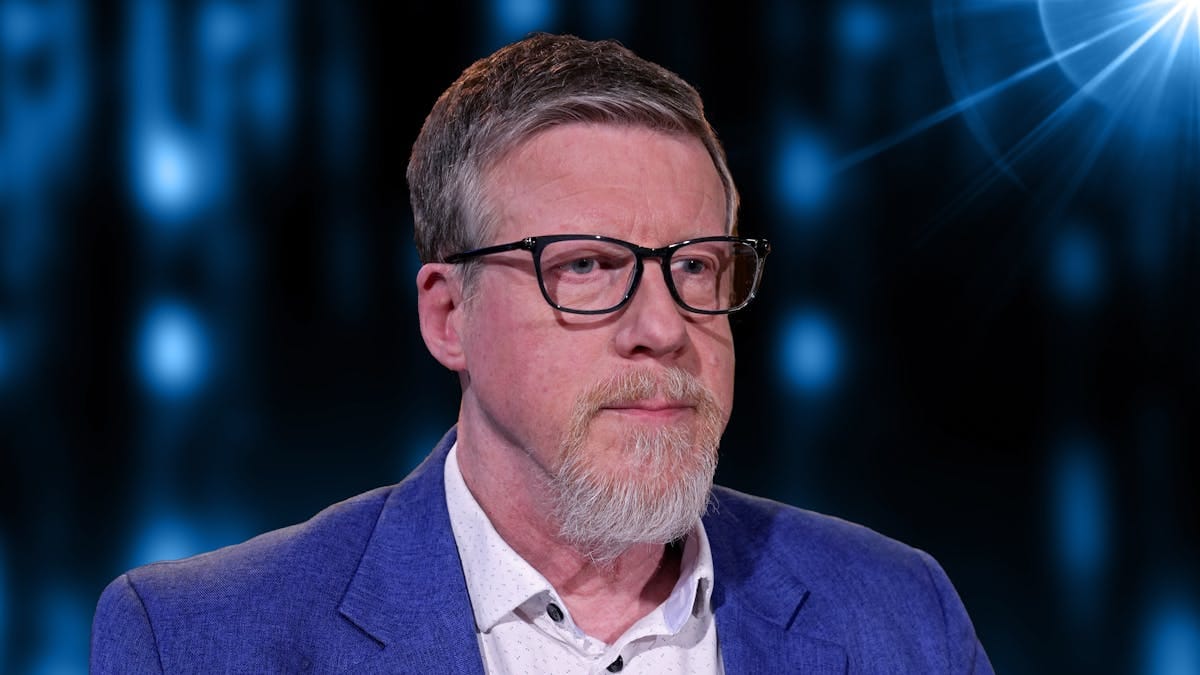
Origins and Background
To understand Paul Hynek’s place in this discussion, the story has to begin with his father.
Dr. J. Allen Hynek was an astronomer and professor who served as a scientific consultant to the United States Air Force’s investigations of unidentified flying objects.
Those investigations passed through several programs, including Project Sign, Project Grudge and eventually Project Blue Book. Their history, official findings and unresolved tensions are examined more fully in Project Blue Book and the Official Management of the Unknown.
Hynek entered this work as a skeptic.
His role included evaluating whether reported sightings could be explained through astronomical objects, aircraft, balloons, atmospheric conditions, meteors or other conventional causes. Many could.
According to the National Archives’ Project Blue Book records, the Air Force received 12,618 reports between 1947 and 1969. It classified 701 as unidentified while concluding that the investigations produced no evidence that those cases represented extraterrestrial vehicles or technology beyond contemporary scientific knowledge.
Those conclusions form part of the official record.
They did not settle Hynek’s personal assessment of how the subject had been handled.
Over time, he became more critical of reflexive dismissal and of explanations applied for institutional convenience rather than evidentiary strength. He did not argue that every unexplained report represented something extraordinary. His deeper concern was that a small residue of difficult cases deserved better methods than either ridicule or belief.
Hynek later developed the close-encounter classification system and helped establish the Center for UFO Studies. His papers, correspondence and research materials are preserved in the Northwestern University Archives.
The fuller evolution of his thinking is explored in J. Allen Hynek and the Scientific Edge of the UFO Question.
The Hynek legacy is therefore not a simple inheritance of belief.
It is an inheritance of tension:
- skepticism without automatic dismissal
- openness without certainty
- scientific ambition confronting incomplete evidence
- unexplained cases existing beside thousands of ordinary ones
- a public mystery shaped by both witnesses and institutions
Paul Hynek carries that tension into a different technological century.
Where his father asked whether a reported object had been explained adequately, Paul’s craftless framing asks whether “object” is always the correct starting point.
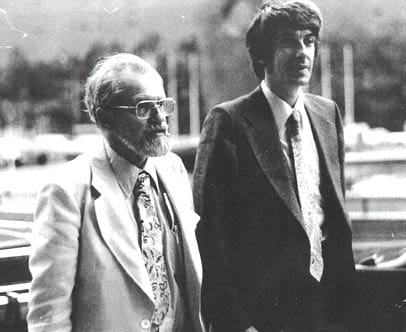
What He’s Known For
Paul Hynek is known in the modern UAP world for several overlapping reasons.
The Hynek Legacy
The most immediate is his personal proximity to J. Allen Hynek.
UFOs were not merely entertainment within the Hynek household. They were connected to scientific controversy, military investigations, witness testimony, public stigma and unresolved cases.
Paul has described growing up around conversations that included his father’s work, visiting researchers and the long cultural aftermath of Project Blue Book. That proximity gives him a perspective unavailable to someone approaching the subject only through published records.
It provides context.
It does not provide proof.
Paul’s recollections can help illuminate his father’s personality, interests and private intellectual environment. They should still be distinguished from contemporaneous documents and independently verifiable historical evidence.
Technology, Finance and Mediated Reality
Hynek’s professional life also matters because it has unfolded through finance, entertainment, software, virtual production and emerging technology.
Humanity increasingly encounters intelligence without sharing physical space with it.
AI agents appear through screens. Virtual characters occupy simulated environments. Augmented reality can place apparently present objects into a person’s field of view. Digital systems can influence perception without entering the world as conventional bodies.
None of these technologies demonstrate interdimensional contact.
They do make it easier to imagine presence as something mediated.
A century shaped by automobiles imagined mechanical visitors. The Space Age imagined interstellar travelers. The information age increasingly imagines interfaces, simulations and distributed intelligence.
The metaphors surrounding UAP may be changing because our technologies are changing.
Disclosure and Entertainment
Paul Hynek also works within the Hollywood Disclosure Alliance, an advocacy organization that seeks to connect UAP researchers with people working in film, television and media.
That role deserves careful framing.
The organization’s claims about extraterrestrial presence and future disclosure represent its stated position. They are not established simply because the organization promotes them.
Its existence is nevertheless relevant.
The UAP subject is now shaped simultaneously by government reports, congressional hearings, documentaries, podcasts, social platforms and entertainment. Disclosure is not only a question of what institutions reveal. It is also a question of how information is packaged, repeated and transformed into public narrative.
That media environment is examined in AREA52 and the Creatorization of Disclosure.
Paul Hynek operates inside that convergence of family history, entertainment, technology and modern disclosure culture.
The Craftless Possibility
The idea at the center of this Dossier emerged from an AREA52 discussion in which Hynek considered whether interdimensional beings would need craft at all.
The remark does not establish that any UAP is interdimensional.
It raises a classification problem.
If something appears in the sky, moves intelligently and seems controlled, humans instinctively imagine hardware. We understand movement through vehicles because our bodies are confined by environments we cannot cross unaided.
We need ships because we cannot live beneath the sea.
We need aircraft because we cannot fly.
We need spacecraft because our biology cannot survive unprotected beyond Earth.
An intelligence with a fundamentally different relationship to matter, space, embodiment or perception might not share those limitations.
The possibility remains speculative.
The question is whether “craft” describes what was present—or only how an unfamiliar event became legible to us.
The Core Idea or Signal
The core signal is this:
The phenomenon may be misidentified because we categorize it too narrowly.
A craft is a human solution to a human limitation.
If something crosses distance, we assume it traveled.
If it traveled, we assume it required propulsion.
If it required propulsion, we assume it needed a vehicle.
That sequence feels natural because it describes our own relationship with space.
But each step is an assumption.
A craftless model could take several forms, and they should not be treated as interchangeable.
The Vehicle Model
A physical object travels through space using advanced but ultimately technological means.
This is the classic extraterrestrial or nuts-and-bolts interpretation. It is the most straightforward model and, in principle, the easiest to test through physical traces, materials, radar, imagery and repeatable sensor data.
The Manifestation Model
An intelligence produces a temporary physical appearance without transporting a conventional vehicle across the intervening distance.
The visible object could be an effect, projection, probe, constructed form or localized event.
The Interface Model
The reported object is not the intelligence itself. It is an interface through which that intelligence becomes perceptible or interactive.
The “craft” would function more like an icon on a screen: a visible representation of a deeper process.
The Perceptual Model
The event occurs partly or entirely through human perception.
That could include hallucination, neurological disruption, dream states, expectation, cultural symbolism or an unknown form of interaction with consciousness.
A perceptual component would not automatically make the experience meaningless. It would change the evidence required to understand it.
The Unknown-Physics Model
The event is physical but operates through mechanisms not adequately described by current aerospace categories.
This possibility does not require beings from another dimension. It could involve an unknown natural phenomenon, unusual plasma behavior, sensor limitations or technology whose operation is being misunderstood.
These models can overlap in theory.
That does not mean they should be collapsed into one explanation.
“Interdimensional” often functions as a container for mathematical dimensions, parallel universes, hidden physical layers, consciousness-based realities and spiritual worlds. Those possibilities make very different claims.
Before the craftless idea could become a meaningful scientific hypothesis, it would need to specify which kind of claim it is making.
The most useful version of Paul Hynek’s framing is therefore not an answer.
It is a pressure test:
What evidence are we failing to collect because we assume from the beginning that the phenomenon must be a vehicle?
Perspectives and Interpretations
The craftless model can be approached through several competing frames.
The Nuts-and-Bolts Interpretation
The conventional extraterrestrial model argues that at least some UAP are physical vehicles.
Supporters point to radar returns, reported physical traces, photographs, military encounters and cases in which apparently structured objects were observed by multiple witnesses.
From this perspective, replacing craft with “interdimensional intelligence” too quickly may abandon the strongest measurable parts of the phenomenon.
An object can behave strangely without ceasing to be an object.
Advanced technology would look anomalous to observers who did not understand its operation. Apparent disappearance could involve speed, distance, atmospheric conditions, electronic warfare, sensor failure or incomplete observation.
The craftless model should not be used to erase physical evidence simply because that evidence is difficult to interpret.
The Interdimensional or Ultraterrestrial Interpretation
A broader interpretation argues that some encounters cross too many categories to resemble ordinary visitation.
Reports may combine structured objects with dreamlike sequences, altered consciousness, symbolic communication, apparent time disruption, unusual entities or effects that continue after the sighting itself.
Jacques Vallée explored whether the phenomenon might behave like a control system interacting with belief, culture and perception. That argument is examined in Jacques Vallée and the Control System Behind the Phenomenon.
John Keel went further, connecting modern UFO encounters to older accounts of fairies, apparitions, monsters and trickster-like intelligences. His model is explored in John Keel and the Theory of the Many Masks.
These frameworks can accommodate cases that appear physical in one moment and symbolic in another.
Their weakness is flexibility.
A model capable of absorbing every contradiction can become impossible to challenge.
The Psychological and Cultural Interpretation
Another possibility is that the craftless appearance originates primarily within the human mind and its surrounding culture.
People do not experience ambiguous events without context. They interpret them through memories, expectations, fears, religious symbols, media and the technological language of their period.
An apparition in one century may become an alien encounter in another.
A mysterious light may be reconstructed as a craft after exposure to familiar imagery.
A dream, sleep-paralysis episode or psychedelic experience may feel autonomous and external even when its immediate mechanism is neurological.
This does not require witnesses to be dishonest.
Human perception is an active construction, not a passive recording device.
The craftless hypothesis could therefore reveal something important without revealing an external intelligence: our categories shape the unknown before we understand it.
The Scientific-Skeptical Interpretation
The strongest skeptical criticism is not that the idea sounds strange.
It is that the idea currently lacks operational boundaries.
What does “interdimensional” predict?
What observation would distinguish it from misperception, hallucination, classified technology, folklore or an unknown natural event?
What evidence would count against it?
If the absence of physical evidence supports the theory, ambiguous evidence supports the theory and contradictory evidence also supports the theory, the model is not yet functioning as a scientific explanation.
It may remain valuable philosophically.
But conceptual usefulness and evidentiary strength are not the same thing.
Strengths and Limitations
The strength of Paul Hynek’s framing is that it challenges anthropocentrism.
Humans often imagine non-human intelligence as a more advanced version of ourselves: embodied organisms using engineered machines to cross physical distance.
That may be correct.
It may also be a projection.
A genuinely unfamiliar intelligence could have a different relationship to individuality, embodiment, matter, time or location. It may not separate organism from environment in the way humans do. It may not “travel” because its presence is distributed, projected or nonlocal.
The craftless model reminds us that the unknown is not obligated to resemble our technology.
It also encourages researchers to examine aspects of encounters commonly discarded as noise: changes in perception, physiological effects, witness states, symbolic content, recurring patterns and the relationship between observation and experience.
Its central limitation is equally important.
The more abstract the explanation becomes, the less risk it carries.
A physical-craft hypothesis can fail if the predicted object, material or sensor signature does not exist.
An undefined interdimensional hypothesis can reinterpret that absence as evidence that the phenomenon transcends physical detection.
That is not enough.
A responsible version of the model needs boundaries.
Evidence Status
Documented
- Paul Hynek publicly discussed the possibility that interdimensional beings would not require craft in the conventional human sense.
- He is the son of J. Allen Hynek and has spoken publicly about his father’s work and legacy.
- He has professional roles in finance, technology, education, entertainment and UAP-oriented media.
- Broader-than-extraterrestrial interpretations have a real history within UFO literature, including work associated with Jacques Vallée, John Keel and J. Allen Hynek.
Claimed
- Some UAP may be entities, manifestations, intelligence events or interfaces rather than vehicles.
- Some encounter characteristics may reflect interaction with consciousness rather than ordinary physical arrival.
Speculative
- Interdimensional beings exist.
- Such beings interact with humanity through UAP.
- Human perception translates nonphysical intelligence into object-like appearances.
- Altered states provide access to an external adjacent reality.
Unresolved
- What “interdimensional” means in measurable terms.
- What observations the model predicts.
- How it could be separated from psychological, cultural, technological and natural explanations.
- Whether one theory should be expected to explain the full diversity of UAP reports.
This is the honest boundary.
Open the frame.
Do not pretend it has already produced the answer.
Broader Implications
The craftless idea matters because it changes what a serious investigation might measure.
If researchers assume every meaningful UAP is a vehicle, they will prioritize imagery, radar, speed, altitude, materials and propulsion.
Those measurements remain essential.
But if some encounters involve an interaction between an event and an observer, a broader research design might also document:
- the witness’s neurological and physiological state
- environmental and electromagnetic conditions
- the sequence of perception before, during and after the event
- agreement and disagreement between multiple witnesses
- differences between sensor data and human testimony
- memory changes over time
- recurring symbols or encounter patterns
- whether the event produces measurable effects independent of belief
This would not mean treating every dream, synchronicity or altered state as contact.
It would mean refusing to discard potentially relevant information before determining whether it is relevant.
The model would also need to make itself vulnerable to failure.
Researchers would need to define what an “intelligence event” should do differently from a misidentified object, neurological event or culturally shaped experience. Predictions would need to be stated before cases were interpreted. Conventional explanations would need to be tested first rather than treated as intellectually boring.
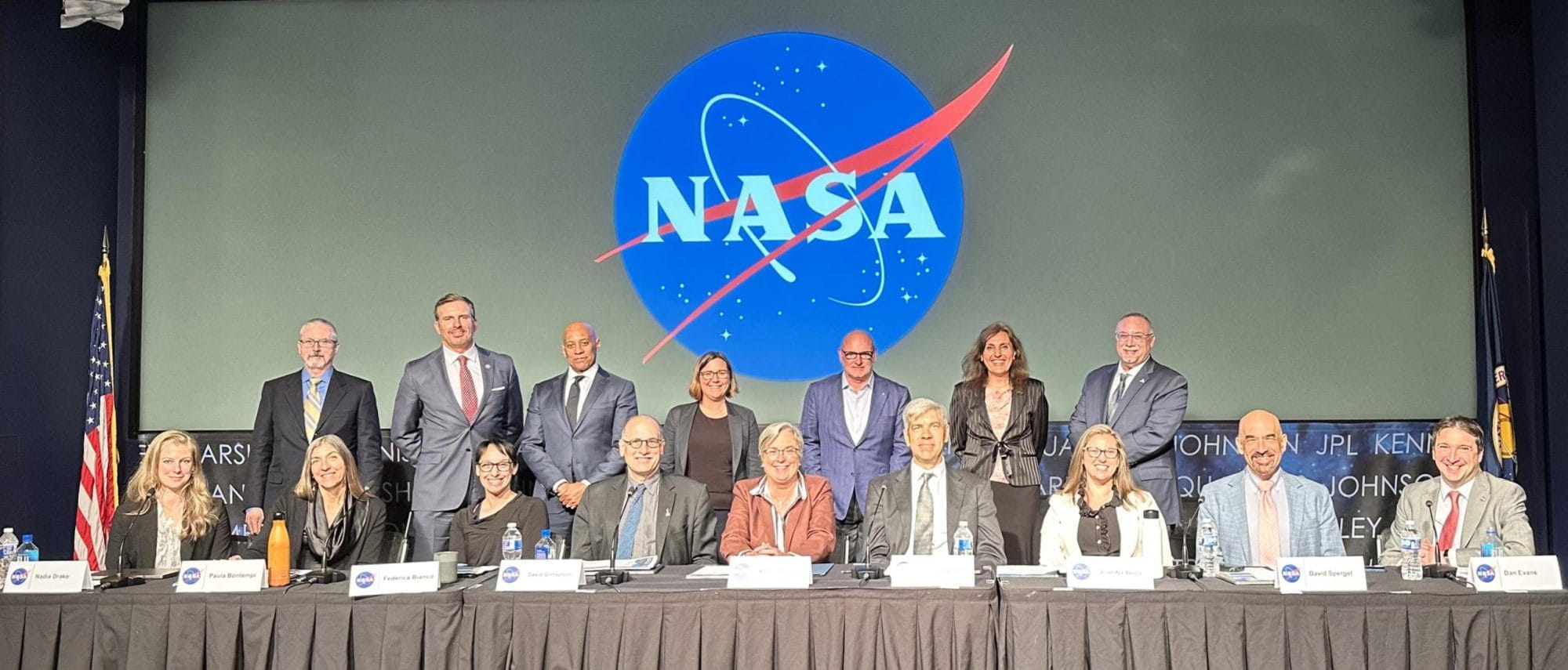
NASA’s UAP independent study emphasized the need for better data, standardized collection and scientific methods. It did not establish an extraterrestrial or interdimensional explanation.
AARO’s historical review reported that it found no empirical evidence that government investigations had confirmed extraterrestrial technology or secret reverse-engineering programs.
These findings do not prove that every UAP has been explained.
They establish the current public evidentiary boundary.
The craftless model therefore remains a question positioned beyond what has been demonstrated.
Its value lies in showing where existing methods might be narrow—not in granting certainty where evidence is absent.
The larger implication may be that “UAP” does not describe one phenomenon.
Some reports are errors.
Some are ordinary objects.
Some may involve classified or foreign technology.
Some may involve unusual natural events.
A small residue may remain unresolved because the data are poor.
Different cases may require different explanations.
The desire for one final theory—extraterrestrial, interdimensional, psychological or otherwise—may itself be another category mistake.
The Reality Signal
What This Subject Represents
Paul Hynek represents the inheritance and mutation of the Hynek legacy.
His father helped move UFOs from ridicule toward structured inquiry while remaining caught between official investigation and persistent anomaly.
Paul carries that history into an age shaped by artificial intelligence, virtual environments, mediated presence and renewed disclosure culture.
The craftless framing is an expression of that transition.
The question has moved from:
What kind of craft is this?
To:
What kind of event are we experiencing?
What Reality Frame It Challenges
The hypothesis challenges the assumption that anything real must behave like a stable physical object.
It also challenges the assumption that intelligence must be embodied, localized and transported through space.
That possibility should not be accepted automatically.
But it reveals how many hidden assumptions sit inside the familiar image of an alien spacecraft.
We assume separation.
We assume distance.
We assume travel.
We assume machinery.
We assume that perception is showing us the event directly.
Each assumption may be reasonable.
None is guaranteed.
Why It Matters Now
Humanity is entering an interface age.
AI can produce the experience of conversation without a human speaker being present. Virtual environments can create navigable worlds. Augmented reality can place visible forms into ordinary surroundings. Digital agents can act across networks without occupying a single humanlike body.
These systems are not evidence of non-human contact.
They are changing what people believe intelligence and presence can look like.
That makes the craftless metaphor culturally powerful.
It also makes caution necessary.
Every age imagines the unknown through its newest technologies. The modern language of simulations, dimensions, AI and interfaces may illuminate possibilities or merely update the mythology.
The timing of an idea does not tell us whether it is true.
It tells us why the idea has become imaginable.
What Remains Unresolved
Everything decisive remains unresolved.
There is no publicly confirmed evidence that interdimensional beings are responsible for UAP.
There is no accepted scientific model describing how such beings would enter or interact with our reality.
There is no established method for distinguishing an intelligence event from misperception, altered consciousness, cultural expectation, unknown technology or natural phenomena.
The phrase “craftless UAP” names a possibility.
It does not identify a cause.
What remains valuable is the methodological challenge:
If researchers assume craft, they search for vehicles.
If they assume perception is irrelevant, they discard the witness’s internal experience.
If they assume every strange component belongs to one phenomenon, they may combine unrelated events.
If they assume all strangeness is meaningless, they may miss a pattern.
The quality of the answer will depend partly on the quality of the categories used to search for it.

The Galactic Mind Perspective
Paul Hynek belongs in The Galactic Mind archive because his remark opens a deeper layer of the UAP question.
Not simply:
Are UFOs real?
Not simply:
Are they extraterrestrial craft?
But:
What kind of reality would make our categories fail?
The craftless hypothesis should be treated as a reality stress test, not an established explanation.
It asks whether humans are mistaking an interface for an object, an event for a vehicle or an interaction for an arrival.
That possibility deserves examination.
It does not deserve immunity from evidence.
The unknown deserves more than ridicule.
It also deserves more than vague mysticism.
If every unexplained feature is absorbed into an invisible dimension, inquiry stops. If every feature that does not resemble conventional technology is discarded, inquiry also stops.
The productive position exists between those failures.
Some UAP may be craft.
Some may be errors.
Some may be classified systems.
Some may be unusual natural events.
Some may involve witnesses encountering the limits of perception.
Something stranger may remain.
Paul Hynek does not prove that there was never a ship.
His value is in asking whether the search for a ship has narrowed the investigation before it has begun.
A Dossier is not a monument.
It is a map of influence.
The influence of this idea is clear: the UAP question is no longer only about where something came from.
It is also about what kind of thing we believe we are seeing.
Open Thread
If an intelligence did not require a craft, how would we recognize it?
Would it appear as a structured object?
A light?
A temporary form?
A voice?
A dream?
A pattern recorded by instruments but experienced differently by witnesses?
Would everyone perceive the same event?
Would it produce physical traces, psychological effects or both?
Could an intelligence interact with human perception without controlling it completely?
And how would we distinguish that possibility from the many ways the human mind can create, distort and reconstruct experience?
The most important question may not be whether there was a ship.
It may be whether “ship” was ever the correct category.
What do you think? Are some UAP better understood as vehicles, intelligence events or something between the two?
What do you think? Drop your thoughts in the comments...
More in Dossiers
J. Allen Hynek and the Scientific Edge of the UFO Question
The astronomer who entered Project Blue Book as a skeptic and emerged as one of the strongest critics of careless dismissal.
Jacques Vallée and the Control System Behind the Phenomenon
A deeper examination of Vallée’s argument that the phenomenon may interact with belief, culture and perception rather than behaving solely like extraterrestrial visitation.
John Keel and the Theory of the Many Masks
The investigator who connected modern UFO encounters with folklore, apparitions and the possibility that the unknown changes its appearance across history.
Project Blue Book and the Official Management of the Unknown
How the United States Air Force collected, classified and attempted to explain more than two decades of UFO reports.
AREA52 and the Creatorization of Disclosure
How creators, podcasts and digital media are becoming part of the machinery through which modern disclosure is investigated, packaged and understood.
Sources / Receipts
- AREA52 Clips: “Interdimensional Beings Don’t Need Crafts”
- AREA52 — “What My Father Knew About UFOs” with Paul Hynek
- Paul Hynek — WorkingNation biography
- Paul Hynek — Hollywood Disclosure Alliance board biography
- Project Blue Book — U.S. National Archives
- J. Allen Hynek archival materials — Northwestern University Archives
- NASA UAP Independent Study and Final Report
- All-domain Anomaly Resolution Office public files
- Jacques Vallée, Passport to Magonia
- J. Allen Hynek and Jacques Vallée, The Edge of Reality
- J. Allen Hynek, The UFO Experience: A Scientific Inquiry
- John Keel, The Eighth Tower


Discussion